
 by
by 
Dungeon Master is a very special game to me on a personal level. Before I got my own gaming system (a hand-me-down Atari 800, which was then replaced by a Mega Drive in 1990), interactive entertainment was limited to my dad's prized Atari ST, which took pride of place in his downstairs office – and one of the first games I can remember playing on the computer was FTL's 1987 first-person RPG.
The impact this game had on me at the time is something I struggle to fully articulate even today; I vividly recall having to pluck up the courage to tackle the first enemy encounter (a Mummy trapped behind a metal door), but once I'd gotten past that initial scare, a world of stunning scope opened up before me.
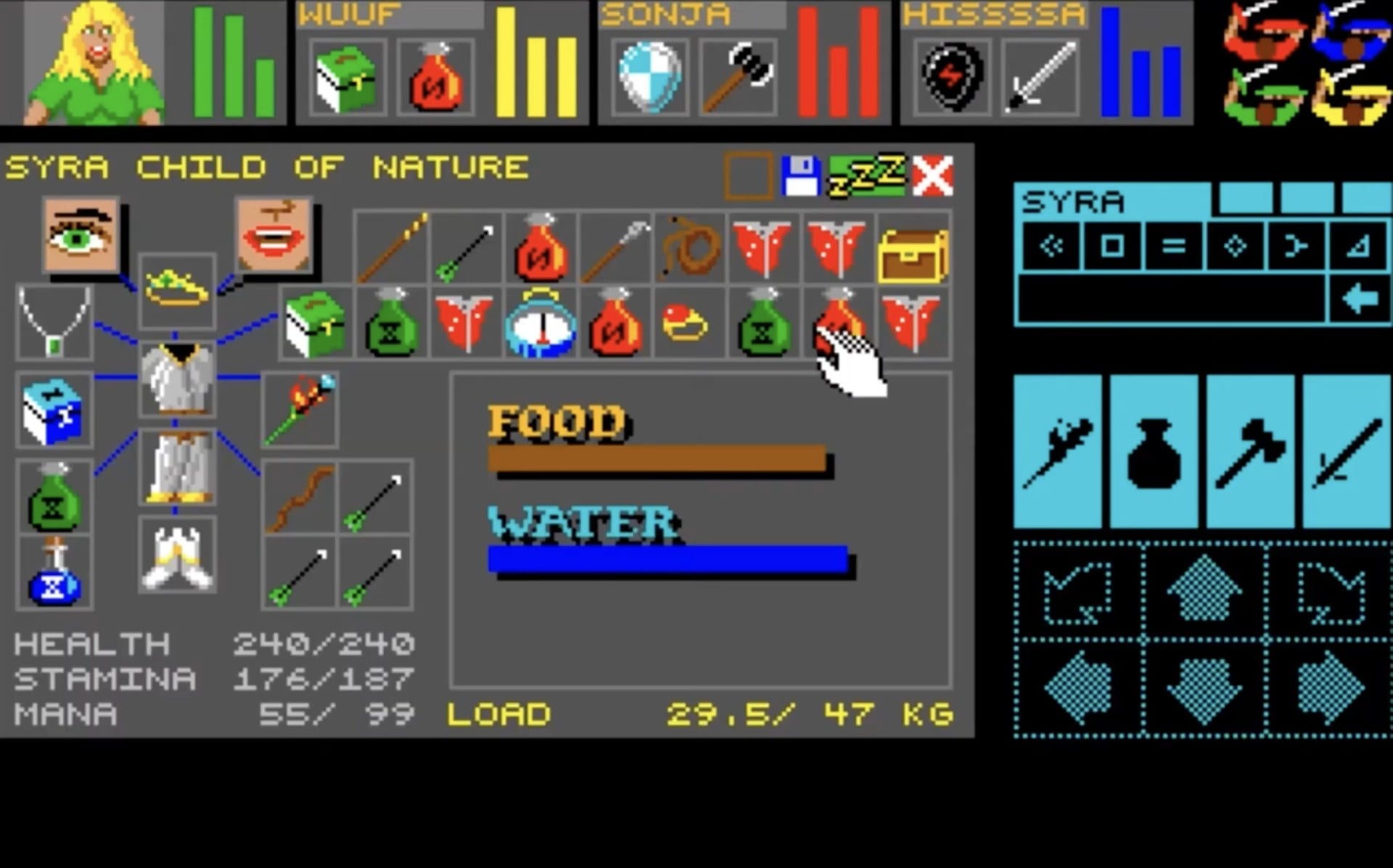
Even by modern standards, Dungeon Master is impressive – torches burn out and leave you in darkness, characters become hungry and thirsty, items and gear have weight values so your warriors can become overburdened, and the spell-casting system is built around a series of runes, forcing you to memorise the combination for each spell. None of this is a big deal in 2026, but back in the late '80s, this was all positively mind-blowing – even more so when you realise that most RPGs in the '80s were turn-based, whereas Dungeon Master's action unfolded in real-time.
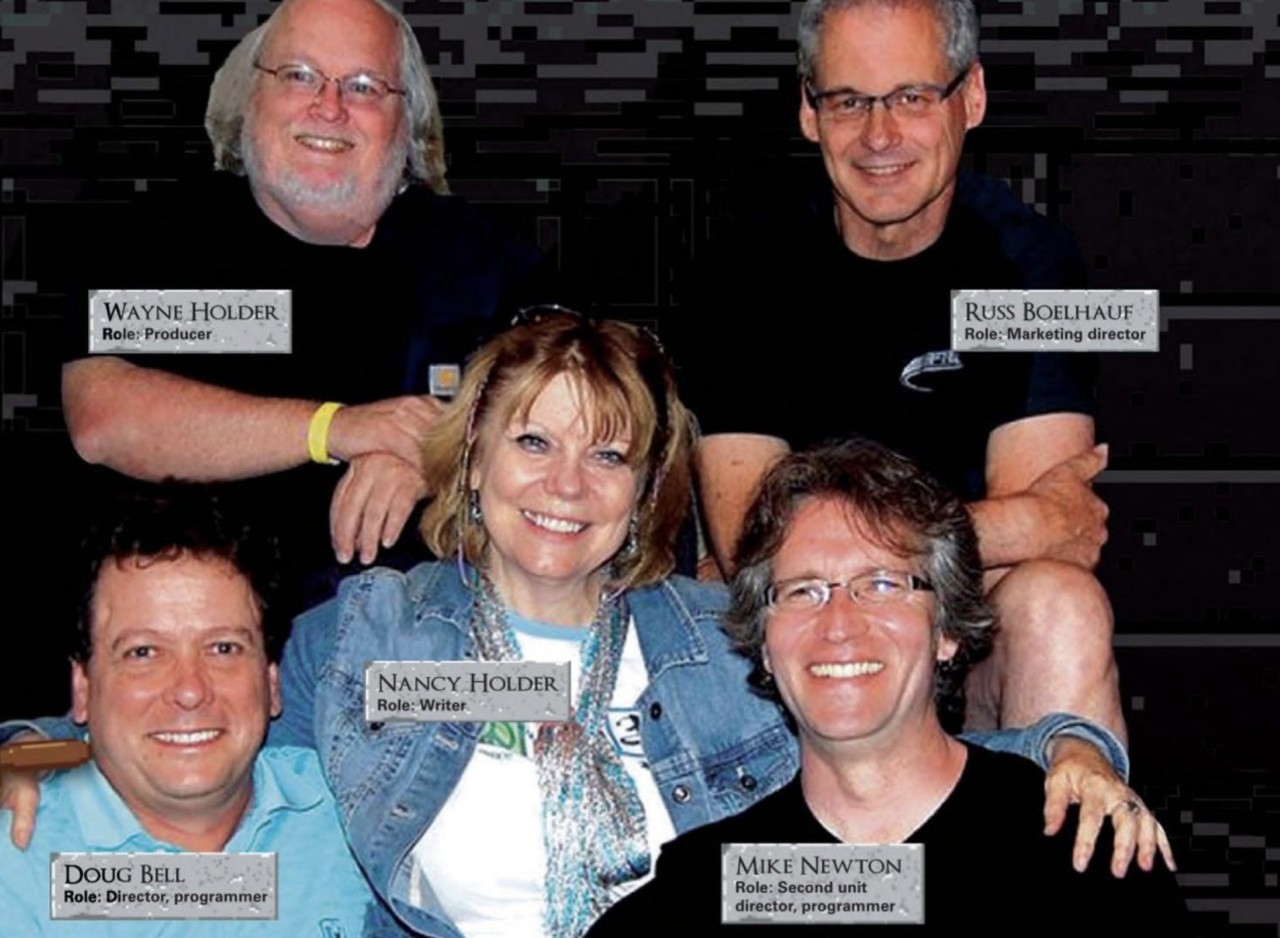
When I began my professional career in games journalism by freelancing for Retro Gamer magazine in 2006, Dungeon Master was one of the titles I had dearly wanted to cover. I was fortunate enough to speak with Doug Bell, the game's director and lead designer, for the magazine's 'making of' piece in issue 34.
A few years later, I revisited the game, with more of the developers taking part – including producer Wayne Holder, writer and narrative designer Nancy Holder, programmer Mike Newton, and marketing manager Russ Boelhauf – for a reunion discussion in Retro Gamer issue 105. The feature you're about to read incorporates answers from both of those interviews.
Crystal Dragon - The Prototype Dungeon Master
"Andy Jaros – the artist on Dungeon Master – and I met during college, attending the University of California, Irvine," explains Doug Bell when asked about how he ended up working at FTL Games, the company founded by Wayne Holder.
"Andy had gotten an Apple II from his parents, and we played Ultima on it and later Wizardry. I commented that I thought I could write a better game than Ultima. One thing led to another, and Andy and I started our own company called PVC Dragon... the jacket for a 5.25" floppy is made of PVC – Poly Vinyl Chloride – and dragons are typically named for their skin in Dungeons & Dragons."
Bell and Jaros raised money by selling shares in this fledgling operation to friends and family, and used the funds to start development on Crystal Dragon, their proposed Ultima killer. Development was slow, and after about two years, the pair were running out of cash.
"We decided to see if another game company was interested in picking up our game," says Bell. "We had recently moved to San Diego and contacted the local game companies, one of which was FTL, owned by Wayne Holder. Wayne decided to take us on for a few months to get the game to a working state. This was in September 1983."
Soon after the pair joined FTL, Atari announced its powerful 16-bit ST home computer. "The Atari was a much more capable computer than the Apple, and better suited to Crystal Dragon, where we were spending a great deal of our time trying to fit it in the Apple's 64K," says Bell.
"However, we decided it was important to have a game at the launch of the ST, which was scheduled for late 1984. FTL had developed SunDog: Frozen Legacy for the Apple II, and Wayne, Andy, and I decided that porting SunDog was a better project than trying to develop a new game for the new platform."
A space trading and combat simulator, SunDog had been a commercial success on Apple II, but Holder reveals the company didn't have plans to expand on the concept. "It was selling like crazy, and we had no plan for a sequel, or anything – we hadn’t planned on success. So, Dungeon Master was going to be the quick ‘knock off’ game. It eventually took us two years to write!"
While Crystal Dragon laid down some of the early foundational work for what would eventually become Dungeon Master, the shift to a new platform meant that the team had to almost start from scratch – and Holder recalls that the core aim of this new project was to create something genre-defining. "People on the team had Dungeons & Dragons experience, and we also got really tired of the little stick-figure dungeon games that we were seeing, and we wanted to do something that had real graphics," he says. "I remember we talked about that a lot at the time."
Pain Rats From Hell
The timely arrival of the Atari ST gave the team at FTL the platform on which they could fully realise their goal. "I think part of the inspiration was not the source material or the subject matter, but was the sudden availability of equipment that everybody could have that had really cool graphics ability," says Mike Newton. "I think the ability to do a first-person, seemingly full-view, high-resolution image was very new. I remember one thing we used to talk about was the opening scene in Raiders of the Lost Ark, where he goes in and pulls the head, and the big stone falls... [and] the idea behind the whole labyrinth and first-person view down a tunnel."
"We started with a proof of concept to use a painter's algorithm – drawing from back to front – to create the dungeon," Bell says. "We wanted to see what the performance was, and it was OK, but we realised that we needed to switch from Pascal to C. I spent three weeks learning C and rewriting the dungeon crawl in C, and the performance was better than we expected."
Given that the Crystal Dragon concept was already a few years old by this point, it should come as no great shock to learn from Bell that the scope of Dungeon Master was initially narrower than the final game. However, he confirms that many of the game's most notable innovations – torches that burnt themselves out, characters needing sustenance and sleep to survive, items weighing characters down, and so forth – were actually part of the original design concept way back in the early '80s. Bell feels that Dungeon Master's true brilliance lies elsewhere. "I think the user interface, graphics, sound and game play were what set us apart, and to a much lesser extent, the refinements of what previous dungeon games had done."
Bell would assume the role of lead designer and developer on Dungeon Master, with the team hovering around five or six people in total. "Wayne did only a little of the programming; his biggest contribution was to figure out how to do digitised sound on the Atari's sound chip," recalls Bell. "Sound was a big one because the chip in the Atari ST was designed to do bleeps and looped tones. Wayne was the one who figured out how to make the Atari ST sound chip do digital sound, and that was after Mike spent a couple of weeks, at least, trying to get some type of reasonable sound from that chip for the game. Andy did all of the artwork. Mike Newton created the tools, including the Dungeon Construction Set. Dennis Walker and I did 90% of the game programming." Wayne Holder's wife, Nancy, also had considerable input when it came to creating the game world.
However, despite these fairly structured roles, Bell is keen to stress that the team had input across all elements of the design. "We all contributed the ideas that set Dungeon Master apart from other games. I think some of the biggest conceptual contributions were probably made by Wayne, particularly with regard to the user interface."
One example of Holder's influence on the feel of Dungeon Master relates to the mechanic of picking up items, as recounted by Bell. "I was working on this complex system where you could look down at the floor, and you could pick up things around you, and Wayne says, ‘Well, it’s right there, why can’t I just reach in and pick it up?’ That was a ‘Well, yeah’ moment. Wayne was actually responsible for a lot of those moments. He would just come in and say, ‘Why don’t you do it that way?’"
Brainstorming sessions, which took place on a whiteboard, allowed every idea to be explored, developed, or discarded, often leading to some unexpected results. "At one point, we had a clean whiteboard, and we started about five columns and started randomly writing words to look for titles, or ideas, or whatever," recalls Newton. "And in the end, they were just a bunch of words, except juxtaposed side by side were the words ‘pain’ in one column, ‘rats’ in the next and ‘hell’ in the following column. We were like, there we go, that’s a character in the game: Pain Rats from Hell!"
Really Real-Time
It might seem like a minor accomplishment today, but the fact that events in Dungeon Master took place in real time was a truly staggering achievement back in 1987. "The games at that point had all been turn-based, and you could take as long as you wanted to think about what you were going to do next, and we wanted to put the player under the pressure of time," says Bell.
Holder feels this aspect was perhaps what made the game stand out, even more so than its presentation. "Most people responded to the graphics, but I think that was really what defined the game more than anything else. The fact that it was real-time and it was this complete simulation, people were amazed to find out that everything, everywhere was being simulated all the time."
What made the real-time world even more immersive was the fact that FTL took a slightly different approach when it came to establishing the player's connection with the setting and its characters. Nancy Holder, who would later become an award-winning author and recipient of the Bram Stoker Award for Lifetime Achievement, was keen to ensure players were eased into the world of Dungeon Master in a way that would be accommodating and not intimidating, as was the case with many computer RPGs at the time.
"You had a big question about how to introduce people into the world," she says. "You didn’t know if you should have a list of character traits and have you pick your name, or should you just make the person feel like those things were chosen – how do you go from being a player into being ‘in’ the game? We were worried about your diegesis, where you’re entering the world of the newly created reality, and that was a huge philosophical problem."
Wayne Holder reveals that there was disagreement even within the development team on how to handle the topic of character creation. "There were some of us who weren’t hardcore gamers who just wanted to pick a character and get going, and there were the purists who wanted the character ‘just so’. I was surprised that it was such a big issue; there was a big schism, and there were two camps."
Newton recalls that Andy Jaros made a character construction kit "where you could not only have a moustache, you could have 32 different moustaches, so you got just the right moustache. And every female character had a number of brassieres she could wear!" Thankfully, the team at FTL managed to find an agreeable solution.
"I think the fact that we had people who weren’t gamers actually saved the game from being an extension of what had already been done," explains Bell. "There was the thought, ‘I don’t wanna go and pick my stats, let me just pick a picture.’ So we came up with a compromise, which was that you could ‘resurrect’ or ‘reincarnate’. You could either get them with their stats, or you get them and start fresh."
"The Dennis Puzzle"
Dungeon Master's often ingenious puzzles were also a collaborative effort. "We all developed the puzzles," says Bell. "Mike created the dungeon, but the individual puzzles were created by all of us. I probably created the most puzzles, but I think Dennis and Wayne created some of the best. We would tinker around and create [them], and then try them out on each other. Eventually, we had to include other people, because you needed to have fresh people as you refined the puzzles. The play testing was quite extensive."
For Holder, this was one of the highlights of the development period. "I think that one of the more interesting periods of development was when we were all developing the different puzzles and trying them on each other, and Dennis has taken that class at UCSD about some kind of theory that if you get interrupted halfway through doing something, you won’t remember how to go back and complete the task. So he created this puzzle that was based on that class he took; I don’t remember which one it was, but that it was one of the puzzles that everybody swore at, because you can’t ever get through it because you keep getting distracted! We called it the ‘Dennis Puzzle’. But there were probably a number of puzzles we never used."
During development, the synergy between Bell and Walker was especially memorable to Holder. "I used to particularly remember watching Doug and Dennis, this weird kind of duo, [who'd] kind of read each other’s minds and pass these discs back and forth over [their] heads and [would] kinda know what was needed next; it was mesmerising to watch. And this stuff sort of materialised out of thin air; we would talk about it and then the next thing you know it would be code running on a computer! That. Even though I only participated in subtasks like the sound and graphics, it was so cool to watch that happening."
With its real-time elements, persistent world and seemingly intelligent enemies, Dungeon Master was a surprisingly tense and often frightening adventure, which set it apart from similar games at the time. "We wanted to create an immersive experience," Bell explains.
"That was the guiding principle behind having the action take place in the dungeon as much as possible. The scary aspect really just evolved from the fact that, up to that point, there had not been a real-time 3D dungeon game with the level of graphics and sound in Dungeon Master. I think one of the other things was that because there was this puzzle nature to it, so you’re sitting there trying to figure something out and that was usually just the right moment to hit you with something that you weren't expecting. Once you were sucked into the game, it didn't take much to scare you."
The influence of Nancy Holder is keenly felt here; she was adamant during development that the player should be both scared and entertained. "We tried to make it scary so that the player could feel engaged," she recalls. "We tried with background noises, and all kinds of things to make it creepy."
Holder (Wayne, that is) recalls that there were many unintentional jump scares in the game, some of which even creeped out the developers themselves. "I remember that stuff that I didn’t think would be scary was scary. Like you’d forget there was a Mummy right around the corner, and you would go in to do testing, and this thing would scream at you – that caught me off guard a number of times!" Holder recalls his daughter playing Dungeon Master many years afterwards, "and she got totally stressed when she ran into the Mummy; she was almost panicking. It still works!"
What's In Store?
By far and away the most significant challenge the team at FTL faced was something few developers have to concern themselves with today: storage space. "We were targeting the Atari 520 ST on a single-sided 360K floppy disk," says Bell. "We didn't want to have to interrupt the gameplay with disk swaps. A lot of the technology in Dungeon Master was spent on compression/decompression algorithms. When fully expanded, the game that fit on a single-sided floppy disk was about 1.6M. There was a sophisticated memory manager that Dennis and I wrote – Dennis mostly – that kept the graphics compressed in memory so that we could fit more. I think it's safe to say that no game ever got as much onto a 360K floppy disk or into the Atari 520ST's memory as Dungeon Master."
The original plan had been to release the game sometime in 1985, and a demo version was published that year to generate interest. However, Bell reveals that there was a sense within the team that they were about to create a "landmark" game, and additional development time was allocated accordingly. The end result of this extended deadline was that few of the team's ideas were left on the cutting room floor. "There were some ideas we had to shelve, but for the most part, we took the time to make the game as good as we could without being dictated to too much by the schedule," says Bell.
This freedom established a productive vibe within the team that went far beyond typical work. "We did a lot of stuff together," explains Bell. "We did dinners, volleyball, movies...it was a really, really fun time. We were more family than business. And all the time Wayne was probably looking at the finances was wondering what was going on!"
Holder feels the success of SunDog definitely gave FTL the breathing room it needed to take things easy on Dungeon Master. "It was really kind of cool, especially after SunDog was released and became a hit – we kind of had some money coming in. And we could be a little less stressed about the whole thing; at least I could, it was easy to relax and think about doing the game. I think that’s why we spent so long doing it; we got so caught up in it that we just didn’t want to let it out of the door until it was as good as we could make it. It didn’t make any business sense, of course, but still."
"Feed The Cult"
There was a genuine belief within the team that Dungeon Master was special. "I remember when we were probably a few weeks away from releasing it, and you could see at that point really what it was, and that was when I did my ‘Feed the Cult’ speech; this game was going to create a cult following, and we needed to come up with stuff to feed that," recalls Bell. "I have used that expression a thousand times in the past 25 years," laughs Boelhauf.
Naturally, every video game developer has that moment where they sincerely believe they're working on something that will revolutionise video games, but back in the 1980s – before the internet arrived for instant feedback – the only steer you had from outside of your core team was from beta testers. Boelhauf recalls a particularly interesting episode.
"When we sent things out to beta testers, and we had various comments back... [there was] the guy who sent it back after having axed it!" Holder expands on this. "We had a game come back to us with the message: ‘Take this aggravating piece of shit and shove it up your ass’. The disc was chopped [into] pieces with an axe, it was just shredded!"
Thankfully, this was an isolated incident, and Dungeon Master launched to rave reviews and impressive sales – in fact, it would reportedly become the Atari ST's best-selling game. This created a familiar issue for FTL. "It was a little bit stressful," says Holder. "I mean, [we had] the same problem we had before – we have a success, and we don’t have a plan for a sequel. We hadn’t really learned from the first time around."
Nancy Holder agrees. "It was so time-consuming, it took everything out of you to work on that game, and it was tiring to think of the next game. You’ve got movie directors, and sometimes they take years before they direct another movie." Boelhauf expands on this issue. "That was probably the earliest model of what goes on on the internet all the time now, we have 22 or 36 month dev cycle with a 90-day sale cycle, and then what do you do?"
Returning To The Dungeon
Dungeon Master was followed by 1989's Chaos Strikes Back, which was a halfway point between an expansion and a sequel. Console ports (which were created without FTL's input) arrived on the SNES and TurboGrafx-16, but players would have to wait until 1995 (well, 1993 if you owned a Japanese PC-9801 home computer) to experience a proper sequel in the shape of the much-hyped Dungeon Master II: The Legend of Skullkeep.
Coming so long after the original game, Skullkeep failed to meet expectations in both critical and commercial terms, despite offering some shockingly intelligent AI-guided enemies to test your wits against. While the first game had been truly groundbreaking, the follow-up looked old-fashioned when compared to the incoming CGI and 3D games that had become possible with the advent of CD-ROM storage.
"The next profitable move for us would have been to follow the big studio, big budget ideal and probably one of the biggest things that came out right at that decision point was Myst, and everybody then fell over themselves to make games," says Boelhauf, citing the CD smash-hit that would herald the beginning of a PC gaming revolution. After the moderate disappointment of Dungeon Master II, FTL would close its doors in 1996.
Holder, who was ultimately responsible for the day-to-day running of FTL as a studio, is happy to take some of the blame for its failure to capitalise on this new wave of interest. "The thing is, business was not my speciality. I liked making the games, and it was more about making the games than anything else," he says.
"Initially, it was a relief from having to do the other recursive products that we produced at FTL," Holder continues. "I was a little bit surprised when gaming became a big business. I did not expect it to be the mainstream thing that we did as a company. I expected it to be this little thing that we did and would pay for itself. I think of Robert Rodriguez’s comment that all he wanted to do when he made El Mariachi was to make enough money to make another film – he was not prepared for it to be successful, and I felt exactly like that. Looking back on FTL, it’s a little bit bittersweet, because those days can’t come back, no matter how much you wish they could – that also pops up in my head. I’m happy that other people are having fun these days, but I miss having that same level of fun myself."
"Tetris Is A Sore Point For Me"
The FTL founder is canny enough to spot, with hindsight, what could have been a very successful sub-business for the company. "The single biggest business mistake that I made was not realising that we should have sold the Dungeon Constructor Set as a separate product and let people create their own stuff," Holder laments. "I was afraid it would dilute the whole cache, and that people would come up with tacky stuff, but people like to author stuff. We did it with Oids later, and that was a big hit."
Online play is something he would have loved to have explored, too. "I’ve watched our daughter playing Minecraft, and I think there are a lot of similarities between that game and Dungeon Master. To me, of all the stuff I’ve looked at, that’s one of the most similar. I also regret that we didn’t consider seriously an online multiplayer mode, because the company had already disbanded by then."
As for the now-retired Bell, who has worked at Riot Games, Trion Worlds and Sony Computer Entertainment since FTL shut down, he feels that Dungeon Master perhaps isn't as famous today as it deserves to be. "I feel honoured when people are still talking about Dungeon Master, but then, on the other hand, I look at people talking about the chronology of computer games, and somehow we seem to be left out of a lot of those. It doesn’t quite seem right." Holder agrees. "I think in a certain sense we were a little bit too early in the sense that we kinda got lost behind games like DOOM. I think Dungeon Master was a far more interesting game."
Just don't mention a certain Russian puzzler to Bell. "Tetris is a sore point for me," he says with a smile. "Because the year we had Dungeon Master out there, and it was at the top of the charts, we were put up for the Software Publishers Association game of the year. We were one of six titles, and we had all these amazing technological things we’d done, and boundaries we’d pushed, and the game that won was Tetris, which was something you could execute in a weekend. I’ve never really quite recovered from that! It’s been the bane of my life. I’ve always picked complicated things to do, and Tetris is sort of a reminder that it doesn’t have to be complicated as long as it’s the right idea."