
 by
by 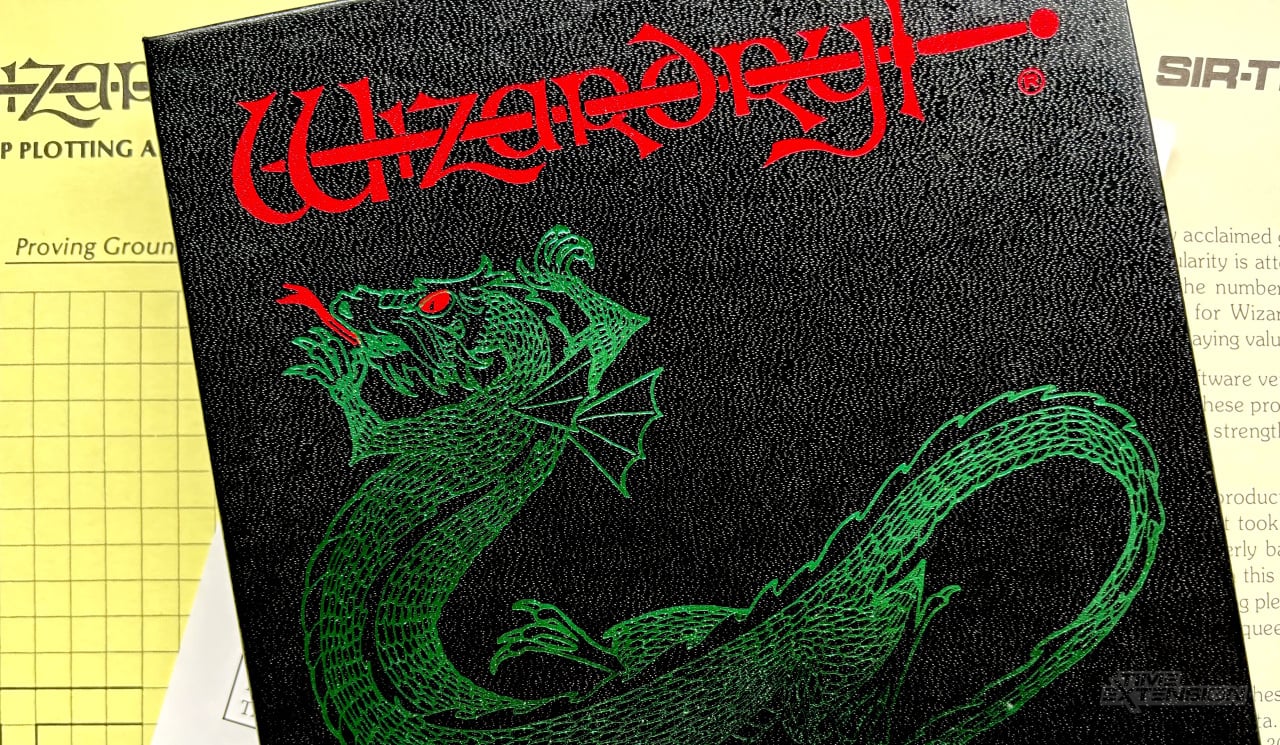
[Writer's note: One of the big regrets in writing this piece was that we were unable to tell Andrew Greenberg's side of the story. However, since this feature originally went live in 2024, we've been able to contact members of Greenberg's friends who helped test the original game and gave us some insight into the early years of Wizardry. As a result, we've done an extensive rewrite of the article below to include their memories. Enjoy!]
Few games can claim to be as influential as Wizardry: Proving Grounds of the Mad Overlord.
Originally released in 1981 for the Apple II computers, it was one of the first Dungeons & Dragons-style role-playing games available for home computers and has since inspired countless developers, including, most notably, the creators of popular RPGs like Dragon Quest and Final Fantasy.
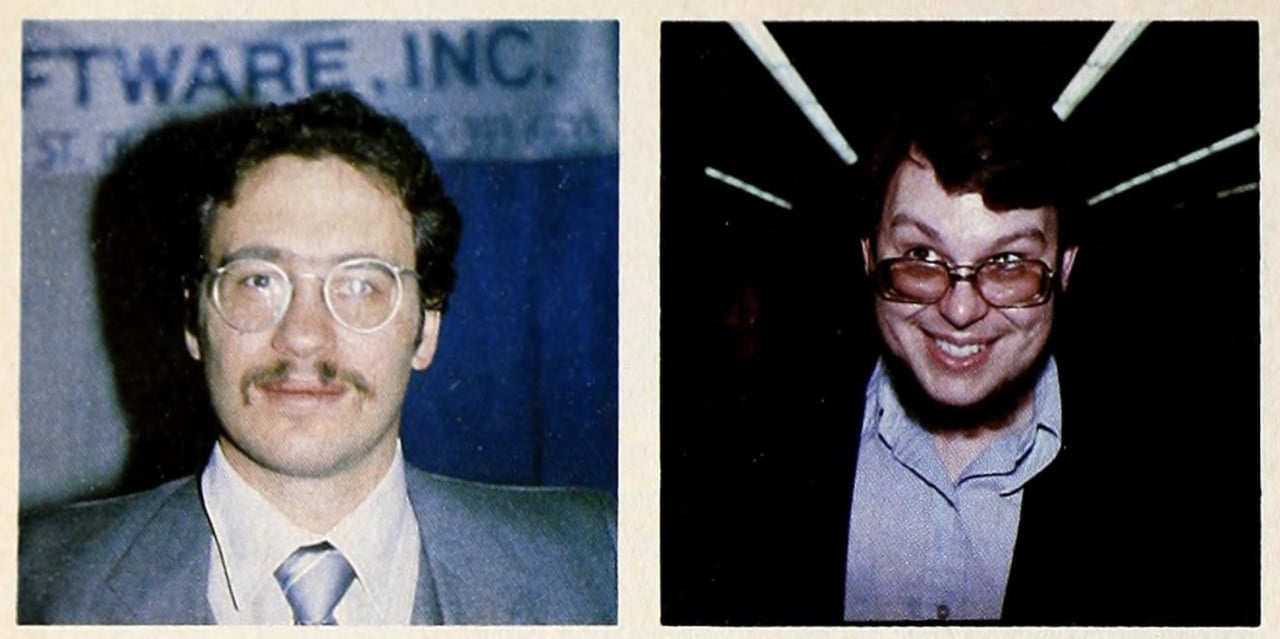
Created by the programming partnership of Andrew C. Greenberg and Robert Woodhead, Wizardry tasked players with descending into a labyrinth situated beneath the castle of the mad overlord Trebor, in search of a stolen treasure.
There, players would face off against all manner of monsters, including giants, orcs, vampires, and slimes, earning experience points from battles and collecting new items to help them prepare for the final fight against an evil wizard named Werdna.
Over the years, there have been various sequels and spin-offs to Wizardry as well as remakes and ports to other platforms, but today, I wanted to focus our attention on the granddaddy of them all: the original Apple II Wizardry. So I got in touch with some of the key people involved in the making of the game, to learn a little more about the circumstances around its creation and the people who brought it to life — starting with its co-creator Robert Woodhead.
Discovering PLATO & An Involuntary "Sabbatical"
Robert Woodhead was born in 1959 in the Tunbridge Wells area of Kent, England. However, his family would move around a lot. At the age of 7, for instance, his family upped sticks and moved to Canada, before moving to the US in his early teens, where they eventually settled in the small city of Ogdensburg in upstate New York
As a kid, he showed an interest in a wide range of hobbies; he was an avid reader of science fiction novels and loved experimenting with amateur radio. However, it was his preoccupation with computers that would end up becoming his main obsession
According to Woodhead, he first showed an interest in computers while attending high school at the Ogdensburg Free Academy, but was unable to study programming classes at the time, as computer science lessons had yet to be added to the school's curriculum.
As a result, he sought permission from a local college to use its computer terminal on weekends to learn to program, enlisting his mum to help him make the 20-mile journey there and back each week.
Woodhead recalls, "When I was in high school, I was given permission to use a computer (a PDP-8) and terminal at a local college (St. Lawrence University, if memory serves). My mother drove me there on Saturdays (so two round trips a day [for her]!), and I spent the whole day there. My first textbook was probably 101 BASIC Computer Games, though I probably borrowed anything computer-related from the library."
For Woodhead, these trips proved a vital first step on the road to becoming a computer programmer, teaching him how to code and execute his own programs. However, it did little to alter the fact that there were still very few educational opportunities for young people at the time. So, when he enrolled as a student at Cornell University in 1975, he was forced to major in his second-favourite subject — psychology — as it offered him the best opportunity to spend quality time with the university's computer system, PLATO.
PLATO was an educational computer network that was originally launched in the early 1960s and saw multiple users take advantage of terminals connected to a single mainframe computer to submit assignments and communicate with their classmates. As Woodhead already knew, however, that wasn't all it could do, with the system also containing a bunch of early computer games; games that would prove incredibly influential on his future work.
"There were dungeon games on PLATO in the same vein as Wizardry," Woodhead tells me. "But the one thing that PLATO could do that nobody else could do was multiplayer. It had real-time multiplayer graphic games in the mid to late 70s! There was one game, in particular, that I became particularly addicted to called Empire, which was a 30-player real-time space war game where sometimes the games would take days to conclude."
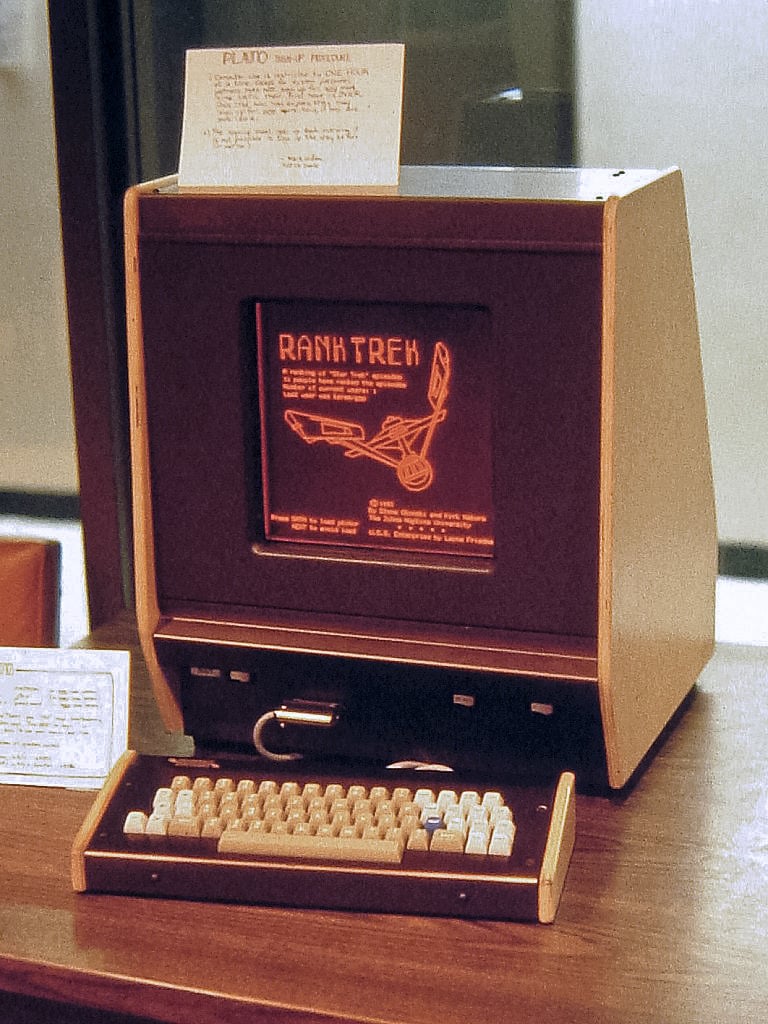
"Crack for computer nerds" is how Woodhead would later characterise PLATO in a retrospective, written in the early 2000s. However, it wouldn't be the only computer-based addiction that he would pick up during his time at Cornell, as soon he also came into possession of his very first home computer, a TRS-80, and began writing his own games, kickstarting his interest in developing his own projects.
"Before I got the TRS-80, I was hired to write inventories and business software for the local computer store," says Woodhead. "I had actually wanted an Apple II, but my boss was selling so many of them, he wouldn't give me any sort of in-store discount. And then, when I was home during one of the summers, the local Radio Shack had a TRS-80 and didn't know what to do with it. So they basically sold it to me at cost, just so they wouldn't have to worry about it.
"When I got back to Cornell that fall, I told my boss, 'Don't worry about the Apple II. I got myself a TRS-80.' And he basically fired me. He likened it to a Ford salesman driving into work in a Chevy."
As you can imagine, Woodhead threw himself into learning to code for TRS-80, and his college work soon began to suffer, as he started skipping classes and shirking assignments to focus on his ever-growing obsession with computers. At the end of the fall semester of 1979, the university took notice and decided to suspend him for a year, prompting his mum to give him something constructive to do during this involuntary "sabbatical" to keep him out of trouble.
This would lead — in a roundabout way — to the creation of Wizardry's publisher, Sir-Tech.
Info-Tree & How Sir-Tech Was Born
To give some context, shortly after Woodhead's family left England, his parents, James and Janice, left their jobs as a research chemist and a nurse, respectively, to set up a business called Resin Sands to manufacture resinated sand for industrial use. Later on, however, shortly before Woodhead went to college, James died from a heart attack, forcing his wife Janice to take over the family business on her own.
Recently widowed and lacking business experience, she realised she couldn't run things herself, leading her to contact a respected businessman, Fred Sirotek, to help manage the company.
"She was a very quick learner, but she needed somebody who had experienced business sense to help her," Woodhead tells me. "So, that's where Fred Sirotek came in. Fred had invested in many companies and had run several small companies himself. So Fred helped her out, and when I got thrown out for a year, my mother asked him to let me write some software to automate the inventory management for one of his companies to give me something to do and keep me out of trouble."
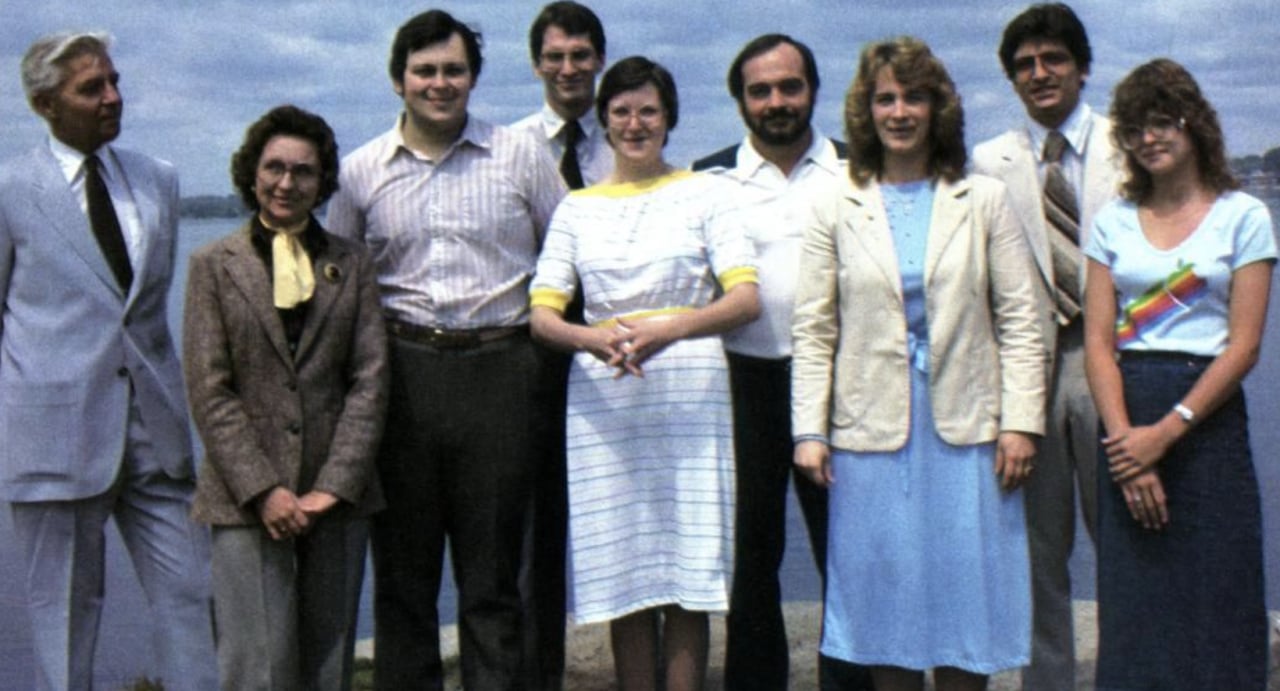
Despite being a punishment of sorts, this arrangement had a number of benefits for Woodhead, chief of which was that he would finally get his hands on an Apple II computer — a machine that he had always wanted to take a closer look at. As a result, he accepted the position and got to work on creating software for Sirotek, devising a program to calculate the changing costs of raw materials and a mail-order application system.
Thanks to Woodhead's talent for programming, both of these proved to be incredibly helpful for Sirotek's businesses, and soon Woodhead and Sirotek began discussing the possibility of marketing them to other companies, leading the programmer to suggest exhibiting the mail-order system (under the name Info Tree) at a computer trade show in Trenton, New Jersey. Fred agreed, but there was a problem. With Woodhead unable to drive and Fred reluctant to let Woodhead check the computer in airline baggage, they would need someone to drive the programmer to the event and back to demo it to potential buyers. So, Fred recruited his son Norman to drive Woodhead to the event and keep him company. According to both parties, it was during this road trip that the idea of Sir-Tech was originally born.

As Norman Sirotek tells me, "Sir-Tech was born out of a car trip back from Trenton, New Jersey. Robert Woodhead and I were doing one of these college campus trade fairs, and we were displaying a product called Info Tree. We did the display; it got a lot of attention at the fair, and our booth was actually the only one with multiple tiers of people stacked up behind it. And on the drive back, we were discussing what kind of products he was thinking of making."
According to Norman, seeing Info Tree's success convinced him there might be a future in computer software, so the pair teamed up with Norman's father and started a company called Sirotech (later renamed Sir-Tech) in 1979 to develop more programs. As he tells me, the idea was for Woodhead to keep making productivity software, but soon the programmer grew tired of working exclusively on these kinds of programs and began to express an interest in making a game instead — an idea that would eventually evolve into the space game Galactic Attack for the Apple II.
Galactic Attack was a single-player take on Empire — one of the games that Woodhead had previously played at university. It saw players take control of a space shuttle called the USS Blaise Pascal as they flew around the galaxy, eliminating a group of aliens called the Kzinti (named after a race from Larry Niven's Known Space series).
To do this, players could attack enemy ships using phasers and torpedoes, alter their warp speed and strafe to evade incoming projectiles, as well as send troops down to a planet to liberate it from the opposing army.
Work on Galactic Attack was completed between 1979 and 1980, but a problem prevented its release to market right away. This was because Woodhead had decided to program the game in the newly released Apple Pascal language (based on UCSD Pascal), which couldn't yet run on standard 48K Apple IIs without an Apple language system and an additional 16 KB of RAM.
Apple teased that it would eventually release a runtime system to provide the proper environment for Pascal programs to boot on 48k computers, but no exact timeline was given for when this would be available to developers, leaving Galactic Attack in limbo. These complications, however, didn't seem to prevent Woodhead from pushing forward with another Pascal-based project — a dungeon game for the Apple II called Paladin — with the developer trusting that the runtime system would be along imminently.
Enter Andrew C. Greenberg, The True Origins of Wizardry
It's at this point that Andrew C. Greenberg becomes involved in the story. As Woodhead tells me, when he began working on Paladin, he also began seeking other potential projects that could be published under the Sirotech name. This led him to contact Andrew C. Greenberg — an engineering student he had previously met at Cornell.
Greenberg, much like Woodhead, was a huge fan of computers; he was another regular PLATO user and owned his very own Apple II, which he used to write software for his friends' amusement. What's interesting, though, is that despite having a lot in common, when the pair first met, neither really liked the other all that much.
"I knew Andrew from PLATO," says Woodhead. "Because he was on PLATO a lot, too. And we didn't really get along all that well back then. We weren't friends. We didn't hate each other or anything, but we just found each other annoying. Mostly because we both wanted to use PLATO, and when one person was using it, they had only two terminals, so there was sometimes a waiting list. So, you'd be like, 'Why are these people on PLATO when I have some serious game-playing to do?"
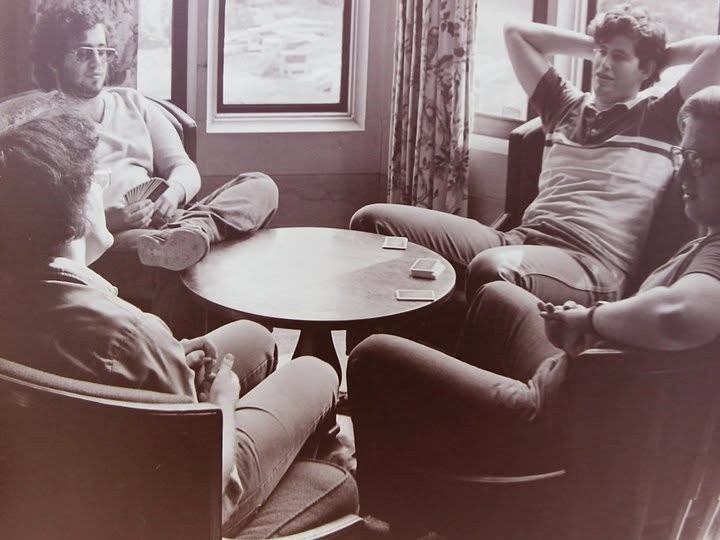
When Woodhead paid Greenberg a visit in June 1980, unbeknownst to him, his former PLATO rival had already been working on his very own dungeon game for the Apple II, which was similar to what he had planned for his own game, Paladin. Seeing a potential opportunity to collaborate, Woodhead suggested pooling their efforts, with Greenberg agreeing to give the collaboration a try.
"We started talking, and it was clear that we had two different pieces to the same puzzle," Woodhead tells me. "He had written his game in BASIC, and my game, which I had just barely started, was in Pascal, but we realised Pascal was superior for a variety of technical reasons, and we'd be able to get a lot more done. And since he'd already done a fairly simple game, he had already made a bunch of mistakes, so he knew what pitfalls to avoid. He also had one other amazingly important thing. He had the name. His game was called Wizardry."
Given that Andrew Greenberg passed away in September 2024, shortly before I started the research for this article, I was sadly unable to get his memories of Wizardry's early days. However, thanks to some online sleuthing, I've since managed to get in touch with a pair of Greenberg's college friends, who not only inspired elements of the game, but also playtested early versions prior to Woodhead's involvement. This includes Paul Murphy, the inspiration behind Murphy's Ghost, an enemy that appears in the original Wizardry, who players can locate on the first floor to quickly level up their character.
As Murphy tells me, he met Greenberg while living at Risley, a special dorm at Cornell University focused on the performing arts, and was among the first people to be unleashed upon Wizardry's dungeons; he even suggests he "may have been the first person to ever finish the game."
He can't remember exactly how Greenberg started working on the title, but has fond memories of sitting in Andy's room trying to get to the bottom of the dungeon. "Andy had already made a Dungeons & Dragons-like game [before Robert Woodhead got involved]. He had this very basic one-player game and wanted people to test it. So a lot of us came into his room, often when he wasn't there or when he was asleep, and sat there for hours and hours playing on this one-character game.
"Because this game was just for himself and his friends, he hadn't thought up all these Dungeons & Dragons-sounding things for the magic elements. As I said, one of the magical weapons was a hot ham-and-cheese sub."
According to Murphy, he wasn't Greenberg's only friend to help out on the game, either, with Bill Bensburg also playing the early versions before Woodhead's involvement. Bensburg is the inspiration for the creature "Bleeb," a frog-like character in multiple Wizardry games (the character's name is a reference to a nickname Bensburg picked up in high school); that wouldn't be his most important contribution, though. Instead, he played a small but important role in fixing the game's first-person view, offering Greenberg guidance on how to achieve the effect he was after.
"Andy was having a little difficulty with the maze," Bensburg recalls. "If you remember, as a kid, how to draw a cube. You draw two squares: a square here and a square there, and then you draw the lines. The problem is that's not what a cube looks like because you can see the lines behind that front face, and you're not supposed to see those.
"So Andy could not figure out how not to draw the lines on the map that were behind a wall. I was taking vector calculus at the time. So, I just made the suggestion, 'If you do this vector calculus, it comes up negative, it's going to be behind the wall. So don't draw that line.' He just sort of scrunched his unibrow, and he was like, 'Really?' And I go, 'Well, yeah, that should do it.' And sure enough, the next day he had written a program called 'Bleeb's Rotating Cube,' where he drew a cube, and what you saw were only the faces of the cube."
Rewriting The Game & The Wizardry Experience
According to both Murphy and Bensburg, before Woodhead came on board, the game already had the basic structure in place of going down into a dungeon, where you killed monsters, or they killed you — owing a debt to the PLATO dungeon crawlers they had both played like Ouiblette and Moria.
The big difference, however, was that Greenberg's version only had you controlling a single player, instead of a party, and was also written in BASIC as opposed to Pascal. This all changed when Woodhead came on board, with the single character being expanded out to a group, and the pair of programmers rewriting the game to further optimise the experience. This is what led to the Wizardry most people are familiar with today.
Wizardry, in case you've never played it, sees players create a party in the training grounds on the edge of town, with users being able to pick from 5 races (human, elf, dwarf, gnome, or hobbit), three alignments (good, neutral, and evil) and four starting classes (fighter, mage, priests, and thieves), with the goal of assembling a team of six characters.
From there, they can then pay a visit to Gigamesh's tavern on the castle grounds (named after another one of Greenberg's friends, Jerry Lazar), where they could recruit these characters to a team, before adventuring into the depths of the castle's dungeon to battle monsters and search for loot.
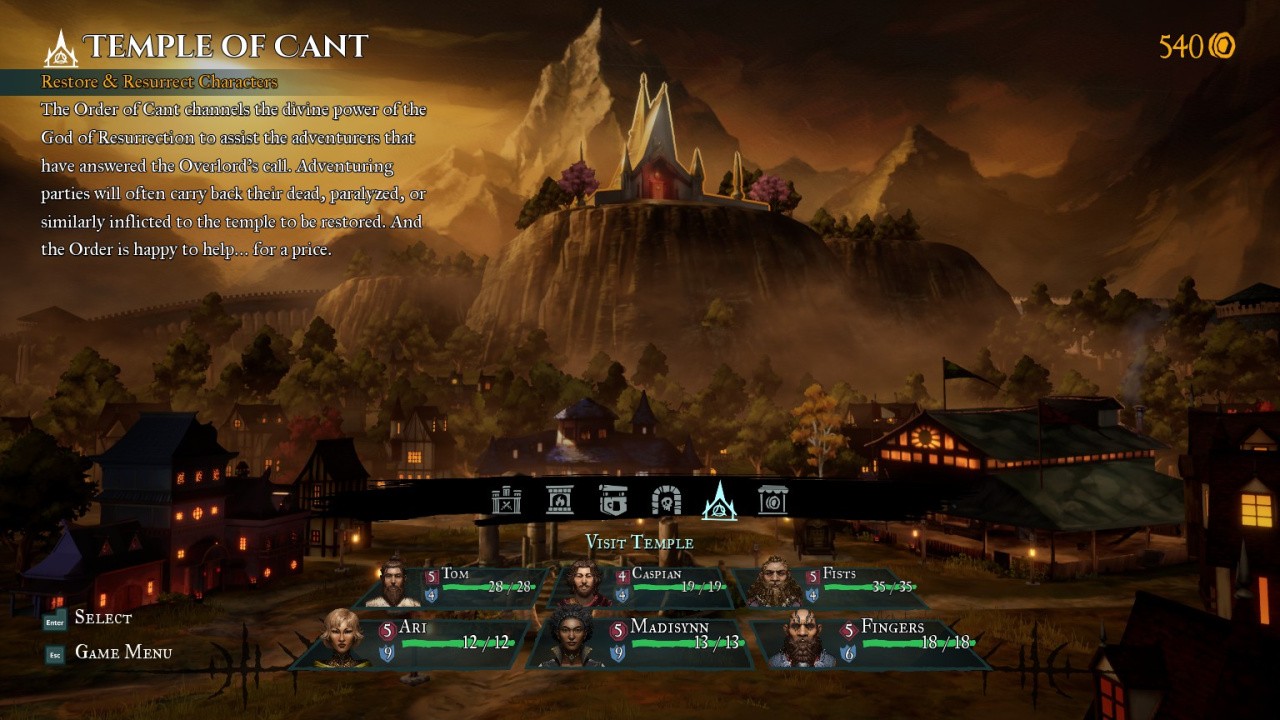
In the original game, there were 10 levels in total to explore — each of which was displayed from a first-person perspective — with every one of these floors being significantly harder than the last. As a result, it was essentially impossible for parties to take on all of these obstacles at once, with players instead being encouraged to regularly retreat back to the safety of the castle grounds, to level up and heal at the adventurer's inn, purchase new items, weapons, and armour at Boltac's Trading Post, and resurrect their dead party members at the Temple of Cant.
I don't know which one of us came up with Trebor and Werdna. It might have been me, because — let's put it this way — the dumber it is the more likely it is to be my work.
Despite the game's dark fantasy setting and punishing difficulty, Wizardry would end up retaining a lot of playful humour and in-jokes from Greenberg's original, adding even more along the way, with one of the most famous examples being Woodhead and Greenberg's decision to use anagrams of their own first names for the mad overlord Trebor and the evil wizard Werdna.
"I don't know which one of us came up with Trebor and Werdna," says Woodhead. "It might have been me, because — let's put it this way — the dumber it is, the more likely it is to be my work."
Just a few months after Woodhead and Greenberg started their collaboration on the game, the pair managed to get a version up and running in September 1980, but it was still apparently far from done. Not only was the game full of bugs, but they were also waiting for Apple to release the runtime system that allowed programs written in Pascal to work on 48K machines. So, in the meantime, they got to work fixing the issues with the game and gave Wizardry its first-ever outing at the New York Personal Computer Expo in November 1980, where they accepted the first orders for the game from paying customers.
As Greenberg's friends continued to put Wizardry through its paces, Apple finally released its runtime system for Apple Pascal in early 1981, leading to the release of Sirotech's first two products — Info Tree and Galactic Attack — via mail order. At this point, two noticeable changes occurred within the company. The first is that the company changed its name from the pun Sirotech to Sir-Tech — to prevent people accidentally calling the Sirotek home at all hours of the morning — and the second is that Robert Sirotek, Norman's older brother, came on board as a marketing director to help Norman.
Prior to coming on board, Robert Sirotek had been working as a programmer at a large minicomputer company but had become disillusioned with the job and the bureaucracy surrounding it. So, he decided to join his brother, who had started to become overwhelmed with the administrative duties of running Sir-Tech. His first role at Sir-Tech was to get better acquainted with the company's product line; inevitably, this included titles that were still in active development, like Wizardry, which he believed to be "a fantastic product."
Doubts, Demos, & Early Reviews
While Robert Sirotek saw Wizardry's potential, he seemed to be the only one from the Sirotek clan. His brother, Norman, and his father, Fred, for instance, expressed concern about how long the game was taking and tried to talk Robert Woodhead into focusing on business-related software instead, believing the market for Apple II games was too niche to turn a sizeable profit.
“I guess I was guilty of some conventional thinking,” Norman told Softalk in August 1982, reflecting on his concerns. “I remember late one evening telling Bob Woodhead to forget the new game and put his efforts into something worthwhile, like a business package. I said nobody wants or needs the game. Bob looked straight at me and said I was wrong and went back to work.”
Fred Sirotek, meanwhile, told Softalk in the very same issue: "The boys thought that it was a great game, but as far as I was concerned, computers were business machines. They weren’t fun machines. You do things with them that you need. I certainly did not realise that there is such a relatively large segment of the population that has the computer only or mostly for pleasure."
With doubts growing in the run-up to release, Robert Woodhead suggested seeking feedback from potential buyers to help iron out some of the remaining bugs, and test the market. So he came up with the idea of releasing a test version of the game at the June 1981 Boston Apple Fest.
"Back in those days, you had so many different computer configurations that you could put into your Apple II, like Legend cards, other kinds of memory cards, and so forth," Norman tells me. "And we could not test every conceivable combination. It was just physically and mentally impossible. So he wanted to release a beta product into the market for testing purposes. His attitude was, 'Why don't we go to the Boston Apple Fest show? We'll sell a couple hundred copies, they'll pay for the show, and we'll get some feedback from users about the game bugs and configuration problems.' So we agreed and packed up the van."
An interesting quirk about this limited edition version of the game was that it wasn't exactly "playtest-balanced". As Woodhead recalls, upon entering the dungeons, players could immediately encounter the devil on level 1, causing their entire party to be wiped out almost completely. This served the functional purpose of allowing players to test more of the game without having to descend deeper into the game's dungeon.
"Our name for it was the Dungeons of Despair," Woodhead says, "Because you would seriously lose your cool playing the game. I seem to recall that we promised people we'd send them the final version of the game when it came out in return for them letting us know if they found any problems. We also didn't make that many copies because we had to make them by hand."
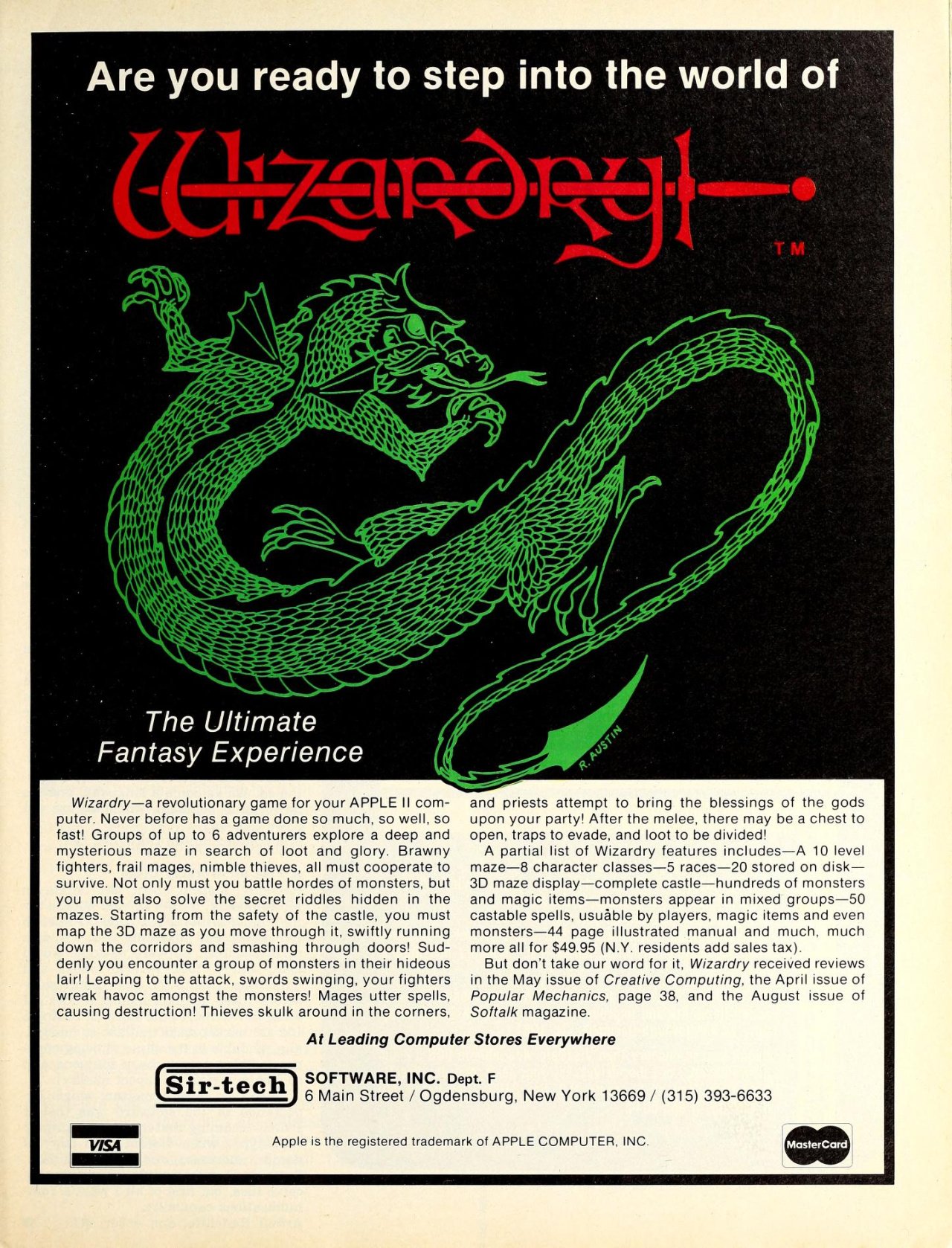
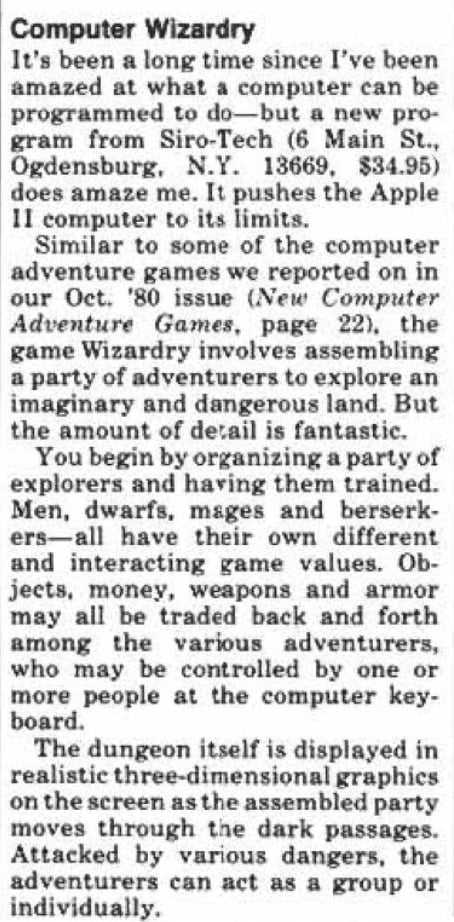
According to the Siroteks, the response to the Boston Apple Fest version far exceeded their expectations, and was all the evidence that Woodhead and Greenberg were on to a winner. But just in case there were still any lingering doubts, the positive reviews started rolling in over the following months, with Softalk publishing its verdict in August 1981, calling Wizardry "the truest of all programs to TSR's noncomputer Dungeons & Dragons" and an "imperative" purchase for fans of the tabletop roleplaying game (at $39.95). It would be released only one month later, in September 1981, and was shipped in a premium-style box with a manual — a contrast to the regular Ziploc bags most Apple II software was distributed in at the time.
"The Wizardry Phenomenon" & Wizardry In Japan
Much as the response from the Boston Apple Fest and early publicity foreshadowed, Wizardry quickly became a huge commercial success for Sir-Tech, selling a reported 24,000 copies in its first year (according to the September/October issue of Computer Gaming World). For Fred and Norman Sirotek — who had previously tried to talk Woodhead into dropping the game — this was a humbling experience, with Norman telling Softalk in August 1982: "Two months after Wizardry came out, I was ready to eat my hat! I’m glad I wasn’t more convincing with my argument."
The reviews and sales weren't the only sign that the team of Greenberg and Woodhead had created something special, either, with some members of the media even referring to the rising popularity of the game as "The Wizardry Phenomenon," due to the emergence of unofficial Wizardry newsletters, strategy guides, and supplementary "cheat" programs. These cheat programs allowed players greater control over their characters, such as the ability to raise them from the dead and alter their levels and loadout, but were actively discouraged by Sir-Tech, with the publisher even going so far as to threaten to void people's warranties if they were caught using them.
"We spent an absorbent amount of time debugging and play balancing Proving Grounds," says Norman, explaining the reasoning behind their strict approach. "And when these cheat programs came out, they were designed to change the strength and the armour class of your character.
If all of a sudden your characters were super strong, you're just gonna march through the dungeon. You're not gonna care who you run up to. There's no longer the fear of your characters dying. And that took away a lot of the finesse of what Wizardry is.
"The best way to put it is when you go down into the dungeon, and you play the game, you have this sense of tension. Am I gonna make it back out alive? How far do I go? How many steps into the maze do I take? And it's forever a calculation of survival. That creates playability, and that creates tension. Now, if all of a sudden your characters were super strong, you're just gonna march through the dungeon. You're not gonna care who you run up to. There's no longer the fear of your characters dying. And that took away a lot of the finesse of what Wizardry is.
He continues, "Our thought process was, 'Okay, you modify the characters, we're not going to warranty it, period.' It was really a game balance issue more than it was, 'You broke the disc, we're not going to honour the warranty.' But, as a secondary item, some of these utilities did break the disc. They messed up the code."
As if all of this wasn't evidence enough that the game was breaking new ground, soon stories began to emerge about a child psychiatrist in Williamsville, New York using Wizardry to get his patients to open up, as well as English Wizardry players coming up with proto-eSports-esque tournaments that saw participants competing to collect the most gold in a fixed time limit. Buoyed by all of this success, Woodhead and Greenberg quickly got to work on developing a sequel scenario, Wizardry II: Knight of Diamonds, which would require players to transfer their party over from the original game, while Sir-Tech began putting pen to paper on a deal to officially bring Wizardry to Japan.
As Norman tells me, in 1982, a small Tokyo-based company called Starcraft approached Sir-Tech with the idea of marketing and distributing the game in Japan. Its plan wasn't to produce a costly Japanese localisation but to simply make the original Apple II version more widely available in the country. Seeing an opportunity to get the game into more markets, Sir-Tech agreed a deal, and watched in shock as it became a huge success in the country, selling $30,000 to $40,000 worth of programs a year in Japan, according to the Associated Press.
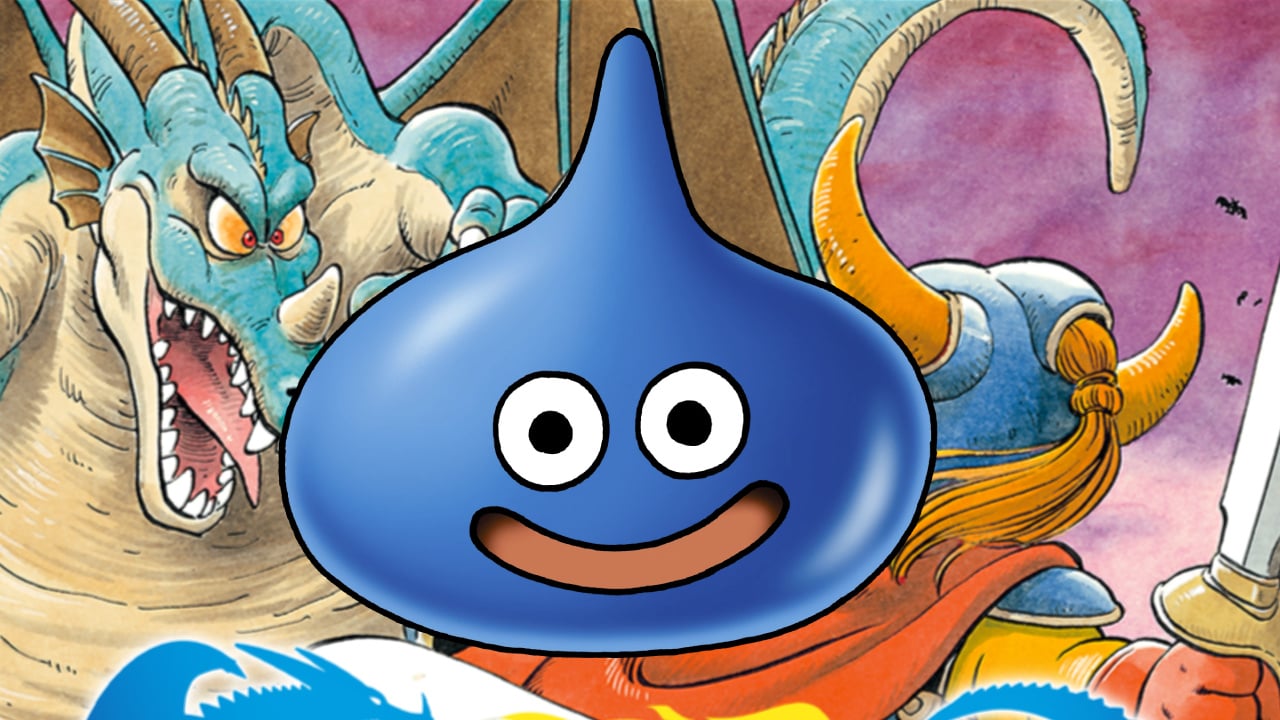
This would be the start of the country's love affair with the game, with the game going on to have a huge impact on a generation of Japanese creators, alongside other Apple II RPGs such as Ultima. This included the father of Final Fantasy, Hironobu Sakaguchi, and Dragon Quest creator Yuji Horii. Both of whom would later incorporate elements of what they loved in Wizardry into their own RPGs, including its turn-based battles. Soon, the success became too much for Sir-Tech to ignore, with the publisher wanting more control over the output as the years went on.
As Robert Sirotek states, "We didn't really closely monitor what he was doing in terms of promoting it, but he was moving volume considering that it was 1982. So that kind of evolved as the years went by, and in 1984, ASCII Corporation, the creators of the MSX, approached us, and they wanted it localised. So essentially, what we did was maintain control of the quality of the product. So, we made an arrangement where we were responsible for porting it to the various platforms that were popular in Japan, localising it with Japanese language and the various dialects, and it was important to do that in Japan. We didn't want to hire a bunch of translators in North America who didn't understand all of the particular nuances of the language."
To do this, Sir-Tech partnered with a Japanese firm called Foretune (owned by an individual named Shigeya Suzuki), creating translated versions for Japanese computers like the FM-7, PC-88, PC-98, and Sharp X1, with Robert Woodhead taking a trip to the country to assist with this effort.
"I literally spent months over there," says Woodhead. "They basically wrote P-code interpreters so they could run Pascal on all the different machines, and my main contribution was to abstract all of the textual information into a language database. Basically, what would now be called a localisation file, but this was, I think, one of the first times it had been done. Then once that was done, all they had to do was edit the localisation file to include the kanji and kana, and the game was up in Japanese. And of course, they had to redo the graphics for each of the machines too."
With various ports and sequels hitting the market following the deal with ASCII, the popularity of Wizardry in Japan only continued to grow, leading even more companies to produce versions for other platforms (including most notably a version for the Nintendo Famicom/NES).
New Opportunities, Lawsuits, & Sad Farewells
For creators, the game's success was life-changing. What started as a project to entertain some college dormmates had become a worldwide phenomenon, opening doors to a wide range of opportunities neither Woodhead nor Greenberg could have possibly imagined.
Following the incredible success of the first Wizardry game, Robert Woodhead kept working on the series until 1987's Wizardry IV: The Return of Werdna, later going on to start the anime licensing company AnimEigo in 1988, with Roe R. Adams III (who was also a co-designer of Wizardry IV).
Speaking in an anniversary video, published in 2026, Woodhead said of the game, "Wizardry set in motion a sequence of events that took me to places and in directions that I could never have imagined back in 1981." He attributed it with helping with the foundation of AnimEigo, and also said it had a huge part to play in him meeting his wife.
"Because of Wizardry, I got to visit Japan," Woodhead said, "I learned about anime. That resulted in me starting an anime company just for fun... I needed an interpreter; she ended up being the love of my life. We've been together ever since. None of that would have happened without Wizardry."
Andrew C. Greenberg, meanwhile, ended his direct involvement with the series after Wizardry V: The Heart of the Maelstrom, starting his own publishing company, Masterplay Publishing Corporation, in 1988, which was responsible for the board game Star Saga. He remained close friends with Robert Woodhead throughout the rest of his life (with Greenberg's kids even referring to Woodhead as "Uncle Robert"), but eventually fell out with the owners of Sir-Tech in the early 90s after the release of Wizardry VI: Bane of the Cosmic Forge, leading to an ugly legal battle (some of which is documented online) over unpaid royalties and a lack of credit.
As Greenberg alleged, in 1981, he signed an agreement with Sir-Tech for the right to market Wizardry, but it required Sir-Tech to pay Greenberg a royalty fee and a percentage of gross sales revenues, and to list Greenberg as a co-owner of the game on all future titles. But as he argued, Sir-Tech went back on this agreement after his direct involvement with the series ended, stopping payments, and crediting the authorship of future Wizardry games to the game designer David W. Bradley.
As Sheila Greenberg, Andrew Greenberg's wife, told me, "Sir-Tech just stopped paying us. So we basically went from a six-figure income to like nothing. Fortunately, Andy had a lot of provisions for the future, and we were able to weather that storm as best we could. After that, he decided he would go to law school and become a patent attorney. Because he had an engineering degree."
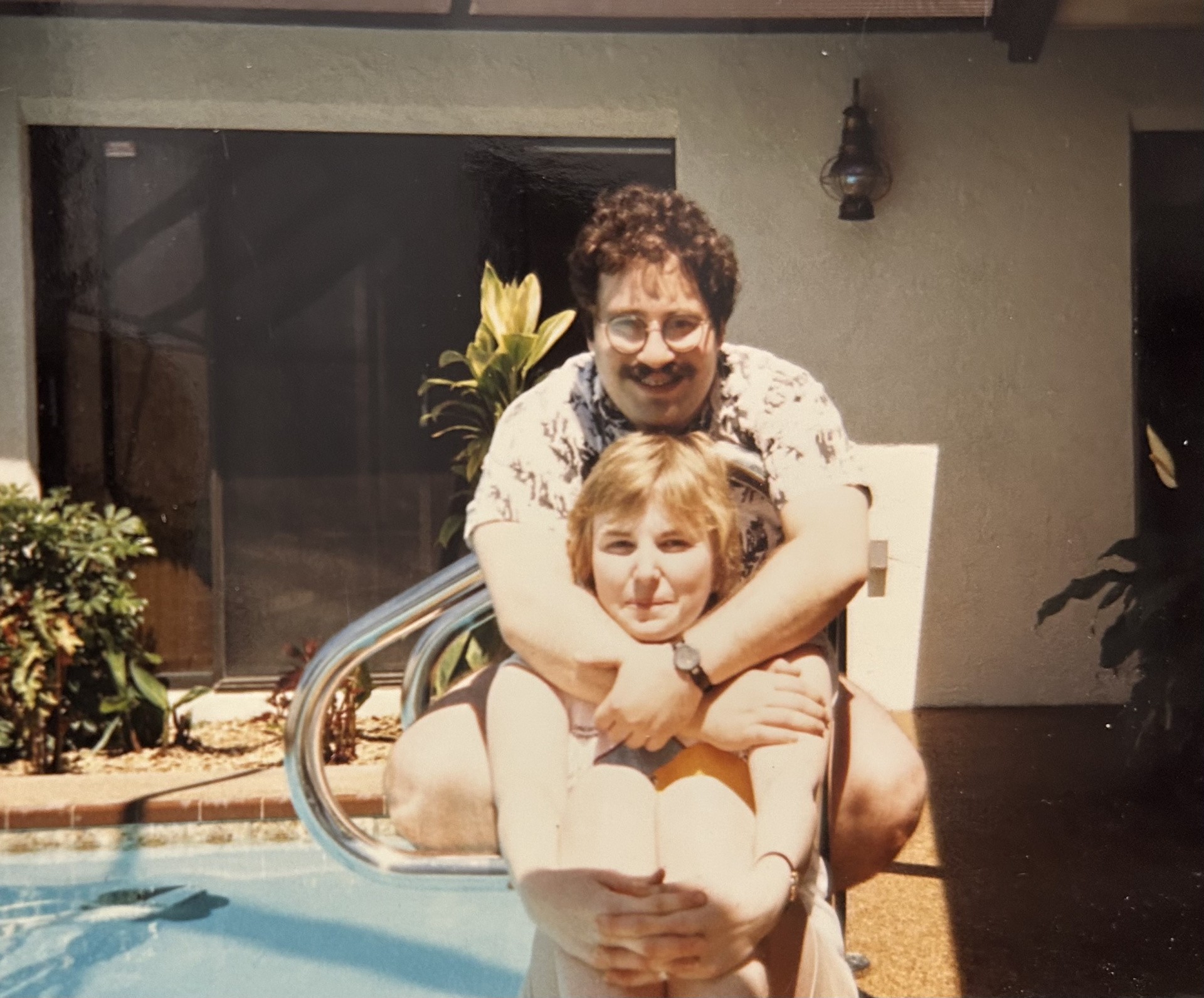
Among Greenberg's friends and family, there's still some disagreement today over whether these legal battles were what inspired his decision to become a patent lawyer. Bill Bensburg, who remained friends with Greenberg following the release of the original Wizardry, argues, for example, "Andy literally became an intellectual property lawyer, because of how he got screwed over by Sir-Tech and what happened." This opinion is also echoed by Paul Murphy.
Sheila, Greenberg's wife, however, argues the opposite, saying, "He didn't become a lawyer because of the lawsuit. It was really more for a career because we had two children in 89 and 90. And so he wanted to make sure that they had a livelihood that would help with them. I also think he just wanted to make his dad proud. His dad was not impressed with him being a game designer. But when he became an attorney, that was good."
"As for the lawsuit, it went on forever," she continued. "We had a fabulous attorney who was willing to work for a percentage of whatever we ended up with. Technically, they owed us millions, but I think we ended up with a couple hundred thousand. So, it was not a satisfying end, and for Andy it was kind of devastating because Wizardry was his baby, and they took it, and so I think that made him really sad. That was just really hard for him."
As mentioned above, Greenberg, unfortunately, passed away in 2024, with Robert Woodhead being the one to break the news on social media, writing: "It is with great sadness that I mark the passing of my dear friend, the Evil Wizard Wedna." In the aftermath, this prompted an outpouring of love for Greenberg's work online, from both English and Japanese fans, something the Bride of Werdna claims would have made Andy incredibly happy.
"It was so awesome," says Sheila. "It made our kids feel so good about their dad. The other part was business and was ugly. But he loved that people loved his game. That was like the biggest thing for him."
Though it's now been forty five years since the game was originally released, the Wizardry series is still going strong, and winning over new fans — many of whom were not even alive when the game was first launched.