
 by
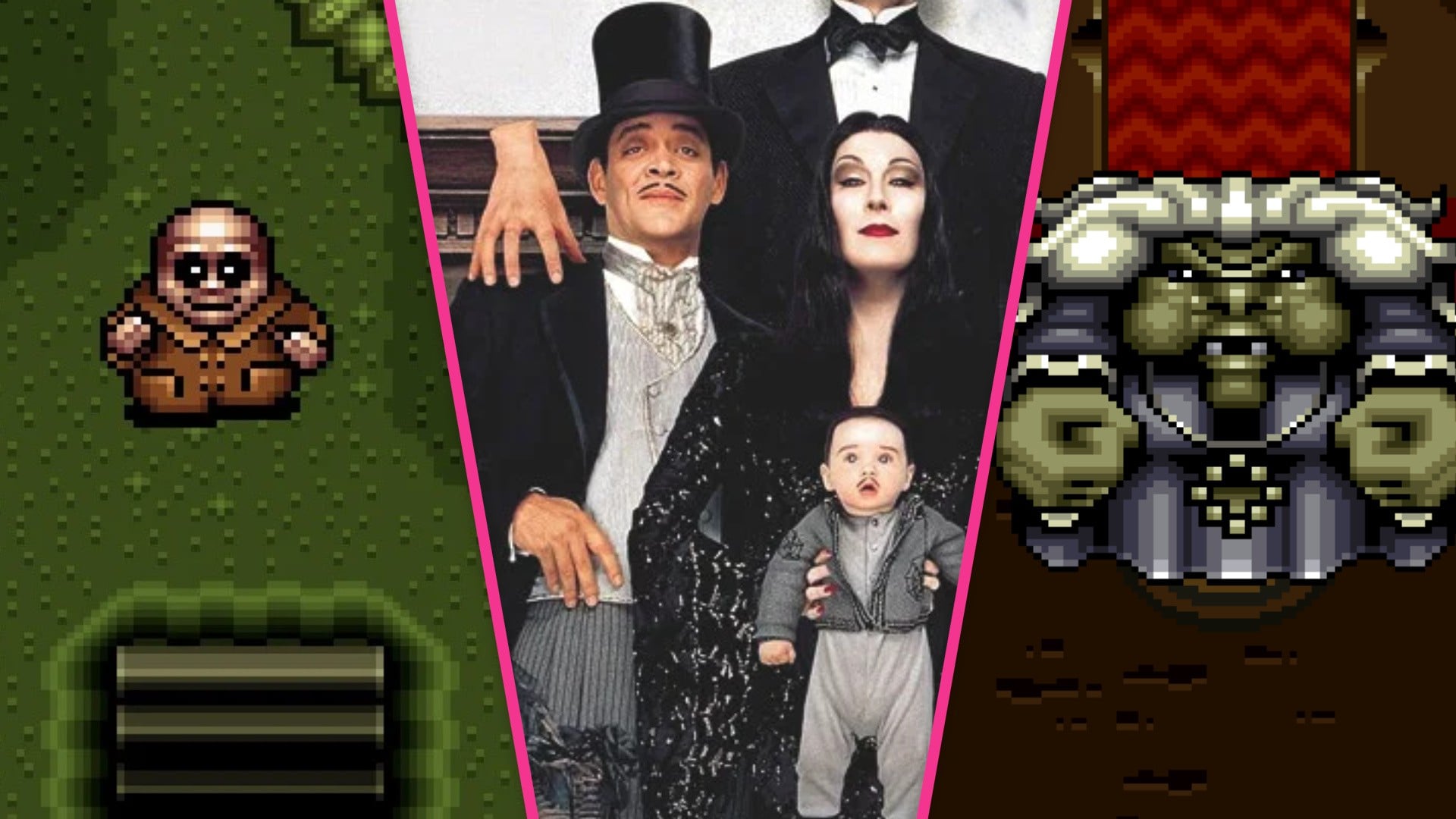
The Addams Family Values for the SNES and Sega Mega Drive isn't exactly regarded as a 16-bit classic, but it's a game I still have a lot of affection for, having grown up obsessively playing it on my Super Nintendo.
Arriving in stores in 1995, nearly two years after the movie that inspired it (and at a time when gamers were already anticipating the next generation of home consoles), it understandably didn't make the loudest splash when it released, never gracing the cover of any popular magazines (as The Addams Family: Pugsley's Scavenger Hunt had two years prior). Unsurprisingly, then, it's probably the least well-known out of three Addams Family games Ocean released (most retro gamers I've spoken to over the years have never heard of it or have never played it, and the only mentions I've found online are typically complaints about its difficulty). Regardless, though, it's still the Addams Family tie-in I find most interesting when I look back on them all today.
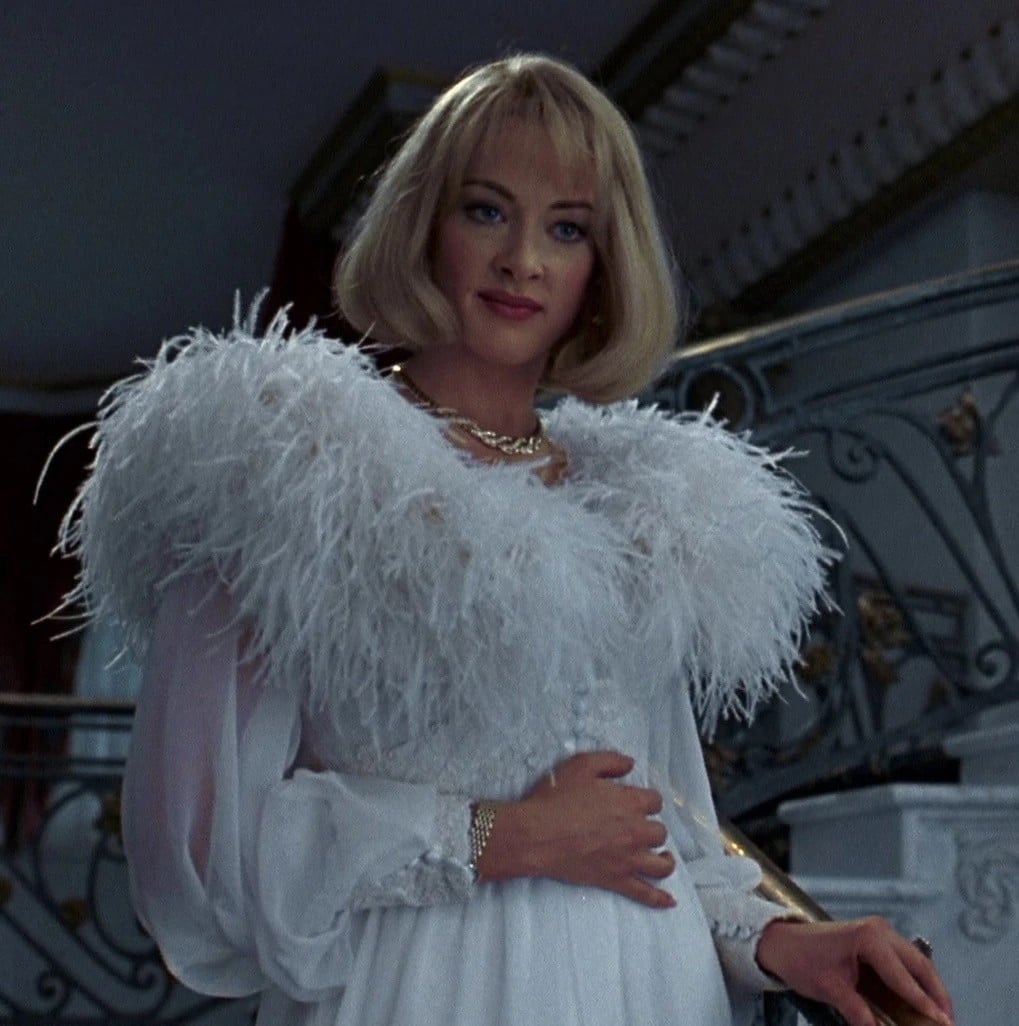
For those who haven't come across it before, what's so fascinating about it is that the game is essentially Ocean's attempt at an Legend of Zelda-style overhead action-adventure game, marking a departure from the developer's earlier side-scrolling titles based on the characters created by Charles Addams. Players take control of Fester as he explores the surprisingly sprawling mansion estate with the objective of finding and rescuing the youngest Addams, Pubert, from the evil nanny and Fester's former love interest, Debbie Jellinsky.
Like Zelda, there are items to collect as you progress through the world (such as Grandma's magic-infused cookies, Lurch's trusty bowling ball, and a jar of fireflies to light dark areas), in addition to enemy-filled dungeons to explore. As anyone who's played the game will tell you, beyond the inciting incident involving Debbie and Pubert, the game really has very little to do with the film it's based on, with the rest of the plot playing rather fast and loose with the source material. There's no Hawaii-themed Honeymoon level where Fester must survive Debbie's murder attempts, and no Camp Chippewa stage, where you must terrorise other campers & their parents.
Instead, you will mostly find yourself wandering around locations created specifically for the game — some suitably themed (garden crypts, greenhouses, and swamps) and others not so much (deserts) — while interacting with a whole bunch of weird and unusual characters not featured in the original film. This includes everything from an Audrey II-esque plant, who briefly acts as your companion, to a Q*Bert-looking creature called Phweep, who seems to have a knack for getting under Fester's skin. This all makes for a fairly odd, yet engaging experience, which has, to its credit, managed to stick in my memory for the last 30 years or so. So, with the spooky season upon us, I decided to do the journalistic digging others were too afraid to do and reach out to the people responsible for this Ocean oddity.
In particular, I wanted to see what I could uncover about why Ocean ditched the side-scrolling genre, why it ended up releasing the game so late after the film, and, of course, what the developers think looking back on it today. For this, I was able to get in touch with the programmers Robert "Rab" Walker and Phil Trelford, artist John Hackleton, producer Ian Turnbull, and the game's composer Keith Tinman, but unfortunately was unable to contact the creative lead on the project, the artist and designer Don McDermott, which ended up being a blow to at least one of my goals.
That's because, according to the sources I spoke to, McDermott was not only one of the first people assigned to the project, alongside a programmer who didn't stay for the entire project (for reasons that will become clear shortly). He also came up with the majority of the game's design, and, as a result, the other team members could only really guess at the reasons why the decision was made to make a clone of Zelda rather than simply create another sidescroller.
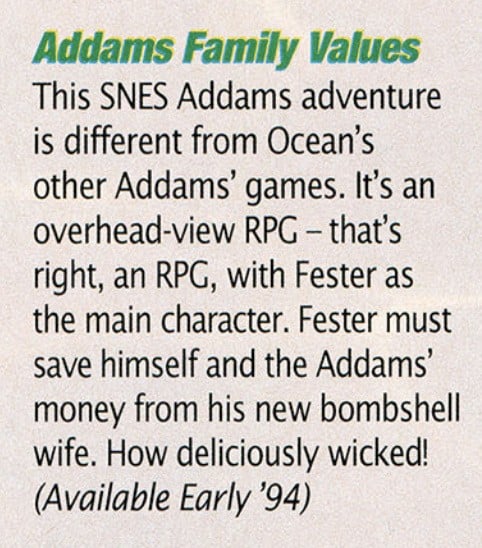
What's clear, though, is that this does seem to have been the plan for the game from the very beginning, with an announcement in an August 1993 issue of GamePro (potentially the first public mention of the game) stating that the upcoming game would be "an overhead-view RPG," and that it was initially planned for an "early 1994" release. As I was told, though, this grand vision ultimately exceeded the original team's capabilities, with the game missing its initial release window. In response, the lead programmer was removed from the project, and a new group of coders, including Walker & Trelford, took over, alongside a third programmer, John May, who worked on the Sega Mega Drive port.
Robert "Rab" Walker tells me, "I was brought onto the project after I'd finished working on Jurassic Park Amiga. Another programmer worked on it before me. He'd been working on it for quite a while (couldn't say for sure how long), and all he had was Fester walking around the map, which kept corrupting. I seem to remember him taking ages trying to fix this and being unable to. When I was brought on, we decided to scrap what he'd done and start pretty much from scratch."
Trelford adds, "The decision to go with a Zelda-like game likely came from Don, and predates me. If I remember rightly, at the time, I was in my early 20s and had not long started at Ocean, initially helping them complete Jurassic Park (JP) for the PC & Amiga. Then I was drafted in [like Rab] to take over from another developer with the game already behind schedule. The primary version was the SNES, which I hadn't worked on before. I remember it was quite an ambitious project for Ocean at the time in terms of the amount of graphics and number of levels, not to mention the dialogue. I also remember the team having some resemblance to the film characters: Don as Uncle Fester (striking resemblance), myself as Lurch (I'm 6ft4), Rab as Gomez, and so on..."
Besides McDermott, Walker, Trelford, and May, other members of this "game development Addams Family" included the composer Keith Tinman (who had full creative control over the music, lending a darker, more atmospheric feel to the soundtrack), the designer Nigel Kershaw (who was tasked with helping write the game's script), and an artist named John Hackleton, who had never worked on a game before, but was brought in to help McDermott create artwork and implement it into the game. The majority of these (bar Tinman) would all be crammed into the same small room inside Ocean Software's Castlefield-based offices, an arrangement that initially led to some friction between the smokers and the non-smokers on the team.

"In those days the smoking policy wasn't as strict as it is today," says Hackleton. "The best I could combat it with was a fan I got from somewhere, because Ian Turnbull wasn't forthcoming to help the situation. He told me that Ocean wasn't a public building, so people smoking in offices were allowed to; he wouldn't even have the company pay for a fan."
Regarding the development setup, the team used MS-DOS computers with a dev kit like PSYQ or SNASM. These computers were equipped with the latest version of Deluxe Paint and Deluxe Paint Animation, which were used to develop the game's graphics and animations. For the character/enemy logic, with development already behind schedule, Trelford tells me he used a "domain-specific programming language" to speed things up (instead of hand-coding assembly), which also let them share code between the Nintendo and Sega versions. He reportedly developed this language for the Jurassic Park games he worked on, loosely based on code from an Amiga version of DMA Design's Blood Money (originally written by Dave Jones of Lemmings/GTA fame) that he'd converted to the PC a few years earlier.
In addition to Deluxe Paint and Deluxe Animation, Ocean staff had access to another useful piece of licensed technology — the Universal Map Editor, or tUME (for short) — which McDermott and Hackleton used to piece together the world. For this, Thelford developed a "simple programming language that used blocks" so that the team could also visually draw logic onto the level maps (in any direction): for instance, letting designers quickly rig up small puzzles involving keys and locked doors.
The revised deadline for the project, according to Walker, was to get the game out before the VHS (which was released in May in the US and November in the UK), in order to get an advert on the tape, but again, the team had trouble getting it out on schedule, with the date continuing to slip. This is something the team attributes, in part, to the incredible size of the project, the small size of the team, and McDermott's perfectionism, which often led to the team tweaking and changing artwork, as well as the layout of the open world. Some of this early work can be seen in a prototype that the Video Game History Foundation recovered, which the website SNES Central later distributed back in 2021. This not only shows a different HUD, altered level designs, and some changes to item icons, but also starts Fester off with more health and suggests that Fester's electricity at one point wasn't tied to his health (as it is in the finished game), but could be upgraded throughout the game with batteries, as highlighted by the research/preservation website The Cutting Room Floor (TCRF).
Speaking about the delays, Hackleton tells me, "The game did drag on, and I can't say exactly why that was, although a probable factor could be that Don McDermott tended to keep changing things over and over again to the point I said, 'Wouldn't it be best to get everything done and, if there's time, address changes to artwork?' However, he didn't take notice, and I suppose it stands to reason that re-addressing already-done artwork takes time that could have been used elsewhere. I completed all the artwork that was asked of me, and I then started to help him with his [workload], including laying triggers, collision and anything else that was needed to implement artwork into the game."
Trelford adds, "There were a lot of levels and a lot of changes, and it would knock on to the development side. Part of my thinking around putting some of the logic in the level editor early on was to let Don do changes himself. I worked with quite a few developers and designers over the years; before Don, I'd worked for a while with Peter Molyneux, who I'd also seen liked to spend time tweaking. I don't think I'd over-criticise Don for having a big vision and a degree of perfectionism for what he felt was his project. Although, as I may have said before, within the constraints of a movie license, it did cause some friction.
"Management didn't really understand development or the creative process. They desperately wanted it finished and out, and applied quite a lot of pressure and demanded long hours. That said, fair play to them, despite everything, for sticking to the course; some games with big delays never saw the light of day."
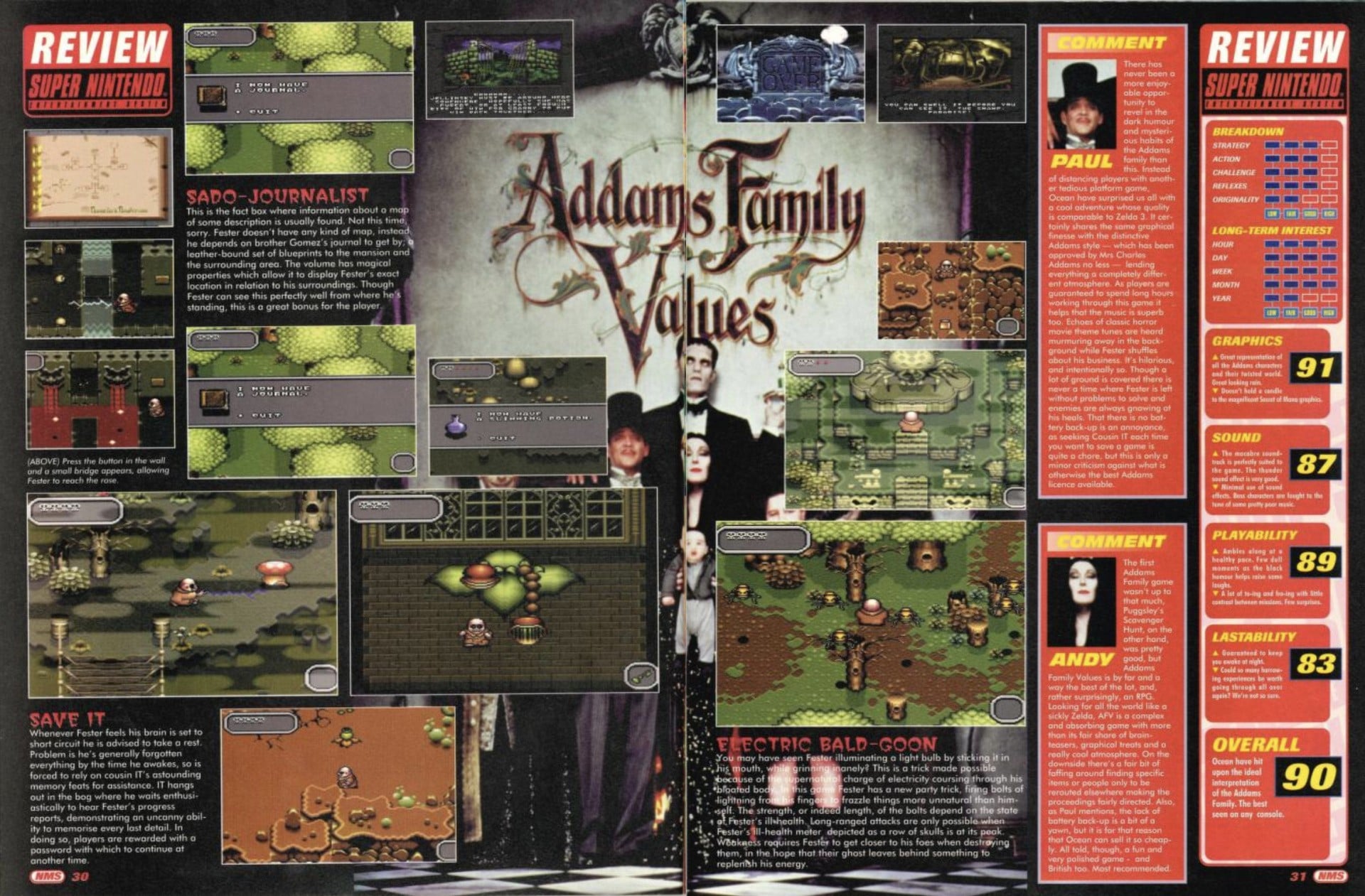
When Addams Family Values finally landed in reviewers' hands in 1995, first impressions were mostly positive. Some, for example, praised the game for ditching the tried-and-tested waters of licensed platforming for a new approach, with Nintendo's official UK magazine at the time, Nintendo Magazine System, calling the decision "a brave step" and awarding the SNES version an impressive 90%.
In particular, the magazine's editor Andy McVittie and staff writer Paul Davies praised its graphics and music, with their only criticism being the lack of battery-backed saves — something the team themselves wanted, but knew they wouldn't get for a game of this size.
"One of the big disappointments I remember was not having battery-backed saves," says Walker. "That added a lot to manufacturing cost, and as this wasn't a major title, there was no way we were getting that."
Instead, the team settled on the system you see in the game, where you can find Cousin Itt to get a password to write down. This proved to be troublesome to implement, though, as Walker tells me, "Trying to fit the whole save game state into 21 (or so) characters" was "an absolute nightmare". Trelford echoes this, saying, "It was tricky to record all the save state data into a string of characters that needed to be typed" before adding, "We thought we were [almost finished], and then there was yet another system to do." Regardless, Nintendo Magazine System called it the "best Addams Family license available", and they weren't alone in singing its praises.
GamesMaster's Les Ellis, for example, labelled the SNES game "a cracking little adventure" and "a lot of fun," giving it a solid 83%, while GameFan's panel also came away impressed. As for the Mega Drive version, those reviews were slightly more mixed, with Games World magazine describing it as "the SNES game with slightly rougher graphics," which isn't exactly inaccurate.
Interested to see how it was viewed retrospectively, I did a quick Google search and found scattered references to the game's difficulty, as well as a Hardcore Gaming 101 article from Federico Tiraboschi, which does a good job of documenting the positives (Keith Tinman's soundtrack, the British sense of humour, and the detailed graphics) while not ignoring the more frustrating aspects (Fester's attack, the confusing overworld, and the ability for enemies to be obscured by the environment). What's interesting is that, according to findings from The Cutting Room Floor, the game originally had difficulty options during development that could have alleviated some of these problems. But Ocean removed these, along with other features, such as scrapped item ideas (like a portal potion). I asked the developers why they removed them; they couldn't remember the precise reason.
"There were issues at the end trying to fit the game onto a smaller cartridge to save costs," says Trelford. "The zip compression was part of it. I can't really remember; it could have been either or both: trying to squeeze the last few bytes and trying to get through the Nintendo QA process faster by reducing the surface area. Getting through the Nintendo QA was quite time-consuming. I remember on the Jurassic Park PC release, I was up until 5 am the night the disks went to manufacture to reduce the size by 1 disk. It wasn't entirely unusual at Ocean to persuade someone to do a hatchet job at the last hour..."
Walker elaborates, "We did plenty of crunch to get it done, as was the way back then. I remember we had a rope bridge in the design which you could roll out in front of you to cross water/lava/whatever. But it caused loads of problems, letting you get to areas you shouldn't, so we canned that (time would have had something to do with that too). I can't remember what the potion did or whether it was ever coded.
"I don't remember having done any difficulty level or control options. Unfortunately, the source discs were stolen years ago. After I left Ocean, I worked at Software Creations, which was in a really seedy part of Manchester. Some blokes broke in at night. Most people had CDs on their desks to listen to at work, and my source code CDs were in my pile and got taken. They took a load of PCs, and some SGI Unix machines, not something you could sell down the pub. I'm still sad about losing those discs! It would be interesting to go back and look at it again!"
Despite the game's rough edges, the team were mostly satisfied with what they'd come up with. Of the people I spoke to, Walker was the most critical, describing it as an "almost good" game and saying that it could have been "very good" with "a couple more months." If he had to revisit it today, he said he would definitely add a proper map system and more guidance to keep players from getting lost in the open world. As for Hackleton, he says he wasn't much of a gamer, but felt like they'd created "a comfortable game," with "pleasing" visuals and some "nice nods" to the film it was based on.
"Hand on heart, I don't know what could have been done to make it play or look better, especially after I mentioned we re-trod the artwork a fair few times to improve(?) it as to Don's requests. I know it had good reviews and even appeared on a games programme (Gamesmaster?) hosted by Dominik Diamond, who visited us in the early days of the game's production. So I think the game went down well, but from rumours I heard that it didn't sell as well as it should have done, and the late release was probably a major factor in that."
If you want to get a physical copy of Addams Family Values to ring in the season, from my experience, online listings (for PAL, at least) are unfortunately few and far between at the moment, with those I've seen being priced way above what any reasonable person would pay for them. If you happen to find a copy for a bargain, though, I'd encourage you to give it a chance. Just like the family it's based on, it's creepy and kooky, mysterious and spooky; some would even describe it as all together ooky (whatever that means). All I know is I got a lot of fun out of it, even more so with the help of fanmade patches.