
 by
by 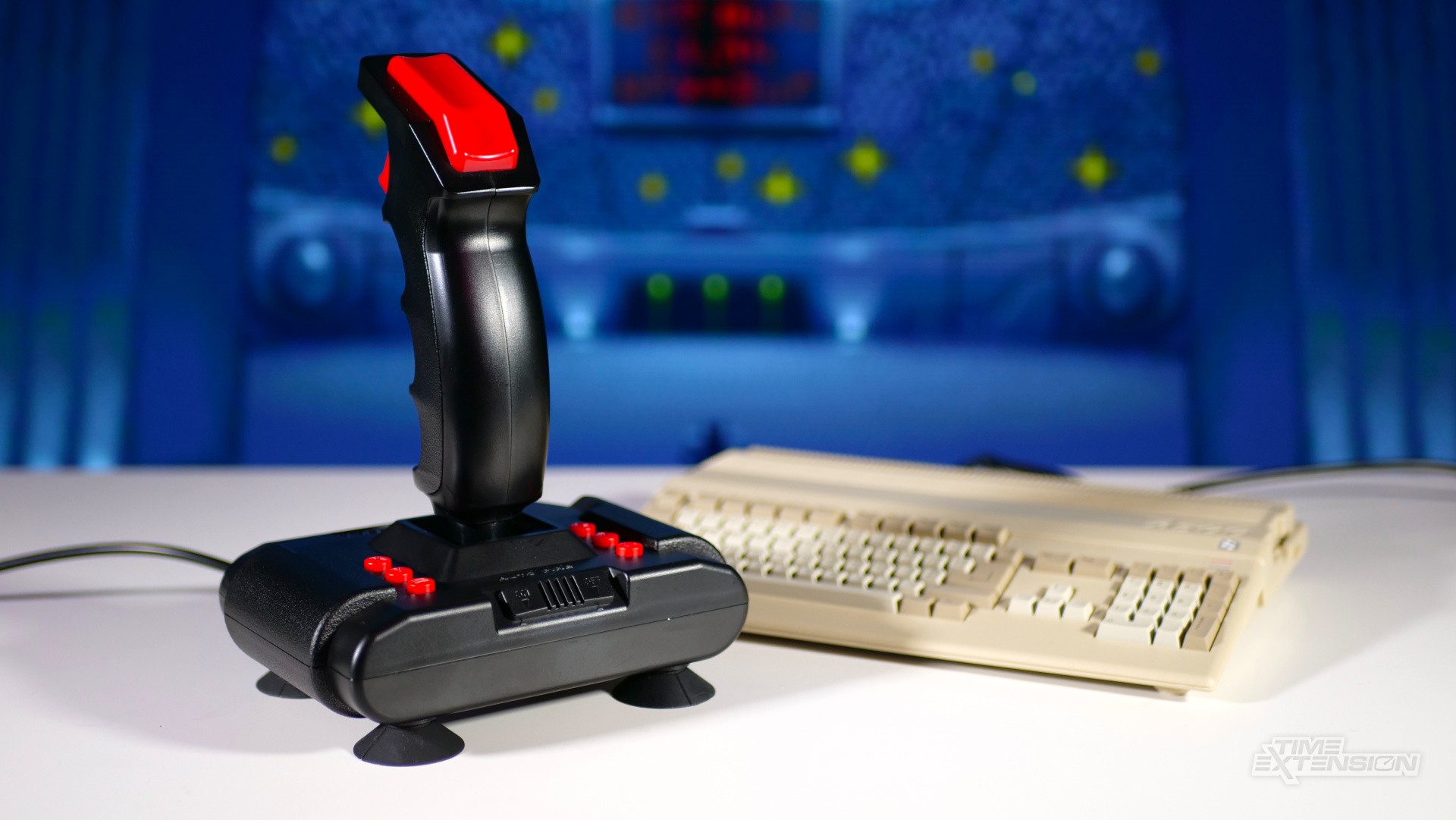
Back in the '80s, before I became a steadfast console kid, I used to play games on my dad's Atari ST. For someone who had been raised on the humble Game & Watch range, the graphics and gameplay were utterly spellbinding – but the one thing I could never quite get my head around was the controls.
Using a mouse for the first time was a transformative experience, of course, and games like Dungeon Master played like a dream with this interface – but whenever it came to arcade-style action titles, I was always frustrated by the lack of decent control options.
The concept of a joypad – something I'd only encounter for the first time when I got my Mega Drive in 1990 – was alien to me, and I found the selection of joysticks to be lacking in quality. Also, being stuck with just a single fire button felt like a painful limitation, especially when compared to the leading coin-ops of the period.
Ultimately, my weapons of choice became the famous Competition Pro – a stick so robust it felt like it could survive nuclear armageddon – and the QuickShot II, a fancier-looking alternative that made you feel like Tom Cruise in Top Gun.
Both of these sticks have been deemed so legendary that they deserve modern-day, USB-equipped updates, with Retro Games Ltd (the company behind the recent C64, Spectrum and Amiga micro-consoles) handling the heavy lifting.
The revived QuickShot II (which retails for around £30) is the latest to hit the market, and its iconic look will be instantly familiar to anyone who grew up as a gamer at the end of the '80s and start of the '90s. With its flight stick-styling, bold red buttons and surprisingly useful suckers on the base (everybody seemed to play their computer at a desk back in the day), it's easy to see why this was the preferred choice for thousands of gamers – but, even with the improvements Retro Games Ltd has made, the QuickShot II's shortcomings endure.
For one, the long shaft (oo-er!) means it's not well-suited to games which require rapid changes in direction, although the upgrade to micro switches certainly makes it feel more responsive than the original ever did. It's awkward to use when you're not sitting at a desk; you have to cradle the controller in one hand while using the stick with the other. It's not terrible, but it makes you realise why, when the joypads became standard in the 1990s, we never really looked back.
The biggest plus point of this revised design is that there are six different fire buttons on offer, rather than the single input you had to put up with back in the day. The A and B buttons – located on the stick – are quite clicky and require a moderate amount of pressure to activate.
On the positive side, these buttons are intelligently automapped when using the controller with, say, the A500 Mini. You'll need to do a bit more setup work when using other systems not created by Retro Games Ltd, but I found that the QuickShot II played nicely with most of the systems I tested it on. There's also a rapid-fire switch, which comes in handy for certain titles.
Ultimately, the QuickShot II is a nice dose of nostalgia for those of us who earned our stripes during the home computer wars, but in 2026, it only serves to highlight how far controller interfaces have come in the past 30-odd years.
Please note that some external links on this page are affiliate links, which means if you click them and make a purchase we may receive a small percentage of the sale. Please read our FTC Disclosure for more information.