
 by
by 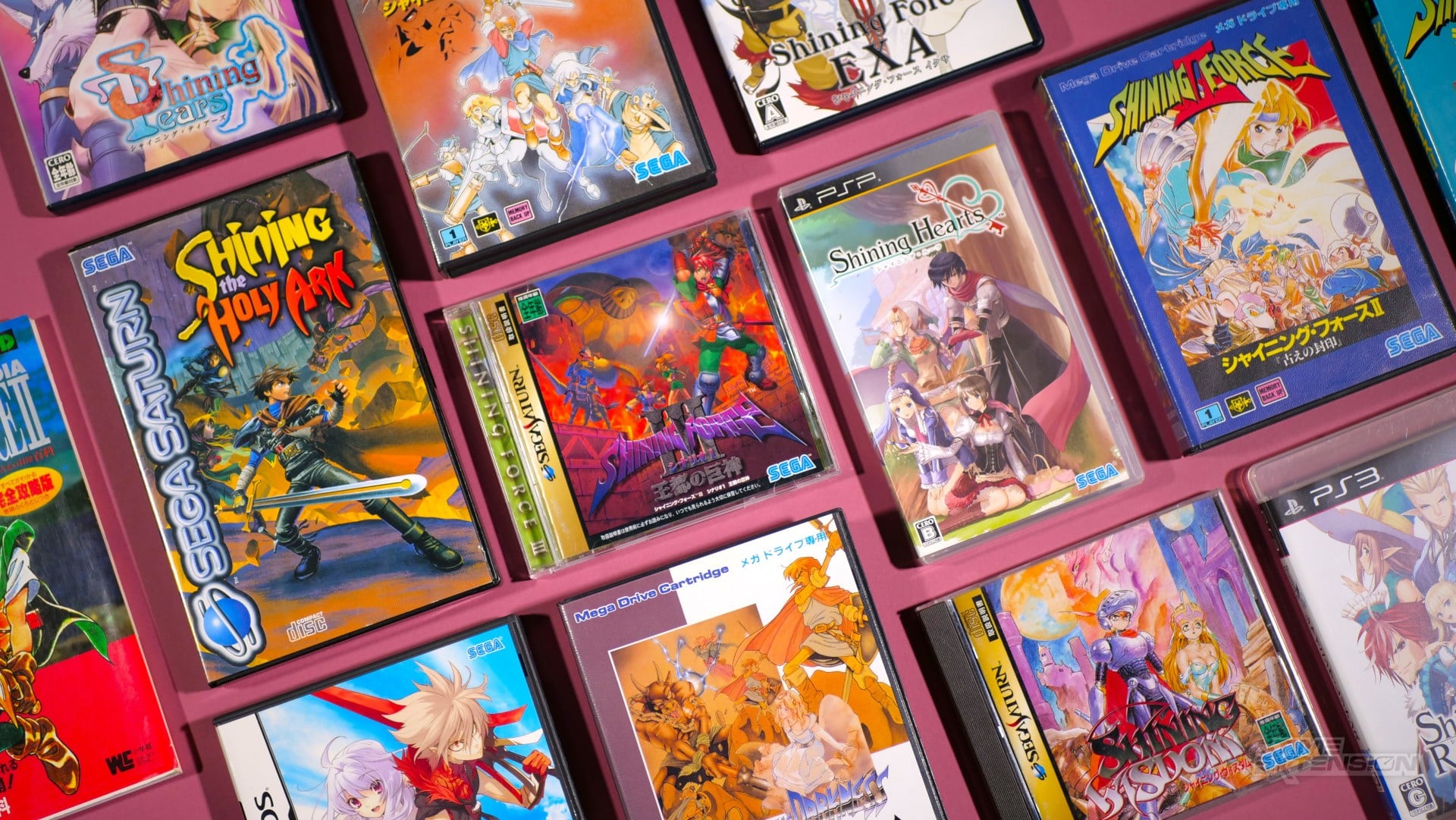
The Shining series may well be best known for its line of tactics RPGs, most notably the Shining Force sub-series, but the 35-year-old franchise actually started out as a first-person perspective dungeon crawler and went on to span many different sub-genres, making it one of the most diverse RPG series to dive into.
The series is also defined by two distinct eras. The first, running from 1991 to 1998, was under the watchful eye of the game’s creators, Shugo and Hiroyuki Takahashi, who cut their teeth on the early Dragon Quest games before setting up their own team within Sega under the name Sonic Software Planning before splintering off into the independent outfit Camelot Software Planning. This classic run of Shining games has a consistent quality and worldview running throughout – despite a few changes in genre – and is generally beloved by fans of the series.
The second era of Shining runs from 2002 to present day after Camelot parted ways with Sega, leaving the latter to manage a new generation of RPGs with a host of different developers and key collaborators. This era is more of a mixed bag. There are some decent games in there, but also some bland disappointments. While some attempt was made throughout this era to draw together a new unified art style and canon, it has proved to be quite inconsistent in practice and not all that popular outside Japan, but there are still a couple of gems to be found if you know where to look.
With that in mind, let’s take a look at the series and rank the mainline entries to see which are most worthy of your time. Before we do, a quick note on the omissions. What you won’t find covered here is any of the old Japanese mobile phone games, as these are now lost to time and almost impossible to have an opinion on, let alone play. The same goes for the Shining Force Cross series, which only appeared in Japanese arcades and has not truly been emulated yet. Instead, our focus is on the main games that were widely released on console, handhelds or PC.
23. Shining Resonance PS3
The very definition of generic, Shining Resonance is an anime action RPG with way too much dialogue, uninteresting locations and tired gameplay. There are far better examples of the genre and many better Shining games.
Sadly, it was also the last new Shining game Sega produced – a few iterations and remasters followed, with little meaningful improvement – and the series seems to have been stuck in a rut ever since.
22. Shining Force Neo PS2
This was the first new Shining “Force” game after Camelot parted ways with Sega, and the start of a bold new direction of action-based games where “Force” previously denoted “tactics”.
Sega’s producers at the time put on plenty of PR spin, suggesting that this was the experience they might have made on Mega Drive had it been powerful enough. There are some attempts to draw connections to the classics – centaur knights appear, for example, while some of the characters share names with those of the original Shining Force.
The action is sold enough and the visuals are pretty nice for a late-era PS2 game, but there’s no getting around the fact Shining Force Neo lacks the Shining magic.
21. Shining Force EXA PS2
The sequel to Shining Force Neo expands on the action-RPG formula with the addition of the Geo Fortress, a customizable robot-castle that can be expanded as the game progresses.
As your party is out and about adventuring, the Geo Fortress is vulnerable to attack and must be defended by the other characters you’ve left behind. Which adds a much-missed element of strategy to the series.
Sadly, however, the actual combat system remains perfunctory at best, tedious at worst. This is another game that doesn't at all earn its Shining Force name.
20. Blade Arcus Rebellion from Shining Switch
The Shining series is well known for spanning multiple sub-genre of RPG, but Blade Arcus Rebellion from Shining is unusual in that it branches out into the world of competitive crossover fighting games.
If Capcom had made a fighting game in the late Nineties, featuring amazing sprite work and characters from across the classic Mega Drive and Saturn games, then it might have been something special. But, instead, this later effort is a generic anime-style fighter from a largely anonymous developer, bringing together less notable characters from modern series entries Shining Blade and Shining Hearts.
Unlike either of those titles, this one actually was released in English and is still available on Steam, but the gameplay, while perfectly fine, is nothing special. You’re unlikely to see this one at Evo any time soon, and it’s not really what Shining fans are looking for either.
19. Shining Hearts PSP
This traditional-style JRPG is a bit of a curiosity in the series thanks to a lighter, cozier tone.
The focus is as much on relationship-building as it is battles, while players can pass the time pleasantly by baking or fishing. If you like gentler RPGs with lots of distractions outside of battles then there’s a lot to like about Shining Hearts, including a rather good soundtrack by Secret of Mana composer Hiroki Kikuta.
Unfortunately, this PSP game was a Japan-exclusive and has never received a fan translation, making its text-heavy systems a bit of a mystery to most.
18. Shining Wind PS2
Sega pushed this release so hard in Japan that it became a cross-media sensation, including a 13-episode anime series and a theme song recorded and released by Japanese pop star Nana Mizuki.
The game itself was a sequel to 2004’s Shining Tears and boasted equally bold 2D art and decent enough action battles but was, unfortunately, a Japan exclusive with no fan translation available.
It looks nice enough and isn’t bad to play, but there are more essential action RPGs in the series than this.
17. Shining Soul GBA
This was the first Shining game Sega produced after parting ways with Camelot, and it was a valiant but flawed attempt to carry the torch without them.
It had good pedigree; developed by Grasshopper Manufacture and directed by Akira Ueda, who had previously worked on Super Mario RPG and Moon: Remix RPG Adventure. It also boasted excellent character designs by original Shining Force artist Yoshitaka Tamaki, brought to life with charming GBA pixel art.
The Diablo-like dungeon crawling action was pretty good if not great, but the story, which drew together bosses from across the series, meddled with the canon a little too much and made too many errors for hardcore fans to forgive.
After the mixed reception to Shining Soul, Sega would begin to distance itself more and more from the classic games and take the Shining series down a new path.
16. Shining Tears PS2
The first game produced under Sega’s new direction for the series, Shining Tears was one of a few new titles overseen by Tony Taka, a popular Japanese artist previously known for his buxom “eroge” designs. The new characters in Tony Taka’s Shining world leaned heavily on titillation and seemed manufactured to shift large quantities of vinyl models of shapely, young female characters to nerdy otaku.
Naturally, this is the point that many Western fans checked out of the series, though in some cases they missed out on some half-decent games. Shining Tears is one such diamond in the rough; an action RPG that focuses on high-resolution 2D pixel art that simply would not have been possible on previous hardware generations.
With the power of PlayStation 2, the screen could fill with multiple sprites and was an impressive sight to behold. It didn’t really feel like a proper Shining game, but this was a fun and attractive action-RPG for the time.
15. Shining Wisdom Saturn
Long before the post-Camelot era of Shining games, Shining Wisdom was generally regarded as the worst game in the series. Which is a bit of a shame as, on the surface, it had a lot going for it.
This action-adventure game almost completely does away with RPG mechanics and is much closer to a Zelda game instead, including an overworld filled with enemies, castles to explore and several dungeons to conquer. It also shares some similarities with Falcom’s Ys series thanks to its red-haired, sword-wielding hero and a bump combat mechanic.
Sadly, the gameplay just doesn’t hang together that well. The bump combat, which requires players to rev up the hero and charge into enemies like a bull, is a bit too fiddly to be satisfying. While the visuals, which give the distinct impression that this might have started life on Mega Drive, feel quite bland compared to Camelot’s later Saturn games.
It does feature cameos from a couple of Shining Force II characters but, that aside, this one doesn’t really feel a part of the same series and lacks much of the charm and worldview of its stablemates.
14. Shining Soul II GBA
Grasshopper Manufacture returned for this sequel and improved on it in every way, particularly in art direction and level design. It generally offers more of the same dungeon-crawling action, but the experience is more satisfying, not least because it has a wider selection of interesting characters to choose from and tons of secrets to find.
Like the first Shining Soul, it also features co-op multiplayer via GBA link cable and unlike the first game, it resists the temptation to mess with canon, telling a completely new story. Though it does find time to include a couple of pleasing cameos along the way.
13. Shining Force Feather DS
Although most of the post-Camelot Shining Force games ditched the tactical gameplay and replaced it with generic action and titillating character designs, Sega decided to go in a different direction with Shining Force Feather.
Development was handed to Flight Plan, who drew on their experience with cult tactics RPGs like Summon Night and Black/Matrix to create an entirely new kind of tactical Shining Force. Rather than a square grid, it used full freedom of movement within a circular range, while the beloved animated attack scenes of the classic games were spiced up with timed commands to inject more strategy into the spectacle.
Shining Force Feather deserves credit for staying true to its tactical roots while also attempting to innovate on them, and the result is one of the better games in the series’ modern era.
12. Shining Force Gaiden GG
This Game Gear exclusive entry attempted to capture the depth and charm of the Mega Drive Shining Force games on a tiny 8-bit screen and did so admirably well.
The satisfying tactical gameplay is present and correct, including miniature versions of the game’s signature animated attack scenes. Sadly, the Game Gear instalments do not include the town exploration sections that define the Mega Drive game against other tactical RPGs, but this is a fine little strategy game all the same.
It was never released outside of Japan – at least not on Game Gear – but the classic Shining Force games are very import-friendly and this is no exception.
11. Shining Force: The Sword of Hajya GG
The second Game Gear Shining Force thankfully was released in English, which is slightly confusing as it’s a direct sequel that continues the story of the first one.
Plot, characters and level design aside, the gameplay is virtually identical to the first Game Gear instalment, which is to say it’s another fantastic portable RPG. However, the Game Gear versions are not quite the best way to play these two games, which is why they appear slightly lower on this list.
Further up, you’ll find the definitive version of these two, which also happens to be one of the greatest Shining games ever made…
10. Shining Blade PSP
It’s somewhat confusing that this one doesn’t proudly sport the full “Shining Force” name as Shining Blade is a full on tactical RPG, and it’s pretty good too.
Developed by Media Vision, who had previously worked on Valkyria Chronicles 3 for Sega, Shining Blade feels like it is built on the same engine as the latter, taking many of the innovations of the Valkyria Chronicles series and applying them to Shining Force.
In many ways, this is as close to a true Shining Force 4 as we’ve ever had. The full 3D gameplay, including greater freedom of movement and long-range aiming mechanics, feels like a great evolution of the series. While the relationship system, which allows certain characters to combine their movement and attacks on the battlefield, pairs well with some genuinely pleasing character designs.
Shining Blade is well worth playing if you’re a fan who’s exhausted all the classic Shining Force games and longs for more tactical action. There’s even a fan translation available, though it is compromised by later chapters being machine-translated. If that puts you off, don’t worry, the game design is intuitive enough that you can still play through the battles and have a great time in Japanese.
9. Shining Ark PSP
The confusingly titled Shining Ark has nothing to do with Shining The Holy Ark but is actually the sequel to Shining Blade, using the same engine to deliver a full 3D Valkyria Chronicles-inspired take on Shining Force.
The formula is generally tweaked all around, making for a smoother and deeper experience, although some changes – like a move to strict turn order rather than the ability to select units at will – may not be to everyone’s taste.
Most of the improvements are outside of the battles, however. Shining Ark takes some inspiration from fellow PSP entry Shining Hearts, fleshing out the game with deeper relationship systems and cozy lifestyle mechanics like the baking system, making this sequel feel like a fuller, richer RPG all round.
Like Shining Blade there is a fan translation available, though this one is entirely machine-translated. Fingers crossed these both get better quality localisations someday as they’re easily the most underrated games in the series.
8. Shining in the Darkness MD
The very first game in the Shining series might not be the best on Mega Drive – It’s a first-person perspective dungeon crawler rather than the tactical battles the series is best known for – but there are still glimpses of what would make the series great down the line, like a bar full of well-drawn, weird and wonderful adventurers, including dwarves and wolfmen, and a cleverly intuitive visual menu system that’s way more fun to navigate than standard text.
The game design draws heavily on the traditions of Dragon Quest, which the original development team had also worked on, and it made for a fun dungeon crawler. Although it would have been nice to have an auto-map, something that would come a few years later in the excellent Saturn sequel…
7. Shining Force Gaiden: Final Conflict GG
The third and final Game Gear Shining Force offered more of the same – a series of small but fun tactical battles with town exploration sadly absent – but it’s the story that makes this one so well liked by series fans.
Rather than continue the narrative of the previous Gaiden games, it is set between the two Mega Drive Shining Force titles and bridges the gap between them, using characters from both to tell a tale that connects two previously unrelated stories.
Though it was released exclusively in Japan, a fan translation is available, making Final Conflict a beloved release for devoted fans of the series.
6. Shining Force CD SCD
Shining Force CD is the reason the first two Game Gear games are further down on this list.
In 1994, Sega chose to remake the two games for Mega CD, reworking the visuals in 16-bit and adding a gorgeous CD audio soundtrack, making it the definitive way to play these two games. Best of all, Sega made use of the expansive CD storage to add two additional game-length chapters, complete with brand new battles.
Players could even use a memory cartridge to transfer their stats from one chapter to the next. All of which makes Shining Force CD not just one of the most generous games in the series but also one of the most essential Mega CD exclusives full stop.
5. Shining Force MD
The Shining series really knocked it out of the park with the second game in the franchise. This was at a time when tactical RPGs were still very new – and practically unheard of in the west, where Fire Emblem had not yet made it here – and so Shining Force impressed with a totally new way to play an RPG.
The battles were deep and rewarding, with a sense of drama and scope that couldn’t be found in traditional turn-based RPG battles. The full-screen attack animations were stunning to behold on the Mega Drive, and the wide roster of playable characters, including distinct and memorable race designs, made it easy to become attached to your force.
The depth and detail of the battles, as well as the charm and beauty of the world, were such that Shining Force has aged brilliantly and is still just as enjoyable to play today.
4. Shining Force: Resurrection Of The Dark Dragon GBA
If there’s one thing the Shining series does well, apart from great RPGs of course, it’s remakes. This one was released on GBA back when Sega was trying to re-establish the series post-Camelot and was produced by Amusement Vision, the same internal studio behind Super Monkey Ball and F-Zero GX, who would later create the Yakuza series.
Everything that made the original Mega Drive game so good was retained, but Amusement Vision also added a brand new story and battles told across a handful of chapters that run in parallel to the main plot and feature three entirely new characters, including Mawlock, a truly unique unit whose spells and abilities could be customised using collectable cards found hidden all around the game.
There’s also a completely new art style, more colourful and stylised for the Nintendo audience. These new visuals may prove divisive to some; they’re a little on the garish side, presumably so they stand out on dim GBA screens. So if you can’t quite stomach the saccharin style, then you may want to swap around this entry with the original Shining Force in our ranking.
It would be completely valid to prefer the original Mega Drive game, but for this writer’s money, Resurrection Of The Dark Dragon is the definitive way to play a classic.
3. Shining The Holy Ark Saturn
In 1997, Sega returned to the Shining in the Darkness template with a follow-up that improved on the formula in every way.
First of all, there’s an auto-map. Yay! But that’s not all. The pre-rendered sprites are absolutely gorgeous; the music, by Motoi “Dark Souls” Sakuraba, is exceptional; and the puzzle-heavy design of the dungeons removes all monotony from the genre entirely and makes exploration a joy. All of the elements come together brilliantly to make every step on the adventure an engrossing and enjoyable one.
As for the story… continuity is inconsistent at best across the Shining series – many entries are unconnected from the last – but Shining The Holy Ark is notable as its events take place ten years before those of Shining Force III and help set up that game’s major villain.
Think of this game as a prologue in one of the 32-bit era’s finest RPG sagas, and you’re bound to become a fan.
2. Shining Force II: Ancient Sealing MD
If you’re looking for the plutonic ideal of Shining Force, then this is the one. It builds on the original game in all the ways a good sequel should. It’s bigger, much bigger, more colourful, better looking, and rich with memorable, engaging battles.
At the time, the Takahashi brothers feared this may be their last game, so they gave their all for Shining Force II, expanding not just on the battles but also the RPG nature of the game, with a deeper, more ambitious story and an expansive overworld map that could be freely explored at will.
Best of all, Shining Force II has some of the best characters in the series. A fantastic hero in the form of Bowie, a likeable lad with a cape that flaps in the wind during battle; a worthy adversary called Odd-Eye who draws the heroes into a dramatic story with personal stakes and, of course, a wealth of bizarre characters to flesh out your ranks, including a rat who happens to be a great thief and a powerful phoenix called Peter.
If you’re looking for somewhere to start with the Shining series, then this highly polished and supremely playable standalone entry is the best place to begin.
1. Shining Force III Saturn
As fate would have it, this was the final game that the series creators at Camelot would work on, and boy did they go out with a bang.
Not only did Shining Force III capture everything that was great about the tactical series in glorious Sega Saturn 3D, it also increased the ambition, telling its story over three discs, released separately over a period of nine months. Each disc featured an entirely different cast of playable characters, an entire game’s worth of battles and a parallel narrative that ingeniously told the story of a civil war from multiple perspectives.
Much like Shining Force CD, players could also transfer their save data from one disc to the next, carrying with them not just all their characters’ stats but also their choices, which would result in story beats and even character unlocks not possible without the save data.
Sadly, only the first chapter was ever released in the US and Europe, leaving Western players baffled by the game’s cliffhanger ending, but thankfully, enterprising fans stepped in and eventually produced a fan translation for the whole saga.
When played as a whole, it’s clear to see that Shining Force III is Camelot’s masterpiece and one of the finest RPGs of the 32-bit era.
If you have a favourite game in the Shining series, please do let us know what it is and why in the comments below. We’d love to hear from fans of this excellent and somewhat underrated series…