
 by
by 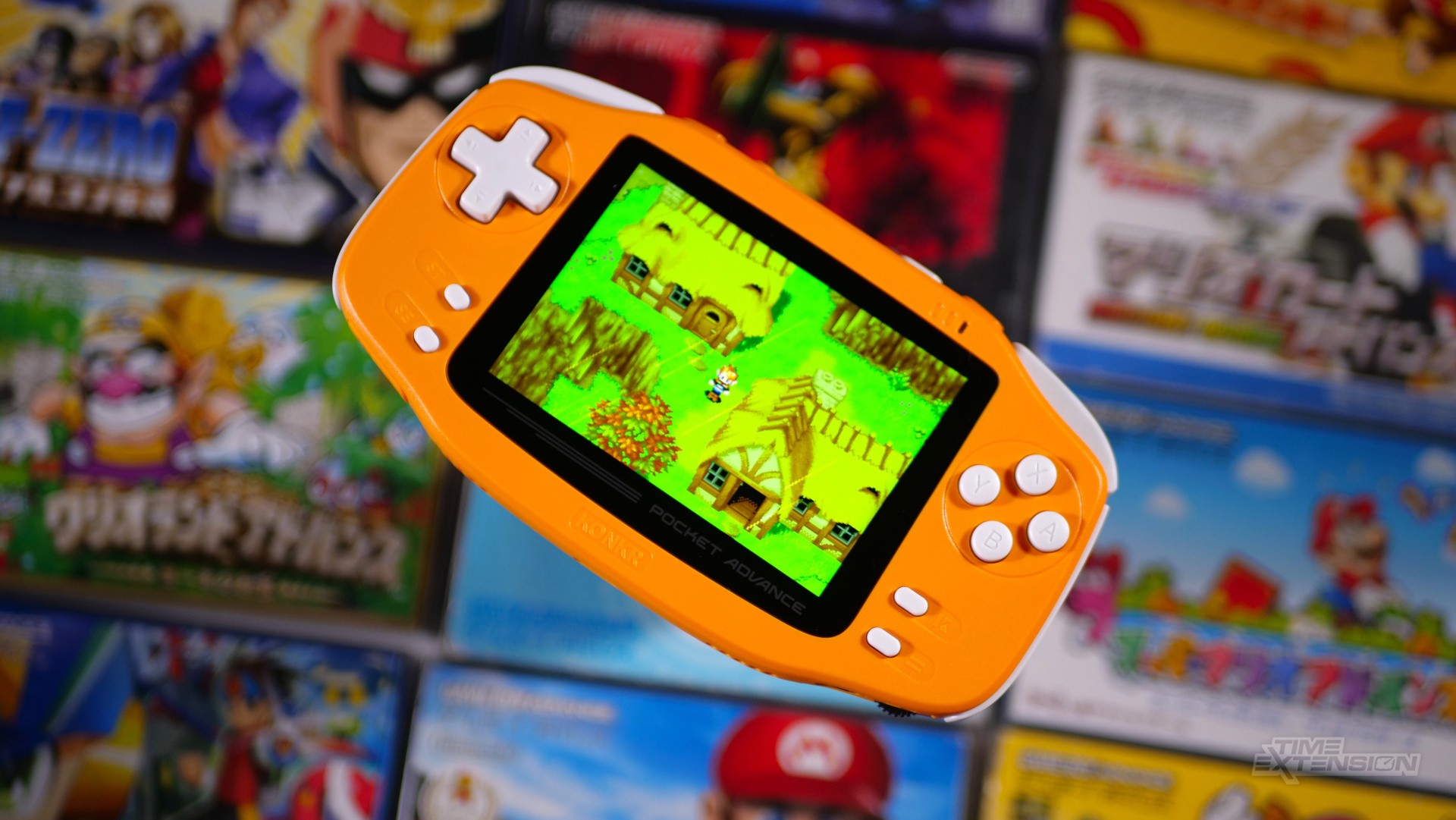
AYANEO's budget brand, KONKR, has already given us some welcome options in the handheld emulation space, but few of them have attracted the kind of fevered attention that the Pocket Advance has managed.
This GBA-inspired portable sold out of its pre-order quota in astonishingly quick time, convincing AYANEO to offer a second batch (as well as new colourways) in order to satisfy demand.
Now the device is here, I can easily see why it has caused such a stir. First off, it's a close match to Nintendo's Mk1 Game Boy Advance, and, as we all know, nostalgia goes a long way in the retro hardware space.
Secondly, it's priced competitively, with the top-spec 4GB RAM/64GB storage model costing $109 (the Onyx Ice variant is more expensive, starting at $109 for the 3GB RAM/32GB storage variant).
But is it worth a look, considering how incredibly crowded this sector of the emulation handheld market is right now? Let's find out.
KONKR Pocket Advance Review: Design
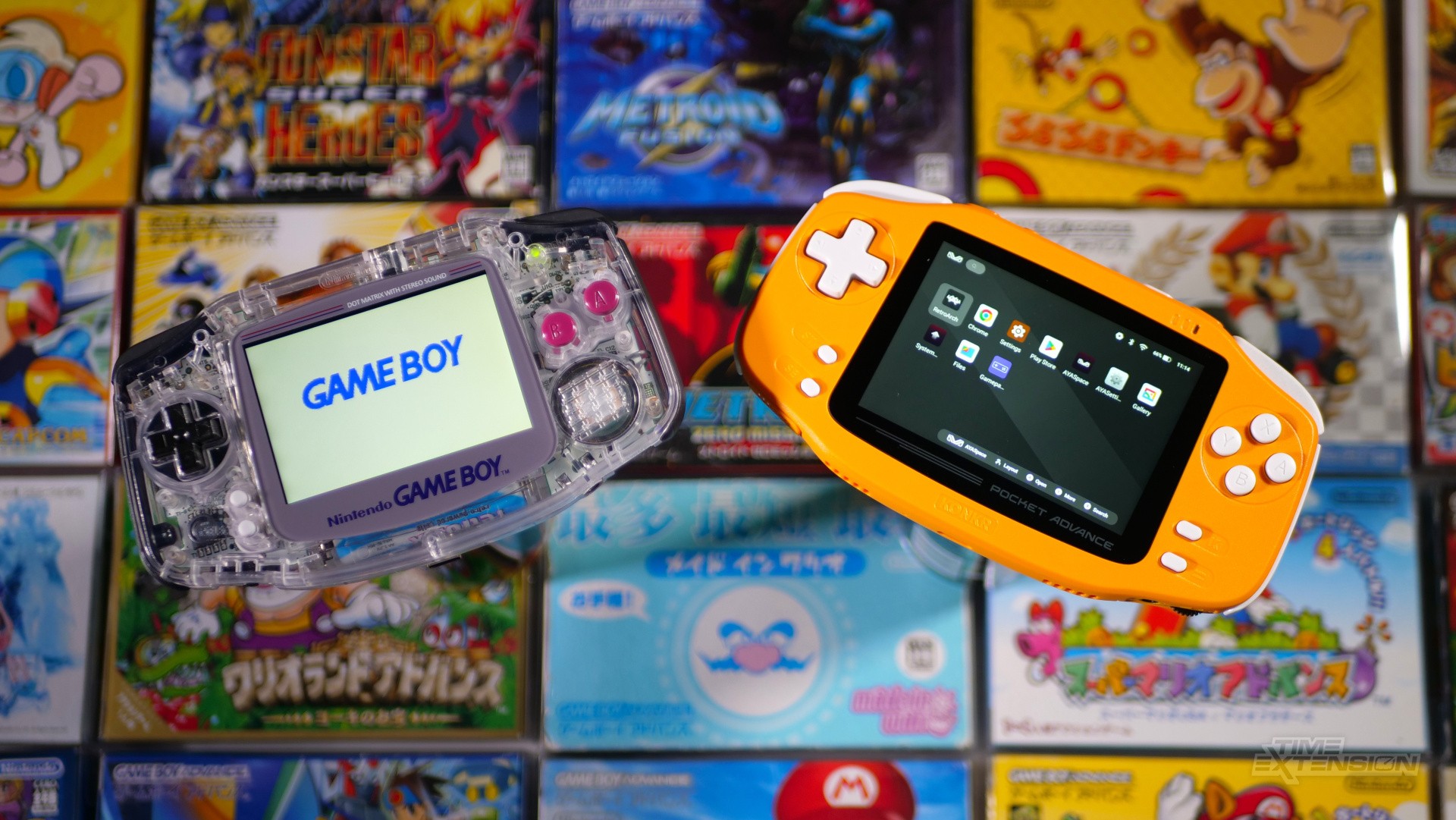
Like the Anbernic RG34XX before it, the KONKR Pocket Advance copies the design of Nintendo's first stab at the GBA design, released in 2001. This landscape format is comfortable to hold and looks suitably iconic – the latter being a definite factor in the Pocket Advance's commercial appeal.
AYANEO has made some alterations when compared to the original model, however. The most noticeable for me, personally, is the slightly larger D-pad, which feels like a big step up when contrasted with Nintendo's version, which was always a little on the dainty side. It's a responsive (and spongy) pad which is great to use. The four action buttons are also on the spongy side, but perfectly fine.
The Pocket Advance also boasts larger shoulder L and R buttons, too, and they rest nicely under your index fingers – certainly more agreeably so than the ones on the 2001 original.
AYANEO has gone a little crazy along the top side of the device, however, installing four additional in-line buttons (L2, R2, LC and RC). These can be remapped to your will, but they're somewhat awkward to reach during gameplay. They may come in useful for some people, regardless, and if you're not one of those people you can simply ignore them – it's not like they get in the way.
The Power / Sleep button is also found here, alongside a mappable button which handily invokes RetroArch's main menu when using that particular emulator frontend. There's also a vent on the top, which combines with an internal fan and a larger vent on the rear to help keep things cool. The fan is pretty quiet.
Along the bottom edge of the Pocket Advance you'll find the stereo speakers, MicroSD card slot, USB-C port, 3.5mm headphone socket and volume dial. The latter is a little sensitive and easy to accidentally touch during use, but it's hardly a deal breaker.
The Pocket Advance doesn't just nail the aesthetic of the original GBA – it's also sturdy and robust, and the plastic has a reassuringly premium feel to it – something which isn't a given at this end of the market.
KONKR Pocket Advance Review: Display & Battery Life
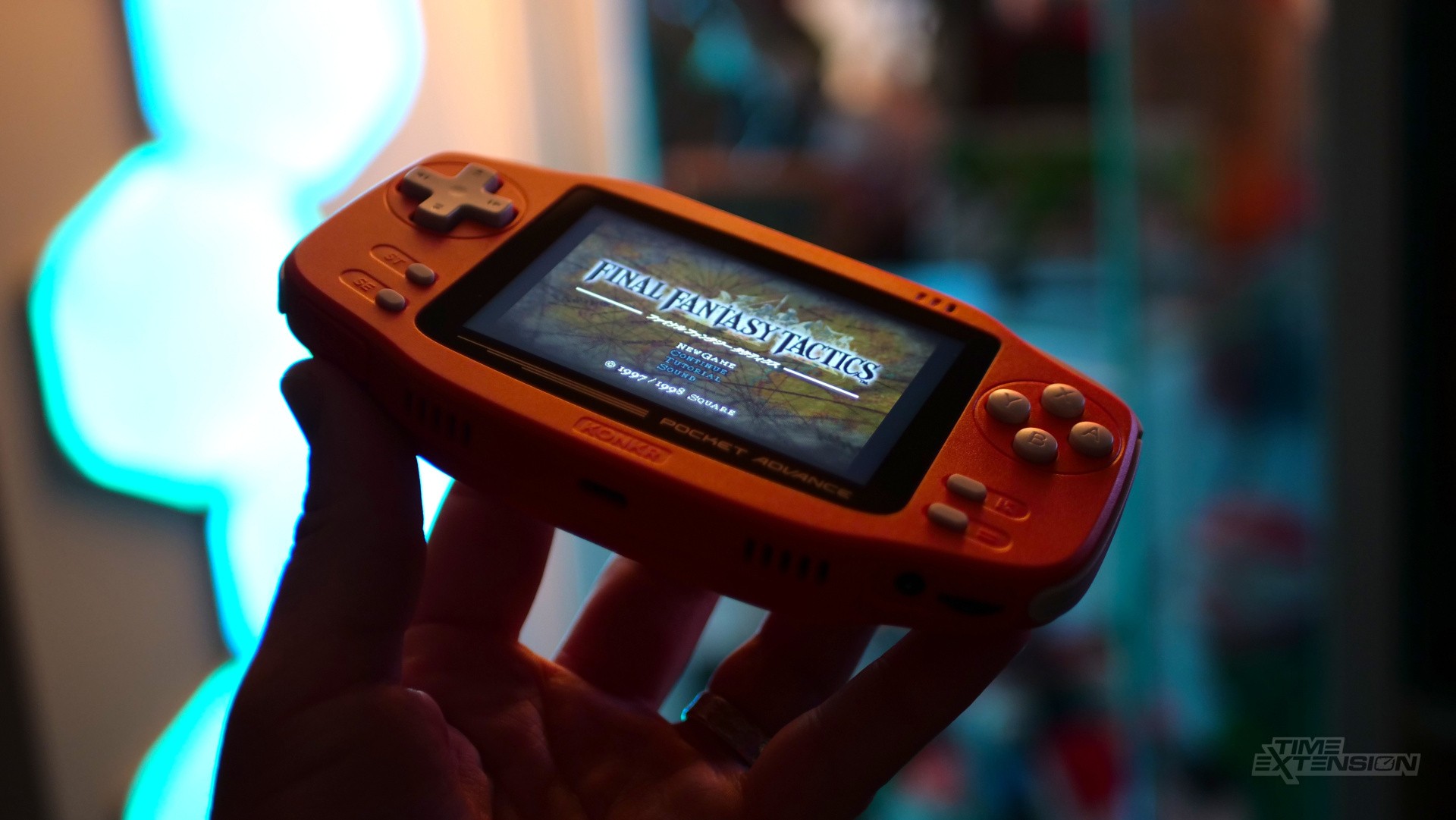
The 3:2 aspect ratio 3.5" LCD display has a resolution of 960x640 pixels, which means you can run GBA titles at four times their usual resolution for a pixel-perfect image.
While it's not as bright and colourful as an OLED panel, the LCD used here is still decent enough, with good brightness and colours. Viewing angles are also rock solid.
All in all, I'm pretty pleased with this screen – it's superior to the aftermarket display I've had installed on my original GBA, put it that way. The biggest drawback is its small size, given that you have to interact with the Android OS using touch for many tasks.
There's a 4000mAh battery inside the Pocket Advance which, according to AYANEO, delivers between four and ten hours of gameplay. This naturally varies depending on what kind of emulation you're undertaking, so it would be wise to expect a figure somewhere in the middle of the two offered by the manufacturer.
KONKR Pocket Advance Review: UI & Emulation
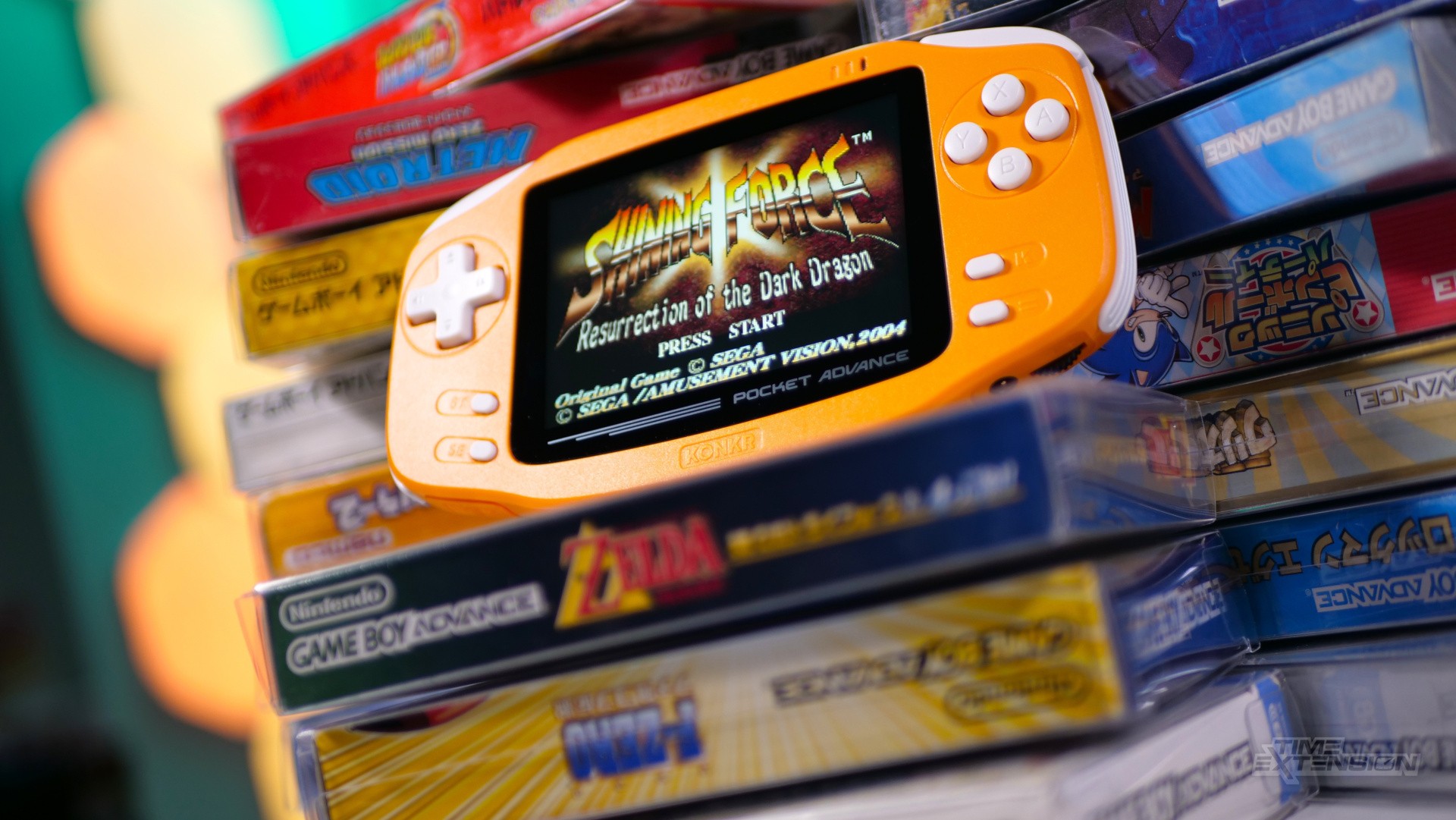
AYANEO has opted for Android 12 to power this handheld, which means the end user benefits from the operating system's wide range of apps and games, as well as its very mature emulation ecosystem.
My first port of call with any Android-based device like this is to simply install RetroArch, which serves as a capable frontend for pretty much any emulator you could think of (it also offers support for RetroAchievements, which is a neat bonus).
As I mentioned previously, the 3.5-inch screen isn't ideal for interacting with the Android UI, especially when it comes to inputting text and selecting links on webpages – but once you've gotten RetroArch (or your frontend of choice) up and running, you can stick to using the D-pad and buttons for a more enjoyable user experience.
The MediaTek Helio G90T chipset inside the Pocket Advance isn't going to place the Pocket Advance in the upper echelons of the handheld emulation scene, but it's powerful enough to handle pretty much everything up to and including the Sega Dreamcast – which isn't a great use of the device, to be honest, as it lacks an analogue stick.
Where the Pocket Advance really shines is when it comes to playing GBA titles; after all, this device was designed with Nintendo's portable in mind. There's no getting around the fact that this is a distinctly "unofficial" way of playing GBA games on the go, but it's the kind of device that makes you wonder why Nintendo hasn't stepped into this realm itself with a legitimate option.
KONKR Pocket Advance Review: Specifications
| Chipset | MediaTek Helio G90T |
| RAM | 3GB / 4GB |
| Storage | 32 GB / 64 GB + MicroSD card slot |
| Screen | 3.5" LCD, 960×640, 3:2 aspect ratio |
| Battery | 4,000mAh |
| Operating System | Android 12 |
| Wireless Connectivity | Wi-Fi 5 / Bluetooth 5.0 |
| Connectivity | USB-C, 3.5 mm audio |
| Dimensions | 151.3 x 82.4 x 22 mm |
| Weight | 224 grams |