
 by
I steadfastly refuse to believe the Wii was released 20 years ago. It certainly doesn't feel like that much time has elapsed since the motion-driven gaming revolution gripped living rooms all over the globe; I can still vividly recall seeing Nintendo's console in action at a friend's house and instantly knowing I needed one.
Countless hours playing Wii Sports, Excite Truck, Zelda: Skyward Sword, and WarioWare: Smooth Moves followed – and then, despite selling over 100 million consoles (and inspiring both Microsoft and Sony to create their own imitators), the fad seemed to vanish almost as swiftly as it arrived.
Sure, Nintendo maintained a connection via its ill-fated Wii U console, which still supported the Wii Remote controllers – and its Switch and Switch 2 systems retain some of that motion-sensing interface via the Joy-Con – but the concept of exclusively controlling a game with your movements feels like a craze that came and went, rather than something that left a lasting impact – like analogue sticks or shoulder buttons.
That's perhaps why so many people were sceptical of the Nex Playground when it was announced back in 2023. Like Microsoft's Kinect, this is a controller-free experience which is focused on families – so the comparisons with the Wii are inevitable and unavoidable. The question is: can Nex Playground make lightning strike twice, or does the motion-gaming trend belong in the past? Let's take a look...
Nex Playground Review: Design & Performance
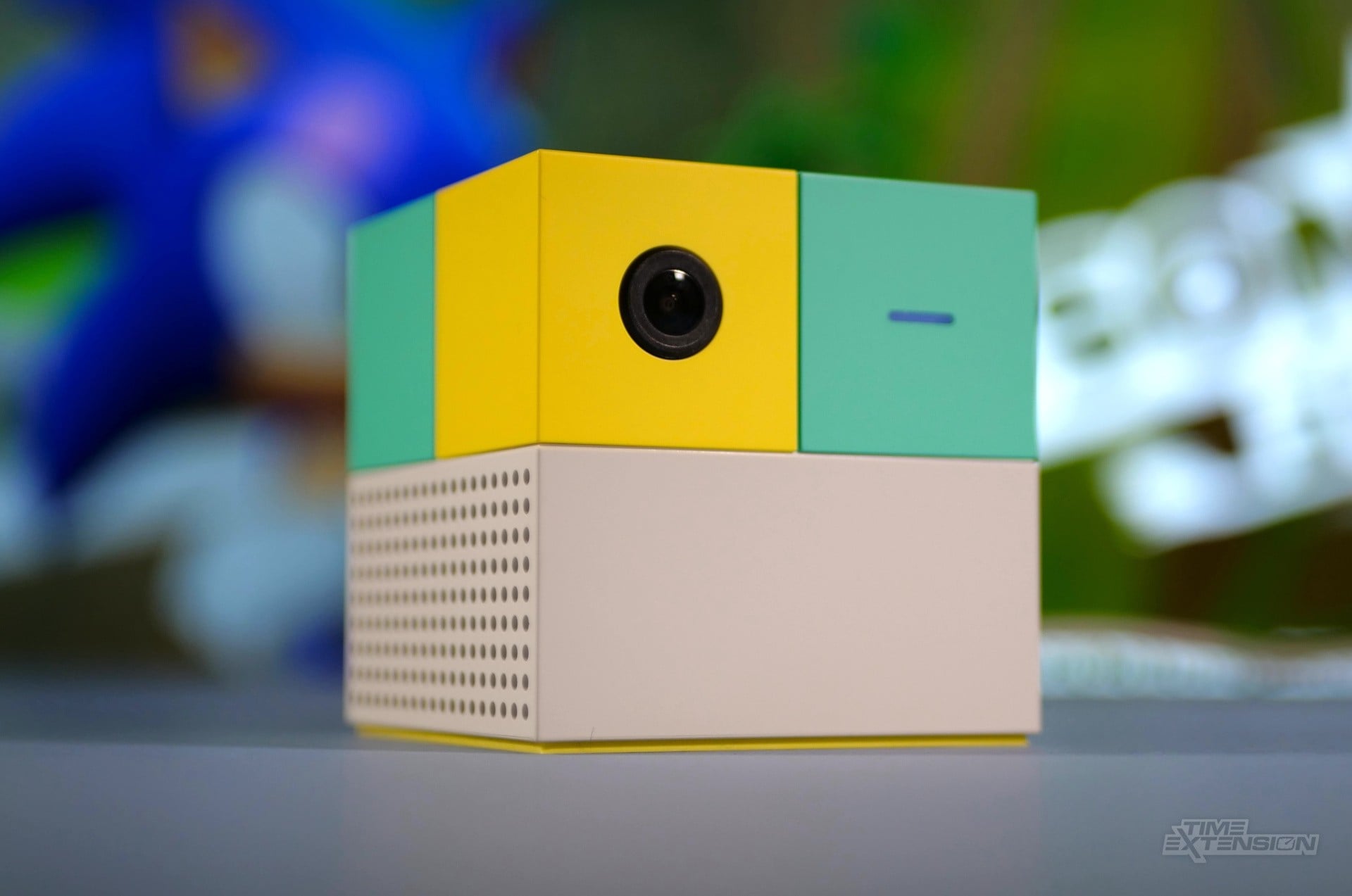
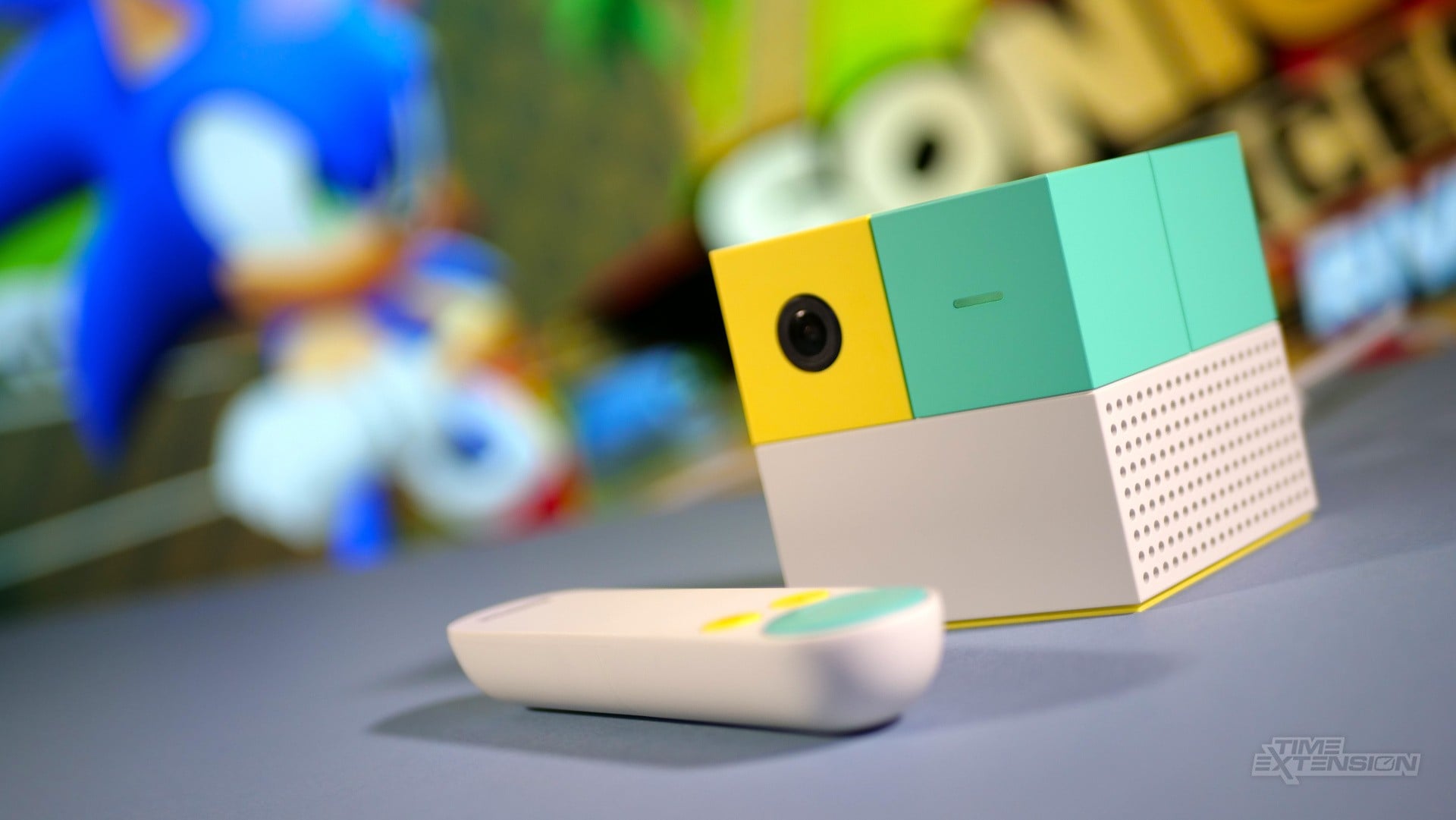
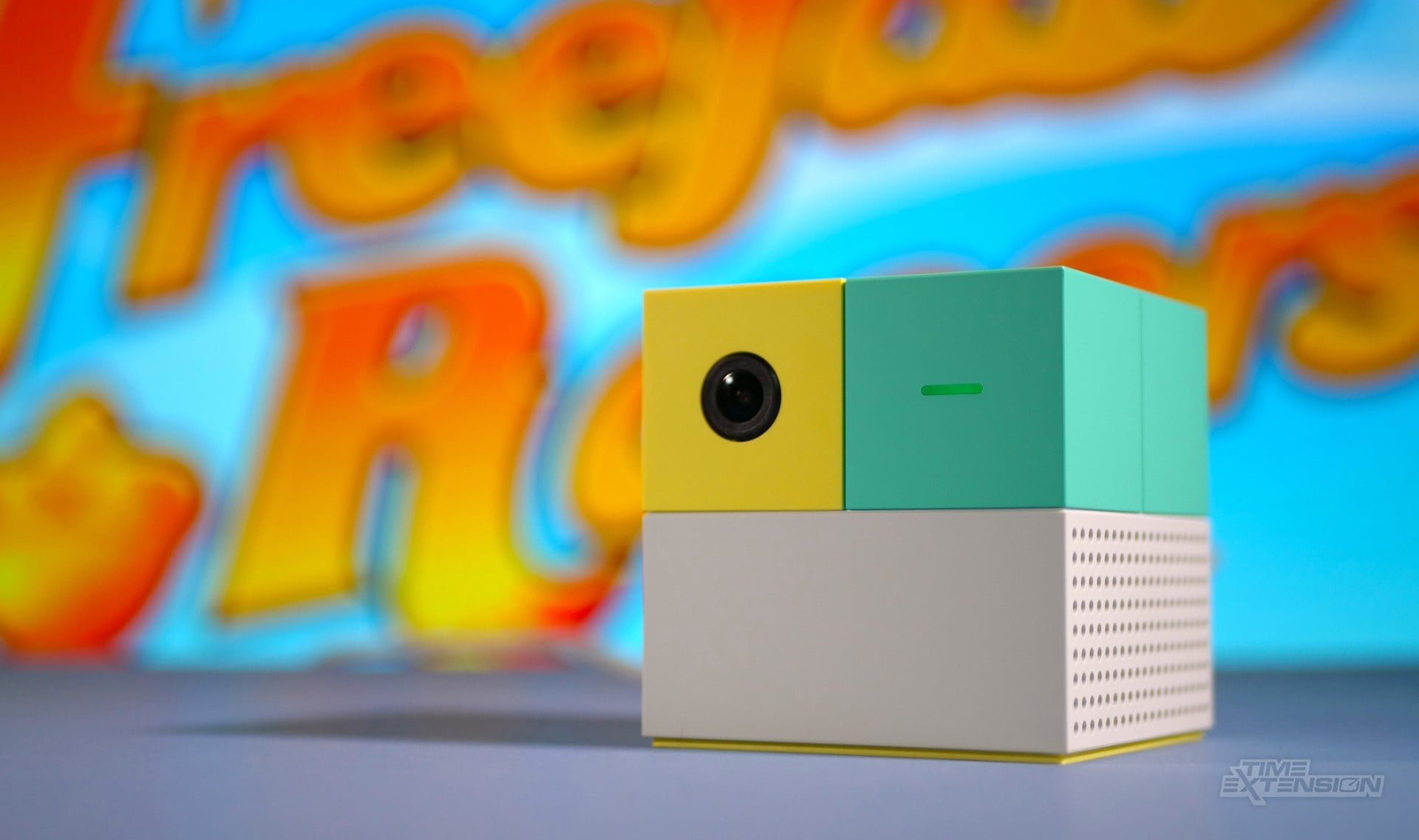
The Nex Playground is shockingly small. It's cube-shaped and slips almost effortlessly into your AV setup; while it's larger than your typical webcam, it's not much larger, which should show how easily it fits into even the most crowded TV cabinet. A rubberised base keeps it firmly in place, too.
The device has a camera at the front – like Kinect, this is your main means of interaction with the hardware. The camera comes with a magnetic cover you can place over it when the system isn't in use; it is tethered to the USB-C power cable, which plugs into the back and has its own built-in PSU. The only other port on the rear of the Nex Playground is the HDMI connection.
While some may be put off by the toy-like appearance of the hardware, I think the Nex Playground looks pretty attractive. It comes bundled with a small remote controller used to navigate menus and input text.
The Nex Playground is powered by an Amlogic A311D2-NOD system-on-a-chip, paired with a Mali-G52 MC4 GPU and 16GB of RAM. There's 64GB of storage included for game installs, and no way to update that total – but the system is clever enough that the least-played games are automatically uninstalled to free up space, so you don't have to manually manage that memory (games you add to your favourites list are never deleted, however). If you're using the system offline, you'll need to make sure you've already downloaded the games you want to play.
Given that Microsoft's Kinect concept is quite old now, it's obvious that the tech used in the Nex Playground provides a more polished, more enjoyable experience. The system uses a "proprietary computer vision and AI system to track 18 nodes on your body in real-time using just the built-in camera," according to the manufacturer, and can track four players concurrently, if the game supports it.
The mention of AI will no doubt cause a particular reaction in some people (myself included), but it seems the tech is used here in very much the same way it is in the G'AIM'E light gun; there's no GenAI taking place here, and the algorithms run on the device directly "and do NOT store or process any video in the cloud," apparently.
In terms of overall performance, the Nex Playground is mostly a resounding success. The AI-driven camera is capable of tracking and following people around the room with decent accuracy, and while a well-lit environment is recommended, I was impressed at how well the device picked out people even when playing at night and with only a lamp to illuminate things.
That said, anyone who lived through the Wii and Kinect years knows these systems aren't completely infallible, and there will be odd occasions when movements and gestures are missed or misunderstood by the camera. These moments are refreshingly few and far between, but Nex Playground isn't perfect. There are also times when the humble nature of the internal hardware betrays itself with stutters or lag, but this is usually when loading up a game for the first time and background installation is presumably taking place – during gameplay, things are pretty rock-solid.
Another thing to note, which isn't really the fault of the hardware, is that you need a lot of space to fit in a second player without hitting each other – and getting four people involved is only possible in the largest of living rooms. Even when playing alone, there's often the need to move furniture and delicate objects out of the way, lest you knock over a lamp or shatter a prized vase with your exaggerated movements.
Nex Playground Review: Games

As I've already mentioned, the The Nex Playground is an all-digital device and does not accept physical media. It comes with five free games: Go Keeper, Fruit Ninja, Party Fowl, Starri and Whac-A-Mole.
Go Keeper puts you in the role of a soccer/football goalie, and you have to use your hands to stop balls from flying past you. Fruit Ninja, well, it's Fruit Ninja. The smartphone phenomenon sucked up far too many hours of my life when it launched years ago, and I was a big fan of the Kinect version, too. The Nex Playground edition benefits from superior movement detection and is perhaps the closest this device has to a 'killer app' pack-in game. Party Fowl is, as the title suggests, a party game with wacky mini-challenges, while Starri sees you dancing to music (there's even a BTS collab happening). Whac-a-Mole, I'm sure, needs no introduction and is a motion-controller take on the classic amusement arcade game.
There's a decent amount of enjoyment to be had from this selection of titles, and a reasonably good mix of genres and game types – if nothing else, they give you a taster of what this machine is capable of. Once you're bored of these, you might ponder precisely how you load up more games – and this is where I fear the Nex Playground becomes a little controversial. You see, there's no digital store; the only way to access more games is to sign up for a Play Pass subscription, which costs $49 / £45 for three months or $89 / £90 for a full year. That works out to $16 a month for the three-month sub or $9 a month for a full year.
Once you sign up, you get full access to the entire Nex Playground library of games. At the time of writing, that's over 60 titles, all ad-free and devoid of in-app purchases.
Nex Team, the company behind this venture, has worked with experts to ensure these games are kid-friendly, and it has also inked deals with some big players in the games industry for software support. For example, Sega's Sonic Forces: Rival Rush brings the blue blur to the system, and the arcade original of Namco's Pac-Man is playable in a unique version in which you use your arms to control the character's direction (it's probably the least suitable way to play a game that relies on fast reflexes, but it's chaotic fun with a friend).
Other brands and IP – such as Teenage Mutant Ninja Turtles, Zumba, Kung-Fu Panda, Barbie, Sesame Street, How to Train Your Dragon, Bluey and Dora the Explorer – are also represented here, reinforcing the Nex Playground's position as a low-friction, kid-friendly gaming experience. These titles don't offer the kind of depth you'd expect from a AAA home console release, but the target audience arguably isn't looking for that.
We're even seeing old motion-controlled titles get a second chance via Nex Playground. 2013's Freefall Racers has apparently been a massive success on this system, and the company behind it has revealed that talks are ongoing to bring Wii and Kinect games to the platform in due course. I quite like the idea of some of the better titles from this period getting a new lease of life, but they naturally won't include any of Nintendo's first-party Wii games, so the pickings might end up a bit slim.
On paper, it's relatively easy to see how the Play Pass proposition makes sense. Nex Team argues that giving access to the whole library from the get-go avoids kids constantly pestering their parents for more money to download additional games - and, at nine bucks a month, that's roughly the equivalent of buying a mid-priced eShop or Steam game every 30-odd days, which doesn't sound too extreme. This, of course, relies on you spending $90 / £90 up-front to access it, which, when added to the initial $300 / £269.99 cost of the base hardware, suddenly makes the Nex Playground feel like a more considerable investment.
Sure, all major console platforms have subscription services these days (and they don't give you every game for free, either), so I can definitely see why Nex Team has felt bold enough to take this approach – but to me, Nex Playground feels like a more casual experience, even for younger players, and I'm not sure every family is likely to keep that subscription going after the first year.
The three-month sub offers some flexibility but is terrible value compared to the yearly one; a monthly payment option roughly in line with the cost of Amazon Prime and Netflix would make more sense, as the Nex Playground might be something that only comes out in the winter months, when their kids are stuck indoors.
I would also have liked the option to purchase games in some way, shape, or form, as I can certainly see instances where my kid's favourite title is suddenly delisted when licensing deals end.
Nex Playground Review: Conclusion
It's easy to see why so many people dismissed the Nex Playground when it was first shown off; there's still something of a hangover from the motion-gaming craze – with all of its puddle-deep game mechanics and pointless plastic accessories – that makes certain people shudder. Nex Playground isn't going to magically erase those bad memories, and I think it's fair to say this device won't challenge the PS5 or Switch 2 for complete dominance of the living room if you're a seasoned player.
Taken for what it is, though, this arguably ticks all of the boxes it needs to. The game selection is accessible, appealing, and blissfully free of obnoxious ads or in-app transactions, and the library is perfectly suited to young families. Like the Wii, the Nex Playground encourages the whole household to get involved, and as a casual way to get kids active and engaged with their parents, it's hard to see anything but a resounding success. In time, it could even bring some of the better examples of the motion-gaming genre back from the dead so they can find a fresh, new audience.
The big issue, from my perspective, is that the Play Pass subscription means you'll never 'own' any of the games (save for the five pre-installed ones, at least) – and it's another $90 per annum on top of the outlay for the hardware. If you were going to buy a game for ten bucks a pop each month, you could argue that the cost is more than reasonable – especially when it already gets you over 60 games (and more are being added all the time) – but in an era where households are being forced to tighten their belts more than ever, I can't help but feel the Play Pass is going to be a sticking point.
Thanks to Nex Team for supplying the Nex Playground used in this review.
Please note that some external links on this page are affiliate links, which means if you click them and make a purchase we may receive a small percentage of the sale. Please read our FTC Disclosure for more information.