
 by
by 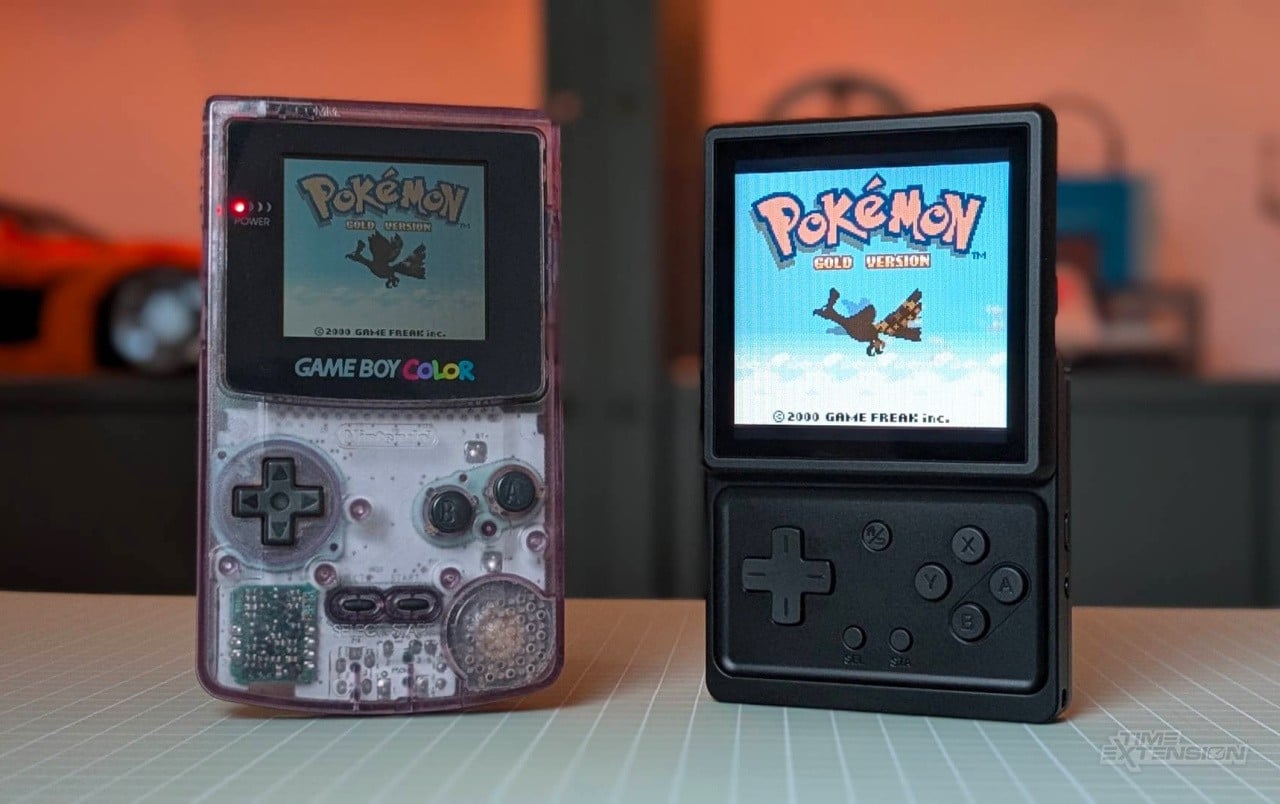
For the past several years, there has been shockingly little innovation in the gaming handheld space. Most products adopt the same candy bar design, with a few outliers chasing nostalgic designs like the Game Boy Advance SP, Nintendo 3DS, or even PS Vita.
But the Anbernic RG Rotate ($87.99) is something else. Seeing the flipping screen open for the first time took me right back to the movie theater in 1999, watching Neo snap open the Nokia 8110 phone to answer a call from Morpheus. As silly as it sounds, that scene is one of the foundational moments in my lifelong love of tech.
The RG Rotate has the same vibe, and it’s cool in a way that no other retro gaming handheld I’ve tested can match. I could flip this thing open all day, games or no.
But as fun as it is, it’s not perfect. I love this device, but I suspect there are dealbreakers here for many gamers.
Flipping Brilliant Design
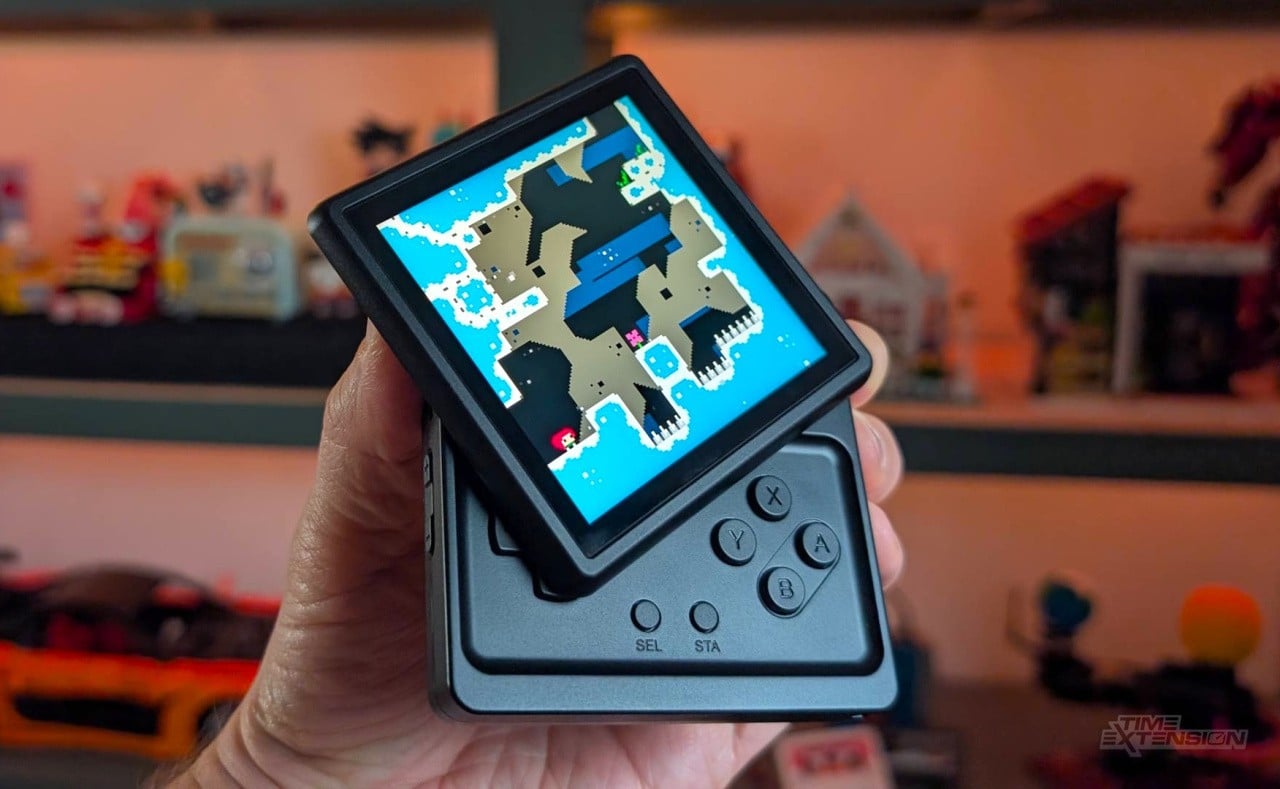
The Anbernic RG Rotate is the best-designed device the company has ever released. Full stop.
The rotating screen is both unique and delightful to use, which hasn’t been the case for any handheld in well over a decade – including those from Nintendo and Sony.
It also gives it an incredibly compact form factor that’s easy to take anywhere. When closed, it’s roughly the same size as a GBA SP.
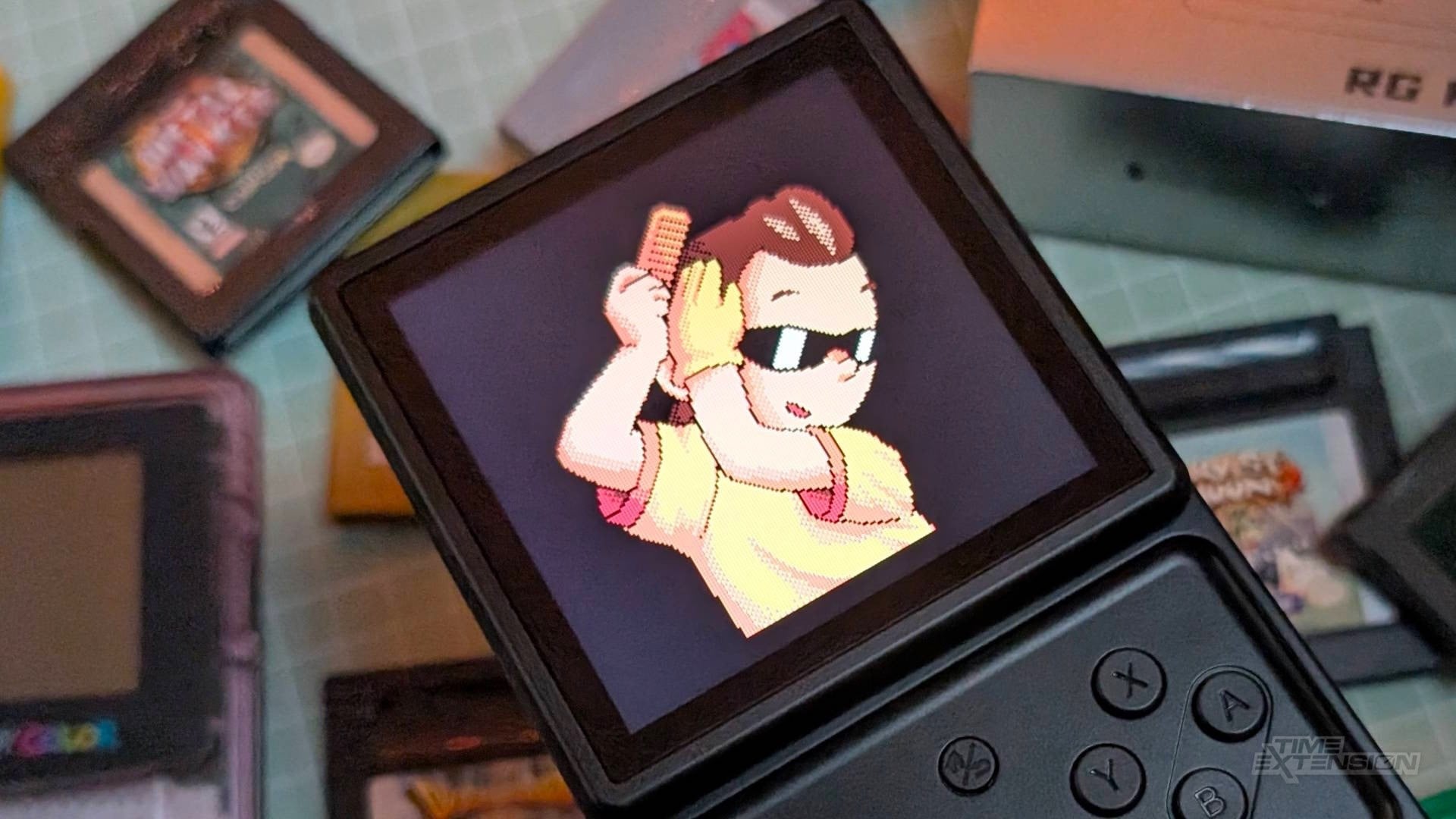
The 3.5-inch IPS screen has a resolution of 720 x 720, and it looks very crisp. Not quite as crisp as the TrimUI Brick, but close. I also found it bright enough to play outdoors in direct sunlight with ease, which is rarely the case with handhelds this cheap.
Granted, the screen being on the outside does expose it to some wear and tear. To help, there’s a screen protector in the box, as well as a soft case that’s sold separately. This is the first time I’ve used a screen protector in years, but it feels like a fair compromise for this device.
I tested the Polar Black variant, which has a plastic body and a painted aluminium frame for the screen. The Aurora Silver model is all aluminium, which adds to the weight (and price) of the device. I doubt it’s worth the $20 premium for most.
No matter which model you get, the real selling point here is the swivelling hinge. With component prices spiking across the tech industry, Anbernic has made the very smart decision of designing a unique physical hinge instead of relying on a simple spec bump.
I cannot overstate how satisfying it is to flip this thing open and closed. The hinge feels very sturdy, and I doubt it will suffer from the hinge issues we’ve seen on most clamshell devices.
A DAPper Fellow?
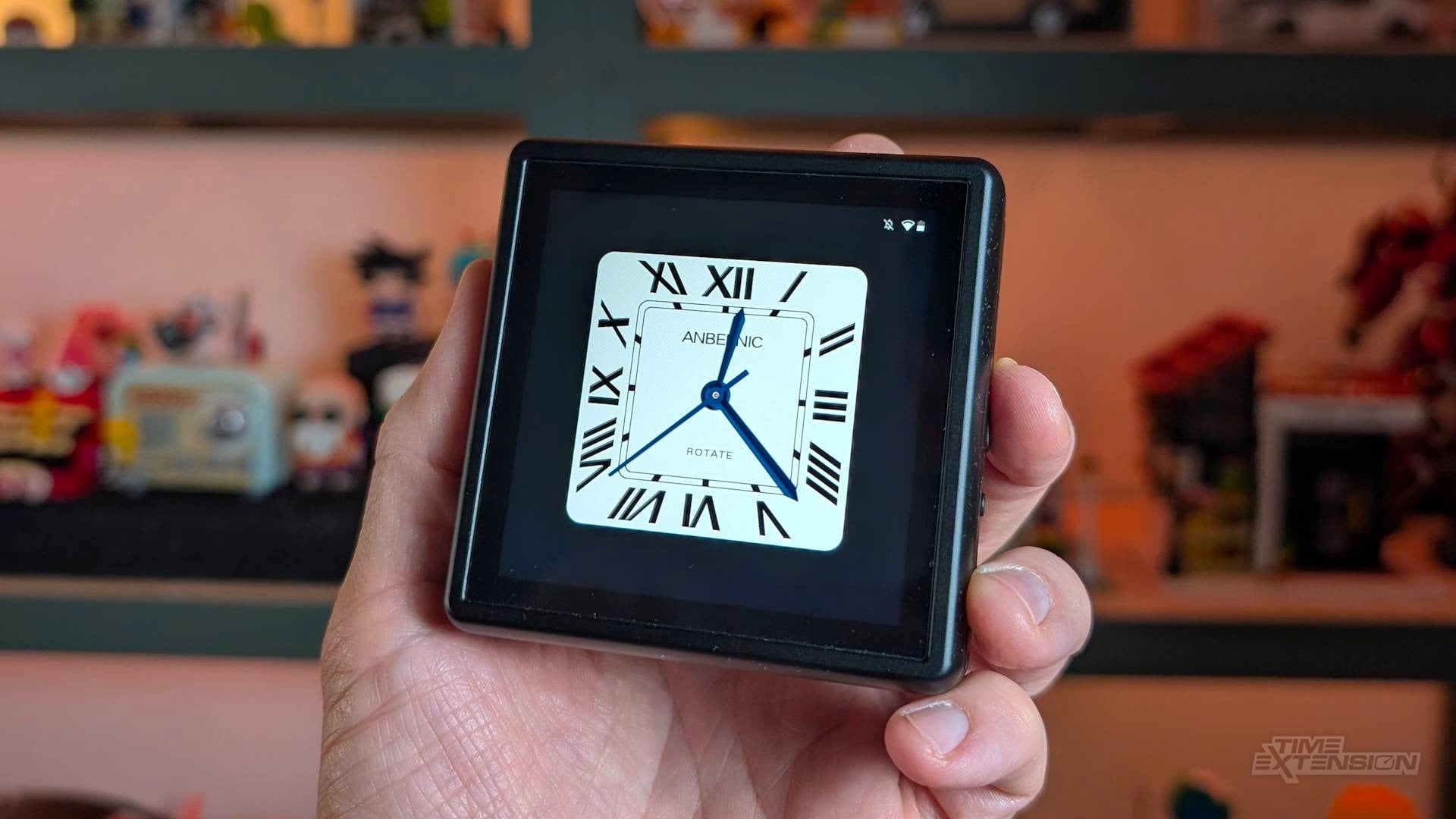
Apart from being a gaming device, Anbernic has also deliberately positioned the RG Rotate as a hybrid digital audio player. If you’re not familiar with them, DAPs are essentially the modern equivalent of iPods, and there are plenty of options out there at all price ranges.
But while the marketing is clearly pushing one thing, the design team didn’t appear to get the memo. The audio experience is deeply compromised.
The worst offender here is the speaker placement. There’s a single speaker, and it’s smack in the middle of the back of the device. When playing in public, that means everyone around you is blasted with your chiptunes.
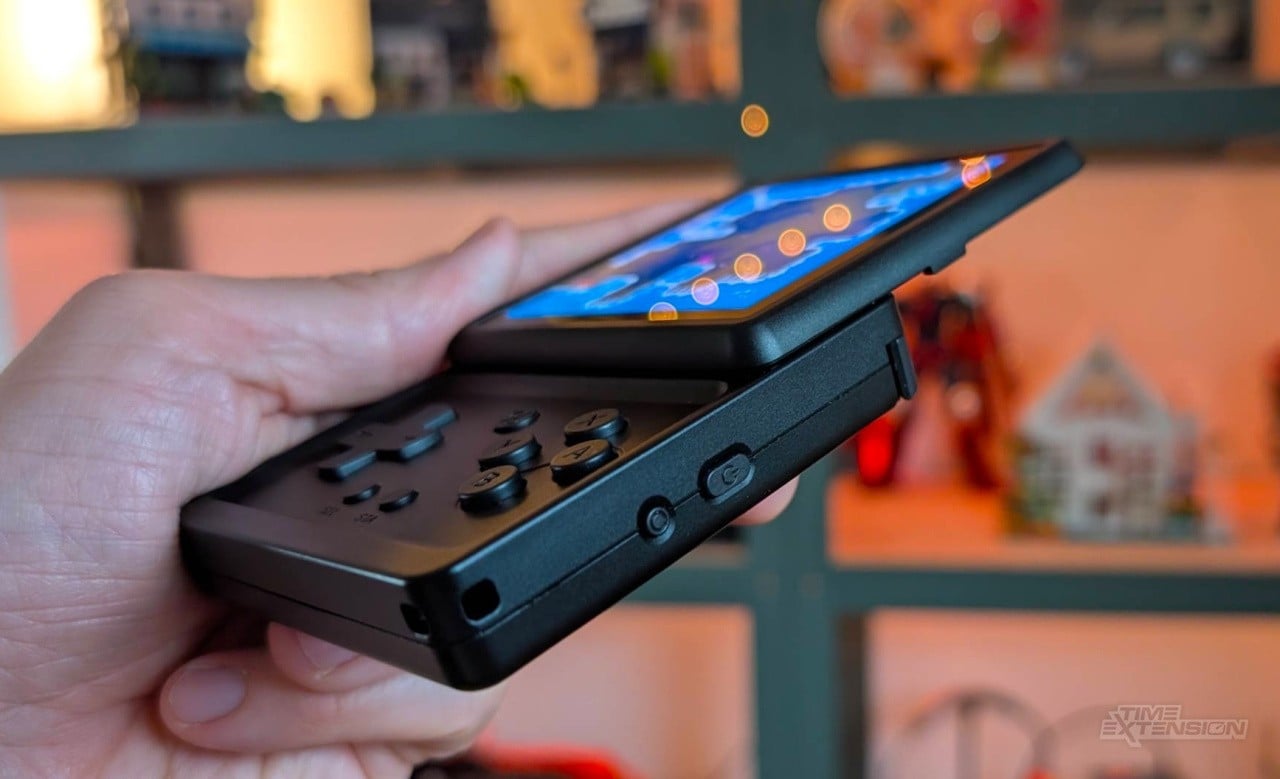
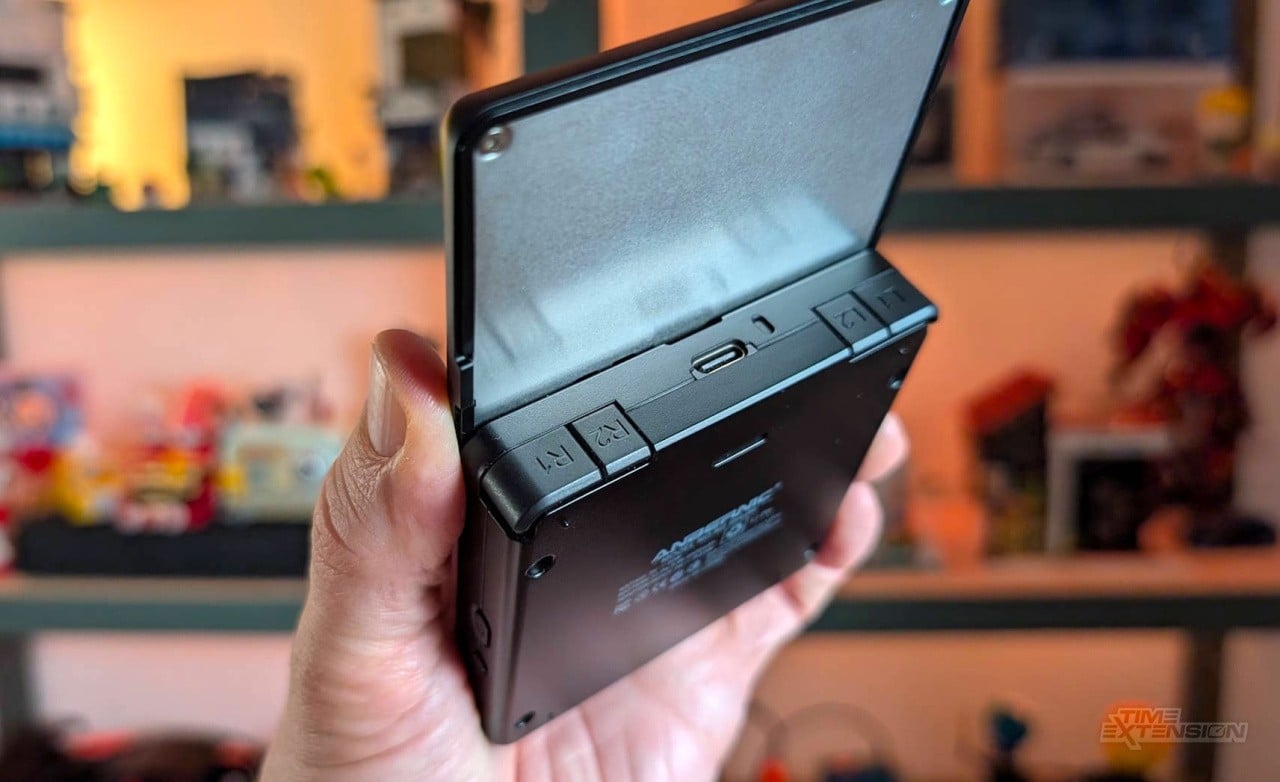
To make matters worse, there’s no headphone jack. There’s only a single USB-C port, so you’ll need to rely on a dongle or USB-C headphones or Bluetooth.
For me, this isn’t a total dealbreaker. At this point, I’ve almost entirely transitioned to Bluetooth headphones in my day-to-day, but there is noticeable audio lag when gaming. It’s manageable, but the lack of a headphone jack will go down as yet another perplexing omission from an otherwise excellent Anbernic handheld.
Although, if I’m being honest, I would never use this as an audio device. As someone who has tried (and failed) to switch from streaming platforms to DAPs several times over the years, this didn’t do the trick either. I switch between headphones and different speaker setups in my home several times throughout the day, so it’s just more convenient to use my phone than a separate device.
Thankfully, the RG Rotate works much better at its main task: playing games.
No Stick, No problem
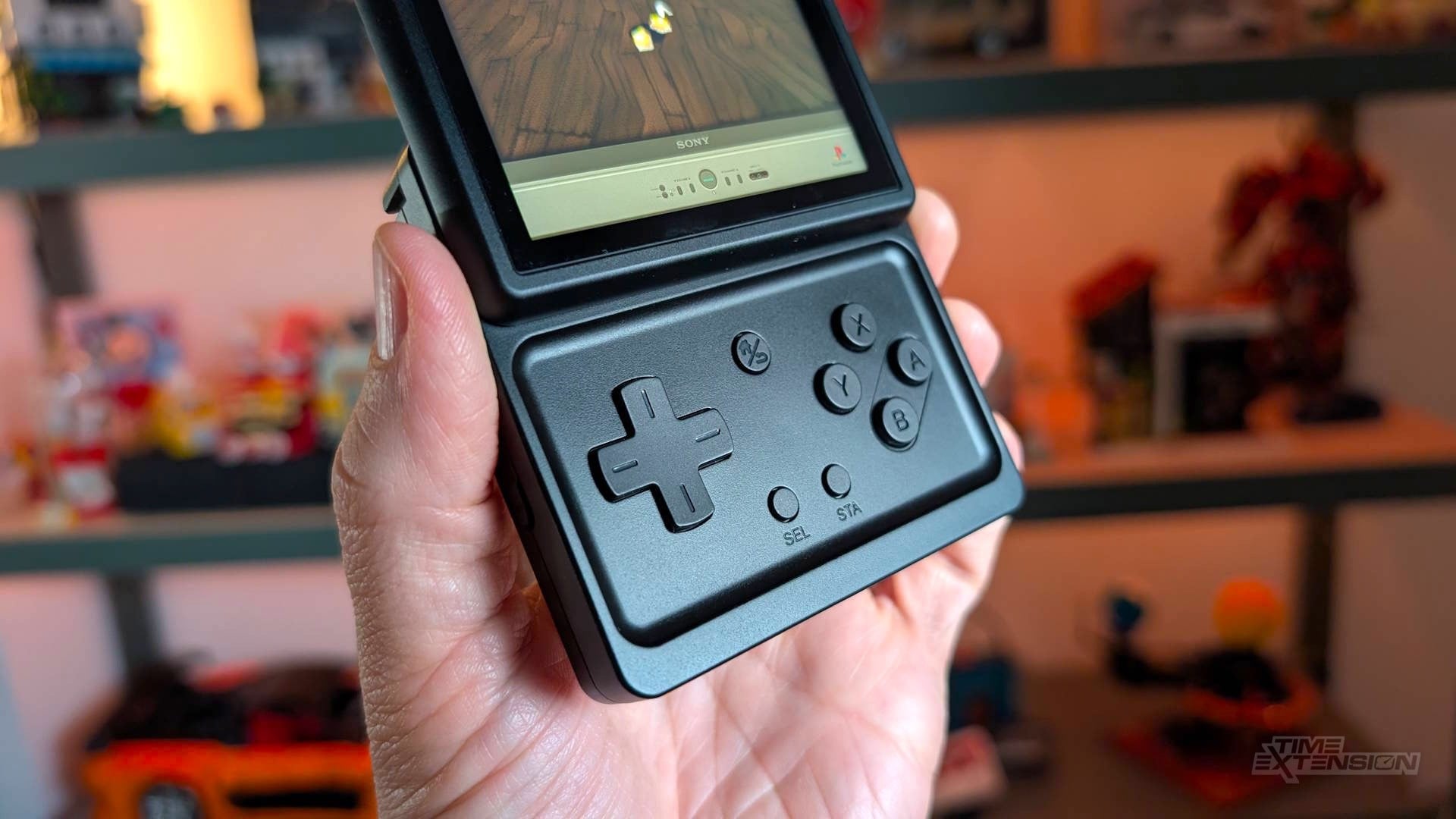
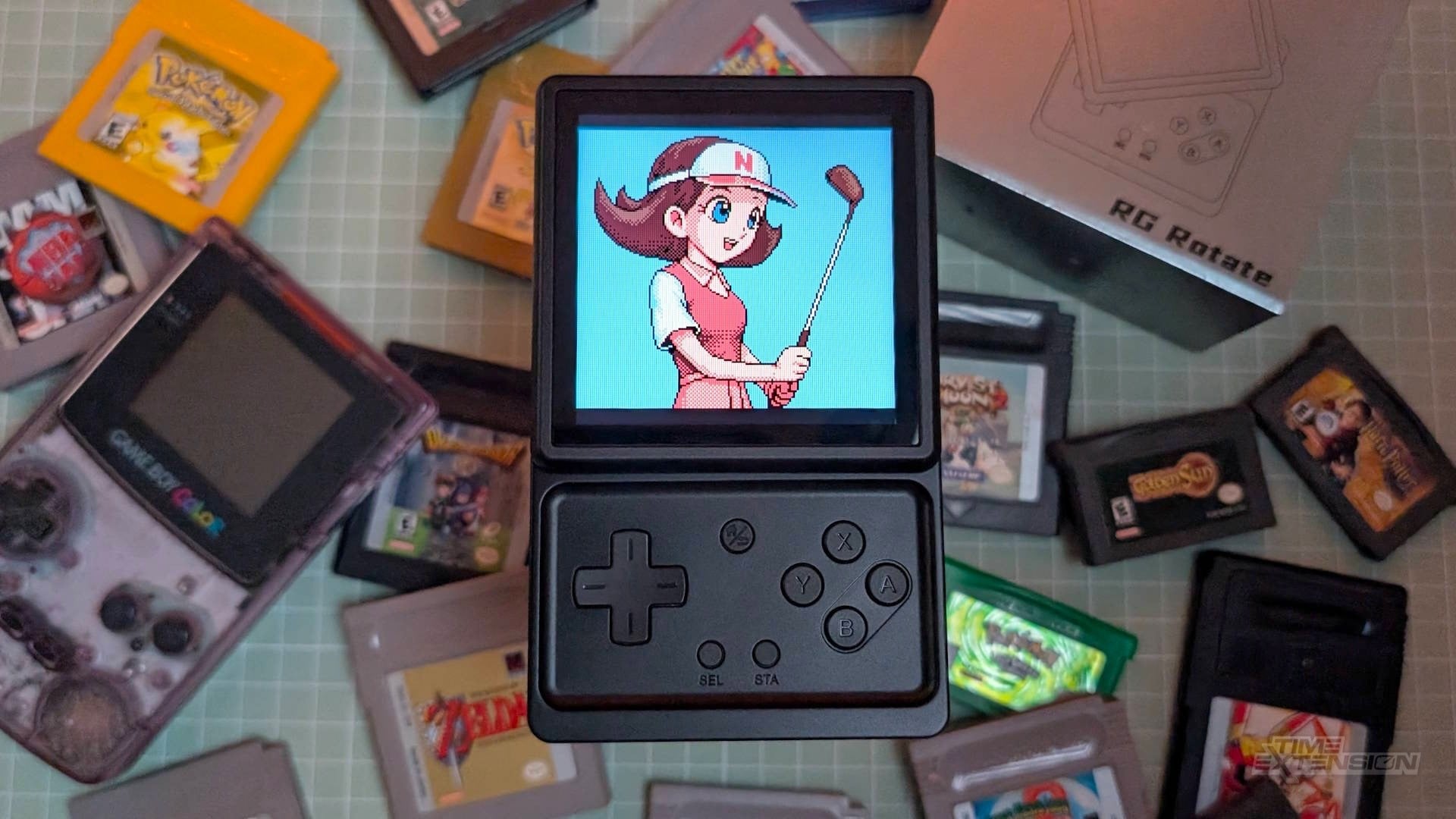
Flipping open the device reveals the controls. The D-pad and buttons are very clicky, which I know can be divisive among retro gaming enthusiasts. This isn’t a device I would play for hours on end, but for short game sessions on the go, it’s very well balanced and comfortable to use.
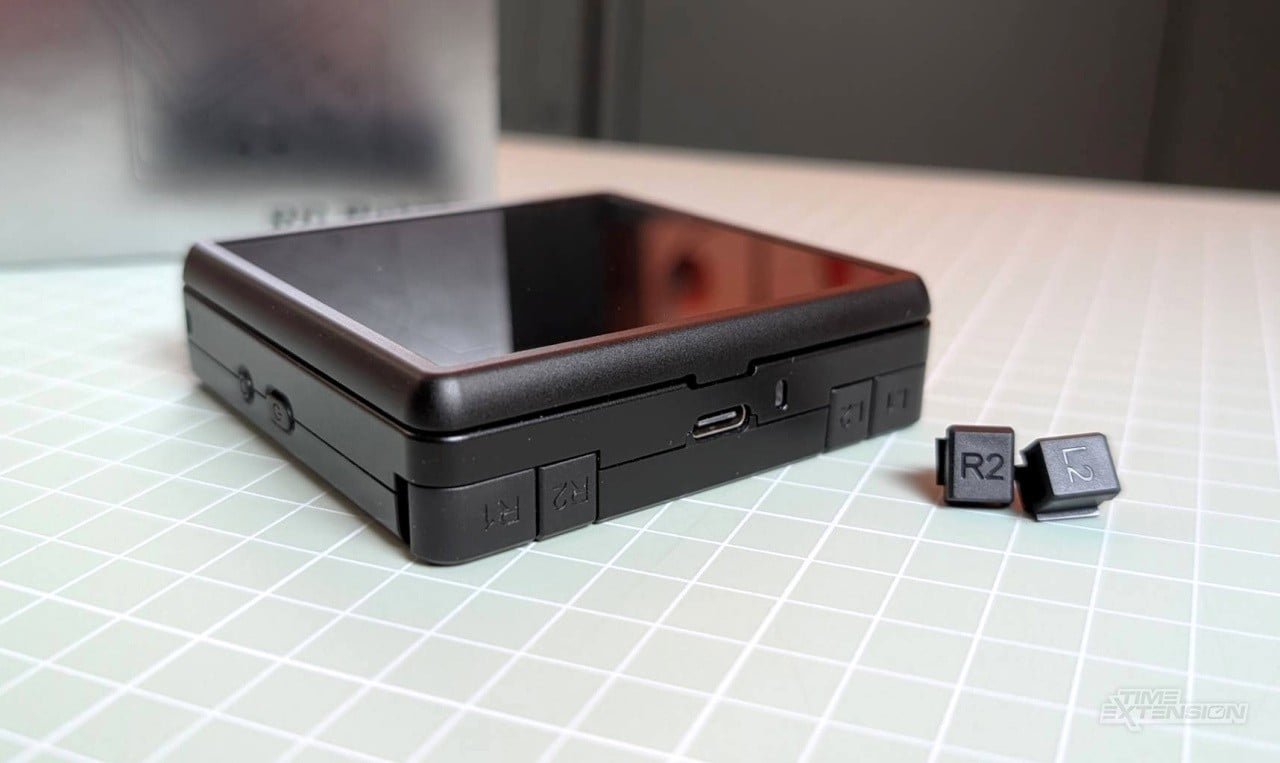
The rotating screen plays a big part in this. It naturally creates a ledge for your fingers to rest, right where the shoulder buttons are. The shoulder buttons themselves are very loud, but there’s an extra set of raised L2 and R2 buttons in the box to make them easier to find. You will have to open the device and disconnect cables to swap them out, but nice to have the option.
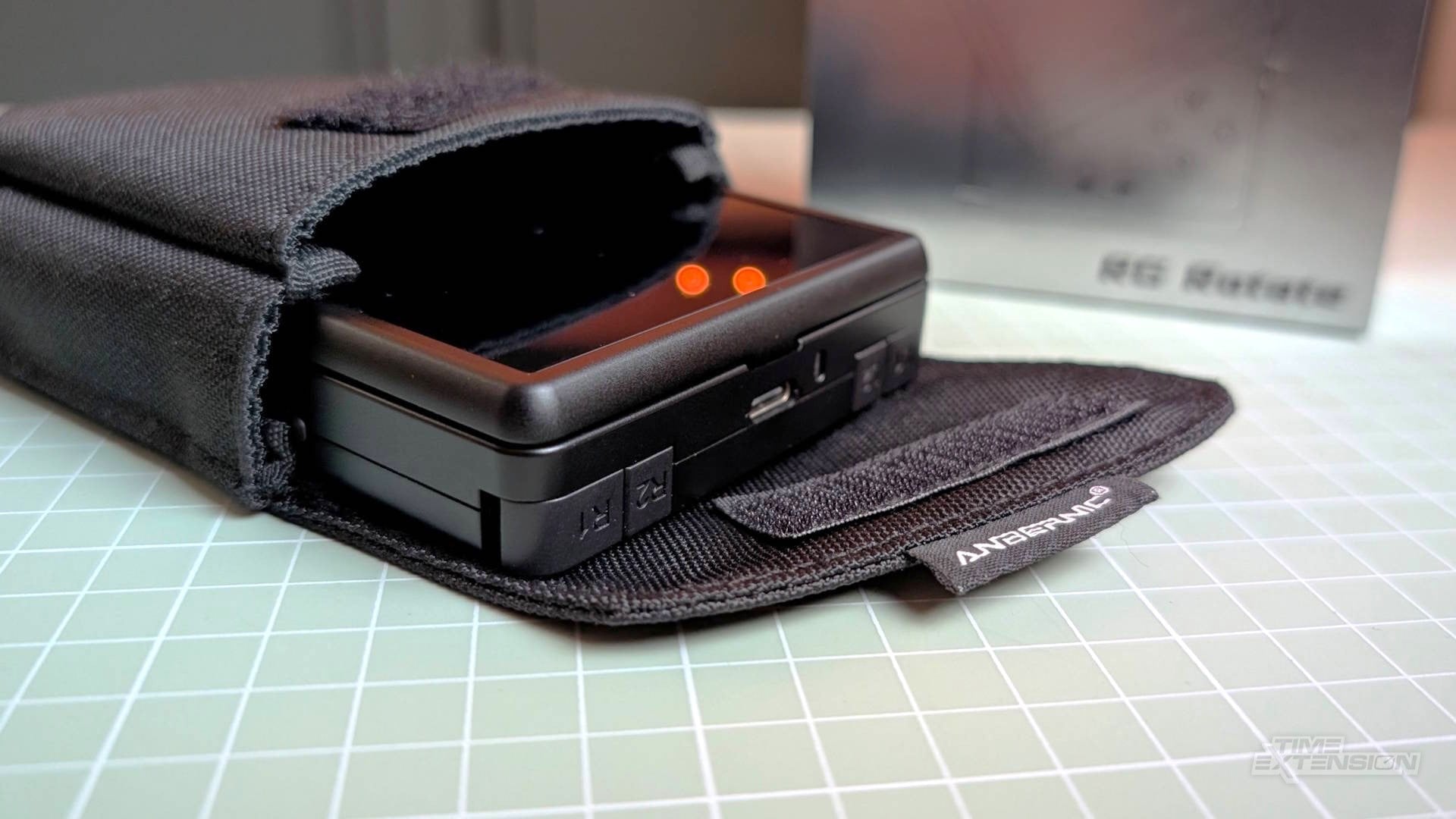
Personally, I kept the default, flush shoulders for pocketability. For the systems I enjoy on this, L2 and R2 are only used for hotkeys, so I’d rather not hit them accidentally.
There are no sticks on the Anbernic RG Rotate, and for me, that’s a plus. Some vocal members of the handheld community seem to want every device to play every system, but in my humble opinion, those people are wrong.
Sticks on a device this small will never be comfortable to use, and newer, higher-resolution games will look terrible on such a small screen. Trust me, it’s not worth it.
If you insist on playing stick-focused games on this, do yourself a favour and buy a Bluetooth controller. Or even better, get a different handheld altogether.
Punching Above Its Weight
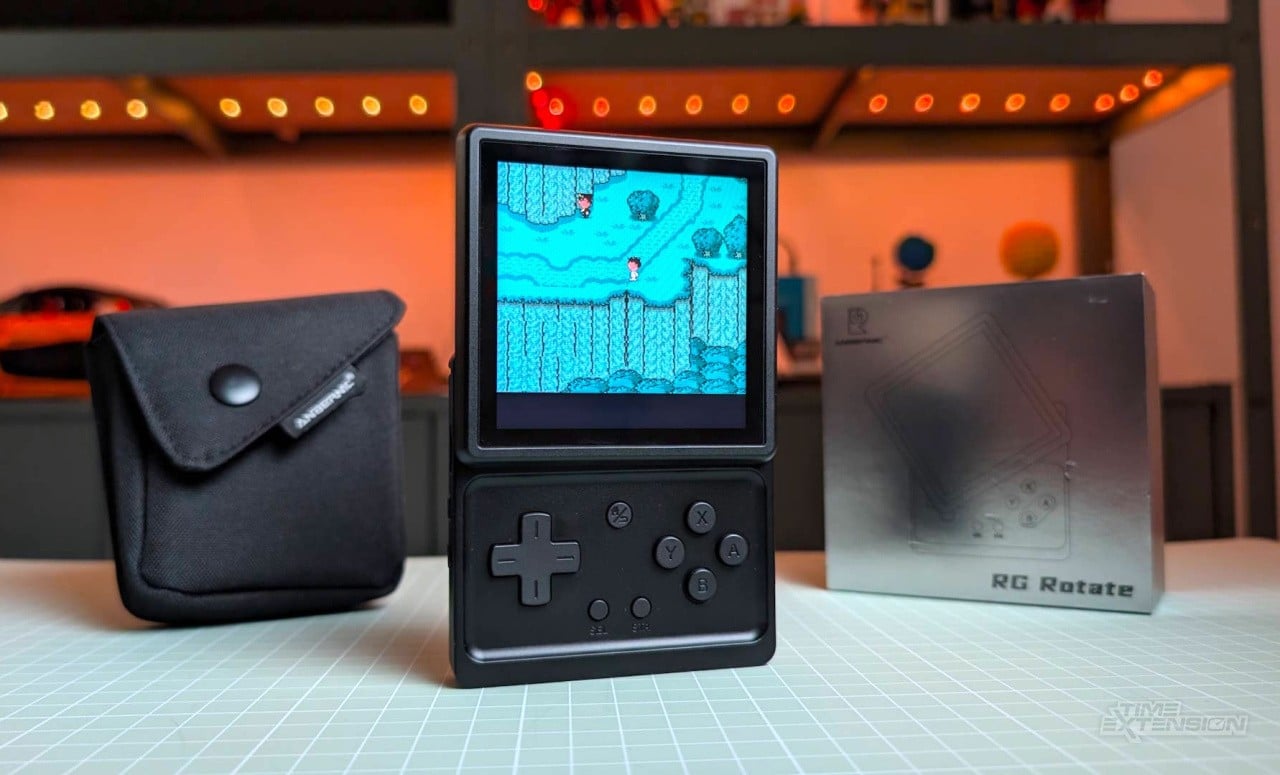
Despite lacking the controls, the Unisoc T618 is a surprisingly capable chipset, and when paired with 3GB of RAM, it’s technically capable of playing some GameCube and PS2 games. You probably won’t enjoy playing those games on this device, but it does make it one of the most powerful options at this size and price.
Rather than push it to the limits, my favourite titles to play on the RG Rotate were Game Boy and Game Boy Colour games, which look phenomenal on this screen. Those were the games that got me started back in the '90s, and many still hold up decades later.
The square screen also lends itself perfectly to PICO-8 games. This modern retro platform spawned classics like Celeste, but it’s also home to countless other titles that can be played and enjoyed in short bursts.
The RG Rotate is also great for 4:3 retro systems like the NES and SNES. You do lose some screen real estate, but with overscaling, overscan, and the right shaders, most games look fantastic. Likewise for the PlayStation catalogue, which plays great with these controls.
Things are mixed when it comes to wider systems. PSP games run fine on this chipset, but the widescreen aspect ratio makes them too small to be enjoyable. Game Boy Advance games fared better, but that’s about as wide as I’d go on the RG Rotate. Nintendo DS and 3DS emulators are pre-installed, but I wouldn’t bother.
There’s a built-in shortcut to change the D-pad inputs to the left stick, which, in theory, allows you to play N64 games. In reality, the microswitch D-pad is a poor substitute. I didn’t enjoy any stick-centric games I tested on this device from any console.
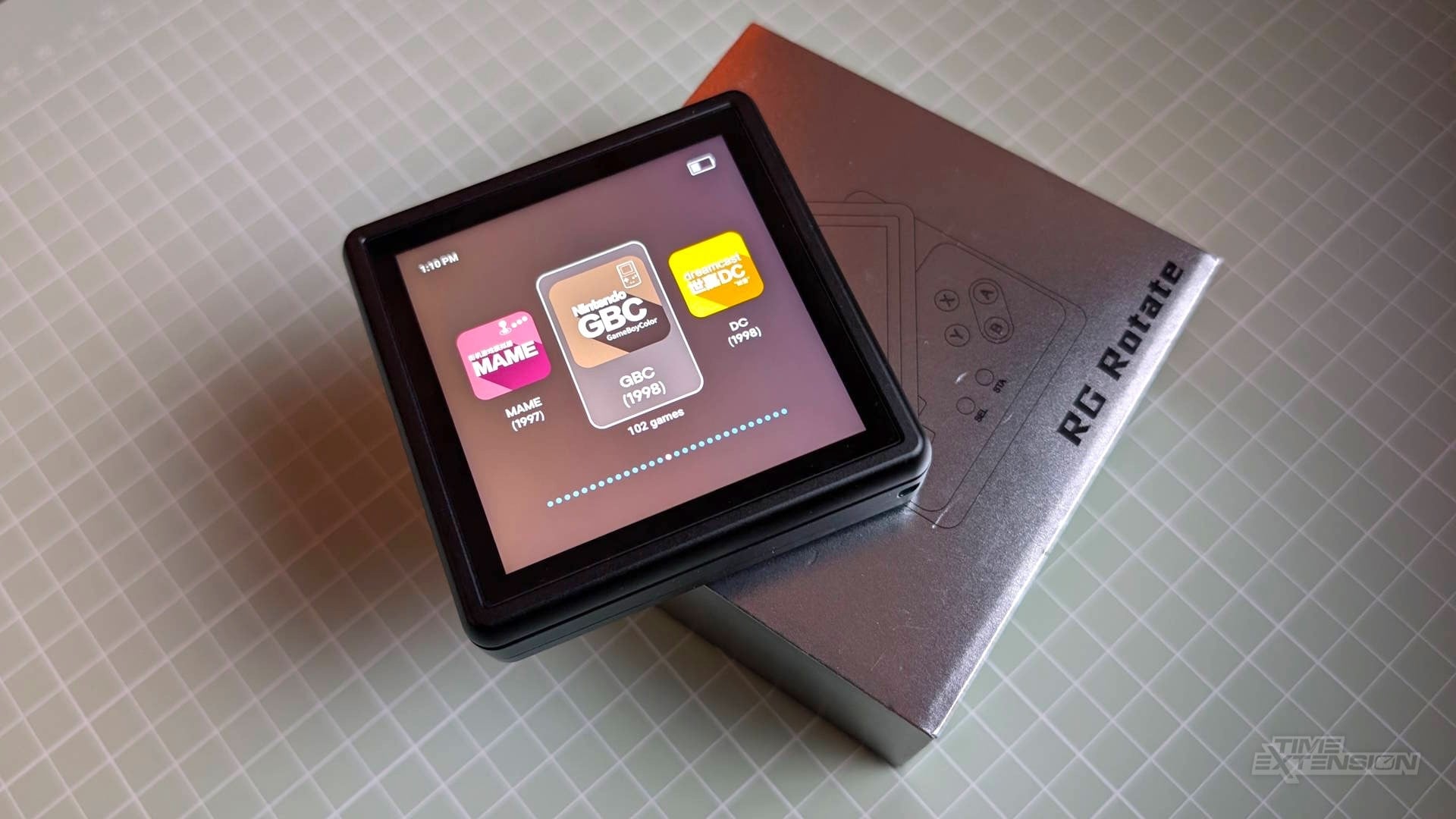
The RG Rotate ships with Android 12, and it comes with the Play Store installed and ready to go. Even casual touchscreen games are fun on this, and they can be played with the device closed. I’d even consider putting social media apps on this, which is never the case for gaming handhelds. It’s surprisingly versatile.
In terms of battery life, the 2,000mAh cell went further than I expected. I got roughly five hours of gameplay in mixed use, which is enough for the brief sessions I favour with an EDC handheld like this. I’m well past the days when I could spend four hours playing Game Boy games without my hands and eyes needing a rest.
The battery also drained fairly significantly overnight, especially when emulators were left open. I saw roughly 5% disappear on standby, and the only way to prevent this is to turn it off completely when not in use. There’s an option in the system menu to turn off the screen when you lower the lid, but more battery-saving tools in Anbernic’s OS would have been nice to see here.
On the plus side, the RG Rotate charged pretty quickly. However, that’s mostly because the cell is so small. An hour on the charger brought it all the way to full, but a quick 30-minute top-off is generally all I needed to get a full day’s charge.
Anbernic RG Rotate Review: Should You Buy It?
It’s only been available for a week, but the Anbernic RG Rotate is already proving to be one of the company’s most popular devices. After testing it, I can totally understand why.
This thing is just a joy to look at, hold, and use. That’s rarely the case with these emulation handhelds, which at this point all look increasingly similar. That alone makes it worth buying for collectors and handheld junkies like me.
It’s also an interesting hybrid device for audiophiles, although it won’t live up to even budget DAPs like the Echo Mini – but that little guy can’t play Pokémon.
If you just want to play games, there are plenty of alternatives at or below the price of the RG Rotate. The TrimUI Brick is one of my favourites, and the clamshell RG 34XXSP is arguably a safer pick for throwing into your bag.
Ultimately, though, no other handheld has the sheer charm of the RG Rotate. I’ve gotten more comments about this device in public than I have in years, so there’s something to be said for being unique in a market filled with copycats.
Please note that some external links on this page are affiliate links, which means if you click them and make a purchase we may receive a small percentage of the sale. Please read our FTC Disclosure for more information.


Comments 12
It does look really nice but my big old man hands can't cope with buttons so close to the bottom, I'd have claw hands in minutes.
A new form factor. Wow. This will change everything.
Please explain to me what is rotating screen for .
I really want one - it just looks like something I want to hold, even if that isn't the most rational position to have.
One for the Christmas list.
@Przemyslaw It looks like the rotating screen is for making the device easily fit into pockets.
@Przemyslaw Yeah, when I first saw it I figured it was for TATE-mode games but it's a square; you could just rotate the image.
I don't really understand the DAP thing. Does that just mean that it plays MP3s and has a speaker? i.e. like every other device manufactured in the past 25 years?
Removed - unconstructive
@WileyDragonfly that sounds like a you problem lol
Just got mine and its fantastic. I've found a bunch of android games that scale perfectly. I play them one handed in tablet form. Solitaire to sudoku to even match 3 is perfect on it
@Przemyslaw its to open it up and then free up the hidden physical controls
"Seeing the flipping screen open for the first time took me right back to the movie theater in 1999, watching Neo snap open the Nokia 8110 phone to answer a call from Morpheus."
Core late 90s memory unlocked.
I hunted around for ages to find the exact Neo and Trinity black sunglasses shades to wear, and a friend went after the Agent Smith ones for contrast, as he always liked the villains more...
Show Comments
Leave A Comment
Hold on there, you need to login to post a comment...