
 by
by 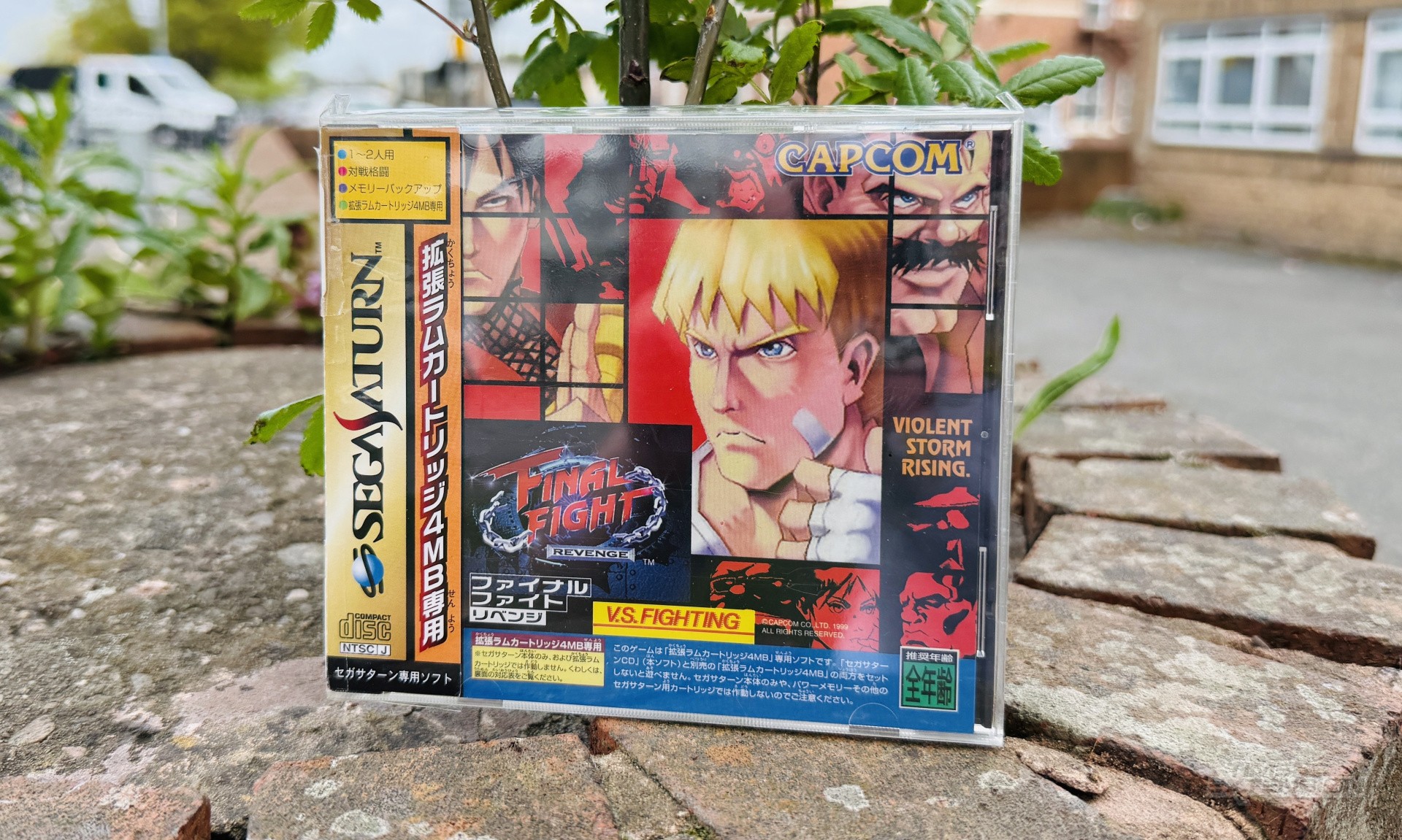
It's fair to say that Capcom's Final Fight Revenge isn't the franchise's finest hour.
Developed for Sega's Titan arcade board and Saturn home console at the tail-end of the 1990s, it was created not in Japan but in the US by Capcom Digital Studios, an outfit that would later work on the likes of Maximo and Final Fight: Streetwise. Rather than stick to the 2D belt-scrolling template laid down by previous entries, Revenge went 3D and opted for the one-on-one approach popularised by the likes of Virtua Fighter and Tekken, albeit with a focus on picking up weapons strewn around the arena.
Veteran journalist Matt Leone has been speaking with key personnel on this troubled project and has put together a fascinating oral history on his Design Room website (which is paywalled, but worth every penny).
Right from the beginning, it's clear that Capcom's US studio was under scrutiny, despite the fact that the Final Fight brand was hardly in the same league as Street Fighter in terms of commercial clout. "It felt like we were under surveillance while we tried to prove to Capcom Japan we [could] make a fighting game," says environment artist Adrian Ludley.
Capcom USA president Bill Gardner explains how the studio had to contend with Capcom general manager Yoshiki Okamoto, who would fly over from Japan to oversee things in the US from time to time:
"He didn't come over often, and when he did, you know, "Oh, I don't like this. Oh, I don't like that. We need to do this. We need to do that." And it would throw this studio into turmoil because they were going down some path and Okamoto wanted to change it.
And so, in truth, to my way of thinking, nothing was really getting done. They'd start something, and then Okamoto would come over and he'd change direction on it. And then he'd go back to Japan, and they'd get down that route, and then he'd come back over and change his mind, and, ugh, it was a nightmare."
Art lead Jonathan Casco explains that former EGM writer David Siller, who was hired to run Capcom Digital Studios, would clash with his Japanese counterpart. "At times, David Siller and Okamoto-san didn't see eye to eye," he says, before adding:
"Okamoto-san was a bit of a prankster and was always making digs at folks, which Siller didn't appreciate. This all seemed like business as usual since we were working for a Japanese company in the U.S. I respected and enjoyed working with both Okamoto-san and Siller equally, but as time went I felt inclined to show more support for the latter.
Siller showed more faith in me and others whereas it felt like the folks in Japan perceived the U.S. devs as being fat or spoiled. To be clear, the Japanese devs who worked with us internally were very supportive, but other folks who came to visit from abroad seemed more critical of our efforts or looked upon us as maybe a bad investment."
Ultimately, Final Fight Revenge was both a critical and commercial disaster. Producer Montgomery Singman tells Leone that Tetsuya Iijima, a Capcom veteran who joined the US studio to help guide the project, was later "scolded" by his superiors for the game's performance.
In hindsight, it didn't stand a chance – by the time it launched on Saturn in 2000, Sega's next console, the Dreamcast, had already been on the market for well over a year in Japan. Even if it had been the best fighting game of all time, it's hard to see how Final Fight Revenge could have overcome the odds, given the timing of its release and the system it was created for.
Singman also laments the fact that Capcom had struck a deal with Sega to have the game as an arcade and console exclusive:
"At the time, I was moaning and groaning. I was literally walking around the studio. I was like, "Why? Why? Why? Why couldn't we use PlayStation hardware?" Because it was superior. And Saturn was a pain in the butt. It's got a dual Hitachi CPU and [it's] really difficult to fine tune. And you look at the graphics quality between Saturn and PlayStation — I thought there was no comparison."
Singman also says that the game should have been a 2D side-scroller and not a 3D, weapon-focused one-on-one fighter. "That's what we should have done," he says. "But I think because of my technical background and ego, I wanted to show our technical prowess. And I think that was a mistake. From a commercial point of view, we could have done a higher resolution, much prettier Final Fight. And potentially, I don't know, extend the story or do a prequel. That would have been much better. [...] But it was hard because back then everything was going to 3D. Everything. If you still stuck with 2D, you were considered a dinosaur."
Despite all of this, some within Capcom Digital Studio felt that Final Fight Revenge was merely a stepping stone to something better. "Maximo was what the studio was formed to make," says Ludley. "Final Fight was just a bridge to get us there." The studio would rebrand as Capcom Studio 8, Inc., and took a second bite at the series in 2006 with the aforementioned Final Fight: Streetwise – a game which has almost as bad a reputation as Revenge.
The full oral history of Final Fight Revenge is 5,000 words of amazing insight and is well worth a read – so be sure to push a bit of cash Leone's way to support the amazing work he's doing at Design Room.