
 by
by 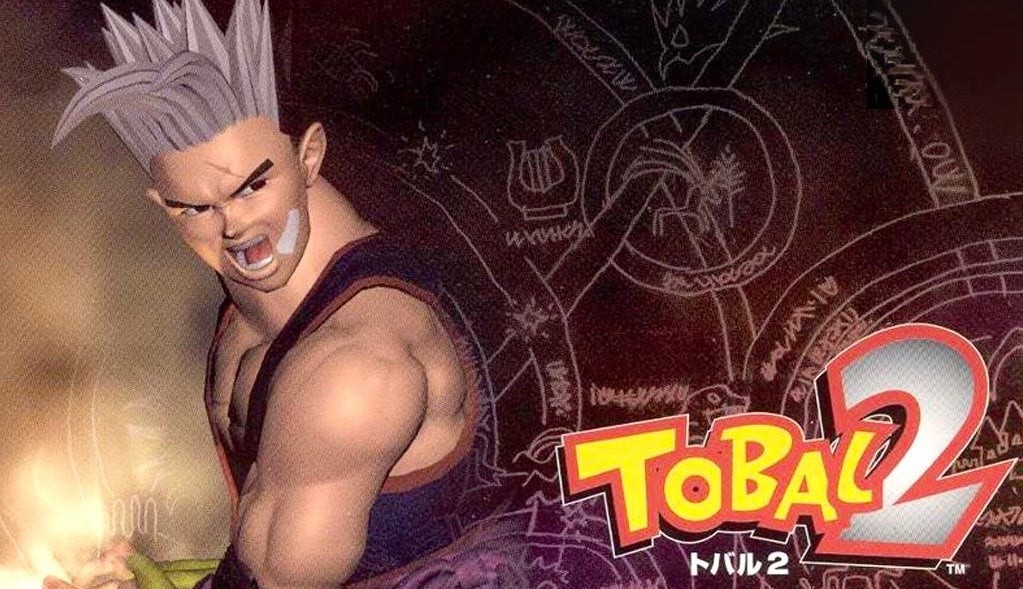
Growing up in the '90s, it could often feel like Japanese companies would simply spin a wheel to decide whether or not they were going to bring one of their titles to the West.
It wasn't uncommon, for instance, to buy a game, fall in with it, and read all about some exciting follow-up or spin-off in the various gaming magazines of the time, only to discover in the space of twelve months that the company had decided not to release the title outside of Japan, typically with little to no explanation being offered as to why.
Being a little older and wiser now, I typically chalk up most of these missing titles today to the costs involved with localising and marketing, as well as concerns about a potential return on investment, but it turns out that isn't the only reason a game might end up being passed over. While talking to the former Square Enix localiser Richard Honeywood, for example, he offered two examples of games he attempted to bring to the West, which eventually had to be passed over for slightly different reasons. This includes the Final Fantasy spin-off Chocobo's Mysterious Dungeon, and the fighting game sequel Tobal No. 2.
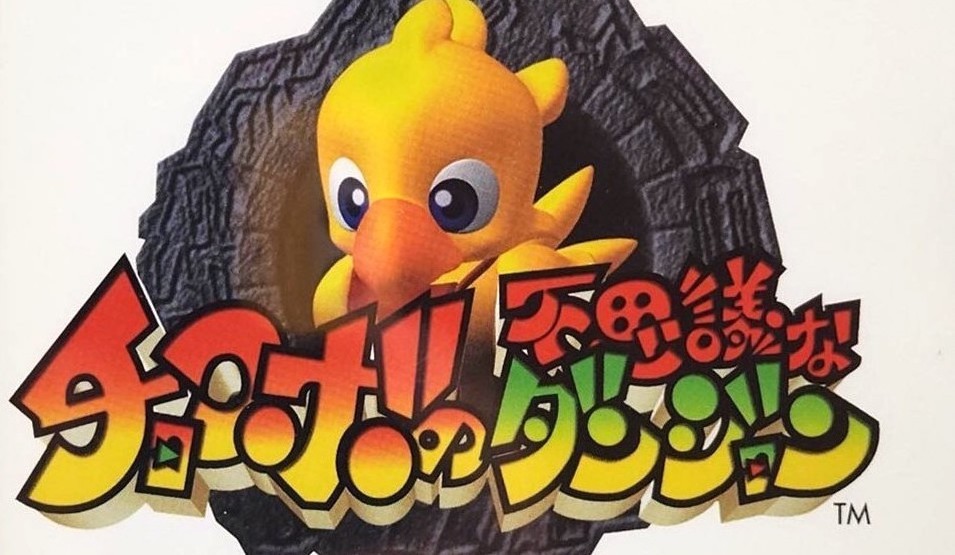
In this interview, Honeywood told us that Chocobo's Mysterious Dungeon was actually the first game he was assigned to localise after joining Square, with the idea being that he would be offered the source code and be able to work independently from the main development team. As he recalls, though, the source code he was provided with wasn't complete, and the computers that potentially contained the missing pieces had already been formatted and put to use elsewhere within the company.
Honeywood said:
"The first title they put me on was Chocobo Dungeon. I got the source code for it and was supposed to work on the localisation, but basically, the development team had all split up and moved on to other games.
I was given what was supposed to be the final source code, but it didn't compile and was missing a lot. I remember asking someone, 'This section's missing, where is it?' and they told me, 'Oh, the guy who worked on that quit.' I asked them if we could get it off his PC, but the PC had already been taken and reformatted, and given out to somebody else. Nobody was doing resource management at all. So, I had to turn around to the executives and say, 'You can't release Chocobo Dungeon; we're missing half the source code.'
Because of this title, Chocobo's Mysterious Dungeon was never released outside of Japan, and Honeywood realized that the setup of having him work separately from the main development teams wasn't exactly viable.
As a result, moving forward, he and the localisation department came up with a different system that would see the developers take a month off after completing a project, during which time the localisation team would work on the translation. When the development team came back, they would then implement what the localisation side had come up with. Interestingly, despite Chocobo's Mysterious Dungeon being passed over for release, its 1998 sequel, Chocobo Dungeon 2, would be localized for North America in 1999.
Another title that Honeywood and the localisation tried to make happen was Tobal 2. The first game had previously been released in Europe and North America, so it made sense for the sequel to do the same. Speaking to the developers, though, they told Honeywood that an English translation would be impossible, thanks to the available amount of memory on the PlayStation and the large amount of text.
Speaking to us, Honeywood stated this was the reason Tobal 2 never made it to the West, but also implied this could have been secretly motivated by the development teams, "preferring to spend their time working on a Japanese version, which they felt was going to sell way more". This was an attitude that eventually changed after the success of Final Fantasy VII.
"We also tried to do a localisation of Tobal 2, but the development team told me, 'We can't put English text into the speech bubbles; it's too difficult.' I remember I was like, 'You're always talking about how great your technology is, but you can't do speech bubbles. Seriously?'
"At the time, a lot of the development teams at Square basically felt that the foreign versions were essentially petty cash; it's not real money. So they preferred to spend their time working on a Japanese version, which they felt was going to sell way more.
"What eventually made that easier is that Final Fantasy VII ended up selling like hot cakes in North America and Europe and made so much money. Suddenly, after that, even the games we weren't going to localise were begging us to localise them. At the same time, the US was also trying to hire more staff to increase the number of translators over there. So they hired two new translators, [Yoshinobu "Nobby" Matsuo] and Brian Bell."
Fortunately, both games have since gone on to receive fan translations in the years since. Tobal 2's translation, for example, was released in 2002, courtesy of Infinite Lupine Translations (further updates have since been released by r4dius and VincentNL in 2020 and 2025, respectively), while Chocobo's Mysterious Dungeon translation dropped in 2020, and was the work of Specialagentape and Higsby.