
 by
by 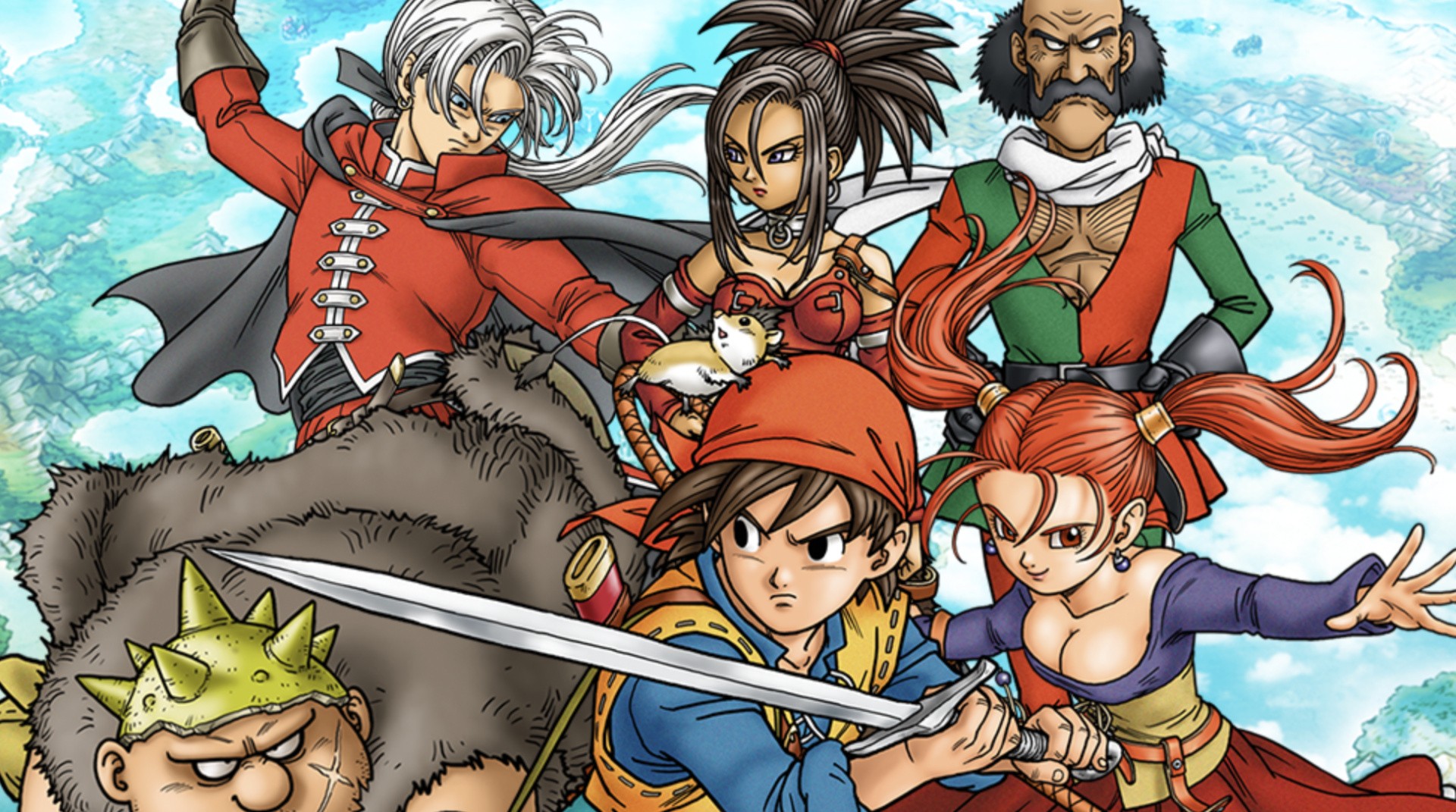
We were recently fortunate enough to sit down with Richard Honeywood, a true legend in the world of video game localisation, who has worked at companies such as Seibu Kaihatsu, Square Enix, and Blizzard.
During his time at Square Enix, he was involved with Dragon Quest VIII, the first mainline entry in the famous RPG franchise to use voices – something series creator Yuji Horii was initially against.
For the English-language version of the game, Honeywood wanted to use British English as opposed to American English in order to differentiate Dragon Quest from Final Fantasy:
"Final Fantasy in the West was basically cyberpunk. You can get away with using American English even in sometimes classical settings, because it's got that cyber element. While Dragon Quest is more traditional fantasy. In fact, the original translations on the NES were sort of done in a faux-Shakespearean feel, even though it was American translators."
Aussie Honeywood says that because Dragon Quest is "a comical, lighthearted fantasy," he felt that British humour would suit it perfectly – "which didn't fly with the American office; they couldn't understand it, and they really hated it."
He adds:
"Even Yutaka Sano was adamant against it. He says, 'If you let British English in, it's going to change everything, and it's not going to sell in America.' He was adamant about it. So I said, 'I respect that, I'll make it British English lite." So he was like, 'Okay, punctuation, spelling, phrasing, you can have two of the three for an American audience,' which is like the dumbest rule ever; it's either British or it's not. So if you look at some of the later games like Dragon Quest Heroes: Rocket Slime, for instance, he didn't allow us to use British spelling, but the punctuation and phrasing could be British. So we'd avoid the word colour, because it has a "u" in it, and say 'hue' instead."
Honeywood faced resistance when it came to the translation teams he wanted to use, too; one of the bonuses of using British English, he says, was that he could collaborate with British English translators. However, he had to turn them down – but there was an upside to this situation.
As well as using Plus Alpha ("a married couple that have worked on tons of games, because I knew those guys had the quirky humour that I wanted"), Honeywood drafted in Morgan Rushton, a QA tester, to be an editor. He also got another tester, Oli Chance, involved. "Later on, Oli and Morgan formed Shloc, which is one of the best translation houses or teams in the UK right now. But that was how that got formed, just from me pulling them across to work on Dragon Quest." (Shloc's recent titles include Death Stranding and Final Fantasy XVI.)
Square Enix's US office still put its foot down, however, telling Honeywood that "at least one American" needed to be on the team to "make sure Americans can follow it." He responded by bringing in Matt Alt, who worked on Dragon Quest VII, as an editor.
"Whenever we did jokes or whatever," adds Honeywood, "we had to see whether he got it or not, and he was our barometer, such as in the case of Cash and Carrie, who are in a town called Baccarat. These were two characters who we characterised as very in-your-face Americans, basically British people taking the mickey out of Americans. Matt thought it was hilarious, and he actually helped us turn those Americanisms up to 11."