
 by
by 
Last week, we published the first half of our conversation with the localisation legend Richard Honeywood.
In that previous article, we covered the surprisingly eventful journey of how the Australian game developer originally moved to Japan, his memories of his first video game job at the Raiden developer Seibu Kaihatsu, and the incredible experience of befriending Satoru Iwata while working on a Splatoon-esque shooter for the 64DD.
Where we left things off was just as Honeywood was about to accept an interview with Square. This decision ultimately led him to pursue a lengthy career in video game localisation. In part two, we pick up pretty much right from that spot, albeit with a slight detour first to talk about an amusing side story Honeywood shared about a "batshit crazy" interview he had with Sega, in between working on the 64DD and getting the job at Square.
Some of the fascinating topics we cover in this second part include how Final Fantasy VII's incredible overseas success changed attitudes to localisation within Square, the various struggles Square Enix faced when translating the dense sci-fi epic Xenogears, and how one of Honeywood's accidental errors led to a famous bug from the original version of Chrono Cross. We also hear about how Honeywood first heard about the Enix merger with Square, some of the objections Honeywood and others faced when deciding to use voice acting and British accents in Dragon Quest VIII, and how the localisation director unexpectedly became Yuji Horii's foreign travel companion. There's a lot to cover, so be sure to get comfortable, as we continue our journey through Honeywood's remarkable career:
Sega Rally Confusion
Time Extension: Before we move on to Square stuff, I've heard you also previously applied to Sega to be part of the Sega Rally team. What happened there?
Honeywood: That was probably the most batshit crazy thing that's ever happened to me. So, as I said, a person I had worked with at Digital Eden had joined the SEGA Rally team, and he had talked about me to someone on the SEGA Rally team called Suzuki-san.
They called me in for an interview, and I travelled all the way from Kōfu to this place near Haneda airport, where Sega was based, and I thought I was meeting with the Sega Rally team. But suddenly the secretary walked in just as I was meeting the guy, and said, 'No, I'm taking him to one of the Yakuin, which is a member of the board of directors,' who was also called Suzuki-san. Even the guy who was supposed to interview with me was like, 'What?'
Because I was the fish out of water, I was like, 'Okay, I'll go wherever I'm told,' and so the secretary took me in, and there was this big boardroom meeting taking place between this board member and a bunch of NEC people. He booted them all out, and suddenly I'm in this massive boardroom, and he's sat down in front of me, and he's just delivering this big, long speech.
From what I remember, he said something like, 'You're Australian... Australians think nothing but sunbathing and taking time off work. The Japanese are farmers. They work really hard.' I was thinking, 'Where is this going?' Then, the next line I remember he said was something like, 'When I worked with Michael Jackson, he said that Sega games are like his hit records.' He went on this long spiel for a good 30 minutes, and during it all, I was trying to get it back to interview questions, saying things like, 'I've got these skills,' but he was having none of it. Then, after the 30 minutes were up, he just stood up and said, 'Well, come back and do your best,' and walked out of the room.
At that point, I panicked slightly. I was like, 'Wait, what do I do?' I was in this room just sitting, twiddling my thumbs, thinking the other interviewer would call me or come into the room to meet with me, but nothing happened. I peeked out of the meeting room, and I saw that the secretary who had pulled me across before was now sitting there typing, and I said, 'What happens now?' She said, 'I don't know,' and walked me out of the building. And I was just left wondering, 'What the hell has just happened?'
What's strange is the next day, I got a call from Sega's HR saying, 'So, are you going to take the job?' But I told them I didn't even know what the job was. They said, 'Wait, didn't we interview you?' And I said, 'I was supposed to speak with someone from the Sega Rally team, but some board director stepped in, and I have no idea what happened.' And they were like, 'Ah, he's done it again. We'll get back to you.' Even stranger, the next day after that, they called me back again and said the same exact thing, 'Are you going to take the job?' So I said, 'Wait, you're supposed to get back to me about what the job was.'
This went on for days, then after about three days of calling, I told them, 'Please stop calling me' (laughs). It was so bizarre.
Joining Square & Final Fantasy VII
Time Extension: From there, how did you originally get the job at Square in localisation?
Honeywood: So, Ken Narita, who was the head programmer, had hired me and said, 'Yep, I'm taking him.' He's going to be a Final Fantasy programmer. But then I suddenly got called back in, and the head of the US office turned up.
He said, 'We're thinking of setting up a localisation department. Would you set it up for us?' At the time, they wanted to set it up in HQ rather than America. And they asked me, 'Would you do that?' I told them, 'I don't know what localisation is,' but then he basically explained to me what the goals were and whatever. So that's where my whole life took a different direction.
Time Extension: Do you know why they wanted a programmer? Had they originally wanted you to use your programming skills, too?
Honeywood: That was part of it. With localisation, they wanted somebody who knew video games. They already had a translator, Michael Baskett, who was more of a movie guy. He was into war movie subtitling back in the day. So when he was working on video games, he wasn't really a video game player, which is what they really liked about me.
It was, 'Okay, we can get this bilingual guy, who's done localisation without realizing he's done localisation, and he can program. We can put him in any dev team, and he could localise the games for us.' So back then, the idea was rather than the original development team spending three months or whatever working on the foreign version, they'd hand the code over to this wonder boy programmer who would solve the localisation problem for them. I was naive at the time, so I just accepted, thinking that it would work, but I soon realized that wasn't going to be the case.
Time Extension: Am I right that another person joined you in setting up the localisation department?
Honeywood: Yes, Aiko [Ito]! The reason why she was in localisation was really ironic. She was raised in Japan, but she was from a Korean lineage.
Aiko had assisted Ted Woolsey, who was the Square's main translator before Michael Baskett. So she had worked on games like Super Mario RPG, Chrono Trigger, and all those old games. She did that because she was the only person inside the development team who happened to have some English, and also, because she was Korean. So, later on, they thought, 'We'll put her in the new international department,' so Aiko was suddenly thrown in with me; she didn't even know I was joining.
Suddenly, the head of the US office brought me in and told her to move seats and sit next to me, and we were put under the network department, because where else are you going to put your localisation? Our manager in the Japanese office was the head of the network department, and he was just like, 'What the hell am I doing with these two foreigners?'
By the time we were working together, Final Fantasy VII had just mastered, and it was too late to change anything. So I was just looking at the source code and the pre-release gameplay of Final Fantasy VII, and I was looking for stuff that I knew was a mistranslation or could be done better for later releases. So, for example, "PHS", which is the party management system, was actually a reference to a phone system in Japan, like a mobile phone system, but they hadn't translated it that way; they just kept it as PHS overseas. I was making these suggestions to feed back to the translator, but I kept being told that he's in the US.
After a while, they walked up to me with tickets to America, saying, 'Here, you fly to America tomorrow to meet with the translator in the US office.' I had to tell them, 'I'm not American, I need to get a visa.' They didn't even realize that I was Australian, so I rushed to get a visa and flew to the American office. Within a couple of days of joining Square, I was in the US, and that was just as Final Fantasy VII was coming out.
Time Extension: I actually spoke to the guy who was the producer on the European versions of Final Fantasy VII for Sony. He told me he had no experience whatsoever in Japanese localisation, so he just ended up pulling in a random company to help him out. I can imagine that probably didn't help with creating any consistency between translations.
Honeywood: It was terrible back in the day. If you look at before I joined the company, the name Ahriman, for the eye monster, was basically mistranslated on the earlier titles, and even in the same game once, it had like three different spellings. I would constantly ask, 'Who did this?' It's like, 'Oh yeah, this one was done by one team, and this was done by another.'
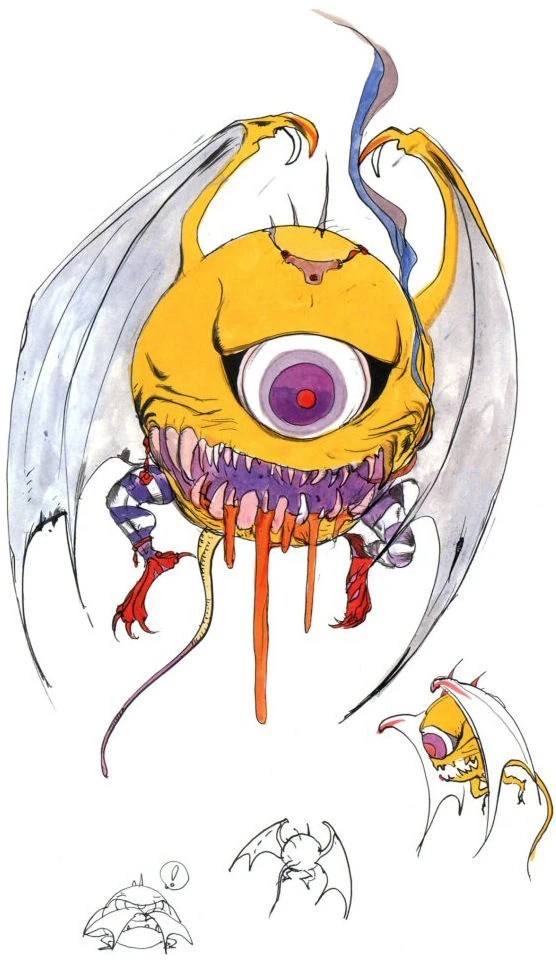
That's where I started thinking, 'Okay, we need to hire and train up our own translators to have that control and consistency.' So, I tried to build a connection with our offices across the world. This was all new territory; it was still the wild west at that point. Up until then, there had been no roles. People didn't say, 'I'm an editor', 'I'm a translator', 'I'm a project manager', 'I'm a localisation director', or 'localisation producer'. Those types of things didn't really exist. We were winging it.
Chocobo Dungeon, Tobal 2, & Xenogears
Time Extension: Do you remember what the first games you were assigned to were?
Honeywood: The first title they put me on was Chocobo Dungeon. I got the source code for it and was supposed to work on the localisation, but basically, the development team had all split up and moved on to other games.
I was given what was supposed to be the final source code, but it didn't compile and was missing a lot. I remember asking someone, 'This section's missing, where is it?' and they told me, 'Oh, the guy who worked on that quit.' I asked them if we could get it off his PC, but the PC had already been taken and reformatted, and given out to somebody else. Nobody was doing resource management at all. So, I had to turn around to the executives and say, 'You can't release Chocobo Dungeon; we're missing half the source code.'
We also tried to do a localisation of Tobal 2, but the development team told me, 'We can't put English text into the speech bubbles; it's too difficult.' I remember I was like, 'You're always talking about how great your technology is, but you can't do speech bubbles. Seriously?'
At the time, a lot of the development teams at Square basically felt that the foreign versions were essentially petty cash; it's not real money. So they preferred to spend their time working on a Japanese version, which they felt was going to sell way more. We basically had to go like evangelists to each of them, saying, 'Can you please allow us to localise this game?'
What eventually made that easier is that Final Fantasy VII ended up selling like hot cakes in North America and Europe and made so much money. Suddenly, after that, even the games we weren't going to localise were begging us to localise them. At the same time, the US was also trying to hire more staff to increase the number of translators over there. So they hired two new translators, [Yoshinobu "Nobby" Matsuo] and Brian Bell.
One of the first jobs we assigned them was Xenogears, which had just dropped, which probably would have been a massive challenge for even the most experienced translators due to its complexity.
Time Extension: I have heard that Xenogears was like a nightmare project for you. What are your memories of that project today?
Honeywood: You have to remember that the content was quite formidable: it's not only packed with references to Jungian and Freudian psychology, but it's also a game about killing god. At the time, I was a Jehovah's Witness, so that part of the subject matter was already kind of hitting my conscience, but some US staff were also scared about what the response would be. For instance, they wanted us to remove the word Church, with a capital, because it might appear to be the Catholic Church. So I was even having to go to the development team before the Japanese version launched, and I was telling them, 'Please tone down some of this stuff.'
Initially, Brian and Nobby were working on the project in the US, along with Michael Baskett. While this was going on, there were some other changes in the US office. As I said, Final Fantasy VII had sold crazy amounts, and I think Michael wanted a bit more respect inside the company, but the Japanese management wasn't having any of it. So there was a falling out that I wasn't fully aware of, and I wrote to Nobby to find out what was happening. He said, 'It sounds like Michael's quitting.' Although they had only finished the first batch of text to translate, both Brian and Nobby made it clear that, for various reasons, they wanted off the project at that point. We moved Brian onto Chocobo Dungeon 2, I believe. I let Nobby help out on some other projects that needed to be done (but I later brought him back on Xenogears to help with QA), and that's where I had to become a lot more hands-on with the translation myself.
Because I was in Japan, I didn't have access to English books, let alone German books, so I had to go to the National Library, where some of these foreign books were housed, to research these concepts and try to find out what they were in English. Remember, the internet was only just becoming a thing at Japanese companies back then. At that time, we had just gotten an intranet at the company, so we could email our American office, but we still didn't have fast data sharing. Even our QA bug reports had to be done by fax! We couldn't just go on Wikipedia and research some of this stuff, so, as you can imagine, it was a total nightmare!
In the end, I nearly killed myself on that title, and people knew it. People saw me sleeping in the office every night and coming up like a zombie. We got to the point where I hardly ever went home, and I was just trying to get that out. At that point, they realized, 'This guy really is passionate about our titles and cares about them.' So we're not giving it to some foreigner who will just turn around a shoddy translation.
Chrono Cross & The Impact of Final Fantasy XI
Time Extension: In the past, I've interviewed Leslie Swan, who was one of the people who started the Nintendo Treehouse and Nintendo's localisation department. Her method was often to pair translators with a team of writers working immediately behind them to punch up what they had written. I'm curious, did you ever use a similar approach?
Honeywood: There was no separate writing team. We basically had the translators do both the translation and localisation. By the time I was working on Chrono Cross with Yutaka Sano [who later became head of localisation at Square US], we had already decided, 'Okay, there's no point in giving us the source code if it's not going to work. So unfortunately, we're going to have to keep the development team on to do the localised version.'
We, therefore, knew we needed a space of about two or three months between the Japanese version finishing and the translation finishing. We told them, 'You guys can work on the next game or whatever while we finish the translations off, and then, after that, you guys can come back and integrate it.'
Most team leads decided that, because people were doing crunch hours to get these games out, they'd give the team a month off, then they would come back and do the localised version. That was the agreement we came to after the first two or three titles, and so with Chrono Cross, that's exactly what we did. We trained up Rich Amtower as our first editor [who incidentally later went to work for Nintendo Treehouse] and Shigeto "Sammy" Matsushima as our other translator to join Yutaka and I, and we got them working on this process where the translators translate, then they cross-check each other's work. From there, they then hand it to editors, and then the edited text goes back to the original translator, and the original translator decides whether to keep the edits or not, which is different from most companies.
If you give your translation to most external companies now, they'll give it to the cheapest translator, and then the editor basically brings it all together from the end, which is a very different approach to what I was doing at Square. I still think that the lead translator should make the final call, not an editor, because often the editors don't speak Japanese; they're only working off a translation, so they often don't understand the source material.
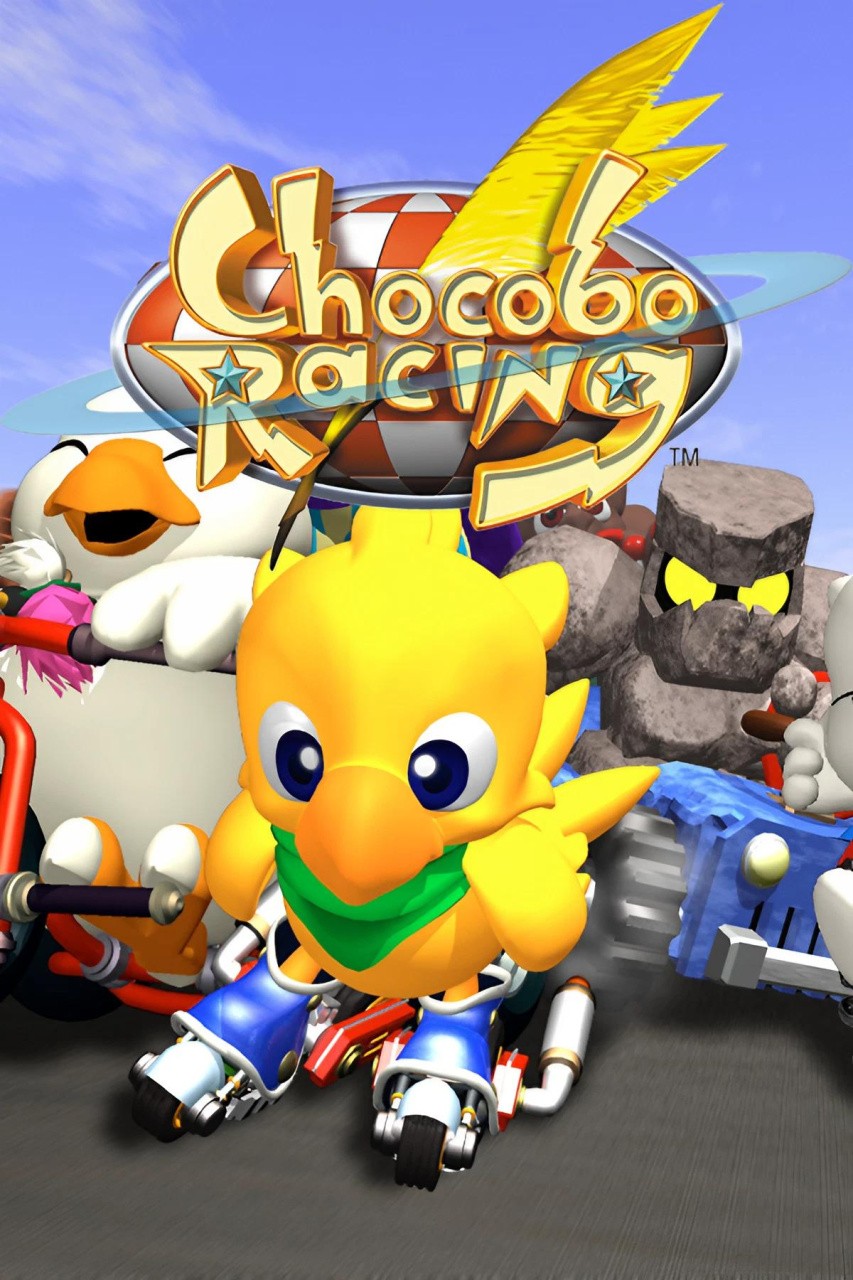
I'd also sometimes use games like Chocobo Racing as a training ground. The translator for that, [Amanda] J. Katsurada, was picked up at an American hiring fair. Because she spoke Japanese and English, they just said, 'Okay, why don't you come to our company and be a translator?' They didn't talk to us about it in the head office. They just suddenly sent this girl to us, so she was like, 'What the hell do I do?'
I sat down with her, and we basically translated Chocobo Racing together in my booth, going through how to characterize a character from the original Japanese to English, to give it that same type of feel. So we'd decide to give one character a Texan accent and others a different type of feel, and we'd also make changes to the graphics and the jokes. The Racing team was very receptive; they knew it wasn't gonna sell well, but they were still like, 'Let's just do it.' I can remember my bonus for that title was 11 yen, which is not even 10 cents. That was my entitlement. Typically, when you're working on a Final Fantasy game, you're getting like tens of thousands of dollars as your bonus.
Time Extension: Didn't some of those early projects also require you to write in zenkaku, so basically full-width, double-byte characters?
Honeywood: Yeah, so back then, because it was a Japanese staff writing in Japanese, all their files were in a Japanese format where all the letters in English are written in zenkaku, which is double-byte. So it didn't really work in English. So I made a little converting tool that did that, and I also made line checking tools because back then, there was no automatic text wrap-around.
On some of the first titles I worked on at Square, we had to actually manually put in line breaks. In fact, if you went over, it could cause the game to crash or lock up. At the end of every message, you basically had to put a double-byte character, like a black circle, which is not in standard English fonts. You can't type it. You have to copy and paste it. I remember in Chrono Cross, there's one scene where we missed this black dot at the end of it, and the game freezes.
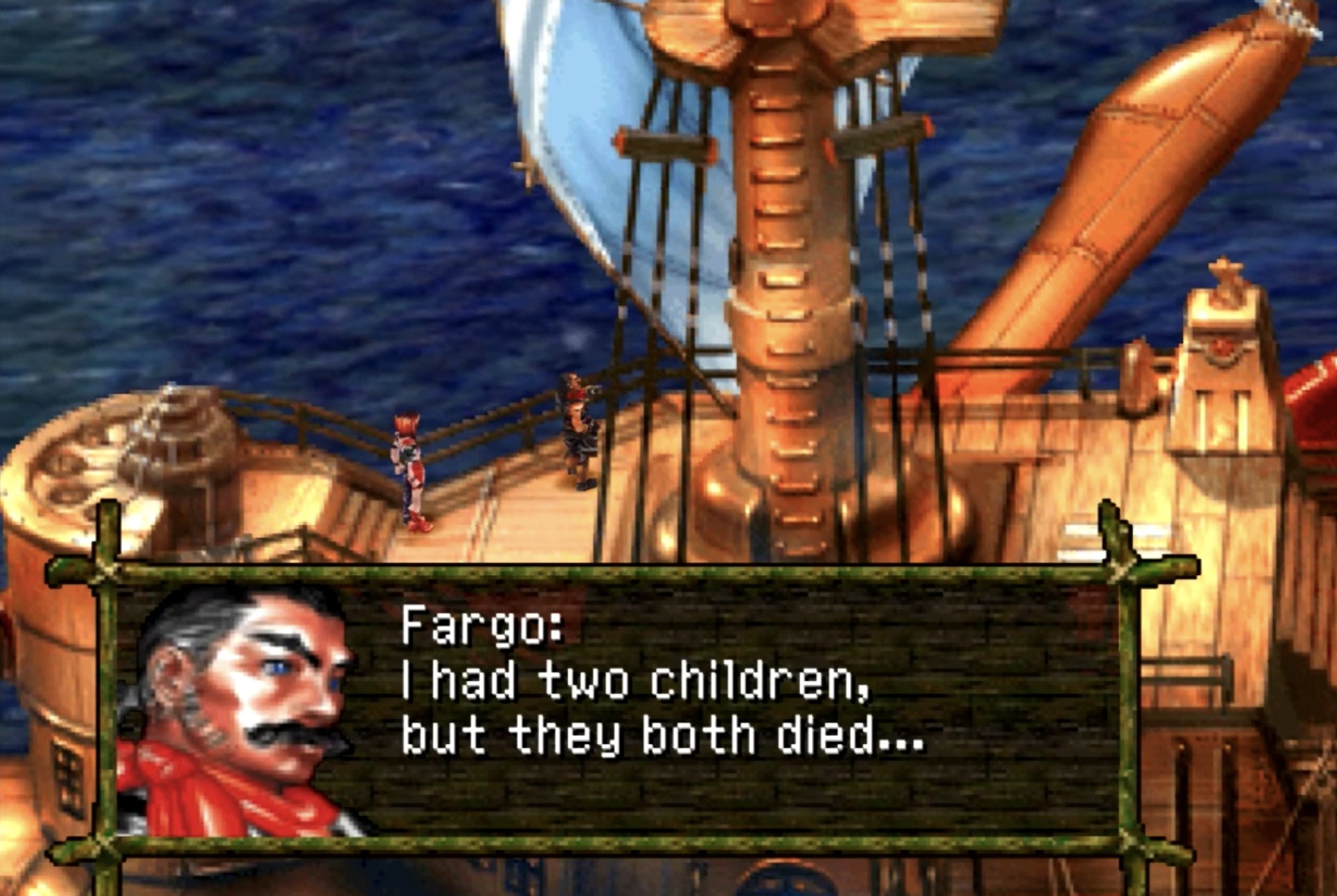
It's the scene where glam rocker Nikki is talking to the pirate Fargo, who is smoking on the deck. It's supposed to be like they're talking to each other and solving life's issues. But because we missed this dot in the international version, it just stops, and it's just Fargo smoking forever. I've seen some people even think that it's a hidden ending, when it's actually just a bug where I missed a certain bit of code.
We were constantly making our own tools to help solve these kinds of problems, but at the same time, I was going to the development team and saying, 'This needs to change going forward.' So basically, they took my code, converted it, and instead of translators submitting the files and converting them themselves, we just put that as part of the compile algorithm. Again, that had some bugs and issues, but that was another step in the right direction.
Of course, it got even more difficult when you go into European languages, because sometimes their accent codes clash with the Japanese codes. It wasn't until the Final Fantasy XI era that we finally got to use normal English text, and the European translators were able to use native European accent marks and diacritics natively, rather than having to convert them back and forth. It was crazy.
Time Extension: Last year, I interviewed Brody Phillips, who worked on Final Fantasy IX, and he mentioned something I thought was interesting about Final Fantasy's spell names. I don't know whether this is something that you can remember, but he said on Final Fantasy IX, someone actually suggested the spells be called Fire, Firrific, and Firama, rather than the Japanese Fire, Fira, and Firaga.
Honeywood: That sounds like something I would suggest (laughs). Before I joined, they were translating spells as Fire 1, Fire 2, Fire 3, and that type of stuff, and it didn't feel like it fit the original game.
So I was suggesting other stuff — some of which I ended up using in Dragon Quest. Like using onomatopoeia, rather than just straight up translating it, or going more of a Dungeons & Dragons route. Dungeons and Dragons was too much of a legal issue. So we sort of had brainstorming sessions for every Final Fantasy about that, which is where we likely discussed that.
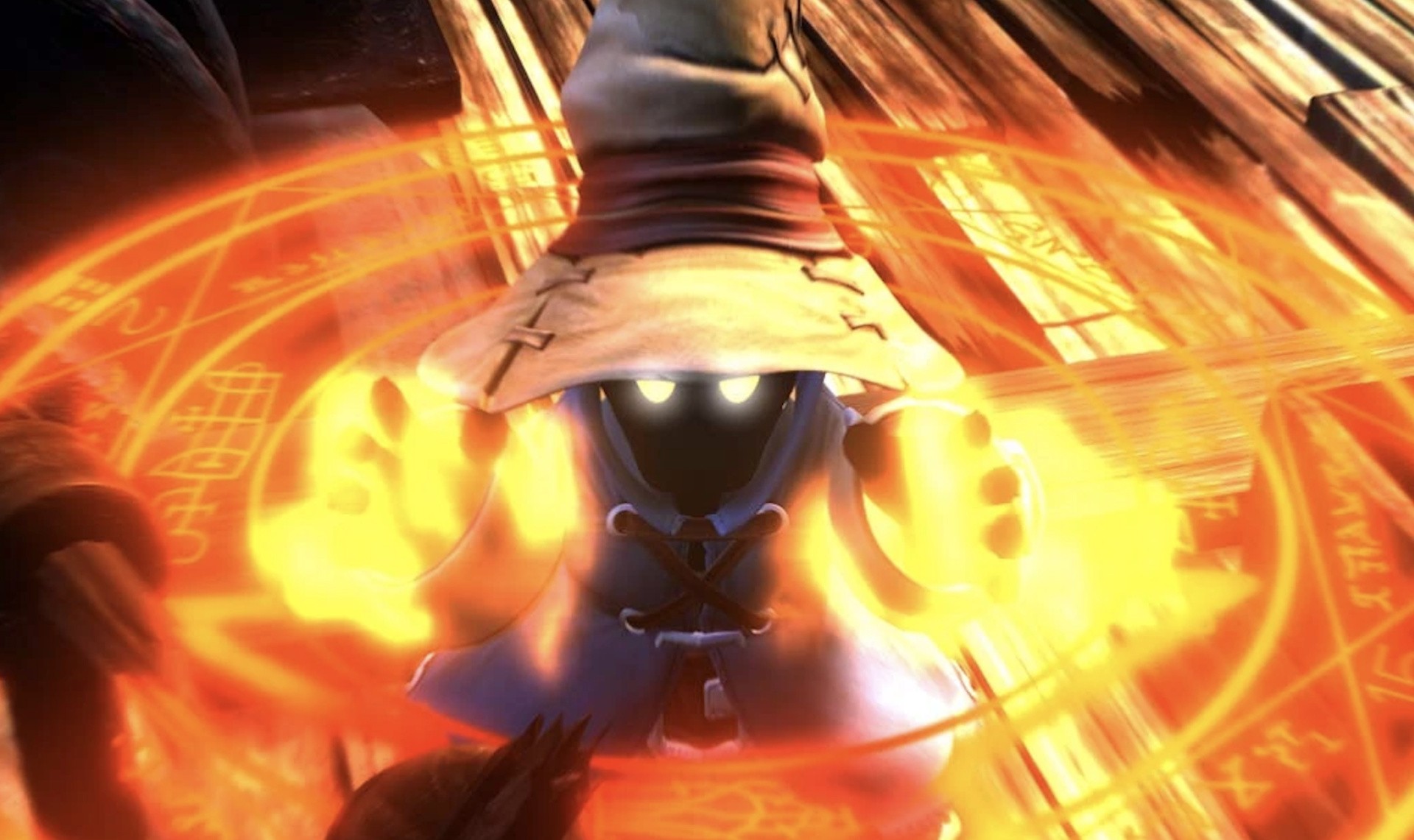
What I think really made the difference, though, when it came to the spell names, was working on the online game Final Fantasy XI, because that was when I actually sat down with the development team.
Koichi Ishii-san was the director of that game and was in charge of the spell naming and the world-building. And, because we knew that this was going to be a global game and that players would be speaking with each other, we understood we needed to make a spell system which would work with our auto-translate feature. So, we had to go back to the spell names, because sometimes they were different across different games and regions.
During those meetings, for instance, I actually had to ask what the word 'Dia' in Japanese meant. Because it sounded similar to the Spanish 'Dia' for day. Ishii-san said, 'I didn't name it. Kawazu-san, the guy who leads the Saga team, was the one who actually thought that spell originally.' So I went over to him and asked, 'What does Dia actually mean?' He goes, 'Dispel Undead.'
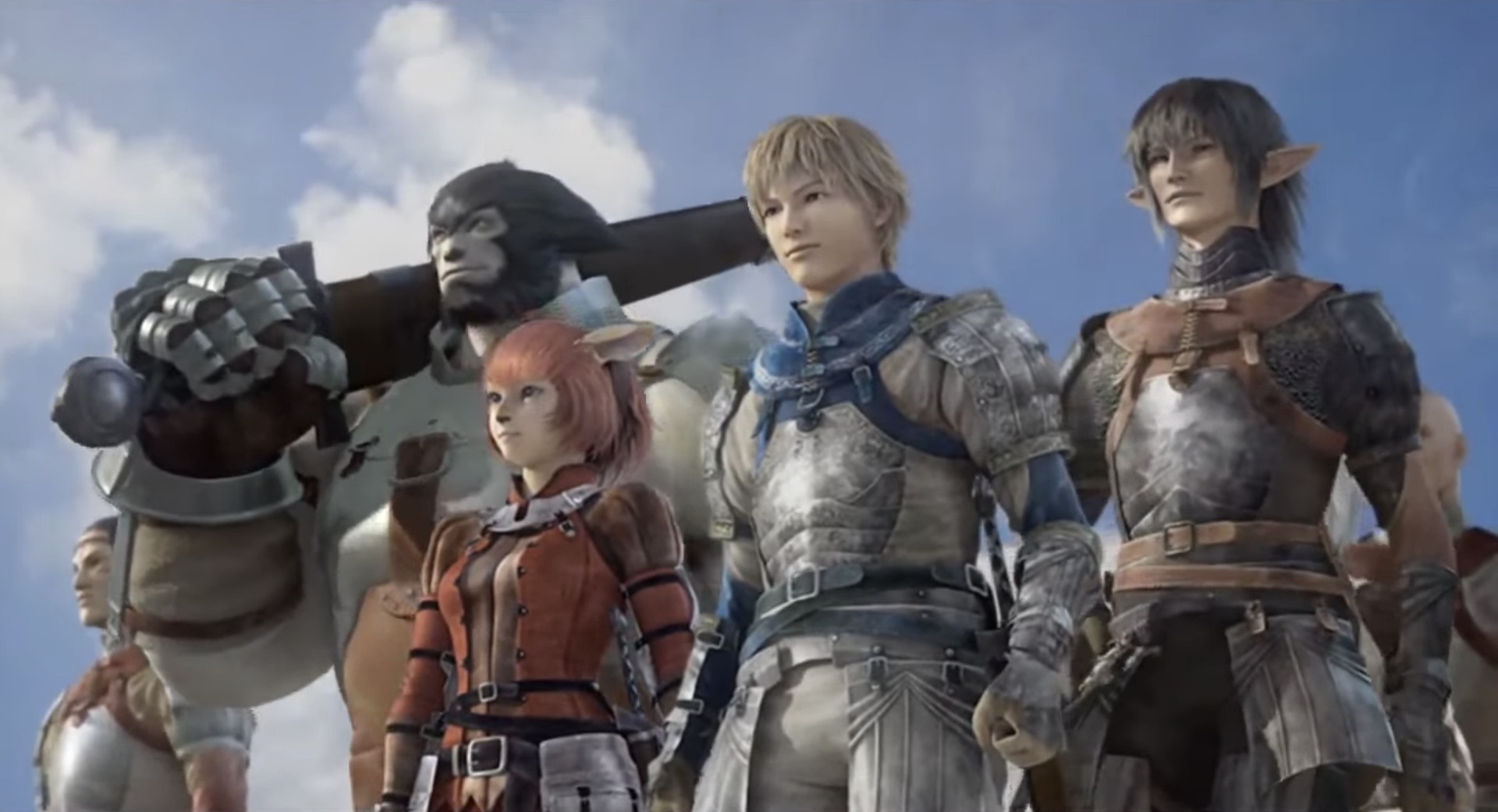
I remember thinking, 'What? It's just an abbreviation.' He had basically combined the word Dispel and Undead. I said, 'What about Gold Needle?' He replied, 'It's like an acupuncture needle. You need a soft metal to pierce stone (petrification) and make you soft.' I just kept thinking, 'Why didn't anybody record this and put it into a wiki within the company that we could all refer to? Why are you just now telling me this?' But they had just thought it was obvious to everybody who played the game.
Dragon Quest, British Accents, & The Da Vinci Code
Time Extension: Eventually, Enix merged with Square, and you found yourself working on the Dragon Quest series as well as Final Fantasy. What do you remember about the merger?
Honeywood: I had gotten word of the merger beforehand because while I was working on Final Fantasy XI, I got called into the CEO's office and they said, 'This is top secret, but we're merging with Enix. We want you to personally join the Enix side of the company and make sure the merger goes smoothly between the two teams.' I walked out of the room like, 'Shit, shit, shit, shit, shit,' and I was sitting there trying to work on FFXI, knowing that there'll be an announcement within the coming days.
The buyout, as far as I'm aware, was because the movie flopped. Square had lost so much money, and there was nothing to save the company at that point. Enix came in and bought us out. But that was the problem. When two companies merge, you're going to have conflicts of culture, and I think Enix looked down on the Square side of things.
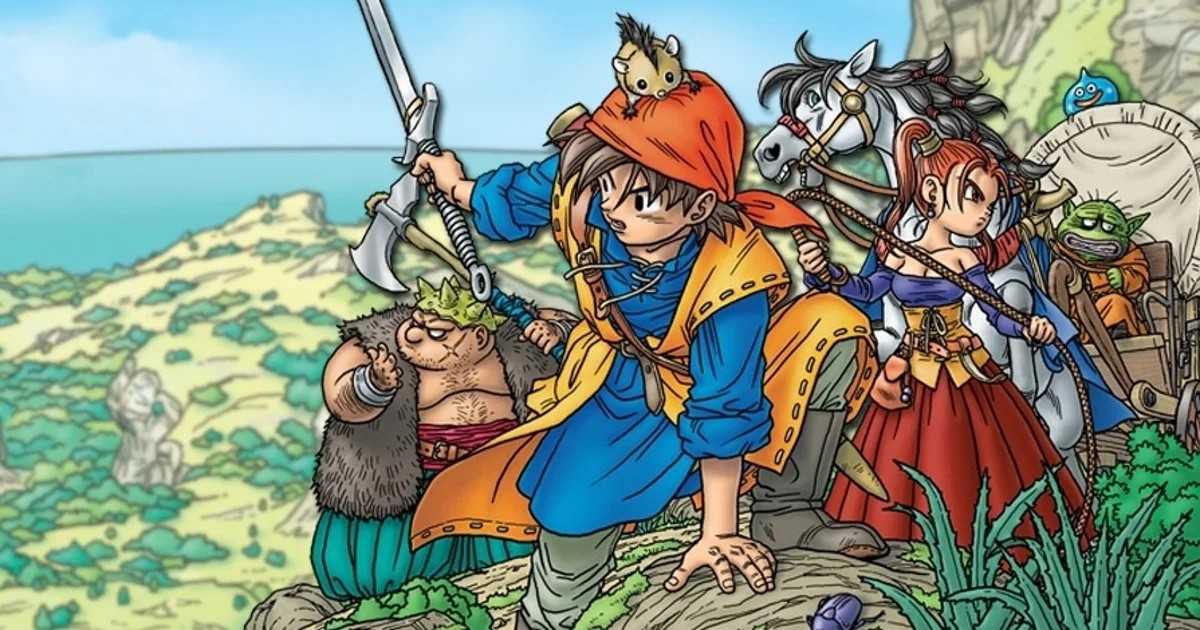
When we met with them, their attitude was, 'You guys were the ones that were bought out, so you guys are subservient to us,' and they wanted us to bow and scrape to them all the time. For instance, Yuji Horii-san only came in once a week for meetings. The rest of the office was smoke-free, but he was a smoker, so in one meeting room, everyone was allowed to smoke, and you basically had to bathe in the cloud of smoke and adjust to their style. I did my best to make it work, and at first, the Enix side acted like they really hated me and didn't necessarily treat me well. But I'd already gone through this before with the Square side, and working at other Japanese companies before that, so I was used to it by now.
Time Extension: I'm curious, how did you go about differentiating Final Fantasy from Dragon Quest when it came to localisation?
Honeywood: The big thing I wanted to do was British English to differentiate us from the American English used in Final Fantasy.
Final Fantasy in the West was basically cyberpunk. You can get away with using American English even in sometimes classical settings, because it's got that cyber element. While Dragon Quest is more traditional fantasy. In fact, the original translations on the NES were sort of done in a faux-Shakespearean feel, even though it was American translators. They did throw in a few things, and they also renamed a lot of the names.
The development team wanted to change that, but I knew we needed to be careful because sometimes we're going to have references across games, and we need to keep the names consistent. So again, I needed to solve those types of issues. Because it was a comical, lighthearted fantasy, I really wanted to use British humour, which didn't fly with the American office; they couldn't understand it, and they really hated it.
Even Yutaka Sano was adamant against it. He says, 'If you let British English in, it's going to change everything, and it's not going to sell in America.' He was adamant about it. So I said, 'I respect that, I'll make it British English lite." So he was like, 'Okay, punctuation, spelling, phrasing, you can have two of the three for an American audience,' which is like the dumbest rule ever; it's either British or it's not. So if you look at some of the later games like Dragon Quest Heroes: Rocket Slime, for instance, he didn't allow us to use British spelling, but the punctuation and phrasing could be British. So we'd avoid the word colour, because it has a "u" in it, and say 'hue' instead.
The good thing about making Dragon Quest British English was that I could meet with British English translators I had previously wanted to use, but had to turn them down. So I worked with Plus Alpha, who are a married couple that have worked on tons of games, because I knew those guys had the quirky humour that I wanted. On that project, I also moved Morgan Rushton, who was a QA tester, up to be an editor on the project. And I tried to get Oli Chance, who was a tester, to come in. Later on, Oli and Morgan formed Shloc, which is one of the best translation houses or teams in the UK right now. But that was how that got formed, just from me pulling them across to work on Dragon Quest.
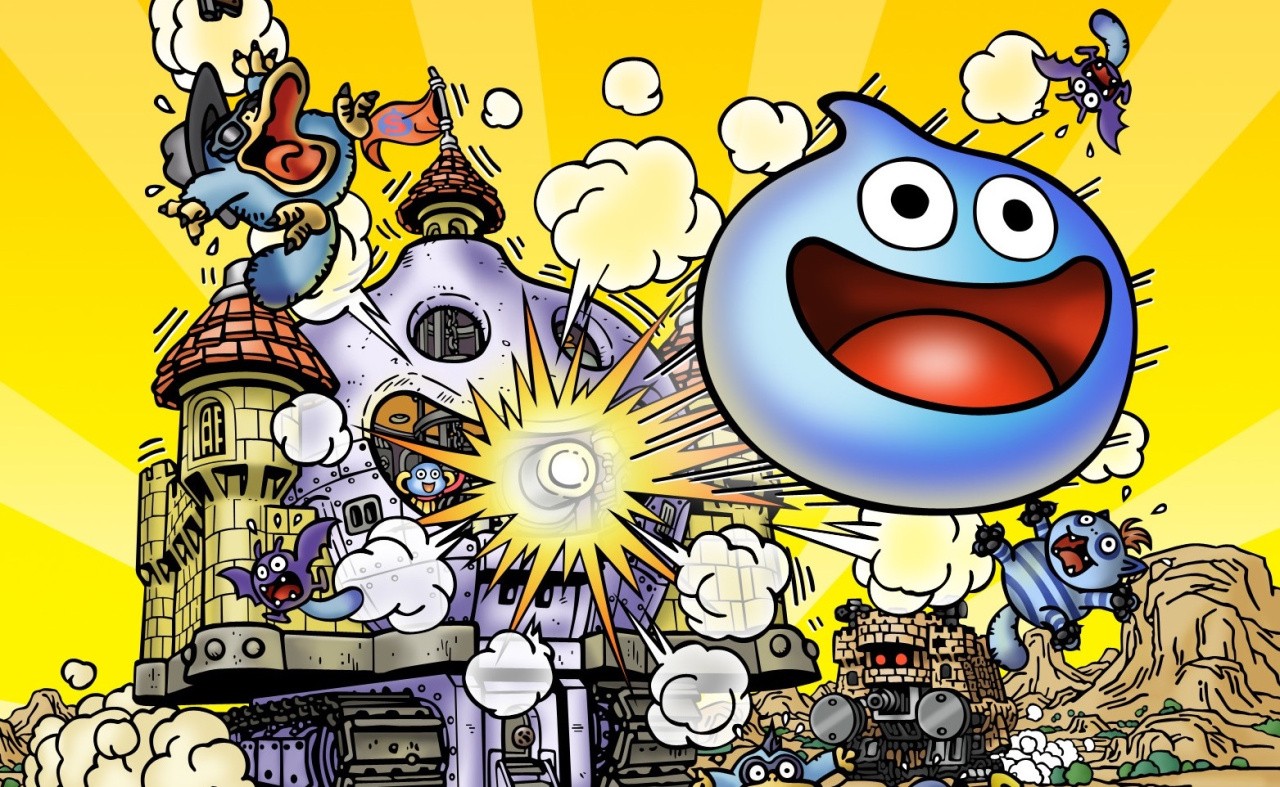
Again, the US office put their foot down, though, and said, 'No, we want at least one American on the team to make sure Americans can follow it.' So I brought in Matt Alt, who was one of the guys who worked on Dragon Quest VII, as an editor. Whenever we did jokes or whatever, we had to see whether he got it or not, and he was our barometer, such as in the case of Cash and Carrie, who are in a town called Baccarat. These were two characters who we characterized as very in-your-face Americans, basically British people taking the mickey out of Americans. Matt thought it was hilarious, and he actually helped us turn those Americanisms up to 11.
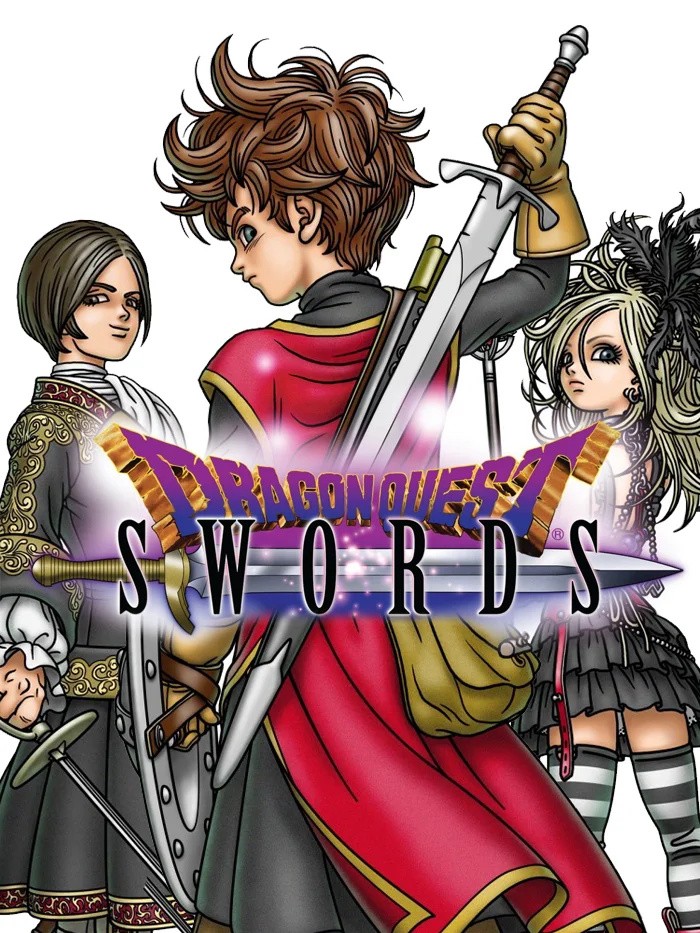
Time Extension: Dragon Quest VIII was the first mainline game in the series to feature voices. How much did that factor into the localisation process?
Honeywood: That was my first time working with Level-5. I met with them, and they were really super helpful. They had experience with foreign games selling more than Japanese games, so they knew that Dragon Quest could finally sell more in the West than it does in Japan if we play this right. So they were totally on board when I asked, 'Can we add voices to a game? But Yuji Horii was adamant, 'No, we're not going to add voices to Dragon Quest.'
He said, 'Dragon Quest is a traditional old-school game. We don't need voices.' So we had to say, 'Even like Final Fantasy has voices. We've got to keep up with the times.' He basically signed off, just see how it went, with the idea being that if it doesn't work, we won't do it again, but then Dragon Quest 8 went out and sold really well. After that, [Koichi] Sugiyama, Akira Toriyama, and Yuji Horii met, the musicians and Sugiyama-san said, 'Adding voice to the game really makes it feel different. We should do that going forward.' So they totally turned around 180 degrees when they saw the success. And that's why, on Dragon Quest Swords, they added voices to the Japanese version of Dragon Quest for the first time.
Time Extension: What was it like working with Yuji Horii?
Honeywood: It was sometimes a bit odd. I remember I would suddenly get a text or a phone call from the company saying, "Oh, Horii-san wants to fly to Paris, can you accompany him?' I'd tell them, I've got work to do. Why am I having to fly to Paris? Is this for work?' And they'd answer, 'No, he just wants a holiday, and he wants a translator or interpreter to go with him.' I didn't even speak French.
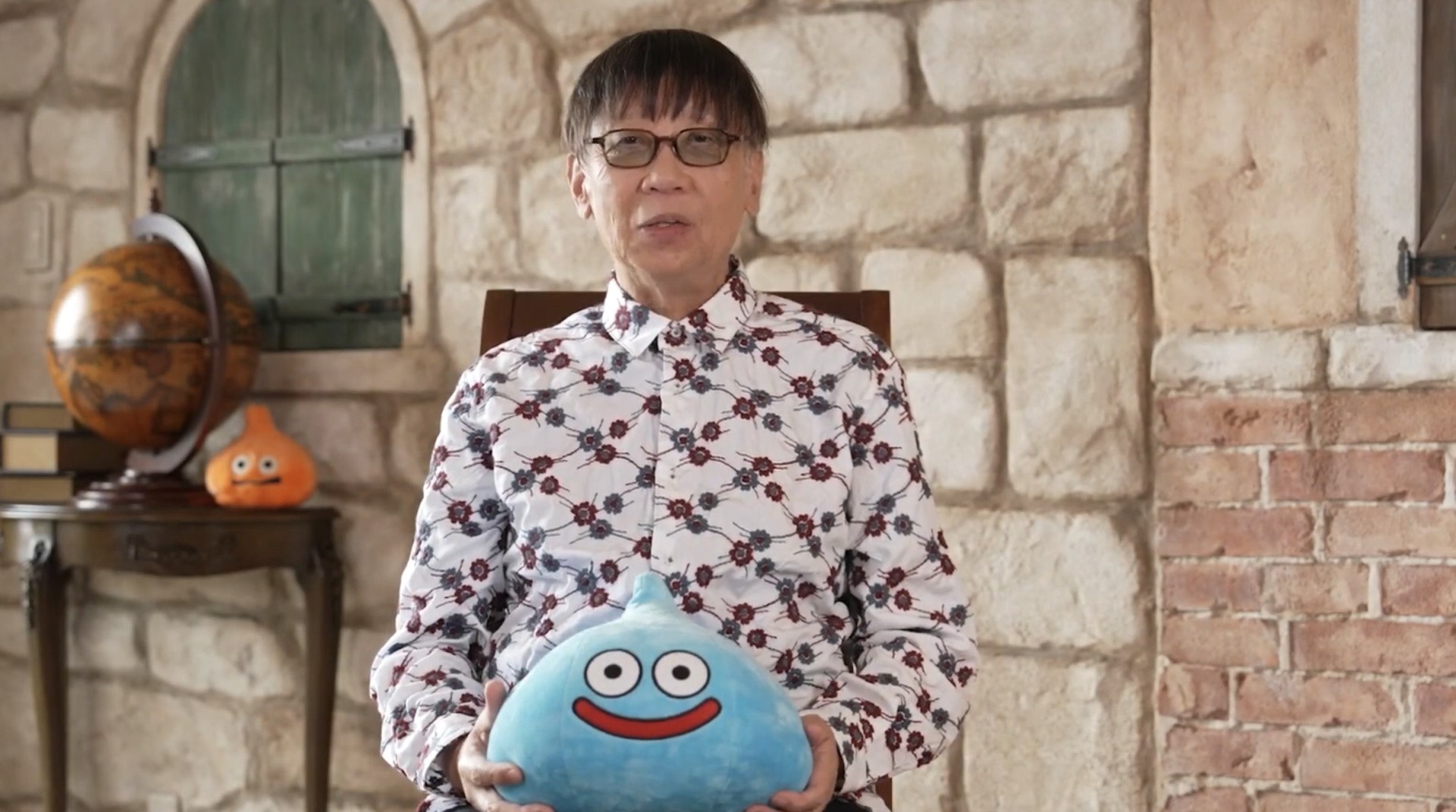
Then another time it'd be like, 'Oh, he read the Da Vinci Code, so he wants to go to Scotland and see Rosslyn Chapel.' So he brought his daughter along with him and a few of the executives. The weird thing was, he always acted like he couldn't remember my name. He'd say, 'George, would you do this for me? Yeah, Harry, do that.' He just randomly used English names to refer to me. Even the Japanese people would say to me, 'He's a sadist, and you're a masochist. That's why you guys work together.’
What was nice, though, was years later, it got back to me when I left Square, and I was leaving Blizzard, and I was interviewing with Koei, and the CEO and the chairperson at Koei said, 'Oh yeah, you're the guy that Horii-san was talking about. He said to us that you're this great guy that he wished they had never left the company. He really respects you.' It was years later, but I finally got a compliment from those people. It's really funny how it all goes around.