
 by
by 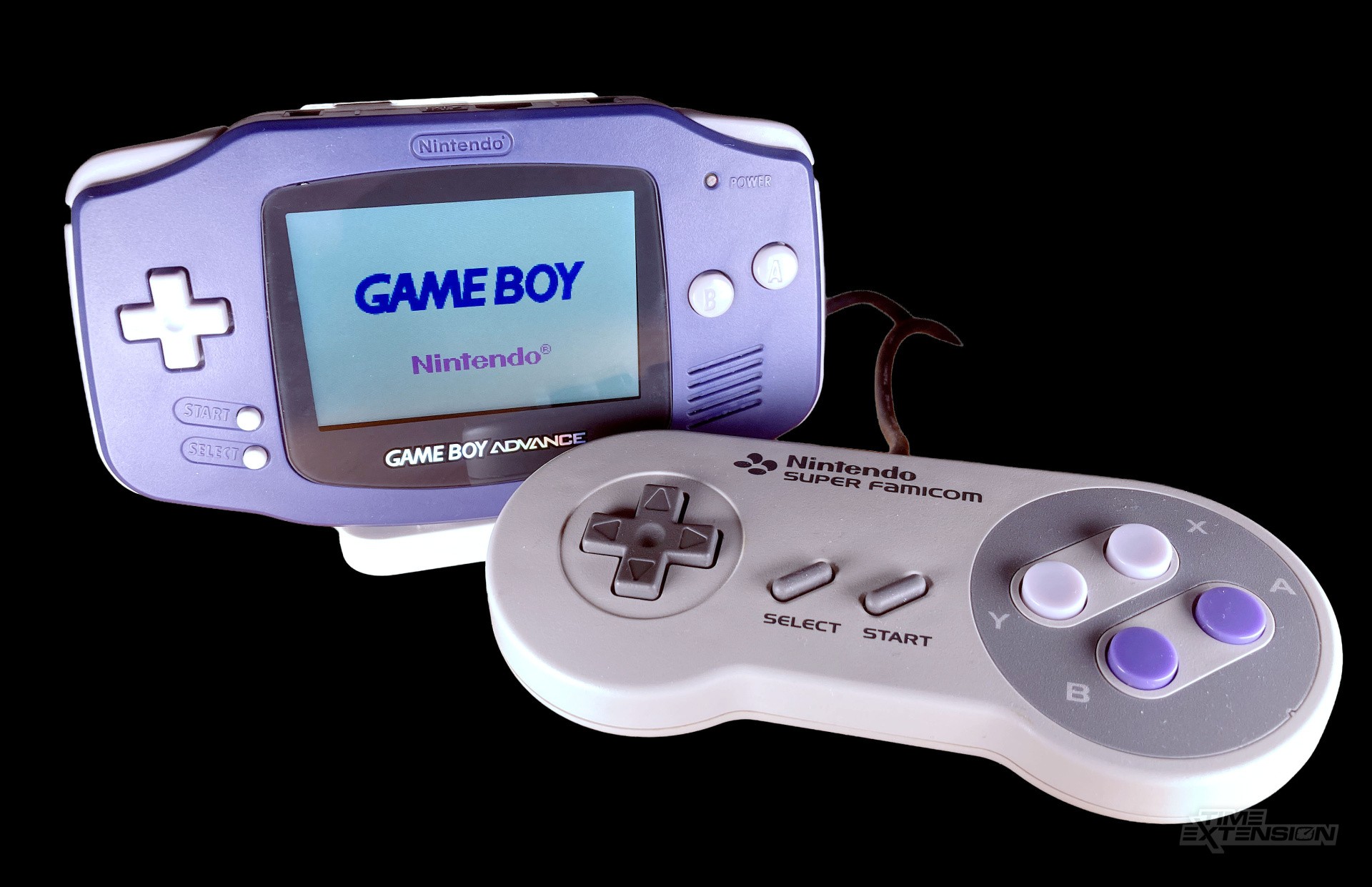
I have always had a huge fondness for the Game Boy. I can say that it lead to my lifelong love of gaming when I first clapped eyes on my classmate Ben’s brand new DMG-01 in 1990. Battery powered, gaming on the go, interchangeable cartridges... it couldn't get better, could it? Sure, I played my Commodore 64 on my black-and-white telly, but monochrome on the go – that was some hot stuff!
My love of the Game Boy and its successors never dimmed (unlike its screen in the dark) and I bought a Game Boy Advance (GBA) when I was 18 in what was probably the only sensible thing I put on my credit card at the time. Lauded as a portable Super Nintendo, a 2D powerhouse and more, I continued enjoying the GBA long after I upgraded to the DS Lite, thanks to its backwards compatibility.
With that in mind, I wanted to share what I think is one of the coolest mods for the GBA and highlight a handful of truly classic games for the system that have gone largely unsung due to the Japanese language barrier (though some do have translation patches).
For those that don’t, I hope through my Japanese skills I can encourage a wider appreciation for these games, and in time that may bring about a translation; or at least I want to encourage you to try them regardless.
Turning The GBA Into A Switch
I always preferred the original AGB-001’s horizontal form factor over the later SP model. This turned out to be a good thing when I discovered a kit from Hispeedido that purported to turn the original GBA into a Switch-like device via a docking station.
Why would this even be desirable? For one, it was a way to play games, including original Game Boy and Game Boy Colour games, on a big screen. In addition, this meant I could record the footage via HDMI. And best of all, it meant I could play uninterrupted when switching between docked and handheld modes.
Would it live up to expectations though? Would the battery life be terrible? Or would it be really difficult to modify, worse still would the controls be really laggy when docked? Maybe the aspect ratio would be ruined?
Fortunately, none of that turned out to be the case. My understanding is this kit has undergone a number of revisions, resulting in a much better package. For one, the aspect ratio of Game Boy and Game Boy Advance games is correct; second, you can leave the batteries in when docked, meaning you can play seamlessly.
If you’re playing on the TV and need to head out, there is no need to switch off; just undock and continue playing. I also found there to be no perceptible lag in controls when using my plugged in Super Famicom controller – and there is a variant of the dock that supports Bluetooth controllers too.
There are a couple of downsides – three if you include the installation process, which requires a lot of patience, especially when modifying the shell to make it all fit. First is the GBA’s lack of a sleep mode, so when you undock, you can continue unhindered, but you can’t put the GBA into standby. That’s just a GBA limitation as I understand it.
And second, the dock is too lightweight. In practice, I’ve not found this to be too problematic, and I’ve certainly never wrenched the plugged-in controller, causing the dock to go flying, but I’d have preferred a more hefty feel.
Overall, it is a fantastic mod, and I couldn’t be happier. Now that I have such a lovely handheld, what Japan-only treasures have I got to share?
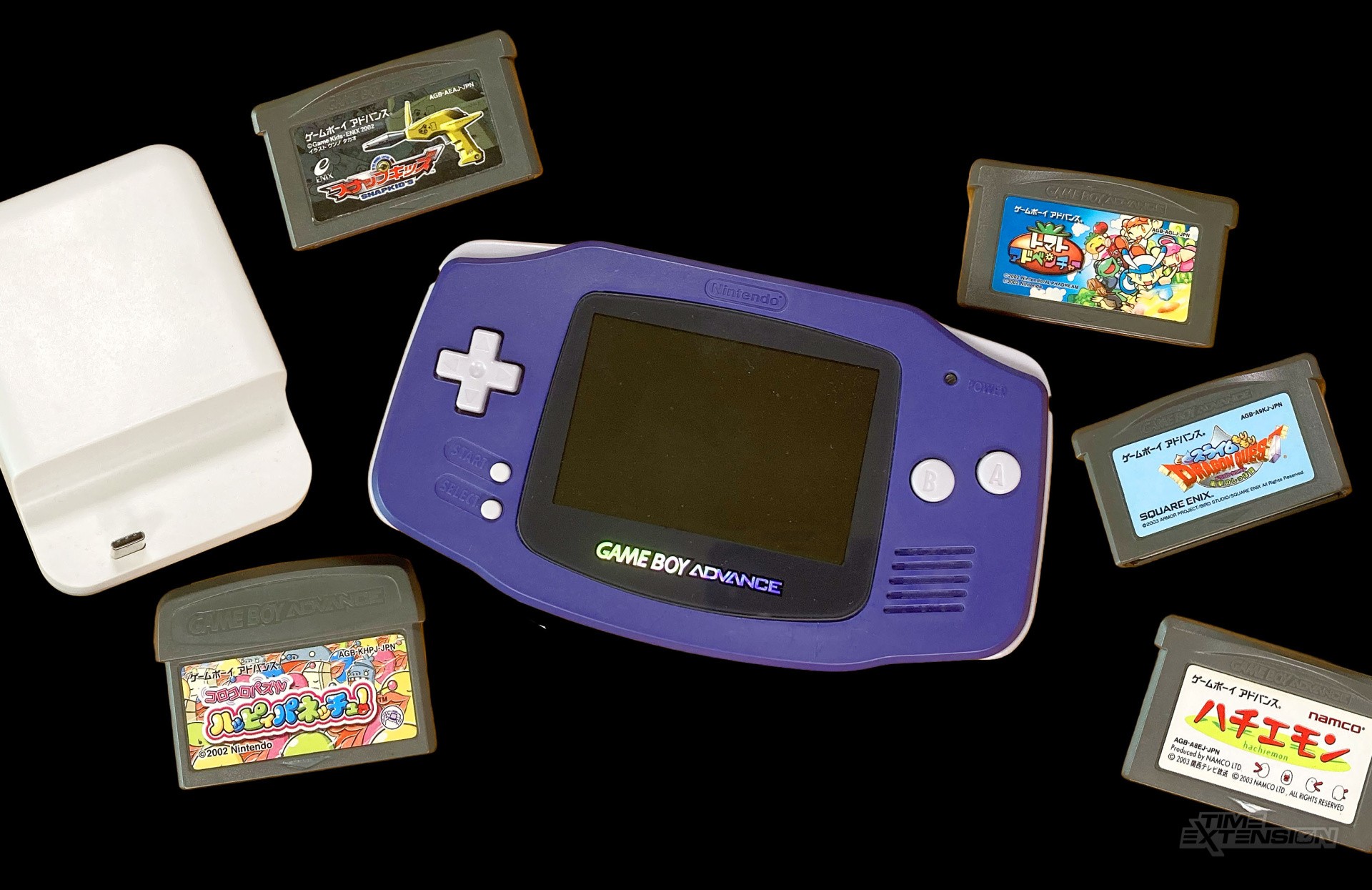
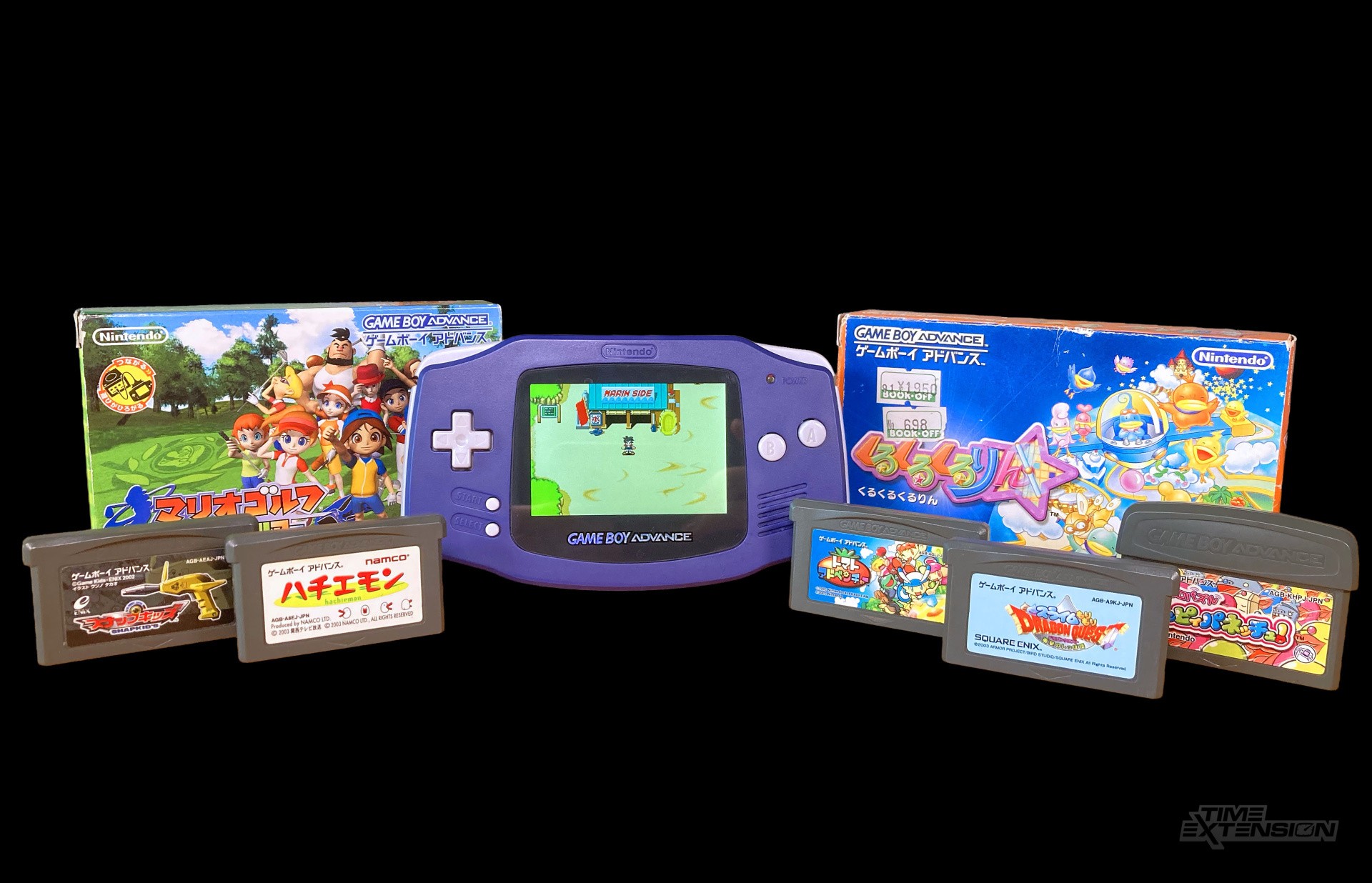
Slime Mori Mori Dragon Quest: Shougeki no Shippo-dan - Square Enix (Action Adventure)
Dragon Quest came into my life later than I would have liked; in Europe, we were officially starved of entries until the late ‘90s. Even North America missed out on some spin-offs, including the first Slime Mori Mori game on the GBA. Its sequel did see a North American release as Rocket Slime on the DS, however.
You play as Slyrin, a young slime up to no good, playing pranks with your siblings and friend to win your father’s secret transformation wand. On winning, you transform into a Momonja (Platypunk) before your hijinks are busted by your mum, resulting in your punishment to stay in your transformed state for the night. Fortuitously, when the terrible Tail Gang assails the town that very night, kidnapping your family and fellow townsfolk, you are reprieved owing to your ‘disguise’.
In this game you will travel to three key areas which expand in scope as the game is played to rescue all 100 of your companions using your elasticity to bust chests, walls and crack enemies' heads. Boss battles have various inventive and engaging quirks but are easy enough. There are some puzzle-solving elements, as well as sub-tasks that ideally you want to complete, and of course a shop to splash your cash at.
Whilst easy, it’s an incredibly whimsical game packed full of fun and humour. It’s one of the greatest games on the GBA that never left Japan. Oh, and it has a couple of neat nods to the Enix & Square merger; look out for Cid Moja!
Tomato Adventure (2002) - Alpha Dream/Nintendo (RPG)
Mario & Luigi Superstar Saga is rightly regarded as a classic on the GBA, but did you know it had a Nintendo-published antecedent? Tomato Adventure is a very well-regarded game in Japan and one many wished had a sequel, but alas, its original creator, Alpha Dream, went bust in 2019.
An inventive RPG with mini-games that sees you searching the Ketchup Kingdom for robot parts to access the Gimmick Palace to rescue your girlfriend and get your TV repaired. Whimsy is again available here in spades! From start to finish, this is a very engaging playthrough. Battles are not random, but instead occur when you engage with enemies on the field, à la Chrono Trigger.
Those who enjoyed Super Mario RPG and/or Mario & Luigi Superstar Saga will definitely enjoy this one, though it is aimed at a younger age group, so the challenge level is not high, but the enjoyment factor is definitely there. There is a translation patch out there so if this sounds appealing, this is one to "Ketchup" on…
Also, Tomato Adventure has just been released on the Nintendo Switch Online service in Japan.
Hachiemon (2003) - Natsume/Namco (Platformer)
This is a great example of a low-key Natsume-developed game that really deserves to be enjoyed outside of Japan. Some things don’t translate well, but if you’re willing to go with things on their own terms, you may start to dig them, such as this game’s Kansai Television mascot Hachiemon. Hachiemon is an egg of sorts with red lips that came to Earth from a star, a good start!
All of your friends have had their lips stolen, and naturally you set out to get them back. You will need to use your lips to swing off platforms, climb, defeat enemies, fire your boomerang and more in this action platformer. It is definitely very quirky, and the game does explain all its controls during a tutorial stage, albeit in Japanese.
There is so much to explore here, and the time limit is generous. The end-of-stage bonus is a slot machine that makes Japanese sentences, gaining you bonuses; shades of Enix’s Segare Ijiri there!
Being a mascot from the Osaka region of Japan means encountering a lot of Kansai dialect, and from that comes much of its humour. There’s something about this creature bemoaning Akan! (terrible/useless) that makes me laugh, along with his expressions and shouting out his TV station’s namesake.
Snap Kids (2002) - Enix (Card Battler)
Pokémon Snap must have had a big influence on Snap Kids, co-developed with Japanese publishing house Shougakkan. You play as Shuto, who, with his friend Marin, joins the school’s card battling Snap Club. Using a Snap Shooter camera, you can photograph creatures known as Wonders and then create battle cards based on their attacks and behaviour. Timing is critical, just as in photography!
Of course, there is a story to go with it. A haughty Shin appears as your apparent main adversary, a former member of the Snap Club. However, it appears that despite the game stating from the offset that Wonders are to be respected, a shadowy organisation is plotting to use them for its own gain…
The game includes an extensive tutorial at the start, which can drag, but it can be accessed via your computer in your bedroom any time. The combination of photography to capture the behaviour of Wonders and turn it into battle cards, along with the card battles, makes this a quite unique and interesting GBA game. It’s quirky in places and lacks diagonal movement on the field, but it is such a good time overall.
Sadly, there is no translation patch available, but for Japanese learners it’s quite an accessible title, though the writing can be pretty tiny; just as well I can play it on a big screen here! Well regarded in Japan, and you can find kouryaku (strategy) guides online.
Korokoro Puzzle Happy Panechu (2001) - Mobile 21/Nintendo
Over the years, Nintendo has pitched motion controls to the point that they were the entire basis of a console, the Wii. In the Game Boy days, motion control was not unheard of, with Korokoro Kirby (Kirby Tilt 'n' Tumble) perhaps the best-known. On the Game Boy Advance, Korokoro Puzzle Happy Panechu was the first, but only in Japan.
Panechu is a simple concept: tilt and roll your GBA to slide the colourful little Panechu together to match 3 or more to eliminate them by making them “Happy”, create combos and build up your bomb store, which can then be combined to create huge explosions and cause havoc for your opponent.
A very simple concept with multiple play modes including link-up cable capability. The motion sensitivity can be adjusted, and if you buy a second-hand cartridge, you can erase saved data by holding down L+R+A+B on start-up.
The techniques required take a bit of practice as randomly tilting to match the little Panechu will only go so far. If you put a little time in, you’ll begin to build the skills required to build combos and big bombs, making this an addictive and tactile experience.
The Bigger Picture
The challenge for this article was to keep it short so as to engage you, but to pack into that the love I have for the GBA and the wider Game Boy system is what I wanted to convey.
Handheld gaming has always appealed to me. But as I get older, the opportunity to play the entire Game Boy library on this handheld on a big screen makes me love it even more.
There’s so much to enjoy on the GBA beyond the typical hidden gems list, and I hope in some small way this has advanced your interests.