
 by
by 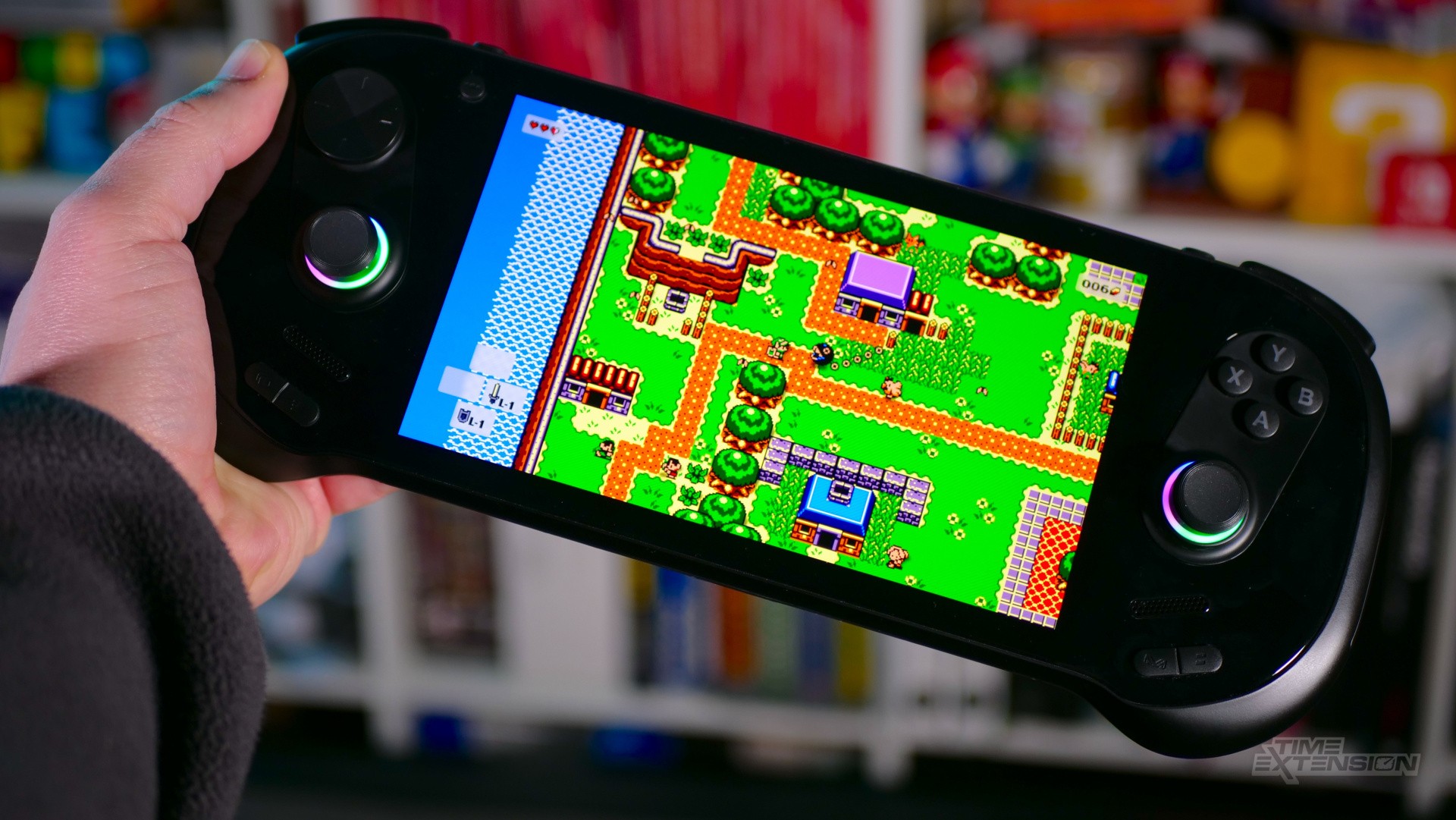
Back in March of last year, I was fortunate enough to review the AYANEO 3, a Windows-based handheld gaming system which cost almost $2,000 in its top-spec version.
Powered by cutting-edge AMD Ryzen chips capable of running AAA games with ease and boasting a pin-sharp OLED screen, the AYANEO 3 supplanted the Steam Deck as my daily driver back in 2025 – and it's been that way ever since.
However, the reason I take this thing with me everywhere isn't necessarily down to its processing power – it's the unique modular control system it features. Dubbed "Magic Modules" by AYANEO, these are hot-swappable controller options that let you configure your setup for any given game.
Now, I'm going to come clean here – while I love the fact that the AYANEO 3 can run Cyberpunk 2077 without breaking a sweat, I use it more as an emulation device, purely because it can handle pretty much any vintage system I choose to throw at it. At the moment, I'm replaying Gradius V at x3 resolution, and it runs as smoothly as butter.
As we all know, not all retro hardware had the same control setups back in the day (at least not until fairly recently, where the 'twin-stick-and-four-face-button' combo has pretty much homogenised joypads). I'm a huge Sega Saturn fan, and its six-button controller was fantastic for Capcom's fighting games. However, I also love the SNES, so I ideally need a solid D-Pad as well as the traditional diamond button cluster.
The AYANEO 3's Magic Modules let me customise my interface to suit the system I'm emulating, right down to ensuring the D-Pad is where it belongs – above the left-hand analogue stick. Heck, the AYANEO 3 even gives me the option of a traditional cross-style D-Pad and a 'rolling' option, similar to that seen on the Mega Drive / Genesis and Saturn.
It might sound like a minor issue, but for me personally, I've lost count of the number of times I've bounced off handheld consoles purely down to the fact that the controls don't quite suit what I need. We're at a point in time where companies expect their handhelds to be a "one size fits all" deal in terms of controls, and that simply isn't the case.
Take the Switch, for example; there's a goldmine of retro classics on that system, but it doesn't even come with a proper D-Pad, forcing me to use the analogue sticks for the vast majority of games. And sure, aftermarket six-button controllers are available, but what if I want to use those six buttons in portable mode? It's maddening to me that Nintendo never released Joy-Con with extra control options, leaving firms like Hori to pick up the pieces.
Unfortunately, although I waxed lyrical about the AYANEO 3's Magic Modules back in March of 2025, the industry clearly didn't see them as a selling point. Sure, competitor Mangmi has incorporated something similar in its new Pocket Max handheld, but the modules on that system are disappointingly limited compared to AYANEO's effort.
Frustratingly, even AYANEO itself seems to have turned its back on this innovation; the Next 2, the company's new flagship device, returns to a more traditional 'fixed' control arrangement.
It remains to be seen if the Chinese company returns to the concept for a future handheld, but one thing is for sure – until that happens, the AYANEO 3 will continue to be my go-to portable for emulation.