
 review by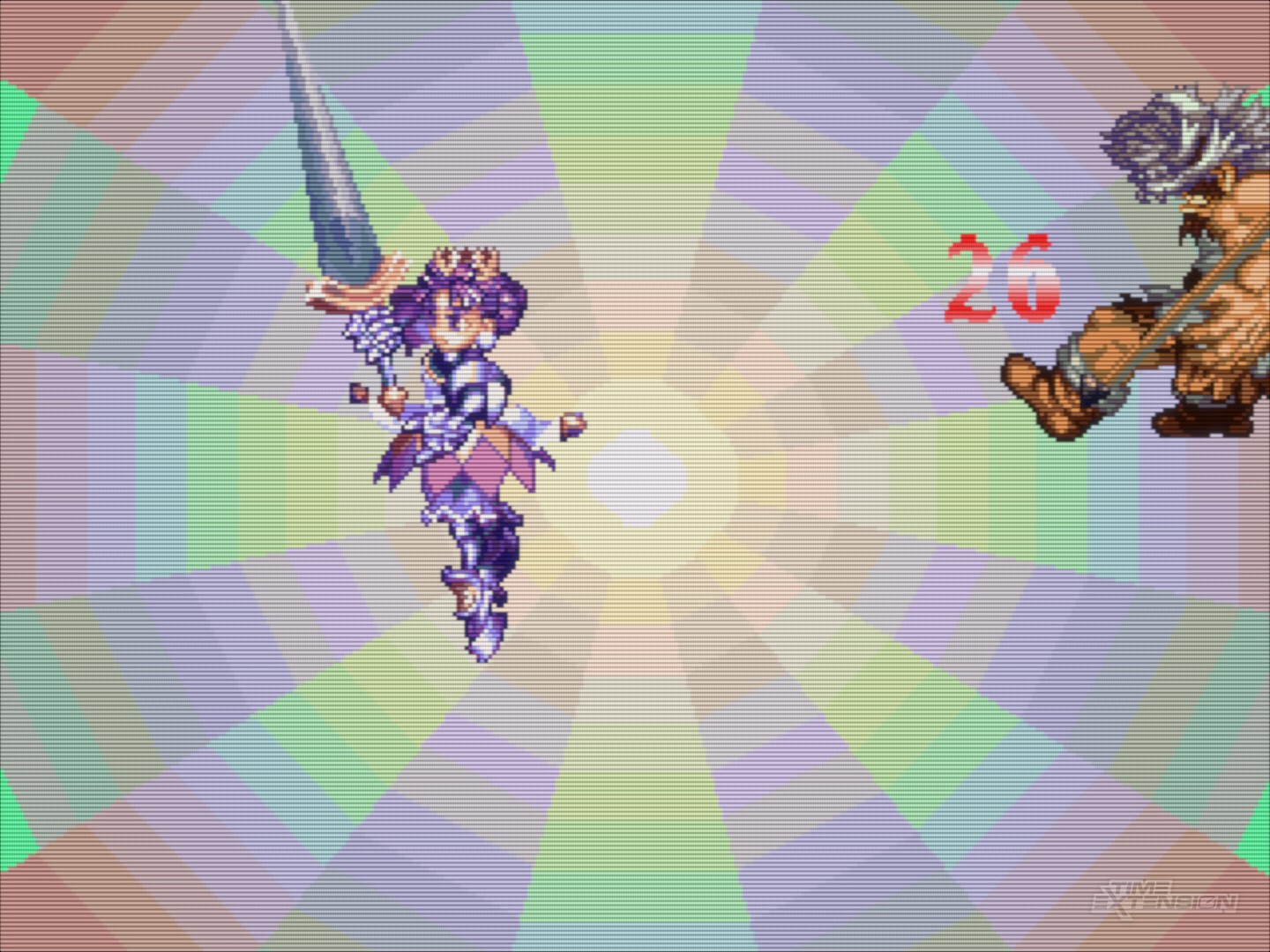
If you're old enough to recall the battle between the PS1, N64 and Saturn at the close of the 1990s, then you'll no doubt be aware that by 1997, Sega had effectively thrown in the towel in the West. Sony's 32-bit console was dominant in pretty much every market, but in Japan, Saturn held on for slightly longer – and as a result, many of its best titles were exclusive to that region.
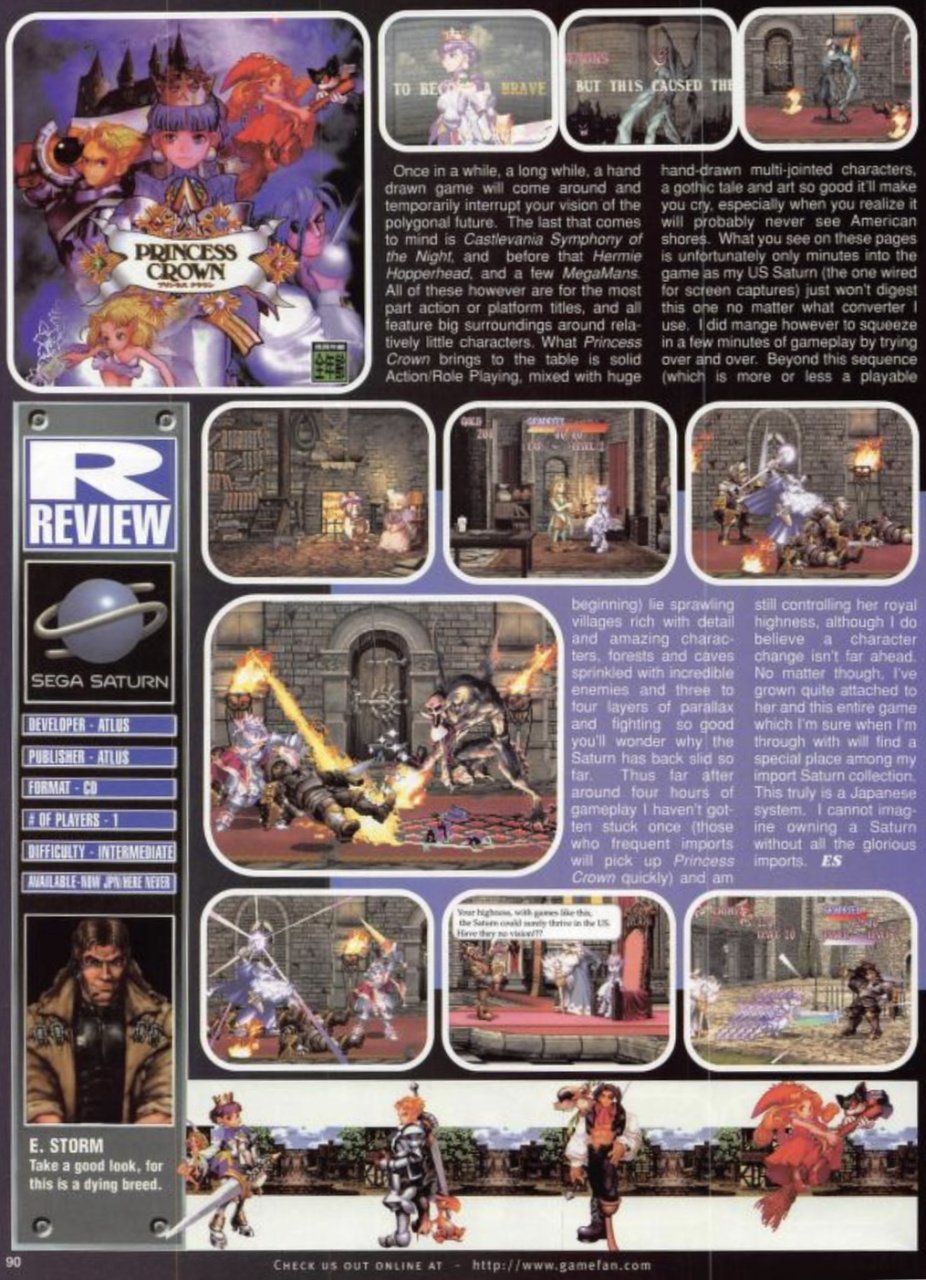
Princess Crown is one such game. I only knew of its existence because it was previewed in an issue of GameFan magazine, with editor Dave Halverson lamenting that the console had quality games to spare, yet precious few were being localised for release in North America and Europe.
While I'm not sure a game named 'Princess Crown' would have saved the Saturn in its battle against the likes of Final Fantasy VII and Metal Gear Solid in the West, there's no denying the fact that this is one of the highlights of the console's vast and varied library – and one which, thanks to the efforts of the fan translation community, can now be enjoyed in English.
Princess Crown marks the directorial debut of George Kamitani, who, prior to working on the game, had been employed at Capcom. Today, Kamitani is synonymous with 2D epics such as Unicorn Overlord, Muramasa: The Demon Blade, Odin Sphere and Dragon's Crown, with the latter pair being considered spiritual successors to Princess Crown.
Princess Crown is perhaps the purest distillation of Kamitani's creative vision; it boasts gorgeous 2D pixel artwork, action-based RPG controls, multiple playable characters and a whimsical fantasy world which you simply cannot help but fall in love with.
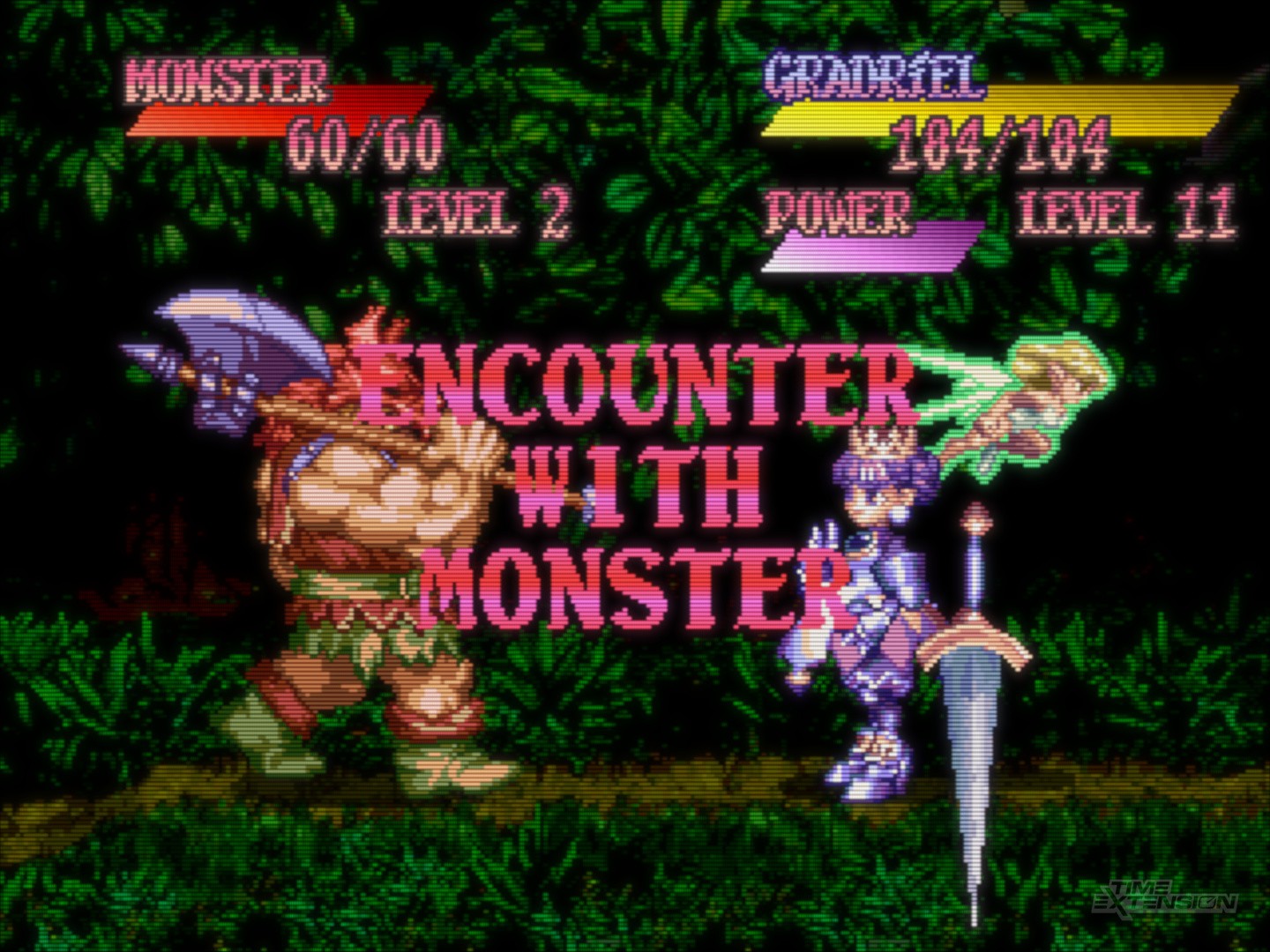
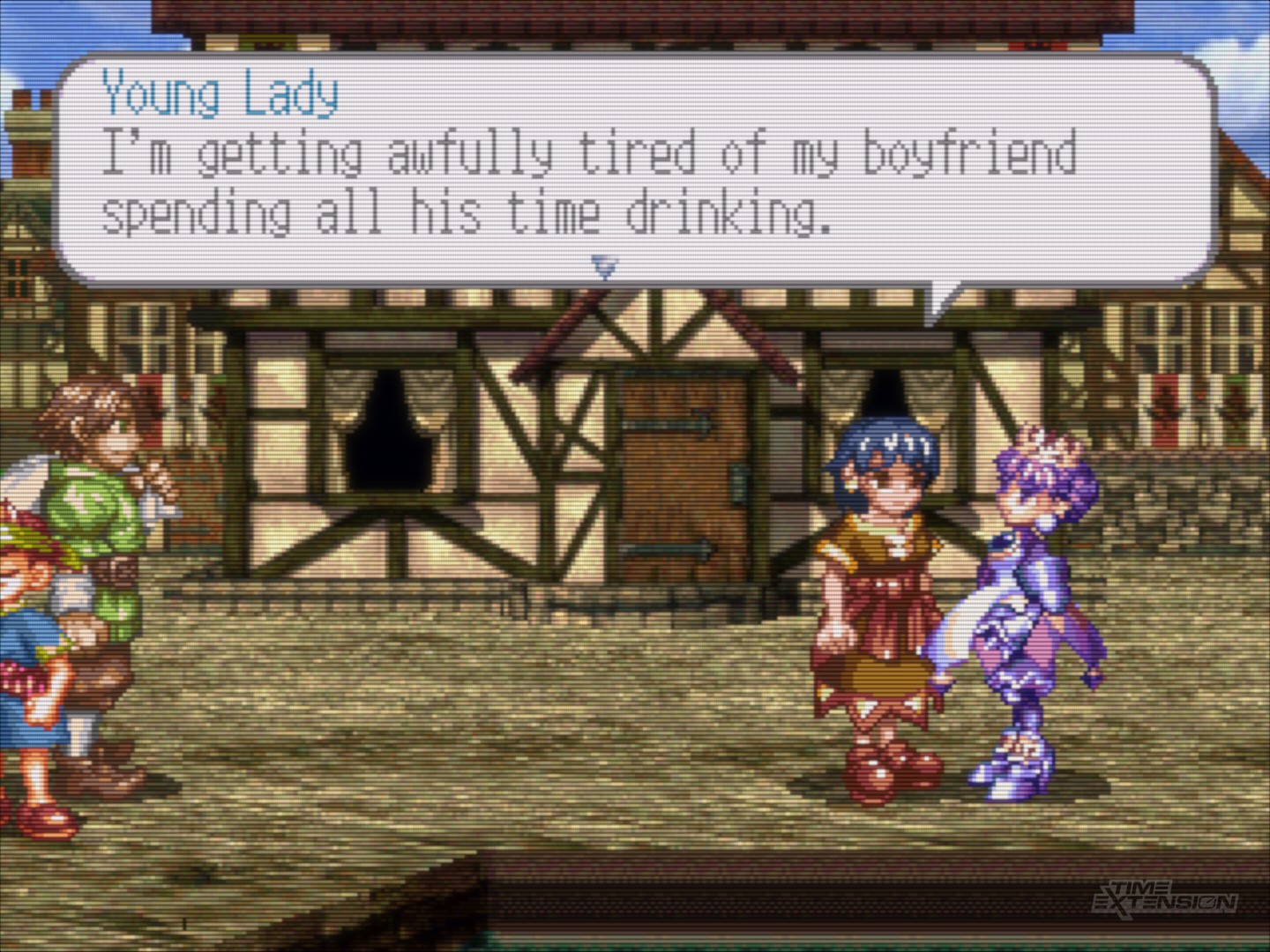
Princess Crown is viewed from a side-on perspective and features a node-based map system for moving between locations. In the various towns and villages, you can converse with NPCs, buy items and record your progress by stopping at Inns. Travelling between locations takes place in real-time, and it is during these moments that the bulk of the game's combat takes place.
When you encounter an enemy, the side-on viewpoint is maintained, but the action shifts to combat mode. You can create relatively simplistic combo attacks, rounding them off with a powerful move (executed by holding down the attack button). The catch is that you have a 'Power' bar, which depletes whenever you attack or block. Once this is exhausted, your character needs to take a brief moment to catch their breath and recover, during which you're particularly vulnerable.
Pushing backwards during an enemy attack will cause your character to block, but if you're quick enough, you can push the B button just as your foe winds up their attack and trigger a menu which allows you to either backstep and avoid the blow or outflank your opponent.
While you're effectively only using two buttons – attack and evade – the combat mechanics are refreshingly deep, especially when you consider that aerial attacks, dashing stabs and rising blows are also possible. Add in the fact that you can also use items in both a defensive and offensive capacity, and things become even more interesting.
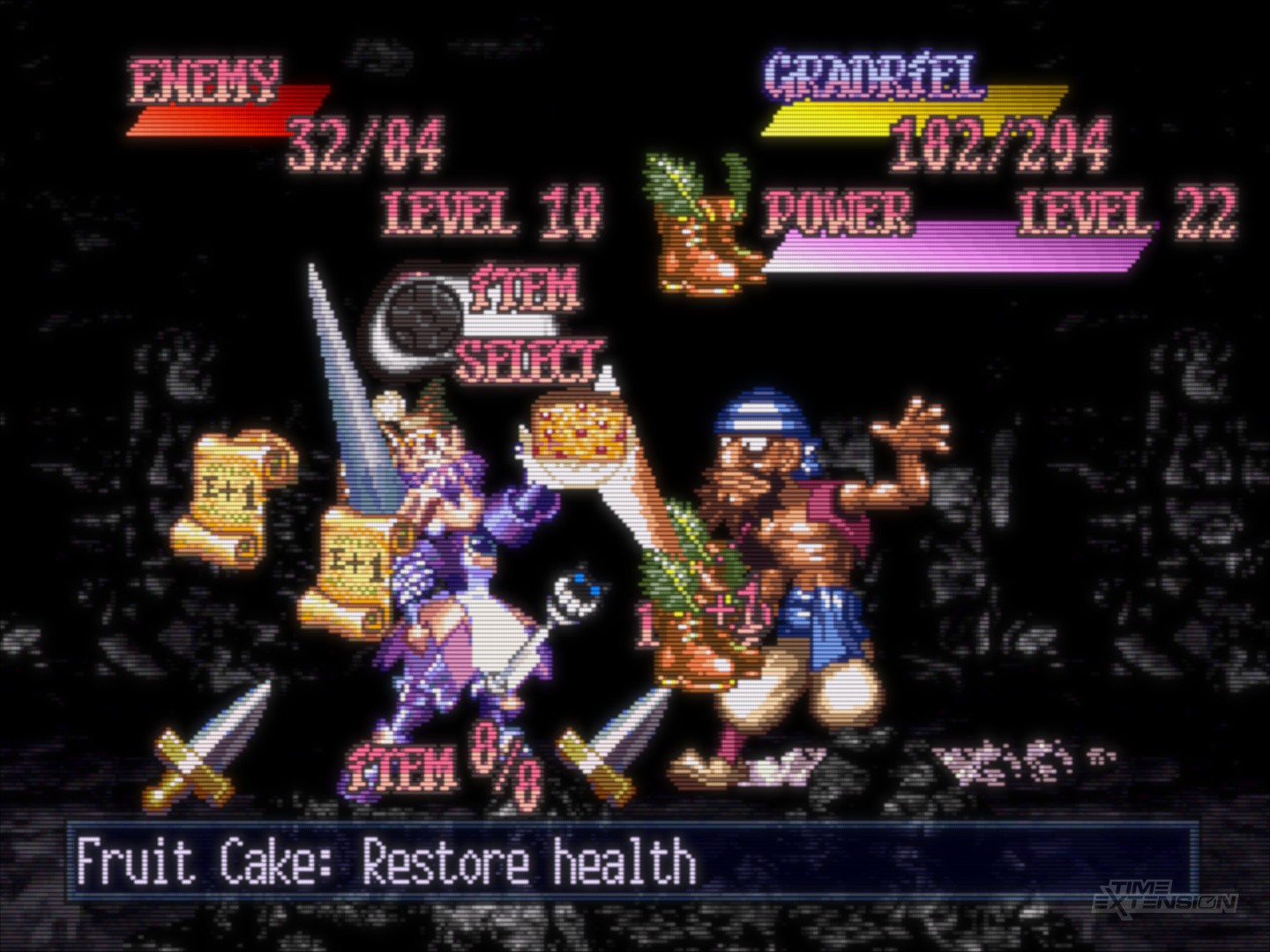
Healing items – such as fruit or cooked meat – replenish your health. When a piece of fruit is fully consumed, you're left with a seed, which can be thrown during battle to cause a tree to grow, which then generates more fruit. If you have a frying pan and the right ingredients, you can cook dishes that help you recover even more health (similar concepts were explored in 2007's Odin Sphere).
These restorative items become increasingly important as you face tougher enemies later on in the game, but it's possible to grind to make things a little easier; experience points are gained after successfully beating enemies, and as your character gains levels, their life and damage output are also increased.
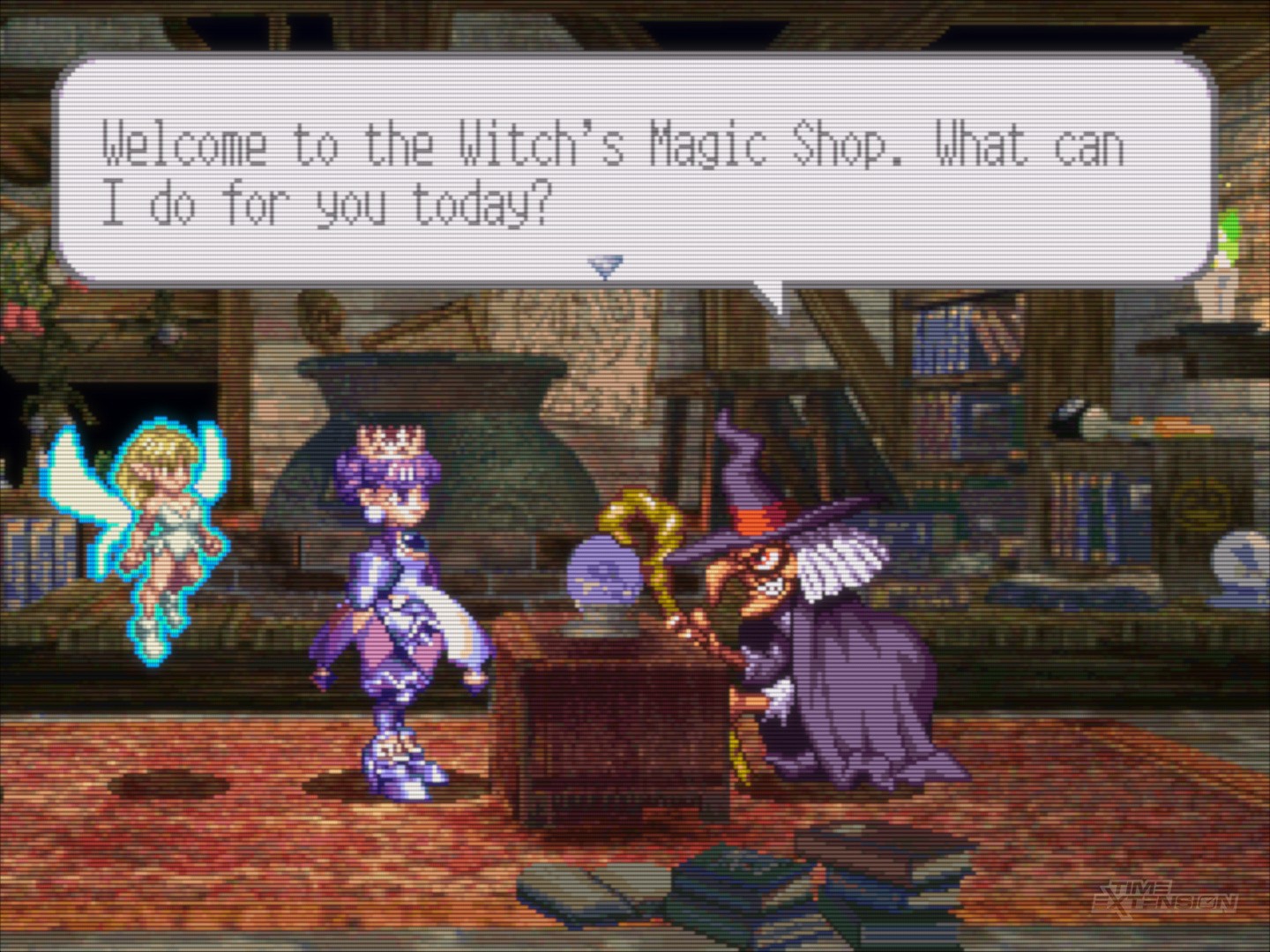
Gear can also be equipped to make life easier; magical boots will allow you to pick up items during combat without having to push down, while a special shield deals fire damage to enemies when you block. These items are indispensable, but you can rely on them forever – they will eventually break. You also have magic jewels, which can unleash fireballs or lightning, as well as scrolls, which can prevent gear from breaking during battle.
Princess Crown ultimately feels like a mix of traditional JRPG and Zelda II-style side-scrolling action, with a pinch of Street Fighter thrown in for good measure (whenever you execute a powerful finishing blow on an enemy, the screen flashes just like it does in Super Street Fighter II Turbo when you claim victory with a Super Special). The combat occasionally becomes a little repetitive due to the basic (yet accessible) moveset, but it is never a big enough issue to entirely derail the player's enjoyment.
The bulk of Princess Crown's charm stems from its presentation, which is utterly gorgeous. The 2D pixel art is sumptuous, with beautifully detailed sprites rubbing shoulders with dense, appealing locations. The amount of animation is also incredible, with enemies displaying their unique personalities via a wide range of movement sequences. Little touches like the lead character Gradriel getting hit on the head by her crown when she takes a heavy blow add to the charm, and I'll never get tired of seeing her joyous victory animation, during which she does an excited little jump as her fairy companion helpfully scoops up her sword.
It is in Princess Crown that we first see Kamitani's penchant for weaving multiple narratives into a single story. While Gradriel is the main character and her quest the most formidable, once it is over, you get the chance to play as three other protagonists, all of whom have rubbed shoulders with the princess at some point during the main narrative. The knight Edward, witch-in-training Proserpina and noble pirate Portgus all offer additional quests, and while they're not as robust as Gradriel's adventure, it's a brilliant way to pull the player back into the world after the main narrative is completed.
Upon reading GameFan's summary all the way back in 1997, I tracked down a copy and armed myself with a crude (yet massively helpful) FAQ. In truth, it's possible to make your way through Princess Crown without such guidance, as progress-vital dialogue is marked in different colours, so you have a visual indicator of when you've unlocked a new route.
I enjoyed my time with the game immensely, even though I couldn't understand a single word, but fast forward to the present day, and we have edmaster's English translation to thank for a far more enjoyable experience.
Conclusion
Princess Crown has always been one of the best games in the Saturn's library, but it is considerably enriched by the availability of a good English language translation patch. A brilliant mix of real-time action and RPG mechanics, the game boasts some gloriously charming 2D pixel artwork, and it wouldn't be an exaggeration to call it one of the best-looking games on Saturn. George Kamitani has arguably gone on to achieve even greater things at Vanillaware, but his directorial debut remains a crowning glory (no pun intended).


Comments 3
"Gradriel" is a pretty unfortunate English-to-Japanese-back-to-English mangling, but I guess per Etrian Odyssey it is canon, like "Varia Suit".
I really hope we eventually get an English patch for the PSP version so I can play it on Vita.
Great game but the most revealing part of this article is finding out what in the entire hell a "Hermie Hopperhead" is.
Show Comments
Leave A Comment
Hold on there, you need to login to post a comment...