
 by
by 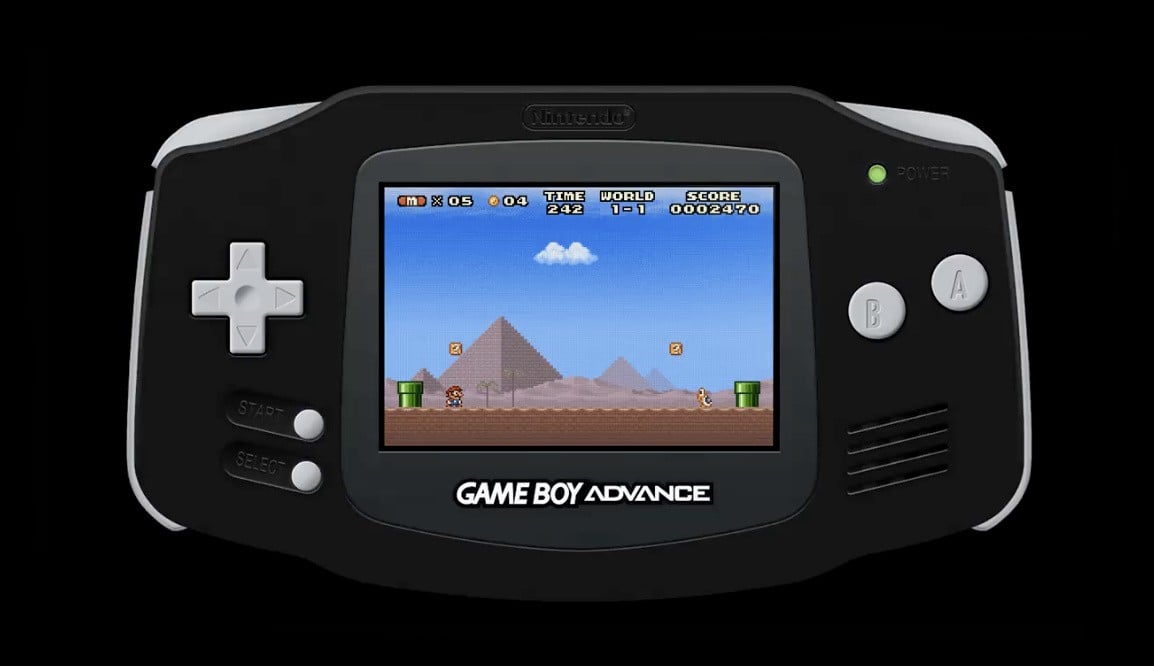
Update []:
Iván Delgado has given an update on his GB Bridge project and has anticipated that it won't go down well with a lot of people.
Speaking on social media, Delgado – whose tool is designed to "port" Game Boy games to the Game Boy Advance – explains that he has recently shifted to AI in order to speed things up:
"I want to talk about a big change in this project that may disappoint some people. As some of my friends know, I started planning GB Bridge many years ago because, at the time, it seemed like the only feasible way to "port" GB games to the GBA.
And of course I thought working on a SML port would be perfect to showcase GB Bridge.
Truth is, with the advancement of AI coding agents, and considering how simple GB games are, that's no longer the best (and certainly not the only) way to make a project like this happen.
A few weeks ago, as an experiment, I used AI to automate the disassembly+rewrite of the game, ensuring frame-perfect accuracy and completeness is tested.
To my surprise, it turns out you really can end up with a clean, native codebase in a relatively short amount of time.
I can't even put into words how much this simplifies a port like this, but to me working on the GB Bridge version seems almost stupid now.
So, considering I have very limited time, and reducing months of engineering effort to a matter of weeks is the difference between these projects actually happening or remaining ideas, I'd rather disappoint some people.
Most importantly, I can now focus on the parts I enjoy most: manually crafting the pixelart, adding enhancements, and ultimately realizing my vision."
The use of GenAI within the world of retro game development, porting and translation has caused a lot of drama recently, and with good reason; AI-assisted projects often exhibit real performance issues, and because they're "vibe-coded", the people who prompted them into existence are often at a loss about how to fix them.
AI-assisted cores are also flooding the FPGA scene, with critics arguing that these lazy ports disincentivise real coders from tackling the same projects, and could lead to talent walking away from the world of FPGA gaming altogether.
Original Story []: An in-development emulator has been revealed which "ports" existing Game Boy games to the GBA, taking advantage of the additional screen space, colours and resolution.
It's the work of renowned Game Boy game enhancer Iván Delgado (@toruzz), who reveals he dropped the first hint about the emulator six years ago.
"I've hinted at it so much there's no point in keeping it under wraps any longer," says Delgado, who has colourised Game Boy games in the past and is also currently working on a colourised version of The Frog For Whom the Bell Tolls.
He adds:
"For the longest time, I've been working on a way to port GB games to the GBA. What I ended up building is a modified GB>GBA emulator that targets a fantasy console instead - I call it the GB Bridge.
GB Bridge is basically a GBC with a different memory map, a bigger screen, and extra inputs. The real trick is that I use special registers to trigger native GBA routines from the emulator - meaning that, while very hard to pull off, I can push things as much as I want."
The developer has shown off a series of GIFs that demonstrate what could be possible with this emulator.
"What I've posted are mockups of the end goal, but I've tested key parts and they are feasible. I'm currently working on Super Mario Land. Like most of my stuff this is long-term, so please don't expect releases anytime soon. That said, I hope I gave you something cool to look forward to."
Later, Delgado felt compelled to clarify the situation a little more:
"I'm seeing a lot of confusion, so I'll try my best to clarify what this is about:
- I'm building a way to "port" GB/GBC games to the GBA. The end result is a native GBA game
- This uses a custom GB to GBA emulator (think 'Classic NES Series' but for GB) + native GBA code"