
 by
by 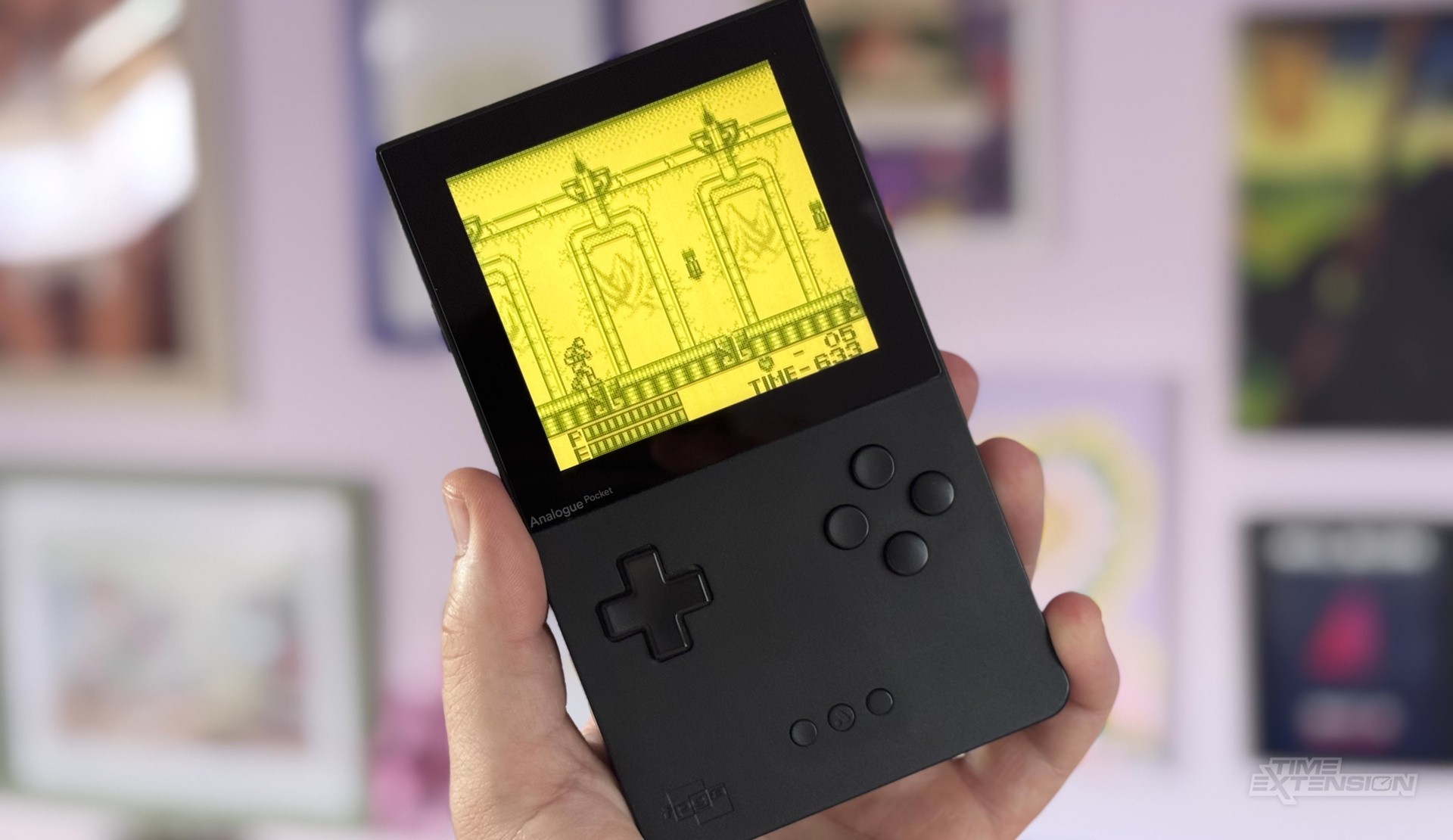
Update []:
A Brickboy core is now available for the Analogue Pocket.
It even allows you to simulate 'dead lines' which appear on so many Game Boy DMG-1 systems as the screen ages.
Original Story []: As any retro gaming purist will tell you, playing old games today isn't just a matter of finding the original hardware and games – the screen you play on is equally as important when it comes to creating an authentic feel.
While many players spend hundreds of dollars on CRTs or expensive upscaler devices, when it comes to playing on handhelds, the situation is a little different – the screen is part of the hardware, and that lends it some unique nostalgic properties.
Nowhere is this more true than with the original DMG-01 Game Boy, which had a 'pea soup' LCD screen that blurred like crazy and wasn't readable in low light.
Yet, for all of its failings, this display has become an intrinsic part of the Game Boy experience, and some (myself included) struggle to play monochrome Game Boy titles on anything other than original hardware; it simply doesn't feel right.
Japanese Indie developer fugudaro / kathoc has created a browser-based emulator known as Brick Boy, which seeks to replicate the console's famous display as closely as possible – even to the point of reproducing the pattern of the reflective panel which sits behind the LCD screen.
As fugudaro explains:
"An LCD that isn't backlit lets external light pass through the LCD, reflect off the back panel, pass through the LCD again, and reach the eyes. So the color in bright areas isn't the LCD's color, but the panel's own color itself. And the actual panel has a fine pattern like Japanese washi paper."
The developer measures the 'noise' from close-up images of publicly available LCD modules. "At 1 dot = 12.9px conversion, the grains are 0.3–0.5 dots, non-directional, amplitude total ±3.9%," they say. "Since it's variation in reflectance, I multiplied rather than added it = it appears in bright areas, and automatically disappears in dark ink."
The end result is an emulator that not only includes the signature blur and pixel grid effects, but also recreates the pattern sitting behind the main image – all combining for a truly faithful impact. The developer has even created a mode which replicates what happens when the polarising film sandwiched around the liquid crystal "rots away":
You can check out this work by playing Brick Boy in your browser, but it's worth noting that the shader has also been ported to RetroArch.
The catch is that this self-proclaimed "old guy from the Famicom generation" is using AI to "automate Game Boy development" – a subject that is proving to be quite contentious at the moment.