
 by
by 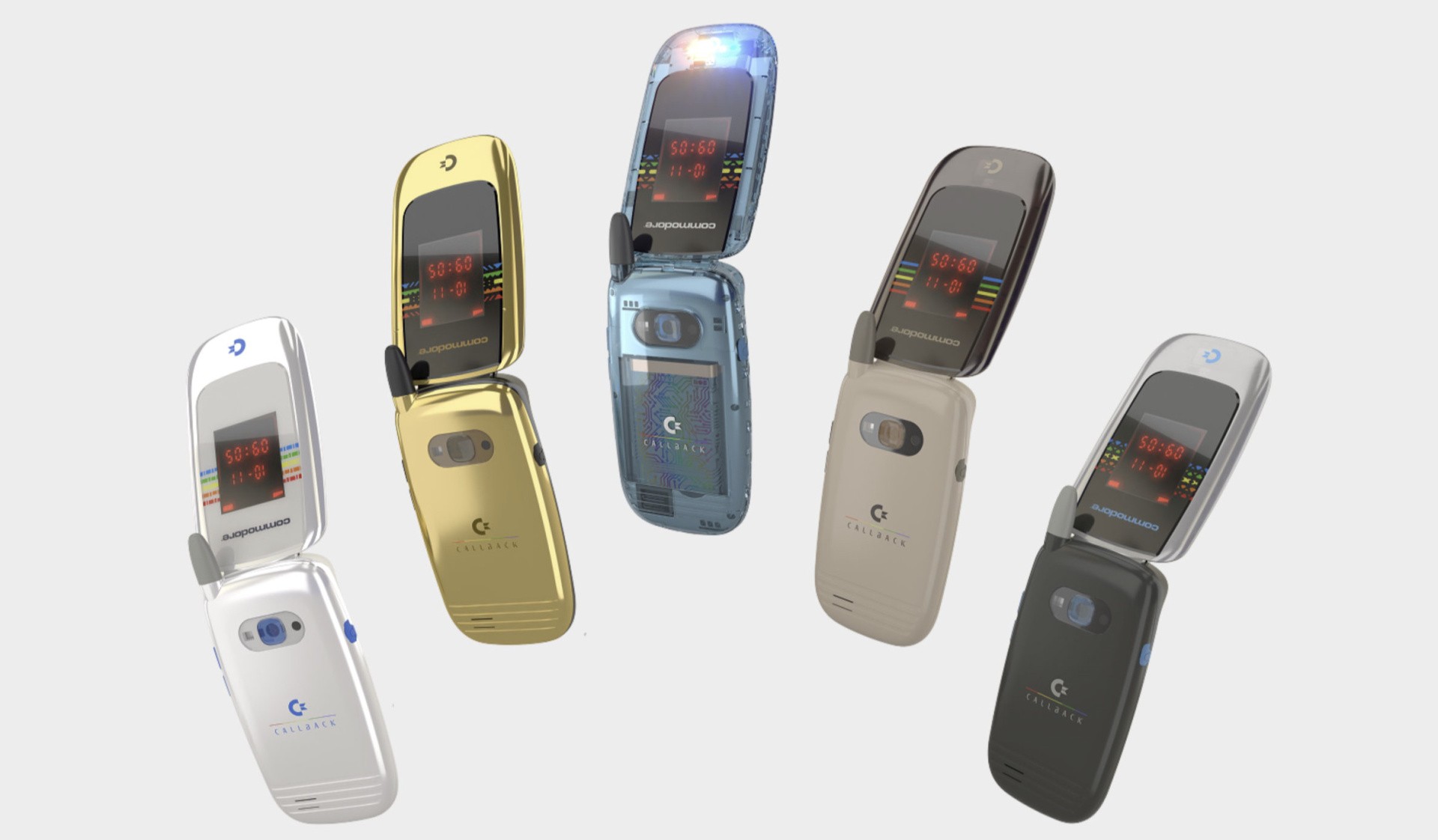
The resurrected Commodore International has already scored a significant hardware success with its brilliant C64 Ultimate, but it's fair to say that its latest product has divided opinion a little.
The Callback 8020 phone is intended to combat the increasingly negative relationship people have with their all-singing, all-dancing smartphones, as it strips away online connectivity, social media, and more to present a device that allows users to enjoy a "digital detox".
However, the phone's high price has attracted criticism, as has Commodore's use of GenAI in its marketing. Despite this, Commodore insists the phone has already been a commercial success, based purely on pre-order interest.
The handset is getting another promotional boost from Horned Goat Productions, which has released Callback64: Operation Internot, an unofficial tie-in game which sees the main character delivering Callback 8020s to a host of hapless doomscrollers (thanks, Indie Retro News).
Here's the synopsis:
"The algorithm hums in its server cathedral, harvesting every eyeball on Earth. Doomscrollers — chins down, souls dim — wander the streets distracted, until the next hazard swallows them.
Then Commodore returns, and drops the Callback 8020. No feeds. No ads. No algorithm. Just calls, texts, and SID ringtones.
The algorithm panics. Its flop cameras line the streets, watching your every move, and it rage-baits the faithful into the Order of the Breadbin — a militia of true believers with one article of faith: a phone? not from my Commodore! Alerted by the algorithm, they take to the rooftops and the pavements with armfuls of breadbin C64s, and they throw them at anyone carrying a Callback."
Callback64 – which is not affiliated with, endorsed by, sponsored by, or associated with Commodore International – is the work of Bill Stevens, who was responsible for the "design, story, artwork, music, level authoring, the entire browser tool suite, and every decision that mattered."
However, Stevens explains that he relied on Anthropic's Claude for "6502 implementation and debugging, working from [my] designs, art and music files, and reports from running each build on real hardware."
He adds:
"The collaboration is worth being straight about: the game was designed, drawn, scored and directed by a person, and the assembly was written by a machine that was told what to build and then told, repeatedly and specifically, what it had got wrong on a real Commodore 64."