
 by
by 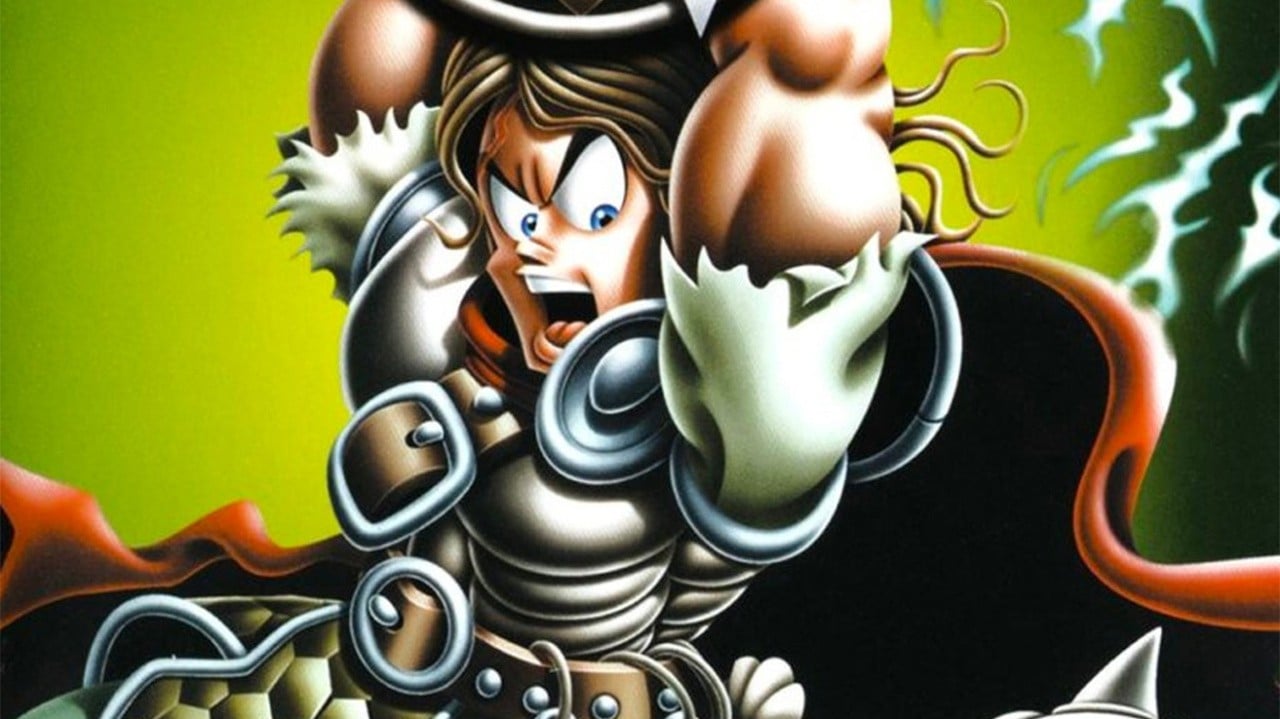
If you're a huge fan of the Ghost 'n Goblins series or just so happened to own a PS2 back in the early 2000s, you might remember Maximo: Ghosts to Glory.
Developed by Capcom's American branch, in collaboration with legendary Famitsu artist Susumu Matsushita, Maximo was a 3D-based action-adventure title, released in 2002 (2001, if you happened to live in Japan), and was set in the same universe as Capcom's classic gothic arcade-style series.
Players took control of the titular character, a resurrected king who finds himself teaming up with the Grim Reaper, to locate his missing bride-to-be, Sophia, while also searching for revenge against his former friend and advisor, Achilles.
Featuring a mix of expressive characters and "old school" difficulty, it launched to mostly positive reviews and has gone on to become considered a bit of a cult classic (alongside its sequel, Army of Zin), but could have apparently turned out very different from the version we know now, according to one of its artists, Joe Pearson, who states he once pitched a darker "R-rated" version of the game that was never produced.
Pearson, if you happen to be a Crash Bandicoot fan, may already be a name that is familiar to you. Alongside Charles Zembillas, he was the creator of Crash's original character design and has also gone on to contribute designs and concept art to various other games over the years. He was brought onto the Maximo project, based on the suggestion of David Siller, the original producer of Crash Bandicoot, and, much like on Crash, was given the task of coming up with a fully fleshed-out story bible for the game, in addition to providing art.
"Through David, I got to work on a number of other games," Pearson told Time Extension. "That includes the first two Maximo games for Capcom, designing and actually writing (at their request) an insane R-rated bible/Story and cinematic for the first Maximo game. They wanted it dark and sexy, so I went full Michael Moorcock on it."
The script Pearson wrote for this version, entitled Maximo: The Dark Knight, has been online since 2018, thanks to Unseen64 and Ross Sillifant, but was recently shared with us by Pearson himself, while contacting him for background for another article. It features a dramatically different plot than what was eventually featured in the finished game, with Pearson admitting he took a lot of inspiration from Michael Moorcock's Elric books. This can be seen, in particular, in the presence of three magical swords (black, white, and red), which are clear references to the white and black swords from Moorcock's novels, and play a huge part in the story Pearson was hoping to tell:
On Talos as he forges a blade. He is clearly wounded badly with deep cuts, bruises and reddened bandages covering his body.
NARRATOR:
"For three days and nights Talos worked, forging three mystic swords from the body and blood of the dead dragon"
Three Swords appear in sequence, fires burn behind and around them—the Red Sword, the White Sword and the Black Sword.
NARRATOR:
"The Red Sword, the Cinnabar, forged from the mystic blood of Khanarch Khan. The White Sword, Immacula, forged from the bones of the dragon. And lastly, The Black Sword, the Parrila, created from the ashes of the monster."
In this earlier version, Maximo isn't the ruler of a kingdom, but a simple warrior serving "Loden the Just", the King of Gloriandra.
Sophia and Achilles are also nowhere to be seen, with the story instead focusing on Lilith, the Queen of Monsters, and a corrupted sword, named Immacula, that ends up corrupting the reigning king and the kingdom, forcing Maximo to flee. It's here that we get a taste of the darker tone Pearson intended for the game, which Capcom eventually decided against, with the hero returning to his family home, only to find his mother, father, and sister transformed into hideous monsters:
EXT. Maximo's village—NIGHT.
ON the village main road. A giant, pumpkin orange moon hangs low in the sky. A once charming, medieval village, has been transformed into a place of demented evil. The two and three story wooden buildings are warped and twisted. Some burn sullenly. Thorny vines wrap around chimneys and wooden posts. A bloated corpse swings from the hanging sign over the Inn's crooked door.
Maximo cautiously moves down the muddy center of the road, looking warily about him. He approaches a small house surrounded by a thorn encrusted wooden fence. In the small, muddy yard a large, two-headed ax is imbedded in a rotting corpse. Maximo enters the yard, stopping just outside black hole of the open doorway.
MAXIMO:
(calling out softly)
"Father...? Mother...?"
There is a long silence the is a long silence then we hear the sounds of raspy breathing and shuffling footsteps. They grow louder. Two grotesque figures emerge slowly from the darkness within the house. An older man and a women, clearly Maximo’s parents, but twisted and bent with corpse white, diseased skin, chunks of exposed bone and glowing red eyes—the living dead.
We asked Pearson what Capcom made of this script when he submitted, but he sadly couldn't recall. All he could do was hazard a guess that he had simply gone too far, and the script needed to be lightened up, to appeal to a younger demographic.
"I think they most likely went 'Woah, this is way too dark,' he told Time Extension. "And then retrenched to a younger, safer content. But they did pay me fairly for the work."
Pearson would later be credited on the finished release with "additional concept art", some of which you can see throughout this article.