
 by
by 
In April 2025 we covered how Japan's Game Preservation Society was on the verge of closing. Since then, a lot has happened, with big changes and even bigger plans. The GPS would again like to thank everyone who rushed to its aid. You won't have known this at the time, but that support helped avert an unexpected crisis which occurred the following July – a crisis so severe that had there not been an influx of financial support throughout May, the GPS would have immediately closed down.
In an unconnected incident, the Japanese government contacted the GPS in July of 2025, stating it would be punishing the GPS by cancelling funding for that round, and would be freezing all future funding, due to two violations:
- Images showing the covers of books, magazines, and game packaging breach regulations.
- The GPS is not allowed to scan full pages of magazines for private archiving, and has to cease doing so immediately.
"It was nasty," Joseph Redon, head of the GPS, tells Time Extension. "They told us the funding will be cut, we are not giving you subsidies for the next round. They were saying you are not going to get any subsidies if you don't correct the situation. But they would not explain why. They would not state explicitly what was wrong with the images. We had a lot of internal discussion, and in the end, we had to hire a lawyer to examine the situation and talk with Cultural Affairs.
"In the end, we understood the exact issue, and when we corrected it in the middle of August, they told us, Okay, now you can get the next round of subsidies, but there will still be a 20% cut as a penalty, and we have to cover this cost ourselves. We discovered with the scans, big or small is not the problem, even super small thumbnails, the problem is that they cannot be provided alone. Every image has to be in context; it has to have a caption – copyright images can only be supplementary. So we had to cut access, and people contacted us, saying 'I don't have access anymore, what's happening?' So people were using it and were excited about those assets."
The second issue caused other problems. The GPS had recently completed crowdfunding for a new scanner to digitise pages of magazines – not for public distribution, but for private archiving, in the hopes that copyright laws would be relaxed in the future. The objective was to safeguard fragile paper materials while they were still available, while also creating an index or database of their contents (including magazine titles, page numbers, and publishing dates). The Japanese government decided this was unacceptable, and the GPS had to stop all scanning activities, although the GPS maintains that no law was being broken.
Redon has to be given credit for navigating this nightmarish scenario with grace and diplomacy, and goes on to explain that the punishment issued by the Japanese government should be seen as a good thing, since it has motivated the GPS to expand.
As he explained:
"Even if the government is wrong they will never acknowledge it. So though it's not fair we accepted it, because we had the funds to overcome this punishment. I am not complaining, this is just to illustrate how difficult it is to do preservation in Japan.
We're not running away from Japan, but the stuff we cannot do here we can do outside, specifically in the USA. So we are creating a sister organisation in the USA. Currently we're in the administrative part, making papers, deciding the structure, etc. We still have some months before the organisation is finalised.
We are not duplicating the work; what we do in Japan we do well. But what we cannot do in Japan is a digital library. We plan to start this organisation in New York - we don't need offices, we don't need storage, but we need database engineers, librarians, and most importantly someone who is an expert in copyright.
When you're building a digital library you are scanning stuff, you are lending books digitally, etc. And of course you have to follow the rules. Some rules are not clear, you need to interpret them, and it might be different in each state of the USA. This is one of the most complicated parts of the project, so we need knowledgeable people."

Redon went on to describe how they are currently working with a New York law firm to create this new entity. This would allow the GPS, or more accurately its sister organisation, to operate in a manner similar to the successful Video Game History Foundation, albeit focusing on Japanese history. This, in turn, would also address many of the issues surrounding supporters who currently do not see the benefits of their donations.
Previously, donations were made to preserve fragile media while it was still viable, so that it could be shared in the future. This was part of the organisation's mission to lobby for changes in copyright law. Under these new plans, the GPS would finally be able to provide – for example – scans of Japanese printed materials (box art, magazines, etc.), in a similar manner to the VGHF's library of American magazines. Rest assured, that the crowd-funded scanner will not go to waste.
In addition to changing the legal framework it operates under, the GPS has also started a Patreon. One of the most repeated requests was for Patreon funding, as an alternative to direct support, which required a larger upfront sum. The Patreon also allows donors to be anonymous, not disclosing personal information such as their address.
Currently, the two available Patreon tiers are Free and £4 / $5 per month, with plans to create higher tiers with more rewards for each. The lowest paid tier will deliver monthly news content on the GPS's activities - it's basically what you'd get by becoming a direct member previously. The difference is that instead of the PDFs, which one had to search for and download, the news will be delivered via email directly and regularly. Of course, the PDFs will still be available for those who enjoy them.
The team are also currently building a stockpile of material for the Patreon and will be introducing bespoke videos, photographs, livestreams, and long-form features that leverage the resources available to the GPS.
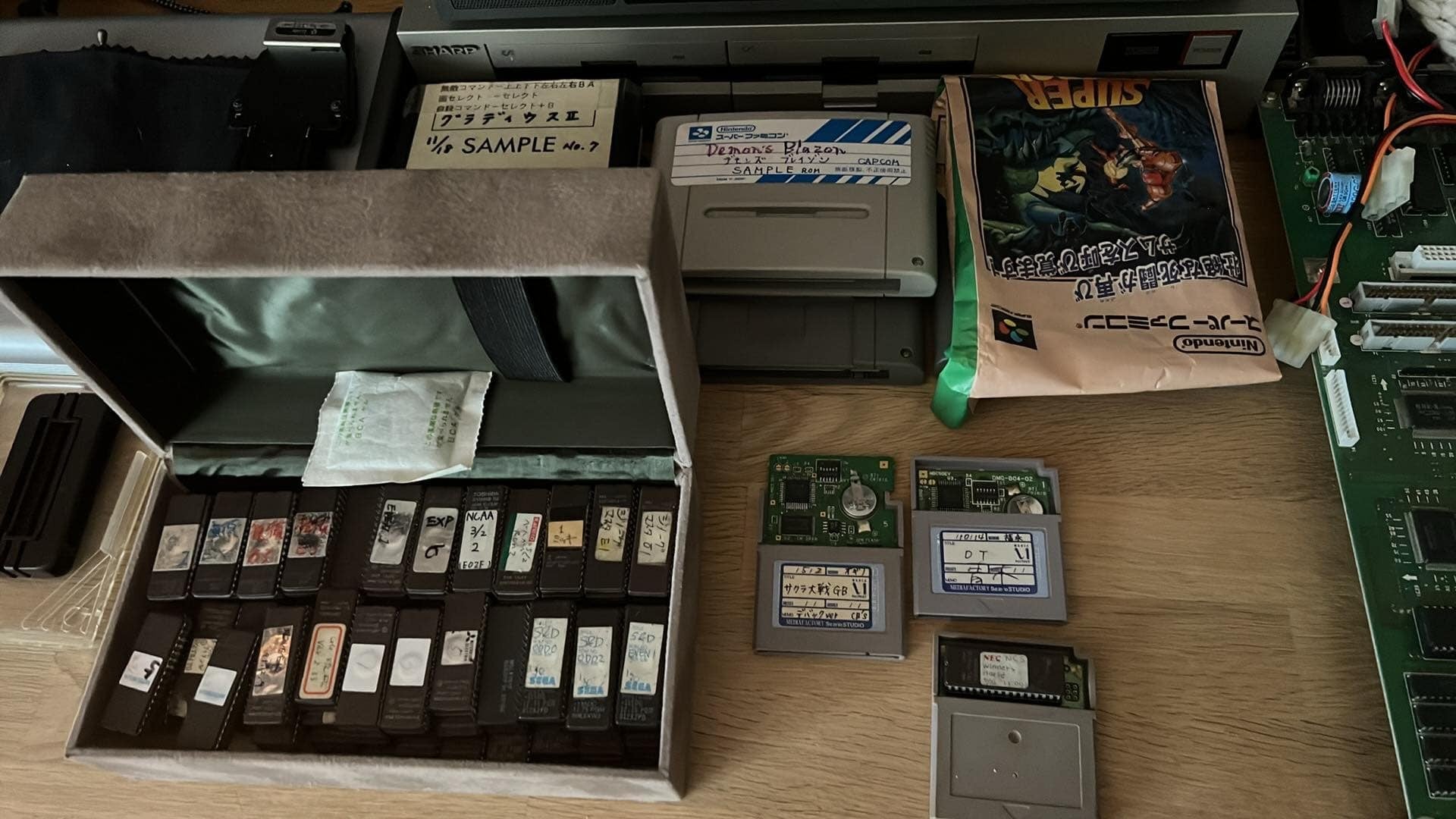
One of the planned future perks on Patreon is remote tours of the HQ, taking viewers around the archives via livestream. All these benefits will be delivered via the Patreon platform. Your author has already written a 5000-word inaugural feature, which will be published as free to access, so as to give a preview of what else will be available. Redon wants to guarantee at least three months' worth of material before introducing higher tiers. He's also expressed a desire to collaborate with others and is currently speaking with preservationists and YouTube channels. Here is an introduction post explaining things.
Redon is keen to emphasise that any money pledged through Patreon goes directly to their preservation work, and is not "buying" any content. Any material provided to supporters via the Patreon will eventually be made freely accessible – but Patreon supporters will have early access to content, as way of showing thanks.
With the current work towards a sister organisation based in the USA, one of the future goals is a freely accessible digital library. He also explains that he wants any content provided to Patreon supporters to also be provided to direct supporters. But he's also keen to grow the support via Patreon, and for good reason – he wants the GPS to free itself from the yoke of current Japanese legislation and force a change in the laws:
"The goal is to get 300 paying supporters on the Patreon. With 300 people the GPS would have enough funds to be autonomous and not rely on the government. It would be an important milestone. I want us to be independent, to not rely on subsidies and a few large private donors, so we can maintain our integrity and philosophy. We can make our own choices which are in the best interest of the public and preservation.
With the sister organisation in America we plan to extricate ourselves from the jurisdiction of Japan's laws. At the same time, and I say this in a positive way, it's a way to lobby the Japanese government. To tell them, currently this cannot be done in Japan, maybe you should think about it, maybe you should change the rules and make it possible for Japan to preserve its own history, otherwise it has to happen outside of Japan.
It's a way to force them to acknowledge the rigidity of the rules, and the fact they should have the vision to adapt the law to the current reality. If they cannot understand that by themselves we have to show them. We are not leaving Japan, but this work should be allowed within Japan."
Please check out the introductory post, and if you have a Patreon account, definitely subscribe to the free tier since you'll receive email updates. Help spread the word about these developments, and, as before, feedback is welcomed and encouraged to help adapt and improve things. Finally, if you have expertise in the fields Redon described previously, especially copyright law, and would like to help, get in touch via official channels.
The GPS still prefers direct donations via its website, since the fees are 3.5% as opposed to Patreon's costs – Patreon fees are a flat 10% but when you factor in the payouts via PayPal and currency conversion fees, it equates to around 15%. However, the GPS welcomes any support via the method that is most comfortable for you. If you'd prefer, it's also possible to make a one-time anonymous donation of any amount by clicking the link on the donations page.
As always, being an NPO means complete and absolute transparency. All monies received are made public, including how they are spent. It's worth also reiterating the following from the recent December 2025 newsletter:
"It may come as a surprise to some readers, but the money that the GPS receives is never used to purchase games. Instead it goes to operations, like paying rent and utilities at headquarters; to materials, like the specialized storage boxes for media; and to research, like our past work with the Pauline or ongoing work with cassette media backups. The games in our archive have primarily come from personal or corporate donations, with the understanding that the Society will ensure they are professionally stored for the future."
After the surge of support last year, around 65% of paid GPS members are now outside Japan. The GPS listened to all of the feedback and looks forward to modernising its approach for a global audience. This is not just marketing speak – for too long, the efforts of everyone involved have had to be hidden from view due to the law.
The year 2026 will finally begin to change this.