
 by
by 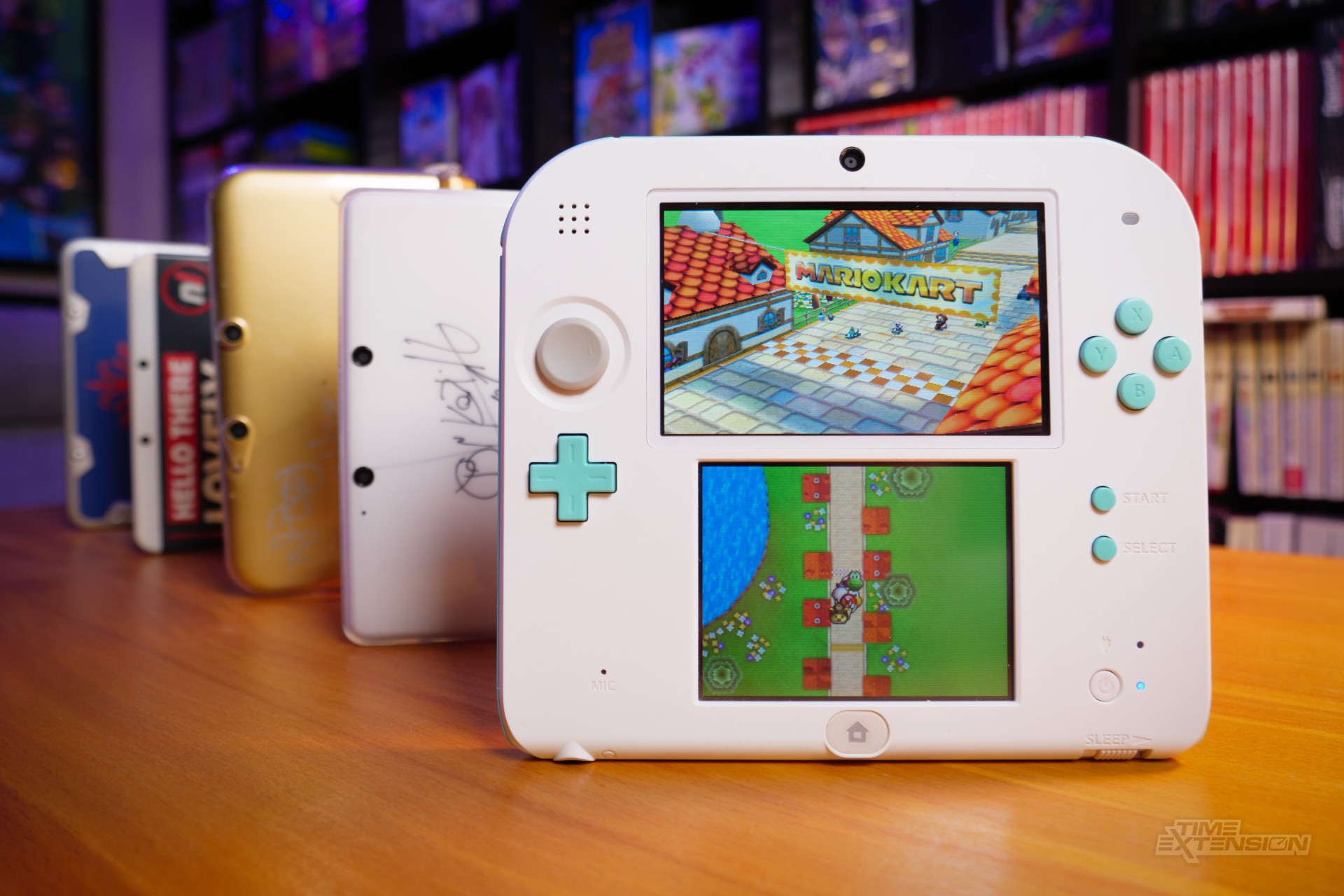
It's taken me thirteen years to realise that chunky plastic wedge wasn't a joke. It was a milestone.
I finally got my hands on a Nintendo 2DS this week – that slate-shaped, non-folding, non-3D thing everyone mocked when it launched in October 2013. Opinion remains fiercely split: people love it or hate it, rarely anything in between.
I expected to understand why it's divisive. What I found was something nobody had properly articulated: the 2DS wasn't a budget compromise or an admission of defeat. It was the last time a crisis forced Nintendo back to Gunpei Yokoi's core principles – not through visionary planning, but through desperate necessity.
And in being forced back to first principles, it accidentally revealed what Nintendo actually is when you strip away all the marketing theatre.
"Lateral Thinking with Withered Technology"
Gunpei Yokoi was Nintendo's soul. Creator of the Game Boy, Game & Watch, and the D-pad – the man who helped build the Japanese company's handheld empire and would continue to work in the realm of portables until his untimely death in 1997.
His philosophy: 枯れた技術の水平思考 (Kareta Gijutsu no Suihei Shikō) – "Lateral Thinking with Withered Technology." Don't chase cutting-edge specs. Use old, reliable, cheap technology in unexpected ways.
The million-selling Game & Watch line was famously created when Yokoi saw a businessman idly tapping away at his cheap, pocket-sized calculator on the way to work, while the successor device – the Game Boy – adopted the same low-cost 1970s screen technology in 1989 and blazed a trail.
Ancient, cheap, reliable. It crushed the more powerful, colour-screened Game Gear and Atari Lynx through pure accessibility: longer battery life, lower price, and focus on gameplay over graphics.
The numbers prove it wasn't idealism – it was ruthlessly profitable. Yokoi's Game Boy sold 118.69 million units over fourteen years (including the Game Boy Color upgrade). At roughly $25-30 margins per unit, that's approximately $3-3.5 billion in gross profit from "obsolete" technology.
For comparison: Game Gear sold 10.62 million. Atari Lynx sold 3 million. Yokoi's withered technology approach generated 10-35x the profit of cutting-edge competitors. This wasn't romanticism – it was business genius.
Yokoi tragically died in 1997 after being involved in a traffic accident. His principles should have died with him, given what came next.
The Warning They Ignored
In 2004, Satoru Iwata – then Nintendo's president – gave an interview that now reads as prophecy.
"I suppose I could give you a list of our technical specs," he said about the upcoming DS. "I believe you'd like that, but I won't for a simple reason. They really don't matter."
He continued: "If developers come to me and say CPU is ten times as powerful, graphics capability twenty times, I will say: that means more workload and slight difference in letting people understand the improvement."
His conclusion: "There's no point in making new hardware unless it's something that will surprise people. DS is not simply new. It's not just more functions or higher specs. It is different."
This was Iwata channelling Yokoi seven years after his death. Innovation through unexpected interaction, not through spec increases. The DS had dual screens, touch control, and completely new ways to play – not just prettier versions of existing experiences.
"We don't just say 'we will change gaming' with words," Iwata emphasised, "but we actually release products and change gaming."
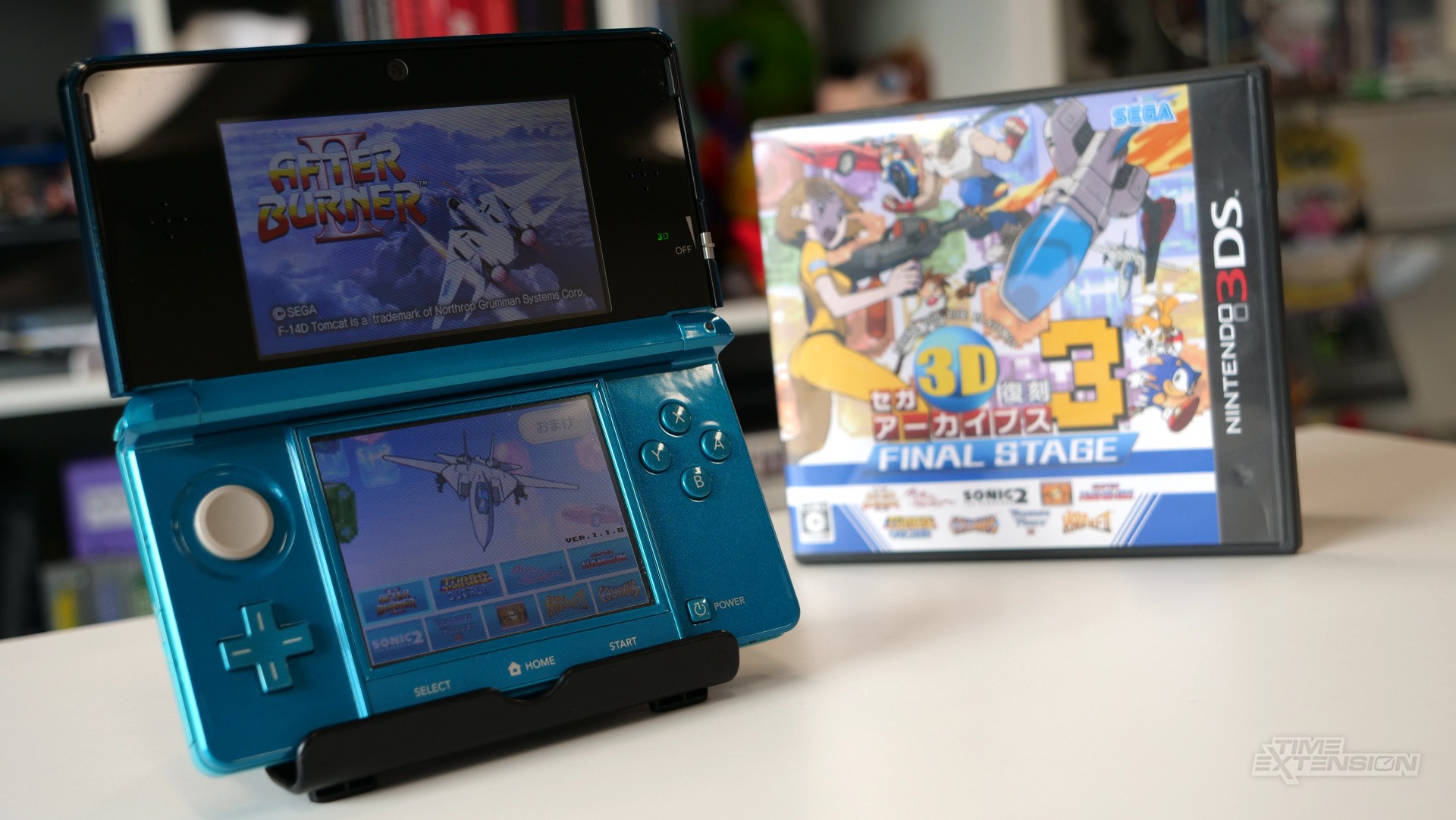
Nintendo's next handheld, the 3DS, would try to change gaming through surprise – but surprise built on expensive, complex technology, not lateral thinking.
Eloquent Hardware
Reading the Iwata Asks interviews, the 3DS was clearly anti-Yokoi from conception; you can see the engineering team's enthusiasm – and their hubris. They added everything: autostereoscopic 3D displays requiring parallax barrier technology, dual cameras for 3D photography needing microscopic precision alignment, AR cards, StreetPass wireless communication, gyroscope, accelerometer, and motion sensors.
The complexity spiralled. The 3D screen required doubling the graphics rendering speed and massively increasing the backlight power (the parallax barrier ate 30-40% of the light output). The dual cameras had to be aligned so precisely that if the optical axes were off by even a slight amount, 3D photos wouldn't work. Manufacturing became a nightmare.
Even the gyro sensor was forced in at the last minute – in February 2010, just months before E3 – causing SoC designer Ryuji Umezu to protest, "specs are final!", only to have Miyamoto override him. The engineers couldn't help themselves. More features. More complexity. More cutting-edge technology.
Miyamoto called it "eloquent hardware" – a device that would persuade you of its brilliance through feature-stacked sophistication. Everything Yokoi warned against. Everything Iwata said didn't matter.
Nintendo launched it at $250 – the most expensive handheld Nintendo had ever made.
March 2011. Reality hit hard.
The Fall
Five months after launch, Nintendo executed an emergency $80 price cut – from $250 to $170. The fastest, deepest price cut in Nintendo's history. The company posted its first annual loss since 1981. Stock plummeted. Analysts compared it to the Virtual Boy disaster.
But the crisis went deeper than sales figures.
In 2011, former Sony engineer Seijiro Tomita sued Nintendo, claiming the 3DS unlawfully used his patented glasses-free 3D display technology. The case dragged on for years. In 2013 – the same year the 2DS launched – a jury found for Tomita, awarding him $30.2 million. Nintendo would eventually win on appeal in 2016, but for years, it was fighting a losing legal battle over the very feature it had bet the platform on.
Simultaneously, health warnings emerged about 3D displays potentially damaging young children's eyesight. Nintendo itself recommended that the 3D feature not be used by children under 7 – effectively locking out the primary demographic for childhood imprinting. Lose the under-7s to smartphones and tablets, and you lose the next generation of Nintendo customers entirely.
The $170 price point helped, but wasn't enough for true mass-market impulse purchases. The 3DS XL in July 2012 offered bigger screens at $200 – premium positioning doubled down.
By 2013, Nintendo faced multiple institutional pressures simultaneously: financial losses, legal battles over its signature feature, health concerns excluding children, and a market that had clearly rejected premium handheld positioning. Something had to give.
Enter Reggie Fils-Aimé and Nintendo of America with a heretical proposal.
The Disruptive American
Satoru Iwata understood that regional divisions sometimes see markets clearly than headquarters. This trust had proven itself: when Reggie Fils-Aimé pushed to pack in Wii Sports with every Wii in America and Europe, Kyoto was sceptical. Japan didn't pack it in. Result? Faster adoption, more software sold per console. Regional understanding beat HQ instinct. The 2DS followed this pattern.
Nintendo of America identified the problem: 3DS health warnings locked out children under seven – the exact imprinting demographic. $170 was too expensive for parents buying handhelds for five-year-olds. NoA's solution: strip the 3D, remove the hinge, hit $129.
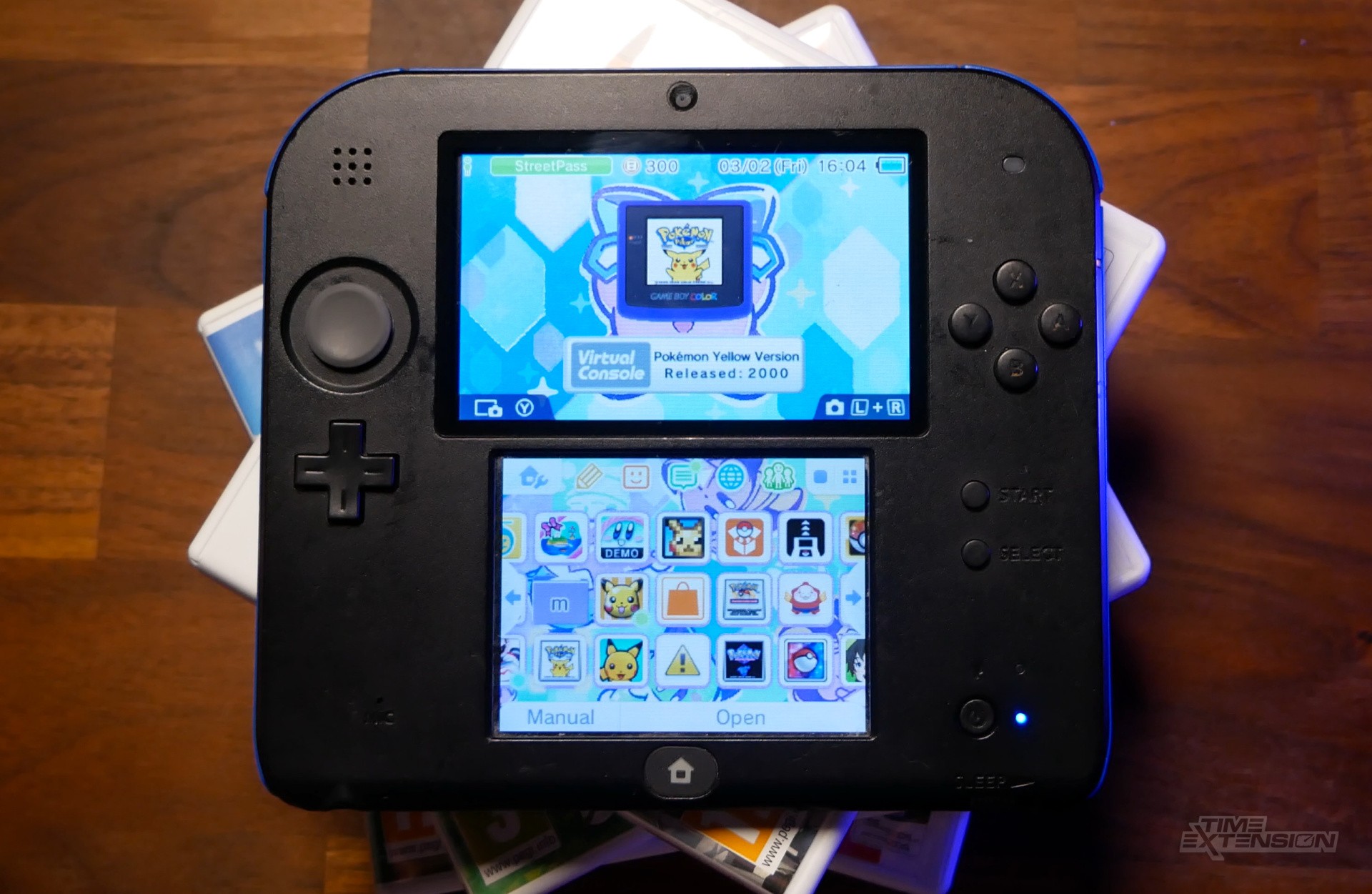
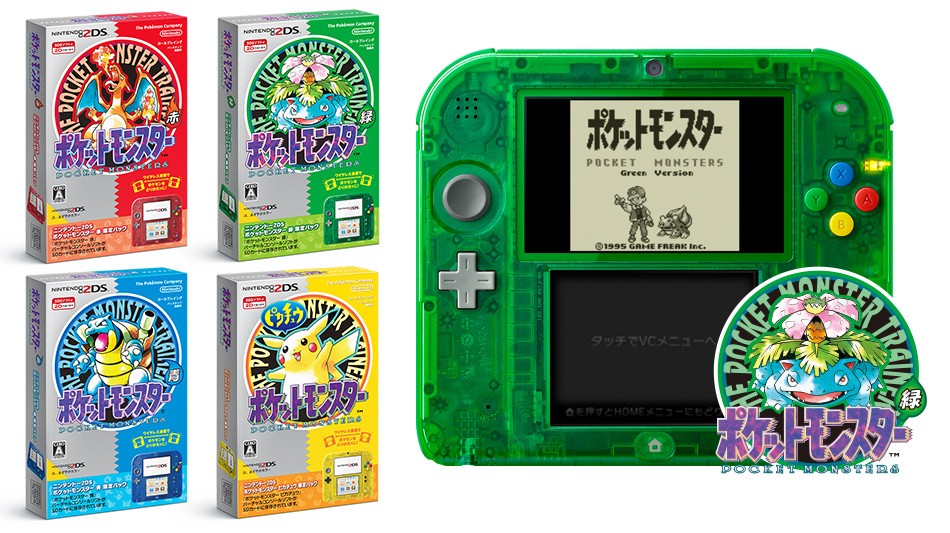
Kyoto resisted. The 2DS wasn't released in Japan for 2.5 years. When it finally arrived in February 2016, it came as limited Pokémon bundles at Pokémon Centres for ¥9,980 – positioned as a premium collectable, not a kids' toy. Same hardware. Opposite philosophies.
Reggie repeatedly called Nintendo "an entertainment company, not a video game company." If you're Sony/Microsoft – video game companies – hardware is credibility. If you're Nintendo – an entertainment company – IP is credibility. Hardware is just delivery.
NoA understood: we're in the Mario and Pokémon business. Cheap access is good business.
Accidental Yokoi
What Kyoto built – reluctantly, desperately – was textbook Yokoi. In photos, the 2DS looks absurd. Wedge shape, chunky plastic, Fisher-Price buttons. Compared to doorstops. But pick one up, and nothing about it interferes with play.
At 255g, it's perfectly balanced – the same weight as the New 3DS, but evenly distributed. No top-heavy clamshell. Your hands just hold it.
Controls centred – Circle Pad and buttons symmetrically flanking the screen. Game Boy Advance thinking: screen middle, controls equal on sides. Game directly front, thumbs natural, controls equidistant. Nothing distracts. No hinge. No 3D slider. No premium finish. No faceplates. Just: game, buttons, play. The hardware serves the game, nothing more.
The slider switch is simple: flick to standby, flick back to play. No ceremony. Toys don't have rituals of closure. You don't "shut" a football. The 3DS close is conclusive – ending something. The 2DS slider is pure pause – the game's still there.
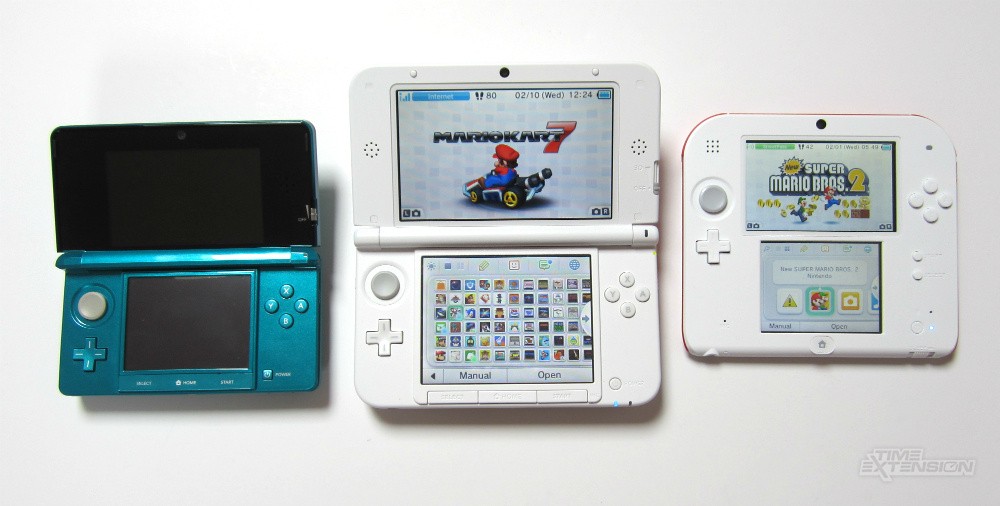
The screen looks sharper than expected. Brighter despite cheaper panels – no parallax barrier means full backlight direct. Dimensions identical to the original 3DS (3.53 inches) meant a tighter pixel density than the New 3DS's larger screen.
The single LCD panel and simplified electronics deliver unexpected benefits. Battery life in sleep mode is exceptional: four days without meaningful drain, compared to the New 3DS struggling to hold charge for 24 hours even with Wi-Fi disabled. Simplification here wasn’t just about cost. It changed how the device behaved. No hinge, no failure point. Indestructible plastic for use, not display.
What they'd built: strip the 3D barrier, mask one LCD as two, remove the hinge, form a solid wedge, hit $129.
The team behind all of this? Nintendo Research & Engineering – Yokoi's successors, led by Satoru Okada, who worked under Yokoi for over 30 years.
Japanese craftsmanship paradox: even admitting it's "just a toy," they perfect it. That balance, that slider, those dimensions. Kirby is "just" a pink ball, but the movement feels microscopic-perfect. Mario is "just" jumping, but the arc is mathematically optimised.
The 2DS is "just" plastic, beautifully executed.
The 3DS competed with iPhones through premium materials and aspiration. The 2DS admitted: we're a toy for playing games. That honesty was what the market wanted.
What The Wedge Proved
October 2013: the 2DS launched alongside Pokémon X & Y. The results were immediate.
2.1 million units in the first quarter. UK's best-selling console. By November, 30% of French 3DS sales. 2013 became the peak year: 13.95 million units across all models. 2012 (pre-2DS): 13.53 million. The 2DS drove the surge.
Manufacturing economics enabled this. Single LCD instead of dual screens, no hinge, simple plastic – Nintendo likely saved $45-55 per unit, allowing $129 pricing while maintaining margins. Over $1 billion in revenue from 9-10 million units that wouldn't exist at higher prices.
But more importantly, the 2DS proved that Nintendo itself is the platform, not the hardware. Strip away autostereoscopic 3D – the namesake feature. Remove the elegant hinge. Replace two screens with one masked panel. Use chunky plastic.
Games still worked perfectly. Mario Kart 7, Pokémon, Animal Crossing, Zelda – identical on "inferior" hardware. Actually, they were often better – no eye strain, brighter screen, more comfortable.
The 2DS proved Reggie's insight: if you're an entertainment company, IP is your advantage. Mario, Pokémon, and Zelda transcend any delivery mechanism. For Nintendo, hardware proved replaceable. The platform was the characters and worlds.
The opposite of Sony/Microsoft, where hardware is the platform. They're technology companies running games. Nintendo is an IP company making hardware.
In October 2014, the New Nintendo 3DS launched – along with upgraded specs, improved 3D, and exclusives. The 2DS had established a baseline, seeded the mass market, and built an installed base. Now harvest with premium. 2DS sales cratered 76% – from 2.1M to 500K.
This was intentional. Pattern proven. Crisis stripped away pretence. What followed was cheaper access, wider adoption, and only then a return to premium.
The Wedge Was Prophecy
The most damning evidence that Nintendo didn't understand what it had created? Japan waited two-and-a-half years.
If Kyoto recognised this as a philosophical breakthrough – Yokoi's core messaging rediscovered – it would have launched immediately. Instead: embarrassment. This was cheap plastic for Western markets, nothing more.
When Nintendo finally sold it in Japan, it fumbled the positioning. The 2DS was sold as a premium collectable at Pokémon Centres. They learned "remove 3D", not "strip to essentials."
It doesn’t look like theatre. The losses were real, the price cuts were urgent, and the first annual loss since 1981 wasn’t some clever bit of positioning. And yet the same correction keeps happening often enough to feel almost like part of some grand strategy.
Perhaps both: Nintendo stumbled into a winning cycle – premium launch, crisis, budget correction, upgrade – without understanding why. It thinks the budget tier is a compromise, and doesn't recognise it as Yokoi's principles accidentally reasserting when crisis strips hubris.
So it kept inflating premiums until reality forced a correction. Every time. This is institutionalised amnesia resembling planning. Accidental genius through repeated failure.
I don't want to sound smug in this assessment; after all, it's taken me thirteen years to understand the pure genius of the 2DS. That chunky plastic thing proved Nintendo only remembers who it is when forced. The 2DS was the last time circumstances forced Nintendo back toward Yokoi’s way of thinking.
The forces that created it – crisis, desperation, honesty – will return. They always do. The wedge wasn’t a joke. It marked one of the rare moments Nintendo remembered what it had always been good at.
And thirteen years later, it still works perfectly.