
 by
by 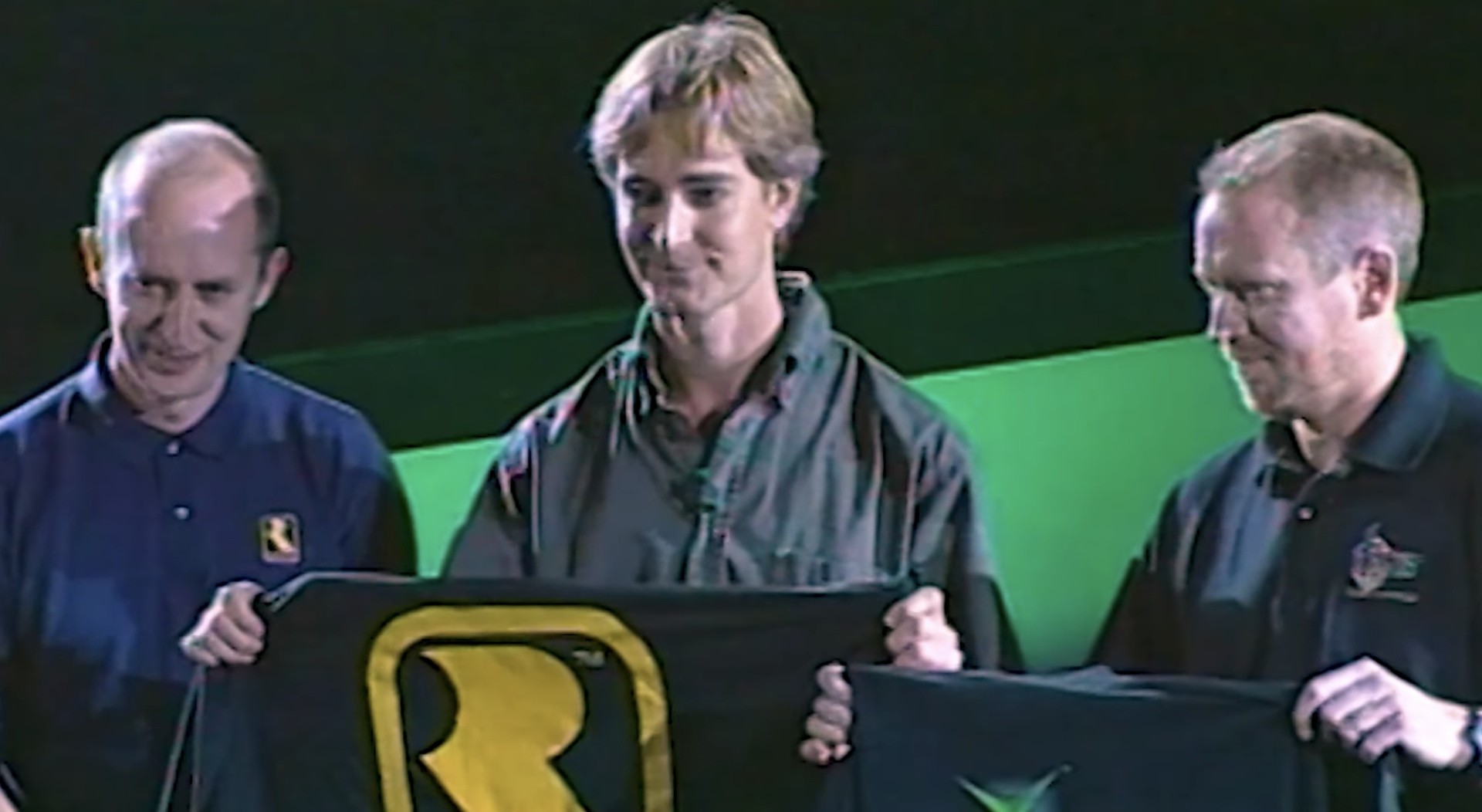
Most people today will largely associate Ed Fries with his role as an Xbox co-founder and Microsoft's vice president of gaming in the late '90s and early 2000s, but his career in games actually dates back a lot further than that.
Before joining Microsoft, in the early '80s, for instance, he developed a series of arcade-inspired Atari 8-bit games for a Southern California company named Romox while still in education. This included a clone of the popular Konami arcade game Frogger, titled Princess and Frog. The money he earned from these games, he has admitted in the past, wasn't exactly great, but, being young and eager to make an impression, he jumped at the opportunity to program for a living and hoped to see his arrangement with Romox continue as the decade progressed. However, in 1984, the publisher pretty much vanished overnight amid the North American video game industry crash, forcing him to find what he jokingly calls "a real job."
It was not long after that, in 1985, that he got a job at Microsoft, a Washington-based computer company, whose main products at the time were DOS and productivity software like Word and Excel for Macintosh computers. He joined the company first as a summer hire and later as a full-time programmer. Here, he would eventually be assigned to work on the Windows version of Excel, while also finding time to contribute to more recreational projects, including a famous Fish! screensaver, with his colleague, Tom Saxton, under the Microsoft-owned Bogus Software. Rising through the ranks at Microsoft, he would move from a programmer to a programming lead to the manager of Word before taking over the gaming division in 1996, bringing us back to the role that he is arguably best known for today.
Last week, we had the chance to speak with Fries about his career in the games industry, paying particular focus to his role in assisting with Microsoft's acquisition of Rare. Fries, in case you are unaware, was not only key to securing that deal but was also responsible for officially revealing the industry-shaking news onstage at Microsoft's X02 event in Seville, Spain, in September 2002. Surprisingly, though, he would leave Microsoft less than two years later, departing after Rare had only released a single game, under the Xbox banner.
We were therefore curious to know what he made of Rare's performance under Microsoft since his departure — a topic that is once again being debated by fans following the high-profile cancellation of Everwild last year.
Early Arcade Influences & The Atari 8-Bits
Time Extension: I know that before joining Microsoft, you were actually already making games. You did some stuff that I believe got picked up by a company, Romox. How did you first get into programming for computers and making your own games?
Fries: Exactly. So, I grew up in a really technical family. My dad was an electrical engineer who moved out here to Seattle to work for Boeing. He had met his wife, my mum, at Bucknell University, a technical engineering college, where she was getting a degree in chemical engineering. And she had also worked for Boeing for a while, but left, had kids, went back to the University of Washington, earned a master's in computer science, and went to work for a company called DEC (Digital Equipment Corporation).
So, from an early age, I grew up in a house full of electronic parts, and my mum would bring home printing terminals, where I could play the original Adventure, Zork, or similar games on the mini computer at her work. So I just grew up around this stuff. And to me, it was just kind of the background of my life.

I didn't think I was going to do that for a living, but when I started high school in 1979, they had just got in a bunch of Apple II computers, so a group of friends and I just kind of fell in love with these computers. We were playing games like Choplifter, the original Wizardry, and the Ultima series. And so, one Christmas, I asked for a computer. I thought I was going to get an Apple II, but I got an Atari 800 instead. After just a little while of playing with the machine, though, I was happy because I thought it was just so much better. I mean, Apple IIs are great. But the Atari had much more advanced graphics and, in some ways, more interesting games.
So, once I got that machine, I just taught myself to program in BASIC first, as most kids in that era did. You'd learn to program out of magazines. Every month, there'd be games in the magazine, and you'd type them in, and you'd make mistakes, and then you'd learn about debugging and figure out what you did wrong. Then, the next step for me was realising that BASIC is too slow and too limited for certain tasks. So I learned 6502 assembly language, which is the language for the chip that's inside the Apple II, Commodore 64, and Atari 800. The first game I wrote in Assembly was a version of the arcade game Spacewar!, which I've actually got multiple machines of here in my room from various people. I was just doing it for fun, doing it because I loved the act of programming.
Time Extension: I was actually gonna ask what your main influences were at the time, but I'm guessing, like most people, it would have just been like whatever you were playing in the arcade, right?
Fries: Yeah, so that's the thing you got to remember. It's not just that the first personal computers were coming out, but it was also the rise of the arcades, right? And so I had played pinball machines as a kid, and those were amazing. But then, I also saw the rise of video games in arcades, which was truly incredible. I remember there was a bowling alley nearby, and we would ride our bikes down there all the time to see the new games coming out.
I'd go through the arcade, and it would be like, 'Oh, here's something I might be able to make at my skill level.' Or, you know, I had a group of friends, and we played a lot of cards, so I'd say, 'Oh, I'll write a game that plays that card game.' It was that kind of thing. So, by the time I was partway through high school. I was pretty sure this is what I wanted to do for a living: programming, at least. After the Spacewar! game I mentioned, the next assembly game I wrote was my version of a Frogger clone, called Froggy. I put in a little title screen, and at the bottom, it said, 'By Eddie Fries.'
This is before the internet, right? But at the time, we had these bulletin boards. I posted it on one of them, and the game spread from one bulletin board to another across the country. The guys at Romox in Southern California saw that and tracked me down, which was no easy feat in 1981. I don't know; I wasn't in the phone book or anything. But they found me in Seattle. They showed up one day and offered me a publishing deal, which is how I got into the game business.
Time Extension: What was that deal like?
Fries: Oh, it was a terrible deal (laughs). I mean, I'm literally a kid making maybe a dollar or something an hour, working at this pizza place. I was just doing it to try to make money to buy games. And our pizza place also had a little arcade in the back, so I'd be back there playing Galaxian or one of the other games that we had at that time. The publishing deal had no advance, so they didn't give me any money up front, and it had a 5% royalty rate. So I get 5% of any money that the game makes. I was like, 'Where do I sign?'
Digital Aquariums, Microsoft Excel, & The Road To Xbox
Time Extension: Was Romox the only video game company that you worked with during this time? How did you go from making games to working at Microsoft?
Fries: Yeah. So that happened during the last year of high school for me, and the first thing they wanted to do was have me rework my Frogger game, called Froggy, because they thought we were going to get sued, and also change the title to Princess and Frog.
After that, I started a computer science degree at a college in New Mexico in the fall of '82, and I continued working with Romox on the side. I wrote a game called Ant-Eater for them and another called Sea Chase. But, as we got into 1984, though, all of a sudden, they didn't pick up the phone, and I didn't know what was happening at first, because I was literally in the middle of nowhere in Mexico, a little tiny town. This was, again, before the communication we now take for granted. What had happened was the [North American game industry] crash of 83 to 84.
Romox and most other game companies were gone in a relatively short amount of time. So, I needed to get a real job, and I got a job running one of the computers for the computer science department at school. When I went back home during my sophomore year, I applied to a bunch of computer-related companies around Seattle and got hired by a tiny company called Starcom for the summer, which was doing a kind of database product for personal computers.
They wanted me back the next summer, but I thought I should also send a resume to Microsoft, since multiple people had asked the year before whether I was going to apply. Microsoft flew me out, told me they were really looking for people like me, and offered me a job after a gruelling 8-hour interview. And so, I worked for them that summer.
Time Extension: At Microsoft, you eventually worked on productivity software. Did you feel the same kind of joy programming productivity software as you had working on games?
Fries: Absolutely. I loved it. I really did. I was working with great people. That summer, I was actually part of the tutorial group. They would make these visual tutorials to teach people how to use early Microsoft products, like the DOS version of Word or something. And so I was in charge of the tools the writers and artists would use, and they were just down the hall from me.
It was a lot like being a programmer at a game company, in that the programmers make tools for artists and designers to use—that's their job. And what's fun about that is that your customers are right there, and you can make them happy.
So, I remember one day that summer, this woman named Janet Vogelsang walked into my office and said she was doing a scene. Back then, they would build these scenes all out of ASCII, out of just keyboard characters, slashes, and things; this is the old days. And she said, 'I'm doing this scene in a dentist's office, and I want to have an aquarium. Could you make it so I could have some fish swimming in a tank?' The program we were using didn't have an animation capability, but I'm a game designer, so I said, 'Sure, I can do that!' So I just stayed late one night and turned the screen into an aquarium, with the fish swimming around on it. Then, at the end of the summer, when I graduated, Microsoft offered me a chance to come back and work full-time in 1985, and eventually, they put me on the Excel team.
They had just shipped the Macintosh version of Excel, and we were working on the first Windows version. It was a super exciting project to be involved in. I was the youngest of seven programmers, and I was working with people for the first time in my life who were a lot better than I was. Being in an environment where you can really learn from people how to be better can be intimidating at first, but it turned out to be a great place to work. We had a small team, and we were really focused on meeting this 18-month goal to get Excel out for Windows. Windows was still under development; all our tools were under development, so bugs could be anywhere.
From there, our group grew over the next five years from 7 people to 50. And during that time, I went from being the youngest guy on the team to managing a team of programmers to becoming the lead programmer. And then my boss went over to run Word and asked if I would come over, too, and be the development manager of Word.
There was also a group of us programmers — we called ourselves Bogus Software — who would make other fun stuff on the side. I was doing fish screensavers, and a guy named Wes Cherry, who was a programmer on Excel, made a version of Solitaire. He had used a DLL, a small pluggable piece of software we had written internally because we were all writing poker apps, to see who could build the smartest poker player.
Time Extension: In 1996, you moved over to the Microsoft gaming group. What was going on at Microsoft at that time in terms of gaming?
Fries: I was managing a 60-person team building Word. And that for me was fun in different ways. I was learning to manage large teams, but I was still a gamer in my spare time, and by 1996, I was getting to the point where the next step in my career was to run a business.
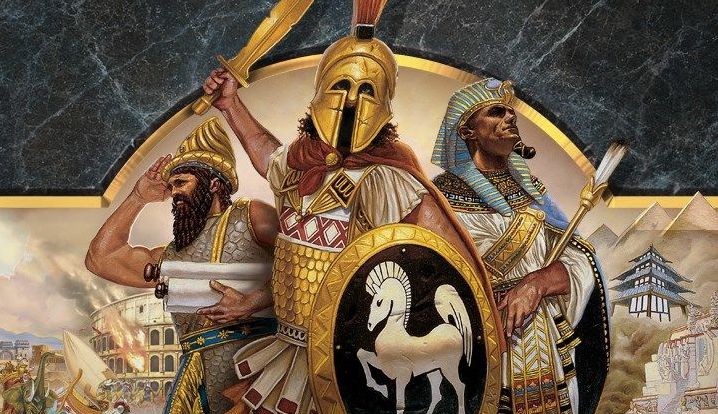
I had been working with bigger and bigger teams of programmers, but I had been looking all over the company, and the business I wanted to run was the game business, because that's my hobby on the side. Fortunately, I had a chance to do that. The team was relatively small, focused on PC stuff, but they already had a bunch of really interesting projects in development. Microsoft Flight Sim was kind of our cash cow in the beginning, but the year after I joined, Age of Empires came out, and we started growing Microsoft's game business from there.
For me, as a gamer, it was so much fun because I was travelling all over the world, meeting all the people whose games I had been playing. So, I actually got to meet Sid Meier and people like Peter Molyneux, and sometimes those meetings led to deals and to working with some of my heroes.
The Stamper Brothers, Rare, & X02
Time Extension: Because of your role within Microsoft's gaming division, you had a key role in the launch of the Xbox, particularly in attracting third parties to develop for the console. I originally emailed you about Microsoft's acquisition of Rare, for instance, which you played a huge part in. I'm curious, how did that deal come about? Is it true that Nintendo never intended to actually buy Rare?
Fries: So, I can definitely set that straight. In the case of the Stamper brothers, the first time I had a chance to meet them was on a trip, I'm pretty sure, to England. That would make the most sense. But at that point, I just assumed they were completely tied up with Nintendo. The Xbox project had already happened, and I was talking to everybody, but there was no clear path for us to work together at that point. So, to me, it was just a meeting with people I respected.
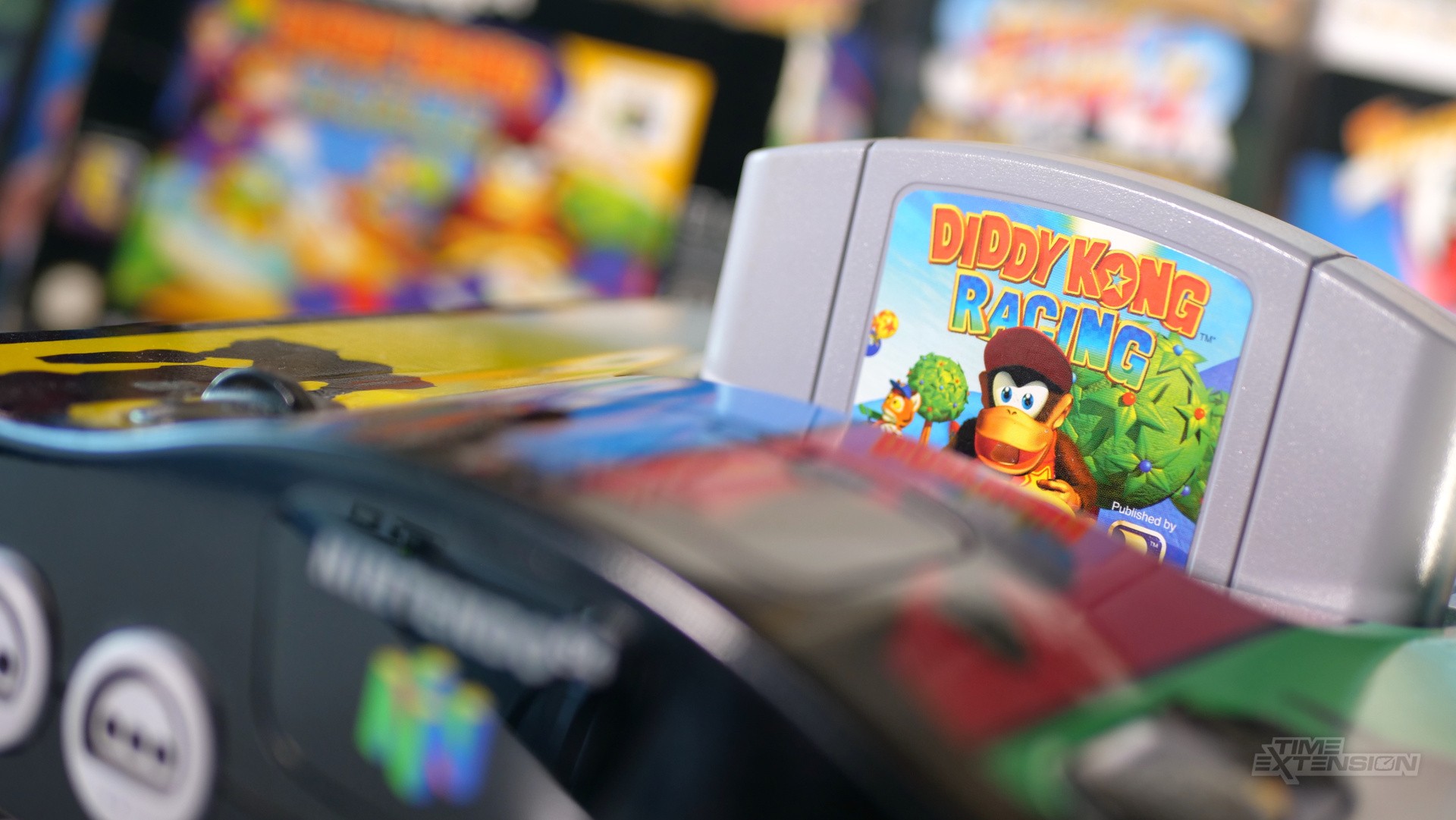
I was a big fan of Diddy Kong Racing, so we talked about that, but that's kind of the game business: you plant some seeds and hope they grow at some point. And in this case, it did. A little later, they reached out to me and explained the situation they were in. And the situation is this: Nintendo, early on, had bought half of Rare. It's always tricky to sell half your company. I'm always kind of warning people about the dangers of doing so. Because if you sell half, then they kind of have what they want already, and then there's no incentive to buy the other half, okay? But Rare had a very smart business guy, Joel Hochberg, and he was great. He really took the Stamper Brothers under his wing and showed them how business really works.
He had negotiated this deal with Nintendo, and he said, 'Okay, we'll sell you half, but within the next 10 years, you have to buy the other half, or you have to put up your half for sale.' So, that was the deal. And by the time I'm talking to them, that had actually already been extended. Nintendo reached the end of the period and had asked for a two-year extension or something. And Joel agreed to extend the deal another two years. But then that extension was coming up again, and it wasn't clear that Nintendo would go forward. In fact, it looked like they wouldn't, which meant that Nintendo would have to put their piece up for sale at whatever price Rare had set for theirs. And so that was really interesting for us, because it was kind of a win-win. Not only are we gonna get a great developer to add to Xbox, but we're also taking one away from our competitor. So it was a very, very, very appealing deal. There were some complications, though.
The Stamper brothers had been frustrated working for Nintendo because Nintendo was a first-party console maker. And as a developer, that could be great if the console's doing well. It can be terrible if the console's doing poorly, because your games aren't going to everyone. They're only going to the people who use that console, right? And so they were thinking, 'Well, we could be selling so much more if we were cross console.'
So, even though we were both excited about the possibility of working with each other, they were concerned that they were basically stepping from being exclusive with one console maker to another, which would be us. So, coming into the deal, we put in a bid, and Activision did too, and Rare initially accepted Activision's bid instead of ours for the reason I said. Basically, because if they worked with Activision, they could publish across all the platforms.
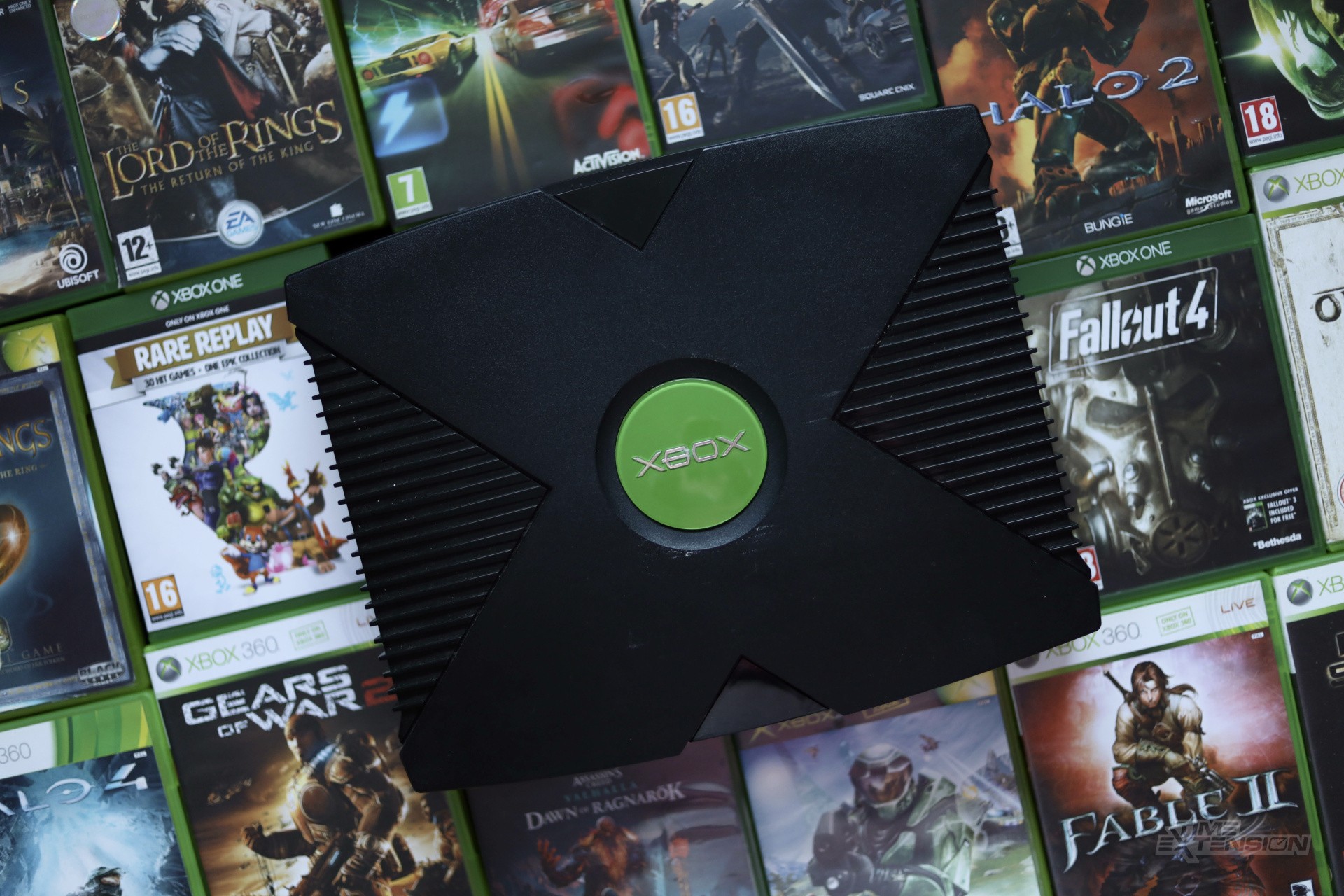
I thought we had lost the deal at that time. But my boss didn't want to lose out and raised our bid without asking me, and Activision ended up backing out. They did some due diligence, saw something they didn't like—I don't know what—but they backed out a few months in. And so then, Rare accepted our deal at the higher price, which I think we probably didn't need to make.
Time Extension: Do you have any memories of the X02 event and the stress of bringing everything together for the reveal? At that event, it obviously culminates in you announcing the acquisition, and Xbox Europe's Sandy Duncan, yourself, and the Stampers on stage together.
Fries: That was a wild time in my life. I mean, we had just launched the Xbox and my wife and I had just had our first son. We launched Xbox in North America in November 2001; it launched in Japan in February 2002, and my son was born in March 2002. His name is Xander. He's named after the Xbox: X-A-N-D-E-R. So he and my wife were actually with me on that trip.
We visited the Stamper Brothers in the Midlands, and my wife and I had fun running around with our baby. The Ryder Cup was actually happening that month, too, so we went to the Ryder Cup. And I remember we were trying to keep the baby from crying as the golfers were swinging (laughs). So it was a crazy time for me. I mean, work was a whirlwind. Home was a whirlwind with the baby. And I was travelling all over the world.
I mean, the thing about working at a big company like Microsoft is you could just, like, say, 'This is what we want to do.' And there'd be teams of people who would come in and make it happen. Financial people, deal-making people, and HR people and all this stuff. So it wasn't difficult for me in that sense. I had a large group of people who worked for me and made my life as easy as possible. So I still got to do a lot of the fun stuff, like going to an event like X02, standing on stage, meeting with the press, and talking about what we're doing and why we're excited about it. As for the Stamper brothers, they were always very friendly to me. We always got along really well. I never really had any conflict with them.
Time Extension: This is a persistent rumour you could perhaps squash, since I imagine you would have been there at the time. It originated with a former Rare employee, who said that when Microsoft bought Rare, some exec thought they'd bought Donkey Kong, too. I can't really imagine that being true, given the due diligence process. Do you have any response to that rumour?
Fries: We knew what intellectual property we were buying. Believe me. That's a big part of the negotiations; that's complete nonsense.
I have seen that. I have seen that written in the press before, too. It's complete nonsense. We knew exactly what we were getting. We were excited to have these teams. We also got to see what projects they were working on.
Time Extension: Were there any difficulties or challenges with incorporating Rare into the Microsoft way of working?
Fries: So, probably the most interesting thing about that deal was that by then, we had probably done at least a dozen acquisitions, and when we first started out in the mid-90s, we would, by default, move them to Redmond and make them part of our team. And it became obvious over time that by buying and integrating companies, we were sort of destroying their internal cultures. And so we started to feel we needed to be more hands-off in these acquisitions and leave the companies as they are.
Every game company I worked with had a unique way of working, but Rare, especially, had its own special way of working. It had its teams segmented into small groups, and they were not allowed to tell other groups what they were doing, which was really unusual, but they thought the teams would be more creative if they were completely separate.

Another thing was that they still operated very much as a startup. And so the salaries and benefits weren't always great for new people. And when we did that acquisition, we're like, 'We're just going to leave you the way you are.' But people who worked there must have thought, 'Oh, Microsoft's going to come in, and I'm going to get paid a better salary, and I'm going to get better benefits,' and all that stuff. And so there was some unrest that we didn't anticipate when we came in, and just left things as they were.
Time Extension: The first game to come out of the Microsoft and Rare partnership was Grabbed by the Ghoulies. Personally, I think it's a really great little game, but I expect it probably wasn't what people were hoping for at the time, with most people having high hopes for another Banjo-Kazooie or Conker's Bad Fur Day. Were there any kind of regrets that this went on to be the first game out the door?
Fries: The only regret that I have is that I don't think we set expectations properly, with the press and with the way we marketed it.
We had worked years earlier to integrate our marketing team with our development teams, which, in game companies, usually operate pretty separately. And then we had a new head of marketing who came in and pulled all the marketing people back out of the development teams. And this was somebody who didn't work for me; they worked for my boss, and so I didn't have any say over it. That kind of undid years of work that I did to integrate marketing and development.
So, the marketing people's job is to hype something and sell as many copies as possible. Grabbed by the Ghoulies was a great little game, but it was just kind of the first of many things to come from the relationship. And so it wasn't meant to be the cornerstone of what we were going to do with Rare in the future. So like I said, the only regret I have is that I don't think we set expectations correctly.
Reasons For Leaving Microsoft, New IPs, & Hope For The Future
Time Extension: I know there are many people out there with their own opinions on this, but I'm curious: what are your thoughts on the acquisition in retrospect? Do you think the acquisition has lived up to that initial promise? Rare has obviously had some great success recently with Sea of Thieves, but there's also been some less-than-great news, such as the high-profile cancellation of Everwild.
Fries: It's a complicated question for me because some of it has to do with my own personal situation, which is that I decided to leave Microsoft a few years after that acquisition. I left in January 2004, so not that much longer after we started to work with them, right? The reason that I left is complicated, but part of it was personal: my second son was being born, and I'd been at the company for almost 20 years. But another part was that I was also facing a lot of internal friction with what I wanted to do.
I wanted to keep doing a lot of creative work because the game business was hard, and we needed to keep innovating. And there was sort of an internal push to become more conservative. It was like, 'Why don't we just make the hits instead of making all these games? Let's just make the hits.' But, of course, that's impossible. And it just got very tiring to try to explain why we needed to work with people like the Stampers at Rare, Tim Schafer at Double Fine, and others who were doing this super creative work if we wanted to keep moving forward as a business. So it was kind of a difference of opinion, and it was also just the right time for me to leave.
So, what happened then was that the group I ran was kind of taken over for a while by people who were much more conservative than I was. Many projects were cancelled — Psychonauts, for example — but Rare managed to survive. It came out with the next game, Kameo, which I thought was decent when I played it on 360.
For me, though, the game that really made me feel good about the acquisition was Banjo-Kazooie: Nuts & Bolts. I thought the creativity of the physics-based construction was great, and of course, we later saw it strongly echoed in Nintendo's The Legend of Zelda: Tears of the Kingdom. That made me feel good that the creativity was still there at Rare. The Stamper brothers left not that long after I left. But I think the studio has managed to move forward and continue producing innovative, interesting work, as you mentioned, like Sea of Thieves.
One thing you need to think about is just how difficult it is when you have a hit game to make another hit game. You take a great studio that we worked with, like Ensemble Studios, for example; they made Age of Empires, and then they made more Age of Empires, and then more Age of Empires. And all that time, they were trying to start other internal projects, but none of them got very far off the ground.
Likewise, the great studio Bungie, all the time that they worked for Microsoft, they were doing Halos, and they kept trying to start other projects on the side, but just weren't able to do it. Ultimately, they left and were forced to create something new, which became Destiny, and now they've finally got something out, with Marathon, which I'm enjoying playing. But that's over a long period of time.
By comparison, Rare is trying very original, new things all the time. And when you do that in the game business, most of them are going to fail. That's just the way the game business works. If all they did was make Perfect Dark sequels, they probably could have looked more successful. They wouldn't have been more successful from my point of view. My point of view is that they're continuing to create really interesting new things that will hopefully become future sequels. But not that many studios can do that, I guess is what I'm saying. Even the best studios, if they're trying new things, will most likely fail. That's just part of the game.
Time Extension: Are you surprised that they haven't gone back to the well a bit more? I remember your original announcement emphasised Rare as a company with all these great IPs, but it seems that, aside from a few examples, there's a lot they've never really followed up on, or perhaps tried once and put to one side.
Fries: I am honestly not close enough to it to know why that is. Making games has only gotten harder over the last 20 years, and it was already hard when I left there. You know, Microsoft's team was very conservative from around 2005 to 2010, but it's now come back around and gotten a lot more creative and interesting, and invested in a lot more interesting teams.
I'm very aligned with what they've been doing under the Phil Spencer regime. I think he was a great leader for that team. I'm also very encouraged about Matt Booty, Asha Sharma, and the new people going forward. So I think you have to judge Rare fairly. I mean, how often does Nintendo create a new IP? They're very good at continuing IPs once they're successful, but how often do they make something really new? Rare's a team that's been trying new things constantly, and, as you said, some of them are succeeding, and that's the best you can hope for from a team like that.
Time Extension: Thanks, Ed. We appreciate you taking the time to chat with us.