
 by
by 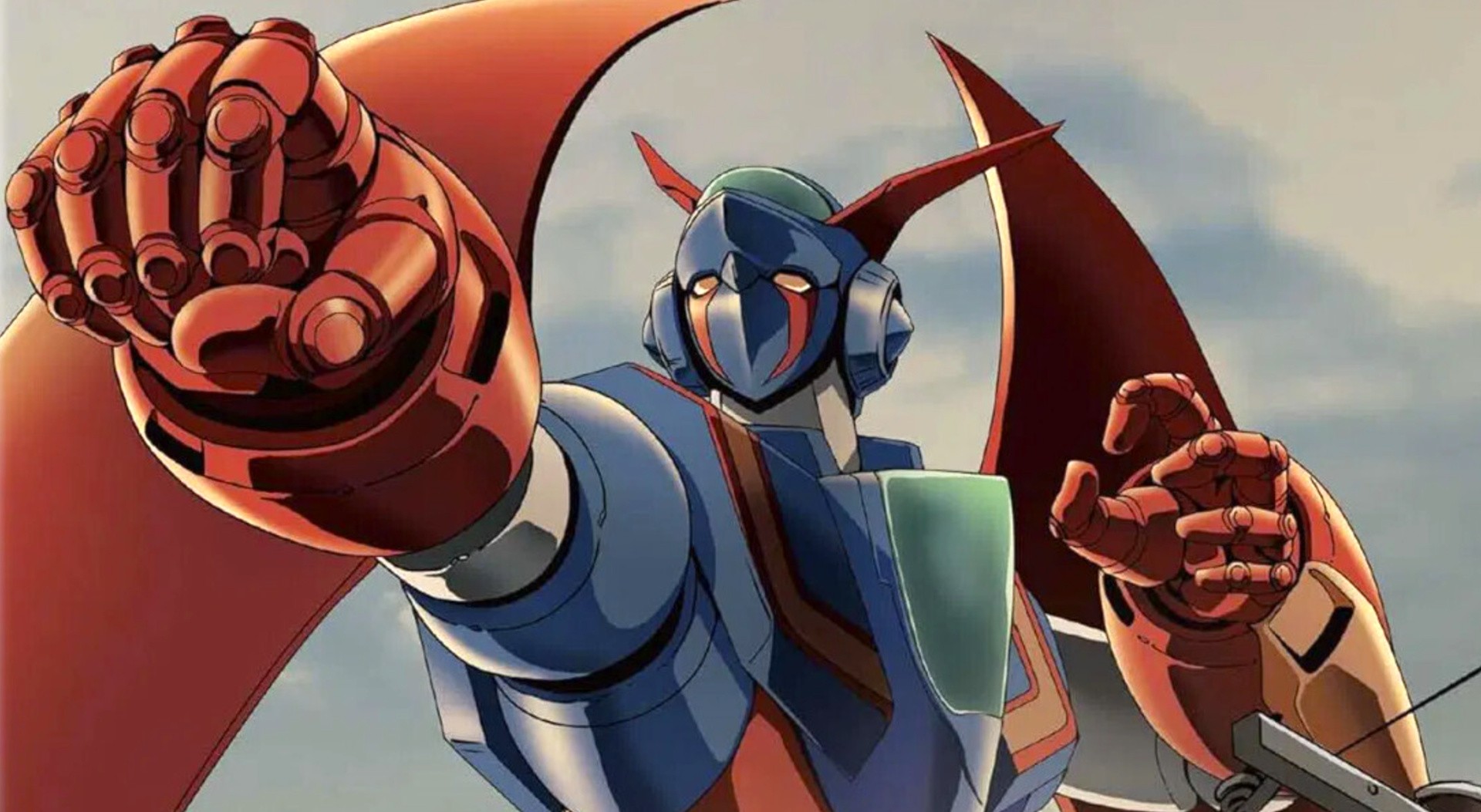
In the realm of retro gaming news in 2026, the announcement that 70's Robot Anime Geppy-X is getting a re-release certainly ranks pretty high on the 'shock-o-meter', not least because the game is considered to be a cult classic even in Japan, but also because it's getting a Western release for the first time ever.
Created in the style of famous Japanese cartoon shows, Geppy-X spans four discs and has become a real collector's item online, with copies changing hands for hundreds of dollars.
Implicit Conversions is working alongside Bliss Brain and members of the original studio, Aroma, to bring the game to modern platforms, along with upgrades such as save states, rewind functionality, built-in achievements and more. It's coming to Steam, Switch, PS4, PS5 and Xbox Series S/X this July.
We were offered the chance to speak not only with one of the key creatives, Akira Yamato, but also with the game's sound director and composer, Momo Michishita, and Bliss Brain's Yasuhide Nagasawa.
The Origins Of Geppy-X
Time Extension: How did the project originally come to be?
Akira Yamato: The origins of the project go back to around 1996, when a concept called Geppy Robo was brought up—almost as a joke—during an internal planning competition at Aroma Co., Ltd.
At the time, Martian Successor Nadesico hadn’t come out yet, and while there had been somewhat similar earlier works like Kiaidan 00, it was seen as a concept with real potential, so development began. I was part of that original team.
Once the game had reached a playable state, we approached Dynamic Planning, the rights holders of Getter Robo, to consult with them. They have a reputation for being very strict about their IP, but they don’t outright reject homage or parody. In our case, they asked us to revise a few elements that were too close—mainly the design of the main robot and some smaller details. I argued internally that we should make those adjustments and continue development, but for some reason, both the development and production sides decided to put Geppy Robo on hold.
Some time later, after changes in staff within the company, someone from the sales department approached me and asked me to create Geppy again. By then, some time had passed since Geppy Robo had been frozen, and I didn’t have a complete grasp of the original project as a whole. So I decided to carry over as much of its essence as possible, while essentially rebuilding everything from scratch as a new project—Geppy-X.
We expected the scale of the game to be similar to Geppy Robo, so I didn’t anticipate a particularly complex story. Still, from a creator’s perspective, I wanted to include branching developments in the latter half, and also explore a slightly more analytical angle that reflects on the culture of 1970s–80s content. As a result, the script ended up exceeding 200 pages—an unusually large volume for an action game.
I assumed it would eventually be trimmed down to a more minimal form, but I submitted it to the sales team as it was. To my surprise, they liked the sheer volume and said, “Let’s make the game with this script.” From there, we expanded even further—giving side characters their own stories and adding an alternate-world mode. The script grew even larger.
At the time, there was a strange prevailing attitude in the Japanese console game industry: that story-driven games were somehow inferior, or that starting development with a scenario was misguided. That mindset was very much present in our own workplace. And yet, many narrative-driven games were clearly succeeding, which made it all the more puzzling.
Given that environment, I never expected Geppy-X to become such a large, story-driven project. I’m still very grateful to the staff who recognised the script's value back then.
In the end, I handled much of the scenario, storyboards, design work, and even the lyrics and composition. It was an overwhelming workload, but thanks to the support of many colleagues, we managed to see it through.

Time Extension: Geppy-X is clearly inspired by classic Japanese robot anime. Which were your favourites?
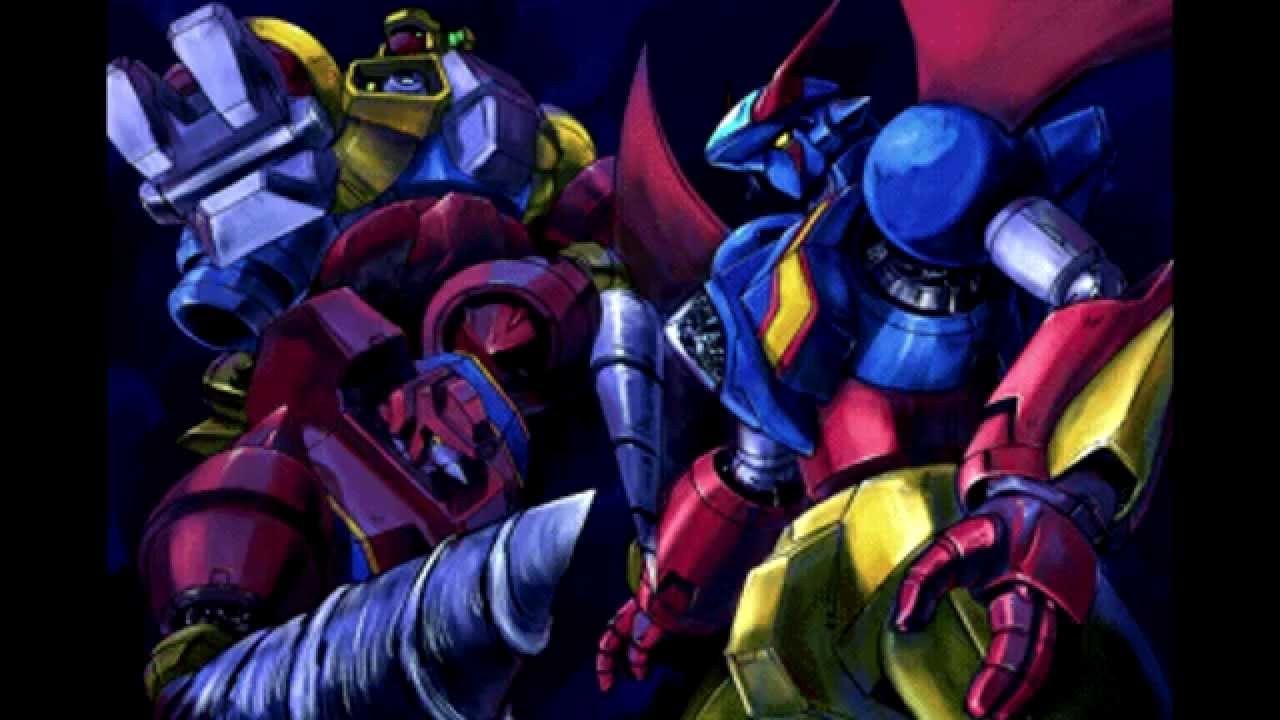
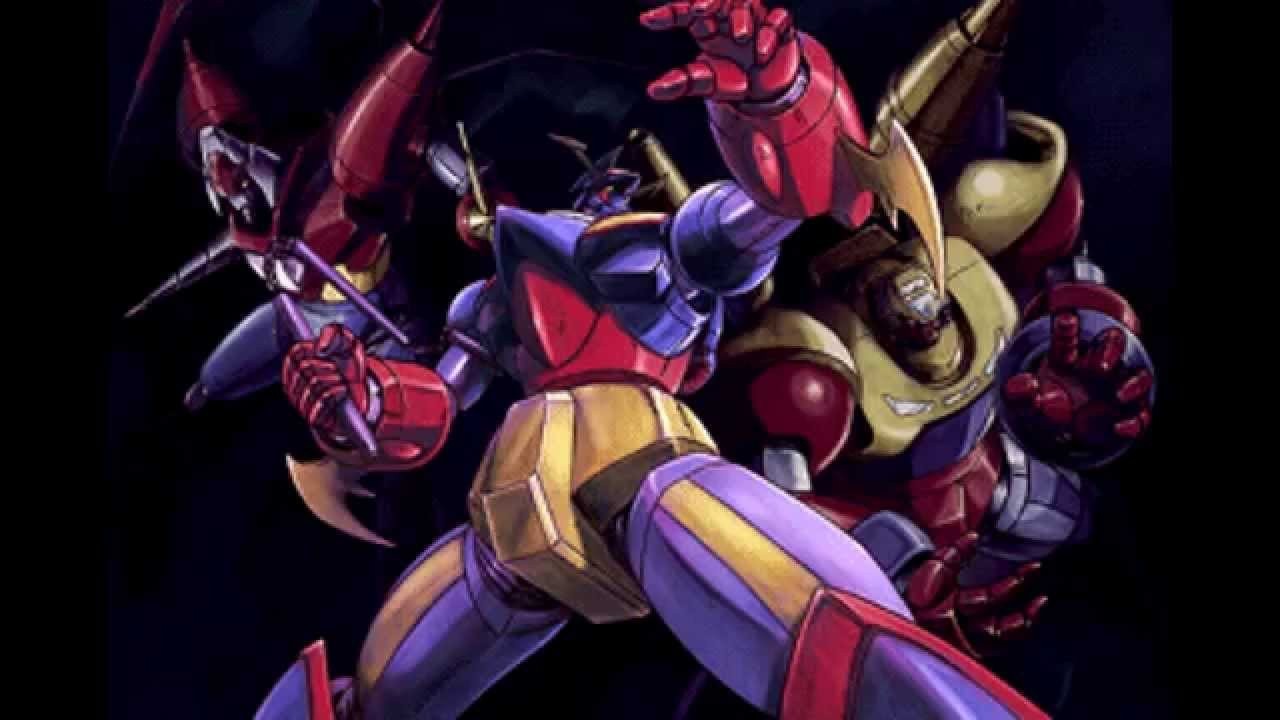
Akira Yamato: First and foremost, the structure of Getter Robo—with its three machines combining and transforming into different forms—was an ideal fit for a shooting game system, so that was the strongest influence.
That said, when it comes to the overall story and tone, I drew broadly from the robot anime of the 1970s and '80s that I loved as a child, as well as tokusatsu hero shows and kaiju films from that era. Rather than focusing on any single work, I tried to weave in those influences evenly across the game.
From a modern perspective, dramas from the '70s and '80s can sometimes feel unintentionally humorous, even in serious moments. That gap in sensibility is actually an important part of Geppy-X. Elements that may have once felt unpolished, or that reflect a generational difference, can now come across as charming—and recognising that shift in perspective is part of the enjoyment.
The concept behind Geppy-X is to reconstruct that sense of “distance” at a 1990s-level of quality, allowing players to rediscover and reinterpret the appeal of those older works. In that sense, it’s not so far removed in spirit from projects like Shin Godzilla, Shin Ultraman, or Shin Kamen Rider.
At the same time, many of the creators behind those earlier works were deeply influenced by what might be called Japan’s “two defeats”—the end of World War II and the subsequent failures of domestic political movements. A lot of content from that era can be seen as a response to those experiences. Movements like women’s liberation in the 1970s also found their way into robot anime and tokusatsu storytelling.
In Geppy-X, we tried to carry forward those themes in various ways, including in the scenario and the lyrics. They’re quite serious topics, but the game is ultimately meant to be entertainment, so we make an effort not to present them too heavily—using humour and light touches to keep the story engaging. That’s something many Japanese storytellers have long done, and still do today.
This is just my personal view, but when looking at recent discussions around ideas like DEI in Western entertainment, I sometimes feel that Japanese content has already explored similar themes in its own way in the past, even if the approach has been different.
Building A Cult Classic
Time Extension: How easy was it to get legendary figures in the anime community to become involved with the game?
Momo Michishita: For casting, Aroma first put together a list of actors who matched each character’s image. From there, we worked closely with the sound director to refine those choices. Since Geppy-X is built around homages to various anime, a lot of the discussion focused on whether those connections would be acceptable.
In the end, we approached the actors by clearly explaining that we had obtained the necessary permissions, and by sharing our strong belief that “this role has to be played by this person.” That passion was an important part of making it happen. The sound direction was handled by Hisashi Fujioka.
I wasn’t involved with the earlier Geppy Robo project, but since Isao Sasaki [the artist who sings both the opening and ending theme songs for this game] had performed the theme song for it, we initially approached her for Geppy-X as well. However, because of various circumstances surrounding the previous project, he declined at first (laughs).
After that, I reached out through connections in the industry—mainly through my mentor—to reopen the conversation. There were some conditions, such as adjustments to the melody, but in the end, he agreed to participate.
It was a similar process with the other performers. I was quite young at the time, so I approached things with a bit of a “nothing ventured, nothing gained” attitude—and, to be honest, I probably leaned quite a lot on my mentor to make it all happen.
Time Extension: The game famously shipped on four discs, thanks to the sheer volume of animated footage. Could you tell us about the process of getting all of that footage created?
Akira Yamato: For both character design and mechanical design, we worked with the same designers who had been involved in Geppy Robo. They were—and still are—top-tier creators active on the front lines of the anime industry.
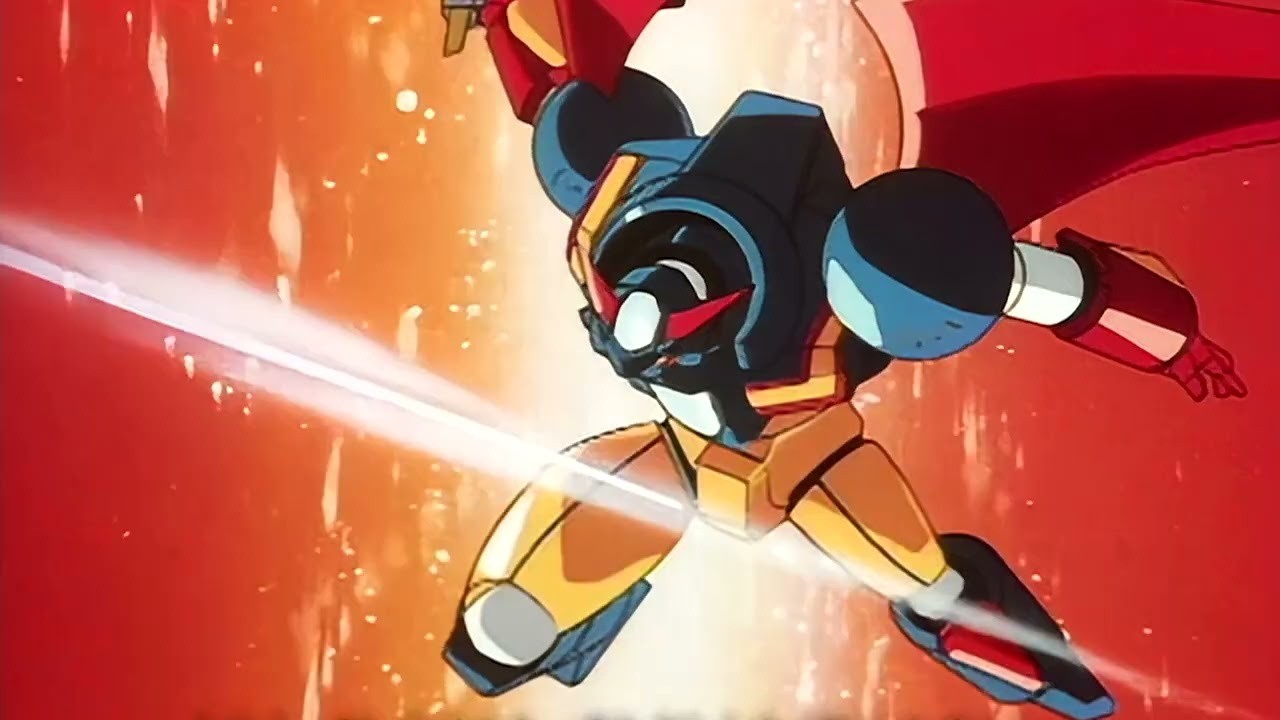
Geppy Robo had been produced on a very limited budget, and the animation quality reflected those constraints. Learning from that experience, we pushed to significantly increase the animation budget for Geppy-X, and received approval. For this project, we entrusted the anime production entirely to the designers and their teams, who led the process. As a result, we were able to achieve a very high level of quality.
To recreate the look and feel of 1970s–80s visuals, we chose not to use modern digital production methods. Instead, we used traditional techniques—shooting hand-painted cels on 35mm film, which was still feasible at the time.
After transferring the film to video (telecine), most game productions would digitise the footage and edit it in-house. However, Geppy-X again followed an analog approach. We brought the film to IMAGICA, a professional editing studio, and worked alongside the animation staff to edit it using the same process as TV anime production. Only after completing that work did we convert the material into digital data.
This process left us with high-quality analogue masters preserved on videotape. That’s why, even 25 years later, we were able to significantly improve the animation quality for the remastered version.
Before working in game development, I had been involved in TV commercials and documentary film production, so this kind of workflow felt very natural to me.
Even in the in-game fictional toy commercials, we avoided then-cutting-edge digital compositing, and instead used analog techniques like masking—just as was done in the '70s and '80s. Paying attention to those kinds of details was extremely important for Geppy-X.
Critical Reception
Time Extension: What was the reaction to the game when it first launched in Japan?
Akira Yamato: To be honest, the reception at the time wasn’t very positive.
In game magazines, where titles were scored and reviewed, I recall it being treated rather harshly—almost like a “rotten tomato.” Part of that may have been due to the timing, as the industry was shifting to a new generation of hardware, but more than anything, it’s unfortunate that Geppy-X simply didn’t reach a wide audience.
Geppy-X takes a different approach from traditional action games, where the goal is to defeat enemies as efficiently as possible. Even the main robot’s weapons aren’t always designed for optimal gameplay—they can be inefficient or awkward to use. That’s because the intention was for players to “perform” the kind of battle scenes you’d see in a TV anime.
Because of that, core action game fans—who tend to approach games almost like athletes seeking the most efficient and competitive experience—often judged it as “interesting in terms of story and presentation, but average as a game.” In that sense, Geppy-X isn’t a machine built for competition; it’s more like something meant for a fun ride.
That said, among the small number of players who understood and appreciated what the game was trying to do, it gained very passionate fans even back in 1999. They were a select group—people who could really “get it” and enjoy what Geppy-X offered.
Over the following 25 years, word of the game gradually spread online. As it began to be featured and discussed—often in an entertaining way on platforms like YouTube—its reputation slowly improved. For that, I’m truly grateful.
Time Extension: Was there any discussion about a Western version of the game back then?
Akira Yamato: At the time, the game industry operated under the assumption that only major hits from large companies had any real chance of being released overseas. For smaller teams like ours, international expansion was simply not realistic unless the game became an exceptional success.
There was also a sense that Japanese entertainment—games and anime included—was primarily made for domestic audiences. The idea that it might be embraced overseas to a greater extent than we imagined didn’t feel very tangible to those of us working in Japan at the time. It’s only in the past decade or so, with the rise of social media and global connectivity, that this perception has really changed.
That said, on a personal level, I’ve always loved overseas content as well. In Geppy-X, we created an extra mode called Star Geppys, which was inspired by Western works. We intentionally emulated the style of American pop culture—things like Flash Gordon, G.I. Joe, and Barbarella—which, from a Japanese perspective, often felt colourful and a bit eccentric. We recreated that flavour in a deliberately “cheap” or playful way.
It was very much a personal passion project, but I was glad that the rest of the team embraced it and allowed us to include it in the game.
Time Extension: How does it feel to see Geppy-X reach a new audience?
Akira Yamato: Geppy-X didn’t find much success in the market back in 1999—it was, commercially speaking, a failure. But at the same time, for the small number of people who managed to get a copy and connect with it, it became something they truly loved. In that sense, you could also say it was a success as a piece of work.
For the past 25 years, we’ve been hoping for a second chance—a remaster. There were several attempts along the way, but none of them came to fruition, and before we knew it, it was already 2026. Meanwhile, the original game became increasingly hard to find, sometimes selling for close to 50,000 yen. It was painful to think that people who wanted to play it simply couldn’t.
We’ve kept you waiting for a long time. At last, we can bring Geppy-X to you for the price of just a few beers. So please—pick it up, play it, and have a good laugh.
I won’t claim that it’s a perfect game. There are parts that may feel rough or lacking. But I can say this with confidence: we used every card we had—and probably some we had no business playing in the first place. And in doing so, I believe we created something that goes beyond the sum of those parts.
Geppy-X isn’t a finely tuned racing machine built with massive resources. It’s more like a ride through the rich history of Japanese entertainment culture—a machine made for the sheer fun of the experience.
So please, enjoy the ride.
Revisiting Geppy-X In 2026
Time Extension: How did the remaster project come about?
Momo Michishita: After Aroma was dissolved, the game’s master data ended up being stored at our company, Sound ams.
At one point, there were discussions about releasing a budget version, but since Aroma no longer existed, inquiries somehow came to me as someone involved in the original development, specifically on the sound side. I then consulted with Yamato-san, and we took custody of the master data. After that, there were several attempts to revive the project, but none of them ultimately moved forward.
As we approached the 25th anniversary, we decided to treat it as a final opportunity and began seriously pursuing a revival. I reached out to [Tetsuo] Endo, the president of ArdeCode, to discuss the project. He helped coordinate efforts across various parties, and through that process, we were eventually connected with Bliss Brain, which led to the remaster finally becoming a reality.

Time Extension: What features have been added to this new version of the game?
Yasuhide Nagasawa: We’ve included most of the features commonly found in modern retro re-releases, such as rewind, save-anywhere functionality, screen effects (like scanlines and distortion), and customizable wallpapers.
The game has also been fully localised. Since the original release was Japan-only, localisation wasn’t considered at the time. For this version, we’ve added features like subtitles—which didn’t exist in the original—and translated in-game graphical text into English.
The anime cutscenes have been upgraded to high resolution, and we’ve also made improvements so that these higher-quality videos play back smoothly within the emulation environment.
The Beast Library (gallery mode) has been reworked with a new layout to better support localisation.
We’ve also added an in-game manual. It’s designed to resemble the look and feel of the original PS1 manual, so we hope players enjoy that nostalgic touch as well.
And while it may seem like a small thing, the original PS1 version came on four CDs, which meant long load times and frequent disc swapping. In this version, loading is significantly faster, and there’s no need to change discs anymore—though perhaps some people might even miss that experience (sorry about that!).
Time Extension: Is the game itself any different from the original, or is it simply running a ROM under emulation?
Yasuhide Nagasawa: The core game itself runs via emulation.
Since no source code remained, one option was to rebuild and clean up elements like characters by essentially recreating them from scratch. However, our priority was to faithfully preserve the original game experience. More importantly, we partnered with Implicit Conversions, a company with strong expertise in bringing legacy titles to modern platforms.
For many players—especially those overseas—this will be their first time experiencing Geppy-X. With that in mind, we felt it was important that they encounter the game as it originally was. That’s why we chose to run it through emulation, keeping the original game intact rather than altering it.
Time Extension: What was it like working with the original team on this remaster?
Yasuhide Nagasawa: Since the original publisher no longer exists, many of the materials have been lost or scattered over time.
If Yamato-san hadn’t preserved key assets—including the original Betacam tapes—and shared them with us, we wouldn’t have been able to call this project a true “remaster.”
We’re also extremely grateful to Sound ams and ArdeCode, who worked tirelessly to make this revival possible and brought the project to us. They helped untangle the complex rights surrounding the game, including those related to voice actors and music.
We truly appreciate everyone involved for making this project possible.