
 by
by 
In the '90s, there were few partnerships in gaming as iconic as the one that formed between the now-legendary arcade game Capcom and the famous US-based comic book publisher Marvel. But it appears, according to a former Capcom staff member, that this relationship didn't get off to the easiest of starts.
That's on account of how protective Marvel was of its comic book characters at the time, as well as some of the incredibly specific demands it tried to impose on the video game company during development.
Speaking to Time Extension recently, Tom Shiraiwa, a former localisation lead at Capcom and an important intermediary between the popular video game company and Marvel, was kind enough to share memories of some of the projects he'd previously worked on. And during this process, he revealed some of the early "headaches" he had while working with Marvel on games like 1994's X-Men: Children of the Atom, including one particular request he received regarding the X-Men character Juggernaut.
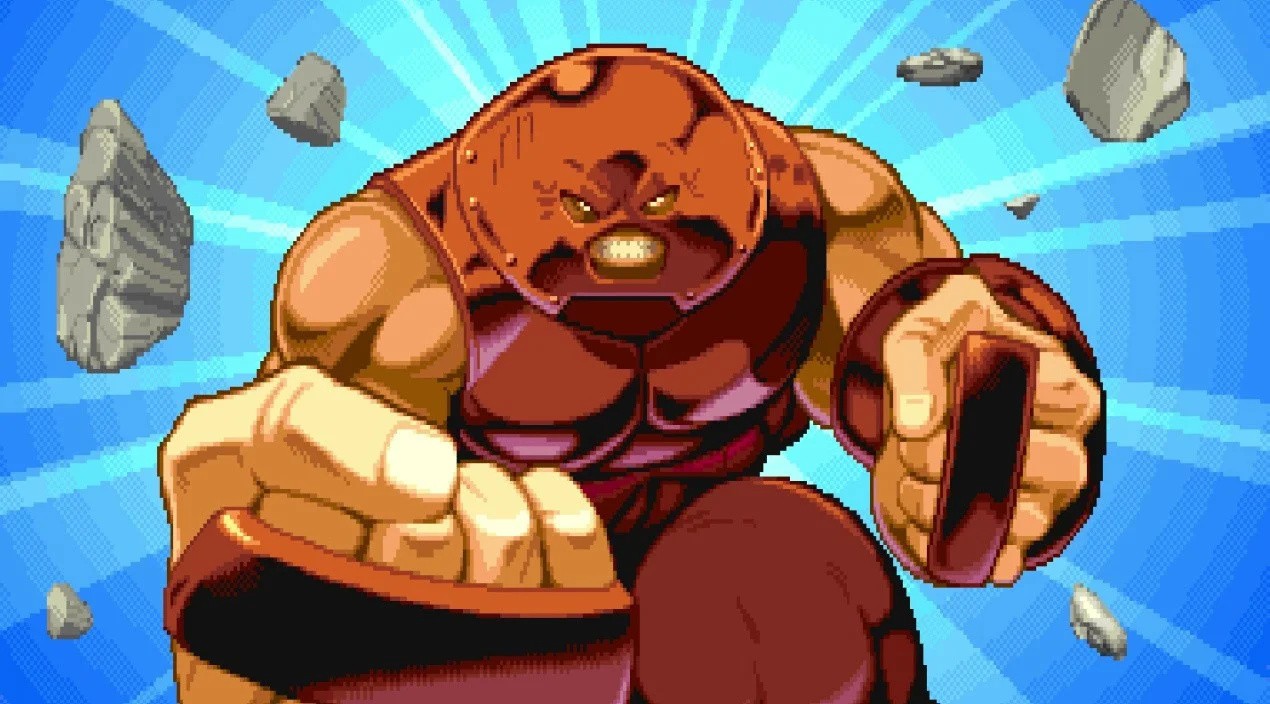
"When we started working with Marvel Comics," said Shiraiwa, "I remember it was pretty challenging. Because they had very, very specific rules about their characters, like their behaviours and their personalities, right? So we went to New York, discussed it with them, and they decided which character they would let us use in their game."
"Together, we decided to use a character called Juggernaut. But when we came back and started working on the character, we usually submitted all the character animations on videotape to get approval. And when we submitted Juggernaut, they said, 'No, Juggernaut can't jump. He's too heavy."
Juggernaut, just to give a little background on the character in case you're not up to speed on the comics history, first debuted in the X-Men comics back in July 1965 and is typically depicted as the stepbrother of Charles Xavier (otherwise known as Professor X).
In contrast to Charles, he is not a mutant but was instead transformed into a human juggernaut after discovering an otherworldly artifact called the Crimson Gem of Cyttorak. His special powers include his incredible super strength and his unstoppable momentum, an ability that allows him to smash through virtually any barrier.
He was one of the X-Men characters who appeared in X-Men: Children of the Atom arcade as a non-playable boss, and later went on to become a playable character in future Capcom arcade games, like Marvel Superheroes and X-Men vs Street Fighter. Considering Children of the Atom was being developed as a 1v1 fighting game, it was inconceivable to Capcom to have just one character on the roster unable to jump, so it essentially fell to Capcom employees, such as Shiraiwa, to try to talk the licensor around — something they were fortunately able to do, after some initial resistance.
"I was like a middleman at the time," said Shiraiwa. "So I remember I reasoned with them, 'Okay, but what's he gonna do when he finds a big hole in front of him? Like a big gap? Will he be able to jump then?' But they said, 'No, in that case, he will simply fall into the hole and just keep running when he lands.' I was like, 'Okay, that's fine, but this is a head-to-head fighting game; he needs to jump.'"
Interestingly, this isn't the first time we've heard about some of the conversations that went on between the two companies, with a fighting game YouTuber called TheSeventhForce rediscovering a secret Capcom website from the late '90s last year, which was later translated by EventHubs, giving us an incredible insight into Marvel vs. Capcom: Clash of Super Heroes.
This revealed a series of essays by the game's producer, Kenji Kataoka, including discussions of which characters Capcom was and wasn't allowed to include.
We brought this up to Shiraiwa, who went on to tell us, "We had lots of headaches at that time," before suggesting that Marvel did become easier to work with once the games were proven successful.
"The funny thing is... after Capcom released maybe one or two Marvel head-to-head fighting games, and they were extremely successful, they were like, 'Anything goes. You can do whatever you want.' So that made me wonder why they had been so strict with us in the first place. But I guess money changes everything."