
 by
by 
If you happened to play a lot of Capcom games in the '90s and early 2000s, there's a high probability you may have seen Takuya "Tom" Shiraiwa's name scroll across your screen at some point in the past. Though we're willing to bet that you never really paid it much attention.
That's because, despite his name appearing across dozens of the Japanese studio's most successful games, the majority of his contributions have been left undisclosed, with his credit typically buried alongside a bunch of other random names in the "special thanks" section. Understandably, because of this, a lot of players know nothing about the sheer variety of important roles he ended up carrying out behind the scenes, everything from becoming Capcom Osaka's very own one-person localisation team to acting as an important intermediary between the Japanese developer and its overseas office.
We first came across his name earlier this year, while looking into the history of Slip Stream, a bizarre 1995 Capcom racing title that is one of the few third-party System 32 games, which eventually led to us discovering some of the translation work he's done over the years on classic series like Marvel vs Capcom and Resident Evil. As a result, we decided to see if Shiraiwa would be open to sharing some of his stories with us, and we were over the moon when he eventually agreed.
Ahead of our chat with Shiraiwa, he warned us that because some of the events we'd be asking about took place over 30 years ago, he wasn't exactly sure he'd remember answers to everything we wanted to ask him — he had very little memory of what he actually did on Slip Stream, for example. But he still managed to provide a fascinating insight into how the English localisation department began in Japan, the challenges he faced working with text restrictions and overseas licensors, and why he ultimately left the company in 2004 to take up a job at Capcom's rival, Square Enix. You can read our conversation below, edited for clarity and length:
Time Extension: Could you give us a little background about yourself? How did you originally get started in localisation?
Shiraiwa: Sure, so I joined Capcom in Osaka when I was 25, after graduating from university, and my job was part of the sales department, selling arcade boards overseas.
At the time, I was already an avid gamer. In fact, my only hobby was playing games, and it turned out there weren't many English speakers in the company who were also familiar with video game mechanics. So, when the R&D team members wanted to localise their game, they eventually began contacting me because I was the only one who knew a little English. There was no such word as 'localisation.' They were just calling it 'text translation.' There wasn't a localisation department; it was just me. So, one guy.
Time Extension: How good was your English at the time? Do you remember if there was any reason, in particular, why you wanted to learn English?
Shiraiwa: When foreign visitors would come to the office, we would join these meetings, and the boss would walk out of the room, leaving me there on my own. So when you are by yourself with someone who doesn't understand Japanese, you're forced to say something, right?

So that was, I think, the first step for me. We also had collaborators at the Capcom USA offices, who often visited Japan to learn about games under development. and also gave them suggestions from a U.S. perspective. And I was always attending those meetings, and in those meetings, I was kind of like the only one who could understand both Japanese and English.
At that time, my English was not that good, but when you are the only one in that kind of environment, you just have to communicate any way you can. Either you use your body language or use whatever English words you know, even if they may not be appropriate. So, I was doing that. Then, after two years at Capcom, they sent me to Sunnyvale, California, to work for Capcom USA/Capcom Entertainment as a liaison, and I spent two years there, which greatly improved my English skills.
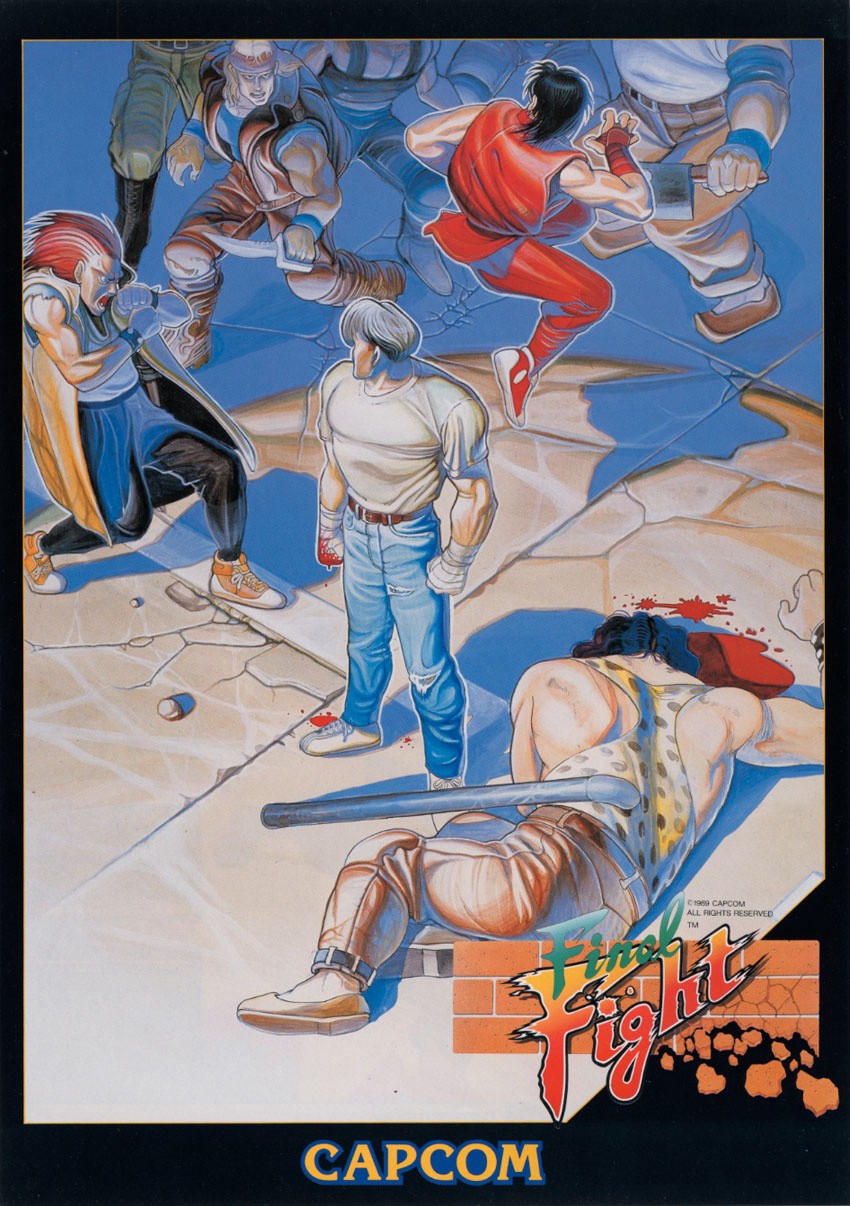
Time Extension: What was Capcom like at that time? This would be like 1990, right? So pre-Street Fighter II, post-Final Fight.
Shiraiwa: It was right after they had released Final Fight, I think. Final Fight was very, very popular at that time, and I think Capcom was still quite a young company at that time. So it was a very amateurish company in a good way. Everybody really cared about the games they were developing, so their priority wasn't making a lot of profit but making games people wanted to play.
Time Extension: You mentioned before that your original role was selling arcade boards overseas. I'm curious, was there much consideration paid toward tailoring these games to sell overseas? Or was it very much a Japanese-first business mentality?
Shiraiwa: Yeah, actually, we had a U.S. subsidiary named Capcom USA. So, in addition to translating in-game text, I was also the liaison between the Japanese development team and the U.S. and European subsidiaries. So, my other important role was to convey feedback and suggestions from those subsidiaries to the development team in Japan. That was another one of my important roles.
Time Extension: Typically, how early would you become involved in the translation process? Was translation usually viewed as an afterthought? Also, can you remember what the translation process was like? Were there any kinds of special tools or software you were using?
Shiraiwa: I don't think there was anything special. They just gave me the text on paper at first; I'd type up the English translation, and I'd then give it back to them as a Word file.
When they asked me to translate the text, they also gave me the number of letters and the available space, and specified how many characters could fit on a single line. So when I returned the text, I actually inserted a carriage return to fit within the space they had allotted.
Time Extension: That must have been very limiting. Japanese is obviously a very high-context language, so I can imagine it was tough trying to fit everything into a set number of characters.
Shiraiwa: Exactly, it was a nightmare. So I usually told them to provide at least double the space of the original Japanese text. Otherwise, there's no way I could actually translate it into English. So I think they started listening to me, and I got double the space, but it was still so, so difficult to make everything fit.
So sometimes, unfortunately, my translations looked almost like a hidden code, because I used too many abbreviations, because I had to, right?
Time Extension: Looking over your early credits on sites like MobyGames, I noticed there are a number of games that you appear in under the 'special thanks' section. I'm wondering: what does that translate to, specifically, for games like Dungeons & Dragons: Tower of Doom and Goof Troop, which were among the earliest projects you were credited with? Were those projects that you translated, or were you involved in those games in another capacity?
Shiraiwa: Dungeons and Dragons and Goof Troop and those games are obviously licensed titles, right? IP-licensed titles. So I was also a middleman between the development team and the licensor.
Time Extension: Ah, okay, so that's another role that you inherited at Capcom? Communicating with companies like TSR and Disney? How much input impact did they typically have on the direction of those kinds of games? Do you have any memories of how those conversations went?
Shiraiwa: Yeah, so when we started those types of projects, a lot of the time I actually asked those licensors what kind of games they were looking for. So, for Dungeons & Dragons, they would say, 'It's an action game based on Dungeons & Dragons, and there are several different stories; this time your game needs to be based on this specific tale or this specific thing within the Dungeons & Dragons world.' So that was the kind of information I gave to the team.
As for Goof Troop, I remember Disney had a lot of specific dos and don'ts for those characters. So that was also my job. I had to translate that style guide for the team. Then they would come up with the gameplay idea, and I would translate it into English and submit it to Disney for approval.
Time Extension: Capcom also worked a lot with Marvel Comics. Do you have any stories about working with them?
Shiraiwa: Oh yeah, so when we started working with Marvel Comics, I remember it was pretty challenging, because they had very, very specific rules about their characters, like their behaviours and their personalities, right?
So we went to New York, discussed it with them, and they decided which character they would let us use in their game. And at that time, of course, they knew we were working on a head-to-head fighting game. Together, we decided to use a character called Juggernaut, so we signed a deal. When we came back and started working on the character, we usually submitted all the character animations on videotape to get approval. And when we submitted Juggernaut, they said, 'No, Juggernaut can't jump. He's too heavy.'
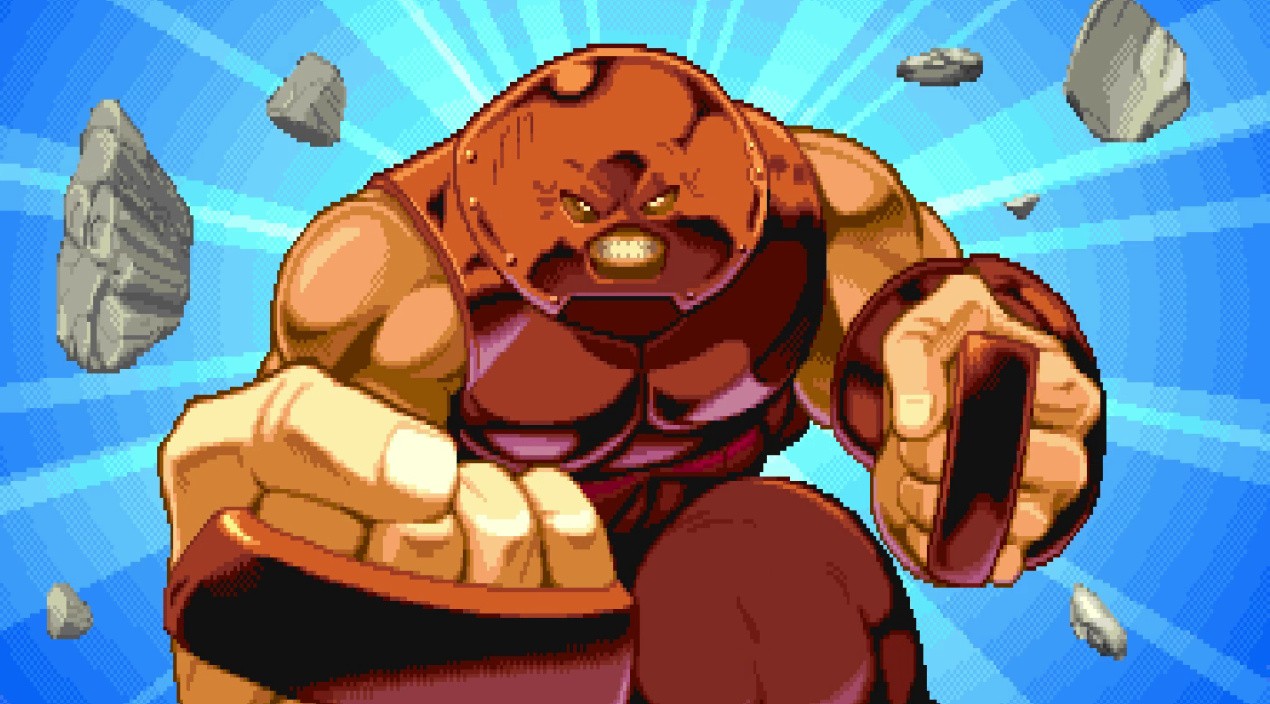
I was like a middleman at the time. So I remember I reasoned with them, 'Okay, but what's he gonna do when he finds a big hole in front of him? Like a big gap? Will he be able to jump then?' But they said, 'No, in that case, he will simply fall into the hole and just keep running when he lands' I was like, 'Okay, that's fine, but this is a head-to-head fighting game; he needs to jump.'"
Time Extension: I've come across a few similar stories involving Capcom and Marvel in the past. I believe Kenji Kataoka, the producer of Marvel vs. Capcom: Clash of Superheroes, shared some info about the challenges with character selection. He mentioned that Marvel had very specific criteria for the kinds of characters that could be used, and they didn't always align with what Capcom wanted to do.
Shiraiwa: We had lots of headaches at that time. The funny thing is, though, after Capcom released maybe one or two Marvel head-to-head fighting games, and they were extremely successful, they were like, 'Anything goes. You can do whatever you want.' So that made me wonder why they had been so strict with us in the first place. But I guess money changes everything.
Time Extension: Another interesting project that you're credited on is the arcade game, Slipstream. It came out in 1995, but it seems to have only been released in Brazil. Apparently, only a few cabinets were produced.
Shiraiwa: I'm sorry, I don't remember. You said my name is credited in the game?
Time Extension: Yeah, it's credited again in the game. And the weird thing about it is that it used Sega hardware. I think it's the only Sega System 32 board game from a third party. So it's a really strange title. It also seems to contain unused English and Japanese text messages, suggesting there were perhaps plans for a Japanese or North American release at one stage. Do you happen to remember anything about it?
Shiraiwa: Perhaps I translated those texts. At that time, as I said, I was kind of the only person, you know, who liked video games and who could also somewhat understand English, so I was like involved in almost all Capcom games at that time.
So my guess is that when the Slipstream developer had to work on the credits, they automatically included my name, maybe without knowing what I did for the game. It was kind of like a formality issue at that time.
Time Extension: When did things begin to change regarding Capcom's translation efforts? When did you start to notice more people being brought in?
Shiraiwa: I can't remember exactly. The time I started seeing some changes was when Resident Evil was released, or maybe somewhat just before that. So this actually relates to one of your questions you sent me about the 'Master of Unlocking and the 'Jill Sandwich' or whatever.
Mikami actually went to a studio in Tokyo to record those English voices, and I think maybe the same company worked on the English text as well. So I was not involved in the dialogue you mentioned at all; I only did a preliminary translation before another company stepped in. And I think the reason for that is that Mikami wanted to be directly involved in the recording session and also give it that very Western horror-film kind of atmosphere. So I think that's why he chose that path. So he actually bypassed me on that project, which was very rare at that time.
I think that's when developers at Capcom started to realise they needed translation resources beyond me, because, of course, I was just a single person. There was obviously a limit on the number of works that I could handle myself. The number of titles kept increasing, and I was becoming a bit overwhelmed by it all.
Time Extension: This next question is very specific, so I wouldn't blame you if you can't remember the events fully, but I heard that, in the original Resident Evil release, there was meant to be a series of notes that were written by one of the characters, the architect of the mansion, George Trevor, that were apparently meant to be in the original game but were cut. There was an interview in which Resident Evil writer Yasuyuki Saga said it was both his and your decision to lobby Shinji Mikami to remove them from the game. I'm wondering, do you remember anything about why you took that stance? All I can think of is that it might have been an issue with getting all that text in.
Shiraiwa: Hmm... maybe I did. I guess that could have been because there was much more than I was able to do at that time, given the time we had available. Maybe it was considered necessary from the creator's perspective, but there was a tight deadline to translate a large amount of text at the time. And as I said, I was basically the only one in the office doing the preliminary translation to send elsewhere.
The preliminary translation would typically be, 'This is what the developer wants to convey by the text," and I tried to be very accurate. That would then be given to someone else, like the company I mentioned or a translator at Capcom USA, whose job was to make it sound more sophisticated or natural in English.
Time Extension: I have another Resident Evil question that is quite specific. There's a Tyrant character in Resident Evil 2 called the T-00, but in a lot of Western licensing material, it's called Mr X, and it's a name that's kind of stuck for the character. The name doesn't actually appear in the game, though. Can you remember, is that a name that resulted from the Japanese team, or do you reckon that came from the overseas office?
Shiraiwa: I don't remember very well, but I think Mr X was in the very early version of the in-game text. We already started translating it based on the very early draft of the text, and I think Mr X was left there, maybe in the in-game text or maybe in the style guide. I think that's how that happened.
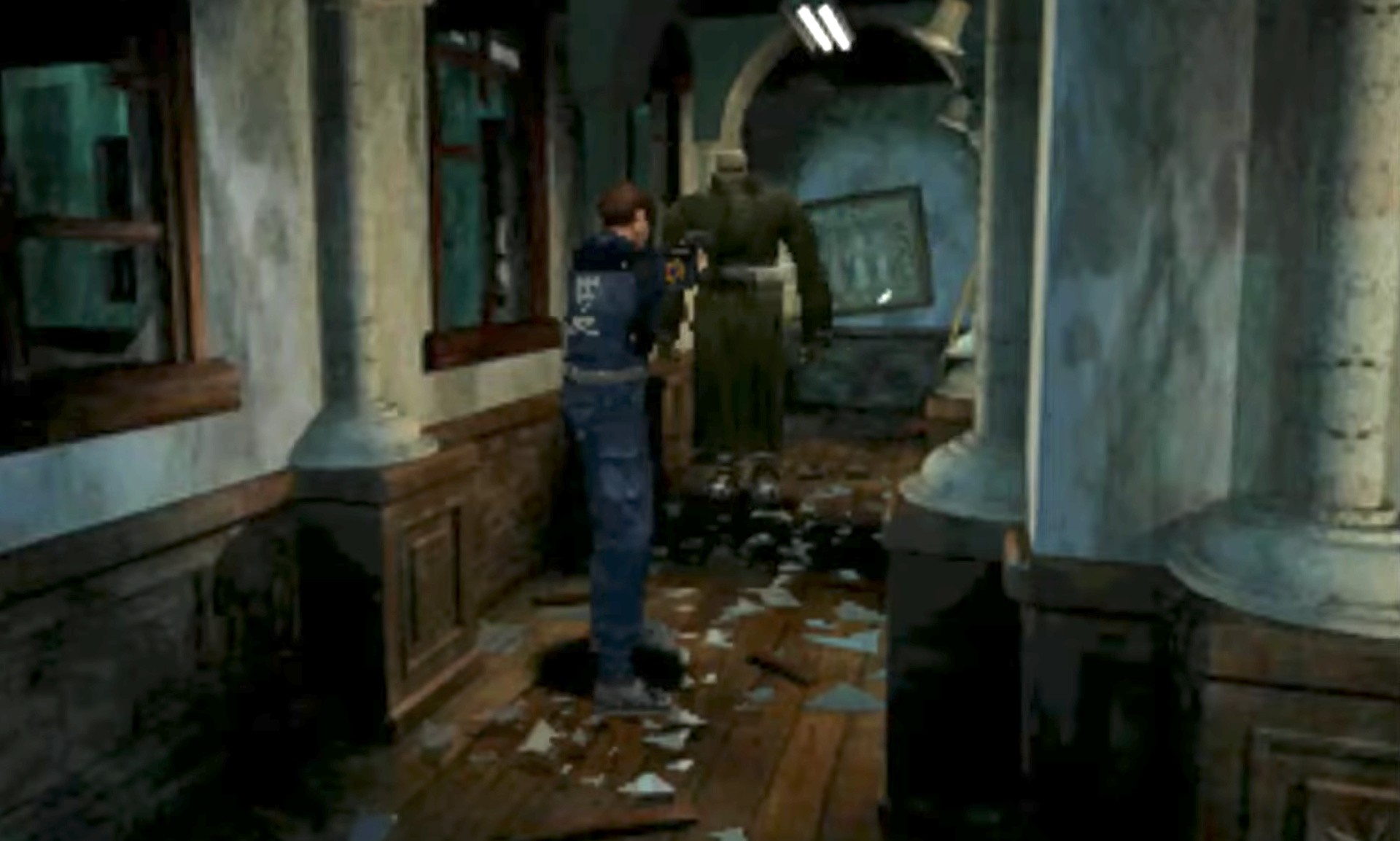
Time Extension: One piece of evidence to suggest it might be from the Japanese team is that there's some Japanese concept art that refers to the character as Tyrant X, so you can imagine that someone would shorten it to Mr X.
Shiraiwa: I guess at that time, the dev team was still thinking about the final name of the character. And they put Mr X as a placeholder name or something.
Time Extension: Besides the Trevor notes and Mr X, another common topic regarding the Resident Evil series is how many false starts or cancelled projects there were. There was Resident Evil 1.5, the term people use for the original version of Resident Evil 2. Resident Evil 0 was originally being developed for the Nintendo 64. And there was an alternative paranormal version of Resident Evil 4 being developed as well. I'm wondering: did any of these projects get to the point where localisation work had actually started, or do you have any memories of working on them in any capacity?
Shiraiwa: Yeah, I think I worked on Resident Evil 0. That was originally on Nintendo 64, but as you know, it was released on GameCube in the end. So those translations were not wasted. But I think I remember like translating like some N64 rumble feature text or something like that, which went unused. I don't remember anything I did for 1.5 or 4; I'm not sure. You might already know this, but there was actually another version of Resident Evil 4, which was released as Devil May Cry.
Time Extension: As you kind of go through these Resident Evil games and the localisation department begins to take shape, did you start having more in-house translators rather than outsourcing to other companies?
Shiraiwa: I think it was a case of both, depending on which development team we're talking about. There were several different types of development teams within the company. There were some departments whose mission was specifically to develop games using external developers and outsourcing companies. Those companies tended to go to external translators or localisation companies. But, for example, Mikami's Resident Evil team really wanted to do everything internally.
They were even hesitant to use people from overseas, and other departments within Capcom, other than Capcom Production Studio 4. Their philosophy was that if you use external people, they will not be able to fully convey what they are trying to achieve in the game because they are outsiders.
Time Extension: Do you reckon that's a result of their reaction to the outsourcing work done on the original Resident Evil 1 game?
Shiraiwa: Yeah, for Resident Evil 1, as I said, because it was Mikami's soul project, I think that he cared a lot about the little details here and there, so that's why he wanted to have everything under his control.
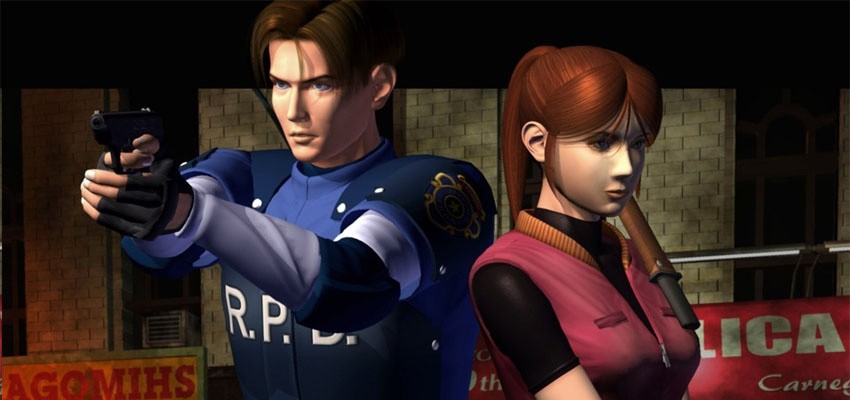
So that's why he went to this studio in Tokyo to record voices and also went to his own translation company or translator to translate the text. But the final result was, as you said, wasn't so great, right? There were comical expressions here and there. He heard about those results from many people, which is why he came to me, and I became involved in the voice recording and also the text translation for Resident Evil 2.
Time Extension: I'm curious, you left Capcom in 2004. Why did you decide to leave the company and join Square instead? What were your main reasons for making that change?
Shiraiwa: At that time, things at Capcom were pretty bad. Like a lot of key people kept leaving the company. I think at that time, Capcom was not doing great financially, and many people were unhappy that their hard work was not properly acknowledged by the company executives, especially the CEO and the chairman.
So, the majority of the developers that I had been working with and I had a lot of respect for either left the company or were getting ready to leave the company, and the company wasn't doing great financially. We were all kind of scared that there would be no Capcom in the near future. Things were that bad. So, in the end, I had stayed there for almost 14 years and decided it was time to make the switch to working at Square instead.
Time Extension: Something that stood out from your Square Enix credits is that you worked on Kingdom Hearts: Chain of Memories, which is another Disney-related project. Were you dealing with any of the same people that you worked with on your previous Disney projects, like Goof Troop, or things like that? Or was it kind of completely different? Also, what was it like working at Square compared to Capcom?
Shiraiwa: No, no, not at all. Also, when I was at Square Enix, although my name is credited, I did almost nothing.
Maybe you have heard about this, but Square Enix has such a gorgeous setup for its localisation team. There are many native translators and speakers, so many of them were very familiar with the Disney style. I went there as a localisation manager, so that's why they put my name in there. But all the actual work on that game was done by those native speakers; I was just making sure everything was done on time.
Time Extension: Thank you again for your time and for agreeing to chat with us! We really appreciate it!