
 by
by 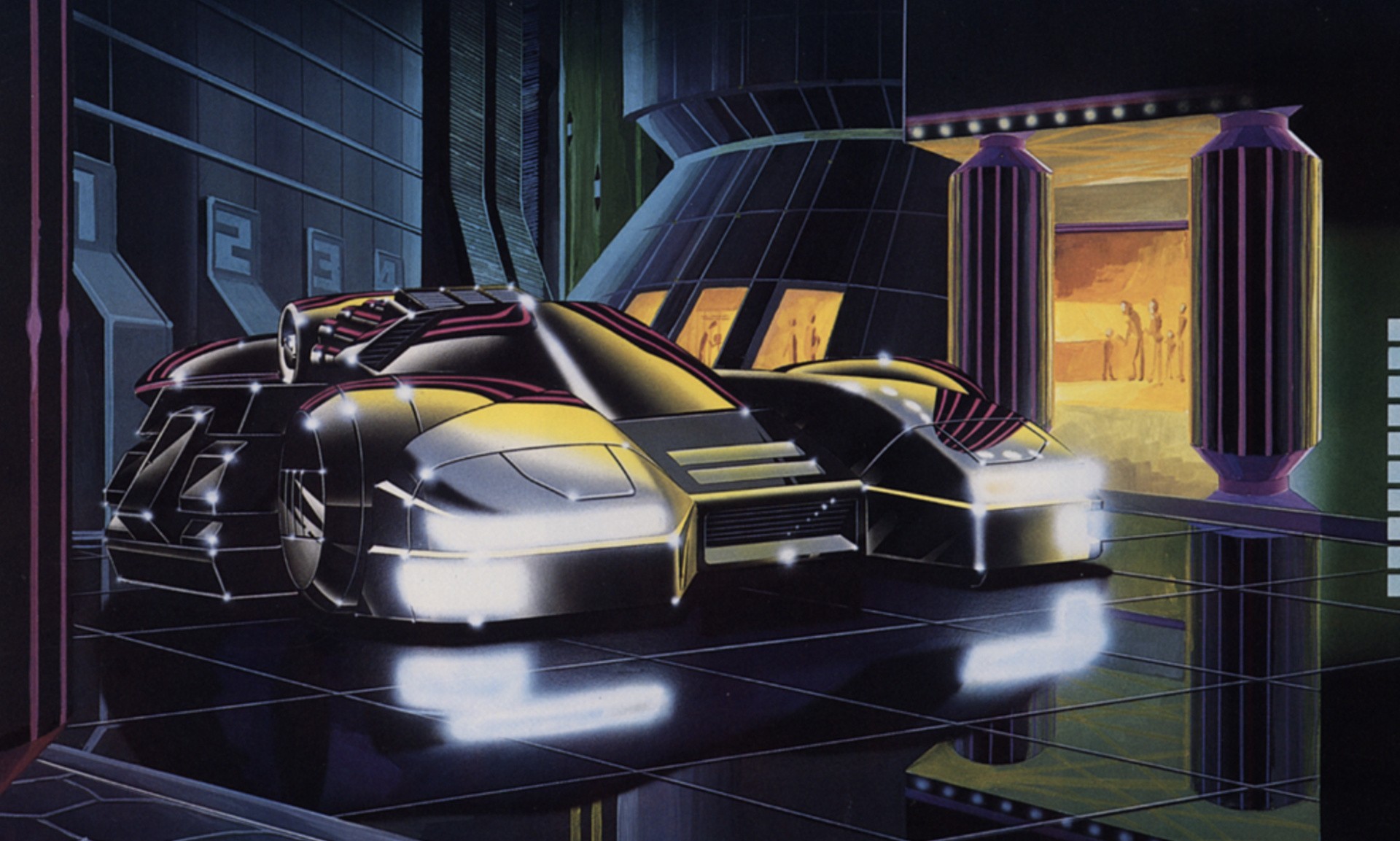
Kenji Kaido is a video game industry veteran whose career dates back to the late 1980s. His lengthy list of game development credits includes arcade games like Bonze Adventure and Sonic Blast Man (designer/director) for Taito, as well as Ape Escape (designer) and Tomba (producer) for PlayStation.
The titles people will most likely attach his name to, however, are the PlayStation 2 games ICO and Shadow of the Colossus, which he produced alongside director Fumito Ueda. However, as discussed, his game career began well before his tenure at Sony, and one of his most notable games is the Taito arcade classic, Night Striker, which is included in the upcoming compilation of Taito games, Operation Night Strikers.
With Operation Night Strikers coming to the west soon from Clear River Games and Limited Run Games, we took the rare opportunity to catch up with Kaido-san during Tokyo Game Show 2025 to get his thoughts, first-hand, about the origins of Night Striker, the game he designed and directed 36 years ago in 1989 for Taito.
As it turns out, this may be the first time he’s had the opportunity to discuss the game outside of the special developer interview included in the physical edition of Operation Night Strikers.
Time Extension: When was the last time anybody interviewed you about Night Striker?
Kenji Kaido: Just a few months ago. I had an interview for the special package version, which included a pamphlet with my interview in it. There was a release ceremony in May which I attended, but I don’t remember if I’ve been interviewed by the media about Night Striker.
Time Extension: So aside from the marketing stuff for Taito, this is probably the first interview about Night Striker that you've done.
Kenji Kaido: Yeah, it's been a while.
Time Extension: Then this is definitely a special moment. When you first started designing Night Striker for arcades, how did you get the idea? You were working for Taito, and you'd done a lot of QA testing for the company prior to Night Striker. Was this your first game at Taito, or where was this in your work history?
Kenji Kaido: Actually, Bonze Adventure was my first game. And before that, I was an amateur developer and created a game while I was still a student at university.
Time Extension: And then Cameltry [released in North America and Europe as On The Ball] and Sonic Blast Man came later.
Kenji Kaido: So Cameltry and Sonic Blast Man came after Night Striker. It’s a little ambiguous, but Night Striker and [another game I developed], Champion Wrestler, were developed simultaneously. I think Champion Wrestler was released first. So Night Striker might have been my third officially released game.
Time Extension: So, when you started working on Night Striker, where did the idea come from? Did a manager at Taito say, 'Hey, we want a game in this style,' like a shooter, or did you come up with the idea?
Kenji Kaido: Initially, Taito wanted to make a large-scale operation game, which was popular at the time, like After Burner and SEGA’s Out Run. The game mechanism was already decided. We had a tube-shaped cockpit, and it spun around, and [management] asked me to come up with a game using that mechanism. I came up with an idea of a sci-fi racing game with tube-shaped tracks.
Time Extension: So the game design was dictated by the hardware. There must have been other games of that nature that utilised that same kind of arcade cabinet, right? Did they have other games of that style that used scaled sprites? You mentioned After Burner and OutRun. Those are games that are similar in style. So were there other Taito games that used the same arcade hardware?
Kenji Kaido: There was a case, a cabinet, and a board. The motherboard already existed. For example, games like Continental Circus and Chase HQ used it. The board and the cabinet were already decided. But the moving parts of the hardware were too expensive to make, so the manufacturer stopped, and the project was supposed to be cancelled.
But the engineer thought that if we could make it with a cheaper mechanism, we wouldn’t have to cancel the project. So, instead of the tube-shaped moving cabinet, they put in moving lights on either side of the cabinet. I was inspired by the lights passing by my window while driving at night, and thought it looked similar to the new mechanism we had. So, the original tube race game became a futuristic scenario of driving through a sci-fi world.
Time Extension: It’s almost like an early VR experience.
Kenji Kaido: Yes, that's right. So I wrote a planning document for a racing game. And I took it to my boss, who was the game developer for Crazy Balloon and an early Lupin the Third game. And he asked me, “Kaido-kun, do you think we can shoot bullets? Or shoot missiles?” I responded, “Yes, let’s make it a shooting game.” I agreed that shooting games were more fun. At that time, I liked Space Harrier. So I said, let's make a game like that. And that's how Night Striker came to be and how I first started making shooting games.
Time Extension: It's a good thing he said shooting and not something crazy, like having animals pop up or something.
Kenji Kaido: Yeah, yeah, yeah. It’s good he didn’t suggest a game about killing animals or karate fighting.
Time Extension: What games were an inspiration to Night Striker? Was the TV show Knight Rider one of them?
Kenji Kaido: Space Harrier and the Star Wars arcade game. Movie influences were Blade Runner. I didn’t really watch Knight Rider, so it didn’t really influence the game.
Time Extension: What kind of inspiration did you take from Space Harrier?
Kenji Kaido: Space Harrier was quite revolutionary. Space Harrier was a 3D shooter, and there’s a vanishing point on the screen. When the player shoots a bullet, it goes towards the vanishing point in the centre of the screen. With this processing system, the player can’t hit the enemy at the edge of the screen. In Space Harrier, they ignore the 3D processing towards the vanishing point, and the bullet flies straight. In other words, it didn’t use 3D processing. So what happens is, the game becomes a whack-a-mole game. I thought it was ingenious, so I used that as a reference.
Another influence was that when you're in a 3D space, it’s really hard to hit a moving target. It's actually very difficult. The player is moving on a flat surface, and it’s difficult to hit a target while you're moving. It's actually a pretty rare phenomenon to be able to hit a moving target. In Space Harrier, they assist with this by locking the enemy and using a guided bullet.
Also, if there’s only one enemy, it’s hard to hit, but if multiple enemies are lined up in a row, even if the player misses their target, they’ll hit something. These are some of the things I learned from Space Harrier.
Time Extension: In the past, Yu Suzuki, the Sega producer on Space Harrier, OutRun and After Burner, has said that even though the games use 2D graphics, it's the sprites that basically scale as they get closer to the screen, which means they basically can enlarge to any size, simulating 3D effects. He said that even though the graphics were 2D, he was calculating everything in 3D. So that's why they mathematically expand or contract depending on how close they are to the screen, which is part of the innovation. Did you have to think in that way, or was that left up to the engineers?
Kenji Kaido: Night Striker was a 3D game. The renderings are done in 3D, and the processing is done in 3D. So if you shoot a bullet, as I mentioned before, the bullet would fly towards the centre because of the 3D processing in the system. But we overrode the programming so that the bullet wouldn’t go towards the vanishing point.
We had an excellent engineer. At the time, it was hard to make those calculations in a 3D space. There were no polygons. I think there were only a few people who were able to do a proper 3D calculation. Night Striker used LOD – level of detail – which is a technology they used to calculate the distance in the game to give it a sense of depth.
The engineers didn't focus just on the accuracy or the correctness of the titles. But they also made sure that it could be played at its maximum graphics environment without making the game too heavy. And LOD at that time was nothing major. There was really nothing even comparable to what we have today. Polygons were just starting to be a thing. So back then, having that idea of getting different levels [of detail] based on where it's placed was something revolutionary and no one had ever done.
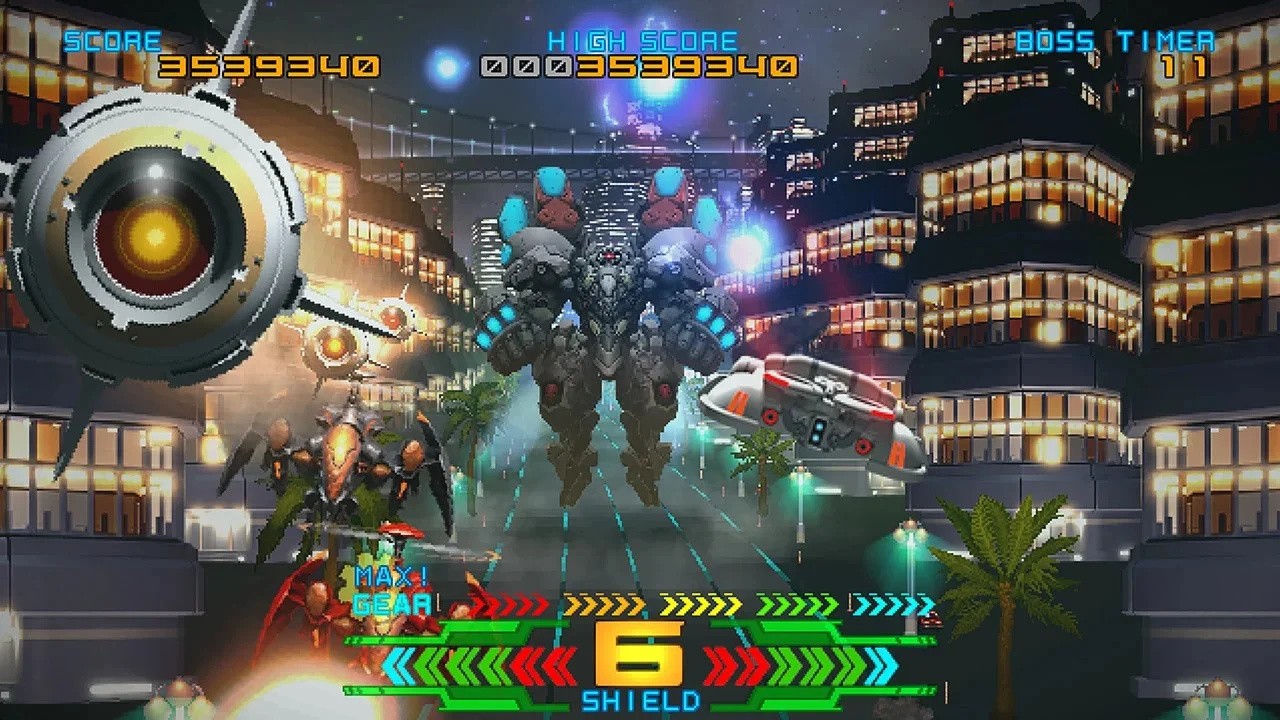
When you make a 3D space, you have to change the size of the sprite. If it's too close, you can't use the sprite. If it's too far away, you have to make the sprite smaller. But if you make a 10x10 sprite and make it smaller, it becomes too heavy. So if the object is really far away, you have to make a small sprite, 5x5 or 2x2. You have to make it within the limitations of the hardware.
In 3D, especially in third-person shooters, it's really difficult to hit the enemy in 3D space. To make a better experience of hitting the enemy, we had a technique where the shooting bullets would move towards the enemy, just like it's got an assist, an aim assist. And if the bullet only had a single hit point, or pixel, of the bullet itself, which is usually a square, if it was just a square on that shot, and it goes through, it's also very hard to actually hit in that 3D dimensional space.
Time Extension: So, did you create a big hit box?
Kenji Kaido: It wasn't big. It was actually very long. It was like a long spherical hitbox. So if it hit anywhere in the sphere, it would be counted as a hit. Which is very strange if you're playing a third-person shooter and you're looking at the point where you're shooting, but it actually makes sense.
Time Extension: Well, that actually addresses one of the big challenges of games like Space Harrier, because with Night Striker, you can't actually see through your character or vehicle and see where the shots are going.
Kenji Kaido: So, yeah, a common way that games, even nowadays, kind of avoid this issue of having very hard calculations with shooting and aiming, is that they just put a [targeting reticle] in the middle. If the enemy is standing there, and you press at that time, it hits. It's like the simplest way. It's forgiving, people understand it, and it works fine. But I didn't want that because, first of all, this game isn’t a first-person shooting game. It doesn't make sense to have a scope there. Also, it was just, in general, I didn't like that idea because it was just kind of a cheat.
Time Extension: Was there anything that you felt like you could improve on from those games that you put into Night Striker?
Kenji Kaido: Yeah, Space Harrier was about two years old. Star Wars was about five years old. Space Harrier had more of a lock-on system. In Night Striker, it's not a lock-on system; it's more like, if the lever direction and button input are in the same direction, the missile will fly towards that direction. If you put a lot of effort into it, it will hit the target. That's what I wanted to improve on. I wanted it to be something that's more of a game where you have to aim yourself, and bring your point to where you want to shoot. I wanted to make it a more manual game that’s dependent on your aiming skills.
Time Extension: Is there anything about Night Striker that we haven’t discussed that you want to mention?
Kenji Kaido: I wanted to mention one more thing that I got really inspired by Star Wars. They had a shield system where the life bar would gradually fade on both sides as you take more damage. It's probably the original way that it's shown in the movies, so they invented that. Back then, traditionally, life bars went just one way. It just starts getting shorter on whichever side it's displayed. But it's right on the top, and it's volumetric. There's a lot of volume to what life you have, and it gradually gets smaller towards the middle. I really liked that idea and felt like I should put that into Night Striker.
Time Extension: Arcade games are generally designed to be difficult and make players spend a lot of money, but Night Striker is a lot more forgiving than many games were at the time.
Kenji Kaido: Video game bosses are usually super hard, but people playing arcade games are mostly casual gamers who aren’t there to play the same game, and they’re not playing the game to do a boss fight. They're playing the game to get to the end. So I never understood the reason why boss fights had to be hard and challenging. I figured it’s best to end the stage with a satisfying ending that tells the player they've finished a certain part of the game. So that's why I made it very easy to actually defeat these bosses. They get slightly stronger as you progress in the game, but it’s never too challenging; there's just maybe a couple of weak bosses instead of just one [tough one].
Time Extension: Which is interesting, because usually, especially in those times, the game publishers like Taito and SNK – especially with fighting games – basically made them super hard, so you were forced to put in more coins. It's interesting that you didn't choose to exploit that.
Kenji Kaido: True, but even with the strong bosses, the developer will make safe zones where the player can hide, and the key is to attack slowly and steadily. But it’s cooler if you can beat it quickly.
In the classic arcade games, the boss fights were always where good players had to really focus, and it was tense. But I wanted to make a game where players are rewarded for getting to the boss stage. I wanted it to be a place where the player could finally relax, knowing that they're finally at the end of the stage. Because sometimes a player will come all the way to the end and then make a simple error, and all is for nought.
Time Extension: Since this game came out before the Internet and message boards really existed, did you ever get any kind of meaningful feedback from the community, or were you completely unaware of what people thought of the game?
Kenji Kaido: Back then, well, first of all, I had to go to the arcade. And then, there was a social media system. It wasn't digital. It was analogue. I went to the arcades and read notes that were left by people in this community notebook. It was really useful as a reading board. Also, the notebooks were distributed all over the country. There was a one-to-one system where there was only one notebook at any arcade, but they would be passed around to neighbouring arcades. And the notes themselves were distributed over dozens of arcades at the same time. If you wrote your notes in one book, it would go to the next arcade, and you never knew if the same one would return to that arcade.
Time Extension: What was the purpose of that?
Kenji Kaido: To exchange information with everyone. So it was like a strategy. In the end, social media is fun, even just reading other people's entries. I found it interesting to read people’s thoughts and tips about the games. And you can respond to entries, too, if you want. But you don't know if the person who wrote the original entry will ever read it. But that's how I got my feedback.
Time Extension: That's super interesting. SNS had a totally different meaning. It's not a social “network” system, it's a social “notebook” system. When current-era Taito said to you, “Hey, we're going to be doing this Operation Night Strikers collection,” what was your immediate thought?
Kenji Kaido: I want them to release a [more] complete version of Operation Night Strikers. The biggest drawback of the arcade game is that you can't analyse the gameplay. For example, you can't see the number of bullets. I wanted to be able to analyse that data and show it to the users.
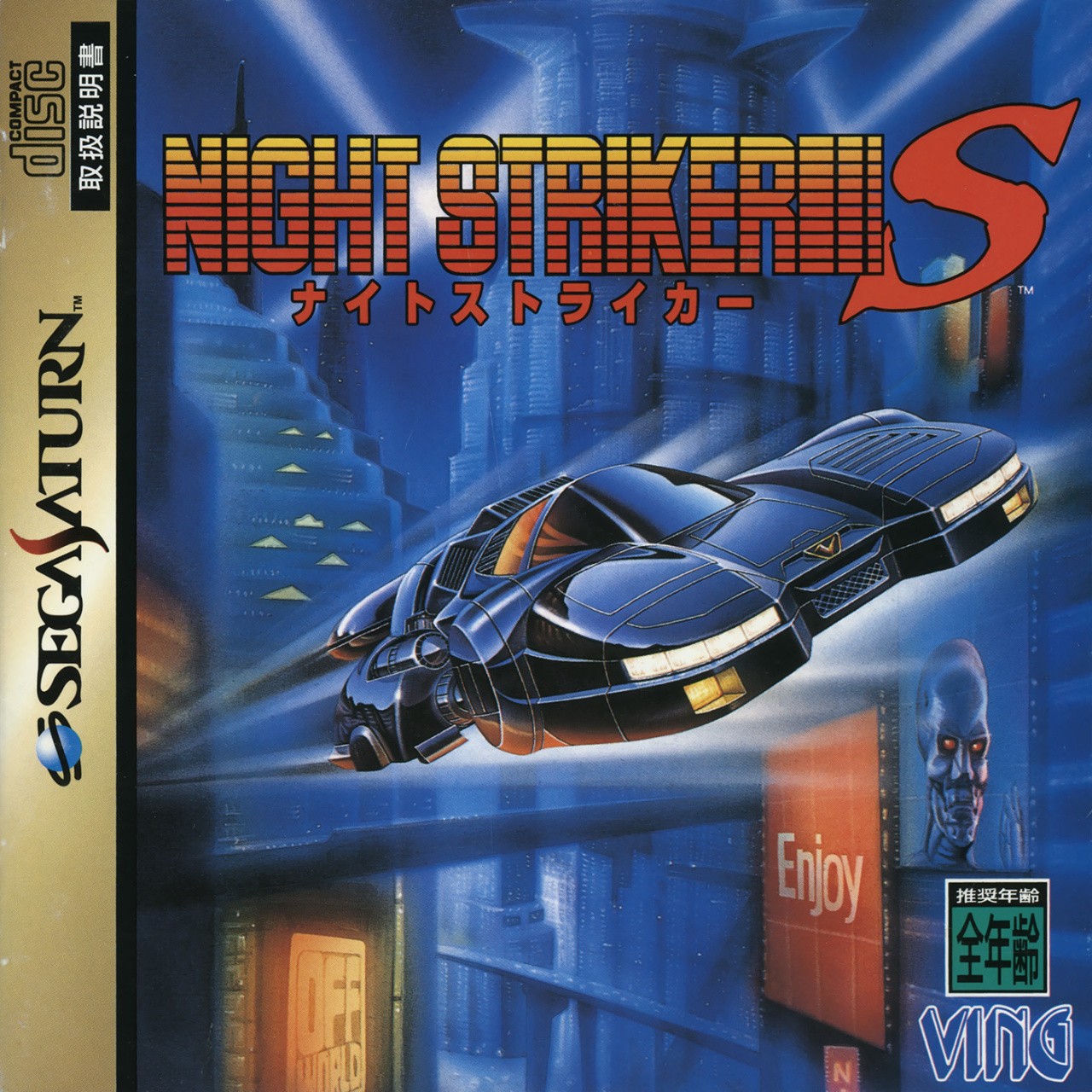
In Operation Night Strikers, the pacifist [style of] gameplay is very important. I wanted to be able to analyse that and show it to the users. For example, I wanted to add a ghost mode where you could show players what other players did. I wanted to add those kinds of features just to make the gaming experience better, but also to give the player an added advantage.
Time Extension: Did they include the ghost mode?
Kenji Kaido: No, they didn’t include the ghost mode. I wanted some sort of game assist mode. It wouldn't make the game easier; it would just show you what the best answer is. I also asked them to implement on-screen the buttons the player was pressing so that the people who stream games can show other people what buttons they were pressing to defeat the game. So that's in the new game. But not everything that I wanted was implemented. Although I asked for a complete edition, it's still not a true complete edition. For example, I wanted to change the colours of the cars and add simple customisation, like having options to change the colour of the car.
Time Extension: I want a red car. So, this is kind of like a random trivia question, but is the driver of the Night Striker car a man or a woman? You never see them, so like, you know, in terms of lore, what does he think?
Kenji Kaido: Well, the story is divided into two parts, right? Yes, that's right. And the last part is...
The last person to arrive is... It's a parallel setting, but it's a different person.
So, in that setting… if there are six people. So, actually, the six endings aren't like one man or woman ending up in six different endings. It's actually six different people. It's just that the truth is that it's actually six different people.
Time Extension: Any last thing you want to say to fans who are just discovering the game now?
Kenji Kaido: The thing I'm most happy about right now is that I still have fans who love the old games. It’s not just nostalgia, but people like the game for the game’s technology and techniques.
Personally, I think it's the coolest game. Out of all the games, Night Striker is still the coolest game. The techniques, the gameplay are very unique and original that I want everyone to be inspired by.
Time Extension: Kaido-san, thank you for sharing your memories of this arcade classic.