
 by
by 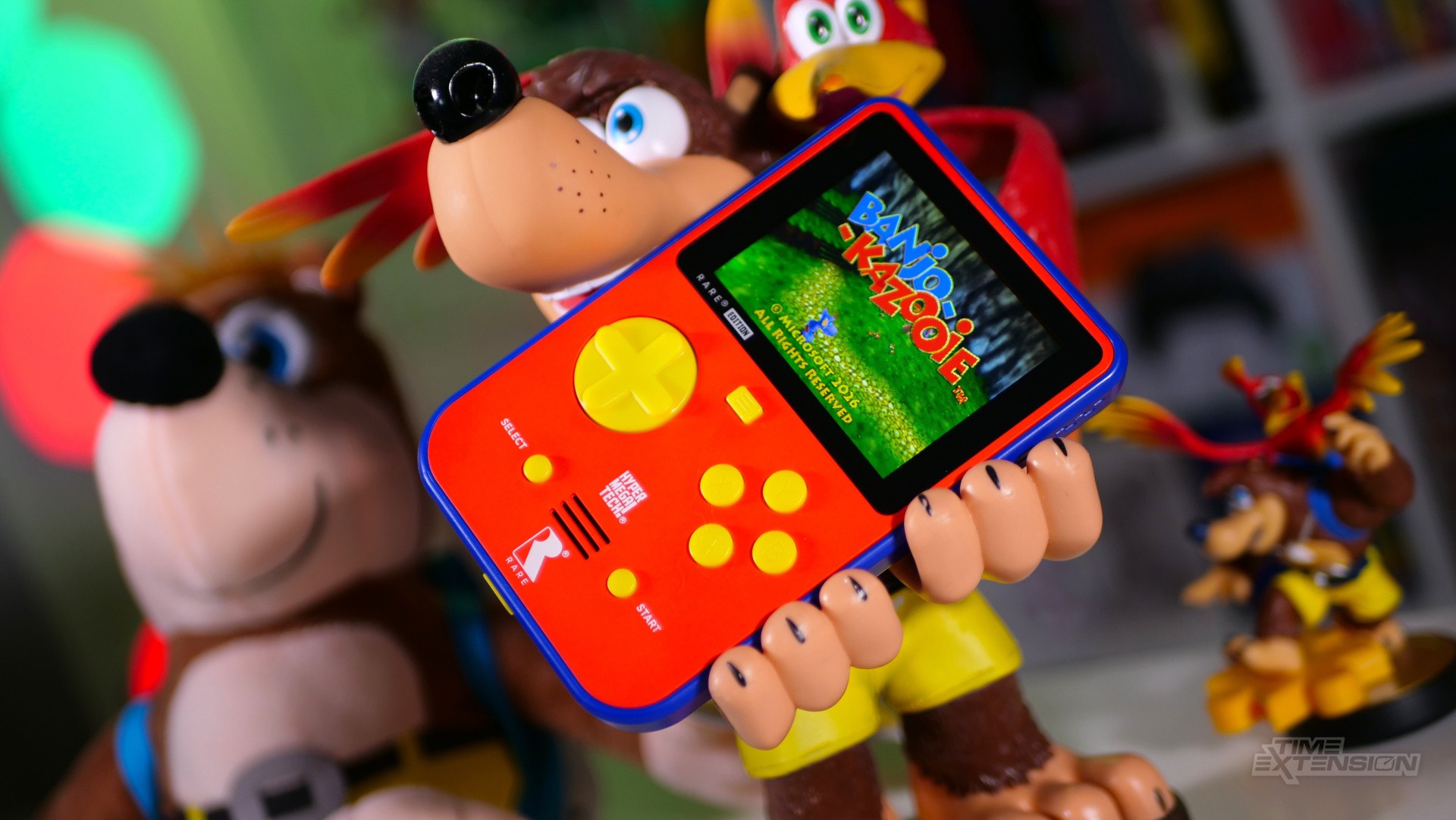
The HyperMegaTech Super Pocket handheld range has already seen more than its fair share of special editions, with companies such as Atari, Taito, Capcom, Data East and SNK all signing up to produce unique variants of the Evercade-compatible device.
However, the announcement that legendary British studio Rare was joining forces with HyperMegaTech owner Blaze to produce its own themed handheld sent shockwaves through the retro gaming world – and with good reason, as this unit would also come with the seminal N64 3D platformer Banjo-Kazooie pre-installed.
The Super Pocket Rare Edition is now in my sweaty palms, and I'm very pleased to announce that it's a rousing success, and potentially one of the best entries in the Super Pocket family thus far.
Super Pocket Rare Edition Review: Games
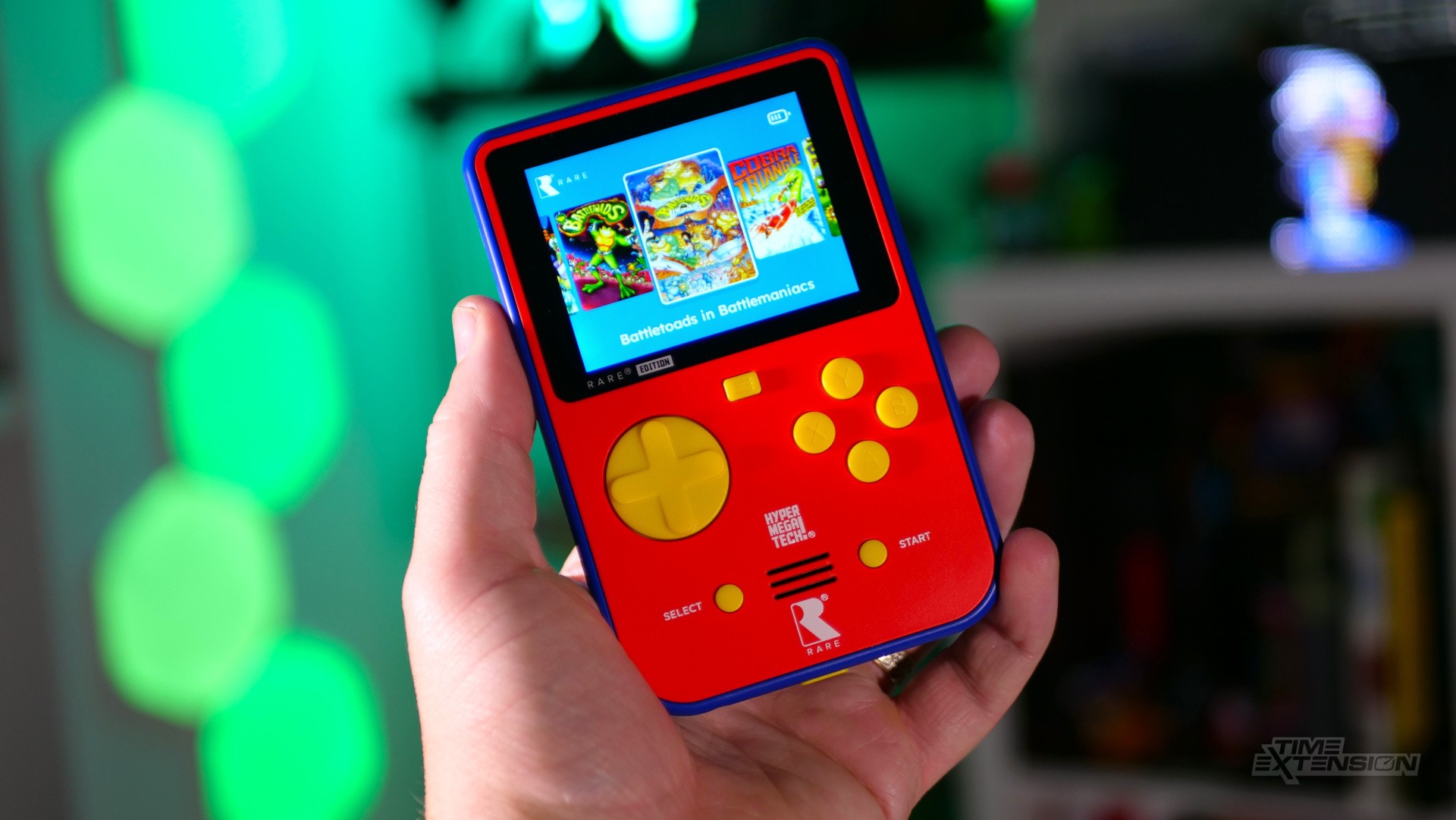
The Rare Super Pocket comes with the following games:
- Banjo-Kazooie (64-bit console)
- Conker’s Pocket Tales (8-bit handheld console)
- Battletoads in Battlemaniacs (16-bit console)
- Battletoads (8-bit console)
- Cobra Triangle (8-bit console)
- R.C. Pro-AM II (8-bit console)
- Slalom (8-bit console)
- Snake Rattle ‘n’ Roll (8-bit console)
- Solar Jetman: Hunt for the Golden Warpship (8-bit console)
- Atic Atac (home computer)
- Jetpac (home computer)
- Lunar Jetman (home computer)
- Knight Lore (home computer)
- Gunfright (home computer)
Many of these titles are already included on the Evercade Rare Collection 1, including Atic Atac, Gunfright, Jetpac, Lunar Jetman, Battletoads, Knight Lore, Conker's Pocket Tales and Cobra Triangle – so, if you own that pack, you can expect a little duplication with this device.
On the upside, Battletoads in Battlemaniacs, R.C. Pro-AM II, Snake Rattle ‘n’ Roll and Solar Jetman: Hunt for the Golden Warpship are all superb new additions here, while Slalom is an important (if slightly shallow) historical inclusion as it was the very first game Rare created for Nintendo's NES, kicking off a relationship that would see it become one of the world's most famous studios.
It is, of course, the presence of Banjo-Kazooie that really elevates this device – and I'll come to that shortly.
Super Pocket Rare Edition Review: Design & Performance
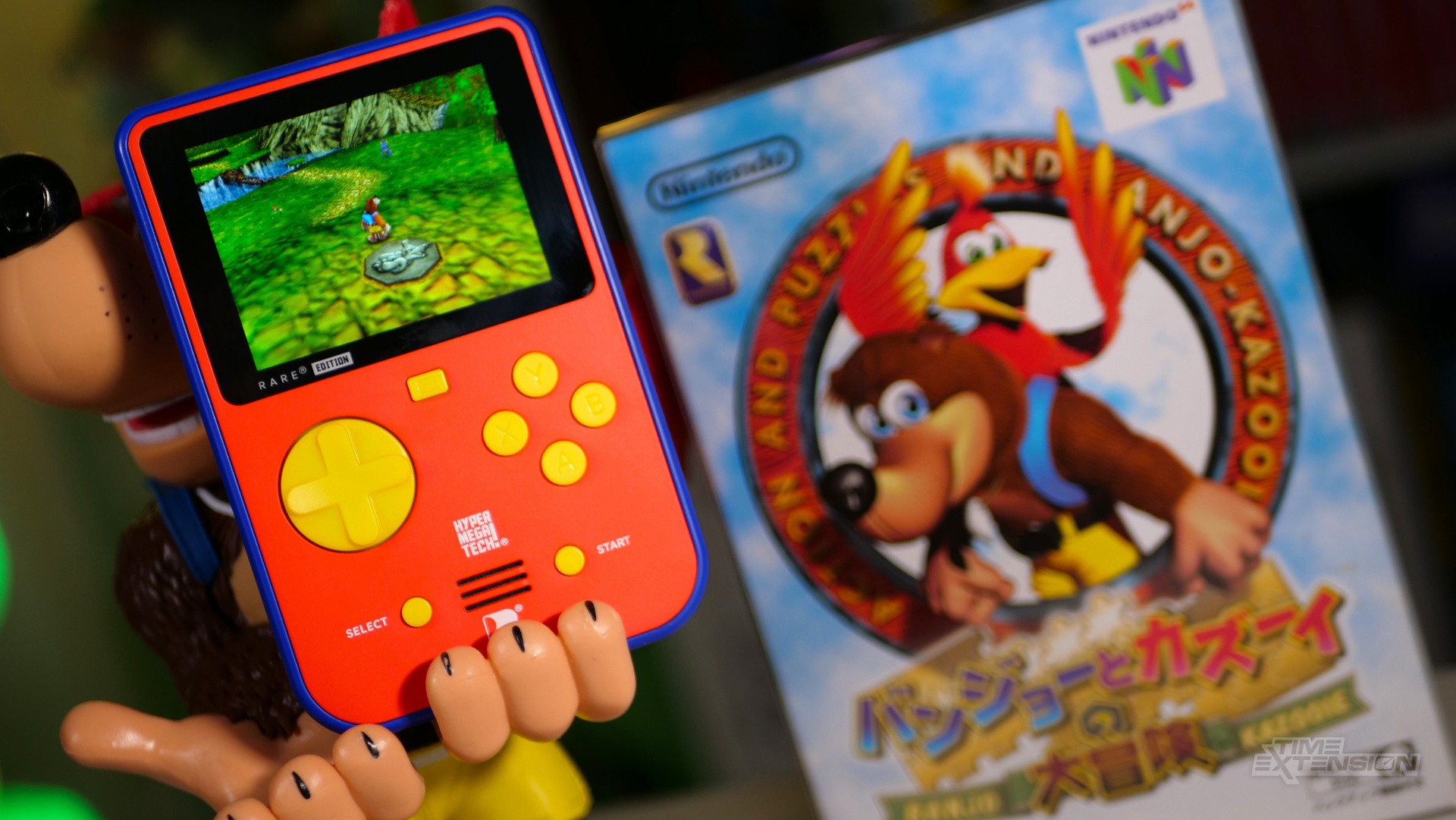
The Super Pocket is something of a known quantity at this stage, having seen multiple versions pre-loaded with different games. As such, the design hasn't changed for this model – which is a good thing, as it's a lovely little device, even if it's perhaps slightly too 'toy-like' for some.
Indeed, the playful nature of the Super Pocket's design is amplified by this variant, which comes in a vibrant blue, red and yellow colourway. It's certainly eye-catching, and instantly reminded me of another N64 smash-hit – Super Mario 64. In this case, however, the colours are of course designed to match the Banjo-Kazooie logo.
The system's 320x240 pixel 2.8-inch LCD display might not sound cutting-edge, but it's perfectly fine for displaying the vast majority of the games that come pre-loaded on this device. Even the most visually demanding game looks great here; Banjo-Kazooie originally ran at a 256x224 resolution on the N64, but on the Super Pocket, it benefits from increased sharpness thanks to those additional pixels.
Battery life is around four hours, which is in line with other Super Pocket releases. You charge the console using the USB-C port on the bottom. There's also a 3.5m headphone socket in the same place.
Super Pocket Rare Edition Review: Banjo-Kazooie
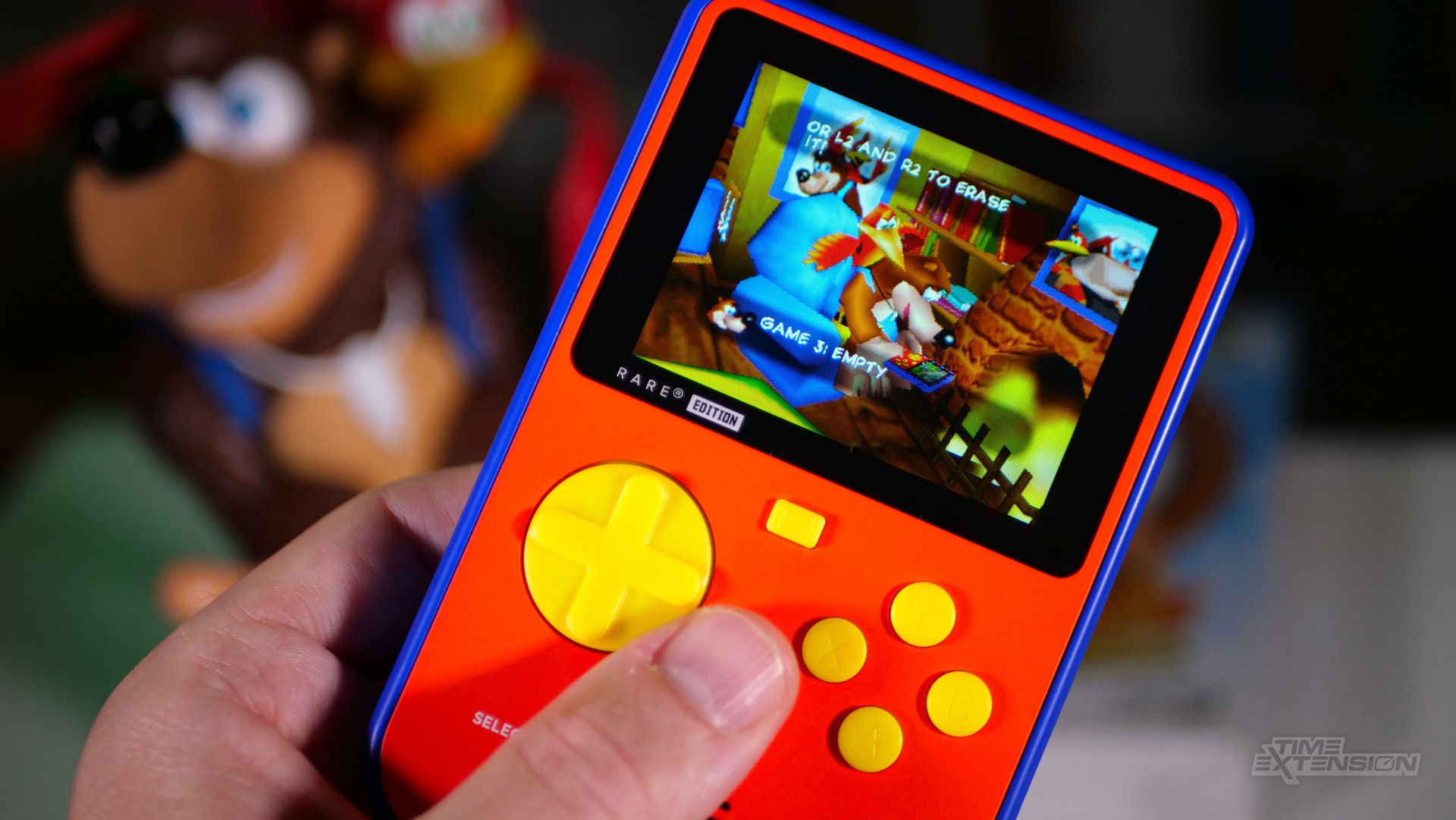
Given that the Super Pocket is an existing device, I'd imagine what most of you reading this really want to know is how the Evercade-sanctioned port of Banjo-Kazooie fares. The answer is (almost entirely) positive.
First up, the game runs smoother than it ever did on the N64, despite the increased resolution. The team that worked on this describes it as an "enhanced" port built on the game's original source code, and it's easy to see why; while the more recent ports on modern-day systems are arguably superior, the Evercade version looks sharp, runs at 60Hz, and generally feels like a big step up from the original.
One thing that has obviously had to change is the interface. There's no analogue stick on the Super Pocket, so movement is handled by the rolling-style digital pad – which, admittedly, is one of the best I've used on this kind of device.
This doesn't change the fact that, without analogue input, Banjo-Kazooie is a very different beast when compared to the N64 original. The smoothness that made Rare's 1998 classic such a joy to control has been replaced by more rigid eight-way movement, which simply doesn't feel the same.
However, the developers have been able to slightly replicate the proportional control of the original game by bringing the R2 button into play. In the game's default 'Replay' control method (which draws inspiration from the version included in Rare Replay), tapping this places Banjo in "tip-toe" mode, simulating the effect of lightly touching the analogue stick in the N64 version. A second tap of the R2 button returns Banjo's movement speed to normal (you can switch this to 'hold' if you prefer – you can also toggle the Talon Trot setting between 'hold' and 'toggle', too). It's obviously not as elegant as it is on original hardware, but it works – for the most part.
Other commands have been moved around a little. The 'R' button on the original N64 was used to snap the camera behind Banjo and Kazooie, whereas on the Super Pocket edition, this is now mapped to the 'B' button. The left and right 'C' buttons shifted the camera in the corresponding direction on the N64, but on the Super Pocket, you use the L1 and R1 buttons on the rear of the device. The 'first person' camera, originally enabled by tapping the upper 'C' button, is now mapped to 'Y', while the camera zoom controls are assigned to the Super Pocket's 'Select' key. I'd recommend you turn on the 'Follow Camera' option in the settings as soon as you boot up – this automatically snaps the camera to the main characters and removes the need to babysit it constantly.
Crouch – which was invoked by pressing the Z trigger on the N64 – is handled by tapping L2. You can switch to a 'Retro' control scheme from the game's options menu, which tries to more accurately reproduce the layout seen on the N64 pad, but to be honest, I just stuck with the 'Replay' setting.
The important thing to note about this control setup is that it works fine, and you can perform the same moves and tricks as in the N64 version. The only issue I think people are going to encounter is that the Super Pocket is quite a small device, and making sure all of your fingers are in the right place at all times is trickier than you'd expect – especially when it comes to the L and R buttons on the rear of the device. Some of the actions in the game require you to feather multiple buttons simultaneously, and this never feels quite as nice as it did on the N64 controller.
Having said all of that, within 30 minutes of picking up the Super Pocket, I was leaping around the levels with (almost) as much grace and ease as I did back in 1998 – so while it's not a 1:1 recreation in terms of interface, it's certainly better than I perhaps expected from a handheld with no analogue stick.
Super Pocket Rare Edition Review: Conclusion
Even if the Super Pocket only came with Banjo-Kazooie, I'd probably still award it the score you see at the bottom of this page.
Rare's game is a genuine '90s classic, and remains as joyous and playable today as it ever did; the Evercade version (which will also be released on a stand-alone cart, alongside its N64 sequel) is even better, as it runs at a higher resolution and offers smoother performance. This is tempered slightly by the lack of analogue control, but the revised controls work better than you might think.
So, should you rush out and buy the Super Pocket Rare Edition? If you're looking for a low-cost, super-portable device that is compatible with the many Evercade carts already on the market, the answer is yes. However, if you want analogue control and don't mind waiting, it might be a better option to keep your powder dry for a little longer and pick up the £169.99 Evercade Nexus, which ships in October and offers dual analogue input. This comes bundled with the aforementioned Banjo-Kazooie Double Pack.
However, that offering represents a price difference of £120 over the Super Pocket – which is quite a fair chunk of change. It's also worth noting that Banjo-Kazooie is available on the Nintendo Switch Online service, if you have access to that – but again, taking that route purely to play this one game is a lot more expensive than the Super Pocket.
With that in mind, the Super Pocket Rare Edition remains a solid option and is highly recommended to anyone who wants to take the famous bear and bird on the road.
Please note that some external links on this page are affiliate links, which means if you click them and make a purchase we may receive a small percentage of the sale. Please read our FTC Disclosure for more information.
Thanks to Blaze for supplying the Super Pocket Rare Edition used in this review.