
 by
by 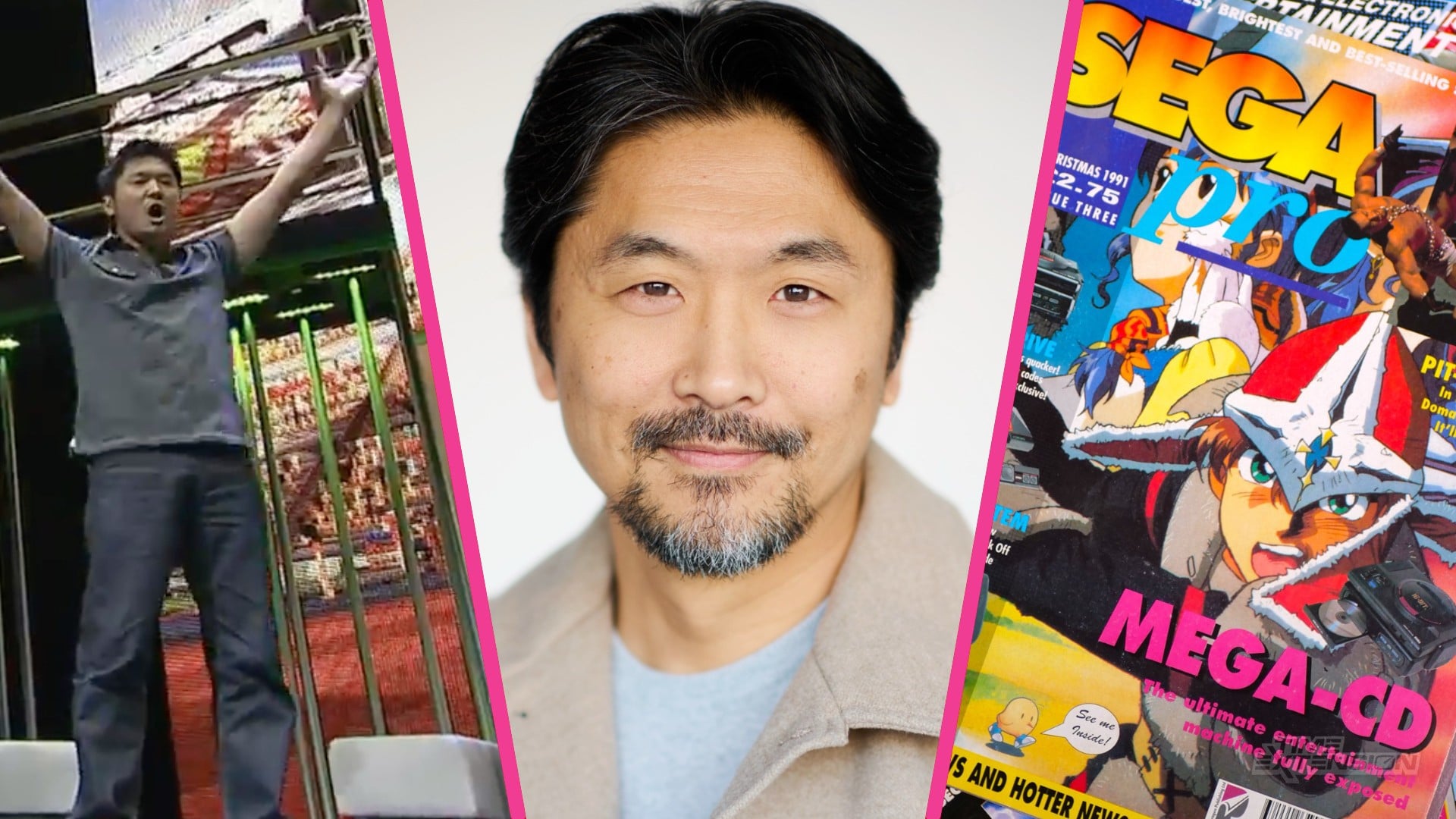
Shintaro Kanaoya has had one of the most remarkable careers you could possibly hope for.
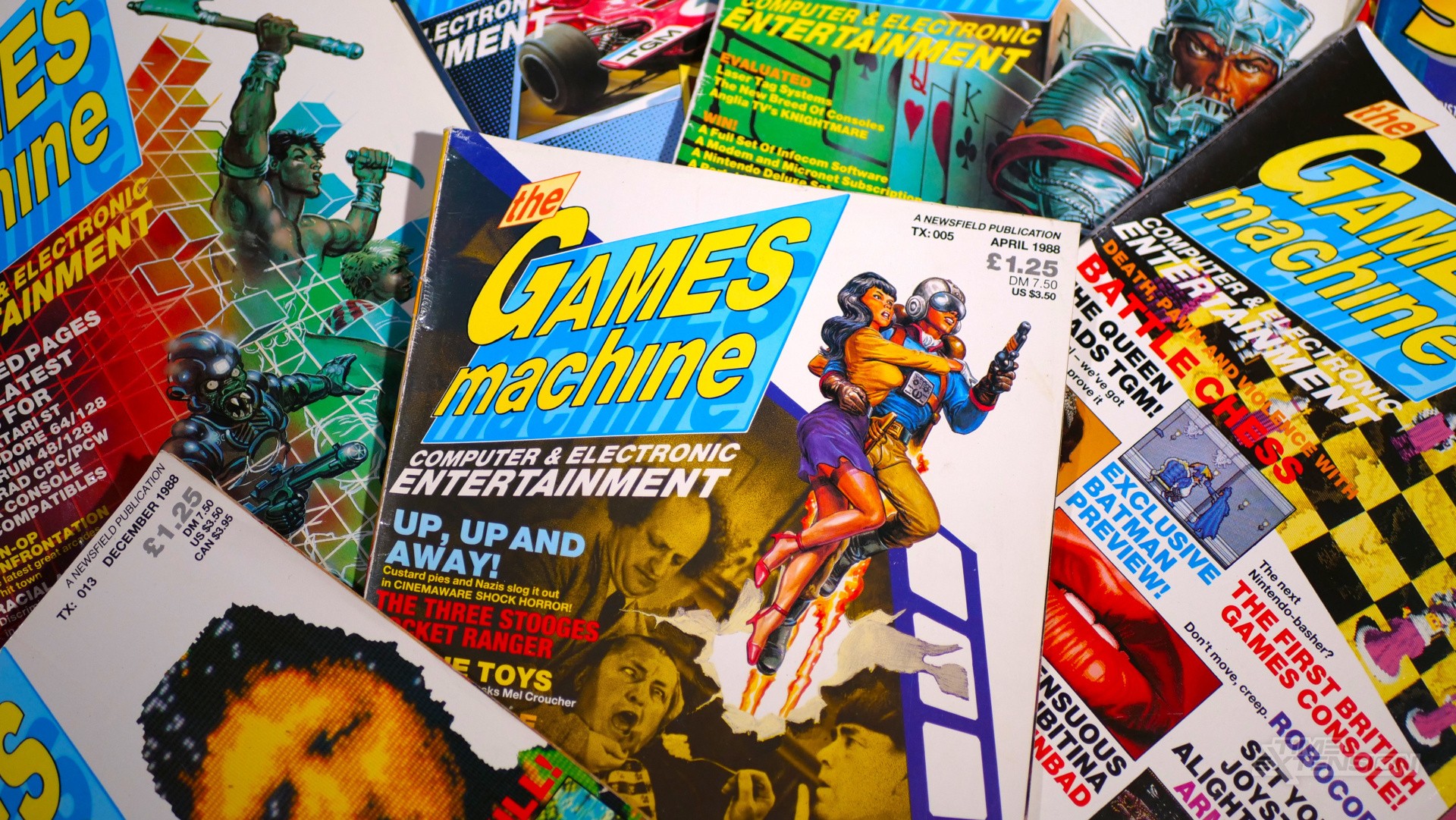
Born in Japan in the 1970s, he and his family relocated to the United Kingdom when he was still a baby, yet connections back home set him up as the perfect 'Far East' correspondent for a series of video game magazines, including The Games Machine (established by Oli Frey and Roger Kean of Zzap!64 fame), Raze and Sega Pro.
Remarkably, by the time he began studying for his A-Levels, Kanaoya was already a published writer and a font of knowledge on everything happening in Japan – but he left the games media industry to finish his schooling and go off to university, only to return to the industry in the mid-'90s at Peter Molyneux's Bullfrog studio.
This role would see him progress to senior positions within EA, Sony Computer Entertainment, Microsoft and Rare, before finally striking out on his own with Chorus Worldwide, the company he established in 2012.
Keen to learn more about this amazing career, we sat down with Kanaoya for the following interview.
Time Extension: Could you fill us in on your early life and how you got into video gaming?
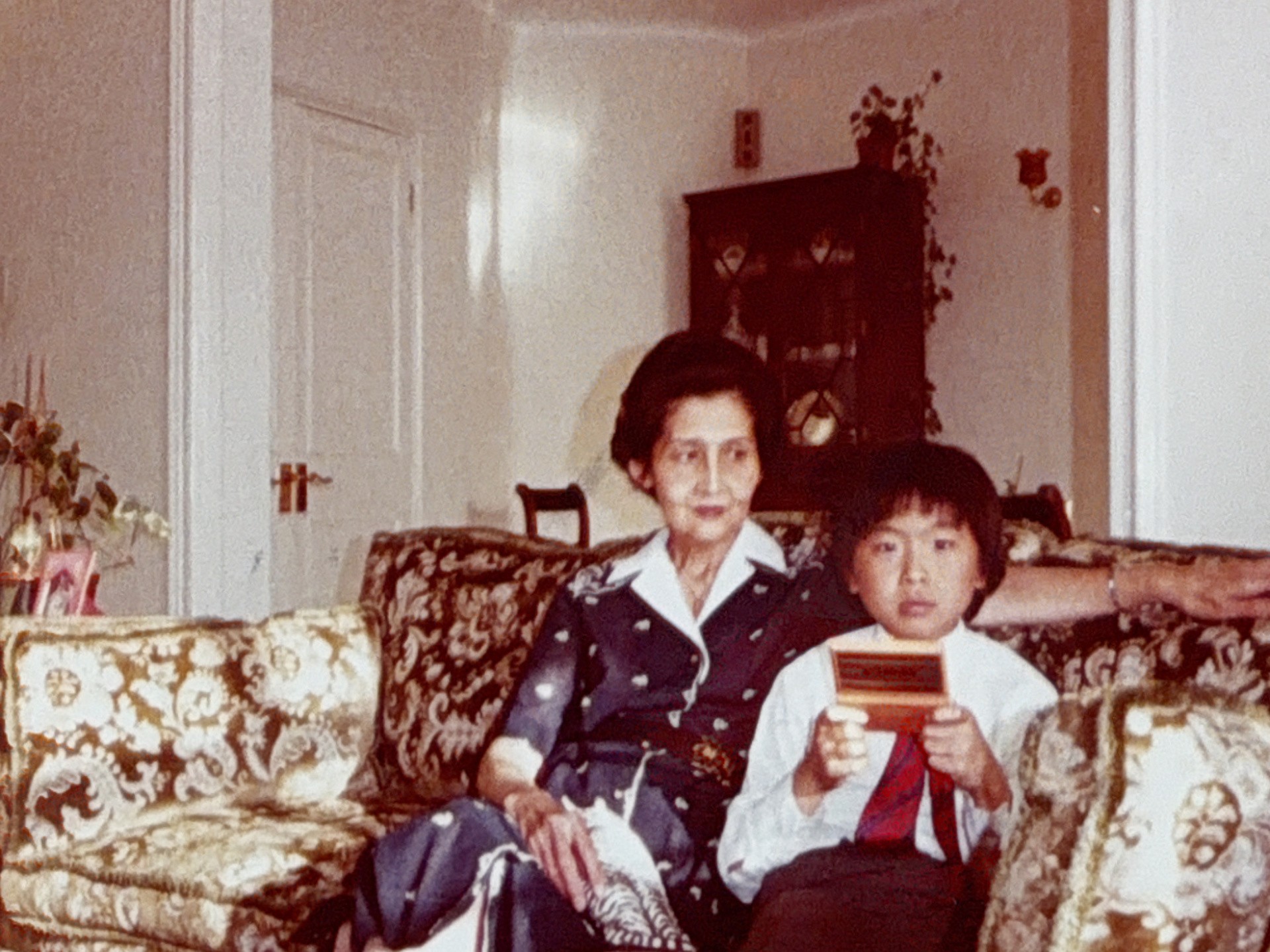
Shintaro Kanaoya: I was born in Japan in 1973, and then in 76, I think it was, we moved to London. I was only two or three. We moved to southwest London, and my parents decided to put me into an English school. So I grew up in the UK, but because both my parents are Japanese and I still had relatives in Japan, we'd go back almost every summer.
One of my grandmothers would very kindly send me bundled up copies of Famitsu, Login, and other magazines, as well as Jump Comics. So, every month I'd get a parcel of stuff and pore over everything. I had a Famicom from one trip to Japan, too. I was already into games quite early.
Japanese video games and culture are now famous all over the world, but things were very different in the UK back in the '80s. What was it like growing up in the UK and straddling two different worlds?
I think people thought 'that's weird and interesting.' Walking into school with the first Donkey Kong on Game & Watch, people were like, 'Oh, what's that?' But no one was like, 'Oh, that's really cool.' Interest in Japan and video games wasn't as widespread as it is now.
No one was really into manga and anime because there was little knowledge of them in the UK at the time. What was always interesting to me was that I liked British comics. I liked 2000 AD and Eagle, but they were 30-odd pages or something – and then you'd get Jump, which was 200 pages!
There wasn't much coming into the UK. The food, the popular culture... people weren't going to Japan for holidays. It was just like this weird country that people didn't really think much about; it was all the cliches of Japanese tourists with big cameras, showing up in coaches, and all that.
How did you start writing about games?
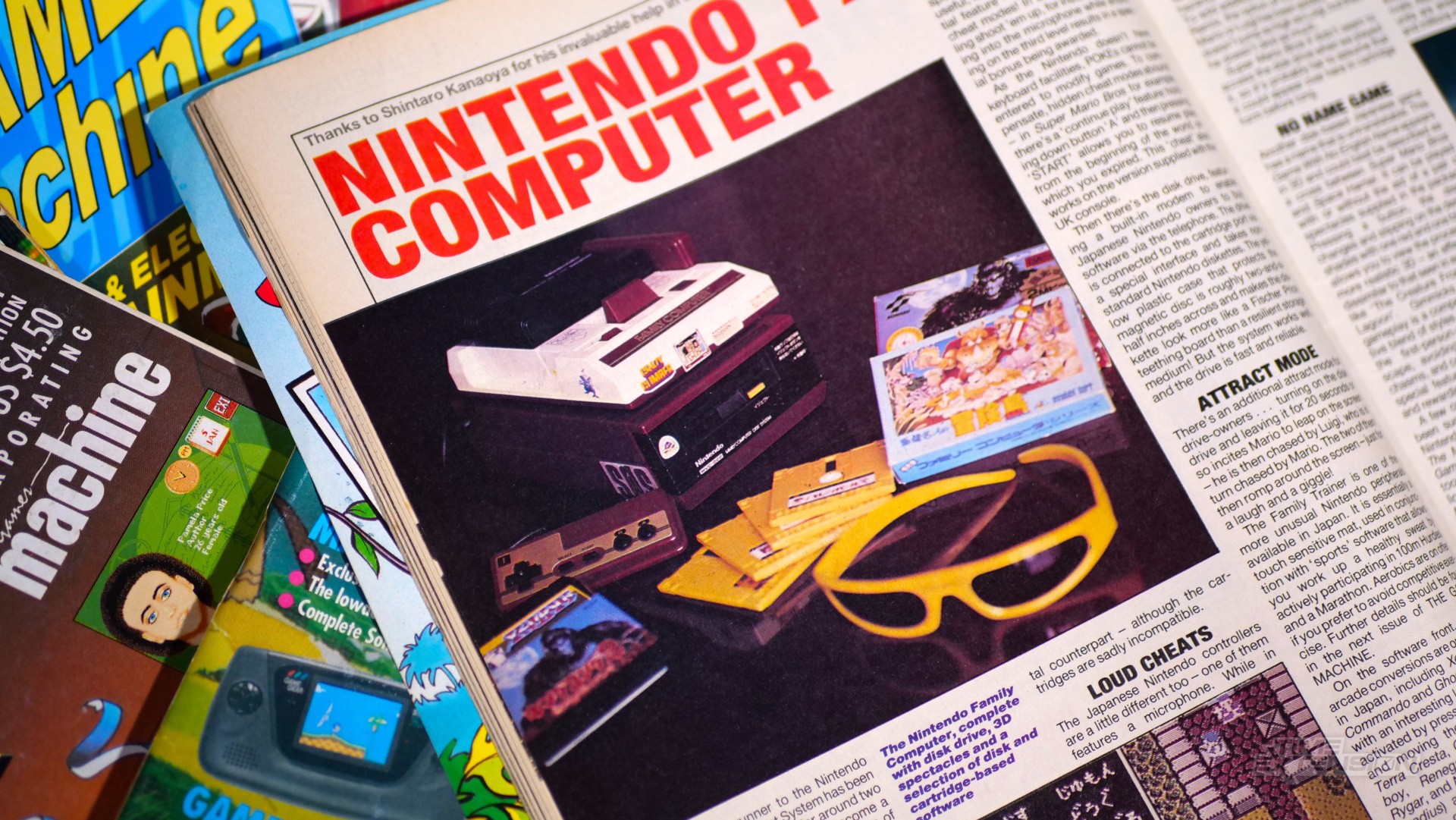
I had the Famicom before the NES was released in the UK. I was keen to play UK games, but I didn't know whether I could use a NES cartridge with a Famcom or vice versa, and I didn't know anyone who had one. So what seemed to make sense to me was to write to a magazine and ask if they could check it for me. I knew the cartridge casing was different. I had the Famicom cart for Legend of Kage, and I ripped open the plastic cart to expose the circuit board. And I think I put that into a jiffy bag and sent it to Newsfield, to The Games Machine guys.
I got a response back: "Any chance we could come down and see it?" And so Gary Penn – whom I'm still friends with to this day – and the late Graeme Kidd came down to London. So this would have been probably 1987, or something like that. They did a little special on the Famicom and the Famicom Disk System, and they just put it on my mum's dining table and took photos of it.
It was not long after that, they said, 'Do you want to start writing a monthly column for us?' I think I was 14 or 15. I would write in longhand, just like I was doing my homework. I didn't have a typewriter or a word processor. So I just write these really scrawly things, send them in, and they pay me. I found out that I used to get paid 7p a word, which apparently was really good. It was called 'Our man in Japan' for The Games Machine.
Sadly, Newsfield's Oli Frey and Roger Kean are both no longer with us. What were they like to work for?
I think I only met Oli once, and not sure I ever managed to meet Roger. They were all in Ludlow, and I was sending my copy in from London.
You filled a similar role on Raze, right?
Yes. The Games Machine went under. There's a guy called Richard Monteiro who got involved somewhere along the way, and launched Paragon Publishing. Richard asked me to carry on for Raze, which I think only lasted maybe a year or so.
Then they started Sega Pro. In the end, I probably did it for about three years or something like that – two or three years up until my A-Levels. And then I said, 'I can't really do this'. Even though it didn't take long, it still took quite a while just to gather all the information, cut bits out of magazines, and send it all off. I needed to focus. I think they offered it to increase my word amount to something stupid, but I said I don't have the time. I did my A-Levels and then didn't really think about games as a career until after I left university.
So, were you getting all your information from Famitsu?
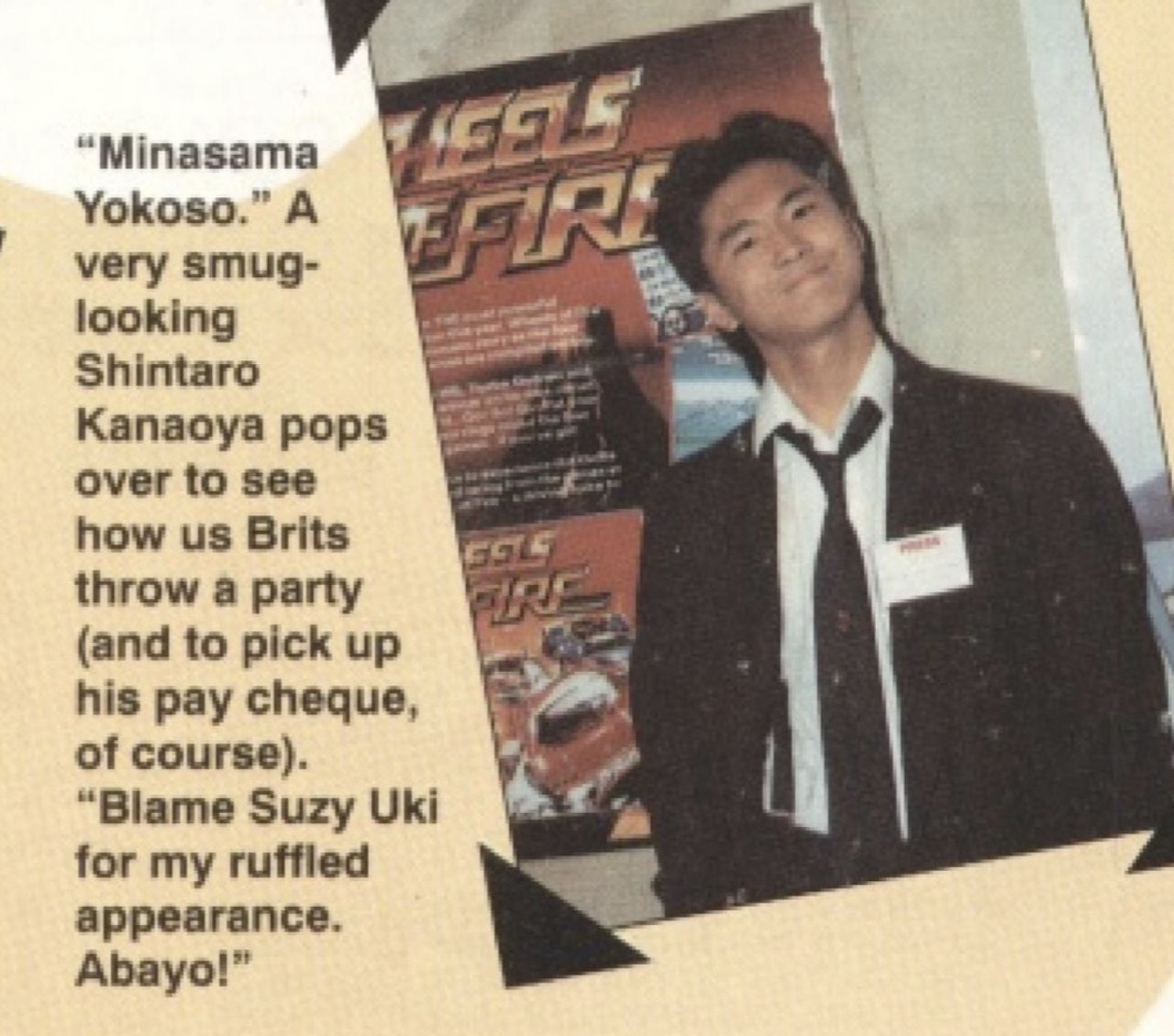
So if I went back to Japan in the summer, I think there was probably one or two times when there was a big game event on or something. I would get photos from the show. There's a photo of me in one issue of The Games Machine or Raze where they said, 'Oh, our Japanese correspondent has stopped by in London,' and it's me in my school uniform. That was all a lie! It was like 'our man in Japan', but I was in Putney!
I was getting all that information from Famitsu and LOGIN. Obviously, the information flow was so slow back then, and the Japanese stuff just wasn't making it through. I think I was one of the first people to talk about the PC Engine, in the UK at least. I do remember one time I was in Japan, I called Nintendo's head office to ask them a question about something, I can't remember what, but I did end up speaking to someone who was very nice and answered my questions!
I always assumed the person writing those columns was a Brit doing so under a pseudonym because the columns were written in a very British style and always referenced Western games.
I think that probably helped as well. I was okay at writing, and it helped me to learn to write. I had a Famicom, I had a Super Famicom early, those kinds of things, so I could actually talk to it a bit more knowledgeably, but I used to love Western games. Dungeon Master was one of my favourite games. I loved it and Eye Of The Beholder, and stuff like that. I think over time I became more of a Western game person because I didn't really like Japanese RPGs like Dragon Quest. I just found them really tedious.
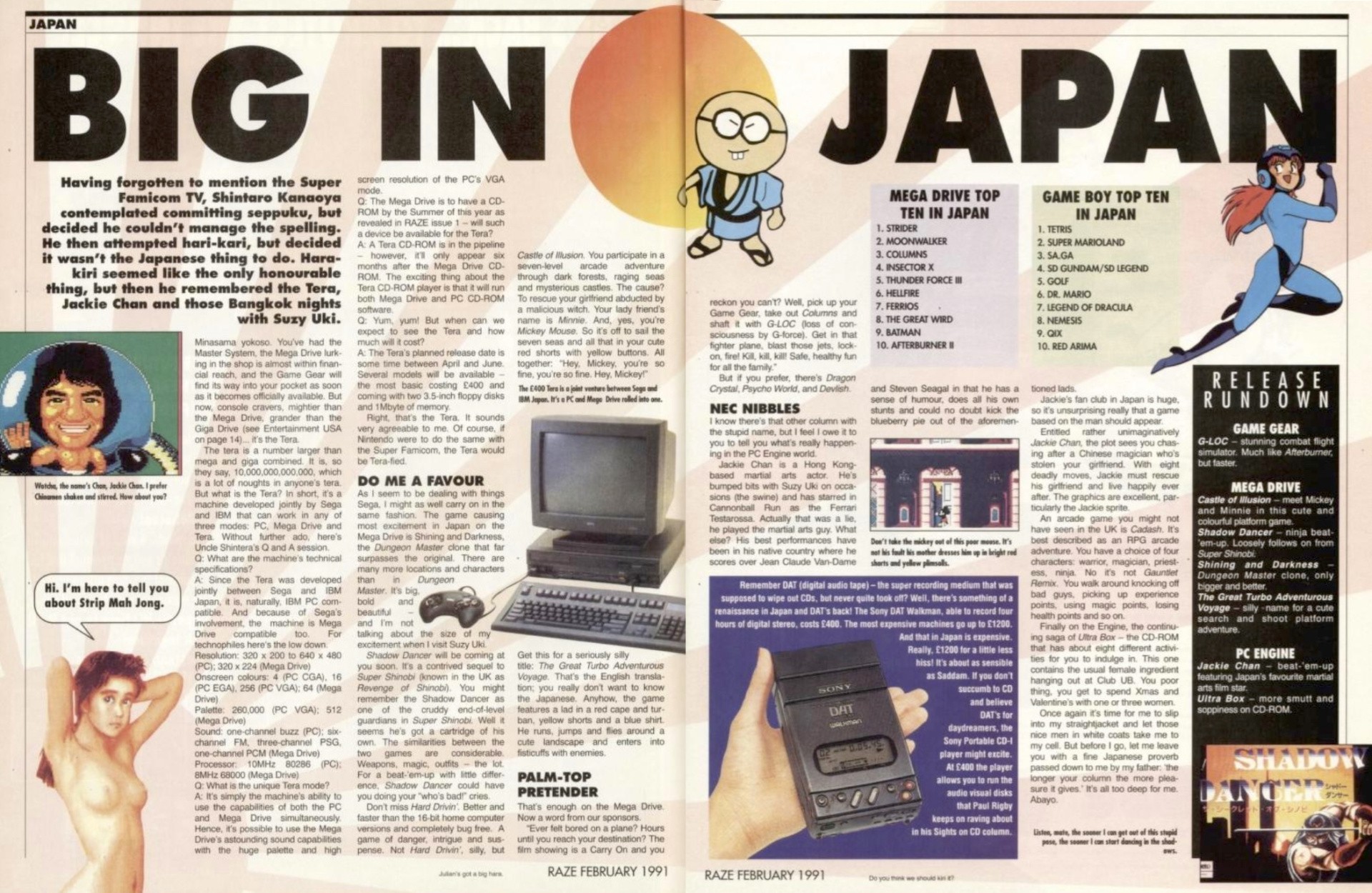
Whose idea was it to include all the saucy pictures of Japanese anime girls?
That actually was probably not me! I was a real nerd. Girls terrified me. That was probably the designer or publisher. I'd send them the stuff in, and they'd probably go, 'Yeah, that look that looks good.' Famitsu was more family-friendly, but LOGIN, which was more focused on computers like the PC-98, were just full on basically anime porn even from back then!
I noticed one copy of Raze referred to you as a 'little yellow guy' - did the '80s / '90s British trademark mild racism ever bother you at all? Would you have fought against it had it happened today?
I didn't even know that was in an issue of Raze! Terrible! But as a general point, I honestly didn't encounter much discrimination, fortunately. I've come across that kind of 'ribbing' over the years, and definitely more in the UK than here in Canada, which is much more multicultural. It's never nice when it happens, though.
How did you come to work for Bullfrog?
I did my A-Levels, went off to university, and had nothing lined up. I didn't think about games as a career at all. I wanted to get into the film if anything, but I didn't really think about games. I didn't know how these things got made. I went to Birmingham Uni to do a philosophy degree, of all things. I graduated and was going to go off to film school, but I just decided I wasn't very good at it. So, I did some interpreting for a few months, and then a job came up at Bullfrog. I knew Bullfrog because I liked their games.
They were just looking for a work experience tester. So, I thought, 'Oh, I'll do that.' They took me on for a week unpaid, then for three weeks as a trial. And then at some point, I think my stepdad said, 'You've got more experience than people know, so why don't you let them know that you've done all this writing stuff?'
I didn't know Peter Molyneux, and I was a bit intimidated, but I put together a package of the stuff I've done previously and left it on his desk. I don't know if he ever saw it, but at some point, they said, 'Well, move that guy from testing to level design.' And then I started being a level designer. And they gave me a full-time job, and I just started. I was in the industry.
So, what was it like working with Peter?
The closest contact I had with him was the first Dungeon Keeper. I was the lead level designer, and for the last few months of that project, we worked out of his house because he'd announced he was leaving Bullfrog, and EA, who he'd sold the company to in 1995, didn't want him in the office. I think seven of us were working out of his house, and I was sitting next to him every day. He was doing all the AI and the overall creative direction. It was interesting. We're doing little individual things like designing levels, programming, or art, but Peter's got the vision for the whole thing. I saw the difference it takes to be at that level and see the whole project, versus just doing a single job.
It was a really instructive experience. It was hard, especially if I'm trying to design levels and I get them to work, and they're balanced, and then one thing on the AI changes and suddenly the whole level's broken. But I'm really proud of the work did on that. Peter was great to work for.
How did your career progress after that?
So, Bullfrog was already part of EA, and I asked for and got a transfer to EA Japan for two years in '99. And then, when I came back in 2001, Bullfrog didn't exist anymore. It was just an EA UK studio down in Chertsey, and we were working on Harry Potter games. I worked on Syndicate Wars, Dungeon Keeper, a little bit of Theme Hospital and Dungeon Keeper 2. Those were like the Bullfrog games I worked on.
So I think I joined it must have been I think only a few months after EA had already bought Bullfrog, but Bullfrog still felt Bullfrog; it was in the same building. It was run by the same guys day-to-day. From what I understand, it had expanded quite quickly, so there were a lot of new faces, but it still felt like its own studio. I think it changed once Peter left, I guess – when Dungeon Keeper one shipped, which would have been 97, I think.
I think at that point, it was like, well, who's running the studio? There was no one creative leader, so I think that's when things started to change. Many senior people started leaving to form new studios. Obviously, Peter formed Lionhead, and other people formed other splinter studios. So I was really kind of at the very tail end of what was Bullfrog; it was different and weird – but it's my first job in the industry. I didn't know any different.
So I moved to Japan for two years. And even though what I was doing was localisation production on things like The Sims, the work itself was fine and interesting enough – but more than anything else, I became friends with a guy who we now work together at my current company, Chorus Worldwide.
EA was fantastic for me because I had about four or five jobs within the same company. From being in a creatively-led studio at Bullfrog to a regional publishing office, then to a massive franchise like Harry Potter, and then I went into marketing and online stuff. There were so many opportunities. I learned a lot in 12 years.
You also went to Sony around this time as well, correct?
Oh god, that was really brief.
So the team I was leading was just a new concepts team. Back then, they had a process where different studios would pitch to a creative lead team in London, run by Eric Matthews, of Bitmap Brothers fame. We had a team at Cambridge just coming up with new concepts constantly, and we would take a genre like horror and then say, 'Okay, what can we do with that?'
It was really good fun, but I think for me, I felt as though none of these games were ever going to get made. I got an opportunity to go back to EA, which was starting a new online division. So it just made sense to me. I didn't feel like Sony Cambridge was really going to be right for me and for the family, so I went back to the warm embrace of EA.
It was the beginning of EA's online stuff. The first EA online thing was called EA Downloader. Because I'd worked with DICE on the Battlefield franchise, I probably had a bit more experience with online stuff than other people had in publishing at the time. So, a guy called Frank Sagnier, who was starting up this new group, asked me if I would be interested in coming back to help launch EA Downloader. We would start to look at free-to-play… Battlefield Heroes was one of those things.
And so that was a two-year stint, doing that. And it was really good fun because we got to launch some of the first Xbox Live games. So that was really cool.
You then moved to Xbox. How did that happen?
So, Phil Spencer had been moved to the UK to start a European publishing group, along with a couple of others who had come over from Redmond. I joined as a business manager. At the time, Xbox Europe had Rare, Lionhead, and I think a couple of other studios and smaller satellites. At the time I joined, there'd been a reorg in the US, so Phil had moved back to run all of Xbox, and they hadn't replaced him. So the European publishing organisation became leaderless before it even started.
When I joined, I was given the choice of either working with Lionhead or Rare. I'd done some work with Rare, and I really like those guys. But Lionhead was down the road because the Microsoft office was in Reading, and I lived in Weybridge, and Lionhead was in Guildford. I knew a lot of those guys, but I really liked what Rare were doing and the relationships I built at Rare.
So I decided to stick with the Rare guys and go in-house as their head of business. This was around the time of Banjo-Kazooie: Nuts & Bolts and Viva Piñata: Trouble in Paradise. They were trying to figure out what to do next, so, as one of the Microsoft people, my job was to help them decide where to go.
This would end up being Kinect, right?
I said, you guys have got real experience working with Nintendo, and Wii Sports was obviously very successful for Wii. Why don't you guys take on the challenge of making 'Natal Sports'? This obviously became Kinect Sports. They thought it over, agreed to do it, and it was a real success. I loved working on it, and it was such a new challenge.
You even got to present the Kinect Sports demo at E3, too!
It was weird because it was supposed to be the creative director, a guy called George Andreas, who's a really lovely guy, but he didn't want to do it for some reason. So I was like, 'Okay, well, who else was going to do it?' I don't know why it became me! I was really nervous because of the because the tech was still kind of early. It actually crashed out at one point!
I had an earpiece, and we were waiting for the hurdles or something to start, and nothing happened. Then someone says, 'go to backup' in my ear, because there were two stations set up, so that's why you see me go to the front. I slide a door over, and then someone in the back flicks over the feed. And I'm standing there thinking, 'God, I hope this works' because they were all real demos. We would have been the only demo that didn't work, which would have been really bad. The woman who was with me was called Abby, and I think, for some reason, we had scripted it so she would win, but I ended up winning! But it was a really good experience, and we were there for a few days just practising. There were things like the lights from the stage were interfering with the Kinect sensor, so we couldn't figure out why things weren't working.
I get that there were lots of problems with it. It doesn't work very well in the sun. But there were some really good experiences on it that you can't get anywhere else. And it sold 30 million units, right?
How did you part ways with Microsoft and start Chorus?
Microsoft likes to reorganise quite a bit, so Rare was reorganised into a group in Vancouver. They were trying to do a sports entertainment group. I was asked to come and join and do the business stuff, not just for Rare, but for the group. So we moved to Vancouver. As well as making sports games, we were developing things like the ESPN app and the UFC app – all these other things that were supposed to be like the TV-first thing that obviously led to Xbox One, all that kind of stuff.
I guess I was there until 2011, and then I left. The indie scene was starting to become a thing, and I had quite a few friends from Bullfrog who had started studios. I'd always wanted to start my own company, so I took the leap with Chorus Worldwide. It was originally more like a consultancy thing, but I started hiring people and then just started taking indie games over to Japan and Asia, and I've been doing that for 12 years now.
What kind of work does Chorus Worldwide undertake?
Up until recently, it was just publishing work. So you know, we would take games that were either in development or finished, and then we would do porting work. So we have an engineer in Japan who handles all our porting, localisation, and marketing, working with platforms and all that kind of submission stuff.
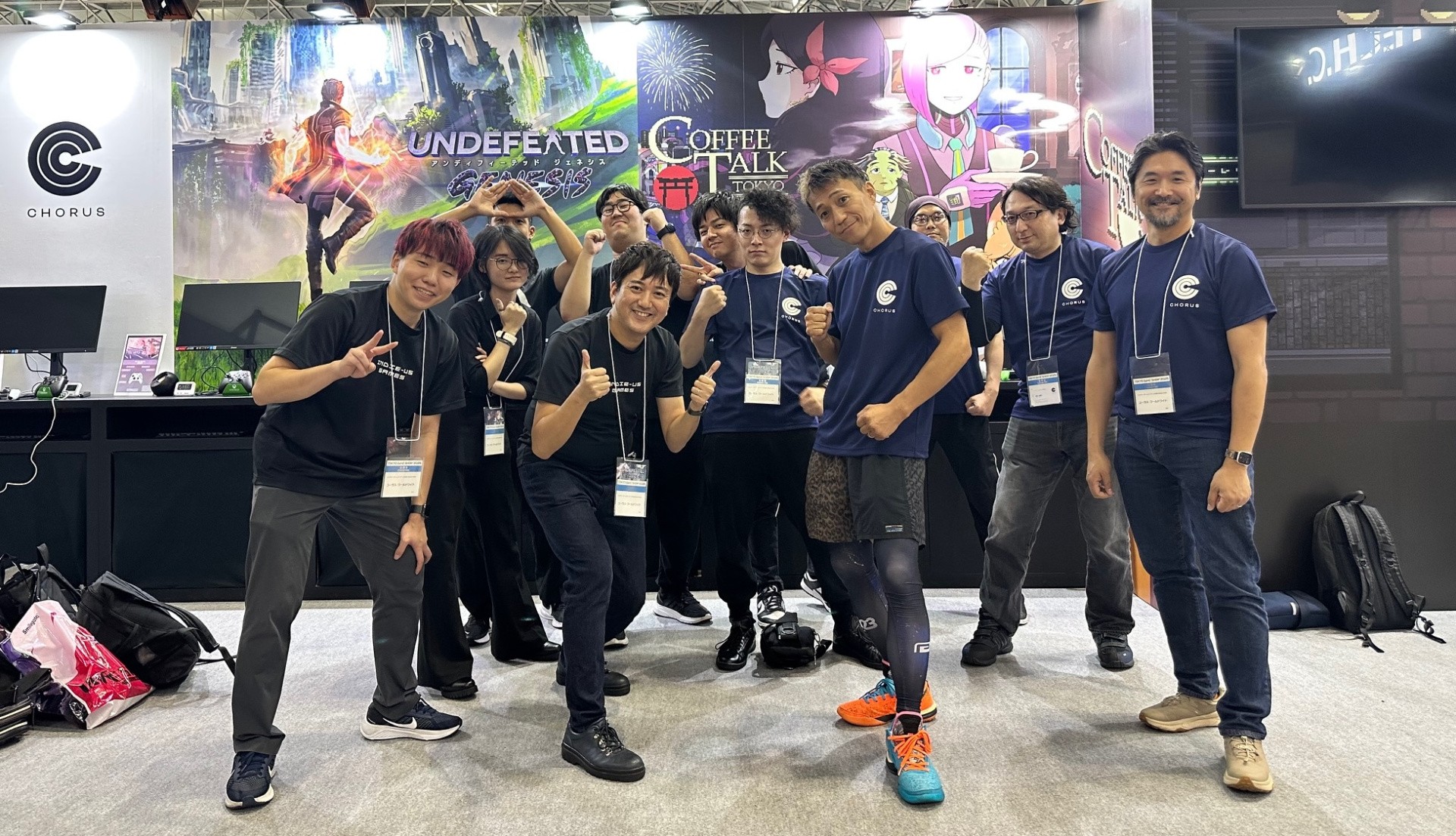
But we're about to launch a game called Coffee Talk Tokyo, which is developed internally. We've put together a team of people working on the Coffee Talk code base that the original developers have let us use. So that's my first taste of development in god knows how many years.
Fuzuki Ninomiya, who's our COO… It's so funny because I met him back in 2000 when I went to work in EA Japan, and we just became really good friends. We lived opposite each other, coincidentally. We'd walk up to work together. We sat next to each other all day. We'd go for smoke breaks together, have lunch together, and walk back together. We were like besties for a couple of years. It was great.
He stayed at EA for a long time and then went to work at Grasshopper Manufacture. A few years into my starting Chorus, we'd been talking, and he agreed to come on board, and so we've been working together ever since. I think that because we're both ex-developers, we're both quite comfortable. None of that stuff really scares us. I think many publishers have never done development themselves.
Game development is just one of your talents. You've since taken up acting; how did that come to pass?
I used to travel a lot with work, go to different conferences, see different games, and then at the end of 2019, I was like, 'I hope I don't have to travel very much in 2020', and then COVID hit, so suddenly no travel!
I'm on a Facebook group of Japanese people living in Vancouver, and someone had posted this thing saying a major streaming channel is looking for these kinds of people, and one of them was men aged 35 to 50, Japanese or Korean, and I thought, 'Oh well, I can do that, it might be fun as well as something to do.' I just thought I'd stand around on a film set as an extra or something. So I put my name in.
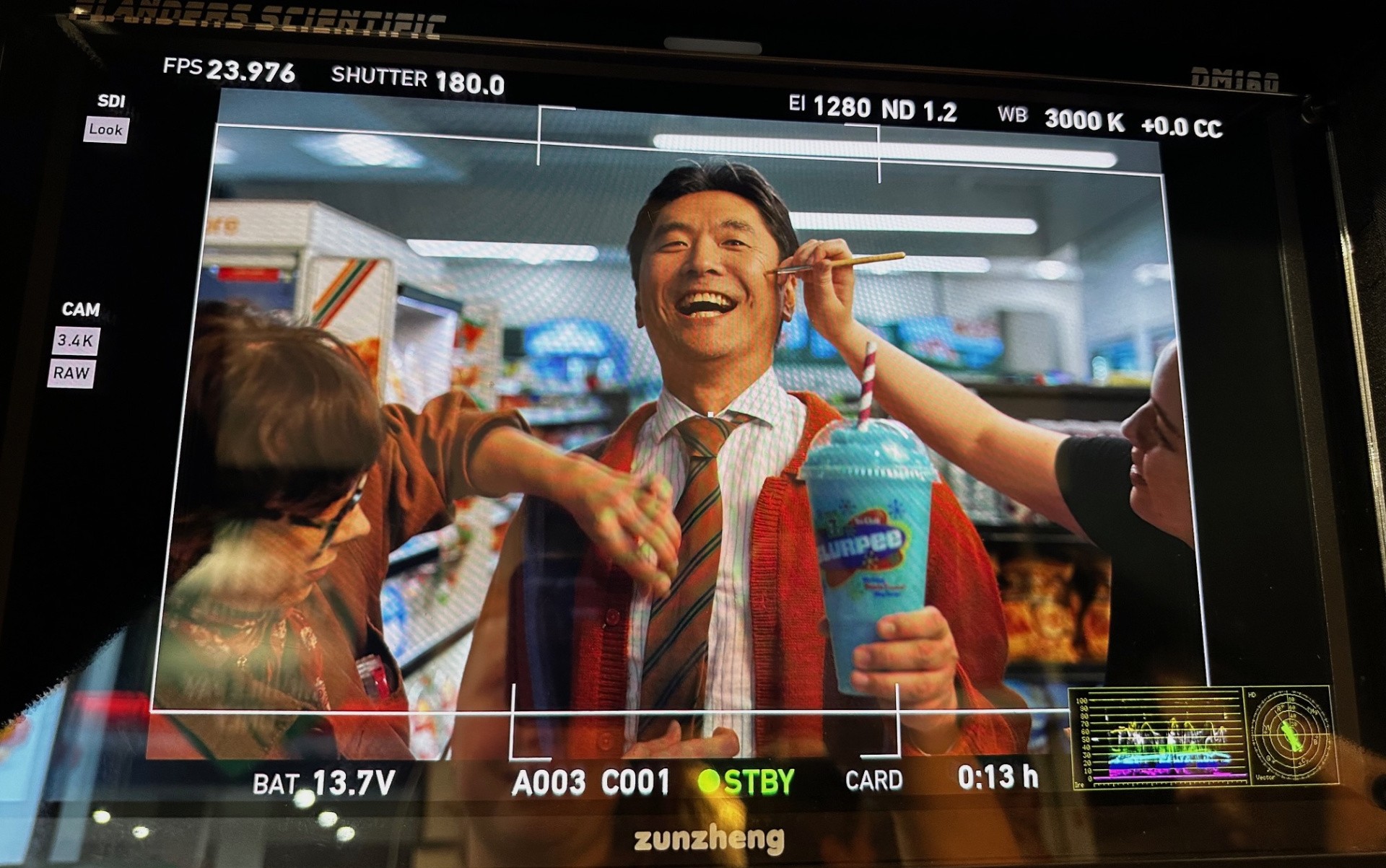
I didn't hear anything for months, and then they came back to me and said, 'Oh, this is actually for Apple TV's show called Pachinko. Can we ask you to audition for a role?' And I thought, 'That's weird. Why? I mean, it's an extra role, right?' I got the job, and it turned out it wasn't an extra role. It was like a speaking role. I don't know how to act – but I didn't tell them that. I did about three days of filming on that, but in the end, that scene didn't make the cut. There's like one blurred shot of me in the background somewhere.
But then I got a job on Shōgun in a very similar way. Then I started taking acting classes once a week, got an agent, and since then I've done two other TV shows and a bunch of commercials. It's just it's really good fun. I did one recently for Microsoft, weirdly enough!
We'd like to thank Shintaro for taking the time to speak with us.