
 by
by 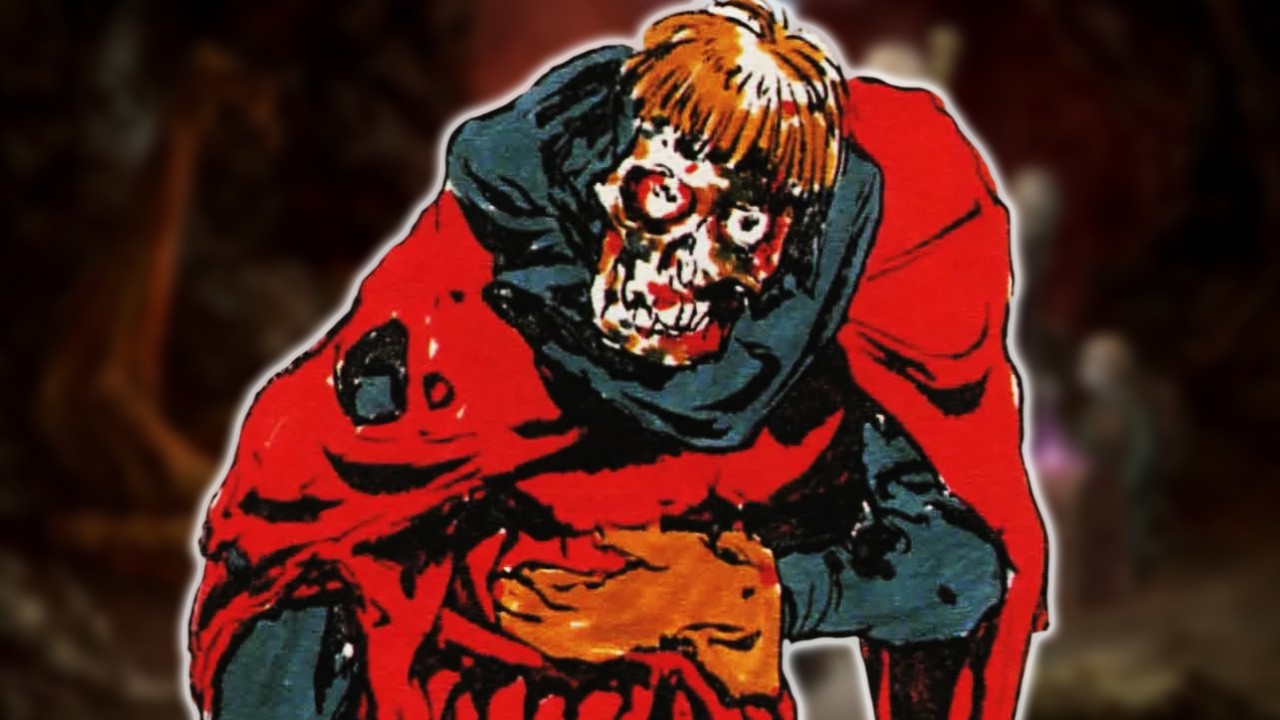
[Writer's note: Since this article went live on Friday, June 12th, 2026, I've added an exclusive interview to the piece, with Paul Murphy himself. Enjoy!]
Researching old games, it can sometimes be hard to break new ground, with pretty much everything that can be dug up seemingly having already appeared in some old magazine, website retrospective, or YouTube video
But rather than give up on the quest entirely, I like to think of this as a bit of a personal challenge, poking me to prod around the unexplored edges of a game's history, to try and provide readers with new perspectives and new information — stuff that has somehow miraculously stayed buried, despite the many years of research and obsessive fan investigations.
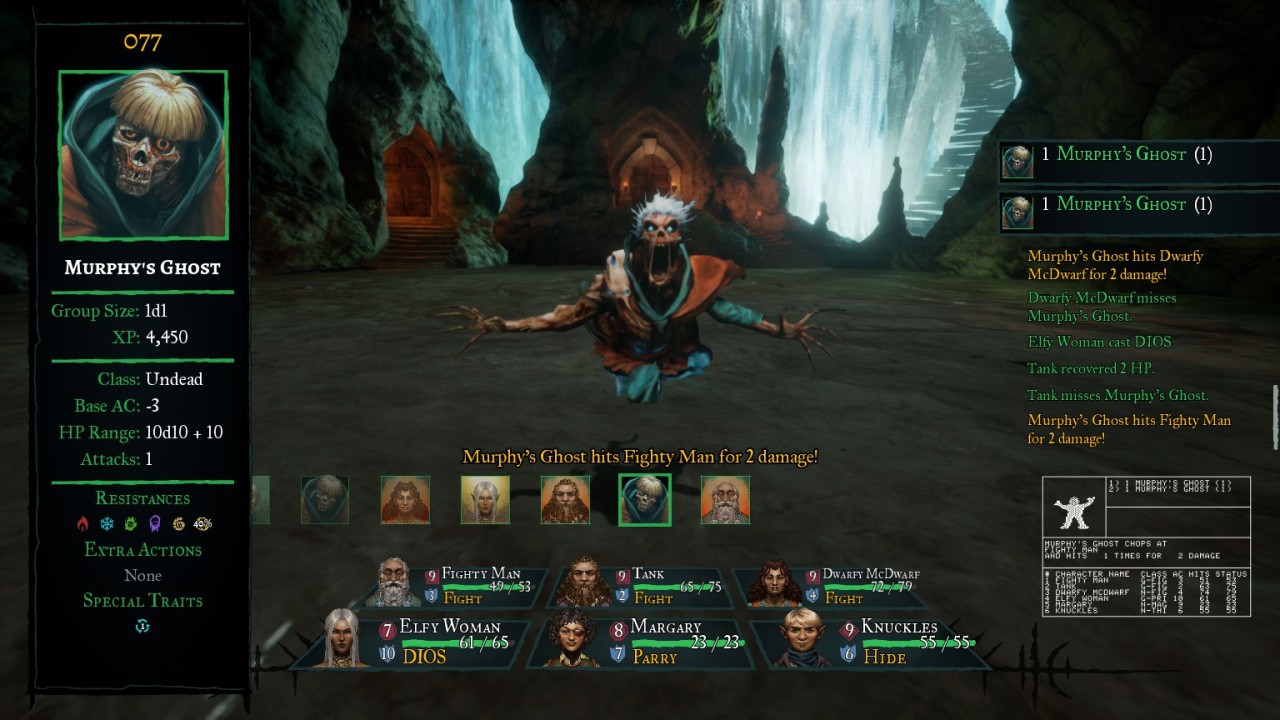
This brings us to my recent research into Murphy's Ghost, one of Wizardry's earliest and most iconic enemies.
If you've ever played the original Wizardry, whether that's the Apple II version or the Digital Eclipse remake, you've likely heard of this character at some point.
Initially residing in a hidden alcove on the first floor of the dungeon below Trebor's castle, he is summoned early on by interacting with a strange altar and is often recommended by players as a useful way to quickly level your party due to the large amount of experience he grants upon defeat. Because of this, some suggest he might even be "the first enemy in any videogame that players actively sought out for the sole purpose of grinding/farming," with the character arguably a predecessor to the Metal Slimes in Dragon Quest. In fact, so famous was this technique that decades later, it was still being referenced in games, with Star Ocean: Till the End of Time containing an amusing Easter Egg, in which a character called Puffy baulked at being named Murphy, replying that she is not some law or 'some pesky ghost for racking up experience points."
In the past, when I interviewed Robert Woodhead, one of the co-creators of Wizardry, for a Making Of on the game, he confirmed a long-running fan theory that Murphy was named after some friends of his collaborator Andrew Greenberg: the testers Paul and Helen Murphy. This got me wondering: are Paul and Helen still with us today? Did they know about this amazing legacy they had left behind in games? And what might they remember from Wizardry's creation? So, I set about trying to track them down, to see whether I could find answers to these questions.
Tracking Down Murphy's Ghost
Given how common Murphy is as a surname, I knew I probably had my work cut out, but it was only when I pulled up social media like Facebook that I realised the true scale of this challenge. My initial search, for instance, turned up a ton of potential candidates, with no real way to verify they were the right person without going to the effort of sending messages to hundreds of people.
So, I decided to try a change of tactic and began looking for ways to narrow my search, remembering a few details that Woodhead had mentioned about the Murphys that could help disqualify people from the list:
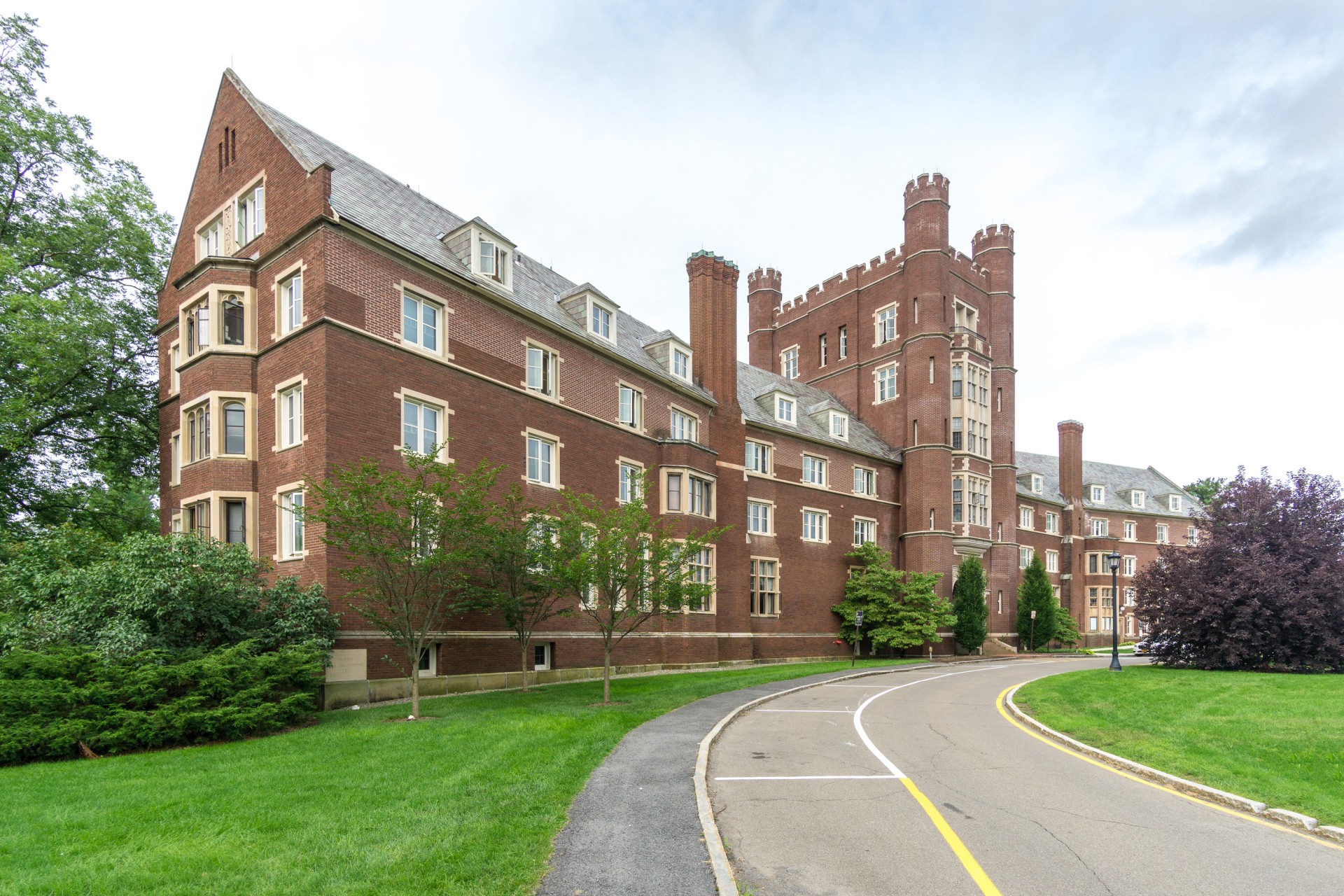
"Andy lived at a special dorm at Cornell called Risley. And Risley was focused on the performing arts. It was this really old building, and so everybody at Cornell who was into performing arts really wanted to stay at Risley. So he lived at Risley, and all of his roommates and floor friends knew he had a computer. And that was kind of a rare thing, so he was a popular guy. And because people like to play games, when he started writing this game, it was only natural that his friends would test it and play it and tell him how good — or bad — it was. I think the nickname for them was WARG — the Wizardry Advanced Research Group."
As Woodhead stated, both Paul and Helen had not only attended Cornell but also lived at Risley, suggesting that they were interested in, or held degrees in, fields related to the performing arts. So I set about searching again for artists who had attended Risley, and came across something I was hoping I wouldn't find: an obituary for someone who matched Helen's description, who passed away in 2005. This Helen was described as "a Cornell graduate" as well as "a painter, sculptor and amateur musician," suggesting it could be the same person Greenberg knew while at Risley, which made me worry that I might potentially be too late.
Reading over the details on the site, however, I spotted a potentially interesting clue: the state and township where the Murphys had lived. With this information in hand, I continued my search and eventually came across a New Jersey improv group called The Lunatic Fringe, which featured a performer named Paul Murphy with "For Helen" in his bio. Believing this to be the right person, I shot him both an email and a message on The Lunatic Fringe group page and waited for a reply, eventually receiving one not long after:
"Yes, I am that Paul Murphy, amazingly. What would you like to know?"
Inevitably, upon reading this, I felt a flood of excitement and inundated Paul with a large number of questions: How did you first meet Andrew Greenberg? Do you have any memories of seeing Wizardry for the first time? Did you have any role in Murphy's Ghost's creation? And the list went on. Luckily, this sudden flurry of questions didn't put him off answering, with the former tester setting the record straight about his involvement with the Wizardry series and providing some additional cool details I'd never heard of before.
"I met both Andy and my future wife Helen at Risley, a dorm for the fine and performing arts," wrote Murphy, confirming Woodhead's story. "I read some of your Wizardry articles on the magazine's website. It's interesting to see the Siroteks' and Robert Woodhead's memories of that time. I am still in touch with a number of people who also play-tested and had some hand in some of the original programming and the later games. I am also still in touch with Andy's widow.
"As much as I love and miss my wife, she did not play-test, and when Andy was working on the game, her name was not Murphy then (although I suppose it was obvious it would be), so Murphy's Ghost was named after me. There was also a monster named Bleeb, named after another friend, and the Tavern, originally Gigamesh's (no L), was named for a third friend, sadly gone from us, but I see his wife, also a Risleyite, all the time."
He continued, "Andy was one of my best friends; we had played Adventure together on the school's computers, and occasionally Oubliette on the Plato, so it seemed only natural that he would ask me to test his game.
"The original Wizardry was a one-character version, with magical items like an Oreo Cookie and a hot Ham and Cheese sub. Andy put in the (as you say, very useful) Murphy's Ghost without consulting me, and I was very flattered. I have heard various things over the years about Wizardry resurfacing from time to time, and that it was being redone online, so I am not entirely surprised to hear about it again. I have had a few chance discussions with people who remember the original, but you are the first one to seek me out."
This message alone was fascinating to me and something I ended up sharing with Wizardry fans almost immediately, announcing that I'd managed to track down Murphy, once and for all. But I also felt that there was potentially more to learn from Paul. So I arranged to chat with him at a later date, carrying out a more straightforward interview with the man that you can read below:
A Conversation With A Ghost
Time Extension: Do you remember how you met Andrew?
Murphy: Not really. I mean, I moved into Risley in my sophomore year. And as I say, it was a dorm for the fine and performing arts, and Andy lived there. He was also a musician. He actually conducted the orchestra when we did A Funny Thing Happened on the Way to the Forum in the theatre in our dorm.
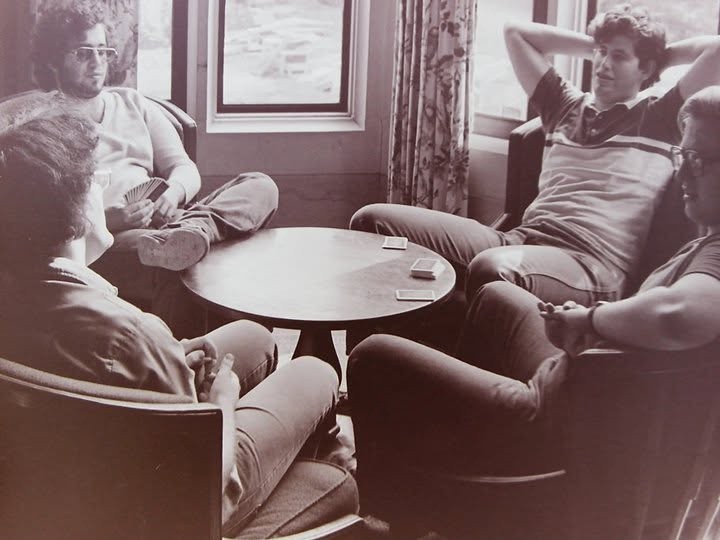
A lot of times, you'd sort of meet people in the central living room. I know I've had pictures of us playing bridge. So, we might have asked him if he played bridge so we could have a fourth. We also played poker together. I'm pretty sure I knew him, though, by the time we did the Primal Scream contest.
So, no, unfortunately, I don't really remember exactly when I met him. It was early in my sophomore year, so that would probably have been in 76.

Time Extension: That reminds me of something that I wanted to ask about. One thing that I've heard is that Andrew was working on his own Dungeons & Dragons game for Apple II before meeting Robert Woodhead at Cornell. I'm wondering, what are your memories of that? I think Andrew once mentioned in an interview with Wizinews that he started working on a game because he was bored, and someone suggested he put D&D on the computer.
Murphy: I don't remember that. But as I told you, we were playing the text-based game Adventure on the Cornell computers, and we were also playing Oubliette and actual Dungeons & Dragons.
Now, there are thousands of books on how to play Dungeons & Dragons, but back then, Andy had the dittoed purple-and-white thing from Gary Gygax, who was the original creator of the game. So when we played it, we had these printouts someone had gotten from somewhere, and there were also notebooks, too. From what I recall, at some point, Andy decided that he wanted to put it onto his Apple II.
Time Extension: Were any of the other people in that friend group into computer programming?
Murphy: I mean, everyone was kind of interested in the computers, but they were very new. So, not many people had them. Andy had one of the first ones. I'm sure we ended up buying ours because of him. But, of course, Andy was very smart; he went into computer programming. So he was kind of ahead of a lot of us — not all of us, but a lot of us.
Time Extension: I've heard from Robert Woodhead that Andy's initial version was in BASIC and much slower than the final version. Do you have any memories of this early version?
Murphy: When Woodhead came in, as far as I remember, Andy had already made a Dungeons & Dragons-like game. He had this very basic one-player game and wanted people to test it. So a lot of us came into his room, often when he wasn't there or when he was asleep, and sat there for hours and hours playing on this one character game. In fact, I just talked to my friend Bill Bensburg, who was also there, and he said he helped with some of the mathematics for the 3D view.
But because this game was just for himself and his friends, he hadn't thought up all these Dungeons & Dragons-sounding things for the magic elements. As I said, one of the magical weapons was a hot ham-and-cheese sub. Truthfully, though, from what I remember, the game itself wasn't that different in terms of the play. You went down, you killed monsters, or they killed you. I mean, the big change is that they turned it into a party rather than a single character.
Time Extension: I've heard that one of Andy's dormmates was Will McLean, who later did artwork for the early Wizardry manuals. I actually have a later copy of the game for the Apple II here; I can unblur my screen and show you some of the illustrations. It's kind of interesting, the difference between how the game was presented then and how it is presented now.
Murphy: Yeah, that brings it all back to me. I have the original game somewhere in the house, probably in the basement. I still have one of my Apple IIs, but it doesn't work anymore.
Time Extension: I also saw another person named Lee Drake comment on an article about Wizardry, saying they were also in the same dorm. I believe he said that his cousins were also involved in playtesting Wizardry.
Murphy: Lee and Will both lived in Risley.
I remember Will. Will was an artist. And I believe Will was also an armourer. If I'm remembering correctly, he sort of made that a career — do you know what the SCA is? The Society for Creative Anachronism?
Time Extension: Oh yeah, I've heard of that. I believe Richard Garriott, who created Ultima, was also a member.
Murphy: Well, Risley looked like a castle. And a lot of people in Risley were involved in the SCA, some very deeply; Andy not so much, but he knew all these people. And Will used to make the armour for their fights, which they had on the lawn in front of Risley. They would get rattan swords and cut off the ends of the oxygen tanks to make helmets.
Someone in the dorm asked once why they didn't wear football helmets. And one of the people in the SCA said, 'Do you have a football helmet? Bring it here.' He put the football helmet on the ground, took the rattan sword, and went, "Wham," and the football helmet just broke. He told them, 'That's why we have an armourer.' But Will went on to, I think, make armour for movies and things.
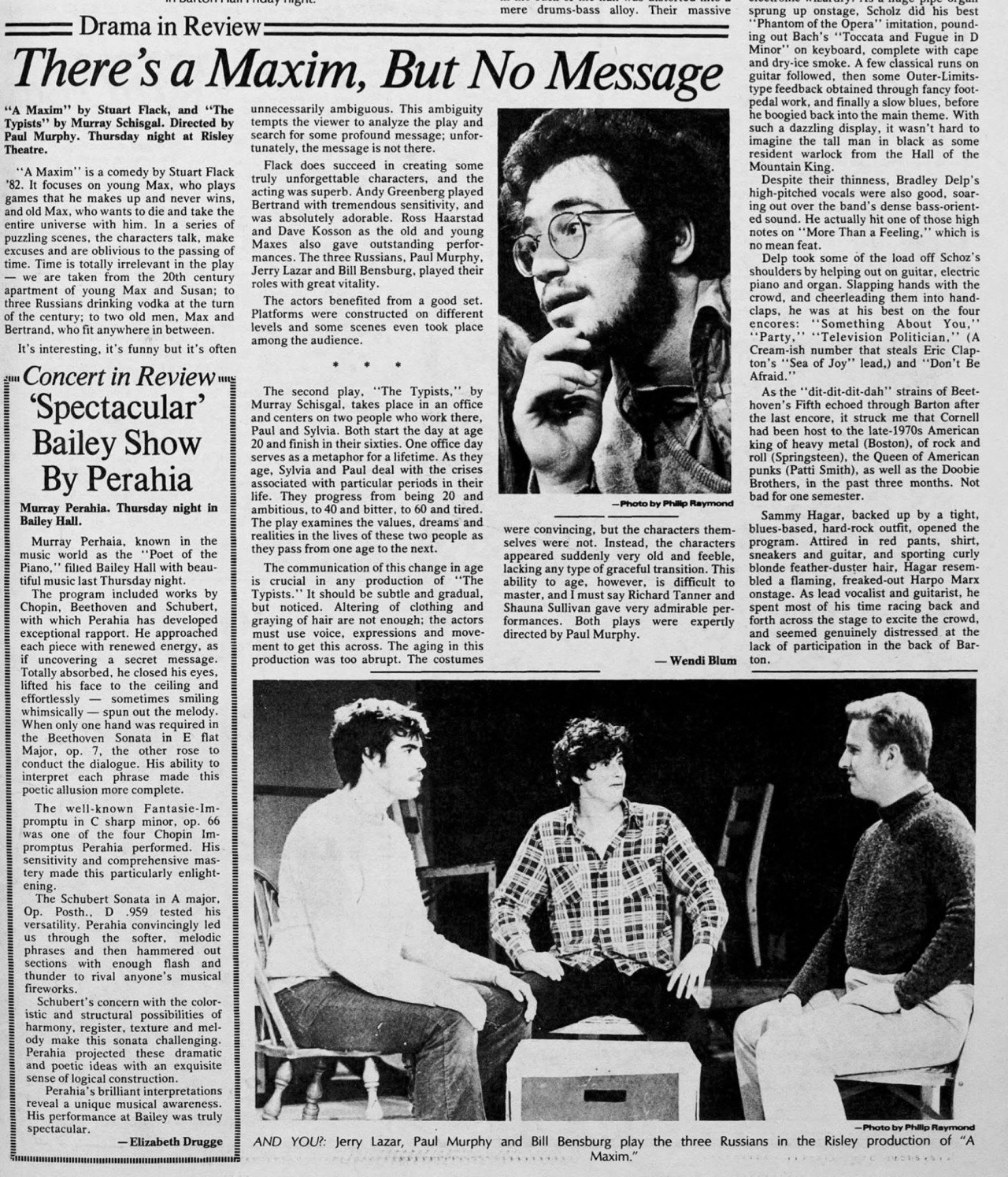
Lee Drake, I still see every once in a while. He's sort of in the business of helping businesses, as far as I know, and he was one of the early testers. But the very early testers were me, my friend Bill Bensburg, a couple of other people, and my friend Jerry. I mean, these are the people whom he named things after in the game.
Time Extension: Yeah, in your email, you mentioned another enemy named after one of Andy's friends.
Murphy: So, there was a monster called a Bleeb, and it was named after my friend Bill Bensburg, who was nicknamed Bleeb in high school. Also, the original tavern, Gigamesh's tavern (not Gilgamesh's tavern), was named after my friend Jerry.
Time Extension: Was that spelling intentional? Because that's something I've seen people correct in updates.
Murphy: It was intentional because Jerry, for whatever reason, was called Gigamesh. But his being called Gigamesh was due to a misprint. At some point, he was trying to do Gilgamesh and left out the L. So he became Gigamesh. So, Gigamesh is intentional in the game.
Time Extension: That's interesting. I've seen people say, 'Oh, Wizardry is full of spelling mistakes; we've fixed them.' One common correction is changing "Gigamesh" to "Gilgamesh". It's funny to hear that it was intentional. One other thing you mentioned was that Helen didn't do any playtesting. But she always comes up on the list of playtesters. I'm wondering, do you have any idea why she got lumped into that list?
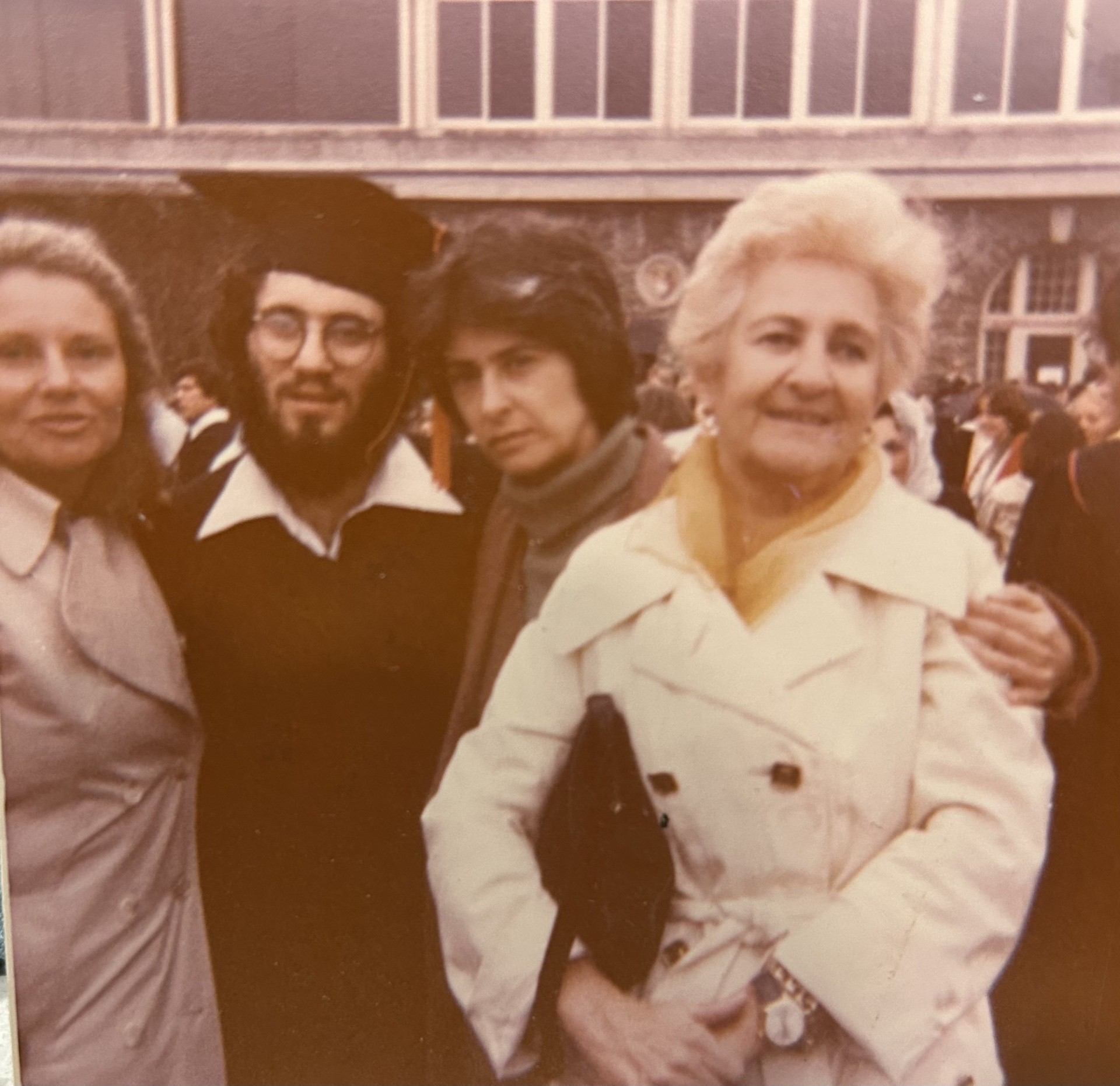
Murphy: She was certainly around. I mean, we were all a close group of friends. Unfortunately, she's gone now, so I can't ask her. But I don't remember her coming in and testing it. This may just be my memory, but I remember that for the original, I did most of the playing.
I was determined to get to the bottom of this dungeon and beat this game. Other people did play, but I spent a lot of time in his room playing the game.
Time Extension: In your original email to me, you mentioned that Andrew added Murphy's Ghost to the game without telling you. Did he tell you how to find it? Or did you discover it naturally through exploration?
Murphy: It's funny because I don't necessarily remember it as being difficult to find. But I do remember it as very useful, because it took a while to just hack at it, but you're not gonna get hurt that much, and you get a lot of experience points afterwards. Once again, this is almost 50 years ago, but I don't remember him saying, 'Look here, look at this.' So I must have found it naturally going through the thing.
And of course, he changed it as we played through it. He changed the names of things and everything. So you would come up to a point and say, 'Oh, look, there's a Murphy's Ghost,' and at some point, I probably thanked him.
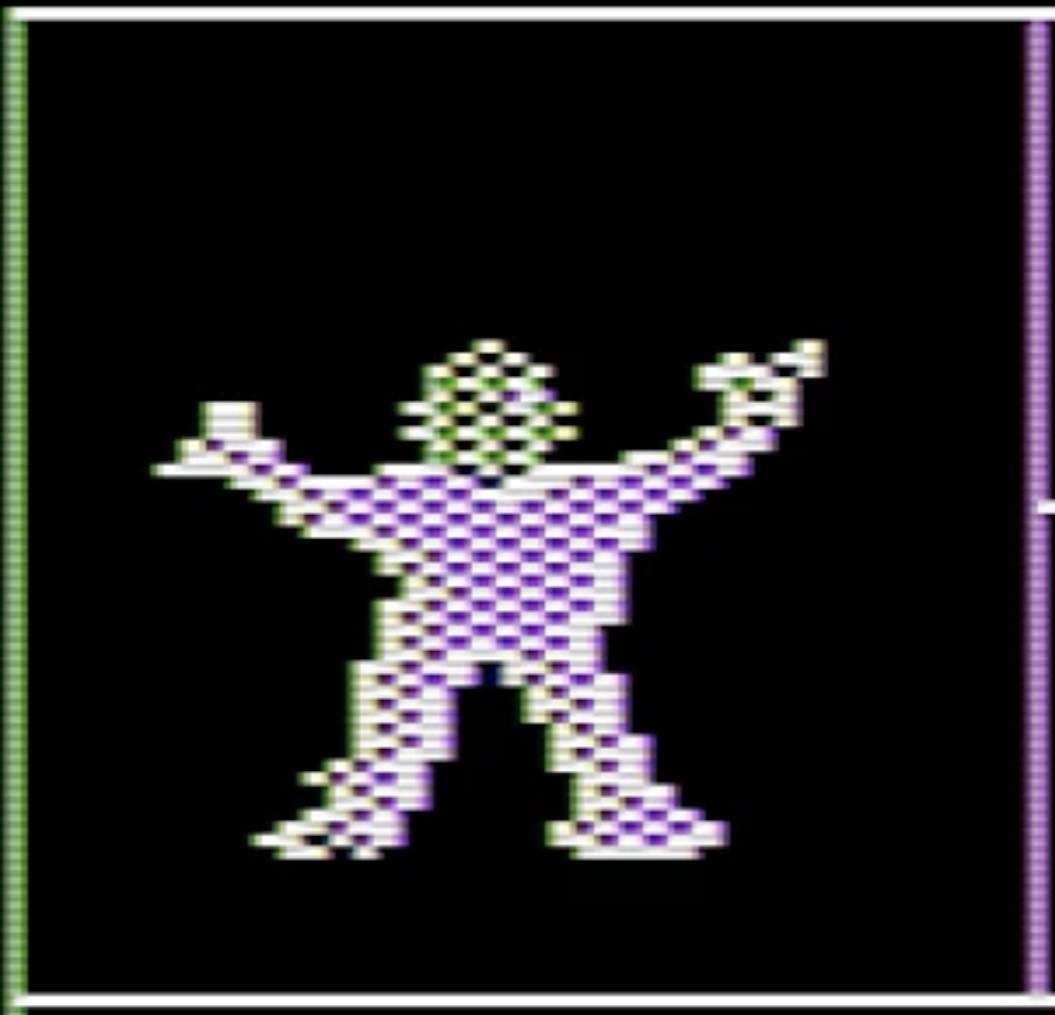
Time Extension: I also wanted to get your thoughts on how the character evolved. The original Apple II version of Murphy's Ghost is obviously very simple given the graphics available at the time; it's almost like a white, Casper-like thing. I don't know if you looked at the image I sent over of the later representation of Murphy's Ghost; it's almost like a medieval knight who's died. I believe a Japanese artist named Jun Suemi was responsible for this version.
Murphy: I did look at that. I was very surprised because, yes, as you say, Murphy's Ghost was just sort of a spirit-y thing.
It surprises no one more than me that there's a whole new look for the character. I knew how popular it was in Japan, but the length of time and the idea that there are people out there who still know what a Murphy's Ghost looks like — I mean, it was never based on what I looked like.
Time Extension: It's funny to me because there are even references to Murphy's ghost in other RPGs. There's a YouTuber/historian named St1ka, and he said it must be one of the earliest, if not the first example of an enemy purely designed for levelling up/grinding.
Murphy: That's fascinating to me. It really is. I even remember playing the game, eventually you got to a level where fighting Murphy's Ghosts was no longer good enough. You weren't going to get enough experience points at that level to be of any help anymore. But for those early levels, yes.
Time Extension: Considering your role, would you have been the first people to actually finish the game?
Murphy: Yes, tiltowait twice; that's what I remember from the first time finishing it. You use the game's most powerful spell, but it doesn't quite kill the evil wizard. But if you did it twice, that was enough.
Looking back, I think I may have been the first person to ever finish the game, but whether it was the one-player version or not, I can't remember.
Time Extension: You mentioned you may have some old Wizardry stuff. Something that came up when I was speaking to Robert Woodhead and Sir-Tech was that they brought a version of the game to the Boston Apple Fest in 1981, nicknamed the Dungeons of Despair.
Would you have playtested that? It was essentially an unbalanced version; you could meet the devil on the first floor, which is why they called it Dungeons of Despair. As far as I'm aware, no surviving copies exist.
Murphy: It's funny because it is certainly possible that I have a copy of that somewhere in the house. I'm pretty sure Andy gave out copies.
I mean, this is, of course, after we had left Ithaca in the 80s. When we were playtesting the original, it was after my sophomore year at Cornell, which would have been 76 or 77. So, sometime in the next three years, we would have been testing the original, and he would have been working on it. But we also playtested some of the later ones—I'm sure that is why Helen's name is on it. By that time, I had an Apple in my apartment in New York City. So they sent me discs, and I would play them.
Time Extension: It's funny you should say that. I was talking to Digital Eclipse, the company that did the remake. They said that they were looking for it. I think they thought Brenda Romero (formerly Garno), a tester at Sir-Tech, may have a copy. She doesn't, but she called it a Holy Grail item. I also asked Robert Woodhead, and he doesn't think anyone will find it. So if you do have it, that would be amazing.
Murphy: As I say, I don't know where it would be. But I'll be speaking later tonight with two of Andy's other friends that I've been talking about, and I can ask them.
Time Extension: It'd be fascinating to know if it still exists. We'd love for you to keep us posted about that.
Speaking again about Andrew, I'm curious, do you remember how he reacted to its success? Because, as you said, it seems to have been just a project to entertain his friends at first, but it obviously went on to become so much more successful.
Murphy: It became big enough, fast enough that they cranked out four more versions of it in quick succession. After it became a success, Andy did spend a bit of money. I remember he bought himself a very nice car.
Also, thanks to some of the things he did, he didn't have to work at one point, so I know he got into some serious bridge playing. Sometimes when I saw him, he would come to New York, call me up, and say, 'Let's go and join a bridge tournament.' I would go there, and he would teach me the bidding system right then and there. In fact, I think he even hired a grandmaster to teach him at some point. But then, of course, he started a company and put out the board game Star Saga.
Time Extension: Masterplay?
Murphy: Yes, Masterplay. And by that point, he had met Sheila, his wife. And she helped with some of the writing. I mean, Star Saga was in some ways before its time. It was a far-reaching sci-fi game with a lot of things you had to look up in the physical books you got with the game, and what they were trying to do was move it so all of that would be done on a computer.
But they were trying to do it before the computer had enough computing power to do all that stuff. So they were hoping to get the people who played Dungeons & Dragons, read all the books, and everything. But it didn't turn out. The game was very complicated and didn't sell that well. But I think someone bought the game and the company, and so Andy at least got a hunk of cash from that. Again, I probably have Star Saga in a bag somewhere.
Time Extension: I must admit, I haven't really seen a lot of this stuff. A lot of the histories I've seen tend to go straight from Wizardry to his career in intellectual property law.
Murphy: When it comes to his career in law, his father was a lawyer. As far as I know, his father was his first lawyer in the Wizardry lawsuit, who, I think, screwed it up in various ways, which ended up dragging it out for 20-something years. And you can't tell me he didn't become an intellectual property lawyer because of that lawsuit.
On the other hand, it wasn't the only thing he did in law. He became a partner at a law firm in Florida, and he was cited by the Supreme Court a couple of times. As Sheila told me, he was very goal-oriented, and he had reached his goal as a lawyer, so I think he kind of lost his way after that.
Time Extension: Despite no longer being at Cornell, you also playtested many of the later Wizardry games Andy worked on, at least up to V. As a final question, do you have a favourite looking back on the experience now? Is it still the first?
Murphy: I definitely have a soft spot for the first one. And truthfully, it's been 40-something years, so I don't remember much about the specifics of the other ones.

All I know is my friend Jess helped design some of the later ones, particularly V, but it is true that, thinking back on it, it was essentially a new adventure. However, nothing else was really new. I mean, the monsters were new, but the gaming system wasn't new. It was like some book series; you have the main character in a new situation, though it's not necessarily that different. I always found them fun, but I can definitely understand that complaint.
Time Extension: Thank you for speaking with us. It's amazing to hear your perspective after so many years. And it's incredible, after all these years, you're still working in the arts. Like I told you, that was one of the ways I was able to locate you.
I knew I was searching for a Paul Murphy who was interested in either music or acting. As always, though, it's possible that in the almost forty to fifty years since then, you might either have either retired or gone on to do something else.
Murphy: It's funny. I do improv in my natural life. I just try to be funny, but I'm in a group that is almost in its 30th year of doing improv out in New Jersey. Jerry Lazar was also one of the group's founders. It's called Lunatic Fringe. But I mean, I've also been acting on and off pretty much my whole life. So, starting off playing the Clock Tower in first grade.
Even when I was at home with my children, I would often do theatre at night. I've never been very good at pushing my own career. Think of a famous actor, but without any drive, that's me. I have worked with a number of wonderful people over the years. This past year, I did a show co-written and starring Tom Hanks. So that was a surreal experience. It's called This World of Tomorrow. It's based on a couple of short stories that Tom wrote.
His cowriter is someone I've worked with a lot over the years. So his cowriter called him up or sent him a message and said, 'Can I adapt some of these?' And he said, 'Go ahead,' and then he said, ' Wait a minute, why don't I help you?'
We produced an almost entirely different show a number of years ago in upstate New York, and then Tom said he would be in it. And we ended up doing it at a place called The Shed in New York. And there is a chance that it will be done again so that I may make my Broadway debut at the age of 70.
Time Extension: Wow! Well, we wish you the best of luck with everything. Thank you again!