
 by
by 
With Wizardry being in the news recently, thanks to Atari's acquisition of Wizardry I-V, it has had us thinking again about a lost piece of the series' history that even its creators now feel could be lost forever.
Before Sir-Tech released Wizardry: Proving Grounds of the Mad Overlord in September 1981, the company released a beta version, entitled Dungeons of Despair, into the market. This early version was sold exclusively at the Boston Apple Fest in June 1981 and was produced in small quantities for testing.
The exact number produced seems to be disputed, with the Wizardry co-creator Robert Woodhead estimating only 50-60 were made, while the Sir-Tech co-founder Norman Sirotek puts the number higher, at roughly 200. The idea behind the release was that players would be able to buy the game at the event, test it, and provide feedback to Sir-Tech, before replacing their copy when the finished game was released. Because of this, to our knowledge, no copies of the game have survived, with Digital Eclipse having failed to track down a copy in the past in preparation for its 2024 remake.
Speaking to Time Extension back in August 2024, Norman Sirotek told us the following about the beta version of the game: "Robert Woodhead wanted to get some product out in the market for testing. Back in those days, you had so many different computer configurations that you could put into your Apple II, like legend cards, other kinds of memory cards, and so forth. And we could not test every conceivable combination. It was just physically and mentally impossible.
"So he wanted to release a beta product into the market for testing purposes. And his attitude was, 'Why don't we go to the Boston Apple Fest show? We'll sell a couple of hundred copies, they'll pay for the show, and we'll get some feedback from users about the game bugs and configuration problems.' So we agreed and packed up the van. We went, set up a booth, and Robert was still making last-minute changes to the game. The evening before the show, we were in the hotel room, packaging copies in Ziploc bags. You put a copy of the manual in, the disk (which was 5¼-inch), and the next day we were selling them at the show."
Because of its incredible rarity, precise information about this version's differences from the later September 1981 version is limited, with some sources suggesting it only contained a handful of the final game's floors to explore.
Much like the finished game, players would create a party of adventurers and head into the dungeon, where they would explore an environment in first person, collecting treasure and battling enemies, however, the main difference seems to be that players could encounter some of the most difficult enemies, like the devil, on the very first floor of the dungeon, ensuring the company could test the game without risking players discovering all the game's secrets in one go.
"It was basically a test version," Woodhead told Time Extension in December 2024. "It just had a test version of the scenario database. that basically had everything in the kitchen sink in it, so we could test out functionality. So it wasn't balanced. I mean, you could run into basically the devil on level one and stuff like that.
He continued, "Our name for it was the Dungeons of Despair. Because you would seriously lose your cool playing the game. I seem to recall that we promised people we'd send them the final version of the game when it came out in return for them letting us know if they found any problems. We also didn't make that many copies because we had to make them by hand."
According to Norman Sirotek, this version of the game sold well at the event, and by the end of the first night, they were already receiving customer feedback about potential bugs, including a glitched enemy that reportedly made the game unbeatable.
"Within 24 hours, some users were coming back to us saying, ‘Hey, I’ve been playing the game. What is this unset monster?’" Sirotek told us. "We were like, ‘What?’ And Woodhead started looking at the code and realised, ‘Oh, this game is unwinnable.’ So, he actually modified the code on the second night to get rid of the problem, and we sold a few more copies the next."
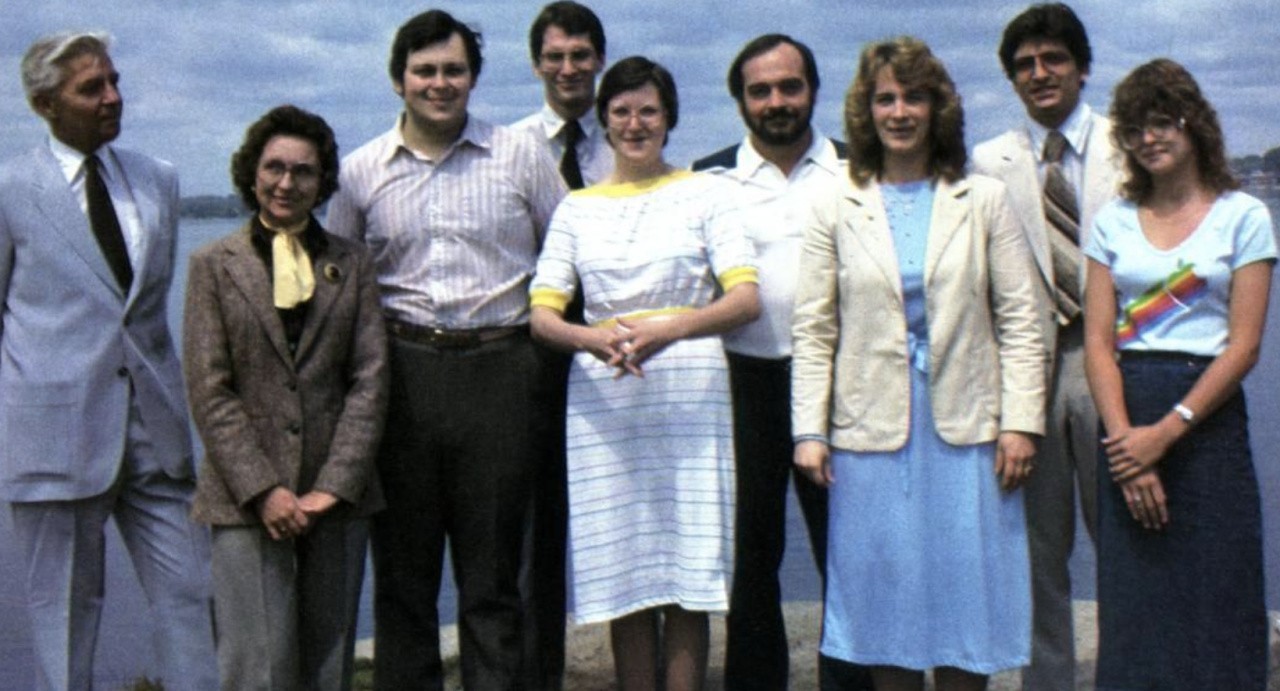
Interestingly, the same year we spoke to Norman Sirotek and Robert Woodhead, we also found ourselves talking to Digital Eclipse's former chief strategy officer and head of publishing, Justin Bailey, who played an integral role in getting the Wizardry remake off the ground, on two separate occasions.
He revealed to us that Digital Eclipse was actually trying to track down a copy of this beta version of the game, to which Norman Sirotek, who was on the same call, responded, "I don't know if you'll ever find that one."
In a separate conversation, Bailey suggested Brenda Romero, the designer of Wizardry 8, who previously started her career at Sir-Tech as a tester, may be the only person to have a copy of this extraordinarily rare version of the game. However, earlier this year, we confirmed with the developer that this, sadly, isn't the case.
"Oh, god, I wish," Romero told us at Dark & Doomy (a Game Republic-organised event in Wakefield, England dedicated to the ID Software classic Doom). "Dungeons of Despair? No, I'm not. That, along with the uncensored Wolfenstein, is on my holy grail list. I did have a Wizardry editor that was only available inside of Sir-Tech, so that's probably the closest to a super-rare thing that I got to screw around with. But Dungeons of Despair? No, unfortunately."
As far as we are aware, this means this early version of the game could now be lost forever, something its developer Woodhead has very little problem with, saying that, "I’m just as happy for it to be lost in the mists of the past."