
 by
by 
I first heard Nobuo Uematsu's music in 1997, when I was only five. To give you some background, I was standing in the hallway of my childhood home when my older brothers excitedly darted down the stairs, about to head to the nearest video game store to buy a mysterious new role-playing game they had read about: Final Fantasy VII.
Like many kids in the UK, I didn't know what a "Final Fantasy" was (only a small handful of the previous games had been released in the PAL region). But I could tell from the excitement in their voices that, whatever it was, it was something special that I didn't want to miss out on. So, as all annoying younger brothers do, as soon as they got home from the shop, I hounded them to let me sit in the room as they loaded the game into the PlayStation disc tray.
Taking my place in front of a TV, I waited impatiently for the game to start, thumbing through the manual in the meantime, when, all of a sudden, Uematsu's famous Prelude began to play from the TV's speakers, instantly hooking me with its iconic arpeggios. From that moment on, it's safe to say I was a fan, with the musician's work being a persistent presence over the decades that followed.
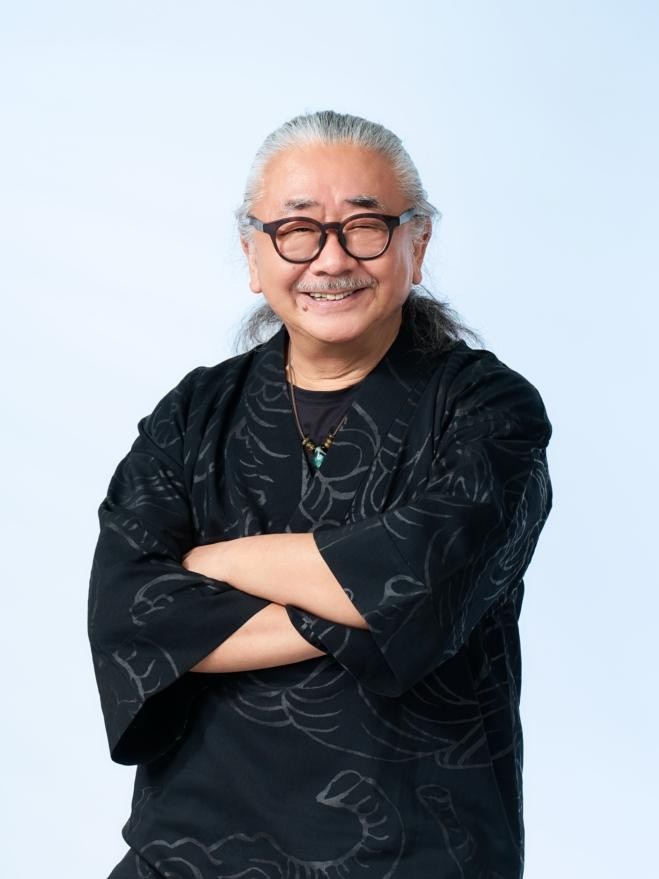
Earlier this year, with help from Japanese-to-English translators Stephen Meyerink and Liz Bushouse, I fulfilled a lifelong dream of asking the legendary composer some questions. Inevitably, because of his busy schedule, this exchange was only brief, but it set me on the path to a deeper study of the composer's career and influences. I dug through old articles, interviewed his former colleagues, and spoke to fans of his music like the composer Alex Moukala and Uematsu's biographer James Mielke, with the aim of uncovering what makes the composer a one-off in the world of gaming, his impact on others, and what he is up to now.
"I'm Kind Of Like A Stray Dog Who Taught Myself How To Compose Music"
Given the longevity of Uematsu's career and the breadth of his achievements, it only felt right to start by asking what makes him want to keep writing music at this stage in his professional life; to this, his answer was simple.
"[It's about] the joy of creating something myself," he tells me. "Something that did not exist in the world until I made it." This is a drive that has followed him through his career, all the way back to the days of his youth and his early musical experiments.
Born in Kōchi on the island of Shikoku, the smallest of Japan's four main islands, Uematsu had many different interests growing up. A keen Boy Scout in his youth, he spent a lot of his time outdoors, camping and building campfires, taking advantage of the region's natural beauty, but soon gravitated towards music at the age of 12, learning to play the piano without any formal training. By the time he was attending middle school in the early '70s, he already knew he wanted to become a musician when he grew up and soon began developing an eclectic taste in music by hanging out at his local record store (Kawamura Records). While others his age were listening almost exclusively to Japanese pop, he instead found himself developing an admiration for overseas artists like Elton John, The Carpenters and Simon & Garfunkel, as well as progressive rock bands like Pink Floyd, Genesis, Emerson, Lake & Palmer, and King Crimson (all of which influenced his later work).
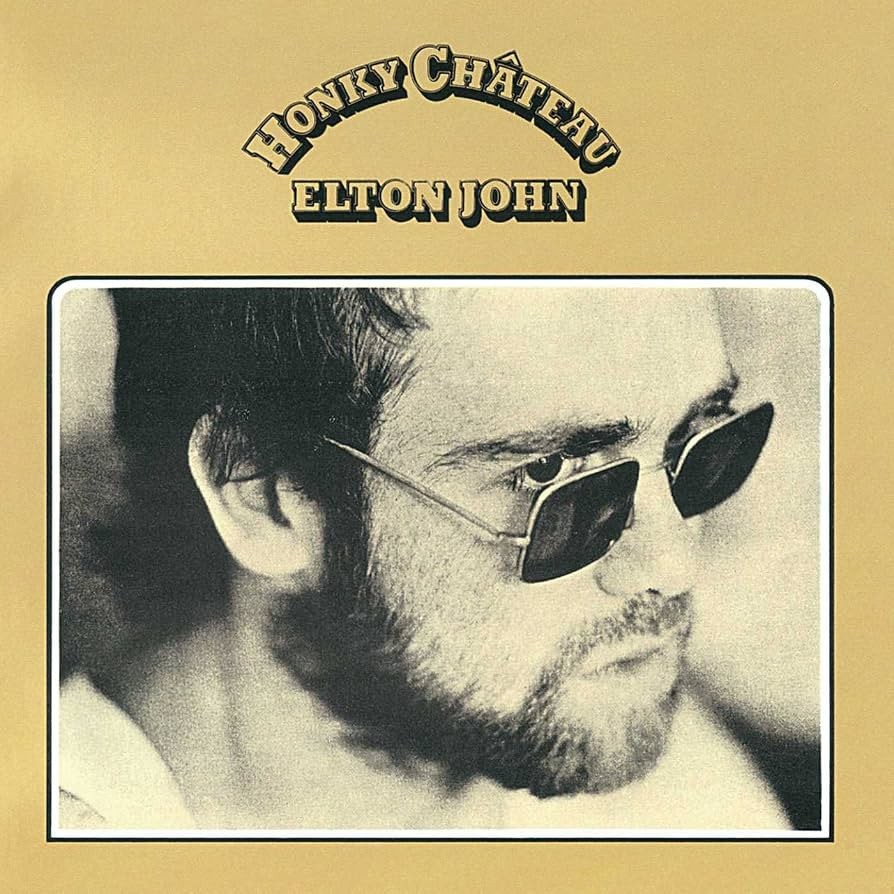
Speaking to the Red Bull Music Academy back in 2014, Uematsu said, "The first record that I ever bought was Elton John’s album Honky Château. It gave me a great shock as a young man. I thought about how wonderful it would be to do that kind of thing as a job. Honky Château had a big impact on my life.
He continued, "At the time, I was 24 or 25, I wanted to work in music, but the world wasn’t forgiving enough to allow someone with no connections, ability, or experience to get a job like that. I knew I wanted to do something, so I made demo tapes every day and sent them to record companies, but I couldn’t get near a job."
In the past, Uematsu has mentioned on several occasions that he never specifically set out to compose music for video games, as when he first applied for jobs the genre of "video game music" didn't necessarily exist. Instead, as a fan of movies, he had dreams of composing music for films but again struggled because of his inexperience and lack of industry connections. As a compromise, he therefore took a position at a music rental agency to bring in some money while he kept knocking on doors, surrounding himself with other musicians he could learn from in the meantime. It was this position that eventually led to a chance encounter with an employee at Square, a small Japanese game developer based in Tokyo, which would end up hiring the musician.
At Square, his first job was as a freelancer arranging Takashi Uno's soundtrack for the PC-8801 game Cruise Chaser Blassty, for a Sonosheet (a type of vinyl record often used for sales promotion at the time), but he soon followed this up with several soundtracks of his own. This included composing music for Japanese home-computer games, like Alpha, King's Knight, Suishō no Dragon, and Square's “stereoscopic 3D” Famicom titles Rad Racer and 3-D WorldRunner. It wouldn’t be until his work on the early Final Fantasy titles for the Nintendo console, however, that he would really begin making a name for himself in the industry.
For Uematsu, learning to compose for games was a definite learning curve, with the Nintendo Famicom having only five channels for both music and sound effects: a square wave, two triangle waves, a noise channel, and a DCPM (Delta Pulse-code Modulation) channel for samples. Nevertheless, he embraced the challenge, learning to compose for games by listening to other video game composers, such as Dragon Quest composer Koichi Sugiyama and Mario composer Koji Kondo.
Talking to JASRAC (the Japanese Society for Rights of Authors, Composers and Publishers) in 2025, Uematsu reflected positively on the experience of writing music for the Famicom as follows, stating, "I had a lot of fun figuring out what I could do with three electronic sounds; it was like playing a video game! I'd listen to music from other composers to learn what kinds of tricks they used, then try a bunch of unusual things, like using arpeggios instead of typical chords, or alternating between major and minor.
"I'm kind of like a stray dog who taught myself how to compose music, so all my knowledge came from things I'd heard before."

Uematsu's technique of absorbing information from elsewhere undoubtedly worked, as he quickly demonstrated a mastery of the Famicom hardware, using its limited sound capabilities to create adrenaline-fueled battle themes, heart-wrenching melodies, and playfully silly pieces that would eventually become iconic in their own right. Growing increasingly confident in his abilities, he was inevitably excited to learn about the impending arrival of the Super Famicom and its enhanced audio capabilities, believing that with 8 notes to work with rather than 3, he could make music more easily.
However, once he got to grips with its capabilities, he still found it inconvenient to create the full-scale pieces he dreamed of, and soon discovered new challenges, including the struggle to live up to what other, more classically trained musicians were doing with the technology.
"He Is Truly One Of A Kind, Uematsu-San. For Me, In A Way, He's The Best Music Teacher There Is"
One famous story, for instance, that often comes up when discussing the soundtrack to the Super Famicom title Final Fantasy IV is that, during development, Uematsu was blown away when he listened to Yuzo Koshiro's music for Quintet's 1990 action platformer/sim hybrid ActRaiser and immediately began to fear that his own work was inferior. So, in response, Uematsu and the project's sound programmer resampled all the music to bring it up to scratch in just one week.
The resulting score is one Uematsu admits he's still embarrassed to listen to today, but has since been regarded as one of the best 16-bit soundtracks of all time, impressing not only his fans, but also his fellow colleagues inside Square.
"When I joined Square in 1991, the first job I was given was debugging Final Fantasy IV," the Secret of Mana and Trials of Mana composer Hiroki Kikuta tells me. "That was the first time I listened to Uematsu-san’s music. I was a gamer who mainly played arcade games, but I had almost never played consumer games; I'd never even played Dragon Quest.
"While debugging Final Fantasy IV, I listened to a lot of BGM, and among them, I was impressed by the field music. I wondered about it for a while, and later I learned that it was the main theme of Final Fantasy IV. I remember I was deeply impressed beyond words."
Throughout the '90s and early 2000s, Uematsu contributed music to further Final Fantasy titles, establishing himself as one of the company's most celebrated musicians and an important influence on the generation that followed; this includes the Final Fantasy Tactics and Final Fantasy XII composer Hitoshi Sakimoto.
"Since many game composers are people of around the same generation as me," says Sakimoto, "Uematsu-san is one of the few people who has been in the position of a senior to me. I don't think he intended this as advice, but he shared with me words that still remain in my heart to this day, such as what it was like to live life as a composer. In terms of music, he is a wonderful melody writer; I even had the opportunity to arrange several of his musical pieces. Through that experience, I learned the importance of melody and accompaniment.”
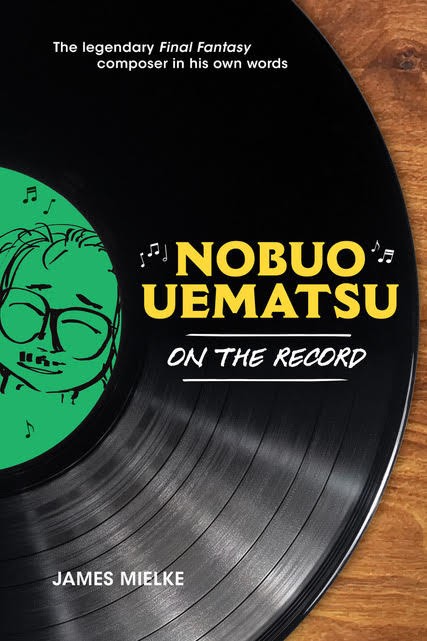
James Mielke is the author of the upcoming biography Nobuo Uematsu: On The Record, which releases next month. He has known Uematsu since 2007, ever since he did a profile of the musician, called ‘A Day In The Life Of Nobuo Uematsu,’ for the now-defunct website 1UP.com. He has interviewed the composer on several other occasions in the time since, regularly bumping into the musician on the streets of Tokyo and becoming close enough that his wife and "Mrs Uematsu" would often go on shopping trips together to Costco. He theorises that the reason why Uematsu's music has resonated with audiences is down to his ability to transcend platform limitations, as well as his non-traditional background and influences:
"I think a lot of it has to do with the fact that he writes memorable music that pairs well with the games we grew up playing," says Mielke. "It’s very evocative, and his skill lies in being able to do a lot with so little. It’s why his early work holds up to rearrangement, reinvention, and reinterpretation. If the melodies weren’t there, it wouldn’t matter, but his work holds up to the people who matter the most: His fans. He also never set out to make ‘game music.’ There wasn’t really much in the way of game music when he first arrived, so his influences come from cinema and progressive rock. I think that’s also a very interesting aspect to Uematsu-san." He isn't the only one to believe this, either.
Alex Moukala is an Italian musician who has been a huge fan of Uematsu's work ever since playing Final Fantasy VII and VIII on the original PlayStation as a kid, and originally built an audience performing arrangements of Uematsu's music. Over the years, he has met and interviewed Uematsu a few times and openly credits the legendary musician with inspiring him to pursue his dream of becoming a composer:
"His music is so deeply researched and expertly crafted, but never in a way that puts people off; rather, it invites you in. It was through him that I discovered genres like flamenco, 70s prog rock, jazz, electronic music, metal... and through his work that I discovered iconic artists like Genesis, Stravinsky, Jimi Hendrix, Kraftwerk, and loads more. He distilled gems and music references from his own voracious music listening and fine taste, and brought them to video games, exposing millions of gamers to such a wide variety of iconic music across time and different cultures. And most of all, he made it so much fun and captivating for people of all ages.
"As a kid, being on the receiving end of Uematsu-san's musical genius during my gaming sessions left me insanely curious, open, and entertained. It made me feel emotions I couldn't put words to, and it genuinely changed how I saw the world, and most especially, how I saw myself, especially when I discovered later in life that he, too, is a self-taught composer. He is truly one of a kind, Uematsu-san. For me, in a way, he's the best music teacher there is."
"He’s Really Into UFOs, The Occult, Ghosts, & Stuff Like That"
Thanks to his work in games, Uematsu has received many honours over his 40-year career, from a special award at the 2024 CEDEC AWARDS to even getting his own collaboration beer named after him. Over the last few years, however, the great composer has notably scaled back his work in gaming, telling the German publication Zeit Online in February 2024, "I don’t think I’ll compose music for a whole game again.”
To date, his last complete video game score remains the soundtrack to Mistwalker's 2021 Apple Arcade RPG Fantasian, directed by his longtime collaborator and Final Fantasy creator Hironobu Sakaguchi. However, he has contributed to a handful of other games in a limited capacity, writing and performing the main theme of Final Fantasy VII: Rebirth, "No Promises to Keep," and co-composing music for games such as Level-5's Fantasy Life I: The Girl Who Steals Time.
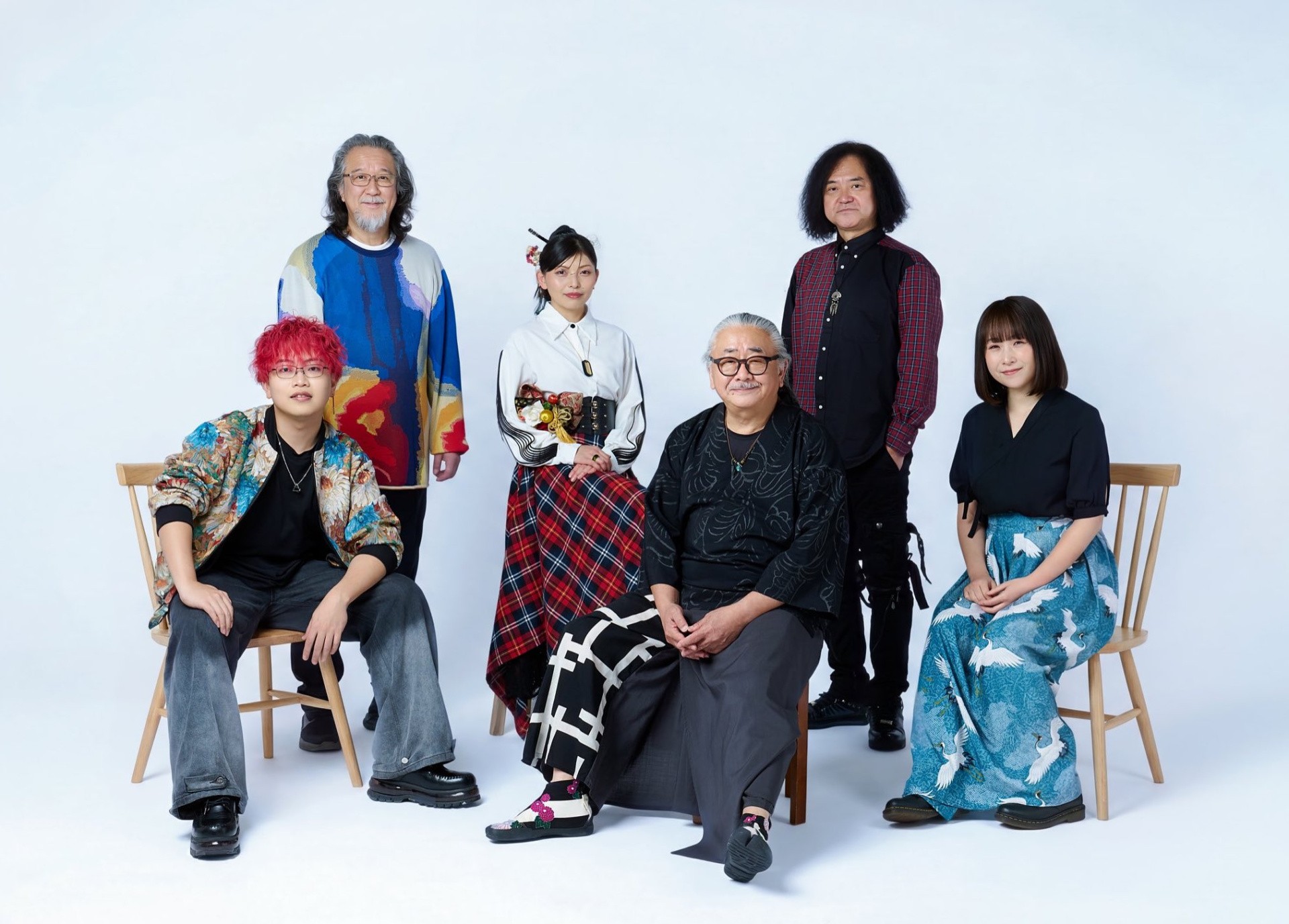
Some might assume this statement signals that the musician is finally slowing down, but the opposite instead appears to be true: the 67-year-old composer has only gotten busier of late, taking on more and more projects outside of games. In 2024, for instance, he created his "first orchestral work written specifically for the concert hall," Merregnon: Heart of Ice, and has also put together a new band over the last five years, called conTIKI, which is currently touring the world performing a mixture of Final Fantasy songs alongside brand-new compositions.
According to Uematsu, the idea for conTIKI first came up “about five or six years ago” when he was performing at “a small live house”. Initially, the group was just Uematsu on piano and the singer Xiao on vocals, performing songs he had written for Final Fantasy. However, they later added more members, and the band grew to six. Besides Uematsu and Xiao, the lineup now includes narrator Rie Tozuka, cellist Nubia, guitarist Michio Okamiya, and percussionist Chihiro Fujioka. Of these, the latter is probably best known to readers for having previously worked alongside Uematsu at Square, where he served as the director of Super Mario RPG.
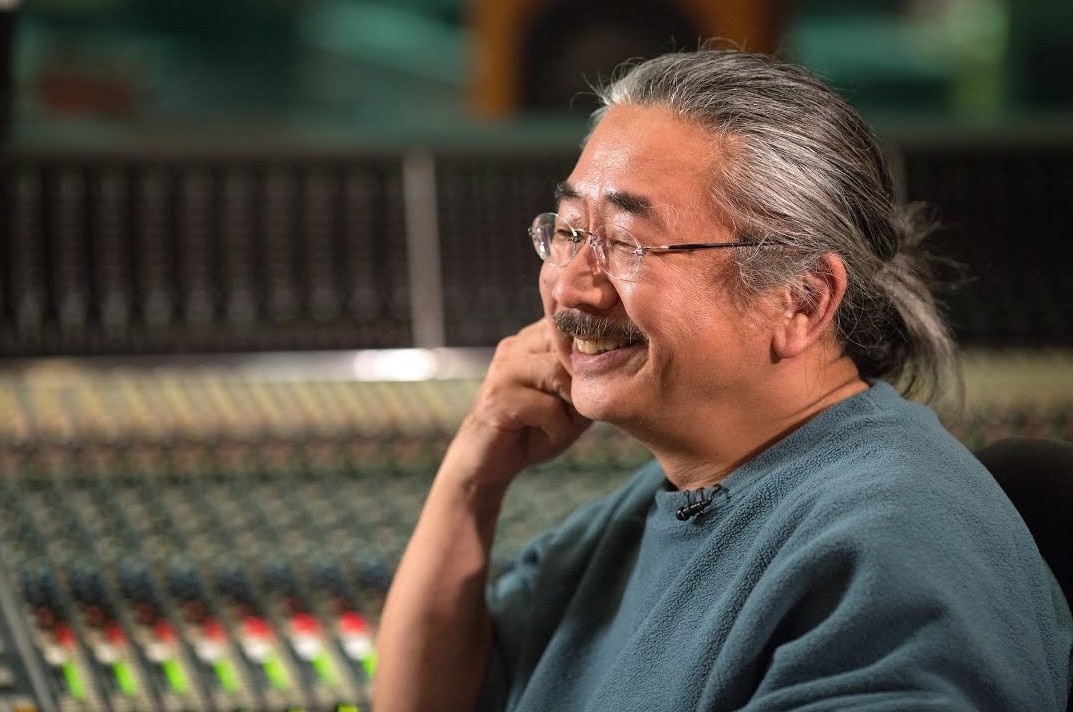
"[Fujioka-san and I] were colleagues when we worked at Square," Uematsu tells me. "There was one time when he asked me, 'Mind if I come watch conTIKI practice?', and I said, 'Of course.' On the day of the practice, he showed up with a massive number of percussion instruments. From that day forth, he was a member of conTIKI."
Obviously, with Uematsu having amassed an incredible number of tracks over the past four decades, whittling down a set list isn’t exactly an easy task, with the composer describing the process himself as "very difficult." Nevertheless, the composer tries to create a balance between songs he himself enjoys playing and tracks he knows the crowd expects from him, with two of the regular instrumentals that are performed as part of the set being Bran Bal, The Soulless Village from Final Fantasy IX, and Final Fantasy V's Battle at the Big Bridge.
Bran Bal, The Soulless Village, is a track that plays when Zidane and company visit the village of the same name on the planet Terra, on Disc 3. It is a haunting melody that lends the village an eerie, downtrodden vibe as you explore it and is one piece of music that Uematsu has personally admitted having a fondness for in the past. Because of this, Uematsu previously selected it for inclusion on his 2022 Final Fantasy arrangement album, Modulation. Battle at the Big Bridge, on the other hand, though heavily remixed, isn't one of the musician's favourites, but is played precisely because of the great reaction it receives from audiences.
Besides Final Fantasy music, another distinctive element of conTIKI's live shows is Tozuka's spoken-word recitations. These stories, typically accompanied by animation, focus on supernatural characters such as forgotten stone guardians, helpful kappas, and the son of the Grim Reaper, and previously formed the basis of a 2024 album that Uematsu crowdfunded on the Japanese website Campfire.
Speaking about why he wanted to include these live recitations in the show, Uematsu shares that they were initially conceived as “short films” and were developed (at least in part) as a reaction to the fact that it now “takes anywhere from one to a number of years” to make a game. As Uematsu tells me, “in that same timeframe”, he could create “around ten of these short films," all of which could be performed onstage quickly and efficiently, without the need to wait out a lengthy development cycle. Talking to Mielke, however, reveals that these also likely have their roots in Uematsu's fascination with the paranormal, something that is more thoroughly inside On The Record.
"He’s really into UFOs, the occult, ghosts, and stuff like that," says Mielke. "To the point that he’s taken extensive trips to other countries to satisfy his endless curiosity."
Earlier this year, conTIKI has performed shows in Japan, Europe, and North America, with additional dates booked for LA, Toronto, and Seattle. The reviews so far have all been universally positive, with Final Fantasy fans being introduced to another side to the creator, while getting to hear their favourite video game tracks performed live.
"I have seen Uematsu ConTIKI live five times now," says Hard Off Ambassador and retro enthusiast Alex Kraus. "I think anybody who has watched an interview with Uematsu or interacted with him knows he has a quirky, playful side that really comes through in the ConTIKI storybook-style songs. They're fun and goofy like the man himself. The band plays Final Fantasy music, yes, but the original songs also give them breathing room to have fun and enjoy themselves."
Jayson Napolitano, the founder of the video game music record label Scarlet Moon, meanwhile, says, "I loved hearing his original works, featuring his signature melodies and playful enthusiasm. It's heartwarming to see and hear an industry legend known for their service to larger multimedia projects express themselves in a way that is uniquely and only them."