
 by
by 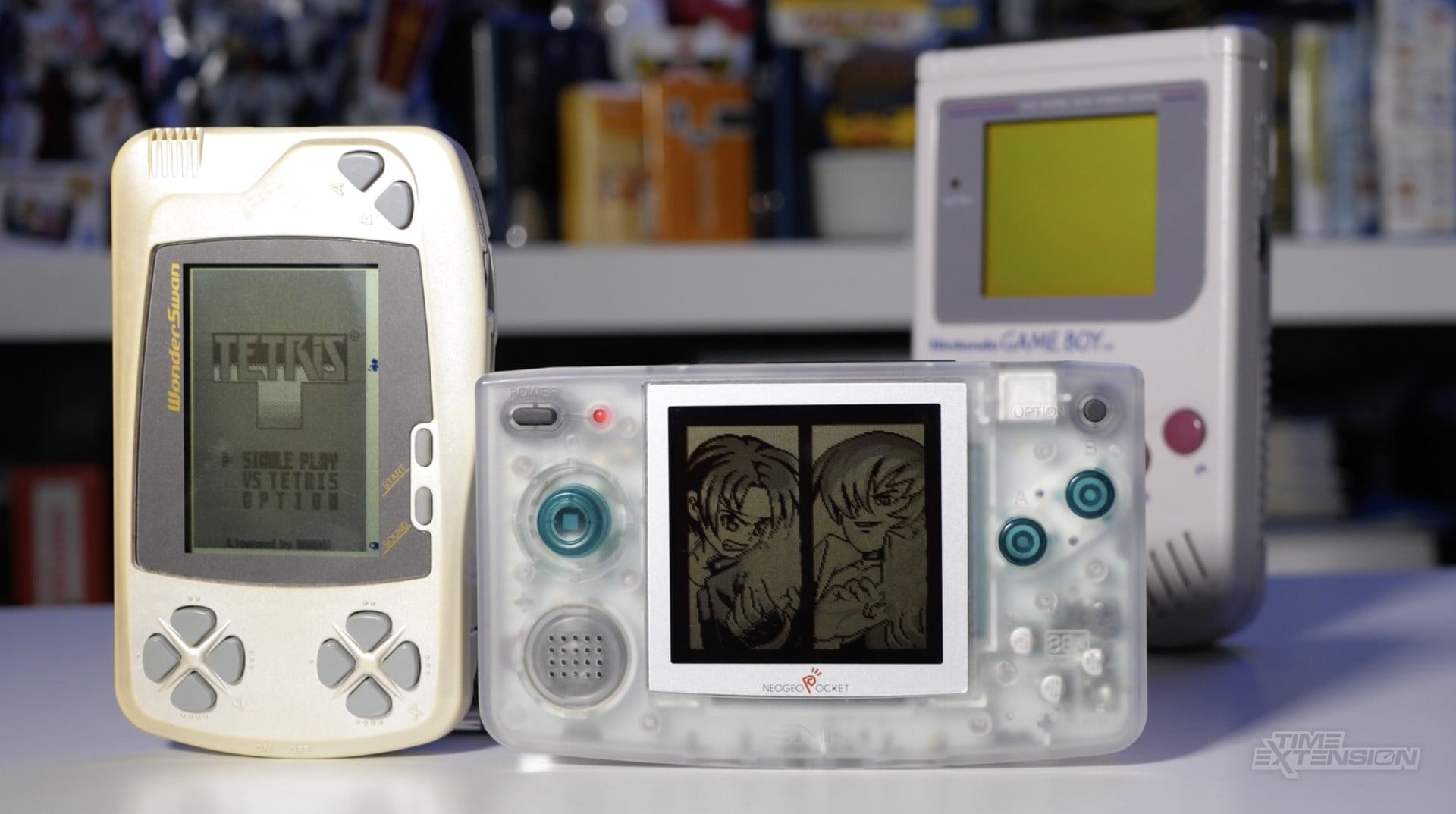
The Nintendo Game Boy was a commercial smash hit practically from the moment it hit store shelves. With its portable design, wide range of amazing games and modest battery demands, it would go on to sell millions of units across the globe – and enjoy an unnaturally long lifespan, thanks, in part, to the phenomenon that is Pokémon, which made its debut on the handheld in 1996, almost a decade after the Game Boy initially launched.
Nintendo didn't have the market to itself, of course; it was challenged in the very early stages of the Game Boy's existence by the likes of Atari, Sega and NEC – all of which unwisely assumed that superior technology would win the handheld gaming market. They were all incorrect; backlit colour displays were a massive power drain at the time, massively limiting the portability of the Lynx, Game Gear and TurboExpress/PC Engine GT – and their commercial potential.
Just as Nintendo was preparing to finally iterate on the Game Boy with the equally popular Game Boy Color in the late '90s, two Japanese companies decided the time was ripe to try and topple the Kyoto giant again. SNK, which was most famous at that point for its Neo Geo home and arcade system, released the Neo Geo Pocket, while Bandai – a toy company which had made significant inroads into the realm of video gaming – enlisted the help of Game Boy designer Gunpei Yokoi to design the WonderSwan handheld.
The Neo Geo Pocket launched in October of 1998, while the WonderSwan would arrive in March of the following year. SNK's system arrived in the same month that Nintendo released the aforementioned Game Boy Color – a fact which will have had a big impact on the swift development of the Neo Geo Pocket Color, which was pushed out to market in March of 1999 – five months after SNK had released its monochrome edition.
The Neo Geo Pocket's library only ever reached a total of nine titles, all of which are forward-compatible with the colour edition of the console (likewise, many NGPC games will run in monochrome on the NGP). Bandai would follow suit; it announced the impending arrival of the WonderSwan Color in the same year it launched the original model.
Looking back at this situation with hindsight, it's easy to see how both companies got caught out here. As we all know, you don't create gaming hardware overnight, and it's easy to see how the thought process within the management of SNK and Bandai would have gone – the monochrome Game Boy enjoyed a massive sales boost thanks to the arrival of Pokémon and the hardware refresh that was the Game Boy Pocket, both of which took place in 1996.
Plans would have been set in motion at that point, and the irony here is that SNK and Bandai clearly wanted to avoid making the same mistake that Atari and Sega had made by equipping their consoles with colour displays – the Game Boy's startling longevity proved that the general public was perfectly happy with black-and-white graphics, right?
However, this approach had the rug pulled from underneath it by the long-awaited announcement of the Game Boy Color, which employed what was cutting-edge reflective thin-film transistor technology to equip the device with a colour screen that didn't require a backlight. It was possibly too late for either SNK or Bandai to change course, so they launched with monochrome handhelds that were arguably overshadowed by Nintendo's fancy TFT-packing system.
I recall spending a small fortune on a monochrome Neo Geo Pocket when it launched in Japan, complete with copies of King of Fighters R-1 and Neo Geo World Cup '98. Likewise, I snapped up the WonderSwan when it arrived in the UK on import, choosing the delightfully bonkers Beatmania port as my first software choice. Both of these systems were swiftly traded in when the colour variants were released, leaving me feeling more than a little cheated thanks to my unsufferable habit of early adoption.
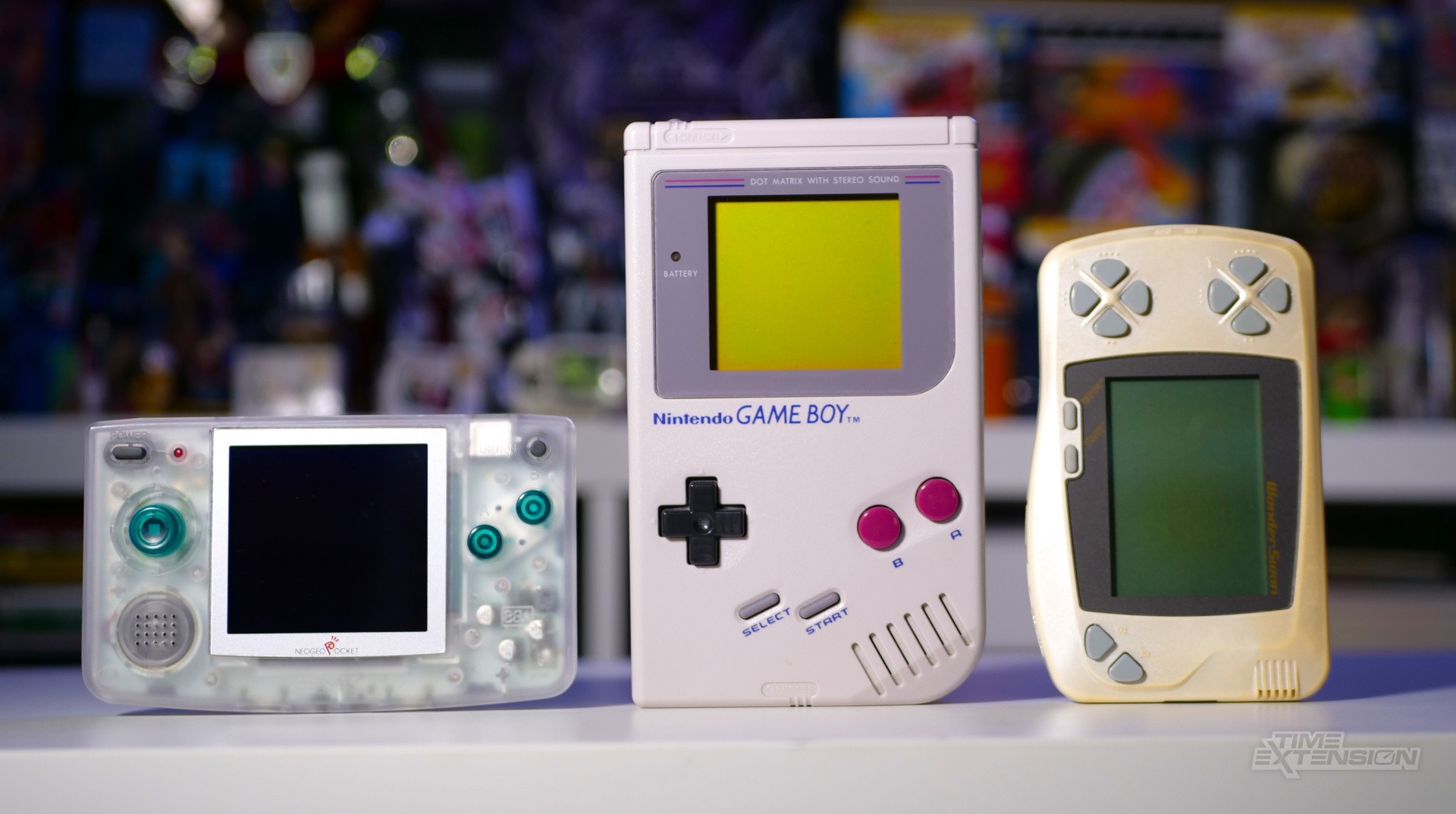
I enjoyed the NGPC and WonderSwan Colour immensely, however (the latter was upgraded to the SwanCrystal variant, which is a lovely little machine and one I still use today) – so it's hard to argue that SNK and Bandai completely failed in their mission. Indeed, the WonderSwan eventually sold 3.5 million units – hardly a figure that Nintendo would deem to be satisfactory, but not to be sniffed at when you consider it was only sold in Japan.
The Neo Geo Pocket, despite a global release and arguably superior software, didn't perform quite as well, with reports suggesting that around two million units were sold worldwide by the time Japanese pachinko manufacturer Aruze – which acquired SNK after it went bankrupt in 2001 – discontinued the device.
On paper, it's easy to dismiss both devices as commercial and critical disappointments, but both are still talked about in glowing terms by collectors today and, for many, represent a fascinating alternative handheld history to explore beyond the well-charted realms of Nintendo.
Still, it's tempting to ponder what might have happened had SNK and Bandai got their colour handhelds to market before Nintendo.