
 by
by 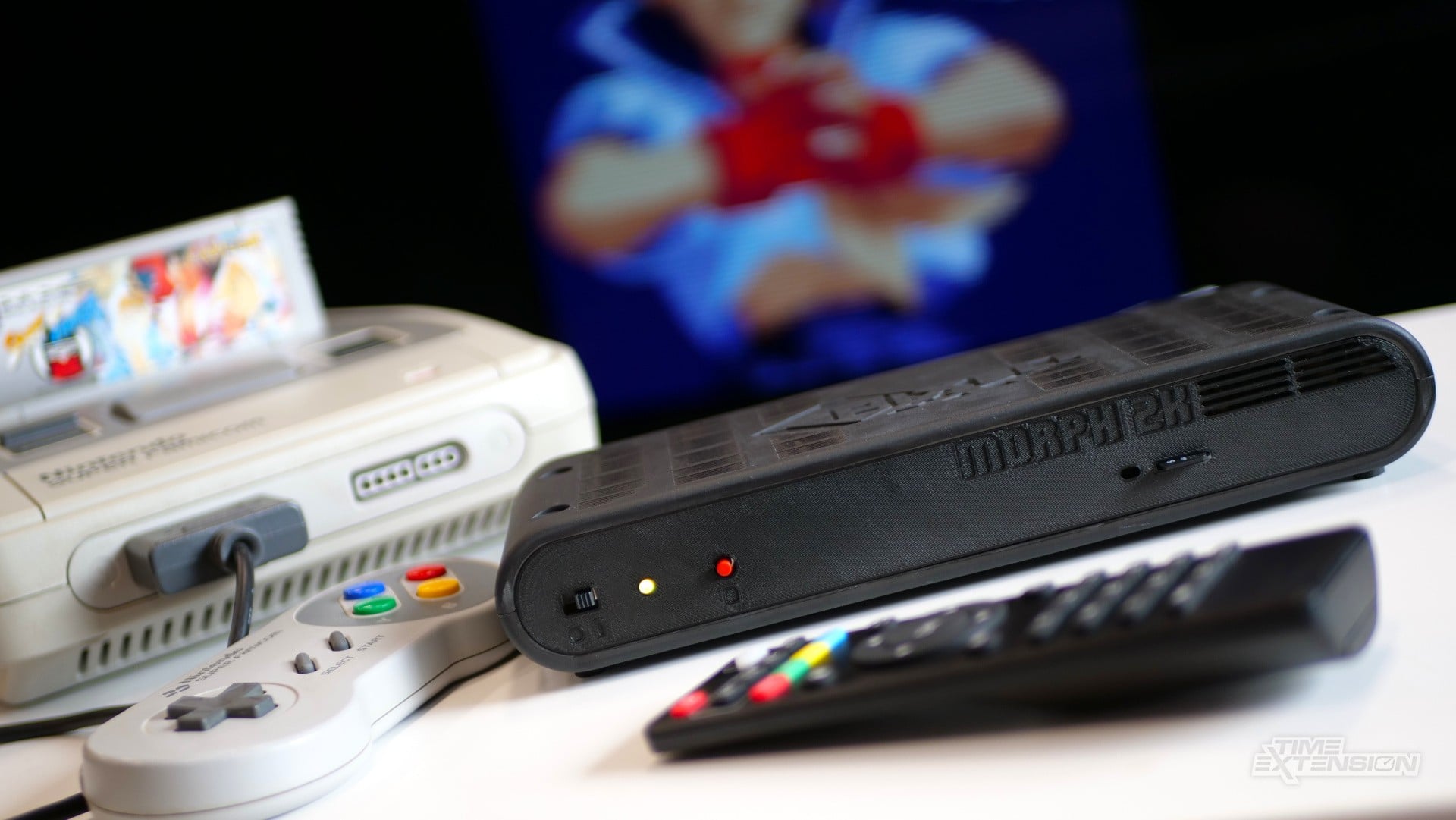
Lots of people still love to game on original hardware, and with good reason – if you're looking for the most authentic experience, returning to authentic consoles is arguably the best way to do it.
You get to use the OG controllers and accessories, and it allows you to leverage your existing software collection. This is why, despite the rise in emulation (both software and FPGA-based), many gamers continue to fall back on their original machines to obtain their retro fix.
Arguably the single biggest issue such players face (outside of the fact that their consoles are often in need of repair) is that almost all vintage machines output an analogue signal, and many modern-day televisions lack even a SCART socket.
That means you'll need to invest in a scaler of some kind to even get your original machine working with your new TV – but thankfully, the market for such devices has grown massively over the past few years.
Once upon a time, unless you could afford the legendary Framemeister, your options were limited, but nowadays we have companies like RetroTINK and Pixel FX operating in this space, giving the consumer a fair amount of choice. There's also the excellent OSSC (which continues to evolve thanks to its open-source nature), along with many other alternatives – although the cheaper examples are honestly not worth the bother.
A key concern with upmarket scalers has always been price; the RetroTINK 4K, for example, is considered the cream of the crop but costs $750. That's why Pixel FX's Morph 2K was treated with such excitement when it was first announced; it aims to deliver the same performance as the company's 4K model but at a $200 price point. That's $125 cheaper than the RetroTINK 5X, another 1080p-focused scaler.
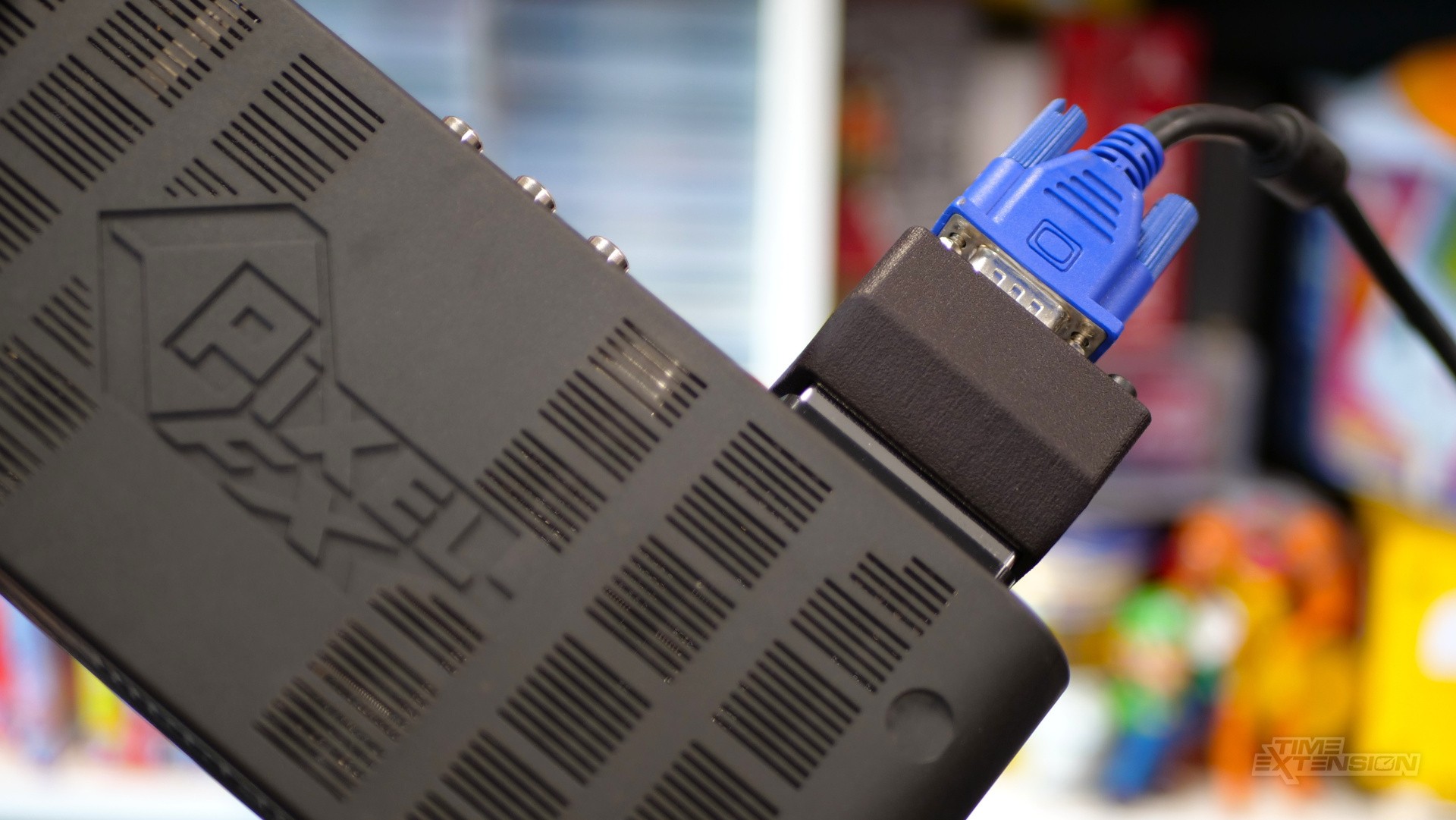
Cutting to the chase, the Morph 2K takes your low-resolution analogue video source and upscales it to 1080p/1440p HDMI at 60Hz and 4:4:4 colour resolution. Inputs include pretty much everything you could wish for, including SCART, S-Video, Component, Composite and even VGA (using a special adapter). It also supports both analogue and digital audio input via the same jack. When everything is hooked up, the device converts your analogue signal and then sends it to your TV via the HDMI port with minimal latency.
I tested the Morph 2K using a wide range of consoles, initially using those which output over RGB SCART. These included the Super Famicom, Neo Geo, Saturn and Mega Drive. The picture quality is a close match to that produced by the aforementioned RetroTINK 5X; pixels are sharpened nicely, and colour reproduction is fantastic. It's worth noting that the quality of your SCART cable plays a strong role in this (I use cables supplied by Retro Gaming Cables), but if you own a good cable, the end result is pretty fantastic.
The Morph 2K's ability to handle a wide range of different legacy signals is a real selling point; it even offers motion-adapting deinterlacing on 480i sources, so you can hook up systems like the GameCube and PS2 and achieve the best image quality you've ever seen from those platforms.
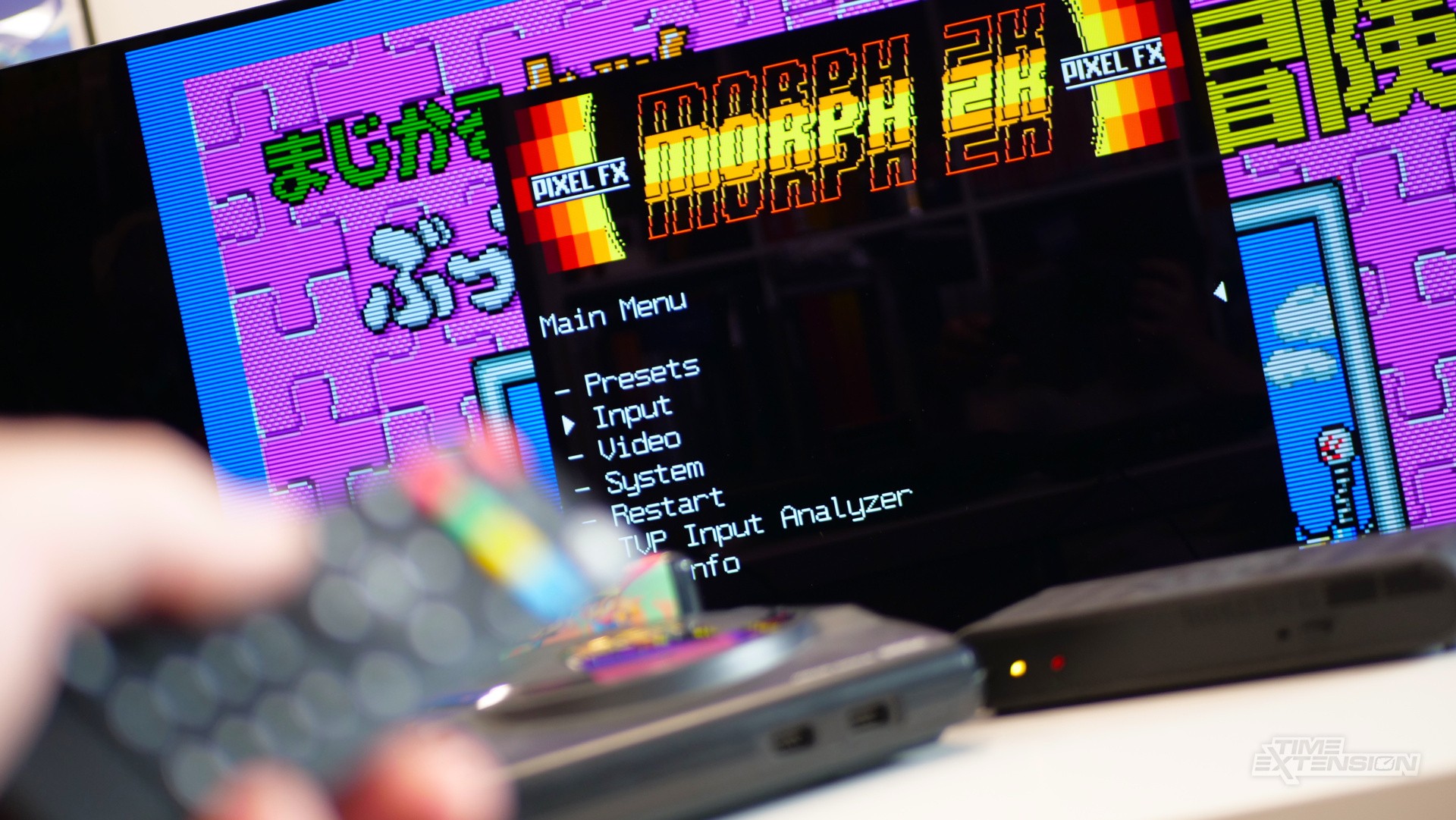
It is possible to add effects like scanlines to the image to achieve an even more faithful look; you can tweak their intensity to produce the look you're after. In fact, customisable image profiles are a big thing with the Morph 2K; these can be saved to a MicroSD card once you're happy with all of your granular tinkering.
Elsewhere, the Morph 2K's UI is detailed and easy to navigate, and the system comes bundled with a generic remote control for navigating the menus. One thing I really liked is the fact that the directional buttons on the remote are mapped to quick menus for things like profiles and scanlines, allowing you to quickly alter those settings without having to dive into the main menu. You can also connect the Morph 2K to your Wi-Fi for quick, easy firmware updates – as well as online control via the FX-Framework web interface.
On the downside, the 3D-printed case looks a little unsightly, but I can live with it given the device's low cost [Edit: Pixel FX has informed me that the final retail version will have a high-quality injection moulded case]. The main thing is that the internal tech delivers exactly what was promised, and there's scope for much more as the Morph 2K matures and gains additional functionality.
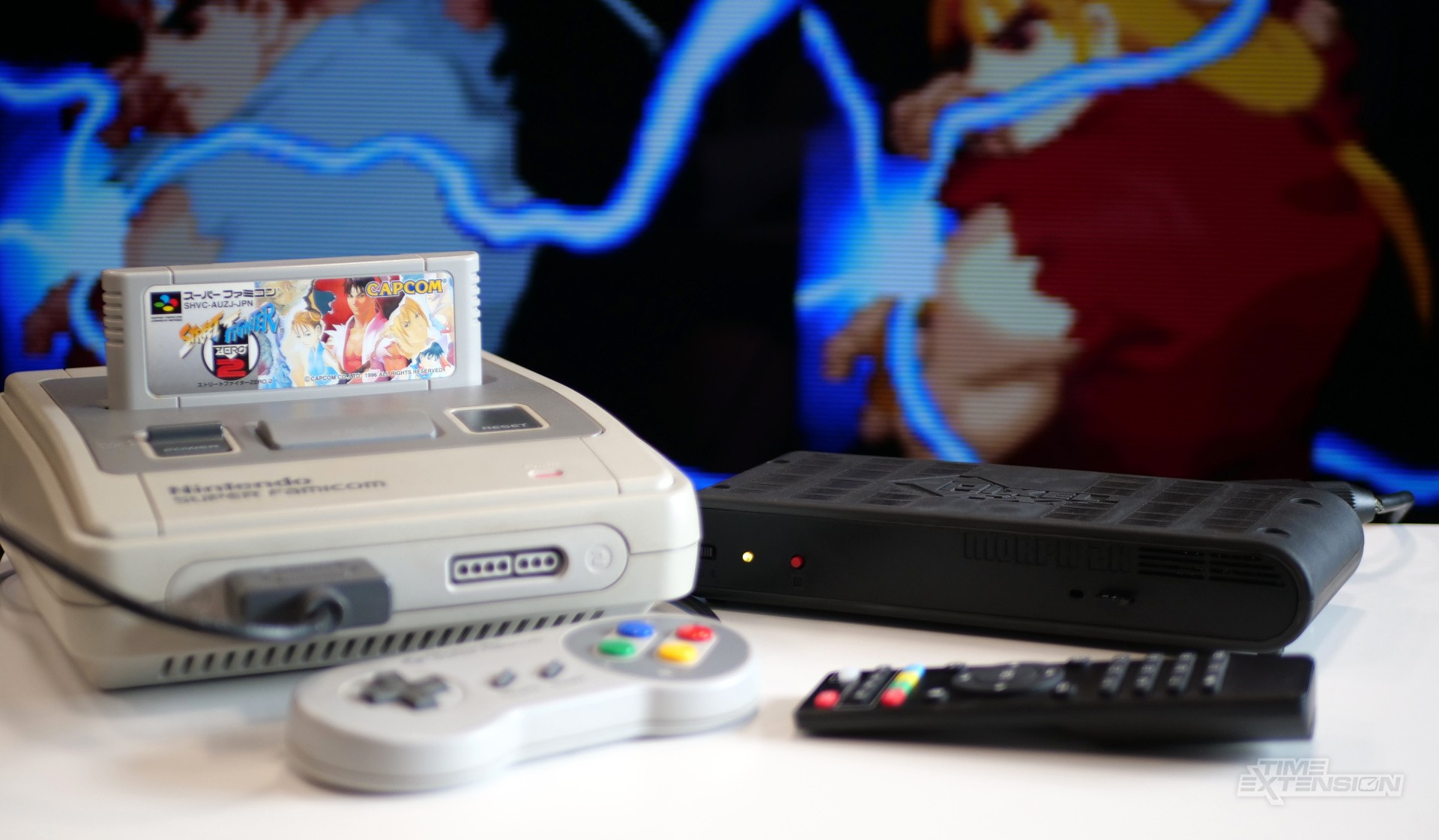
The elephant in the room at this stage is the RetroTINK 5X's recent firmware update, which has given that particular scaler some of the best features from its more expensive sibling, the RetroTINK 4K.
That update gives the 5X an advantage over the Morph 2K at this moment in time, but I would speculate that people who are simply looking to get a good-quality picture from their original hardware over HDMI might be better served opting for the cheaper Morph 2K rather than spending the extra cash on the 5X.
It all comes down to your budget. For $200, the Morph 2K really is an amazing value for money – and probably the best entry-level scaler on the market right now.
Please note that some external links on this page are affiliate links, which means if you click them and make a purchase we may receive a small percentage of the sale. Please read our FTC Disclosure for more information.