
 by
by 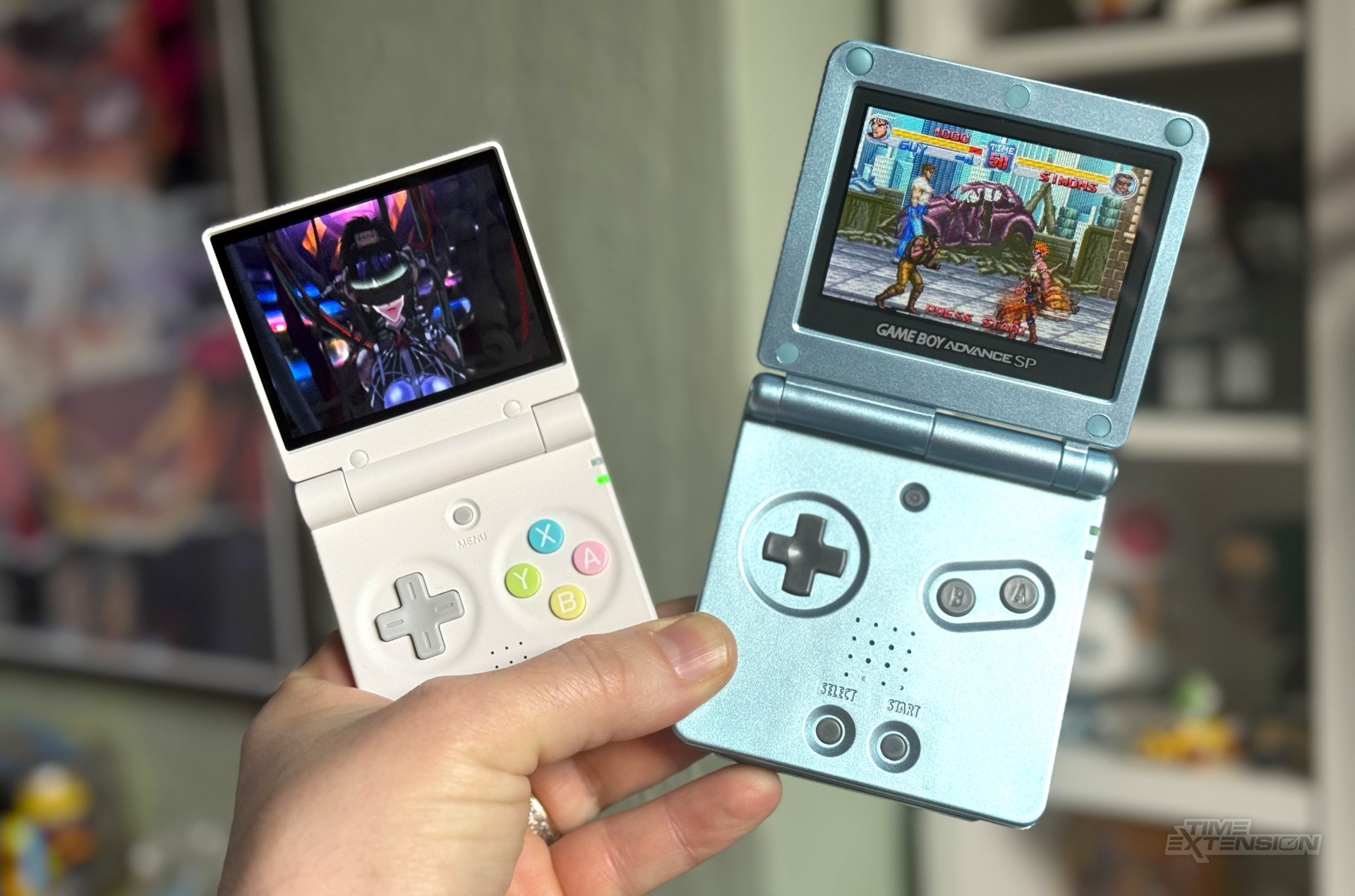
Back in 2022, I reviewed the dinky Miyoo Mini, a truly pocket-friendly handheld emulation device that could run pretty much everything up to the PS1 era, yet was small enough to fit into your daily life with ease.
Four years later, Miyoo has revisited the same base hardware, but with a twist – this time, the system is presented in a clamshell form factor.
The $70 Miyoo Mini Flip takes inspiration from its bigger brother, the Miyoo Flip (a GBA SP clone from last year) to offer a compact yet moderately powerful way to reconnect with retro games on the move. Is it worth the modest asking price when this sector is already overcrowded – and can 2022 internals really cut it in 2026? Let's find out.
Before I get into the performance of the Miyoo Mini Flip, it's worth spending a little time discussing the design. When closed, this device is one of the most portable emulation handhelds money can buy – it feels super-sleek. The build quality is excellent, too, and I like the fact that it comes with its own protective carry case. Will the hinge suffer the same issues as the one on the full-size Flip? Time will tell, but it seems robust enough so far.
The small size doesn't present any real headaches for my small-sized hands, but it could prove uncomfortable if you're blessed with larger ones. All things considered, though, I feel the Miyoo Mini Flip's ergonomics are better than you might expect given its diminutive form; somehow, it just works, and your fingers rest in all the right places.
As we've already established, the Cortex-A7 1.2 GHz chipset found in the Miyoo Mini Flip is the same as the one in the original Miyoo Mini, so performance is roughly the same. You'll find that Game Boy, SNES, Mega Drive, GBA, Master System and many arcade games run perfectly on this device, and it's only when you push into the realm of PS1 that you'll notice some hiccups – and even then, it's nothing so bad as to render the games unplayable.
The 2.8-inch, 750x560-pixel IPS screen is the same, and given that it was one of the high points of the Miyoo Mini, that's a good thing. Granted, OLED is king these days, but you're unlikely to find such an advanced panel in a product at this price, and the quality of the Miyoo Mini Flip's display is good enough regardless.
The control layout will be instantly familiar to anyone who has used an emulation device in the past few years, with a D-pad, four face buttons and four in-line shoulder buttons. There's no analogue input, but there's simply nowhere to place two sticks – and they arguably wouldn't make sense on a device of this size and form factor anyway.
The D-pad is quite clicky and doesn't have much travel, but it's surprisingly precise; I didn't notice any annoying false diagonals during my review period. However, it's not a great pad for flowing movements, so using it for fighting games takes a little getting used to.
Elsewhere, there's a 2500mAh battery that will give you around three hours on average, assuming you keep the screen brightness in a reasonable range and aren't playing PS1 titles all day long. On the topic of charging, I couldn't get the Miyoo Mini Flip to work with my fast-charging power brick, and had to resort to using the bundled USB-C-to-USB-A cable and an old-school Apple iPhone 5W charger.
Because the unit is quite small, there's only a single MicroSD card slot – and only one USB-C port. This presents an issue: if you want to use headphones with this device, you'll have to plug in the bundled USB-C-to-3.5mm audio adapter (a workaround very similar to what Nintendo had to do when it launched the GBA SP all those years ago). This means you can't recharge and listen via headphones at the same time. The speaker on the Miyoo Mini Flip is loud but lacks bass, so headphones are often the best option.
MechDIY was kind enough to send me a review sample of the Miyoo Mini Flip that comes pre-loaded with the brilliant Onion OS. This third-party operating system is one of the best in the business, and really takes the pain out of getting your handheld working perfectly. It's worth noting that the Mini Flip has WiFi (something the original Mini lacked), which is a nice bonus.
Miyoo Mini Flip Review: Conclusion
While it doesn't offer a power jump over the original, the Miyoo Mini Flip is arguably a more appealing device. The clamshell design doesn't just make the unit more portable; it actually improves ergonomics, too. If you're looking for high-level emulation, this isn't going to cut it, but it's perfectly fine for those who wish to rediscover the 8- and 16-bit eras in the most portable, pocket-friendly way possible.
Thanks to MechDIY for supplying the Miyoo Mini Flip used in this review.