
 by
by 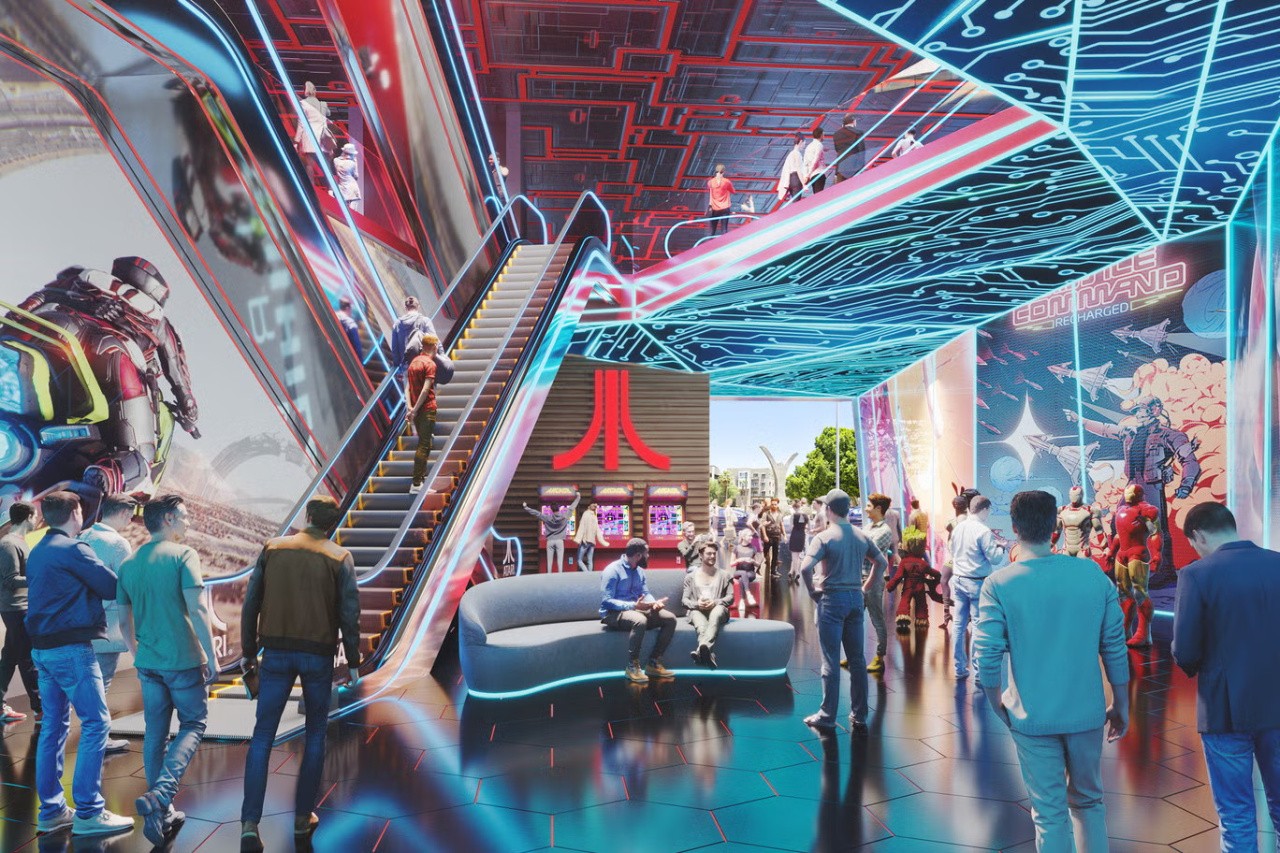
Update []:
We've since been informed that another Atari hotel is planned, and it's worth noting that this venture is being handled by a third party under license from Atari.
Original Story []: Remember when long-departed Atari CEO Fred Chesnais said the company was going to open a bunch of themed hotels in North America?
Bold plans were drawn up for hotels in Las Vegas, Austin, Chicago, Denver, San Francisco, San Jose, Seattle, and Phoenix, but, almost six years on, it seems that only the Phoenix development is actually taking place (although, as noted in the updated above, the Denver one might also come to pass).
As reported by The Independent, construction is due to begin on a site at 840 N. Central Avenue later this year. The building is being designed by Räkkhaus, which has issued a statement claiming that the Atari Hotel has been "conceived as a glowing monolith of light and motion, rising from Downtown Phoenix’s Roosevelt Row Arts District like a digital beacon and a symbol of a new era for the city.”
It will contain over "90,000 square feet of experience-driven spaces," including a 20,000-square-foot, 2,000-person concert and event centre, an esports venue and "multiple immersive environments that merge gaming, music, and nightlife."
The façade will showcase pixel grid patterning, and inside guests will find "arcade circuitry" designs. The overall look is apparently inspired by the “visual language of Tron and Blade Runner, with energy, color, and architecture of those imagined futures.”
There will be 19 suites and 72 rooms, in a rather tenious reference to 1972, the year Atari was established. “Additional amenities include several restaurants, retail spaces, and an oversized pool designed for high-energy parties and gatherings," adds Räkkhaus.
Zac Cohen, creative director at Räkkhaus, had this to say about the news:
“Our goal was to fuse architecture with interaction — not themed design, but pure spatial innovation. A tower defined by motion, responsive surfaces, and a frame that glows with its own internal logic. This is placemaking at a new scale, a building that will be truly unique in the world. Phoenix is embracing bold ideas, and this project was built to push the edge of what that can be.”