
 by
by 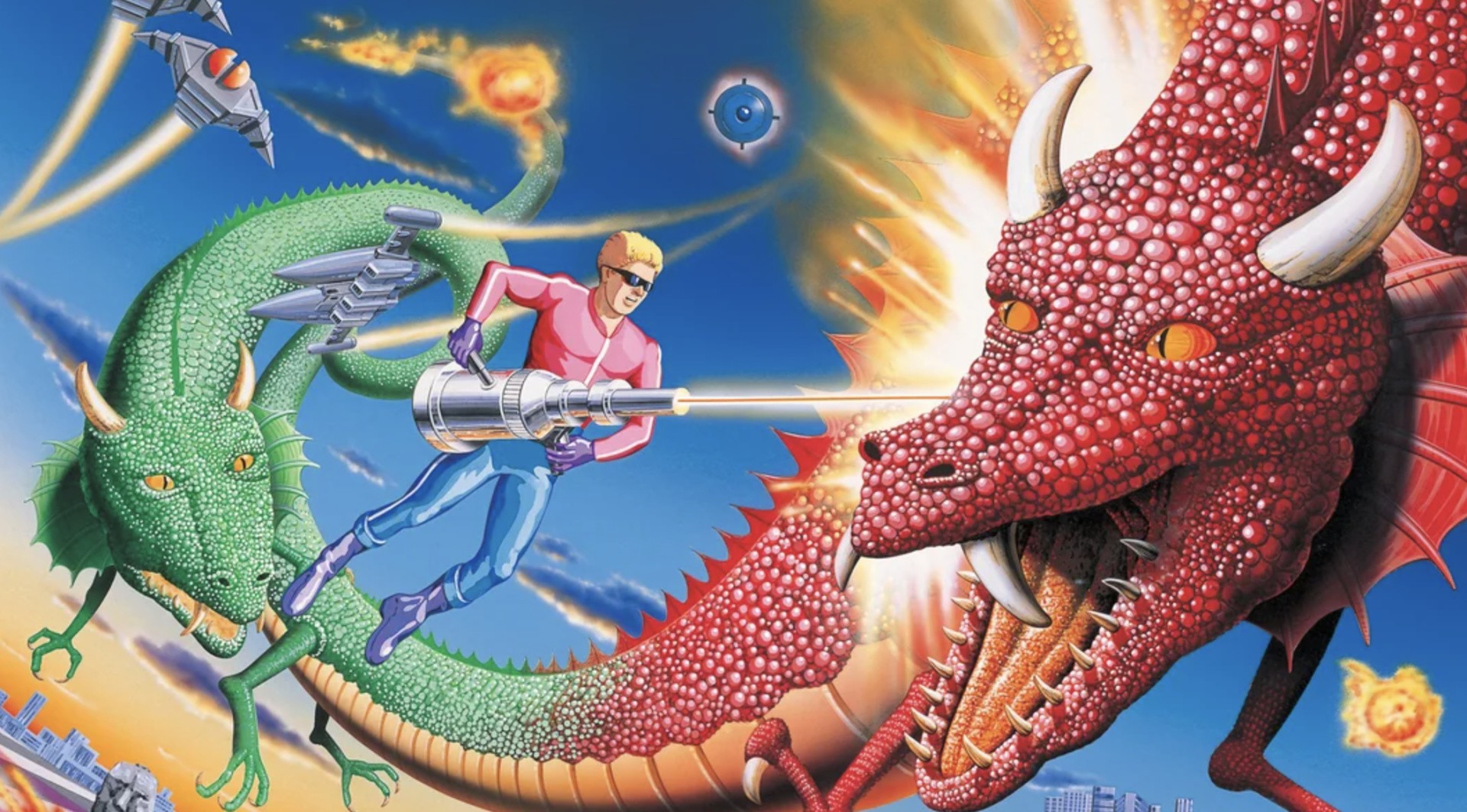
Yosuke Okunari is one of Sega's most notable employees in recent times, having tirelessly promoted the company's history across a wide range of systems and products.
In his recent column for Beep Shop (thanks, Kurt Kalata), Okunari discusses one of his early forays in celebrating Sega's history, which involved him becoming involved with the 'Sega Ages' series of titles.
This began in 1996 on the Sega Saturn, and by the time Okunari took over in 2004, Sega was seeking another company to work with for porting its vintage games to the PS2. That company ended up being M2, and the first two entries it would work on were Vol. 20: Space Harrier II - Space Harrier Complete Collection and Vol. 21: SDI & Quartet - Sega System 16 Collection, both of which launched simultaneously in 2005.
Okunari and M2 cooked up some incredible features for these games, one of which was called "Parallel Play":
"This feature lets you switch to the home console version while playing the arcade version, allowing you to play both games and compare the differences. It was a groundbreaking feature that even went so far as to be patented, but it seems that very few people actually used it."
The Sega Ages 2500 series was named after its price point, as each release would retail for 2,500 Yen (approximately $15). While Okunari was sure the amazing effort made with these collections would result in bumper sales, he now sees with the benefit of hindsight that he was wildly naive:
"Looking back at that time, I realize I was really young. As both a developer and a producer, I was vastly inexperienced and immature. At the time, I thought that if we all worked hard together, we could achieve results that were commensurate with our efforts, and that we could achieve anything. All I can say is that we were careless in every way."
Okunari admits that he ignored the fact that "in a short-term project with a low budget, the content should be as simple as possible and the specifications should be kept to a minimum," and that "this combination of a rookie producer with inflated dreams who only thought about the good side of life, and a development company with poor schedule management, continued without realizing that there was something impossible about what they were doing."
Ultimately, he says that "by adding specifications that were over-specced in addition to the volume that was out of line with the project's scale, I was strangling both M2 and myself."
Both collections were delayed as a result, and the response at a pre-release retail event was hardly encouraging:
"The response to the software at the pre-order event was dismal. Buyers unanimously commented that such an old game wouldn't sell. "SDI & Quartet" in particular was not well-received. Everyone said they had never seen or heard of such a game, and after glancing at the software from afar, they quickly left. Even when they managed to lure customers to try it out, the unique game system of "SDI" left them with no positive feedback, with people saying it was "too difficult" or "I just didn't understand it." The initial production run of the two new series titles was one of the lowest in the series' history."
Despite this, Okunari remained optimistic about the series' future. "We weren't just making one or two games, we were making a series called "SEGA AGES 2500," he says. "Initial sales weren't the only thing that mattered. If the reviews after release were good, we could expect repeat production. I was optimistic."
The Sega Ages series has continued until fairly recently, with titles such as Shinobi, Virtua Racing, Herzog Zwei and Sonic 2 coming to Switch.
You can check out Okunari's other columns on Beep Shop here.