
 by
by 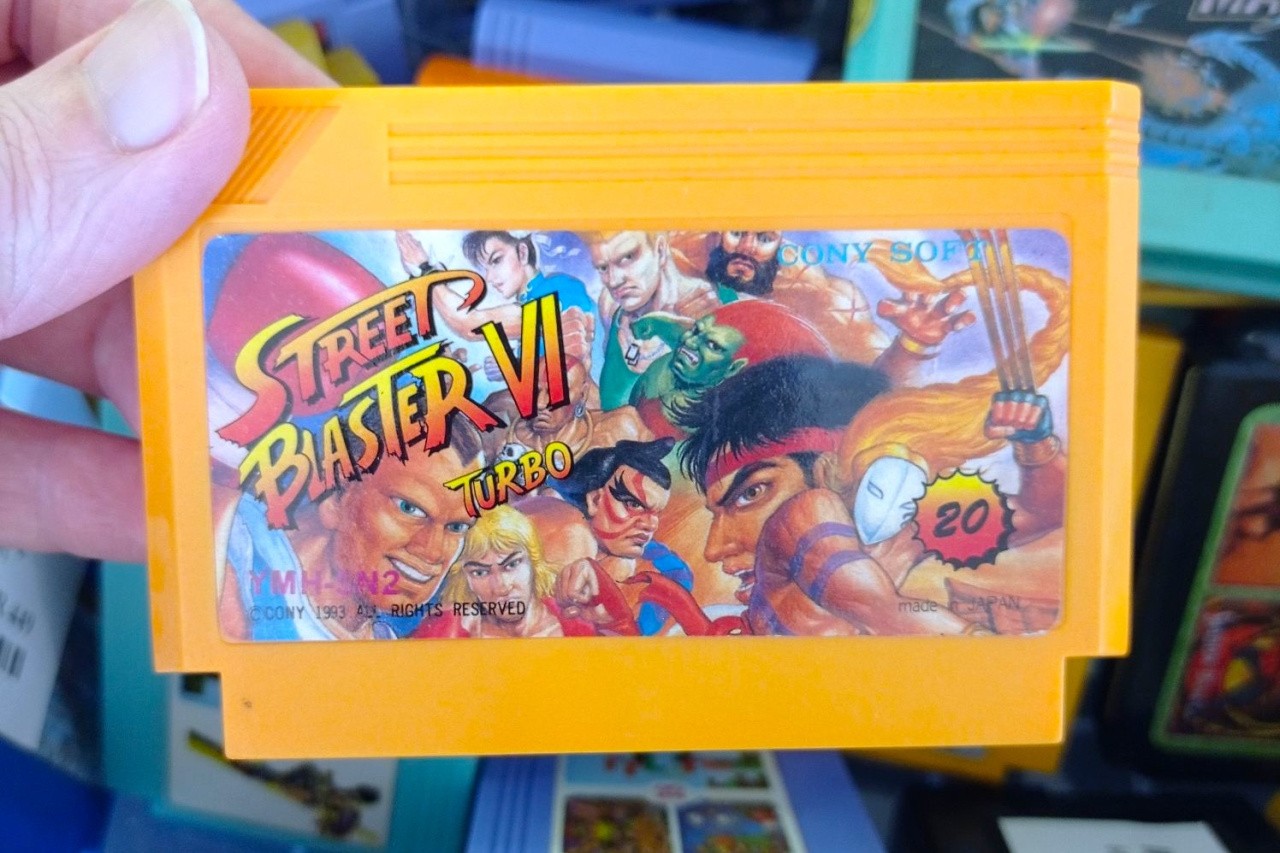
As outlined in the first of what will be two pieces, my family and I recently returned to my homeland of South Africa.
This was mainly to reconnect with my birthplace and see how much it had changed, but I also wanted to rediscover the video game, comic, and related hobby scenes. Which is why you're also reading this, presumably.
(Also for those interested, cannabis is legalised; I marvelled at the many government-licensed dagga shops I walked past, but definitely did not at any point whatsoever enter any one of them at all, nor converse with the attractive woman at the counter about her wares, just so we're absolutely clear.)
Firstly, like most places in the world, printed video game magazines don't really exist anymore. The domestically produced NAG magazine does an annual print edition, but it can only be ordered online. There are no import magazines either, since apart from a few holdouts (ie: Retro Gamer), most shut down years ago. In fact, there was surprisingly little in terms of magazines at all - just a few fashion and lifestyle mags in tiny supermarket cordons. The country's 130-year-old equivalent to WH Smith, the Central News Agency, essentially died a few years ago, and I didn't see any equivalent in the many malls visited.
Mall culture deserves a special mention, actually, since it continues to thrive, despite dying out globally. The 8-Bit Guy has an incredible video explaining the demise of mall culture in America. Lack of newsagents notwithstanding, South Africa's continued mall culture is an interesting convergence of factors.
The high crime rate and enormous outdoor space discourage high-street shopping (though it does exist), while the searing African heat encourages staying near air conditioning; large shopping malls solve both problems. However, the main factor is the failure of South Africa's postal system, where items go missing or get stolen, which means online shopping never got the foothold it did in Europe or America.
Thus locals continue to shop at malls while enjoying cafes and other adjacent amenities. The increasing use of cards over cash also feels anachronistic against a backdrop of commerce that harkens back several decades.
Despite the evergreen presence of malls, there seemed to be fewer games stores than in the UK. Certainly there was no direct equivalent to the UK's CEX chain. Mostly just tech stores which sold a few games in the corner. Even places like Cash Converters and Cash Crusaders had limited game inventory, and it was rarely older than the PS3 era. For anyone interested in retro games, don't expect to stumble across places by accident - you will need to look up specialist indie retailers, and sometimes drive out of your way for them.
Below is a selection I visited, with video and photos. I had hoped to visit RetroGuySA in Cape Town, but he explained he'd pivoted to online only.
Regarding online shopping, there's no official eBay presence in the country, though locals do sell on eBay. Instead, similar to Japan, South Africa has its own domestic equivalent: Bob Shop! Previously known as Bid or Buy, this is basically eBay with a different name. Take a moment to search the listings - sadly there seems to be zero presence of rarities such as the Vectrex or Virtual Boy, and few vintage games magazines, while the retro games which are listed can be pricey. Just divide by 20 to get the rough GBP.
Readers Den
This is a small, family-run pair of stores; I visited the south side one, and while appearing heavily fortified from the outside, it's quite welcoming inside. I chatted with the staff and browsed the aisles. It had a section devoted to local talent (including neighbouring Zimbabwe), though sadly it's small compared to the Japanese and American sections.
Conversing with the staff revealed interesting facts: a lot of South African artists try to emulate the Japanese manga style, rather than cultivating their own; several successful South African artists have gone on to illustrate major series by Marvel, and these are especially popular among locals; there aren't many domestic comics because there's no real publisher for them, with most being self-published and sold at conventions. A couple of exceptions are Kwezi, a superhero series with high production values, and Mengelmoes, which is internationally published.
I especially liked Mengelmoes; it's a six-part autobiographical series about an Afrikaans boy growing up in post-Apartheid South Africa, eventually becoming a successful international comics artist. The first volume was so reminiscent of my own school days that I subsequently bought the set - a cathartic exploration of how my own life might have played out had I remained. Equally excellent is The Number 1 Game, a post-apocalyptic story with a distinctly African art style.
Enjoy the video below. And yes, I know there's no possessive apostrophe, but every cell in my body yearns to put one!
Galactic Traders
This was the second place I visited, and it is a goldmine for printed material. There were multiple shelves laden with books, magazines, and comics, going back several decades. I bought several old issues of NAG, plus British and American magazines (copies of GameFan were only £3 each!). Honestly, I could have bought half their stock of magazines were I not flying back.
They also had an enormous and eclectic range of video game ephemera, and all else besides. From old Atari consoles right up to modern systems, there was stuff here I'd never seen in the wild before, like Dragon 32 cassettes, and other items I never knew existed. Plus cameras, toys, trading cards, board games; you name it, they probably had it.
Unfortunately, all of it came at a rather high price. A loose Master System II, just the console, was about £200! While loose bootleg Famicom carts were about £40 each. Despite this, it's absolutely worth visiting to rummage around (they're also online), and you might get lucky and find a bargain.
Back in Time Vintage Toy Store
I should have come here first - it was a bit of a trek to a private home in the suburbs, but this bazaar of vintage toys was so good I visited a second time to buy stuff!
The video speaks for itself, but if you grew up in the 80s and 90s, your favourite toys were likely on one of these shelves. Mostly I was there for the video games. The selection is maybe smaller than Galactic Traders, but the prices are considerably fairer.
It was also fun conversing with the owner, Heinrich, about his life as a collector; he even showed me his rare South African NES. We chatted a lot about the bootleg Famicom scene, how customers from all over the world buy items, plus the rising cost of private couriers.
He mentioned how one especially rare Famicom bootleg, unique to SA, sold for $100 to a collector in China. But we're saving the big Famiclone content for a separate piece.
If you're in Cape Town give him a call to see if he's in, and then check out all this cool stuff in person.
Kalk Bay
It's not strictly game related, but if you're interested in old books, magazines, antiques, oddities, relics, curios, mementoes, bric-a-brac, knickknacks, confectionery, and general retro "stuff", then visit Kalk Bay.
Along a stretch of Main Road surrounding the Kalk Bay Trading Post are 15 or more shops specialising in such things. You'll need to investigate the many alleys and side roads, such as Colyn and Belmont, but the entire area is a nostalgia zone of materials dating back over a century. I would have bought the ostrich foot I found if I thought it would fit in my suitcase.
One of the stores even had a selection of boxed Intellivision games for a tenner each. Make sure you set aside an entire day, because you will easily spend hours exploring. Also be sure to pop down to the harbour itself, for a fresh lobster lunch at Kalky's and an open-air market of local artisans.