
 by
by 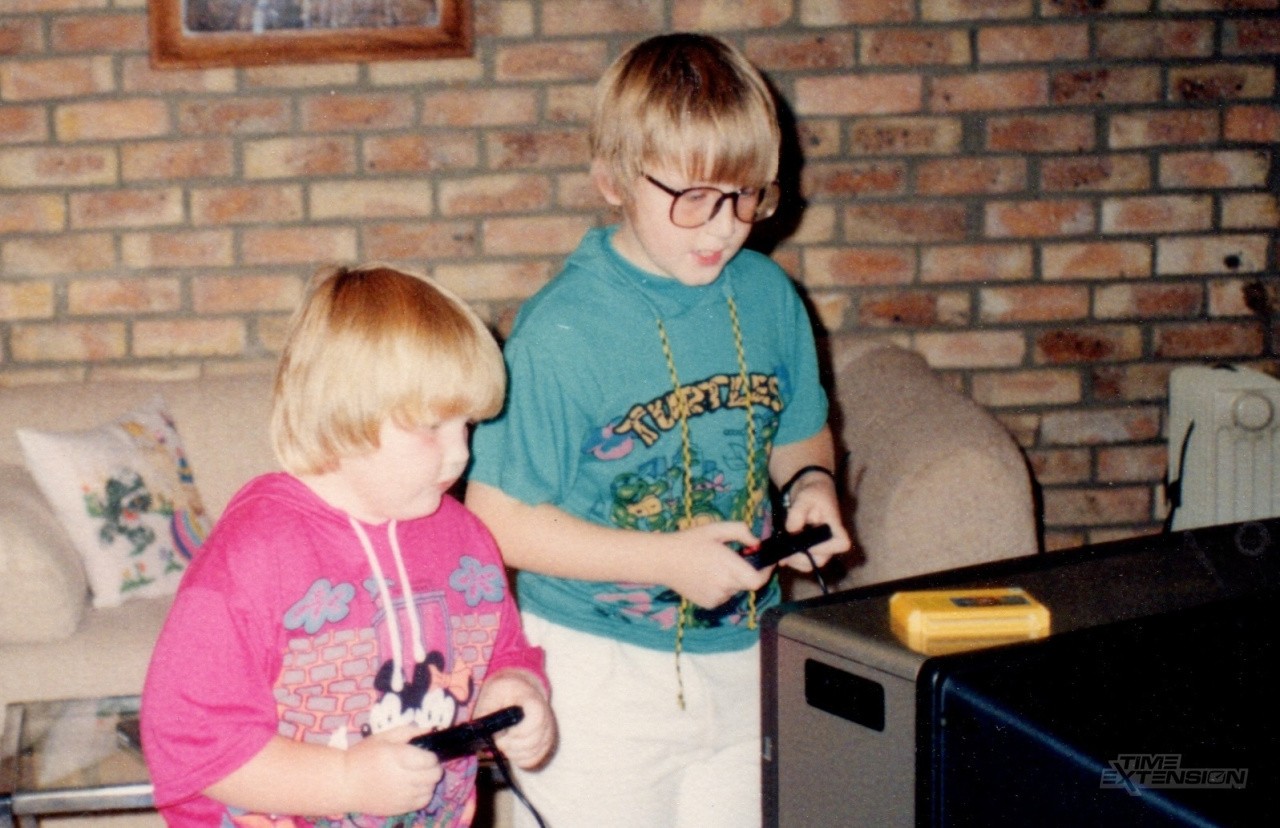
I was born in South Africa, am 1/8th Afrikaans (my ancestors were Boers), and I like to talk about its bizarre and unique gaming ecosystem a lot, since it shaped everything I've ever written.
My family had not been back in 30 years, and so wanting some form of spiritual closure, and to see what had become, in 2026, we holidayed in Cape Town for two weeks. We visited old haunts, did the touristy stuff, and I reconnected with a gaming scene that had radically metamorphosed over three decades.
You're going to spot several recurring themes in this piece, mostly pertaining to temporal, geographical, political, and cultural dislocation from the rest of the world. But I also want to preface things by introducing the South African phrase: ’n Boer maak ’n plan.
Literally, it means "a farmer makes a plan", but as many will point out, it's something of a national ethos, and refers to a mentality of adaptation, ingenuity, or resourcefulness in solving difficult situations. South Africa’s isolation encouraged its knack for improvisation. It's a useful lens for interpreting the following accounts of video game history, as you'll see.
The Early Years
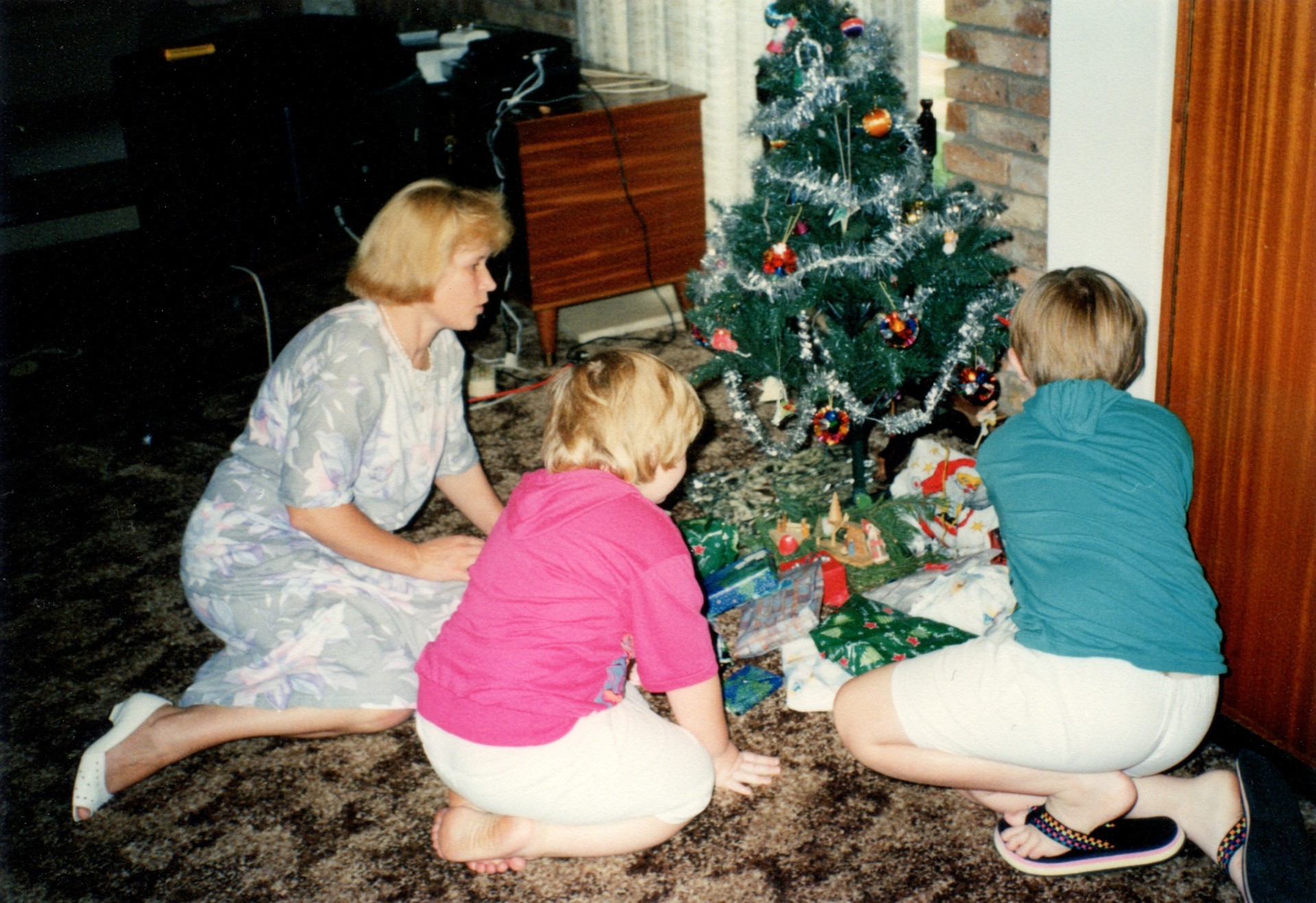
My earliest gaming memories are being between 3- and 4-years-old and playing Pac-Man at the local corner store – my dad would flip a beer crate for me to stand on. I could never clear the first stage, but the bright colours and ability to control the screen were mind-blowing. More arcade games followed, installed almost everywhere.
If you're trying to calculate how old I am based on when Pac-Man was released, you'd be wrong. In many ways, South Africa existed anachronistically, almost like a parallel reality outside the mainstream flow of culture. Products arrived later, antiquated systems prevailed, and everything was out of sync – you might be playing the latest licensed video game (or toys) based on the end period of a cartoon series, yet the series itself had only just started airing. Official games, grey imports, and bootlegs all mixed together to obfuscate the real-world date.
I should introduce Paul Loubser at this point, my lifelong friend from primary school. In South Africa, you start school in January, the year you'll turn 7 (meaning I was 6 at the time). Paul, being older (and wealthier), was like a mentor for video games, sharing the latest import magazines, correcting my mispronunciation of Japanese, and introducing me to expensive goodies such as the Sega Mega CD.
Paul had a friend from Hong Kong called David, who, in turn, was like a mentor to Paul. David had everything – we'd visit, watch bootleg tapes of pre-release films (subtitled in Chinese), play G.I. Joe, be in awe of his import Turbo Duo with a six-button controller, and flick through stacks of Street Fighter II comics by Jademan (which directly inspired this article and interviews).
My friendship with Paul was formative and would shape my personality even after leaving. Over the ensuing decades, our lives followed similar trajectories, with Paul working in games journalism, the games industry, animation, lecturing, and starting several retail businesses. As children, though, we started off swapping Famicom carts.
A Pirate's Life For Me
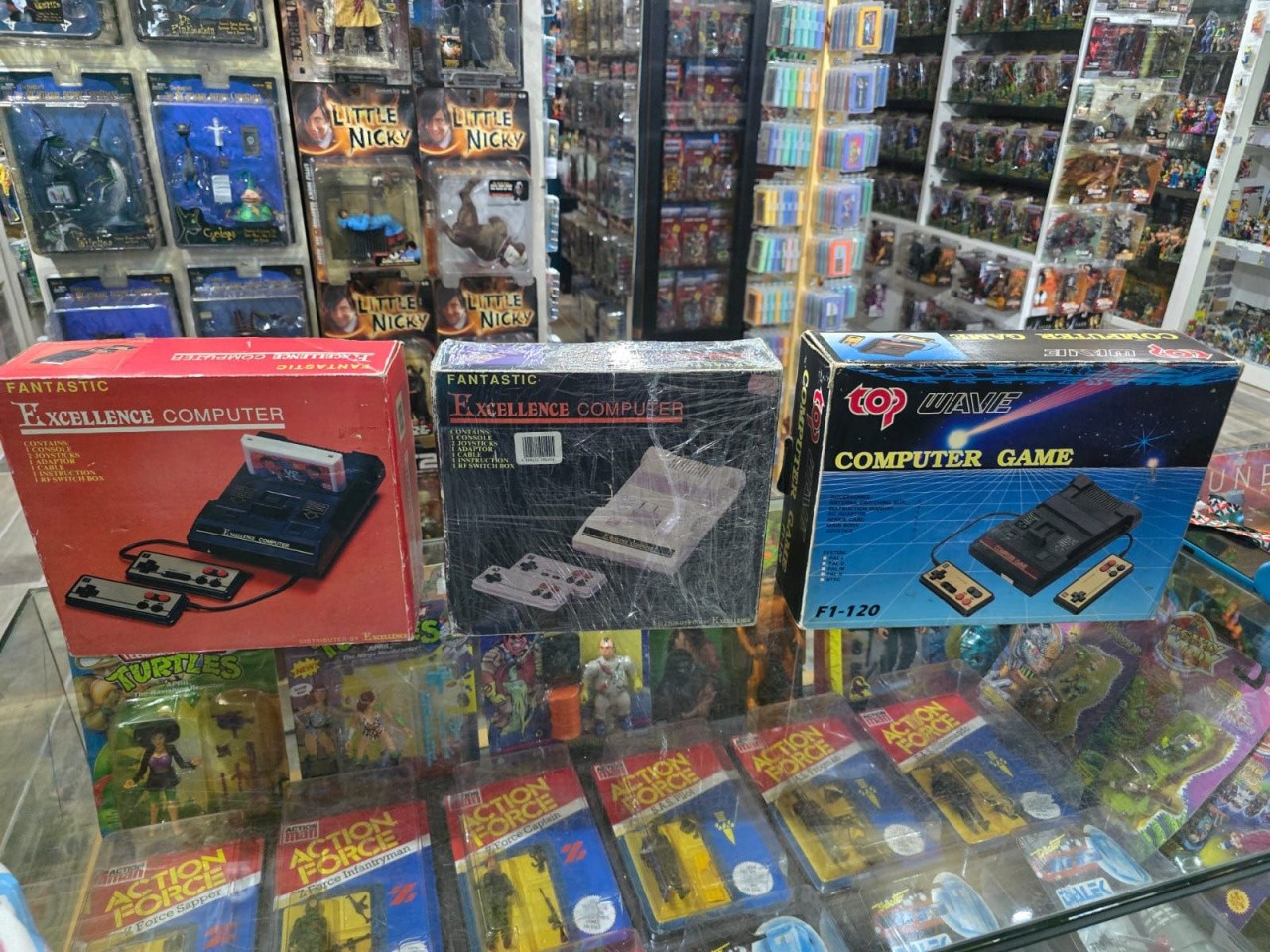
A main component of early games in South Africa is the bootleg Famiclone scene – that is, pirate or cloned Famicom hardware and games, sourced from Taiwan (possibly not Hong Kong and mainland China; but we'll get to that later). As you'd expect, reliable sources of inside information are scarce, but bootlegs were ubiquitous across South Africa and, contrary to what you might think, were of a surprisingly high quality.
At one time, you could even buy bootleg Famicom games at pharmacies such as Clicks, perhaps mirroring how the chemist chain Boots in the UK used to sell games during the '80s and '90s. But it wasn't only bootlegs – authentic Japanese Famicom cartridges, loose, were sold alongside.
I have vivid memories of walking into game stores at Randridge and Westgate Malls and seeing cabinets housing hundreds of brightly coloured carts. Some games were obvious, but there were also many high-quality bootlegs, with bespoke labels, which to this day I've never been able to ascertain what they were.
At one time, I'd played what the shop owner said was Super Mario Bros. 8, and it did indeed feature Mario battling giant mushrooms. For years, I assumed this was just another game which never left Japan; only when I later encountered the internet did I discover this was, in fact, a very professional hack of Don Doko Don 2.
There were games never officially available on a Famicom cartridge, such as Castlevania II: Simon's Quest (Dracula II: Noroi no Fuuin in Japan) and Super Mario Bros. 2 (The Lost Levels) – both of these were only on the Famicom Disk System. In addition, there were American and European exclusives, like G.I. Joe: The Atlantis Factor, Alien 3, Snake's Revenge, and Widget.
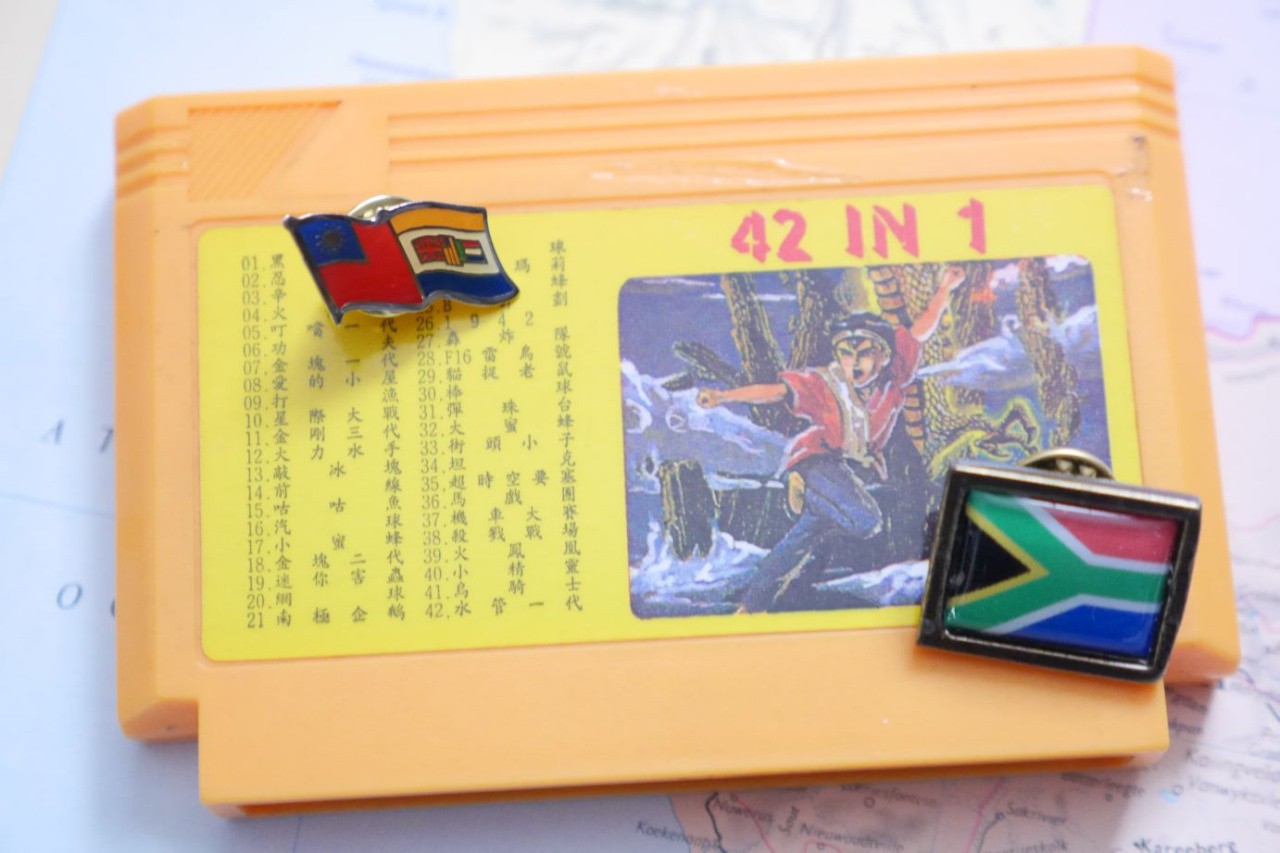
Every pastel-hued Famicom cart in those display cases was a mystery to be unravelled. Also, the multicarts were glorious; my first contained 42 distinct games from the early NES era, forever warping my understanding of value and fostering an appreciation for lower-quality titles. When something like Ikki, which notoriously inspired the term kusoge, only constitutes 2.4% of your latest birthday gift, the lower cost ratio allows you to enjoy it!
There is no better evidence of how widespread and commonplace bootlegs were than this televised advert for Reggie's Entertainment System. (Notice it shows footage of Simon's Quest, which was never available on cartridge in Japan.) This advert was broadcast on national TV, in the late afternoon, directly after Disney's Mickey Mouse Club. The fact that I was even able to salvage it from a VHS tape is a miracle, given how often my parents taped over stuff.
For context, the games from R20 would be around £5 in 1992 (according to Google), and the R200 console would be about £50. Reggie's was a domestic chain of toy stores, analogous to Toys R Us and operating under the same license holder, Redgwoods.
Thus, Reggie's, a mainstream toy outlet connected to a global brand, arranged for a bootleg Famicom to be manufactured in Taiwan, with its branding on the console and box, to be sold alongside pirated cartridges, circa the early 1990s. Consider for a moment how unusual that is.
This news story from 2024 brings up some interesting historical court cases regarding how poorly copyright was enforced in South Africa:
"In 1995, Nintendo launched legal action against Golden China TV Game Centre and others to enforce its copyright in South Africa. [...] Golden China TV Game Centre and others [then brought an] appeal against Nintendo specifically to address the issue of games being classified as films."
The news story has a factual inaccuracy, but it's one I've made myself. Given all the evidence – not to mention the sanctions, which we'll discuss later – you'd be forgiven for thinking Nintendo never attempted to establish an official presence in the country. But in fact it did!
This article by Joshua Alexander Rogers is one of the most important articles on South African gaming history, as it presents deep research that categorically confirms Nintendo's presence. He also points out my own failings in this regard, and rightly so. I had never even seen an official NES, so this was a revelation!
"High On Drugs"
Rogers is correct in his article when saying that I possibly got close to uncovering the official South African NES – though it never registered until decades after. In November 1992, there was a magazine for children sold through schools called K.I.D.Z. - Die BESTE Tydskrif vir Kinders / The BEST Magazine for Children, a dual-language publication for which there is zero online footprint. Its inaugural issue came with a pack of Guinness Book of Records trading cards and Club Nintendo magazine.
Although distributed in 1992, the copyright panel for Club Nintendo shows 1990 and ownership by Nintendo Europe, while also clearly showing the South African office address in Doorfontein (the same address for Josse Feldman Ltd. on its 90-day warranty card with Nintendo hardware). The curious thing is that while the magazine initially seems identical to the Portuguese magazine published in 1990, the contents have been altered. There were several editions across Europe, but those with the "Classic" moniker contain more content, while the earlier linked Portuguese edition is structurally identical.
The South African team clearly made changes, though. Page 4 shows a diagram of the NES, with the channel 3/4 switch labelled as "not applicable in SA". While page 29, in the Rad Racer tips section, states: The Speedrush ("Rush" as in "high" on drugs).
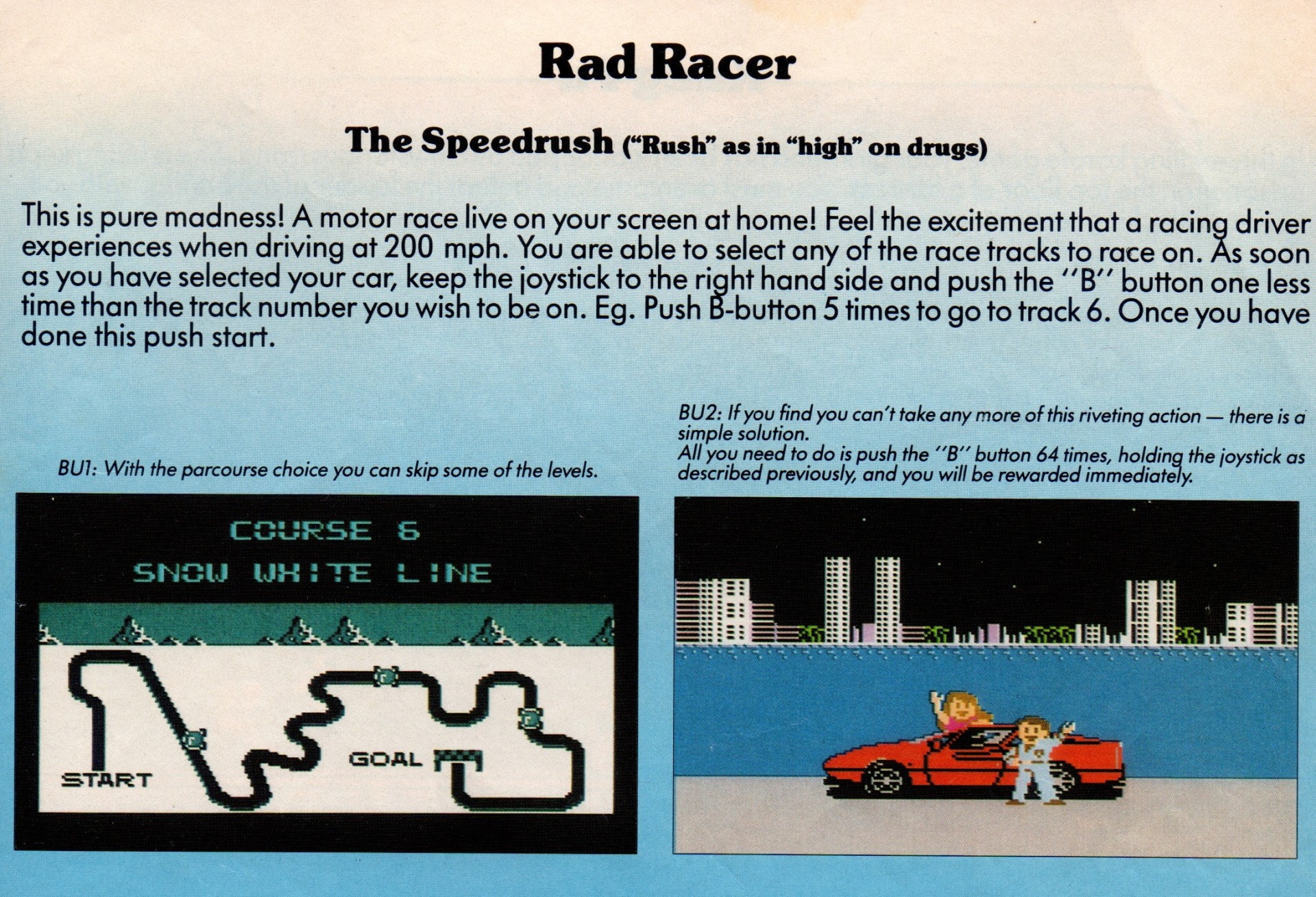
A reference endorsing illegal drugs in an official Nintendo publication aimed at children? Why yes, that is indeed a thing!
Obviously, someone on the editorial team was goofing around, and given the way media worked at the time, no one in Europe proofread and approved the pages. I tried sharing this online many years ago, and was accused of fabricating a hoax and playing an "idiotic prank". But you must believe me, an official Nintendo magazine implied that playing Rad Racer was akin to consuming narcotics (cue panicked mothers screaming that Nintendo killed their son).
This Club Nintendo adds further evidence to Rogers' research on an official presence. At the time, while I thoroughly enjoyed K.I.D.Z. magazine and the supplement, I was already reading Electronic Gaming Monthly and playing Famiclone, and so for years never truly realised the evidence this represented. To that end, I have scanned the entire Club Nintendo issue, along with the cover, contents, and video game pages of K.I.D.Z. Magazine's first eight issues, and put them all on the Internet Archive.
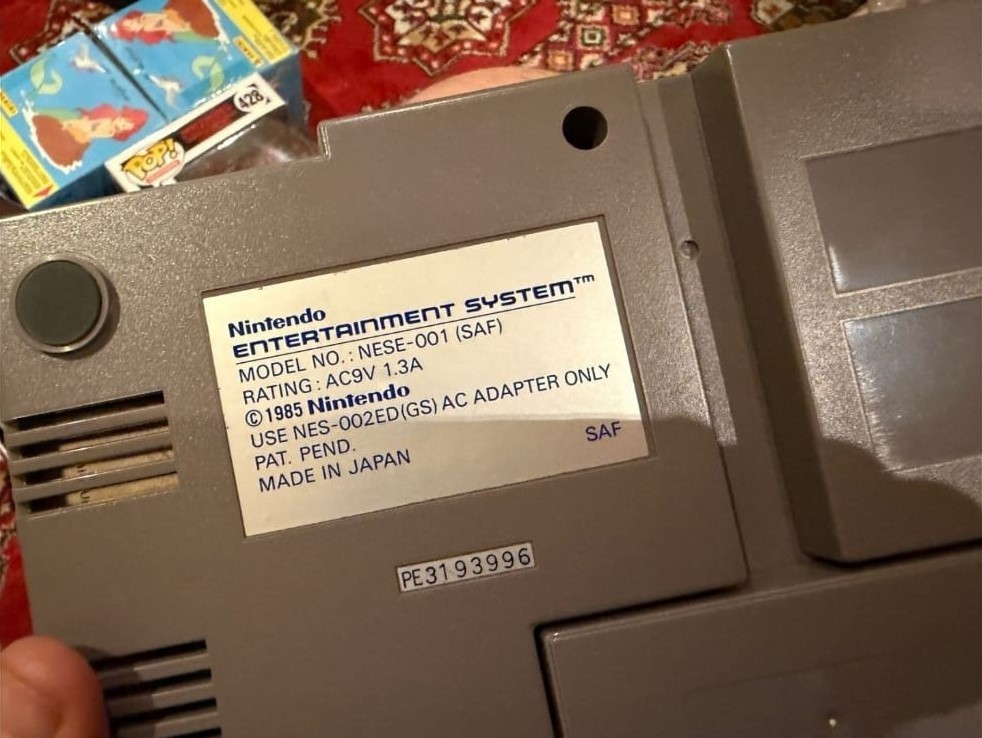
Take a moment to think about how anachronistic this was: the Club Nintendo magazine has a copyright date of 1990, but was given out in November 1992, while according to Joshua Rogers' research, the distributor Josse Feldman Ltd. brought out the SAF-branded NES in 1993, based on the European model – this was after the Japanese Super Famicom launch in November 1990, and after the UK SNES launch in April 1991.
Both the Saturn and PlayStation were around the corner, launching in November and December of 1994, and South Africa was only now officially getting the NES, despite having been flooded with Famiclones for years already. Plus imported SFC / SNES! Not to mention Sega already had an official PAL presence with its Master System and Mega Drive. It's unsurprising then that the expensive grey toaster was overlooked by gamers such as Paul and I – neither of us having ever even seen one in the wild.
Matters Of Import
When you overlay the grey import market, things get even more convoluted. Prior to the NES launch, South Africa already had Japanese and American imported SFC / SNES available. I can distinctly remember seeing an American SNES advertised in the nationally distributed M-Net TV Guide Magazine, and comparing its photos with those of the SNES in American magazines like EGM and British magazines like Game Zone.
For some reason, there was also an influx of imported PC Engine Shuttle consoles, alongside pricier Turbo Duo systems. The Mega Drive situation was fascinating, with official PAL units sitting alongside Japanese and American imports, as well as Taiwanese bootleg units. When buying one, shopkeepers would literally ask: "You want American or Japanese?"
Paul has a funny story about the confusion this caused:
"My first Mega Drive was a bootleg from Taiwan. I recently got another bootleg for the nostalgia. Everything was knockoffs; I would actually learn about knockoffs when I got my Mega CD and my bootleg Mega Drive was not compatible with it. That's when I learned about PAL and NTSC and compatibility - as a kid it felt like I had some kind of inside information above my peers who were playing games. So my parents then had to buy me a second official Mega Drive to use with the Mega CD, which I'd earned with good grades at school."
It needs to be emphasised that all these different systems weren't being sold in some hidden-away specialist store for hardcore enthusiasts; they were found all over in everyday shopping malls. Also the internet wasn't a thing at that time, and South Africa didn't yet have a domestic games magazine like New Age Gaming (we'll get to them), meaning kids had to rely on imported magazines from America and the UK, which invariably did not reflect what was available locally, and didn't even synchronise with each other, and were only available months after the cover date. This impossibility of knowing the global zeitgeist only made my thirst for understanding stronger.
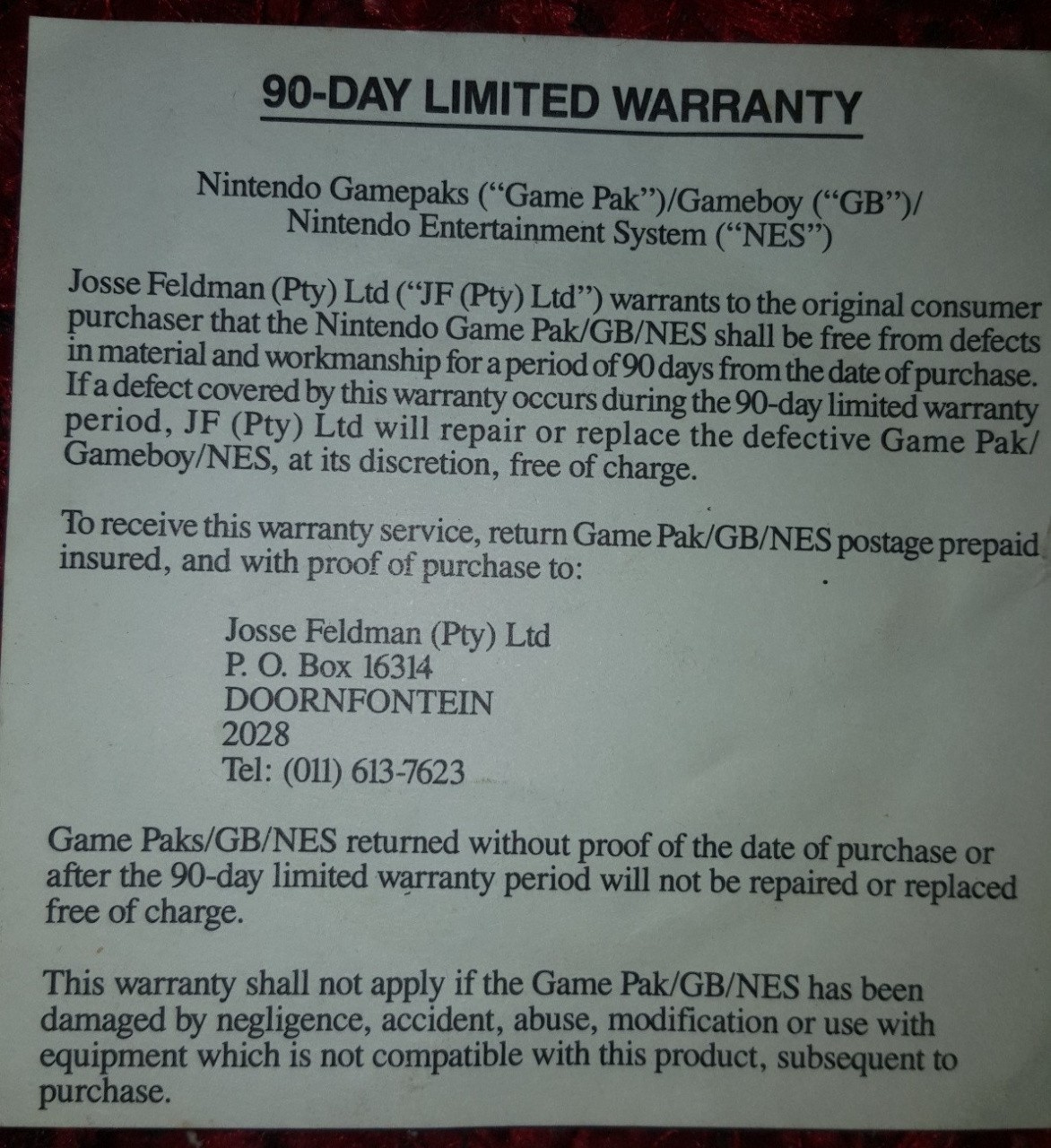
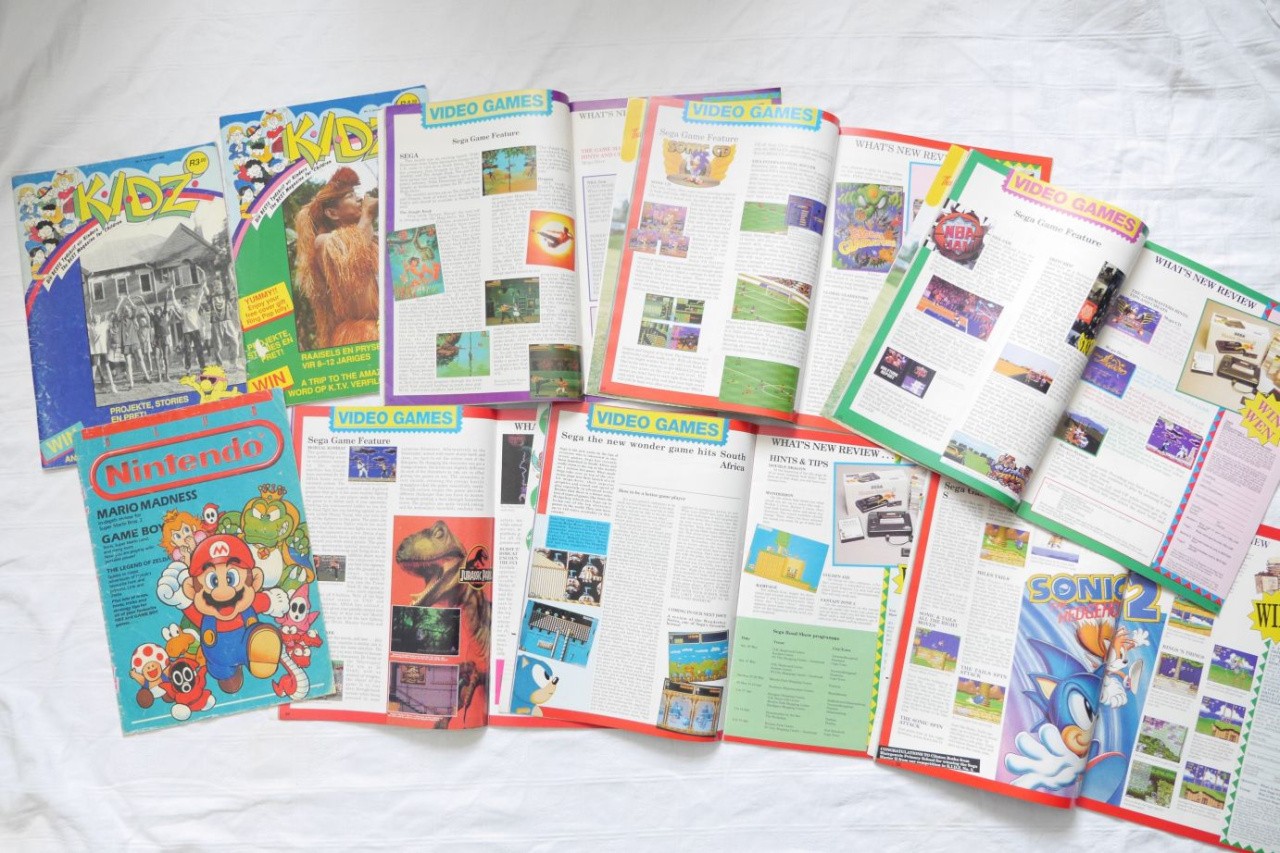
Scholars researching Sega's global reach should make use of the K.I.D.Z. magazines; while the editorial isn't particularly interesting in itself, it is solid evidence of an official presence. Things get confusing because, according to Sega Retro's excellent page on Sega in South Africa, video games (including Sega) were distributed since the early 1980s through the mid-1990s, first by Prima Toys and then by Consumer Electronics, the latter of which was established by the founders of Australian Sega distributor Ozisoft.
It's a great page on South Africa, accurately describing the grey import market and prices for systems (which align with my own recollections), but there's no reference to an official Sega presence, which is what the K.I.D.Z. pages imply by explicitly naming "Sega South Africa" and the "Sega South Africa Agency". The two sources also contradict each other slightly with regard to when Sega first arrived in the country. Which is not a criticism – trying to research and document such a fractured market is extremely difficult, as highlighted by Rogers' exposé on the official NES versus my own writings, which incorrectly claimed it never existed.
According to the K.I.D.Z. content, Sega would market both the Master System and Mega Drive concurrently. The undated third issue (circa early 1993) states: "Sega has recently been launched in South Africa..." It then goes on to promote the Sega Road Show, with dates and cities where Sega would show up. You have to respect the determination, given how ubiquitous imported systems already were – this couldn't have been an easy market to establish.
The coverage continues over subsequent issues, introducing Sonic the Hedgehog and then the Mega CD console. If memory serves, the Mega CD cost a whopping R1000 at the time, probably more, which was about £200; way outside what the average middle-class family would buy for their kids. It seems the Sega coverage was written by Sega themselves, since the address for letters was literally its marketing department in Joburg.
Regarding an official Sega presence and Sonic the Hedgehog, it's worth taking a detour into the history of television in South Africa. Or rather, the lack thereof. For you see, only in 1976 was it officially introduced nationwide. In fact, the Minister for Posts and Telegraphs, Dr Albert Hertzog, had previously stated that TV was "the devil's box" and would only come to South Africa "over my dead body".
It was often lamented by locals that when the world's first successful heart transplant took place in Cape Town in December 1967, performed by Dr Christiaan Barnard, fellow South Africans could only listen on the radio or read about it in the newspaper, while the rest of the world saw it broadcast on the news, as the hospital was filled with TV cameras and journalists. Plus, of course, without TV sets, it was also impossible for anyone to even imagine playing the first games console, the Magnavox Odyssey, which launched in 1972. Though in theory locals might have been able to play the PAL version of the Atari 2600, which launched in 1978.
There was a lot to catch up with after 1976, but in 1986, the first subscription channel was launched, M-Net, and then in 1990, M-Net launched its own dedicated children's programming with K-TV. This later introduced the Wimpy's sponsored 'Grabba-Gameshow' segment on Saturday mornings, where a contestant would yell instructions over the telephone, controlling Sonic on the Mega Drive to collect rings and win prizes.
Ahead Of The Game?
Hopefully, what stories like this convey are the challenges and setbacks South Africa had to overcome – receiving TV decades after most other industrialised nations is quite the handicap – but once rolling, some highly inventive things took place. South Africa achieved some advanced industry standards when TV finally arrived, with a subscription channel, dedicated children's programming, live phone-in games, and multi-language support.
The M-Net decoder box, for example, had a button to switch between English and Afrikaans dubbing, and a second button could even mute swearing! For the free terrestrial channels, alternate language tracks were broadcast over the radio so you could mute your TV and listen that way. This was taking place as early as 1986, but nobody talks about it. (South Africa wasn't the first with multi-language broadcasts, to be clear; Japan had its EIAJ multi-channel sound system in 1979).
Related to all this, it's also worth exploring some of the bizarre legal loopholes that existed, the sanctions imposed, and the workarounds which resulted. It gets confusing, but just hang on for a bit...
In the DNA of Hideo Kojima feature, I wrote the following:
"Kojima has described his film influences when making Metal Gear. It's also set in SA, which is interesting when you consider the climate Kojima was exposed to in Japan in the 1980s. Not only were there a slew of action films featuring mercenaries in Africa, but SA at this time was engaged in a border war taking place over areas of Namibia, Zambia, and Angola; often called the Angolan Bush War, this has been described as SA's Vietnam, and also involved mercenaries. Japan and SA at this time also had a special trade relationship, defying international sanctions, resulting in the Japanese being given "honorary white status" under Apartheid. The two nations were very close. You can find plenty of legacy news footage online; if Kojima at any point flicked over to NHK's international news, he would have been aware of events. Later, with MGSV, some characters actually speak Afrikaans, one of the official languages of SA."
These are observations you seldom see regarding Solid Snake's outings, and they actually point to a reality even more complicated than described. There are really several different intersecting historical threads here, all of which impact the video game industry both directly and indirectly. Let's try to disentangle them.
Various types of sanctions against South Africa have cropped up since 1962, and there's a whole slew of further reading. But it was only implemented haphazardly; while Japan excluded South Africa from the 1964 Tokyo Olympics, it also defied international calls to cease trade, and as seen in this legacy news article, long-term trade deals for natural resources like iron resulted in the Japanese being officially granted honorary classification as white people, thus making business easier.
This continued for decades, with some complaining that Japan helped strengthen the old regime. As for video games, you're not going to find a memo from Namco explicitly stating this honorary classification helped with sales of Pac-Man cabinets. The impact would have been indirect, with the preferential treatment subtly encouraging travel and trade.
It's worth noting also that consumer electronics companies were still wary of overtly showcasing their presence. There are persistent rumours, for example, that certain Japanese companies gained market access by quietly rebranding goods. As you can imagine, dealings like this are not publicised. But there are plenty of documented examples of companies which continued to operate, albeit under different names.
To further understand the background which shaped the video game market, let's shift through time a little. In 1975, the US "encouraged" South Africa to intervene and counter the spread of Communism in Angola; the US government provided arms to rebels, coordinating in parallel with South Africa, and in addition, US mercenaries travelled to Angola and Rhodesia to fight directly (CIA website PDF).
Thus, South Africa dutifully conscripted thousands of young white men (because only whites were eligible for conscription) to fight a futile bush war, crippling an entire generation. It's worth reiterating how Kojima chose to include Afrikaans-speaking mercenaries in Metal Gear Solid V, which is set in 1975, discussing the political climate of the time. It's an otherwise forgotten chapter in history, but it dovetails with the broader wave of sanctions in 1985, when US policy towards South Africa suddenly reversed course.
With South Africa now treated as a pariah, and the US leading a global charge to enact harsher and harsher sanctions, plus numerous corporations pulling out of the country, South Africa would foster ties with other maligned or isolated nations, such as Taiwan (expelled from the UN in 1971; not recognised by the US in 1979).
Thus, in 1984, the Taiwanese were also granted honorary 'white status' in the Apartheid-era South Africa. Actually, South Africa granted this to many East Asian countries, highlighting that the old government would bend or observe the rules only to the extent it was beneficial. But let's focus on Taiwan. The enormous volume of bootleg video games coming from Taiwan, and the complete absence of any official Nintendo or Sega presence until after 1991, not to mention the conspicuous lack of intellectual property or copyright enforcement, all tie together with this focal point around 1985.
The reality of sanctions is not that the public loses access to products or services. It's that the market becomes unregulated, ungoverned, and propped up by knockoffs, unofficial imports, and a flow of relabelled goods via back channels.
It also encourages local brands and producers to fill the void – notice how when KFC pulled out of South Africa in 1987, that same year Nando's chicken restaurant was founded. It's not a coincidence; local entrepreneurs had room to breathe. So it was inevitable that something like the Reggie's Entertainment System, and countless other clones, would come to exist and be sold. People will find a way, adapt, and the results are both organic and chaotic. As we say in South Africa: ’n Boer maak ’n plan.
One of the side effects of all this would be the difficulty of copyright enforcement. While South Africa had a robust legal framework for copyright protection with the Copyright Act 1978, the reality is that this was not really enforced. With the boycotts and sanctions and overall moral quagmire around being seen there, companies did not pursue piracy.
There are a few citable examples – such as Rogers' article, mentioning Nintendo doing so after 1991 – but the reality on the ground is that, as a local, you had easy access to bootleg media throughout the 1980s and '90s. This highly unconventional scenario encourages comparison to contemporary Russia, which explicitly ignores the intellectual property laws of countries it deems unfriendly, and where 62% of software is estimated to be pirated. International copyright enforcement is difficult (if not impossible) when a country is not seated at the dominant global cultural and economic table.
As an amusing aside, if you watched TV during the 1980s, with films such as Lethal Weapon 2, or series such as The Professionals, or the new Mission: Impossible, plus others, the villains were typically either Russian, non-descript Spanish-speakers from fictional South American countries, or South African. It was somewhat amusing growing up and, thanks to popular media, thinking to oneself: we're one of the baddies again! Suffice it to say, my parents hated it when programmes did this. I didn't understand it at the time, but my formative years were in a country with a stigmatised national identity.
This has been a lot to process, but as you can see, South Africa functioned through contradictions, loopholes, improvisations, and selective exceptions. It was a peculiar ecosystem that formed semi-detached from dominant Western societies. Geopolitics directly shaped which media and video games South African children consumed. Games were a wild west of bootlegs and grey imports, later sitting alongside an official PAL market that struggled to establish itself.
Hopefully, all these words have conveyed what an eclectic madhouse the world of video games in South Africa was - and I loved every minute of it!
This was the first part in a series on South Africa - more entries will follow, exploring the 32-bit era, interviews regarding the Sonic telephone game, and recommended stores in Cape Town.
Special thanks to Paul Loubser, Heinrich Withers, and Ivan Swart for their kind assistance and photos