
 by
by 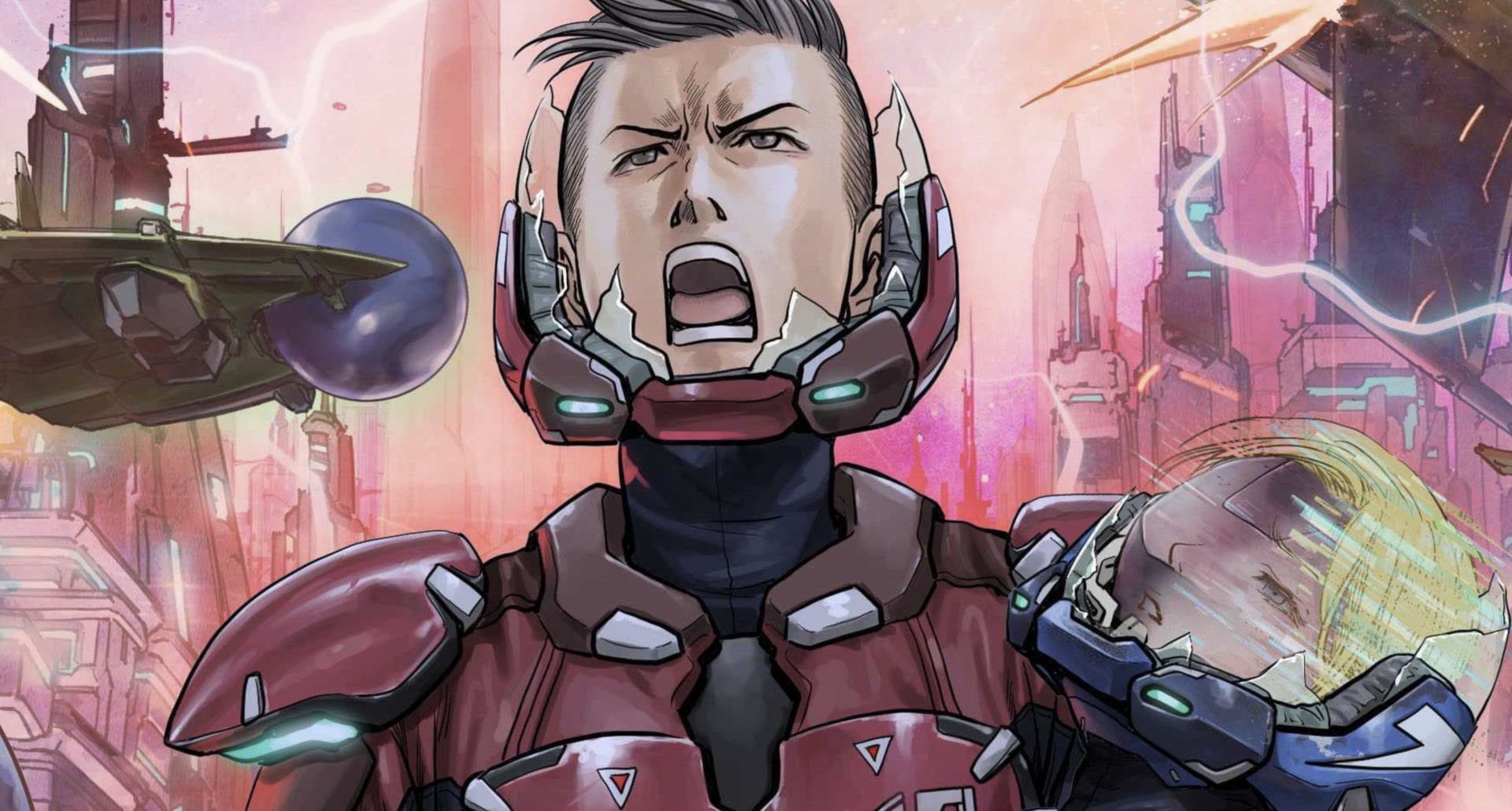
This month sees the release of Truxton Extreme, a new entry in the legendary shmup series which started life all the way back in 1988 and was conceived by the equally esteemed Masahiro Yuge.
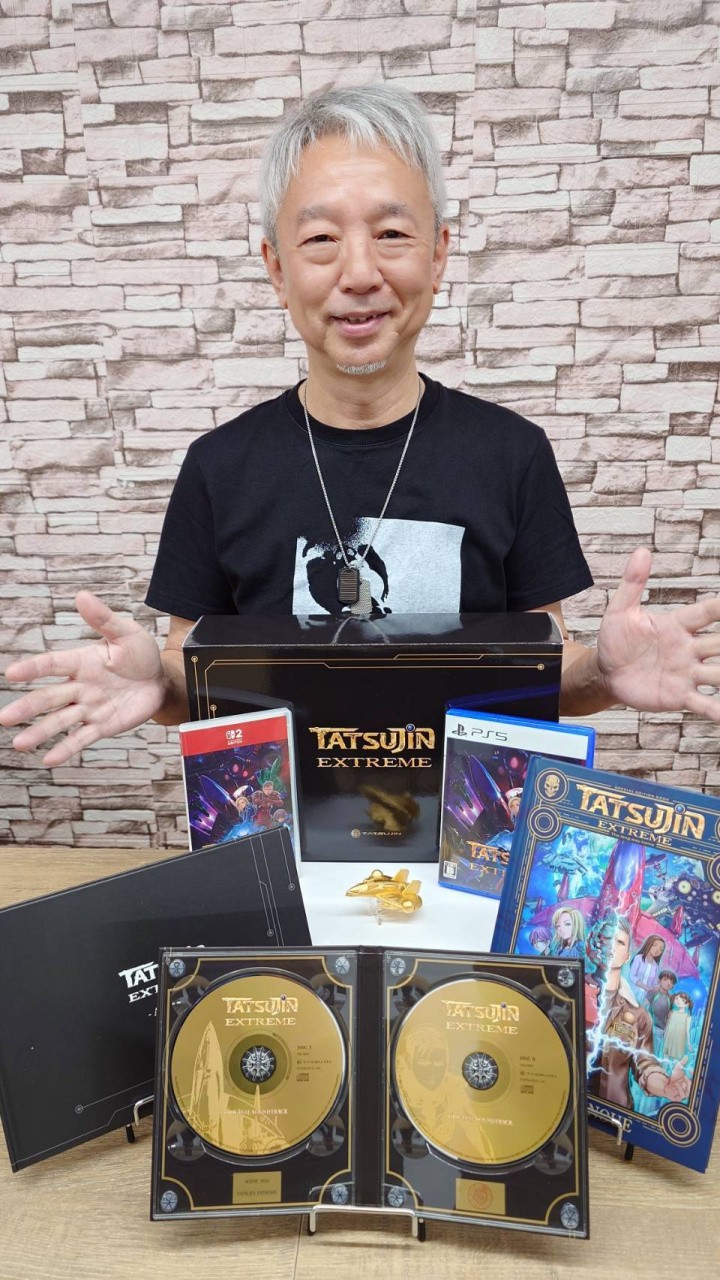
Yuge established Tatsujin in 2017, with the initial objective of overseeing the Toaplan IP he helped create while that company was active, but Truxton Extreme represents the most ambitious undertaking for his new firm – and, following our hands-on session a short while back, we were lucky enough to speak to Yuge about the game.
Time Extension: What motivated you to establish Tatsujin and reclaim the rights to so many of your past titles?
Masahiro Yuge: By naming the company after the title of a past, we began receiving a large number of licensing inquiries (about Toaplan titles). This made me think that if we could manage the rights to those games ourselves, we could create opportunities for a new generation of players to experience these classic titles again. And that’s what led us to pursue the acquisition.
Truxton/Tatsujin is considered one of the games that started the shump genre's shift towards high-level, skilful play (hence the Japanese name meaning 'expert'). Does it amaze you that, in a modern era where titles are designed to hit as large an audience as possible, there's still such an appetite for this hardcore style of game?
At the time, for arcade games to be a viable business, it was essential to create systems that players would find both fair and enjoyable. As a result, players steadily honed their skills, eventually growing into individuals who could truly be called “masters.”
As developers, we took great pleasure in watching players improve and coming up with new challenges and mechanics that would rise to meet their growing abilities. In many ways, it was like an ongoing game of cat and mouse between them and us. Through that process, I feel that a strong bond was formed—one that may not have been visible, but was nonetheless very real.
That is why, even today, seeing fans continue to support these games with such passion fills me with not only surprise, but also a deep sense of gratitude.
You've got a musical background; why do you think music and the shmup genre work so well together from a mechanical standpoint?
Scrolling shooters may appear, at first glance, to be about repeating the same actions over and over. In reality, however, the placement of enemies and shifts in difficulty are carefully designed to create waves of tension and accomplishment for the player.
Sound plays a crucial role in amplifying those emotions. Music can heighten the sense of tension during intense moments and make moments of triumph feel even more exhilarating. In that sense, I believe sound is one of the key elements that supports and enriches the overall game experience.
During the early stages of development, we often evaluate the feel of a game without any background music or sound effects. Yet simply adding sound can transform the experience completely, making it feel like an entirely different game. Programming, visual design, and sound—when these three elements come together as one, that is when a truly complete game experience is created.
Moving on to Truxton Extreme, why did you choose a 16:9 aspect ratio rather than the more traditional TATE view?
Most modern home TVs and PC monitors are not designed to be used in a vertical orientation. As a result, when a game created for a traditional portrait aspect ratio is displayed on a widescreen display, large amounts of unused space appear on either side of the screen. Quite simply, we felt that was a waste.
Even in some classic titles, games that were originally designed for vertical screens had to compensate for the lack of horizontal visibility by scrolling the view sideways.
That's why, with TATSUJIN EXTREME, we approached development from the planning stage with a 16:9 widescreen format as a core premise. This allowed us to create and fine-tune the game naturally around that screen format.
Throughout development, the team continuously shared ideas on how to address the challenges presented by each situation. Because everyone worked with that shared vision from the outset, we were able to avoid any major divergences regarding the direction and deliver a gameplay experience that feels intuitive.
What was the hardest aspect of Truxton Extreme from a design perspective?
Although TATSUJIN EXTREME is built in 3D, the player’s weapons are designed to hit both aerial and ground-based enemies in order to preserve the intuitive feel of a traditional shooting game.
To achieve the sense of scale and depth that 3D graphics can provide, it was necessary to introduce perspective/a sense of depth into the visuals. However, if that perspective is emphasized too much, inconsistencies can arise between what players see and how the game actually works. For example, it may appear as though a shot has damaged an enemy that it never visibly hit.
As a result, one of the most challenging aspects of the game’s design was finding the right balance between the visual impact of 3D presentation and the clarity and readability expected from the genre. In particular, we spent a great deal of time considering how to eliminate any sense of discomfort caused by differences in elevation and depth while still maintaining exciting and dynamic visuals.
I love the fact that so many classic Truxton tunes have been updated for this game. What was it like to return to these tracks using modern musical techniques?
It felt incredible. Back then, hardware limitations meant that I could never fully reproduce the sounds I had envisioned in my head. Now, thanks to modern music production technology, I’m truly delighted that I can finally deliver these compositions in the form I originally imagined.
At the same time, having access to so many new possibilities has inspired an endless stream of fresh ideas and creative approaches that I’d like to explore. I’m genuinely grateful that advances in technology have created an environment where creators can continue to take on new challenges.
The visuals in Truxton Extreme are all 3D and look striking, but longtime Toaplan fans will point out that the company was famous for its stunning 2D pixel art. Do you think it would even be possible to create a game in that style today?
The ability to create high-quality pixel art has become an increasingly rare and valuable skill in today’s game industry.
At the same time, Truxton Extreme required a tremendous amount of visual content, including enemy designs, environments, and numerous other graphical assets. Given the scale of the project, developing the game entirely with 2D pixel art was simply not a realistic option.
That said, I do believe it is still entirely possible to create new 2D pixel-art games today. By carefully adjusting the scope of the project, as well as the level of visual expression and overall volume, developers can still produce compelling pixel-art experiences that meet modern expectations.
Could we see you resurrect any other classic franchises you've been involved with, such as Hellfire, Dogyuun or Twin Hawk via modern-day sequels?
Absolutely. After all, we continuously see a wide range of responses from fans, including feedback on our past titles and requests for remakes, remasters, and entirely new series entries.
By listening to those voices, we hope to bring the legacy titles to a new generation by evolving them with modern technology and making them accessible to even more players around the world.
I believe that is one of TATSUJIN’s most important missions.
Your new company is very much about celebrating the past, but could we see an all- new game from Tatsujin at some point?
That is certainly a possibility. At the same time, I feel that everything we create is built upon our past work and the experience we’ve accumulated over the years. That applies not only to shooting games, but to any genre we choose to take on.
Even if we were to develop a completely original new title, I think players would naturally find connections to our previous works or compare certain elements to games we’ve made in the past.
And in turn we’d be very happy if players did feel those connections.
Toaplan products are available in so many ways these days, from Evercade to Astro City and even re-releases on the Mega Drive. How does it feel to see your legacy so alive and robust in 2026?
We have been working to fill the void left after Toaplan ceased operations and to bring its games back to players once again. However, I must admit that the level of interest and support we have received has far exceeded my expectations.
We’re deeply grateful both to the longtime fans who have continued to cherish these titles over the years and to those who are discovering them for the very first time.
Truxton Extreme is, in many ways, a manifestation of our gratitude toward all of those players. Through this game, we hope to express our appreciation and share that sentiment with everyone who has supported us, past and present.
We'd like to thank Yuge-san for his time, and for Overload PR for making this interview possible. Truxton Extreme launches on Steam, Switch 2, PlayStation 5, and Xbox Series X/S on 30th July.