
 by
by 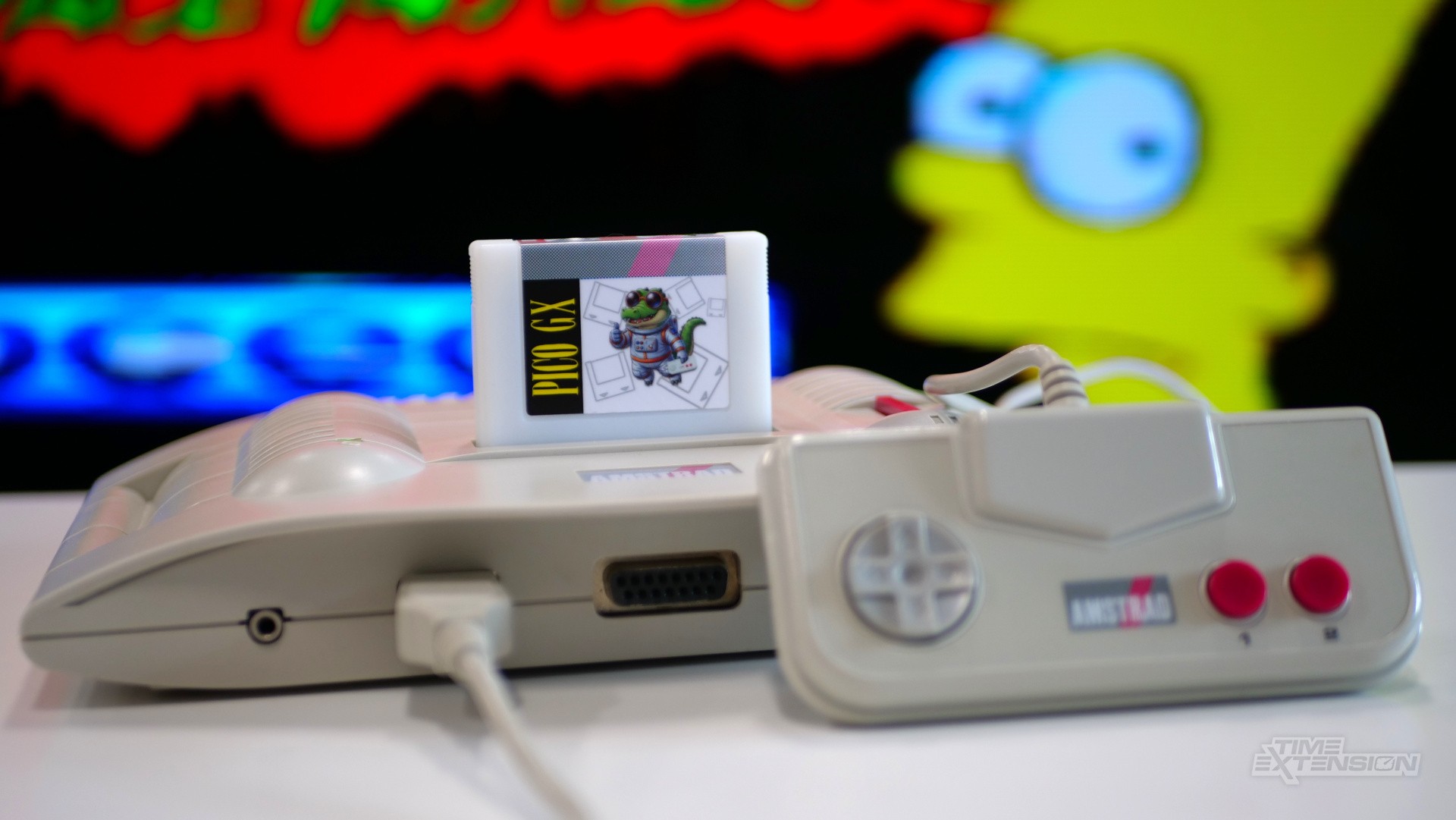
The world of video gaming is littered with hardware flops, but few of them are quite as catastrophic as the Amstrad GX4000.
It's easy to see why this ill-fated 1990 console made sense from a business perspective; systems like the NES and Master System were gathering momentum in Europe at the time, while the Mega Drive, PC Engine and Neo Geo were proving that this console-based revolution was no mere flash in the pan. Nintendo was also about to release its Super Famicom in Japan, more proof that consoles were the next big thing in home entertainment.
You can't blame Alan Sugar for looking at this growing sector and wanting a slice of the action – but taking the existing (and underpowered) Amstrad CPC Plus, removing the computer-related features and charging customers a premium for cartridges that already existed in a far cheaper cassette form perhaps wasn't the smartest strategy to deploy. Unsurprisingly, the public voted with their wallets.
Nobody knows for sure how many GX4000s were sold, but rumour has it the figure is around the 15,000 units mark – a complete and utter disaster from a commercial perspective. The system lasted around a year before being discontinued by Amstrad, and is little more than a footnote in the company's story.
You might ask, then, why anybody in their right mind would develop a flash cart for this system – especially when only 27 games were released for it. Well, the obvious point is that anyone wanting to sample the GX4000's entire software library will find a flash cart a more reasonably priced way of doing so when compared to buying all of the original carts individually, but there's a more appealing reason – due to its aforementioned link with the CPC family, it's possible to convert cassette-based Amstrad titles to run on the GX4000. Also, there are a surprising number of homebrew Amstrad games hitting the web right now, including an unofficial port of Sonic.
Taking this into account, Rodrik's Pico GX (yes, that's the topic of this review; apologies for the long intro, but we got there eventually) becomes a far more desirable product. Powered by the Raspberry Pi Pico microcontroller, this open-source cartridge costs £40 and is positioned as "an all-in-one solution for running your games for your GX console and Amstrad Plus computers."
If you've ever used a flash cartridge before, the Pico GX won't hold any surprises. You load your games onto a MicroSD card in .cpr or .bin format and boot them from the cartridge's user interface. The UI is clean and uncluttered, and remembers the last game that was booted (this is because it is saved in the Pico's 2MB memory, so you could, in theory, load a game, remove the SD card and treat the Pico GX as a stand-alone cart – I'm not sure why you'd want to, but the option is at least there).
Because of the aforementioned ability to convert standard Amstrad CPC games into GX4000-compatible versions, the Pico GX grants access to a far wider selection of titles than the standard GX4000 ever played host to officially, thus turning one of console gaming's most infamous turkeys into something a little more appealing (it won't solve the console's terrible RGB SCART output or that painful-to-use controller, but you can't have everything).
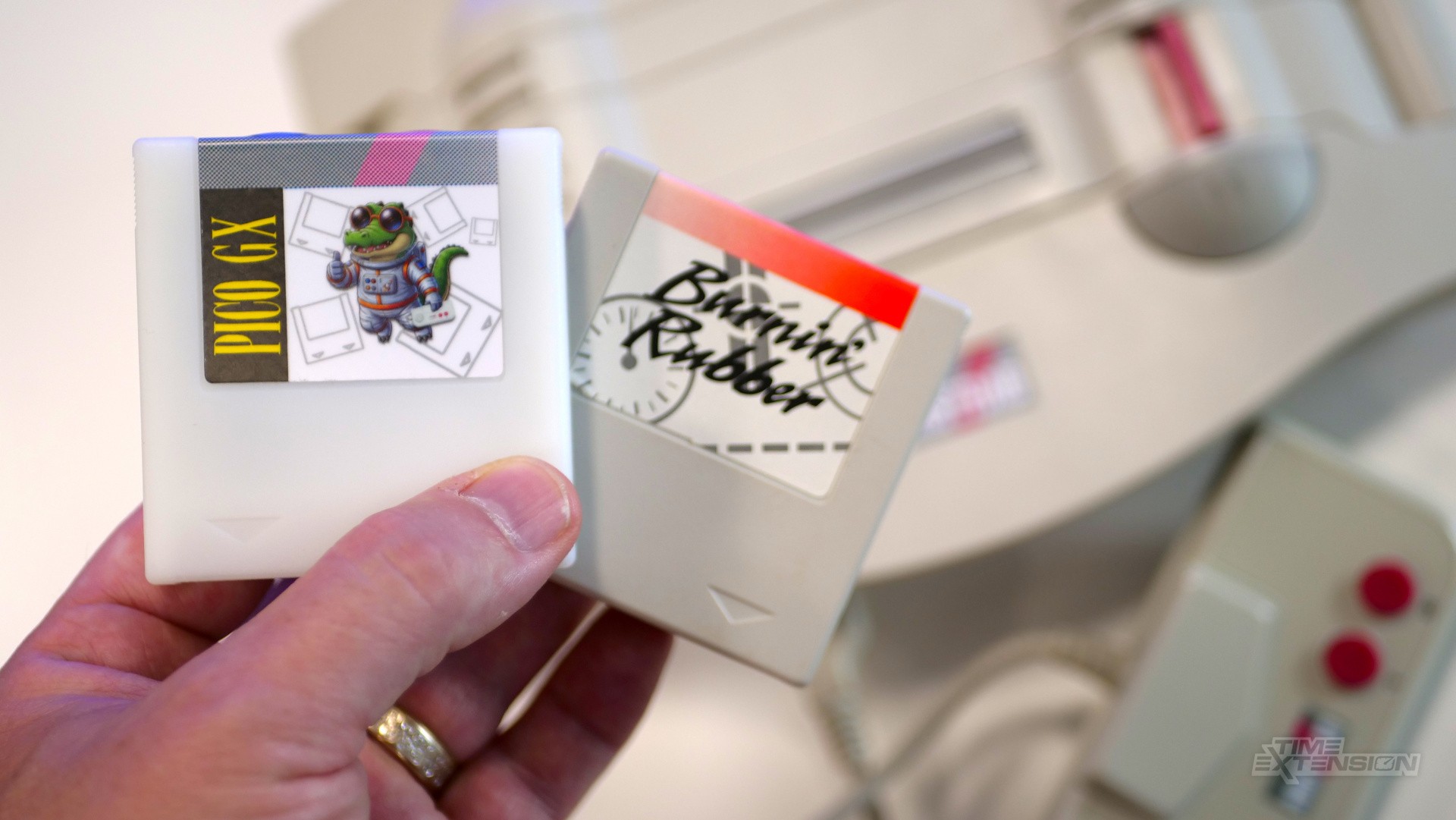
The developer continues to work on improving the Pico GX, and updates can be found on this GitHub page. The unit I'm using in this review was kindly supplied by Flamelily Retro, an official UK reseller for the device that ensures the creator gets a share of every purchase. The unit I was sent comes in a resin factory-printed case complete with a cartridge label (which, disappointingly, appears to have an AI-generated image on it – I'm happy to be proven wrong, however). There's a USB-C port on the top which allows you to update the firmware and transfer games without having to pop out the MicroSD card.
While the GX4000's poor reputation within the world of retro gaming is certainly justified, it's nonetheless heartwarming to see that even a platform with such a negative legacy has dedicated fans who want nothing more than to elevate its standing a little – and I've personally had more fun than I anticipated digging into the expanded library of Lord Sugar's fascinating failure.