
 by
by 
There are very few developers around who can claim to have as much insight into Bethesda's history as Bruce Nesmith.
Arriving from the Dungeons & Dragons publisher TSR in the mid-90s, Nesmith has had two separate tenures at the RPG giant (1995-1998, 2004-2021), the latter of which lasted over 17 years.
During that time, he's contributed to the design of some of the company's biggest games, including several titles in The Elder Scrolls series, the company's resurrection of the Fallout series, and its spacefaring RPG Starfield. In 2021, however, he left the company to spend more time pursuing his love of writing, creating the Loki Redeemed series of Norse-inspired contemporary fantasy novels and the LitRPG series Glory Seeker in the years since.
At the beginning of 2026, we sat down with Nesmith to chat with the veteran writer and designer about his journey in games, covering his early days making games for teletype machines, his career at TSR, and his eventual arrival at Bethesda, which is where he made his name.
He explained to us why he is the "luckiest son of a bitch in the industry", what his "awkward" first day at TSR was like, how the final nine months of development on Daggerfall were a "miserable" experience, and clarified some controversial comments he made recently in another interview about The Elder Scrolls III: Morrowind. You can read our conversation, edited for clarity and length, below:
Mines of Moria, Dragons, & A Stroke of Luck
Time Extension: To start, I’m wondering, what was your experience with computers growing up?
Nesmith: When I was in high school, we had a Hewlett-Packard 2000 computer. And we had two teletypes and one advanced teletype machine. So they didn't even have CRT screens.
A friend of mine introduced me to that, and I made a silly little stock market game and a Mines of Moria game, which was fun but kind of a waste of paper because it had to print the map every time you made a move. That was my initial introduction to computers, but from there I left high school and went on to college at Beloit.

Beloit had the creme de la creme: an IBM 1800 that ran on punch cards. And for a couple of my classes, particularly chemistry, I had to actually do some Fortran 77 programming on the punch cards. During my junior year, they then decided to purchase a Hewlett-Packard 3000 computer, and I applied to be one of four students to help them with a software conversion over the summer because I had experience with the HP 2000. So, I spent the summer at a small liberal arts school with nobody on campus other than half a dozen other students, three of whom were my programming buddies.
Eight hours a day, I'd work. Eight hours a day, I'd sleep and take care of necessary functions. And eight hours a day, I'd program for myself, because it was a new, exciting system. It actually had a CRT screen, can you believe it? So I made about half a dozen games in that space of time. I was programming the accounting software in COBOL, but I did my games in BASIC.
When everybody came back in the Fall, my games became a hit, not necessarily because they were amazing, but because they were the only thing you could play. The biggest hit was a game called Dragons, a 2d20 dungeon role-playing game based on a 2d20 tabletop RPG system that a friend of mine and I had developed. It came about because a friend of ours who was a few years older introduced us to Dungeons & Dragons.
Time Extension: Could you tell me a bit more about this game, Dragons? What did it look like to play? Because at this point, you said you had a CRT to work with.
Nesmith: It basically had ray tracing for what you could see. As you moved around, it showed you the part of the map you could see. It had pound signs for walls, little brackets with numbers in them for chests, and greater-than and less-than signs for the monsters, and it became pretty popular with the other kids and actually attracted the attention of TSR, the publisher of Dungeons & Dragons.
What happened was I was getting ready to graduate with a Bachelor of Science in Mathematics (which was next to useless, particularly in 1981), and it turns out that TSR, which was 45 minutes up the road, was also getting a Hewlett-Packard 3000. Being so close, they shared the same salesperson, because that was her region, and she said, 'You know, there's this kid down the road at the college who's programmed something that's a lot like the stuff you guys make.' After that, they called me to interview for a job as a computer games programmer.
Today, I do a fair amount of talks to colleges and high schools and groups that are interested in getting into the games industry, and what I typically tell them is, 'Don't wait around for someone to call you up with your dream job. It happened to me. I'm the only one. That's it. I got it.'
But what I also tell them is that you get a job by showing your employer you can do the job, and without trying, that's what I did; I proved that I could do the job. And that’s really the lesson people should take away.
There are a lot of ways to prove you can do a job. You can do it by getting a degree, working on your own, or at another company, but that's essentially what an employer wants. They want to know that you can do the job because they're driven by fear, and they want to know that the investment that they make in you, which is substantial, will be worth it and won't be wasted. I did that without even realising it. And so, I often say, ‘I am the luckiest son of a bitch in the industry’.
TSR, The Apple II Plus, & Marvel
Time Extension: What were your first impressions of TSR?
Nesmith: So, for the interview, I got my first suit, and it fit about as well as you'd expect a first suit on a college student to, and since they didn't know what they were doing, either, they stuck me in the vice president of sales, Will Niebling's office.
They put me in a corner on a chair, with a semicircle of people around me — half of whom were executives, half of whom were middle managers — and they just fired questions at me; I didn't know any better. I thought this was what all interviews were like. This was the first interview I ever had for a job that wasn't being a lifeguard or whatever else.

Anyway, I ended up getting the job, and I showed up to my first day of work at TSR, which was in a rundown hotel that was later condemned, then refurbished and turned into an ice cream parlour. This rundown hotel had crooked walls and floors; if you put a pencil on the floor, it would roll to one side. And they stuck me in this room that clearly looked like the world's tiniest hotel room with a makeshift closet that they'd taken the doors off of, and plunked me in front of this TRS-80 computer that used paper tape.
I'm in my suit. Everybody else there was in t-shirts and shorts – some of which may have been laundered; many of which weren't. And the walls in this room were covered with little yellow Post-it notes with little cartoons and sayings from Art Spiegelman's Maus, a graphic novel about Nazi Germany with Jews as mice and the Gestapo as cats, which I didn’t know anything about at the time. If you can imagine a more awkward first day, I'd love to hear about it.
Time Extension: What was the first project you worked on there?
Nesmith: The first thing they had me do was fix a program for a version of The Eight Hours of Le Mans tabletop game that Mike Carr had made. The problem they were having was that every hour, they needed to sort the cars, and it was just taking too long. You know, people are just twiddling their thumbs.

So I did the incredibly innovative thing of implementing a modified bubble sort. It was probably the second-most common routine in programming, but its advantage is that the first pass gets you the top entry. And so I could print it out immediately. Then the second one is printed, then the third, and so on. So you didn't have to wait for the whole thing to be sorted. I could just print it. And so I solved their problem with the world's absolutely most trivial routine.
Time Extension: How does that then lead on to you working on computer games for TSR, like Theseus and the Minotaur for the Apple II?
Nesmith: So once the TRS-80 games proved to be unmarketable, TSR got some Apple II Pluses, and we hired some other people. We got Steve Sullivan to do the artwork, and Keith Enge to do real programming, who was a far better programmer than I'll ever be.
I worked on two games: Theseus and the Minotaur, featuring first-person 3D dungeon maps, and Dungeon, an adaptation of the dungeon board game TSR produced. And then Keith worked on something much more technically challenging: a Dawn Patrol game.
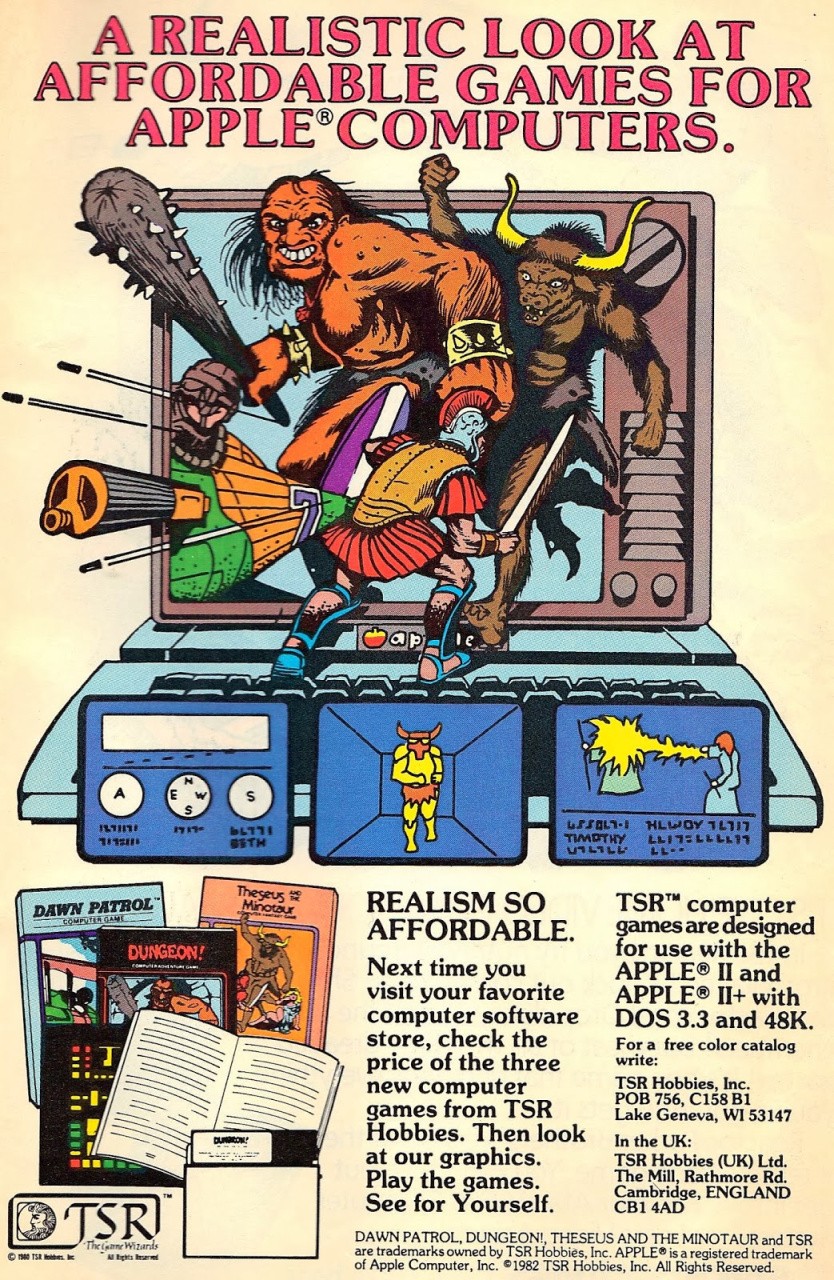
That had all the different planes and their instruments, and you'd actually see out the windows with a 3D rendering of the airplane and whatnot. He wrote all of that in assembly because he knew what he was doing. It was running at four to eight frames per second as a real-time dogfighting simulation, which was pretty cool for the technology of the day. The problem, unfortunately, though, was that TSR didn't know how to market these.
They put them in the Random House catalogue next to all their other D&D products, and they just assumed stores would buy and sell them. But the store owners didn't know what to do with them either, because not that many people had Apple II Pluses, and they didn't go looking for these kinds of games at their hobby gaming stores. So the sales did not support maintaining the staff and the overhead the computer games department needed, even with only a handful of people. So they got rid of the department, and we all got the opportunity to transfer to other parts of the company.
I initially transferred into the IT section, and then, very shortly after, they transferred me to the game design section, where I wrote my very first project, an eight-page adventure titled Day of the Octopus for the Marvel Superheroes RPG. You had preset Marvel superheroes, and in the adventure I designed, you were fighting Doc Ock. It was all very basic stuff, but from there, I continued to work for them, writing adventures.
Time Extension: Much later, you became involved in writing for Ravenloft, a campaign setting for Dungeons & Dragons, initially created by Tracy and Laura Hickman. How did that opportunity come about?
Nesmith: My work at TSR was divided into two chapters. After working there for about four years, the company had financial difficulties and was laying people off.
In either the last layoff or the second-to-last layoff, my boss, Harold Johnson, came to us and said, 'I'm supposed to lay somebody off, and I don't know what to do. There's no fat left here.' And so I looked around at all my friends, and realised that their skill sets would make it far more difficult for them to get a job outside the industry than mine would, because I had programming experience. So I volunteered to be laid off, something for which my wife has still yet to forgive me, 40 years later.
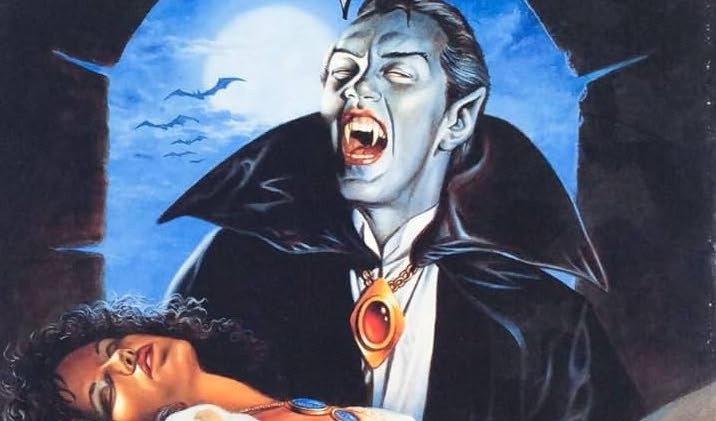
I spent a few years outside of the industry. And when TSR's fortunes rose again, I reapplied, and Jim Ward hired me. At that point, I was able to work on more interesting projects. The Ravenloft Box Set is probably the one I'm best known for, but I also did a bunch of other things.
I did the Dragon Strike board game. I did the Gamma World 4th Edition rules set. So that was probably the heyday of my time at TSR, that second chapter. The Ravenloft box set was extremely well received, and I'm still extremely grateful to the fans for that.
Bethesda & The Making Of Daggerfall
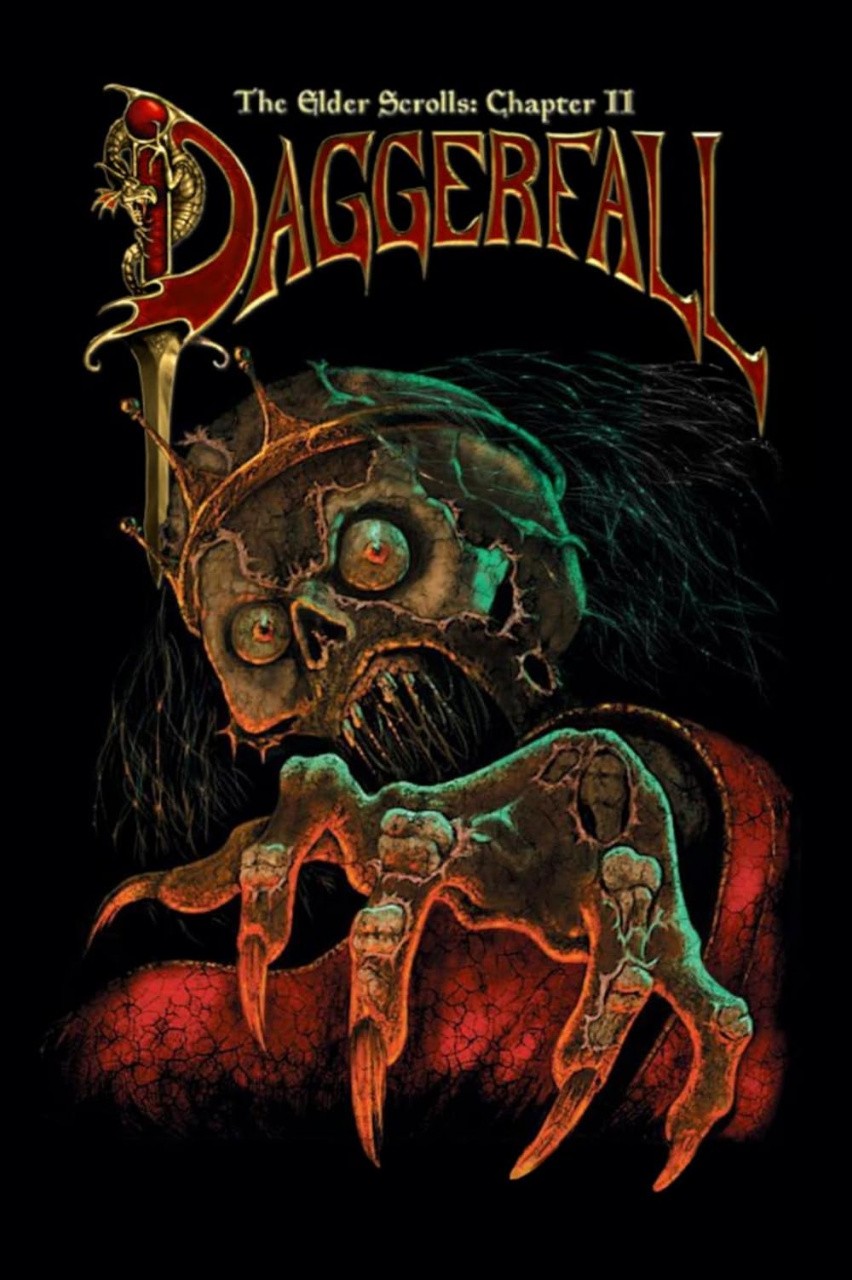
Time Extension: In 1995, you joined Bethesda to work on the second game in The Elder Scrolls series, Daggerfall. Could you talk me through how you decided to make the leap from TSR to Bethesda?
Nesmith: Well, Lorraine Williams had purchased the company, and she was the CEO during my second tenure at TSR. And at some point, TSR started running into problems again. And I was involved in things like the Dragon Strike board game, which was one of Lorraine's key initiatives. As a result, I had a little bit of a peek into what the C-suite was doing, just enough to see that I felt the company was very troubled and not on a good path. And so I chose to leave voluntarily. I sent out my resume and got hired by Bethesda.
Not long after I left, Lorraine sold the company to Wizards of the Coast. So that was more of a very traditional job change where I just said I wanted to leave, put my resume out, got hired, left, and then they hired me to work on design stuff for The Elder Scrolls II: Daggerfall.
Time Extension: Were you aware of The Elder Scrolls: Arena prior to joining?
Nesmith: No, I had never heard of it, but they brought me in, and they showed me what they were working on, and it looked amazing, so that really didn't matter. All the guys there were also really excited to have someone with a TSR pedigree there. So, I was happy to make the leap.
So many other places I interviewed at had made me offers, but I wasn’t really excited about any of them. I actually got an offer to work on the Ultima series, for example, but they wanted me to leave immediately. And I still had a few months to wait, to let my kids finish school and wrap up a couple of last things at TSR. So that fell through. I also interviewed with Westwood. They were in Las Vegas. And they looked like a great group of people, but I just couldn't live in Las Vegas. I couldn't take my family out there. That's a personal thing. Vegas can be a great place for some people. It just was not a place for me.
Time Extension: When you began working on Daggerfall, what state was the game in? Had they already made the switch in engines to Xngine?
Nesmith: I came on after that. I came on mid-project, and my role was to work on quests and build dungeons. So that's what I did. For people who really can get in a wayback machine, that initial dungeon, the very first one you start the game in, that was mine. So if you hated that and wanted to tear your eyeballs out, that's my fault. Though the idea of starting in a dungeon would probably have been Julian LeFay and Ted Peterson's call. They were the principals on that, particularly Julian.
Time Extension: Tutorial dungeons seem to be a pretty big staple of The Elder Scrolls series. If I'm remembering correctly, Arena, Daggerfall, Oblivion, and Skyrim all had one. Do you happen to know why that is?
Nesmith: I don't know why exactly, but I do think it's actually a good idea. Most video games have a starter area that teaches the player how to play. It's a very rare game that just throws you into the open world, because the developer needs to make sure you understand how to do combat, how to use all the special systems — whether it's sneaking, climbing, jumping, or whatever it is. They also need to make sure that the fights you have are definitely winnable, particularly with the characters you have created. So that's essentially what we were trying to do with Daggerfall. Did we do it well? I don't know if you could argue that. But by the time Todd Howard took over for Morrowind, which I was not at Bethesda for, I think he decided to run with the trope of you always start as some kind of prisoner, because it always ensured the same thing.
You could start the player off in a cell, get them through the basics, and pretty much control that initial experience, making sure they understand how to play the game before throwing them into the open world. And if you look at it, all the games did that, even Daggerfall.
Once you got past the initial dungeon, you were thrown into the open world, and you could go anywhere. You had that open-world experience. And while I would be loath to say Bethesda pioneered open world, they definitely took it and ran with it.
Time Extension: Another Elder Scrolls staple, and something that Daggerfall actually introduced to the Elder Scrolls, was levelling based on your role-playing. You assign points at the start of the game, but level based on how you roleplay rather than collecting and assigning additional points. Were you involved in any of the discussions around that?
Nesmith: My memories of that time are going to be a little bit fuzzy. So I would be quite reluctant to say I was in those conversations, but I know I was personally very excited about them.
I really liked the character generation system in Daggerfall. It had a lot of really cool things going on, things that my years of working with tabletop role-playing games told me were worth doing. So, when it came time for me to work on Oblivion, I wanted to push those elements really hard. And then in Skyrim, even harder. I think Todd actually puts it best. He says, 'The idea is for the game to get out of your way.'
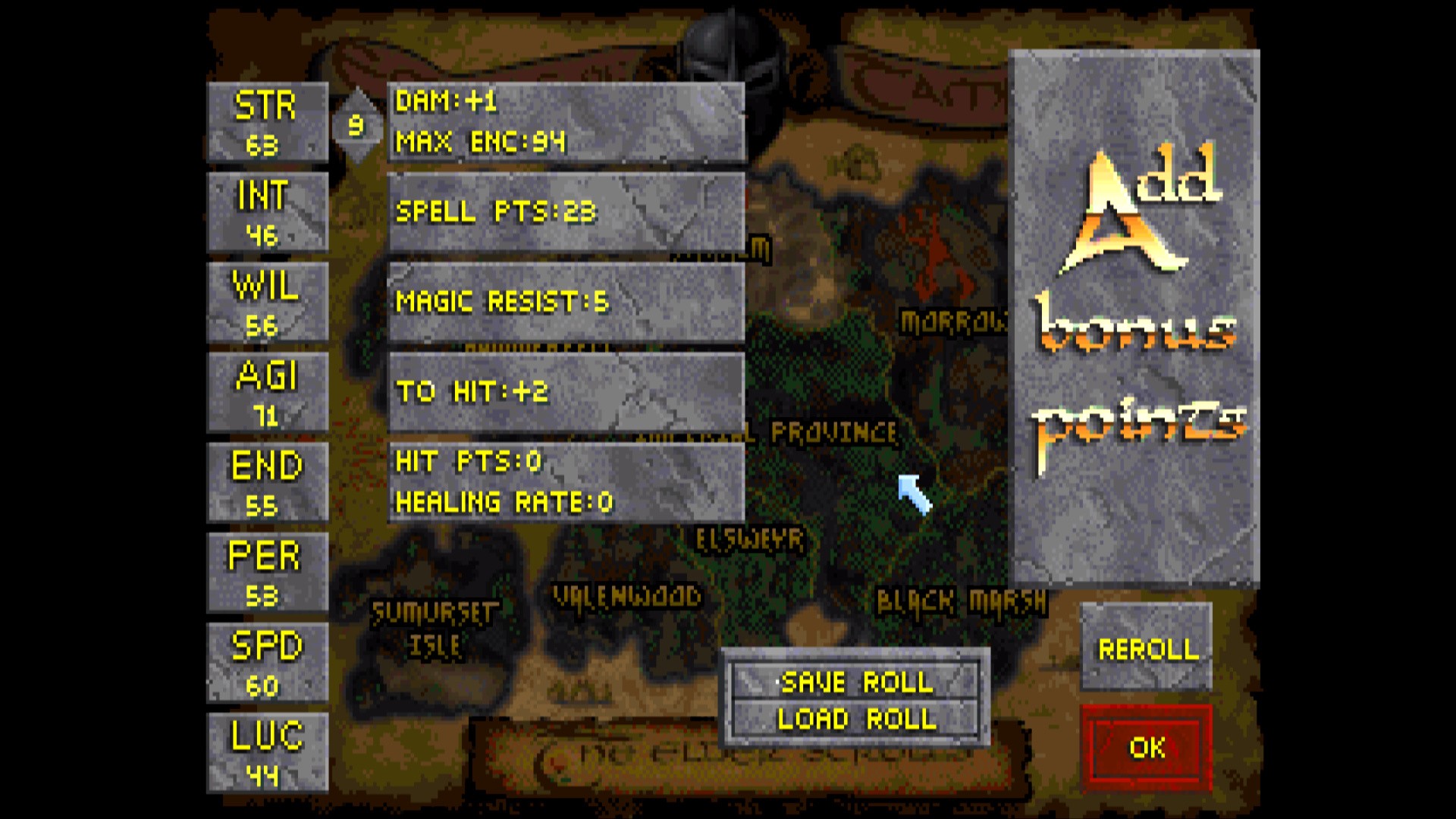
In other words, you're just in the moment. You're in the experience. You're just doing the things you find fun, whatever that happens to be. And all this other stuff is in the background. If you want to pay attention to it, fine. If you don't, also fine. It's about getting out of the player's way; don't make it so you're playing a spreadsheet; make it so you're in the game doing the cool stuff. That's been kind of a driving concept since Daggerfall.
Time Extension: With Daggerfall, there are obviously a lot of stories about how it had a particularly challenging development cycle and was super punishing for its development team. Why was that? Was it the technical challenges, the scheduling, or the pressure from management to have it out sooner rather than later?
Nesmith: The simple answer to that question is yes, it's all of that. Many video games back then were made by one person or very small teams, and production cycles would run from six months to a year or a year and a half. But Julian and Ted — particularly Julian — had very big dreams.
After the success of Arena, they wanted to do something that was a real role-playing game and something big. But the company needed to put out a product. So, Julian, completely well-intentioned, kept thinking it would be done really soon and that there was just a little bit more to do. The reality, though, was that it was so complex and so big that no proper scheduling was ever applied to it.
It was a three-year project, and they kept trying to do it in 1.5 years. And so management got very desperate to get it released on time, and they pushed people hard. To be fair to Bethesda, though, you're talking about a small boutique company at that point. Bethesda was not very big. They didn't have the means to just say, 'Okay, well, it's going to be a three-year project, so let's let it take three years.' That's a lot of cash to burn through for a company that size, and they finally needed to have something out.
So, you know, poor scoping, poor communication, and not paying attention to risk management all folded together to make the final nine months of that project an absolutely miserable experience for everyone working on it. And as has been shown years later, when you push staff that hard, you actually get inferior results. It's not the best way to operate. But at that point, it was very common for studios to push through crunch and have their staff work extremely long, hard hours to try to get something out quickly.
Time Extension: Did Daggerfall give you any insight into how not to run projects later on?
Nesmith: Oh yeah, pretty much everything done there was a negative lesson in what not to do going forward.
But one thing I think everyone has to understand about video game development is that the game's never really done. Every game is published with bugs, incomplete features, and features they didn't have time to polish. Every single one. Even with the simplest game you can possibly think of, that's going to be the case. And so you end up with a situation where you just have to decide, ‘Is this good enough?’ And when you're dealing with that, there is a drive, especially at the end, to try to make it as good as possible, because you're facing an impossible task. It can't ever be truly, completely, utterly complete.
So people end up putting in long hours, many of them voluntarily, and management has to decide at what level to apply pressure, at what level not to, and for how long. Bethesda landed in a pretty good spot, I think, where we would have just a couple months towards the end of the project where everyone was asked to put in whatever they could stomach in terms of extra effort to try and get that last little bit of polish, close those last few bugs, get this feature working the way it really should have been working. Whatever it may happen to be.
10th Planet, The Lost Precursor To Starfield
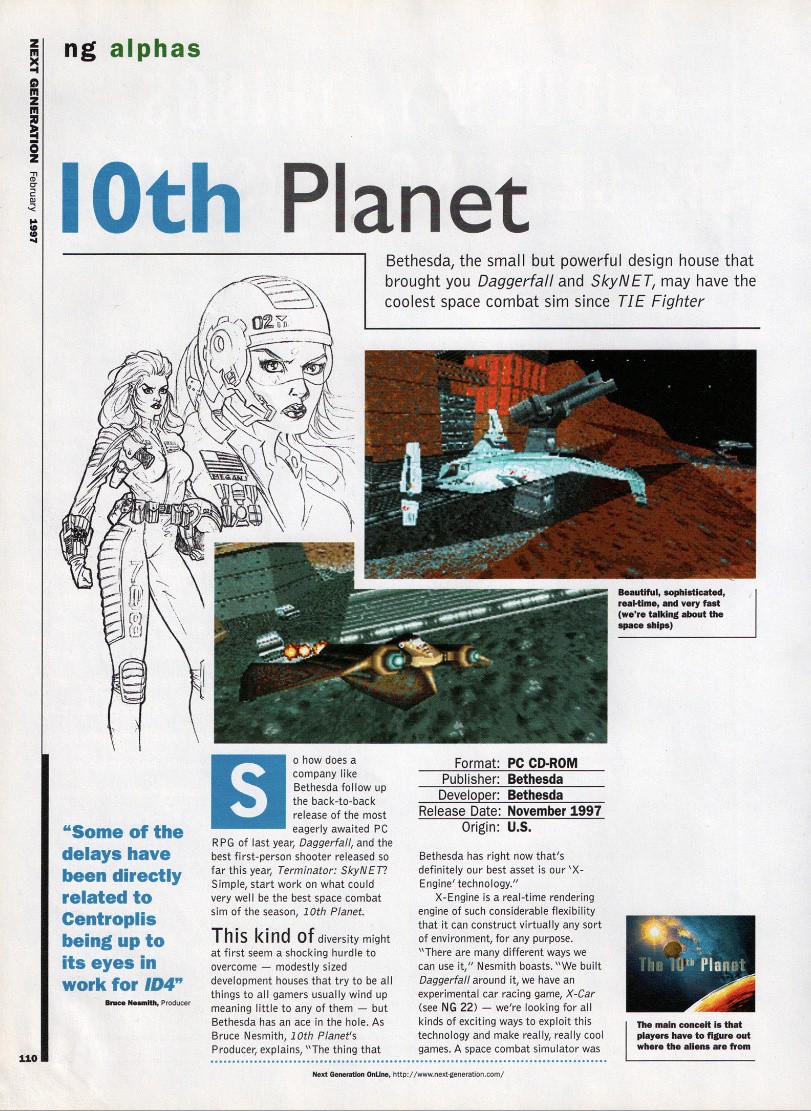
Time Extension: In addition to Daggerfall, I also heard you worked on an unreleased sci-fi game for Bethesda, called The 10th Planet. When did you become involved with that? Did that overlap with your duties on Daggerfall, or was that after Daggerfall had shipped?
Nesmith: That was after. So I had just worked on Daggerfall, the Terminator series, the PBA Bowling game, and other stuff like that, and this opportunity came up to work on this project. At TSR, I made my bones by being willing to take on projects others didn't want: 'Oh, nobody wants to do that? I'll do that.' And management loves it when you do that, particularly if you can at least elevate it to the point where it doesn't suck. But, often, people don't want to do these things because they don't see any potential in them.
So while I certainly did not only do that, that was something I had done a number of times. Management came to us and said they had an opportunity to work with some Hollywood guys on a project called 10th Planet and asked who would be available to work on it. And I stupidly said, 'Sure, I'll jump on that grenade.' Well, it turns out that the tabletop publishing business is not like the video game business. And if a project isn't tenable, you should not work on it. You should not jump on that grenade.
Time Extension: Do you think the project would have been cancelled if you had not gotten involved?
Nesmith: I don't know, because the other part of the problem is one that I have to own up to, which is that I ultimately overscoped the game. They wanted a game out in nine months, and, exactly like Julian (this is the lesson I did not learn), I scoped a game that was probably closer to two years because I had my own dreams for what it should be.
My dreams excited management, but they wanted it in nine months, and that game could not be produced in nine months. I'm not sure they would have been happy with the game that could be produced in nine months, but we never had that discussion to find out. So, I don't know if they would have just assigned someone to work on it, or if it would have just languished and petered out. That's pretty much unknowable at this point.
Time Extension: When did you know the project had reached the point where problems arose? That Bethesda had completely run out of patience.
Nesmith: Probably about six months into the nine-month project, I realised I had bitten off way more than I could chew, and I didn't have an exit strategy because I was committed. I'd have had to retool the entire game by then.
So I just kept hoping I could persuade them to give me the extra time, as they did with Daggerfall. But they had learned their lesson with Daggerfall, which is that you have to cut your losses at some point. You know, the sunk cost fallacy is real. And, at that point, they really only had two choices. Cancel the project, move me on to something else, or fire me. But they were also in financial straits; they had to cut staff in order to keep the doors open. So it was a much easier and probably better choice for them to let me go.
Time Extension: Looking back on that experience, are your memories of the project mostly negative, or did you believe that what you and the team were creating would come good in the end?
Nesmith: I think if the company had had the wherewithal to be able to put two more years into the 10th Planet, we could have made a very exciting game. I liked what we were doing. That doesn't mean, though, that it was market viable. Spaceship combat games were not the largest niche in video games, and we were essentially going after the Wing Commander crowd.
I think it would have been a very cool game. So I'm still proud of the work I did on it and of the people I worked with. But the reality is, it was grossly overscoped, and there was probably a difference in expectations between management and me that led to its cancellation.
Return to Bethesda, Oblivion, & Skyrim
Time Extension: You were fired from Bethesda in 1998, but returned to the company in 2004. What changed about your own situation that caused you to go, 'Okay, I want to go back, I have unfinished business there?'
Nesmith: Well, my office mate at the time of my first iteration at Bethesda was Todd Howard. So Todd and I had become close, and he knew what I was capable of and what I could do. After I spent, Jesus, five, maybe six years working for Convera doing a couple of different things for them, they ended up in trouble, and they had to let me go.
So I reached out to Todd and said, 'Hey, I'd love to come back and work,' because, at that point, upper management had completely changed. The company had been sold to ZeniMax, and a lot of the upper management had changed. So, a lot of the people I had issues with were no longer in positions of authority or were literally no longer with the company. It was very, very different. The culture was very, very different. Todd interviewed me — I had to go through the interview. He didn't just say, 'You're hired,' and I passed the interview process.
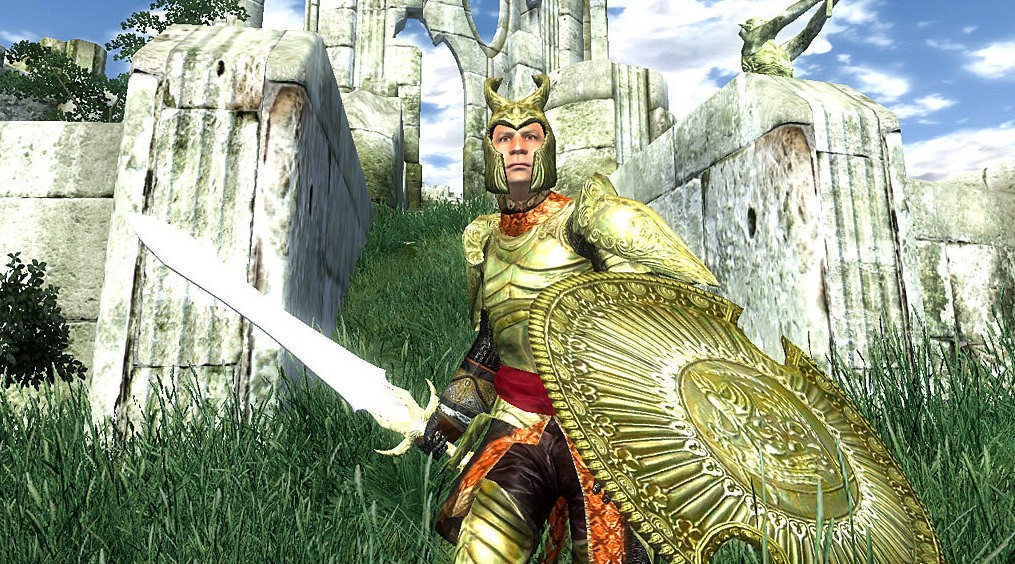
Time Extension: Was Oblivion the first project that you were put on when you rejoined?
Nesmith: It was in the works when I started.
Time Extension: At what stage do you reckon it was when you came back on board? Had they already gotten most of the technology up and running for it?
Nesmith: No, I would say it was probably still in early development, which means it had already gone through the pre-development stages of what we're going to do and proof of concepts and all that.
They were just starting to knuckle down and actually start making the game. It was early in that stage. I had a lot of input, along with my good friend Kurt Kuhlmann, on things like NPC controls, which we referred to as packages at the time, and on much of the character system. Later on, I also did the whole Thieves Guild questline for Oblivion. So I ended up having quite a bit of responsibility and quite a bit of input into a lot of the systems that went on.
Time Extension: Looking back now, do you have any particular favourite quests from that game?
Nesmith: Oh, there's a lot of stuff. There's one quest that sticks out in my mind because it was such a pain in the ass, as well as being very cool. That was in the Shivering Isles, I believe.
It was a ghost quest, and the idea is that there's this event that happened; this conquering of a little castle, and all the ghosts are replaying it over and over again. So your job is to go in there and make changes so the outcome is different and the ghosts can be put to rest. I think there were three major things that you could change. And so when you went in there, and you did one of these things, the next time the ghosts replayed, it had to play differently.
Getting that to happen was a huge challenge, particularly because you could do these steps in any order. So we had to deal with all the permutations. But the end result, I was very, very proud of because it is kind of a unique story that you don't see a lot in video games. where you actually change what's going on with these ghosts and try to make the story play out differently, and you actually get to see it playing out with those changes, so that was very cool.
Time Extension: I’ve always been curious about how early developers start thinking about quest design. How early, in your opinion, should quest designers be involved in the development process? Is there a specific approach that you personally think works really well when plotting out quests?
Nesmith: You need all your staff busy. Studios can't wait for all the technology to be done, and then the programmers sit back, and the design staff goes. You know, the same with the art. Studios can't wait for all the technology to be done before the artists start working. So everybody has to be doing everything from the beginning. And this will be true in every company. This is, you know, not something super secretive, but just a process, and every company is going to do this.
I usually try to do lore research wherever possible. So if I'm doing a quest about a particular location, I want to make sure I look up all the things in that location. I'm usually looking for something interesting with open-ended questions. Like, if the location has ghosts, but it doesn't really define why the ghosts are here. That's something interesting I can hook into.
What I usually do is put something down on paper, and once something is on paper, then I can have somebody look at it. Because the easiest time to make changes is when you've done the least amount of work. So I can have somebody look at it, who says, 'Hey, this doesn't make sense,' and then I can say, 'I can fix it right now, it takes five minutes,' as opposed to taking five days to make a fix once it is completely implemented. You always want to make as many changes as possible as early as possible, and get feedback early on.
Once you've done that, you can then build a little bit of a shell, just the bare bones, you're not going to do any combat, but it's in-game. You get to play it again, and you get more feedback. You can't create this stuff in a vacuum.
Time Extension: Later on, you became the lead designer on Skyrim, which is a huge game, but huge in a different kind of way than Daggerfall. Daggerfall, for instance, relied a lot on procedural generation to create its world, while Skyrim is largely hand-crafted. Looking at the two, I’d be interested in how you view these different approaches to world design and the impact on the player experience.
Nesmith: Well, for me, Daggerfall was falsely large, because it has a lot of things that are repeated. Like I have desert, I have desert, and I have desert. Those are all the same. So if I have 10 deserts versus I have one hundred thousand deserts, the one hundred thousand is much, much larger, but is it really? Because the player’s senses are just going to say, ‘It’s desert.’
There were, I believe, 35,000 or 36,000 separate locations in Daggerfall, but that's a falsehood, because what you need to look at is how many different locations there were. Having everything the same doesn't move the needle. What you need are things that are different. Like, at a sandwich shop, they'll tell you that there are 6,000 different sandwiches you can make. Technically, that's true, because of all the permutations of all the ingredients that they have. But in reality, as human beings, we don't see the permutations. We just see the different variations.
So you see the number of types of cheese, meat, and vegetables. And say, ‘There’s eight.’ And the same thing is going to be true in a video game.
So the number of things that actually feel different, special, and unique in Skyrim is what gives it its sense of scale and scope. You keep finding new things that weren't there before, and that often requires human effort. It can’t be generated.
The Elder Scrolls VI, Remasters, & Morrowind Comments
Time Extension: You obviously left Bethesda in 2021, but I’d be remiss if I didn’t ask you about The Elder Scrolls VI. I’m wondering, were you shocked that it was announced as early as it was? Even now, it seems like it is still a long way off, because games in general seem to be taking longer and longer to make, and there’s so much pressure to make a good first impression.
Nesmith: The Elder Scrolls VI, GTA 6, there's a bunch of other titles you could rattle off. They have an expectations problem, and those companies are keenly aware of it. The expectations are set to an unachievable level. You cannot match those expectations; It's not humanly possible. So you have to try and dial them back, or you have to work hard to get close to the expectations.
When it comes to The Elder Scrolls VI, I think it was inevitable that the announcement had to come. I don't think Todd wanted to do that, but because it had been so long since Elder Scrolls V, he had to reassure the audience that it was going to happen.
His normal process, which I totally subscribe to, is not to talk about it until closer to its release date, because you're going to set expectations poorly. So you're better off waiting. But they were getting so much negative feedback: 'Are you ever going to do Elder Scrolls? Have you abandoned us?' He had to say something. He could not remain silent any longer.
Time Extension: Besides Elder Scrolls VI, do you think that there's an opportunity for Bethesda to revisit earlier games like Daggerfall or Arena in the form of a remaster or remake?
Nesmith: They did it with Oblivion. So, the answer to that is yes, because they did it with Oblivion. Now, if you want to go back to Daggerfall, Arena or even Morrowind, it would be arguable that the code base doesn't exist anymore. So, the effort to spin those up would exceed any possible benefit you could get from them.
It would be tricky. I think a lot of the time, older games, if you go back and play them, do not hold up. We have this memory in our heads that is more about how we felt while playing than about the actual play experience. You're remembering the emotion.
Time Extension: Obviously, we mentioned they've done it already with Oblivion, but I'm curious, if Bethesda ever went back to Daggerfall, what do you think it would need to change?
Nesmith: It would be tricky. I think a lot of the time, older games, if you go back and play them, do not hold up. We have this memory in our heads that is more about how we felt while playing than about the actual play experience. You're remembering the emotion.
If you went to play it, you'd actually look at it and go, 'Wow, I don't know that I can play this. This is not good.' And I think, you know, it's just a matter of the evolution of the industry and the capabilities we have available. Daggerfall's combat, for example, is extremely primitive compared to modern combat. And I think you'd struggle with that.
Creatures were also sprites, animated sprites, that had eight facings for how they would position themselves. So in your head, you're remembering all this smooth motion, but it's not there. It's not there at all. And the landscape was just undulating terrain with highly visible nodes; you can see the square patterning on it, like a rock or a little piece of grass. So, for those who love the nostalgic feel, I think those people might be the ones you can make happy. But to actually bring it up to modern expectations, yeah, I don't know about that.
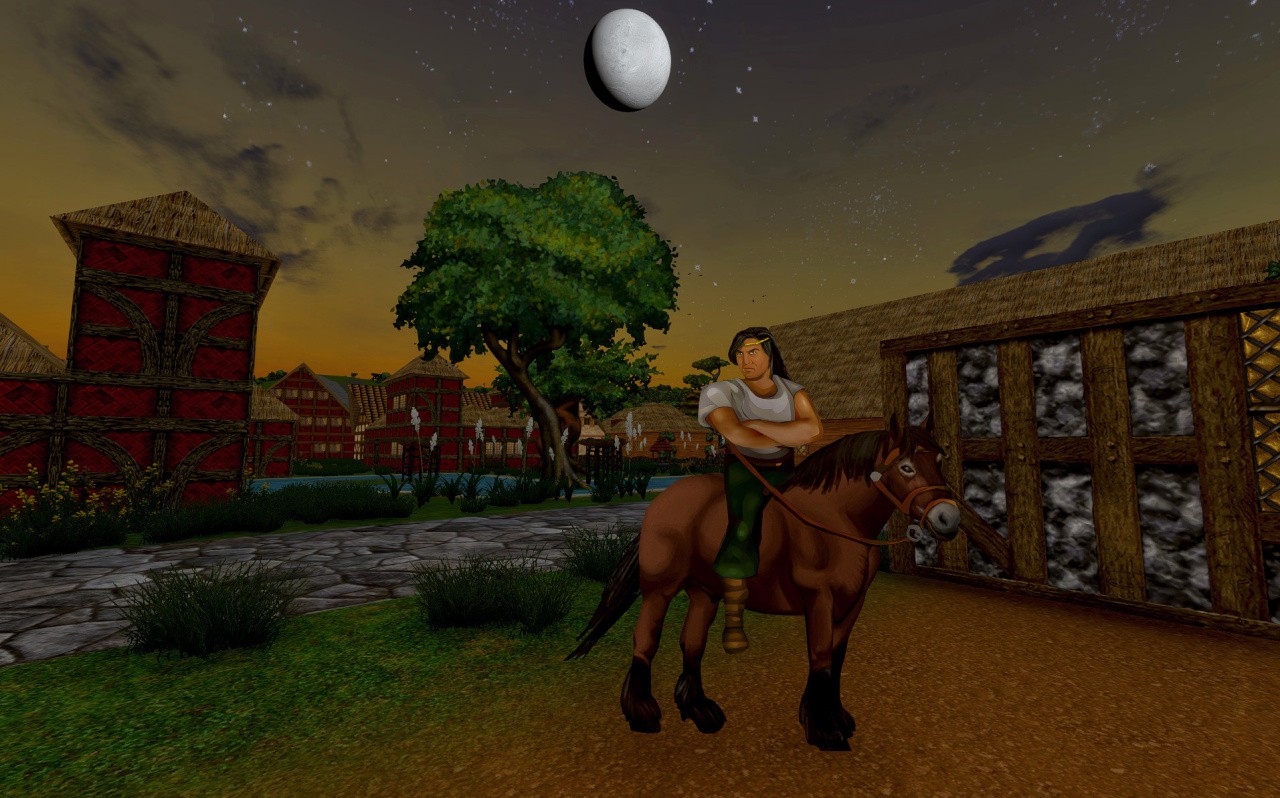
Even the Oblivion Remaster suffers from that, and that's a much more current game. A lot of things about it feel dated, and they feel clunky because time has moved on; we've gotten better at things. The amazing graphics they added and a couple of other fixes make the game more viable, and I'm a huge fan; I think it's a great product. But you've got to work at it from a nostalgia point of view. If you were trying to release that as a modern game currently, that just wouldn't fly.
Time Extension: I think you mentioned something similar recently, in an interview about Morrowind, and you caught some criticism online for that.
Nesmith: Oh, I got personal blowback on that. I got people sending me personal DMs saying, 'How can you say that Morrowind would not hold up?'
Time Extension: What would be your response to that, I guess?
Nesmith: What appeals to a person is particular to that person. It's personal, by definition. So you may love Morrowind, which I think is fantastic. I love Morrowind. And you may be able to overlook what I consider to be challenges in bringing a game like Morrowind to modern players, and you'd be fine to do that. I think for most people, my statements about how nostalgia is more powerful than actual critical thinking about it still hold true.
I still think for the majority of people, not those people who are extreme fans, Morrowind, as it was created originally, is not going to hold up today. Like, literally go back and play Morrowind. The game's out there. Go play it and tell me that still holds up.
If it does for you, fantastic, I'm happy for you; you have a wonderful game to play. If you were to recreate Morrowind, I think you would need to rebuild it, rather than just give it a shiny new exterior, as they did with Oblivion.
We'd like to thank Bruce for taking the time to chat with us.