
 by
by 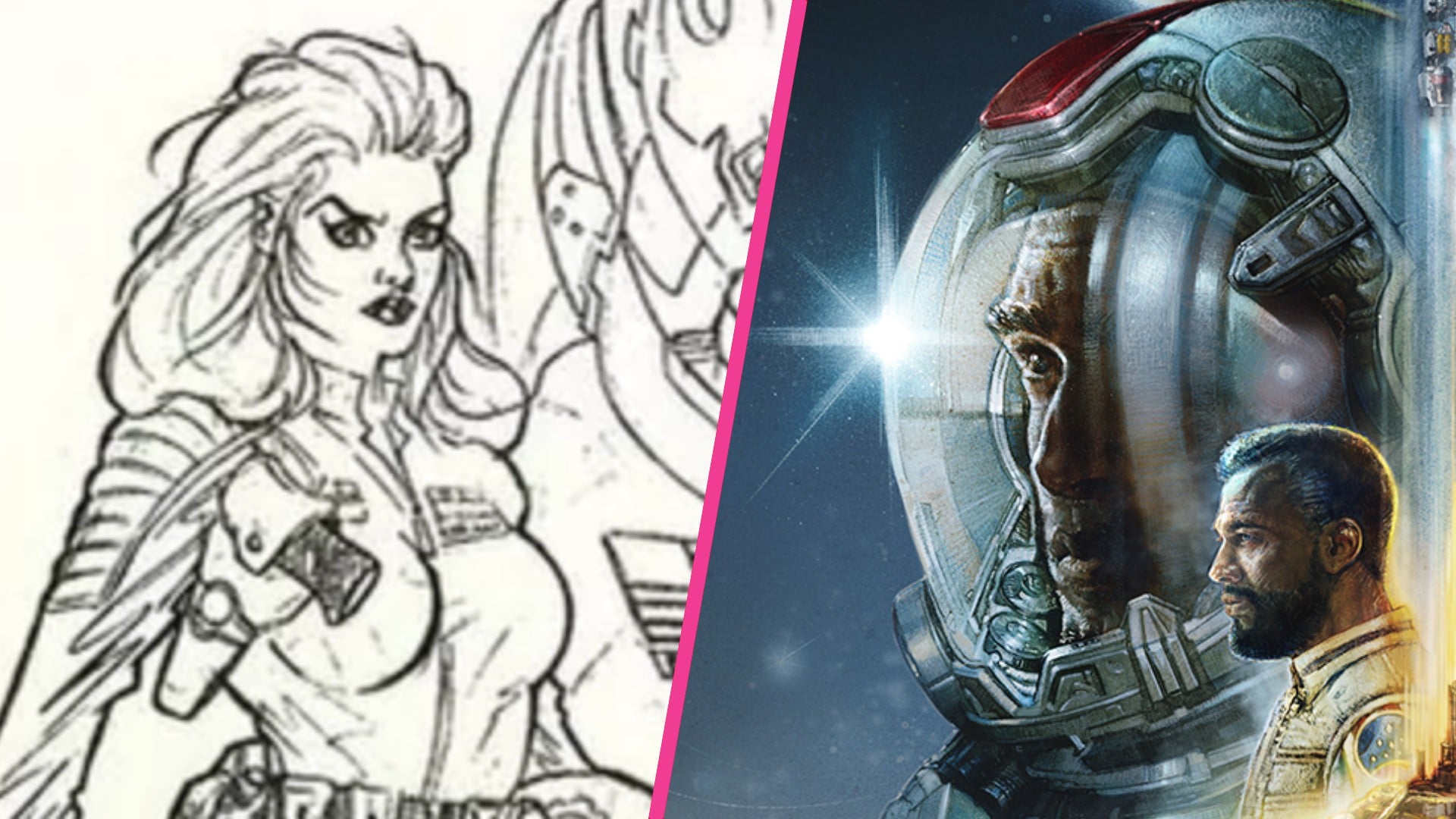
We were lucky enough to sit down with the legendary Bruce Nesmith recently, a video game industry veteran who has had roles at TSR and Bethesda and has titles such as Fallout 3, Elder Scrolls IV: Oblivion and Elder Scrolls V: Skyrim on his glittering CV.
During our chat, Nesmith touched upon one of the games he worked on that didn't actually make it to store shelves, a sci-fi title by the name of The 10th Planet, which, on paper, at least, sounds like a precursor to Bethesda's 2023 title, Starfield.
Touted by North American magazine Next Generation as a potential candidate for "best combat sim of the season" in 1997, The 10th Planet was a case of a flagging project being dropped in Nesmith's lap.
"At TSR, I made my bones by being willing to take on projects others didn't want," he tells us. "'Oh, nobody wants to do that? I'll do that.' And management loves it when you do that, particularly if you can at least elevate it to the point where it doesn't suck. But, often, people don't want to do these things because they don't see any potential in them."
Nesmith says he regrets the decision to take the game on:
"Management came to us and said they had an opportunity to work with some Hollywood guys on a project called 10th Planet and asked who would be available to work on it. And I stupidly said, 'Sure, I'll jump on that grenade.' Well, it turns out that the tabletop publishing business is not like the video game business. And if a project isn't tenable, you should not work on it. You should not jump on that grenade."
While the legendary designer admits that his "dreams excited management," the expectation was that The 10th Planet could be finished in nine months. "That game could not be produced in nine months," Nesmith says. "I'm not sure they would have been happy with the game that could be produced in nine months, but we never had that discussion to find out. So, I don't know if they would have just assigned someone to work on it, or if it would have just languished and petered out. That's pretty much unknowable at this point."
After around six months of development, Nesmith realised he had "bitten off way more than I could chew, and I didn't have an exit strategy because I was committed. I'd have had to retool the entire game by then." This would eventually lead to him being fired from the company.
He adds:
"So I just kept hoping I could persuade them to give me the extra time, as they did with Daggerfall. But they had learned their lesson with Daggerfall, which is that you have to cut your losses at some point. You know, the sunk cost fallacy is real. And, at that point, they really only had two choices. Cancel the project, move me on to something else, or fire me. But they were also in financial straits; they had to cut staff in order to keep the doors open. So it was a much easier and probably better choice for them to let me go."
Despite the whole venture leaving a sour taste in his mouth, Nesmith still believes that The 10th Planet could have been something special:
"I think if the company had had the wherewithal to be able to put two more years into the 10th Planet, we could have made a very exciting game. I liked what we were doing. That doesn't mean, though, that it was market viable. Spaceship combat games were not the largest niche in video games, and we were essentially going after the Wing Commander crowd.
I think it would have been a very cool game. So I'm still proud of the work I did on it and of the people I worked with. But the reality is, it was grossly overscoped, and there was probably a difference in expectations between management and me that led to its cancellation."