
 by
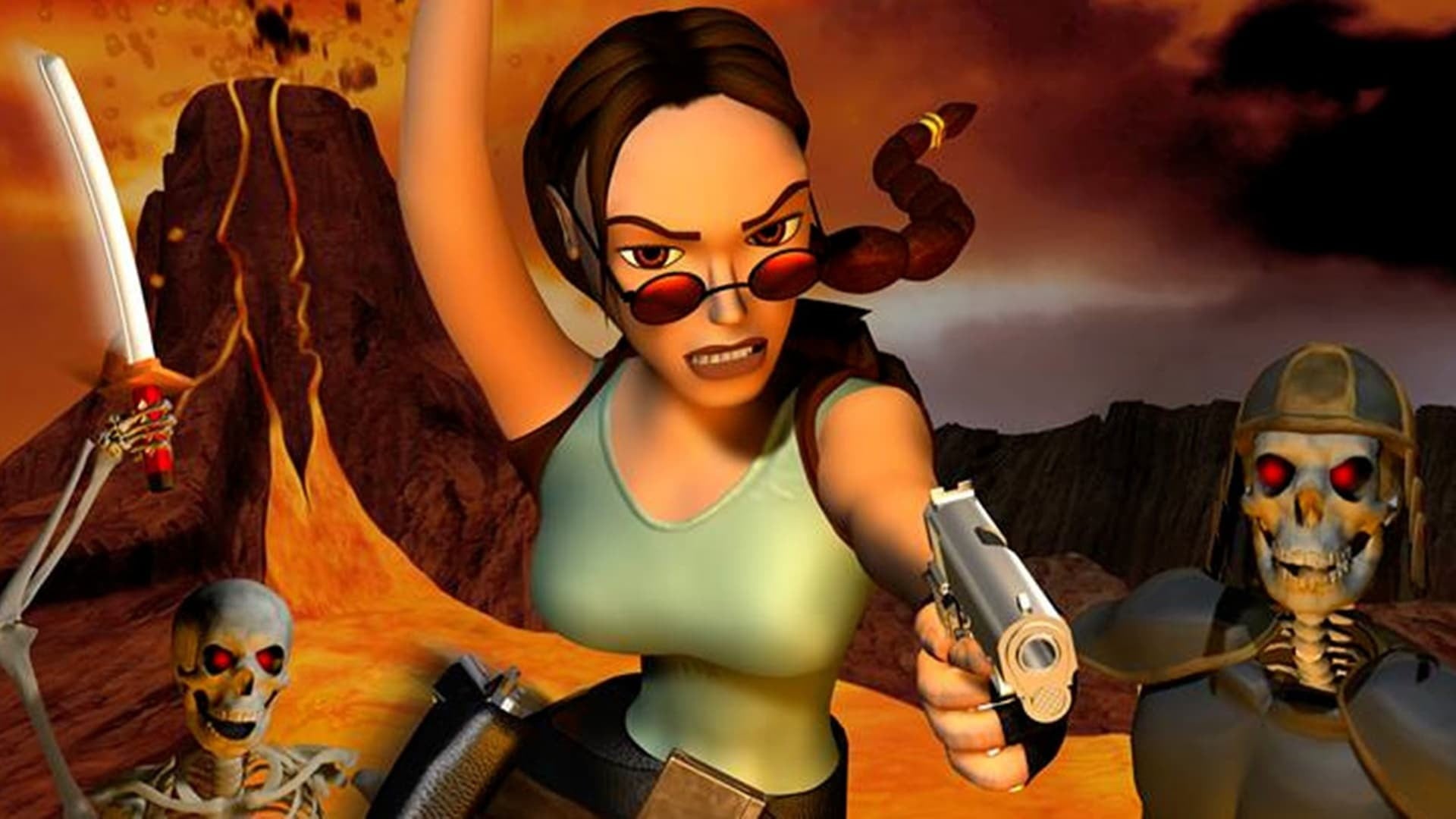
This month sees the launch of the Making of Tomb Raider 1997-2000 book, an unofficial deep-dive into the creation of some of Lara Croft's most beloved adventures, written by me, Daryl Baxter.
In case you're keen for a taster of what the book might contain, I've included an excerpt which focuses on Lara's Nintendo debut, which took place on the Game Boy Color in 2000.
At this point, I'll hand over the mic to artist Matt Charlesworth, who was kind enough to speak with me about the creation of this beloved handheld title.
"After helping with Tomb Raider 3 via the loading screens, I got chatting with Sean Dunlevy, who had just finished working on Fighting Force 64. We were both super excited about working on the newly released Game Boy Color, as it gave him a chance to get back to low-level ASM coding on simpler 8-bit systems, and it allowed me to learn an art form that was (at that time) dead on major home consoles and game systems: pixel art.
After a month or two of prototyping, Sean and I had the framework of a cartoony space adventure with similar gameplay to Flashback / Another World, called Salvage. It was at this point that we realised that we could make this into a pretty great portable TR game, so we met with [Core Design boss] Jeremy Smith and got the approval to do exactly that.
Sean and I started on that project for different reasons. I think he wanted to avoid the larger team sizes and codebase of the PS1 generation, and I wanted to have a place where I could rapidly learn new techniques to broaden my skill set without the stress and focus drawn by working on the flagship PS1 games. Sean was a seasoned veteran programmer by this time, and as I stated before, I knew very little but was eager to learn.
Teaming up with Sean was a great experience, and I’m lucky I had that experience with him in particular, as he was patient and great at explaining the technical things I needed to understand without ever patronising or talking down to me. I’m extremely grateful to him for that time.
Lightning then struck twice when we hired gameplay programmer Ian Manders from Rare – another incredible person who was a joy to work with. Despite being closer to my age than Sean, he brought with him a ton of experience from Rare, having shipped Donkey Kong Country games on Game Boy and Ken Griffey Jr.’s Winning Run on the Super Nintendo console.
Tomb Raider felt like a direct 3D evolution of games such as Prince Of Persia, Another World, and Flashback, so it seemed obvious to us that a 2D TR game should evoke similar mechanics and gameplay to feel authentic and on brand.
We made progress pretty quickly on the game, but it also became obvious really fast that I wouldn’t be able to do all of the art myself for the entire game – it was too much and I had too much to learn. I don’t remember exactly how it happened, but thankfully, at just the right time, a bunch of animation grads from Ballyfermot Animation College in Ireland arrived at Core, and we were able to pick Fergus [Duggan] and Paschal [McGuire] to add to our team.
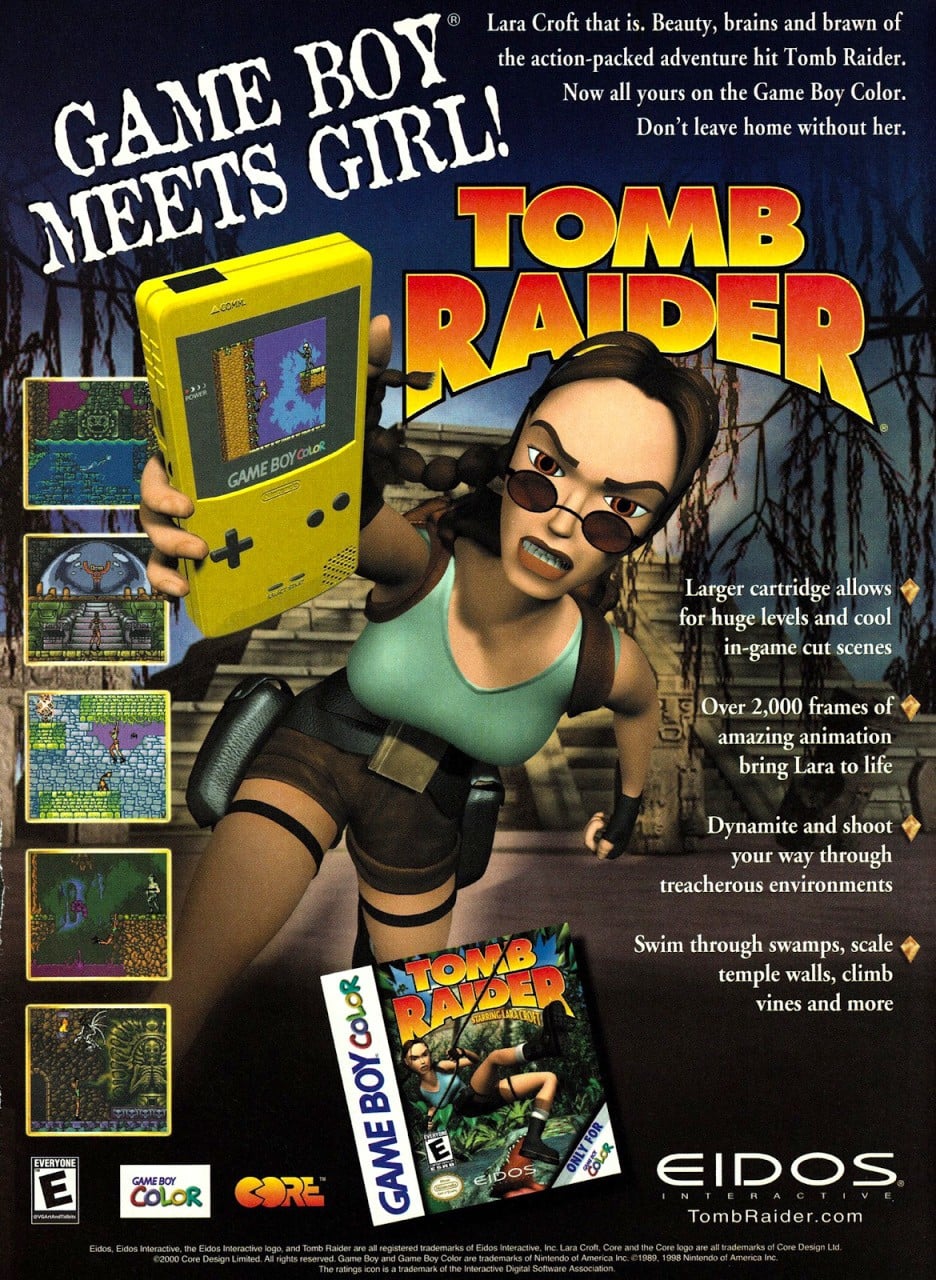
Although Paschal struggled a little to transition into game development, Fergus was the right person we needed. He took on and owned the entire background art for the game and allowed me to focus on Lara and enemy art, and animation. He did an unbelievable job, and I think his work on both Game Boy games stands up to this day.
At the outset, I remember the legendary Jerr O’Carroll also assisting me with learning 2D pixel art and design as we explored the Salvage project, but he didn’t transition with us onto the Tomb Raider game, as I think he was animating on TR4 as far as I remember. But shortly after Fergus and Paschal joined us, Lee Pullen (whose pixel art defined the characters of the Chuck Rock series) also lent a hand and taught me a bunch about efficiently conveying motion with the extreme constraints of super low-res pixel art.
The thing I remember most from that time was working incredibly long hours and feeling way out of my depth, but having my late friend Troy Horton producing our game made it manageable, and thanks to him, we knew everything would be alright.
After probably about a year, we were done, and THQ published the game. We shipped that after about a year of incredibly hard work and crazy hours (all self-inflicted) and received at least one 10/10 review from a GB-specific print magazine at the time. It’s hilarious, but looking through that archive, I see that the editors of the magazine had to retcon the review score down after several issues because it was ranking higher than Pokémon and Zelda!
This was an incredibly rewarding game to work on, especially as it was my first real game I contributed to in a truly meaningful way, and because Sean and I ran the project and had full creative control."
The Making of Tomb Raider 1997-2000 is available now.
Please note that some external links on this page are affiliate links, which means if you click them and make a purchase we may receive a small percentage of the sale. Please read our FTC Disclosure for more information.