
 by
by 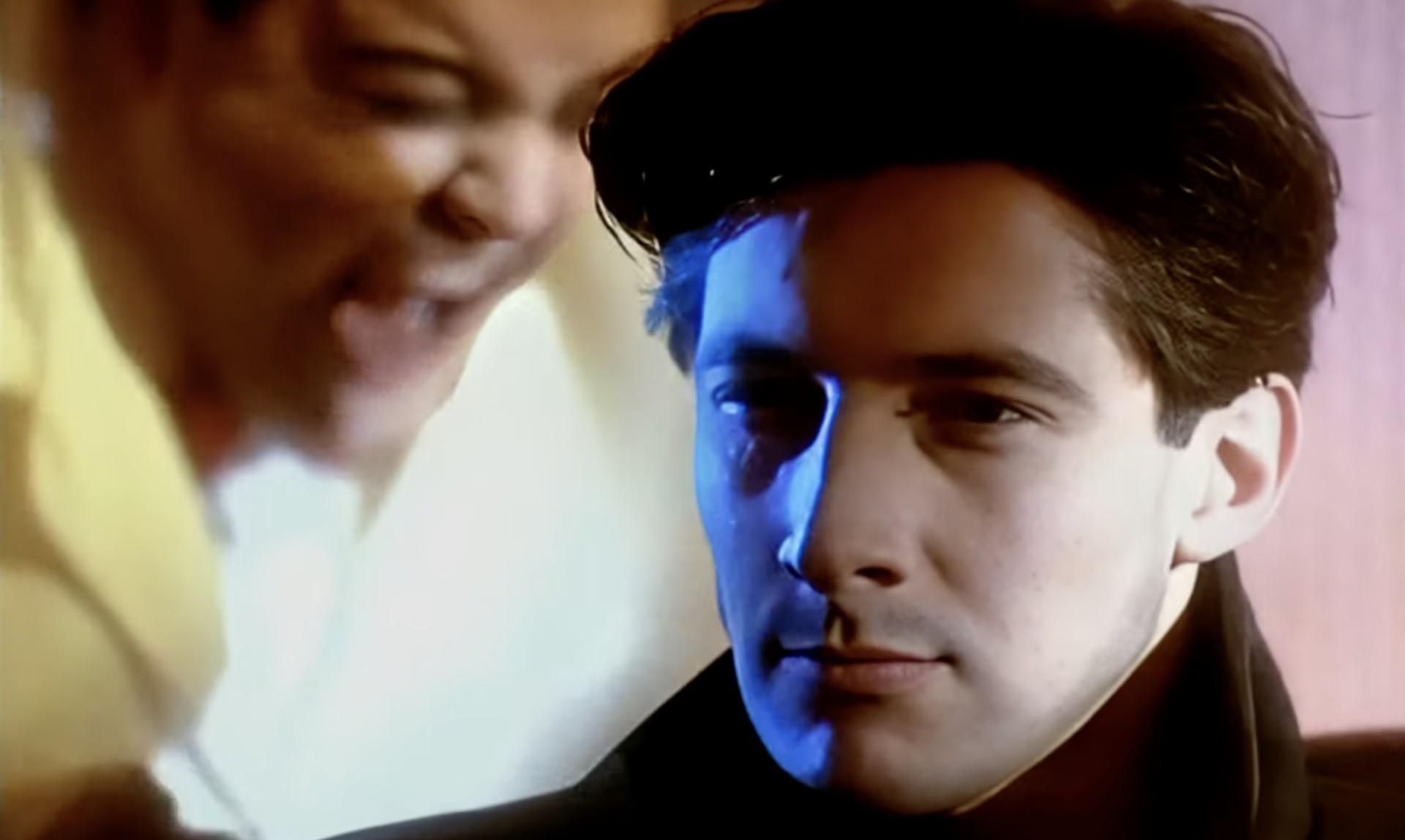
If you grew up in the UK in the early '90s, then you'll no doubt be aware of Sega's 'Cyber Razor Cut' commercial.
Aired in 1992 just as the console wars between Sega and Nintendo were about to heat up, the advertisement featured Peter Wingfield (Highlander: The Series) and Steve O'Donnell (Bottom) and was set in a steam-filled cyberpunk barbershop. The suave and handsome Jimmy (Wingfield) enters, demanding a 'Cyber Razor Cut' from O'Donnell's character – a request which sees Jimmy being cybernetically enhanced to cope with the intense challenge posed by "over 100" Mega Drive games.
The commercial was shot by award-winning cinematographer Geoff Boyle, who sadly passed away in 2021. I was lucky enough to have spoken to Boyle many years ago for a feature on the entire Sega Pirate TV campaign, and he explained exactly how he achieved its incredible visual effects.
"I remember having really great storyboards that were more like comics rather than 'ordinary' storyboards," said Boyle back in 2016, who worked with Ford, Pepsi, Lego, BMW and Fosters during his career, which also included the movies Enemy at the Gates (2001), Mutant Chronicles (2008) and Street Fighter: The Legend of Chun-Li (2009).
"Storyboards for commercials are usually a series of images in the same format as TV and are intended to be a fairly strict guide. What we got with this was a great comic book with frame shapes all over the place; the intention was to give us the feel of the piece and to encourage us to explore and play with images."
Advancements in technology helped shape the unique look of the commercial. "This was a time when cameras were evolving, and speed changes in shots were becoming easier," Boyle added. "We also had special mirrors built that were 8 by 4 feet and semi-reflecting so that we could see through them at appropriate moments and see a full TV control room behind the barber's mirror; the custom two-way mirrors were made by a company in [London's] Glasshouse Yard, which had been there for nearly 1,000 years. There was a full TV studio I designed to feed the banks of monitors behind the mirrors that you only see for a flash in the finished commercial."
Filming the commercial wasn't without its hardships. "We had to raise the entire set up off the ground so that we could pump steam through and have it coming up through the floor – this tended to turn the set into a swamp," Boyle told me. "The huge steam boiler just outside the studio door was terrifying; I spent the entire shoot expecting it to explode."
Cyber Razor Cut kicked off a series of advertisements that quickly and effectively educated the UK public on the merits of Sega's hardware range, which also included the Master System and Game Gear. "I worked with Amazon on the TV series Mr. Robot," former Sega marketing director Simon Morris told me back in 2016. "That's basically the same idea; over 20 years later, and someone turned it into a TV show! Jimmy was an ultra-cool tech kid living under the radar in a custom-built truck packed with cool gear and the latest games."
Cyber Razor Cut was followed up by 'Howdedodat', a Mad Max-style skit aimed at promoting the Game Gear that was shot in the baking sun of the Spanish countryside. "It was lit entirely with mirrors that had to be continually adjusted to compensate for the moving sun," explained Boyle to me a decade ago.
"The dust was just incredible. At one stage, I complimented makeup on how good – or perhaps 'bad' is the right word – Steve [O'Donnell] was looking; he had a really dirty, greasy look. They replied that they hadn't done anything and asked if I had tried sitting in his place. I duly obliged and discovered that the effect of all my mirrors was to create a ferocious oven far, far hotter than the already baking heat. No wonder he was sweaty!"
The 'Pirate TV' campaign was so successful that it eventually outgrew the Jimmy character and helped Sega establish a lead on Nintendo in the UK. "I loved that series of commercials," the sadly missed Boyle told me in 2016. "We were encouraged to take chances and push ourselves creatively. I think that shows."