
 by
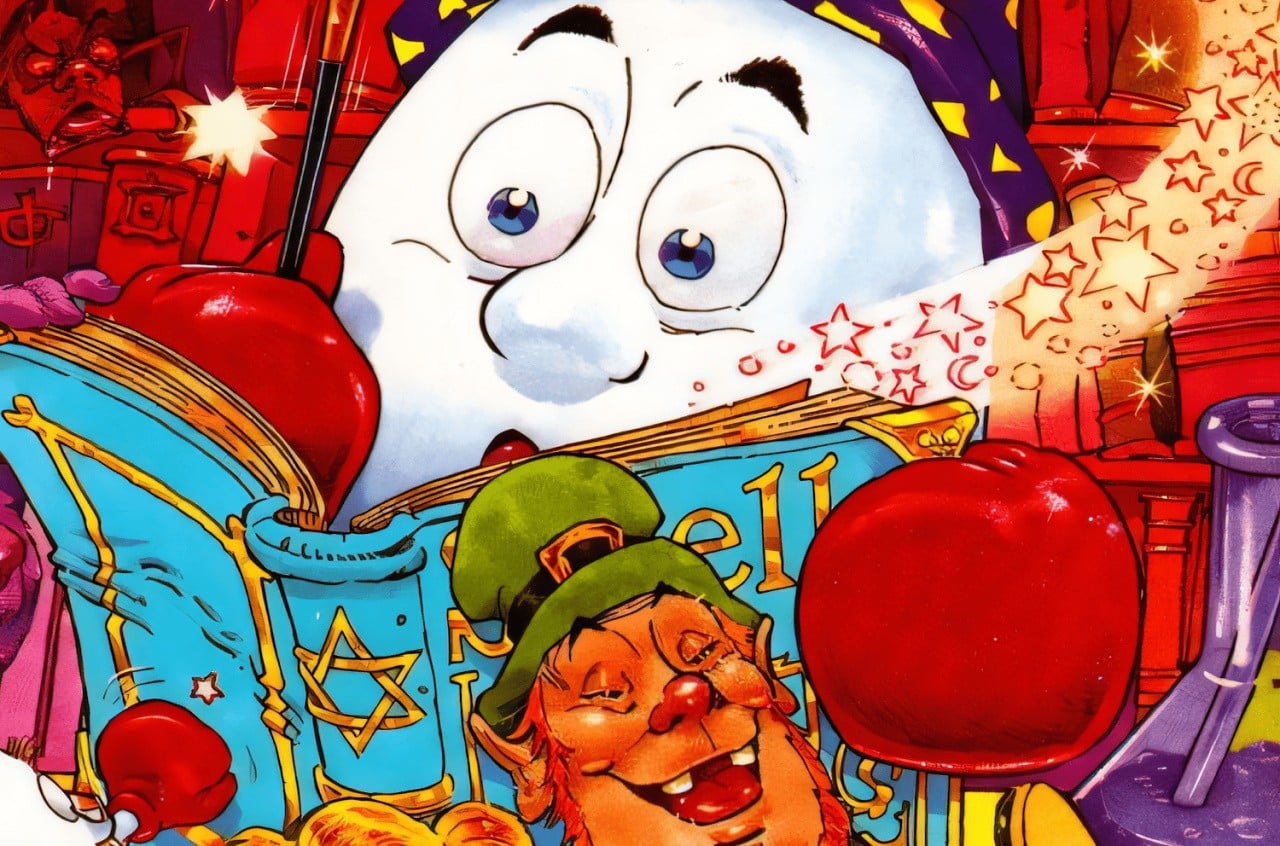
The Oliver Twins recently announced that they are crowdfunding a new collection of Dizzy titles for the Sega Mega Drive.
The Eggcellent Dizzy Collection will contain three games – Dizzy the Adventurer, Go! Dizzy Go! and Panic! Dizzy – and sees the siblings return to the series after a long hiatus, having finally reached an agreement with IP holder Codemasters (now part of EA).
This isn't the only Dizzy project the pair have on the boil, as they recently announced Ultra Dizzy, which will make extensive use of Generative AI. The Olivers have been vocal in their support for this new tech, which is trained on the work of artists, writers and musicians (overwhelmingly without permission, something the companies behind the tech are keenly aware of) and has drawn serious pushback from many in the creative community.
The Eggcellent Dizzy Collection, the Kickstarter page states, contains games which obviously pre-date the arrival of GenAI – the three titles included were developed all the way back in 1993. However, the pair say they used AI tools "to help develop the game-selection menu and create packaging artwork faithful to the original games."
Sadly, this fact is pretty clear, as there's little consistency in the art shown so far. Dizzy is wearing different shoes in all three covers for the games, for example, and the wizard Zaks is wearing a different hat in the two pieces of artwork he appears on.
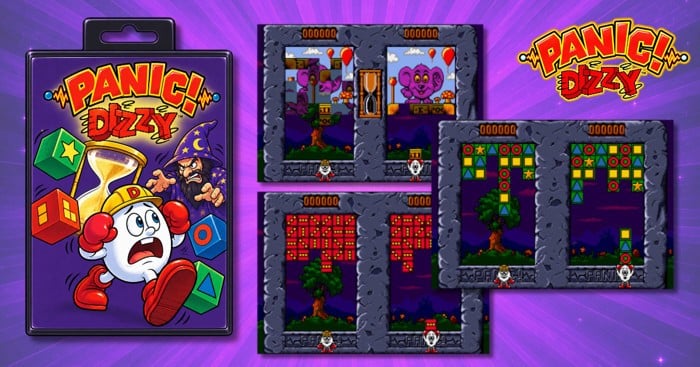
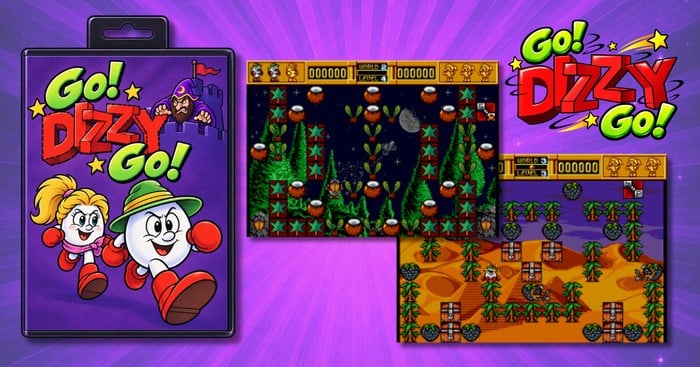
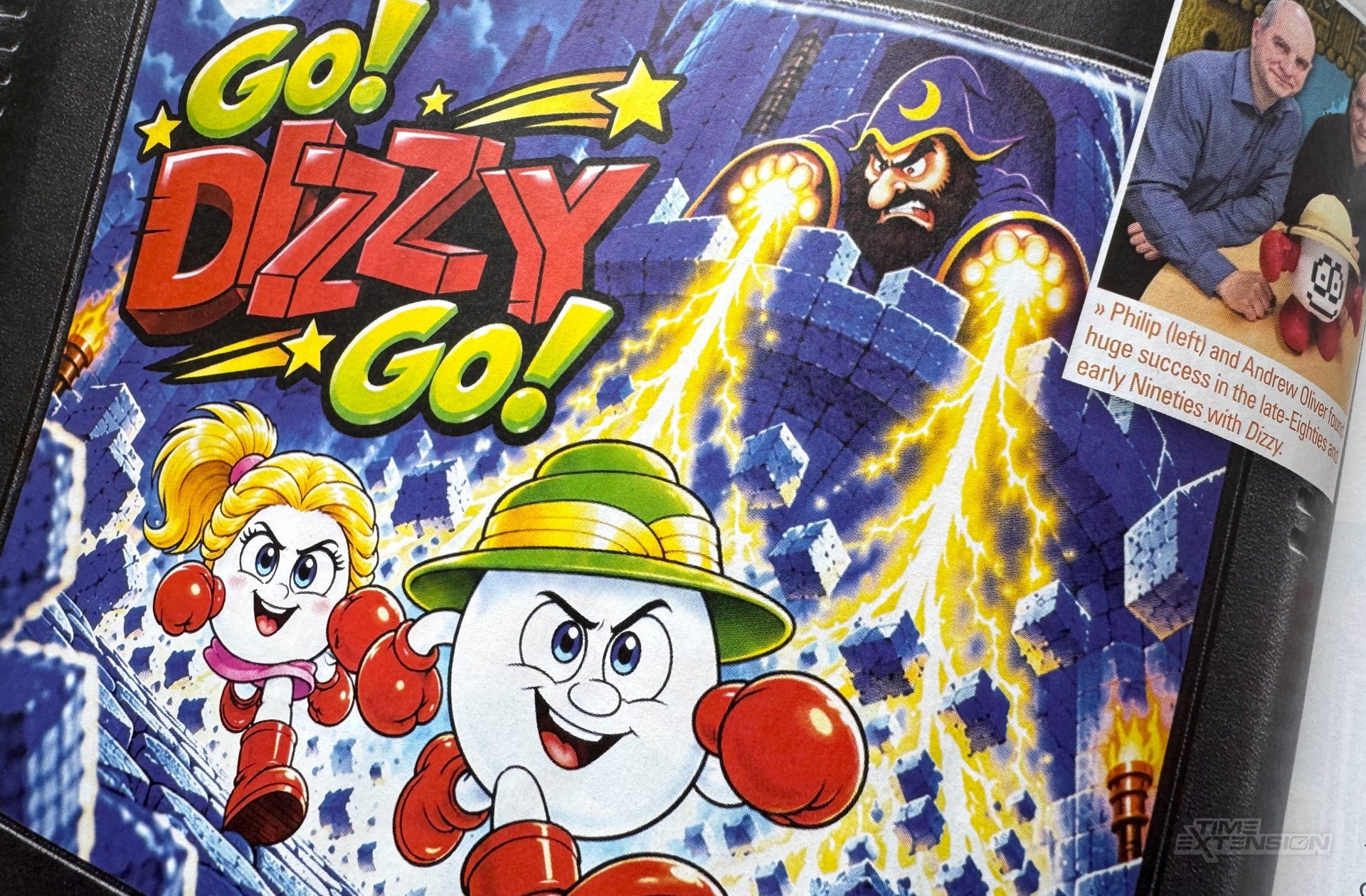
Like so much GenAI art, it actually gets worse the more you look at it. Another promotional image appears in this month's issue of Retro Gamer magazine and shows Zaks with six fingers on one hand and five on the other (or, if you prefer, five fingers and one thumb on one hand, and four fingers and a thumb on the other). Compare this to the art on the Kickstarter page, and poor old Zaks has, at one point, three fingers and a thumb (on the Panic! Dizzy cover).
The reason for these mistakes is obvious: unlike a human artist, who would be consistent with their designs (and know how many fingers a person should have), you're getting a slightly different output every time you tell an AI model to produce an image (how else can you explain the fact that Dizzy's gloves have fingers on this GenAI poster the Olivers are hawking for £25 a pop?).
According to the Olivers, we should all get used to this shortcoming, as they're adamant it is the future of how games are designed.
"This is still skilled, human-led work," insist the pair in a statement on the Kickstarter page. "People design, create, test, review and refine the results. AI does not replace our creative direction or our responsibility for the finished product." I'd argue that's blatantly false, based on the evidence of Zaks' fingers, and it raises a worrying quality-control issue that could extend to the entire project.
Speaking in the aforementioned issue of Retro Gamer, Philip Oliver doubles down on his view of GenAI:
"We understand some people dont want developers to use Al tools to reduce time and cost and that's ok and a personal choice. With just me and Andrew working on it, we'd have to schedule at least a year. We're not committing to that, it's just not going to happen. Whereas this way it can happen. Many years ago, we set ourselves the goal of a game a month, as you can stay enthusiastic about an idea for a month. When it drags into six months or a year, it's miserable. God knows how the people at Grand Theft Auto VI manage to deal with it. The thing is, this is just another tool and there's lots of things I liken it to.
In the early days, if you'd have asked me to write a Dizzy game where I had to convert assembler into hex codes, would I have done it? No. I got a compiler to do that for me. This is just the next evolution of tools. If you can do stuff that could never have been justified before, then that's a good use. I could never have justified any of this Active Brain stuff before, whereas now I can."
What irks me here is a seemingly basic misunderstanding of what it takes to make a good game, or at least how the artistic side of a game is made – something you'd think Philip Oliver would be an expert at by now.
There's an old saying that 'nothing of value comes easily.' For the Olivers, it's simple maths: spending time costs money, so they're taking a shortcut. A shortcut means more time to create more stuff, right? Well, that's only valid if the stuff you're creating has value, and these images make it clear that the Olivers' quality control has fallen so far through the floor it's hit bedrock.
If there's no attention paid to something as simple as the number of fingers on a character's hand, what hope is there that the core games they make using GenAI will be free of bugs or lazy design? Sure, you can produce stuff faster and therefore save money (and not have to pay a real artist, of course), but if that stuff is utterly slop (like their recent Ghost Hunters title), why should anyone give it the time of day?
People already argue there are too many games on the market, and that's before the inevitable flood of sloppy GenAI-developed titles hits us with its full force. While the cost of production is going to plummet – as the Olivers rightly point out – I fear that the quality bar is also going to head in the same direction, and that's bad news for pretty much everyone.
I hope consumers quickly wise up to such sloppy, low-quality titles and dismiss them, choosing instead to reward developers willing to put real effort into their games and show the respect the consumer deserves when they hand over their hard-earned cash.
After all, couldn't a consumer argue that buying a game with real money is "too big a risk" and that piracy is a better option? That seems to be the point the Olivers are making at the moment when they insist that making video games the traditional way is too expensive and risky for them to contemplate.