
 by
by 
Today – March 31st, 2026 – marks the official end of an era with the decommissioning of Japan’s 3G FOMA antennas.
The decline of the i-mode was a slow burn: NTT DoCoMo stopped accepting new subscribers (users had to pay a monthly subscription to access the service) from September 30th, 2019, and by November 30th, 2021, the i-mode website service, which hosted video game storefronts, had already gone dark. In reality, purchasing new titles has been impossible for years.
Does it mean that the service ended in 2019? The end of i-mode happened years before. Capcom shuttered its mobile store in 2017, with Square Enix following suit shortly after. Even earlier, giants of pre-smartphone mobile gaming like G-mode already shifted from 'Keitai', Japanese feature phones, to smartphones. For example, in 2008, G-mode released 274 games on Keitai platforms; they launched a staggering 161 titles in 2010, but that number plummeted to just 15 by 2012.
Following the 2008 launch of the iPhone in Japan via Softbank, i-mode became something of a "living dead" platform for gaming. Yet, one core feature refused to die. In a Japan characterised by the late adoption of home PCs and unequal internet access, i-mode was the primary gateway to a limited but translated internet for millions.
Its synergy of affordable Keitai handsets and a curated, mobile-friendly internet made it a revolution. For many, their first digital identity was an @docomo.ne.jp email address, a service that remained until the very end. The e-mail service was so important that in 2002, 57.7% of mobile users were accessing their mail via the i-mode.
The success of i-mode wasn't just about convenience. Even though many services were about convenience, like apps telling you which day to take out the trash, it was also about a high-speed mobile ecosystem that allowed developers to realise visions far beyond what the West could imagine, nearly a decade before the smartphone revolution changed the world.
Gaming On The Go, Thanks To High-Speed Internet
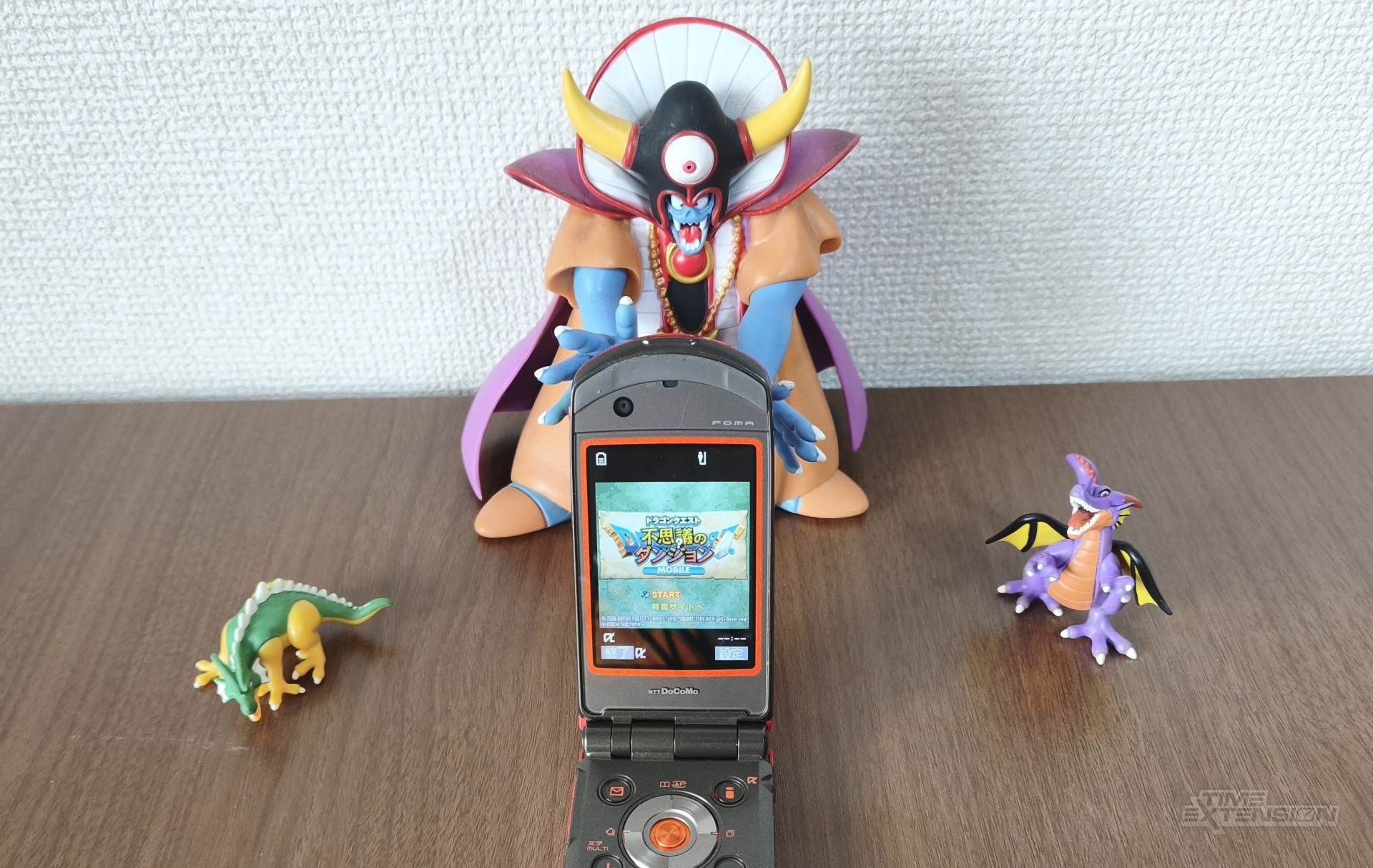
Keitai games were distributed digitally through dozens of online storefronts, each operated by a different game publisher. These storefronts, which charged a monthly subscription fee, were only accessible through a mobile internet service like i-mode.
In the case of i-mode, DoCoMo retained nine percent of the collection charge, with the remaining 91 percent going to the storefronts. This monetisation model allowed game publishers to cater their games towards an audience like never before. At first, Keitai games were integrated with other electronic devices. Sonic Golf Cmode Cup (2002) was available for a limited period of time, and it allowed players to earn discount points for Coca-Cola vending machines.
The Mobile Phone Connection Cable (2001) allowed certain PlayStation and PlayStation 2 games to use internet features via an i-mode device. For example, an i-mode expansion pack for Doko Demo Issyo allowed the game’s virtual pet to learn new words from mobile emails and read the phone’s schedule book. However, the advent of DoCoMo’s 3G service in 2004 allowed for mobile-friendly internet to become the true centre of these new gameplay experiences.
Before Crisis: Final Fantasy VII (2004) was a Keitai-exclusive prequel to Final Fantasy VII, as well as the first instalment in the greater Compilation of Final Fantasy VII. Releasing the first prequel to Final Fantasy VII on Keitai was a bold statement: Keitai was more than a supplement to existing gaming devices, it was a viable gaming platform on its own.
As a Keitai game, Before Crisis pushed the medium’s boundaries by completely relying on mobile internet for its core functionality. Its story was told in 26 story chapters, periodically released via Square Enix’s mobile storefront over the course of three years. A Keitai’s camera could be used to generate new materia spells. Players could then use their mobile email to send this Materia to their friends.
The main Before Crisis app was accompanied by two side apps: the Gold Saucer and Weapon Dimension Mode. The Gold Saucer app featured Final Fantasy VII’s minigames, but thanks to mobile internet, they now sported online leaderboards. The Weapon Dimension Mode app tasked players with defeating a postgame superboss, Jade Weapon.
The app utilised DoCoMo’s i-Area service to track players’ location, allowing their in-game location to mirror their real-world location. For example, if players were located in Hokkaido, which is known for its cold climate, they would fight Jade Weapon in Icicle Inn. Far from a halfhearted spinoff, Before Crisis was a Final Fantasy VII game developed for Keitai and only Keitai.
BBMF launched a new Keitai storefront, Megaten (Megami Tensei) Online, which was dedicated to “network-enabled appli.” To coincide with the launch, BBMF developed a massively multiplayer online RPG: Persona Mobile Online (2009).
The game took many gameplay mechanics, including the battle system, from Persona 3 (2006). Persona games are known for their social simulation elements, and Persona Mobile Online utilised mobile internet to harness these elements in a social MMORPG. In addition to forming parties and friendships with online users, players could earn points for the Megaten Online storefront itself; these points could be used to purchase Megaten-themed phone customisations, such as ringtones. These points were distributed monthly or available via microtransactions.
Persona Mobile Online is thus a prime example of how some Keitai games utilised mobile internet not just for multiplayer connectivity but also for integration with the broader mobile storefront ecosystem.
Hence, Keitai games were tailored to maximise revenues from a subscription-based distribution system. This level of pecuniary integration had been impossible in the console and handheld gaming market, meaning Keitai was one of the first outlets for publishers to test a new monetary vision for video games. However, this monetary vision was not just limited to video games.
More Than Games: The i-mode Ecosystem
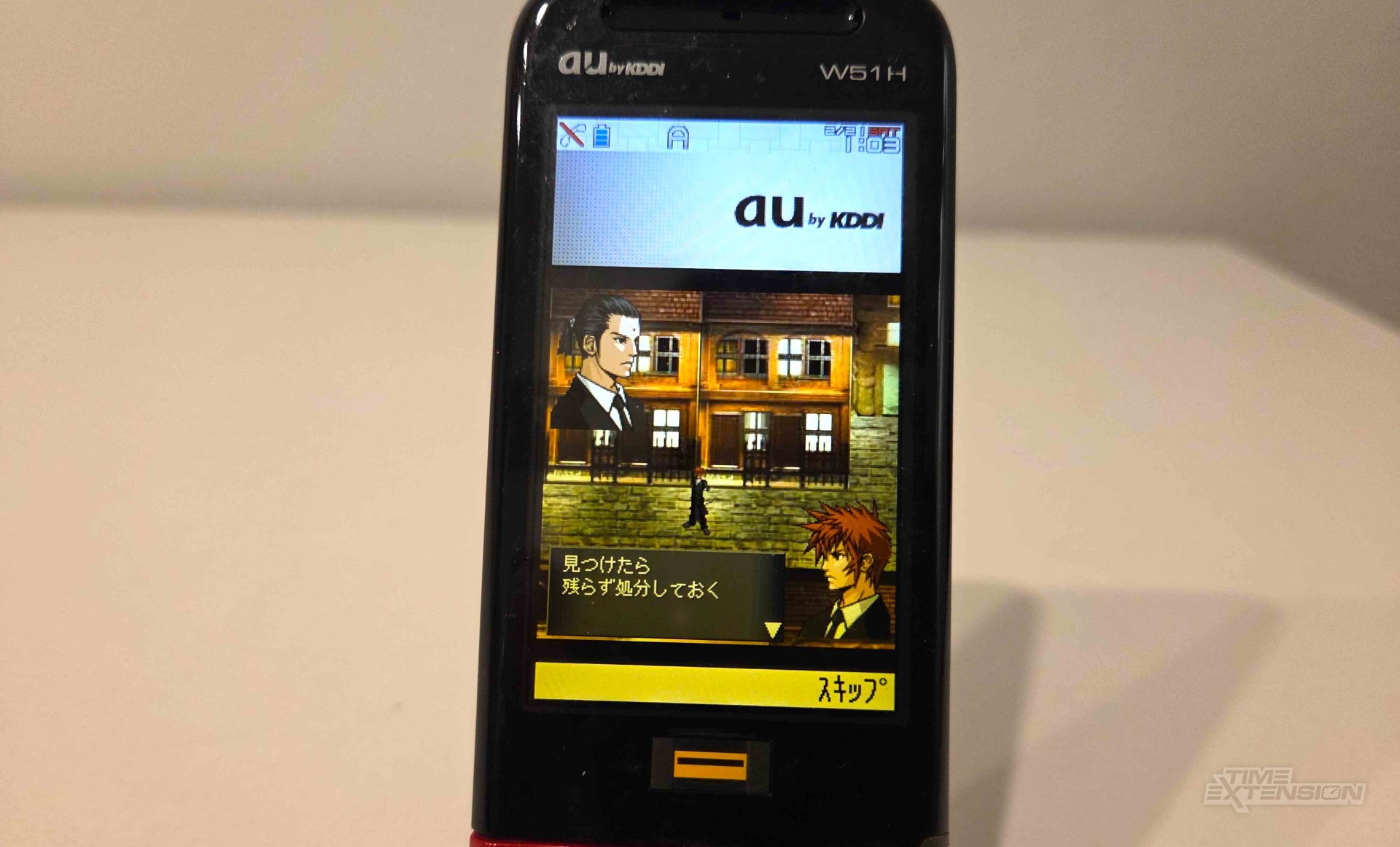
The i-mode service was so deeply woven into the fabric of Japanese daily life that researcher Eiji Hamatani famously described the platform as a "life infrastructure." Its growth was explosive: within just 21 months of launch, the user base had already surged past 14.5 million. By 2010, this number hit an all-time record of over 49 million subscribers, representing more than a third of Japan’s total population. The i-mode didn't just provide a service; it fundamentally shaped how millions lived their daily lives.
In this ecosystem, gaming held a privileged position. Far from being a niche hobby, games were one of the most popular uses of the service, to the point where manufacturers pre-installed demos directly onto the handsets. Hamatani’s research highlights this ubiquity: in 2005 and 2006, over 80% of Keitai users had engaged with at least one gaming feature on their phone. The i-mode was more than a mere app store; it was the centre of the entire Japanese mobile universe.
However, this centralised nature was also the reason i-mode struggled to expand internationally. The platform was trapped in a cycle of "technical specificities" that worked perfectly in Japan but failed elsewhere, a phenomenon journalists and researchers dubbed "Galapagos Syndrome." This eventually led to the term 'garakei', a mix of Galapagos and Keitai, to describe these highly advanced but geographically isolated phones.
A major technical hurdle was DoJa, DoCoMo’s proprietary variant of Java. For developers outside Japan, mastering DoJa required specialised training that differed significantly from the international standards used in the US and Europe, creating a barrier to entry that few were willing to cross.
Looking back at corporate newsletters from the era, it’s clear that the i-mode gaming experience extended far beyond the screen. It was a culture of online competitions, real-life events, and collaborations with popular food chains.
At the 2006 Tokyo Game Show, for instance, the Softbank booth showcased some titles with promotional staff in elaborate maid and schoolgirl cosplay, a peak 2000s marketing tactic. G-mode even organised high-profile tournaments for titles like Keitai Shoujo Janken (a school-themed Rock-Paper-Scissors game), blurring the lines between digital play and physical community.
But i-mode didn't have to wait until 2006 to be recognised as a heavyweight. As early as Tokyo Game Show 2001, the platform stood alongside industry titans like Sony, Nintendo, and Microsoft. For the Japanese public, playing on a Keitai wasn't just a distraction; it had already become one of the most common ways to experience video games.
What We Can Learn From Keitai

As has become evident, Keitai games were far from low-quality flip phone games. They were the ancestors to modern mobile games as we know them.
Keitai games’ extensive integrations with Japan’s mobile internet platforms, from periodic content releases to microtransactions, predated modern live-service mobile game practices. These network integrations created unique and addictive gameplay experiences, but they have also created a dire preservation crisis.
After the total closure of Keitai game storefronts, the only way to find a game is to find a Keitai handset with it already installed. Some games received updates that modified their graphics, meaning that many games have countless variations. The difficulties with preserving network-dependent Keitai games extend even further.
Before Crisis is a model example. Obtaining a copy of the game is already difficult; to make matters worse, each copy only contains a minuscule percentage of the full game. YuviApp, the foremost preservationist working on Before Crisis, has spoken about this difficulty. “Even a lot of the game’s text wasn’t stored locally — it was sent dynamically from the server when needed. Because of this, a huge amount of the game’s data never made it onto the client.”
Just to make it past the game’s title screen, Yuvi created a local server and reverse-engineered numerous network packets. Before Crisis only stored one map on a device, so piecing together all 24 chapters is a gargantuan task. These preservation difficulties are compounded for Keitai games that received periodic content updates, as past content may be completely lost unless a local copy did not have its data overwritten.
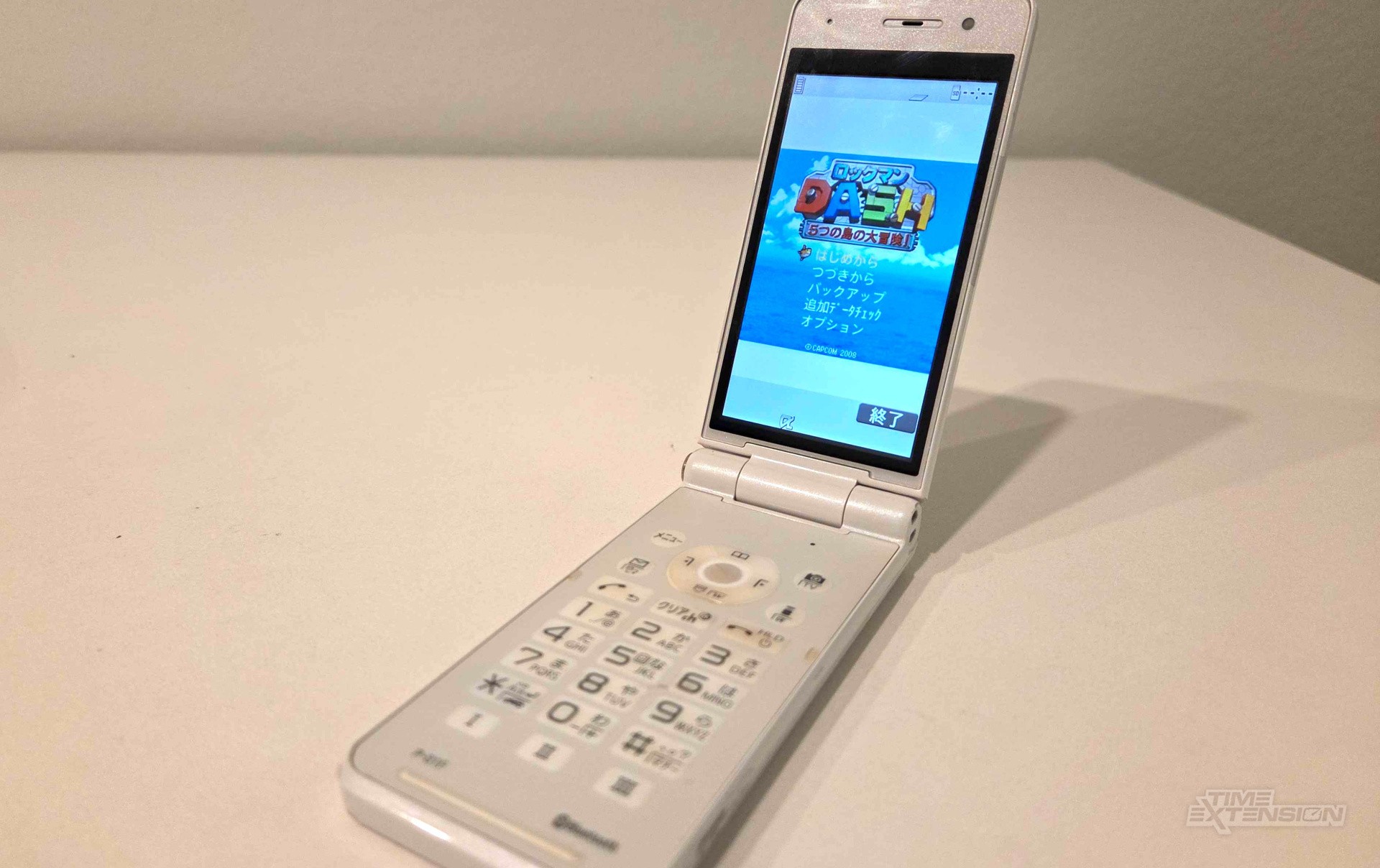
Nonetheless, preserving network-dependent Keitai games is not completely impossible; with just four copies of the game, Yuvi has managed to preserve several Gold Saucer minigames, a training mode battle, Chapter 2’s free-roam mode, and Chapter 10’s rescue mission.
Network-dependent Keitai games have striking similarities to modern live-service games. The monetisation of live-service games, from mobile to console platforms, echoes Keitai games’ subscription-based distribution system. Furthermore, periodic content updates and server-reliant gameplay will render these games largely unplayable after their servers are shut down.
An uncountable number of failed live-service games have already shut down and become lost to time, like Warhaven or Muv-Luv Dimensions. We are only moving closer towards a server-reliant gaming future. In 2023, 66 percent of video game studios believed that live-service games were necessary for long-term financial success.
There are still no formalised legal frameworks to preserve digital games, an impediment that extends to game preservation at large. Thus, the difficulties that Keitai game preservationists grapple with today will be the game preservation difficulties for tomorrow. However, the Keitai game preservation movement has proved that even in the most dire circumstances, there are beacons of hope.
Over 2,000 Keitai games have been preserved to date, and online preservationists like Yuvi are making astounding advances with preserving server-reliant Keitai games. In light of i-mode’s complete shutdown, we hope that the tireless efforts of Keitai game preservationists inspire more awareness towards preserving digital video games.
This piece was written on behalf of the Game Preservation Society by Max Solensky and Quentin Lourdaux-Mercier.