
 by
by 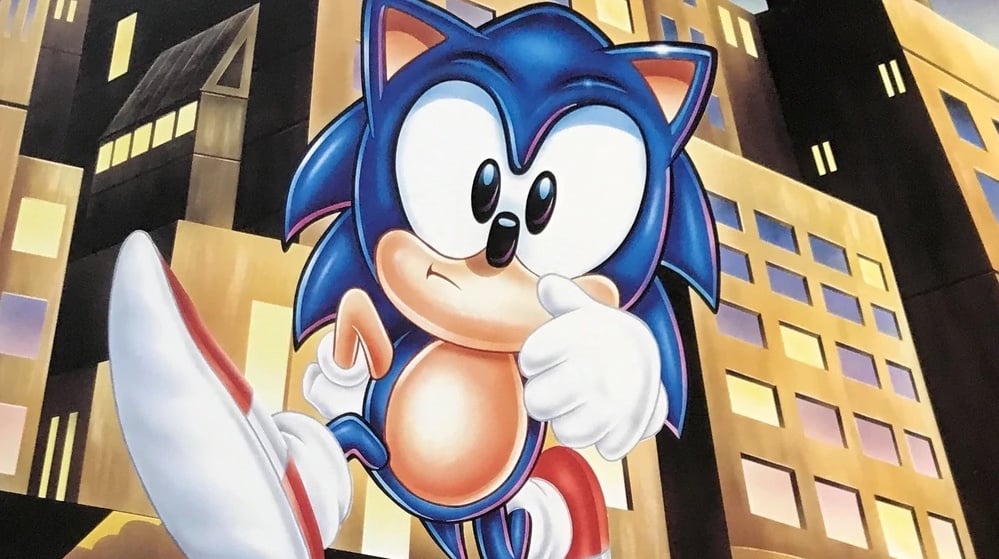
With Sonic's 35th anniversary looming, we thought it would be a perfect time to resurface some of our favourite Sonic articles on the site over the next week.
This includes our interview with Al Nilsen, originally posted in 2023, in which Nilsen talks about his experience seeing Sonic for the first time and the successful mall tour he was involved in, which pitted Sonic against Nintendo's mascot.
Back when Sega first released Sonic the Hedgehog in 1991, it was still the underdog. Nintendo still controlled the North American video game market, as it had for many years, and it didn't look likely to relinquish its grip on gamers' wallets anytime soon.
So, in response, Sega of America launched an aggressive marketing campaign to try to take the battle to the giant. The aim was to position its new mascot, Sonic, as a viable alternative to Nintendo's star attraction, Mario, through television ads, direct comparisons, and other methods, so that players would switch to the Genesis and away from the market leader.
Al Nilsen, a former group director and global head of marketing at Sega of America, was among those tasked with developing ideas to sell Sonic in the US. Nilsen got his start at Sega in 1989 and had worked at both Mattel and Hasbro before that, where he acted as a product manager. At Sega, Nilsen helped launch the 16-bit console Genesis in the US during his first few years at the company and also served as the point of contact between Sega of Japan and the King of Pop, Michael Jackson. He was responsible for ensuring Sonic became a household name and that the hedgehog's success would, in turn, impact Genesis's sales.
We had the privilege of speaking with Nilsen on two occasions over the past couple of years about his work at Sega. What follows is a collection of previously unpublished questions and answers taken from those conversations.
Time Extension: Just to start, could you tell us how you first got the job at Sega?
Al Nilsen: I was [working at] Hasbro. I was recommended by someone who had worked with me at Mattel, and I got to work on a kind of start-up within Hasbro. We had bought a company that Nolan Bushnell had started to develop a videotape-based gaming system called Control-Vision, but it never made it to market because the price of DRAM went up astronomically. So our $200 product ended up costing $400-$450, which just wasn’t viable.
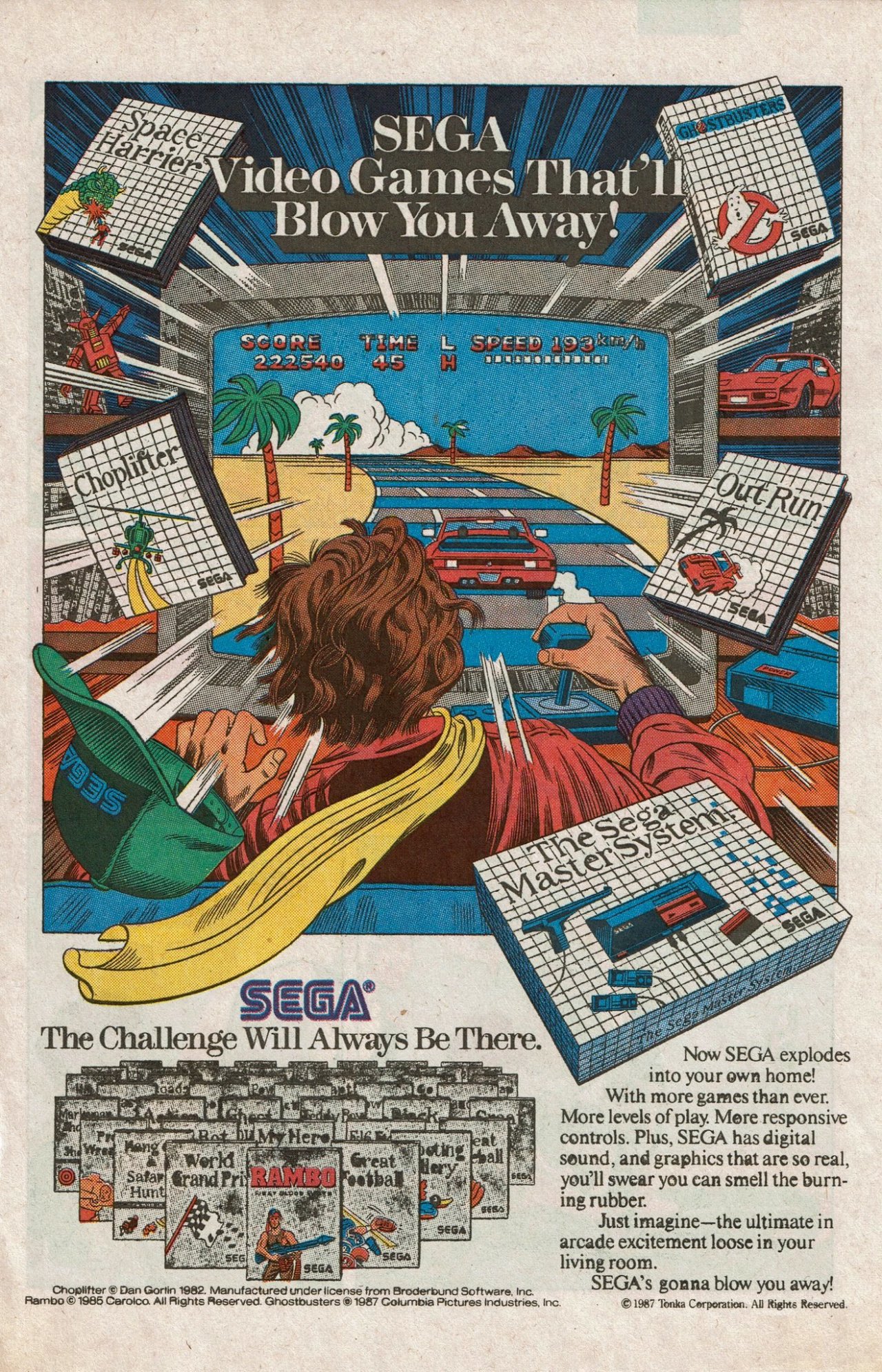
[Anyway], at that time, Sega was looking for a person to head up marketing because they were thinking of getting into marketing the Genesis system, because up until that time the Master System in the US was being sold and marketed by Tonka Toys. All Sega of America was doing was repair stations, and we had the game counsellors there. All retail marketing was handled by Tonka, and Sega wanted to control its own destiny, so it wanted to enter the business with Genesis.
I know you spoke to Mike [Katz, the former president of Atari] about how Sega was talking to them about marketing and distributing and then Atari turned them down. They were still looking at what to go and do. I was kind of a placeholder in the organisation. If they made the decision, I would be hired, and one of the funny things that I had to do as part of the interview process was, I had to go and develop a PowerPoint presentation from Sega of America to Sega of Japan explaining why choosing Sega of America for the 16-bit system would be the best choice. So, it was very strange trying to convince them to be in the business so I could therefore officially be hired.
At the time, Sega of America was basically 5 people. It was the interim president, a head of sales who didn’t have anything to sell, a finance person, an operations person, and I would have been the fifth to go head up marketing. And the [final] decision was to let the US go to market with the 16-bit system.
Time Extension: I read online that, back when Genesis was first revealed at the Summer Consumer Electronics Show in 1989, there was a device called TeleGenesis that was also announced alongside it. I’m wondering how much you remember about that device. Was it the same as the Mega Modem that was released in Japan?
Al Nilsen: It was the Mega Modem. I named it TeleGenesis because it went and worked with the Genesis system and the telephone line. So when we launched the system, it was in our product plan. If you look at the original brochures and the original system pictures, you would see the original TeleGenesis modem sitting I guess to the right of the Genesis system, and we talked about it.
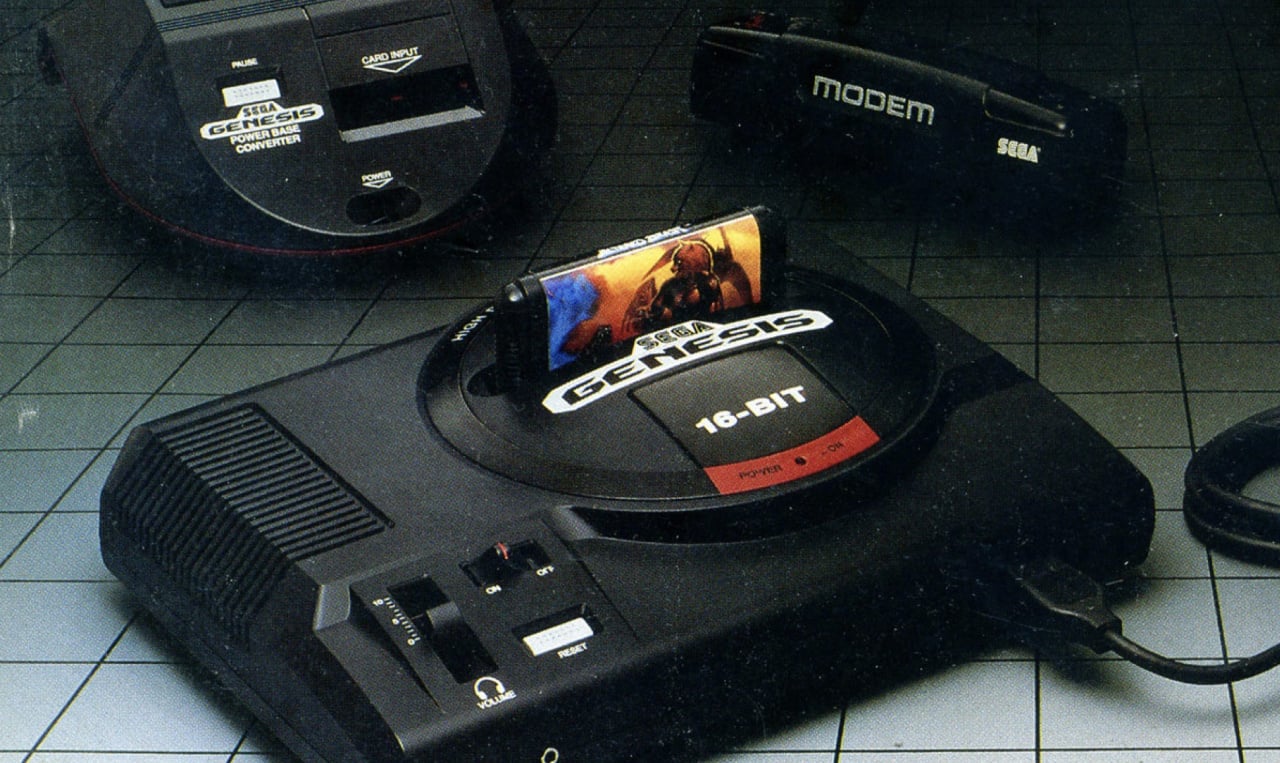
The game we had, which they showed in Japan, was the baseball one. I guess we might have actually shown it as the first CES in the June of ’89 when we launched the Genesis system in the US, and it was a less-than-ideal experience; it was slow going back and forth. We looked at two or three other games they had in development, but I can’t remember which ones. And the price was relatively high. I don’t remember what it was: $100 or something like that. And we made the decision not to go and bring it into the US because we thought it would not be a big seller, and it just wasn’t an ideal game-playing experience compared to what the experience was with Sega Genesis: playing all of the arcade games and action games and sports games (some of them Baseball). So that’s where it went.
Time Extension: Michael Katz told me that when he became president of Sega of America, he had very little face-to-face contact with the Japanese side of the company. How often did you communicate with Sega of Japan back in those days?
Al Nilsen: I was at Sega of Japan probably in those days every month or month-and-a-half. So I was in meetings with them about product development, manufacturing schedules, new products, peripherals at the time, and any other issues that came up. I was doing a lot of that stuff.
I was working with them daily via fax, so I had one point of contact. Actually, he was the contact for all of Sega of America, where we would go and fax questions and things we needed more information on, and then he would distribute them to the various groups in Japan, get the answers, and provide them to us. It was good to have one point of contact, but there were times when nothing beats going and speaking with people in person, especially in product development. You know, seeing the products and talking with the actual people who were developing them.
Time Extension: In 1989, you were chosen to be the point of contact between Sega of Japan and Michael Jackson. I’m wondering, how did that experience come about? Could you tell us what that collaboration was like?
Al Nilsen: Absolutely! So, Unbeknownst to us, Sega of Japan did a deal with Michael Jackson for both an arcade game and a Genesis game. So, one day the head of worldwide consumer products, Dai Sakurai, came into my office, closed the door, and told me that they had just done a deal with Michael Jackson, which I thought could be cool, and that Mr Nakayama, the head of Sega, had chosen me to be the interface between Michael and Sega of Japan as they were developing it.
I was told that the first thing I would do was meet with Michael to present him with the game designs for both games and get him to sign off on them. And he pulled out the game designs, and they were big boards with screenshots on them. And I said, ‘Great, when are we going to do that?’ He said, ‘We’re flying to LA tomorrow.’ And I was like, ‘Oh, okay’. So, I looked at the drawings, and I didn’t know what the game was. I knew what the different pieces were, but there weren’t any documents in English, so that evening I spent probably three to four hours on the phone with Dai Sakurai and the developers in Japan going through the game designs one by one so that I could understand what they were and go and explain them to Michael. Then the next morning, we flew down to LA.
First, we met with Michael’s legal team, then returned to our hotel and were told we would be contacted and taken back to a room to meet with Michael. We were picked up probably an hour later by Bill Bray, who was Michael’s head of security and then taken to a recording studio in Hollywood where Michael was recording, I guess, the Dangerous album at that time. This was in late July/early August in ’89, as I was bringing him the very first Genesis from the US shipments because the Genesis wasn't out until the 14th of August.
[Anyway], we go to the recording studio, walk down a long hallway, and coming the other way, there’s Michael Jackson. And as he gets nearer, he goes, ‘I know that game! That’s a good game,’ pointing to the Altered Beast package front on the Genesis box I'm holding. We got introduced to Michael, and he was like, ‘Let’s go up to my room’, so we went up to the second floor into his room, and there were a couple of his lawyers, the agent who negotiated the deal, his head of security, and me and Dai Sakurai. They all kind of formed a circle, and I’m there talking to Michael, and he says, ‘Take a seat.’ So, I look at the couch, I look at a chair, and I said, ‘Michael, why don’t you sit wherever you want to.’ He went and sat on the floor, so I went and sat on the floor with him in my pin-striped suit, and this group of six people are standing in a circle behind us looking down on us.
So, I pulled out the presentation boards, started talking to Michael about what they were, and he had great feedback. He was a gamer himself and looked at the screenshots they had and made a lot of comments like, ‘Well, why don’t we do this? What if I did this? What if this is how the battles go on?’ We had been told by Michael’s head of security as we were going up, ‘You have a 20-minute window that Michael likes to be in meetings, so expect this to be only 10-15 minutes long’, and we probably ended up spending over an hour with him, just Michael and I talking, with the rest of them just looking down and listening. Michael kept being called on the intercom because he was needed down in the studio, and he said, ‘I’ll be there, I’ll be there,’ and just kept talking about the game. It just showed how much he loved gaming and what we were doing.
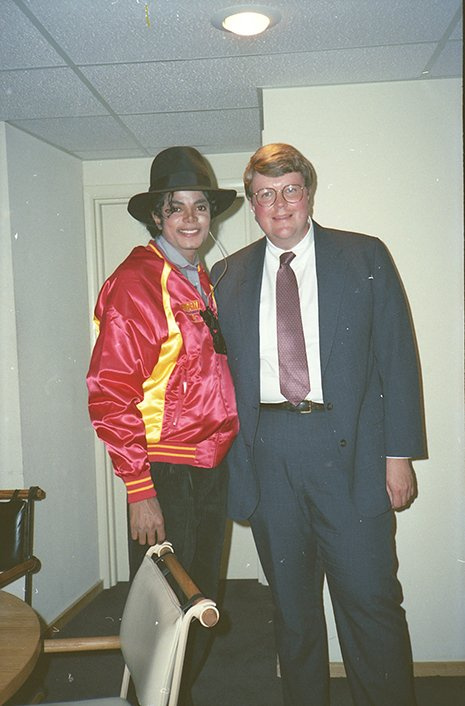
Finally, it was like, ‘We need you down in the studio now!’ and he was like, ‘Okay!' So he got up, and Dai and I had pictures taken with him, and then he went down to the studio. Then his head of security takes us back, and he says, ‘You don’t realise what just happened; Michael doesn’t do meetings like that. That’s the longest meeting I’ve ever seen Michael take. He must love what he’s doing.’
It was like we were just two gamers talking about games and how to make them better, so it was great. And over the coming months, I would go and meet with Michael at another studio he was using, a condo he had in LA, and I got to go to Neverland Ranch several times and even stay overnight. So, it was quite an experience. It was just a great relationship between Michael and me, and we loved talking about games, the toy industry, pop culture, and things like that. And what we ended up with were two great games: the Genesis game and the arcade game.
I also learned how to do ROM upgrades on an arcade machine for the first time. I had never done that before, but I had to take new ROMs and install them in the arcade machines in his home, so I learned a new skill!
Time Extension: Could you tell us about the first time you saw Sonic? What did you make of the character?
Al Nilsen: In 1990, I was chosen by Mr Nakayama, the head of Sega, to choose who would be the mascot, because they had this mascot contest. I was presented with two coloured boards. The first was this egg-shaped character, which I felt would be very pre-school in the US. And then there was a hedgehog. A blue hedgehog. It was like, ‘What’s a hedgehog?’ He had a band, a rock band, and he had a human girlfriend who looked like Marilyn Monroe and was named Madonna. These were the two choices that I had, and I chose Sonic because it was the lesser of two evils. I had no gameplay or anything like that.
Fast forward nine months, I had heard nothing about it since, and I was in Sega R&D in Japan and from across the room I saw two monitors. On the first monitor was this wireframe with something spinning at super speed. I walked up, and it’s like, ‘Here’s this character in a ball’ spinning, but all it was was a wireframe of I don’t know Green Hill Zone. But I was like, I have never seen a game like this before, and the speed was amazing. Then they stopped it, and it was Sonic, that thing that I had seen 6-9 months before. I just fell in love with it.
The next monitor next to it was the Green Hill Zone; it was the background. It was just these beautiful colours - these rich colours - which were just amazing. [The Sonic co-creator Yuji] Naka was there, and I went, and I said, ‘Can you go and do those rich graphics and combine it with the speed we have there on the Genesis system?’ And he was like, ‘Yep, absolutely!’ I just knew we had something special.
Time Extension: How did the ideas come about in terms of marketing Sonic? Ellen Beth Van Buskirk Knapp told me it was common for the then-Sega of America president, Tom Kalinske, to just ask people to pitch in ideas and then for everyone to build on each other.
Al Nilsen: Absolutely! A lot of the time, my group, especially Madeline [Canepa, now Madeline Schroeder, former Sega of America product manager and marketer] and I, would go and sit down and come up with some ideas. And we would go and present them to Tom and Ellen Beth [Van Buskirk Knapp, the marketing services manager at Sega of America] and other members of the senior staff. Then we would try to figure out how to do something that would have the biggest impact, and how to make it better with other ideas that were there.
We wanted Sonic everywhere and Sonic in everyone’s mind, whether you were a kid or whether you were an adult. We wanted moms and dads to be the ones buying it for their children. So, we wanted Sonic everywhere that you hadn’t seen Sonic before.
It was interesting because when we launched Sonic, we kept him under wraps because we knew he was our secret weapon against Nintendo. So, we wanted Sonic to be a surprise and release him just before the Consumer Electronics Show in 1991, when we did our comparison with the wall of two big monitors: one featuring Sonic, one featuring the new Super Nintendo/Super Famicom Super Mario World — lots of supers there.
Time Extension: Do you remember some of the ideas that you were throwing around at the time in order to get more publicity for Sonic to make him more of a recognisable character in the home?
Al Nilsen: Absolutely! What we would do is not only work with what we were doing in the US, but also with what we were doing in Japan, Europe, and the rest of the world. And that coordination really started in a major way with the plans for Sonic 2 and 'Sonic 2sday', where we did a worldwide global launch.
This was an idea that I had. Madeline and I pulled everything together and then worked on how we could do everything from a PR angle — how could we do everything from a retailer angle to make sure that when you walked into a Toys R’ Us, it was literally 'Sonic boutiques'. Where it was not just Sonic, but also all of our licensed products that were just starting to come out. What could we go and do in terms of previews?
We had the Sonic 2 tour which went to – I forget how many retailers and air force bases in the US. And in Europe, it was on London double-decker buses promoting Sonic. There were Sonic balloons. So, it became a worldwide effort to go and “Sonic-ise” people, and, of course, the biggest one was Sonic, starting in 1991 with the Genesis and the Mega Drive. So it was, here are the two things that went together.
The big thing we wanted to do was go and create word of mouth and buzz, and this is what people were talking about in schools. They were talking about it to their friends. And we wanted it that everyone would say, ‘Oh Super Famicom, Super Mario World, this is great, this is fabulous,’ and for their friends to go, ‘No, no, no, Sonic is faster, he’s better.’ And it worked!
When we did the head-to-head at CES, I remember one journalist who went and said, ‘Super Mario has got 30, 768 colours, you’ve only got 512, what are you going to do about it?’ And Tom and I walked him over to the wall where we had the two systems running. We started running the Japanese Super Famicom in the demo mode [and] we were using Sega’s demo mode, and you could not only see the speed difference but that Nintendo was using a more pastel palette while we had these vibrant, bright colours. So that was the first time that we did a comparison. At CES, the buyers and everyone were saying ‘Super Nintendo isn’t that big, because here’s Sonic.’ So that really started the buzz. And we knew it was going to work.
So, the next thing we did was a mall tour across America where we let people not only play Sonic for the first time but also play Super Mario World for the first time, because the Super Nintendo hadn’t been released yet in the US. So, this was the first time anybody could go and play it. And we were doing Nintendo a favour by letting them see what its new system was.
[Anyway], after people went and played both systems, we had them vote for which was their preference. And we had the highest preference for Sonic in Seattle, five miles from Nintendo’s headquarters. So, even people close to Nintendo loved it. At least 85-88% chose Sonic over Mario, and we knew this because we ran secret playtests around the country before Sonic was released, where we let kids who loved Mario play the new Mario and the new Sonic. Over 90% of the Mario lovers chose Sonic over Mario. So, we knew we had something strong.
So that was the launch of Sonic into the US, along with a TV campaign and a strong PR campaign. You know, Sonic went to number one. He had a Q-score rating higher than Mickey Mouse's. Which was unbelievable. So, that was great, and so the appeal of Sonic was strongest in the US, followed by Europe very, very close behind.
Time Extension: Just as a final question, I’m wondering, with all this success, why did you leave Sega for Viacom in 1993? Were your reasons similar to Tom Kalinske in that you saw kind of a lot of decisions start to be made without Sega of America’s involvement?
Al Nilsen: That was part of it. Tom and I started seeing it. I was probably going to Japan every month and a half. Tom was probably there every 2 to 2 and a half months, and we started seeing that in both Japan and in decisions coming to Sega of America. So, I was seeing the beginnings of it.
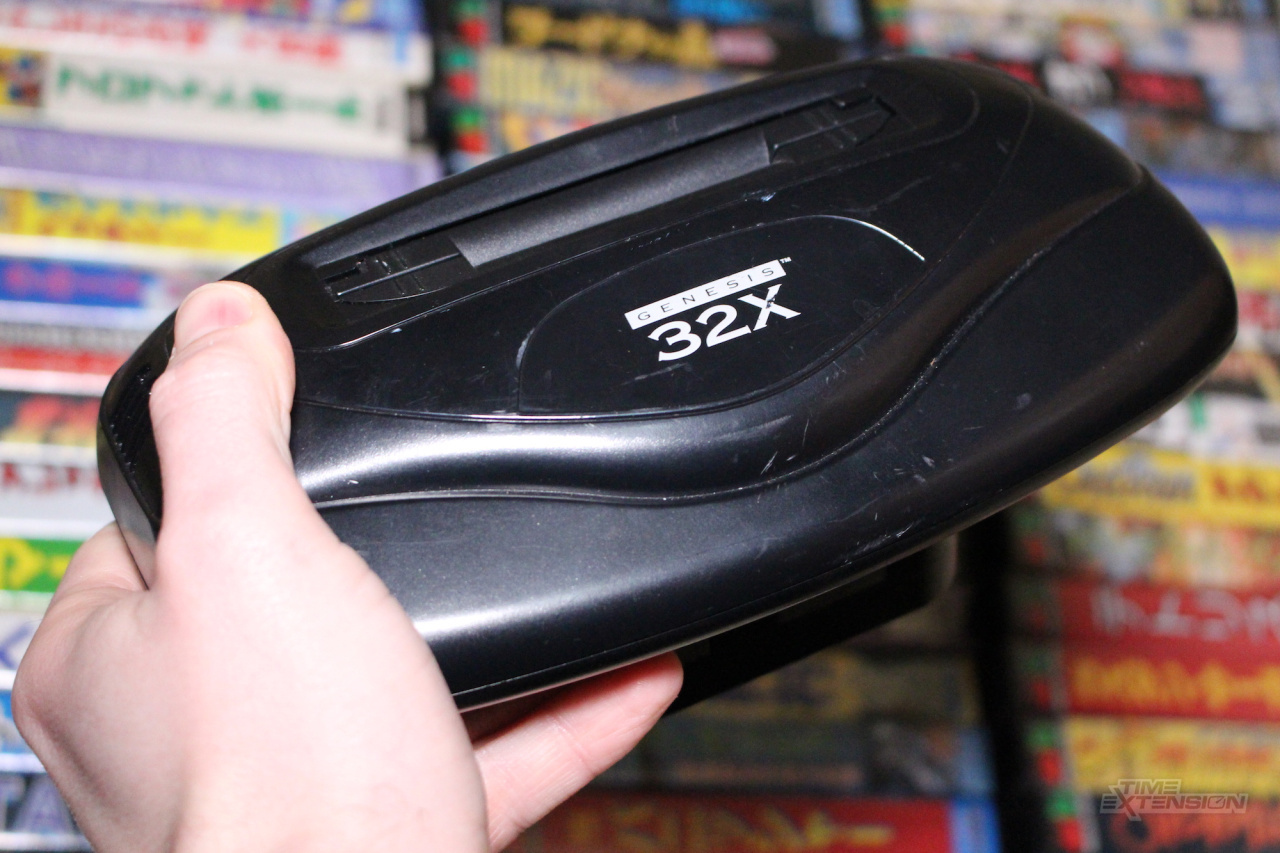
I had been there from when 32X was presented to Tom and me, and it was just kind of a non-starter. There weren’t enough games available for it, and the price was so high, and the new Sega [Saturn] was coming out. So I knew what was happening from that standpoint. So yes, I did see a change in what was happening in various groups. I had a very good product development group, so that was something that kind of remained unchanged because that wasn’t really where the problems were happening.
The reason I left, getting back to your original question, is that at the beginning of, I guess, ’93, my job had changed to heading up global marketing at Sega of America. The reason for this was the great success we had with Sonic 2sday and the introduction of Sonic 2 when I made it a global launch, and we coordinated with Sega of Japan, Sega Europe, and Sega OziSoft in Australia to make it a global launch and be able to share artwork and materials and learn from each other and plan. It was great coordination between them all, and [Sega] wanted more of that. And so, I was given this position.
I was doing a lot of travelling and not spending much time at home, and it was very hard to coordinate things because I was running into problems with Sega of Japan, who wanted to handle everything themselves. I also wasn't getting much hands-on experience with the product that was on the market in the US, which was something that, one, I enjoyed, but two, had a strong impact on me. Sega’s most successful game throughout the whole time, even after me, was Sonic 2, and what we accomplished with it. And I was not having that hands-on experience or much input because I was travelling back and forth much more than I had been.
We looked at what other places I could go and be because the organisation had been reorganised after I had been moved to the new position, and it was hard for Tom to try and bring me back in. Tom also really wanted and felt that he needed, in this global position, to be even closer to Sega of Japan because the decisions that they were making that were being pushed down upon us were increasing, and so it was good to have somebody who was able to go and see what was happening and see ‘Can there be changes?’ before they reach the US. So, it was an important position, but it was just wearing me out.
[Anyway], Viacom came along with a great opportunity to work with their new media group, while also spending 25% of my time with Nickelodeon on consumer products, a group I had enjoyed working with on various promotions. Even though it meant moving to New York, it was just a much better opportunity for me than spending most of my time sitting on a plane.