
 by
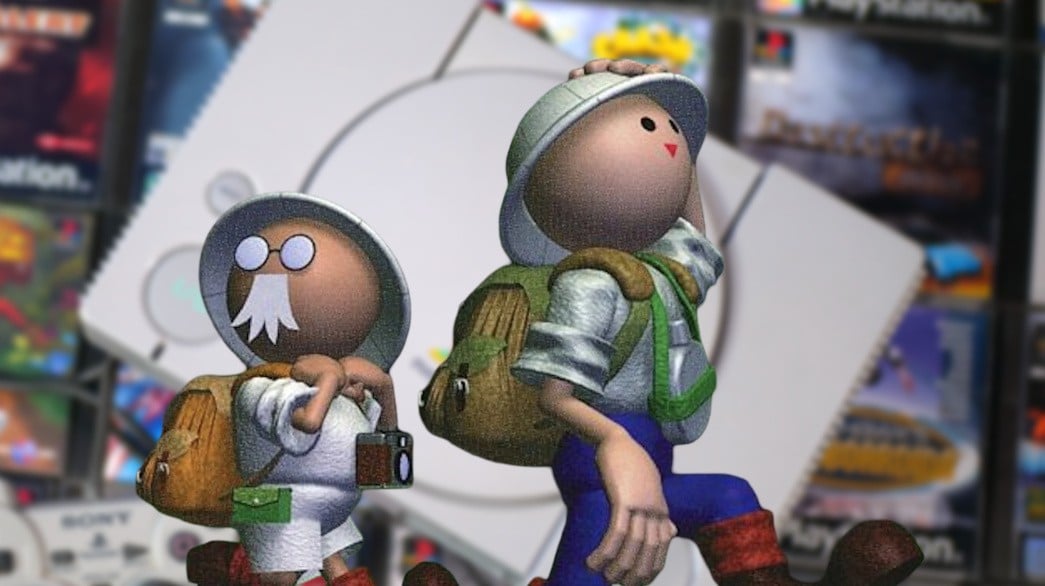
When the hacker Chapu Translations released his PS1 fan translation of Gust Co., Ltd.'s slapstick 3D adventure Welcome House 2 in December 2024, he was fulfilling a decade-long dream.
A huge fan of the PlayStation 1's eclectic Japanese library and a great admirer of the PlayStation fan translation community, he had always wanted to produce his own English translations of Japanese games; however, he admits some early failed attempts forced him to put his dreams on hold in 2014.
Being busy with classes and exams, he understandably tried to put the idea out of his head to focus on other things, but the itch to create his own fan translations kept returning, ultimately resurfacing for good in 2024. Deciding to give things another try, he selected Welcome House 2 as the project to help him learn the ropes.
Since then, Chapu has continued producing Japanese-to-English patches for games like Feycraft's obscure subterranean RPG Prisoner, the eco-friendly adventure game Wonder Trek, the Tower-based platformer Tiny Bullets, and the PS1 kusoge Yaku Yuujou Dangi (alongside other members of the fan translation community), and he has even more projects on the go as well.
Just over the last month, for instance, we covered another project he is involved with that aims to translate Takara and Dual's 1997 Japan-exclusive dungeon crawler Schrödinger no Neko into English, and also wrote about two more patches he's working on, including fan translations for Xing Entertainment's 1999 underwater RPG Meremanoid and Highwaystar and NEC Interchannel's horror-themed strategy RPG Ningyo no Rakuin from the year 2000 (the latter of which came out yesterday).
Inevitably curious to know more about his fan translation journey and the projects he's been working on, Time Extension chatted with Chapu over a voice call to talk about a range of topics, from how his love for PlayStation started growing up gaming in Argentina, how he decides what projects to tackle next, and the types of technical challenges he's faced so far.
Time Extension: Hi Chapu! It's great to speak to you at last. Firstly, I want to ask about Schrödinger no Neko, one of the latest translation patches you announced you are working on, alongside the Japanese-to-English translator Cadensia and Super Retro Polygons. How is that project coming along? What was it about that game that made you want to tackle it? Do you have any idea yet on when it will release?
Chapu: I don't like to give specific release dates because more often than not you'll find some unexpected technical problems along the way, or simply the people working on it have personal problems, so projects get delayed. I know the disappointment something like that can cause. But Schrödinger no Neko is coming along great! The script is about half translated, the graphics are taken care of, and I've already ironed out all the wee hacking problems I found.
I started working on it in particular because the first-person exploration reminded me of an old Sega CD game, Yumemi Mystery Mansion. Also, the game's aesthetics and general vibe appealed to me, and the story goes to some mad places.
Time Extension: I’ve also seen your name mentioned as part of the team translating Meremanoid, which is another interesting game I really can’t wait to play. Can you share anything about that project or your involvement with it? It sounds like it’s pretty far along.
Chapu: Indeed, Meremanoid is essentially done! Several of us in the team have already played the complete translation end-to-end and found no issues. We're just giving it one last pass with a fresh set of eyes to catch any last-minute typos or translation missteps. We haven't discussed a proper release date yet, but we're probably talking days. We're very excited to share it with everyone!
Time Extension: It sounds like you're really busy. Do you typically work on so many projects at once? Do you have any other unannounced projects you're working on now, or any games you want to get around to in the future?
Chapu: I have tons of projects, haha! Besides the two we've already mentioned, there's Ningyo no Rakuin, now translated to "The Curse of Ogaeritō", on which we've been working with Whowasphone404 (who translated Yaku/Misfortune), vervalkon (graphics on Wonder Trek) and LaytonLoztew (who did a bunch of great RetroAchievements sets and is playtesting).
That one will release very soon [Editor's note: it actually came out yesterday if you want to give it a try]. Then there's Fox Junction, with Cargodin and much of the same team from Meremanoid. That one's also done, so it will release in no time.
I'm also well into The Conveni with translator ColdClock, although there's still lots of work to be done and I've lagged more than a bit on that one, but I plan on continuing soon.
Right now I'm also starting to look into Robin Lloyd no Bouken. I don't want to get anyone's hopes up; still trying to get the graphical side of things done right (learning how to implement a variable-width font for that one). And I've also semi-started work on other stuff like Jungle Park, Planet DOB, and Deep Sea Adventure: Kaitei Kyuu Panthalassa no Nazo, but those are in very, very early stages yet.
I'm always looking into several projects at once, seeing which ones I can crack and, once I'm confident I can take them to completion, I start looking for people who would like to assemble a team.
Time Extension: All of your patches so far have been for games released for the original PlayStation. What were your first experiences with the PlayStation growing up? You're based in Argentina. I'm curious, what was the gaming culture like there for retro games?
Chapu: I got the PlayStation when I was 12. By the time I got my parents to buy it for me, I had already played a bit at friends' homes. The first time I ever used one was at Cyber, which was a place where you could pay for half an hour or an hour and play on PC over LAN or on consoles. Here in Argentina, we just had pirated copies back then; the market for originals only appeared from the seventh generation onwards with the PS3 and such.
I remember I got my chipped PS1 with five games, and the one I ended up playing the most was Armored Core. It had an awesome mix of action, exploration, resource management and, more importantly, narrative. I had had my first taste of truly narrative video games on the Sega Channel, playing Phantasy Star III and Shining Force II, but the level of storytelling I found on the PS1 was something else. Thanks to the PlayStation, I became a lifelong fan of JRPGs and was able to experience a multitude of amazing games.
Time Extension: Would you say it’s one of your favourite consoles? If so, why?
Chapu: It's definitely my favourite console, bar none! Besides the obvious emotional appeal of having had it during my adolescence and formative years, I think the transition from the fourth to the fifth generation of consoles was extremely interesting because full 3D was such a new technology. It opened up new and exciting possibilities for games, whole genres even.
I think that video game developers were still unsure of what the potential for 3D could be, so they took a lot of risks and came up with games that were unlike anything seen before; they experimented with new things to see what would work. And I also feel that Sony, being a newcomer to the home console market, was willing to give more creative freedom to developers back then, since they needed a very strong library to succeed against established names like Sega or Nintendo. So, I think the PS1 has one of the most unique, varied, and interesting libraries in all video game history.
Time Extension: I'm wondering, what are the games that really demonstrate the diversity of the PS1 library to you? Like, what have been some of the games that have really stood out to you personally?
Chapu: Off the top of my head, one I particularly like is LSD: Dream Emulator. It's such a weird game, and I read afterwards that the main developer for the game actually based it on a dream journal he kept. So I think it's really fascinating. Not only the fact that he chose to do that, but that it actually got approved, that it's a commercial release in Japan. But that's just one example. There's a bunch of them.
For instance, there's also Suzuki Bakuhatsu, which is this game that has you attempt to deactivate these bombs disguised as everyday objects. Also, just recently, an English patch was released for another game that's called Pixy Garden. That's sort of a simulation game, crossed with a digital pet, where you have to terraform a planet to allow Pixies or fairies to grow. That's another really cool game that feels really unique.
Time Extension: You mentioned to us that Welcome House 2 was your first translation. I'm wondering how you came across that and what about that game stood out to you as worth translating?
Chapu: Well, it's a funny story. I didn't translate Welcome House 2 because I thought the game was great. In fact, I don't think it's a great game. I think maybe it's a fun couple of hours, at best, but it just has a silly sense of humour that I really enjoy. But I think that games that aren't great also deserve a translation, and a chance to reach a wider audience.
Not every game can be an Ico for PS2 or a Final Fantasy VII for PlayStation 1. And in this particular case, what happened was, it was mid-2024, I was finishing college, and I was really burned out from studying. I finished a couple of exams, and I had a couple of weeks before starting classes again.
So I thought, 'Hey, it's been a while since the last time I checked what's new in the fan translation scene.' So I went to a ROM hacking site, and I found nikita600's translation for Welcome House 1. I played the game, and it sort of rekindled this interest I had in doing fan translations. 10 years ago, I tried my hand at translating Aconcagua, but I couldn't get past the LZSS compression.
Now I know it was just a really difficult game to hack, but back then I didn't have a clue. So, when I found the patch for Welcome House, I thought, 'Maybe I can give making a fan translation another shot now I'm much more experienced as a programmer,' and it was at that point that I noticed that there was a Welcome House 2.
I downloaded it, tried it, and I thought that it was extremely similar to the first one, right? So, being a bit of a nerd, I thought, 'You know what? These people probably used the exact same engine to make the second game with just a few modifications. So, I bet if I can get my hands on the source code for the first patch, that would help me.' I got in touch with nikita600, and he very graciously provided me with a link to his GitHub, and well, the rest is history.
Time Extension: How similar were the two games when you finally looked into it? Were they as similar as you expected?
Chapu: They were very similar, actually. They just cut off a few things here and there. For instance, they improved how text is stored to take up less space, but the text referencing was pretty much the same with pointer tables, and they also used the built-in BIOS fonts on the PS1, just like in the first game. So, I used the project as essentially a learning curve. But the funny thing is, after I released the patch, I actually got messages from people thanking me profusely because they had been wanting to play that game for years. That was absolutely amazing to me, because it wasn't exactly my dream game, but it turns out, it was someone else's.
Time Extension: Looking back, I think the first two patches of yours we covered were your patches for Feycraft’s PS1 action RPG Prisoner and Zest Works' Wonder Trek. I’d be fascinated to know: how did those games originally land on your radar? Were they games people had been waiting to play, or titles you just happened to stumble across online and feel were interesting?
Chapu: I tend to dig deep into the internet for stuff that interests me, not just for games, but also for movies, music, and literature. For games in particular, there are several interesting blogs I like to read, for instance, Lunatic Obscurity, Something In the Direction of Exhibition, and the more popular Hardcore Gaming 101, and those are a big source of inspiration for some of the unusual titles I like to look at.
Wonder Trek was a game I had known about and wanted to play for about 10 years at that point. Prisoner, on the other hand, I discovered about a week before starting to work on it. I had just published the patch for Welcome House 2, and I was looking at what to translate next. I first tried with Wonder Trek, but I couldn't figure out how the text was being stored. Then I read a comment on the CDRomance page for Prisoner saying the game's story was excellent. That intrigued me, so I gave it a shot and found out I agreed, which motivated me to finish and release it.
There were two funny things about this: the person who wrote that comment turned out to be a fellow Argentinian, living in another city just an hour away from my own. While I was working on the patch, I got in touch with them to ask for pointers on the story since they had uploaded a full playthrough to YouTube. When it was released, I went to his city (his name is Cros; I thanked him in the patch notes), and we had a few celebratory pints. We've remained friends ever since. As for the second funny thing, the experience I got from Prisoner allowed me to crack the Wonder Trek problem in literally 15 minutes, after having spent two weeks banging my head against the wall before.
Time Extension: What are some of the biggest technical obstacles involved in hacking games in the PS1 library?
Chapu: I think, for PS1 games, fan translation hacking problems typically boil down to two main areas: graphics and text. Whenever I start a new game, those are the first two things I need to get out of the way so I can actually do it. Modifying the graphical engine to properly display fixed half-width text instead of the Japanese fixed full-width; and modifying the text management engine to store and retrieve an ASCII-encoded translation instead of the original SJIS-encoded text.
You need both the data and graphical space to do a proper translation, such as storing enough text and being able to display it on-screen. Also, many games reference the text in quite creative ways to account for the non-linearity of the script, and that usually poses a challenge as well. If you reinsert a translated script that's not the same size, you have to recalculate pointers or offsets that reference it.
There's also, of course, other stuff, like some bonkers things devs liked to do with image formats, or cracking compression schemes (though most of the time they're usually some in-house variety of LZSS), but yeah, text storage and its graphical representation are the two main areas for me.
Time Extension: Are there any specific pieces of software or tools that have proven particularly helpful for this kind of work?
Chapu: There are tons of great tools I use. My main three are the Ghidra disassembler, the ARMIPS compiler, and the PCSX-Redux emulator, which has amazing debugging capabilities. Also, for graphics, I'm very fond of jPSXdec, TimViewer and Usenti. And for rebuilding, I use MKPSXISO and the PSXImager suite. All great, free tools selflessly developed and shared by community members.
Time Extension: Just as a final question, obviously, one of the most controversial topics across all of retro gaming right now is this subject of AI-assisted/AI-generated projects. More than ever, we’re seeing people use AI for all kinds of projects, but often in a way that undermines existing fan communities. Decomp.dev’s creator, for instance, recently said that it has broken the community aspect of the decompilation scene.
Has it been the same for the fan translation community? Has it been discouraging at all to see this trend increasing in recent years?
Chapu: I wouldn't say it's discouraging, maybe a wee bit disappointing. Take Meremanoid, for instance: we obviously weren't expecting an AI patch to drop out of the blue like that, with mere days to finish the last proofreading pass. But it doesn't change our resolve or our belief in the quality of our work.
That's why Cargodin decided to let everyone know we're working on it and ask for some patience. That one's eagerly awaited by lots of people, so knowing a human-made translation is on the way is probably important.
Besides what happened with Meremanoid, I agree with the decomp.dev creator that the surge in AI patches has been detrimental to the community. For instance, I've met lots of great people thanks to this hobby, people with whom I've worked on patches. If I had just prompted an AI agent to translate a game, I would've never met those great people. A bunch of disconnected people in their rooms "talking" to LLMs don't make up a community. I know that lots of gamers out there aren't necessarily interested in this, though. They only want to play a certain game in their language.
I personally hold no ill will towards people who do (or use) these patches. I do, however, believe that they have been misdirected, tricked, if you will, into believing they're doing the same as human teams. They are not. What they are doing is obtaining an end result which is, at best, a very poor and subpar approximation of what humans can produce. But the process is absolutely different, and I think that it's in that process that you'll find the quality of the end product.
Many people have been made to expect zero-friction, instant gratification, and have been led to believe that getting things fast is OK if you just lower your standards. Standards are the one thing we should never lower; if anything, we all ought to try and improve them.
Time Extension: Thanks again for your time! We really appreciate you talking with us.