
 by
by 
One of the last, and most steadfast, elements of PlayStation 2's infrastructure has finally been toppled, as modders have "broken wide open" the best-selling console's notoriously fortified security chip.
As reported by Tom's Hardware, the CXP102064 chip - more commonly known by the pseudonym "MechaCon" - made its debut in the original PS2 model released in 1999. The chip has many roles within the console's operation, including direct control of the PS2's optical drive and the decryption of both its "MagicGate" memory card and the platform's native KELF (Kernel Executable Linkable Format) files.
As such, the MechaCon was an integral part of PlayStation 2's internal security and was recognised at the time as being one of the most powerfully executed examples of on-board technology in console history.
It's no small feat that Canadian modder DiscoStarslayer has finally cracked open one of the PS2's key cores, some 26 years after the console's initial release. Their reverse-engineering project took a staggering four years, during which the modder chemically decapped the chip itself, then painstakingly analysed its microscopic circuitry for structure and potential exploits.
After dumping their initial findings online, DiscoStarslayer received an assist from another modder, Libby, who studied the data and eventually found a way into the chip's infrastructure via software, spilling its secrets and ultimately giving dedicated techheads an understanding of both its creation and potential recreation.
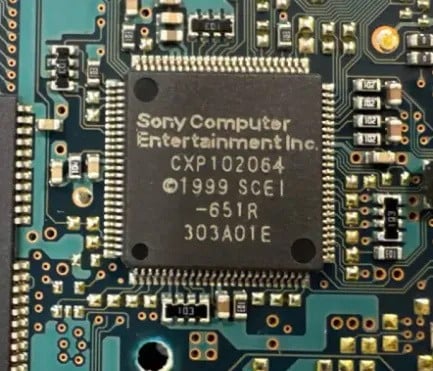
And therein lies the goal: DiscoStarslayer's work offers greater understanding of the PS2's process and structure, information vital to evolving emulation of Sony's beloved black box. Not just a technological lock to be picked, opening the MechaCon forges new paths for PS2 hardware and software emulation moving forward - advancing the vital role of preservation for a new generation of modders.
Kudos to DiscoStarslayer and Libby for their incredible dedication. Additionally, kudos to Sony technicians for having crafted such a formidable piece of tech in the first place.
Two-plus decades of hardware fortification is no small feat.