
 by
by 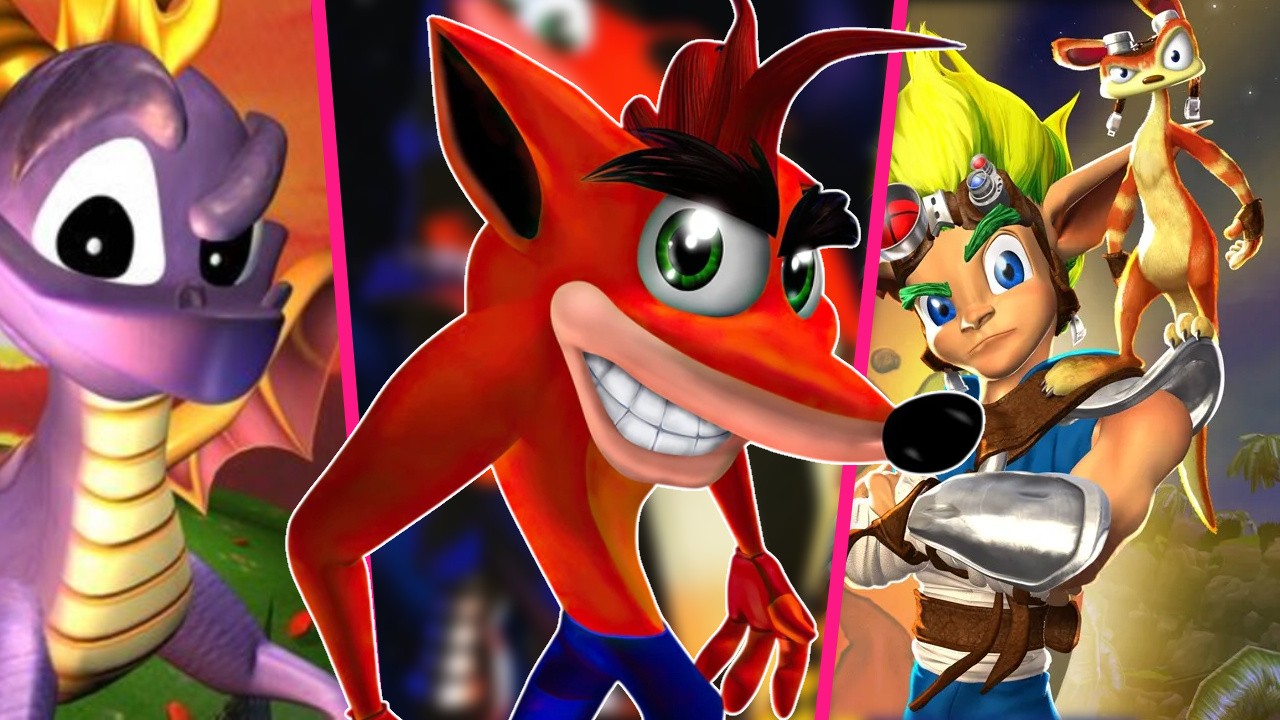
Charles Zembillas isn’t the type of person to stay quiet when he feels he's been disrespected.
He’s aware that may make him seem like a bit of a “firebrand” to some. But it’s something he feels has been necessary to set the record straight, given how several of his contributions to animation and gaming have been buried and misrepresented over the years.
Zembillas, in case you are unaware, is a Hollywood art director and character designer who previously worked on animated films like An American Tail and classic TV series like He-Man and the Masters of the Universe, She-Ra: Princess of Power, and Bravestarr. In addition to that, he has also had a pretty spectacular career in games, too, not only being the co-creator of the popular video game character Crash Bandicoot (alongside his friend and former colleague Joe Pearson), but also dozens of other memorable platforming characters, from Spyro the Dragon to Daxter (from Jak & Daxter).
Over the years, the characters he has created have gone on to be the stars of games that have sold millions of copies, inspired mountains of merchandise, and appeared in countless sequels and spin-offs. But despite that, he argues he's seen little recognition or thanks for his work, often being denied the credit or acknowledgement he rightfully deserves by his former employers. It's something that, he admits, still affects him decades later and has led him to try to educate the next generation about some of the pitfalls and dangers that lie in wait for artists in creative industries, in the hope that others can avoid some of the same challenges and mistakes he's experienced along the way.
Time Extension recently reached out to Zembillas to learn more about his incredible career, and, in typical fashion, he held nothing back, giving us an extraordinarily candid account of his journey from bullied school kid to Hollywood artist and master designer. We talked about his unconventional entry into the world of animation, his work on Crash, Spyro, and Jak & Daxter, and the many difficult battles he's faced over the years to ensure his name is mentioned alongside his creations.
Escaping To California
Zembillas's love of art began at a very early age. Being fairly small in stature, he was often picked on by older kids at school, but art proved to be his secret weapon.
While his peers were all sketching stick figures, he was already capable of drawing more complex shapes, earning praise from both his teachers and the other students in the classroom. Naturally, because of this, he knew pretty early on what he wanted to do with the rest of his life, with one early experience, in particular, solidifying his desire to become a professional artist.
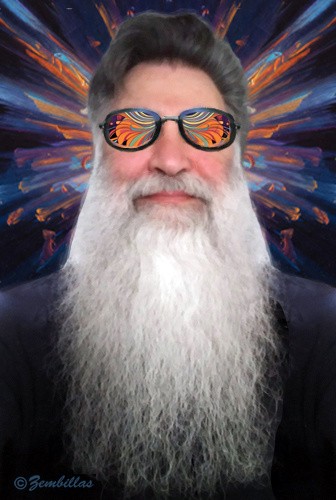
He recalls, "I remember one time the teacher passed out newsprint and those fat crayons in class; I started drawing the Lone Ranger — or maybe it was an Easter bunny. Anyway, I was really getting into it like normal, and the girl behind me looked over my shoulder and yelled out, 'God, is that good!' The entire class immediately stopped what they were doing and rushed over to see what I had done, and I was the center of attention. That's the day I went home and told my mum, 'I know what I'm going to be when I grow up.'
"From there, my family really encouraged me; they kept telling me that what I had was a gift from God and I was obligated to follow up on that, to do something with it."
Zembillas grew up in the 1960s and '70s in a Greek immigrant family in Gary, Indiana — an old steel town founded in 1906 by U.S. Steel. As he explains, back in the ‘70s, his "entire neighborhood [essentially] fell apart in one summer" due to a rising crime rate. In the aftermath, he, therefore, found himself living together with his family in an increasingly difficult environment, with his parents' business, in which he often worked, becoming a regular target for armed robbers.
"Back when I was a kid, it was very dangerous," Zembillas recalls. "My father was an immigrant from Greece. I was the oldest of my brothers and sisters, so I had an obligation to help out with the family business — this little neighborhood grocery store. So I had to work as a child, and we were held up a lot. Fortunately, I missed some of those incidents, but we were held up a total of 12 times at gunpoint. So, I saw art as my way out."
Knowing the kind of career he wanted to pursue, Zembillas went to college and got a major in fine arts, but struggled to get a job with his degree, so he applied to the American Academy of Art in Chicago, an institution he describes as a very fine school that had "a great tradition of training some of the greatest artists in America." Here, he would study for a couple of years before Hallmark Cards, the popular card company, hired him to work at their Kansas City office.
For Zembillas, Hallmark proved to be an important first step in his journey toward becoming a professional artist, and he was happy enough working at the company at first. But over time, he grew increasingly creatively frustrated and found himself wanting to make inroads into the animation industry, having been inspired, in part, by The Secret of Nimh and the work of Don Bluth. So, after a few months, he called Don Bluth Studios and sent his portfolio to Disney in hopes of landing his very first animation job.
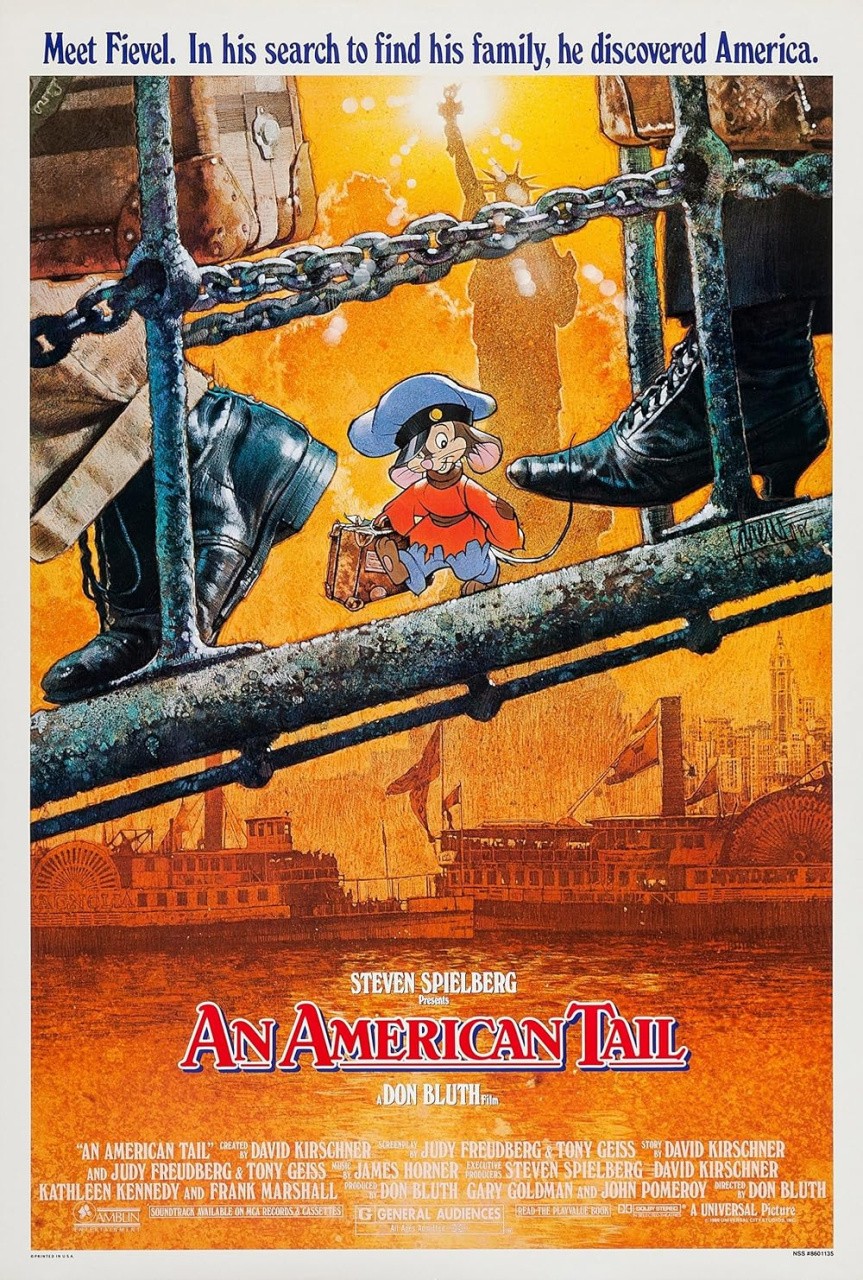
"I broke into the animation industry in an extremely unusual way," Zembillas tells me. "I had sent my portfolio to Disney, and I got accepted. But by the time I got out to Burbank, it was the first week of a major industry-wide strike, and all the studios were closed; nothing was going on, and the job fell through. I had borrowed a friend's tent and was pitching it in the desert or on the beach, and I didn't really have anywhere to live. But then I got hooked up with this lady in San Diego, Patricia Paris, who was a legend at Hallmark Cards.
"She gave me work and a place to stay while I was waiting out the strike, and while I was working with her, I met David Kirshner, who gave me a freelance gig working on concept art for what became An American Tail. I was told it was going to be a made-for-TV special with no marketing to it in connection with the 100th anniversary of the Statue of Liberty. That's not the way it turned out. Later, the animated feature turned out to be a smash hit when it was released four years later, and I didn't get a credit.
"Around the time I got the gig, I was also calling around studios until I finally got an appointment to show my work at a studio called Filmation. They took me to meet the head of the studio, who was Lou Scheimer, and he hired me then and there; I got a job in the morning and an apartment that afternoon."
Crash Bandicoot
Working at Filmation, Zembillas would go on to be part of the original creative teams on He-Man and the Masters of the Universe and She-Ra: Princess of Power, where he would hone his craft as a character designer. He would then land another animation gig at DIC Entertainment in 1985, which was best known at the time for its work on the Inspector Gadget television show.
It was at DIC that Zembillas would go on to meet his future Crash collaborator, Joe Pearson, who was working the next desk over on a TV series based on a series of children's novels called The Littles.
"Joe and I were working next to each other," recalls Zembillas. "And I was giving him some pointers about how to do this or that, because I think it was his first job in animation. We got along really well, and over time we discovered we shared similar perspectives on the industry and were both independent-minded. That kick-started a friendship, and so, many years later, when Joe was working at Universal Cartoon Studios in November 1994, he called me up about this video game project he was getting involved with. A project called Willy the Wombat (which later became Crash)."
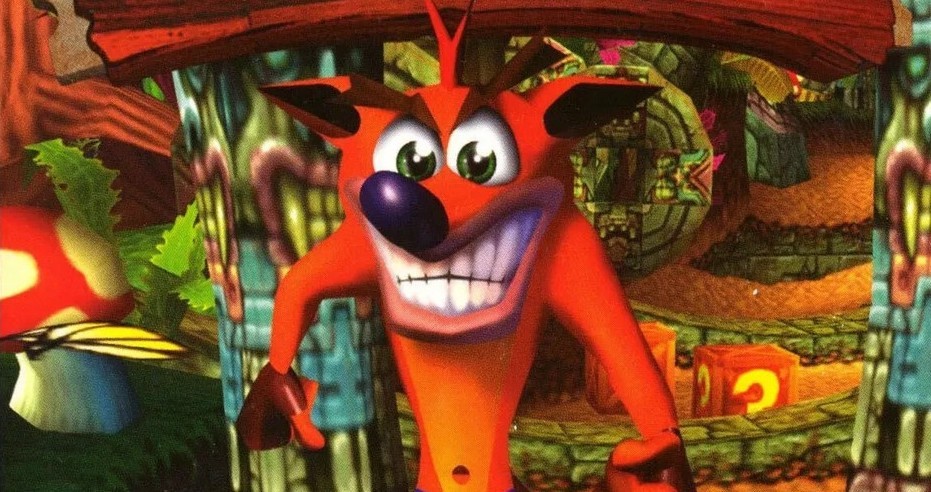
Willy the Wombat, as a concept, first came about thanks to a deal between Universal Interactive Studios and the developer Naughty Dog, which at the time was composed of just two people, the studio's co-founders Jason Rubin and Andy Gavin.
Having just released Way of the Warrior, a fighting game published by Universal Interactive for 3DO, Rubin and Gavin made the long drive across the country from Massachusetts to Universal City, in LA, in late 1994, to work on ideas for their next game. This eventually led the pair to develop the concept of creating a 3D version of popular 2D platformers like Sonic the Hedgehog and Donkey Kong Country, which they affectionately nicknamed "Sonic's Ass".
The idea behind this project in these early stages was for the game to feature a main character named Willy the Wombat (loosely inspired by the Tasmanian Devil), who had been mutated by an evil scientist, with the title mostly taking place on an island somewhere near Australia. But beyond that, little else about its story or visual design was set in stone. So, Naughty Dog and Universal decided to bring in outside experts to both develop the lead character and their world. This ended up being Pearson and Zembillas.
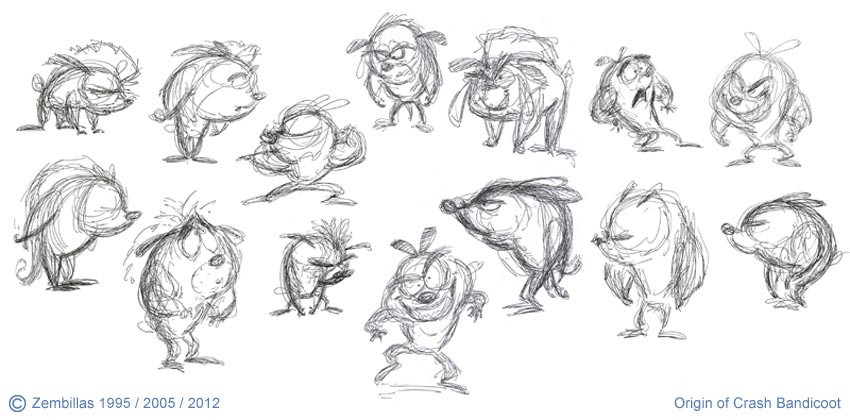
"We had his lawyer negotiate the deal for our involvement," says Zembillas. "It was a very bad contract, to tell you the truth. It didn't pay much, and I didn't make any money, but I went along with it because I thought the project might be fun.
“At that time, video games were really frowned upon in the animation business. It was like a tiered thing. If you're working on 'feature' films, that was considered the A-list stuff. TV was B-list. Video games were at the very rock bottom, so it wasn't something that many people wanted to do. Although I did hear later there was another artist who was trying to get into this gig, and that was Butch Hartman, who was at Hanna-Barbera."
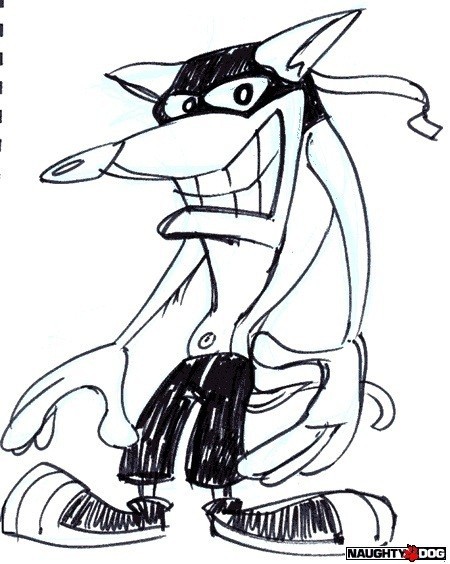
Upon joining the project, Pearson immediately fleshed out the game’s world, writing a lengthy production bible for the project, and devising new ideas for the title, including the Aztec Tiki design theme, as well as the Evolvo Ray, the Cortex Vortex, and much of Cortex's backstory. Meanwhile, Zembillas claims to have initially "followed Pearson's lead," but also found opportunities elsewhere to build on what Pearson was doing and further stretch his creative muscles.
In the case of Crash, for instance, Zembillas recalls that both he and Pearson originally designed the character to be more squat and Taz-like, based on the initial brief from Naughty Dog, but eventually Pearson submitted a stretched-out version with an oversized mouth, which Naughty Dog seemed to like. It then fell to Zembillas to build on this design, working out how the character should move and emote, and what his personality should be.
"It was a challenge," says Zembillas. "I remember looking at this design that Joe came up with, and saying, 'How do I make sense out of this? The character's body is his mouth, and it only works if his mouth is smiling. How am I going to handle these different expressions?' I was doing different versions of Joe's character, putting a tail on him and even a kilt on him — whatever came to mind — then, after a while, I finally figured out how to make it work, which involved just putting a lot of myself in there. From there, everything just kind of fell into place."
Besides Crash, Pearson and Zembillas would also collaborate this way on several other characters, including the villain, Dr. Neo Cortex, who Zembillas had initially envisioned as “a mad scientist, child genius.”
“When you're designing characters, especially when you're at the very beginning, and there's nothing there, you just kind of explore every possible iteration of it,” he says. “So that's what I was doing with Neo Cortex. I'm not really sure how the final version came about, but again, they were partial to what Joe was doing, so I kind of adapted Joe's design, and what you see is just how he turned out.”
There were some other characters elsewhere, Zembillas ended up taking the lead on. This includes Crash's companion, Aku Aku (whom he originally envisioned as a "genie" before it was suggested they be transformed into a voodoo mask), and Crash's girlfriend, Tawna (who also underwent a similarly dramatic transformation).
"I started off making Crash's girlfriend look like a kind of streetwalker," says Zembillas. "I remember drawing a cigarette in her mouth. She was really quite different. But then they told me, 'Make her sexy,' and I just figured they wanted her to be a Jessica Rabbit-type character.
"So I drew her as a blonde bombshell, and it came out pretty well. I don't know if I would have picked that one the way that she turned out. There were some other designs, including one in particular that I was pretty partial to, but, you know, they wanted something else. So that's just what I did."
Crash Becomes A Hit & Spyro the Dragon
When Crash Bandicoot launched in 1996 on the Sony PlayStation, it went on to become a huge critical and commercial success for Naughty Dog, Universal Interactive, and Sony Computer Entertainment (which had stepped in to publish the game). But with this success came tense disagreements over how Zembillas and Pearson's involvement was being represented to the media, with Naughty Dog repeatedly minimising the pair's contributions.
In the promotion leading up to the initial release of Crash Bandicoot, for instance, one EGM preview referred to the pair as "outside cartoon artists" who were "brought in to tweak the look of the game's characters," while elsewhere in another interview, Jason Rubin credited Crash to a team of twelve, including "two [unnamed] cartoon designers.” For Pearson and Zembillas, who had contributed to so much of the project, this proved to be a huge slap in the face and a shocking misrepresentation of the truth.
"I remember around the time Crash came out, I was working with Joe on a Christmas special at his studio," says Zembillas. "We went to the back porch, and we were both reading out of this magazine together, and we were astonished at what they were saying. We created Crash; they hired us to create Crash. We did not come in to tweak the project. They were crediting everybody else at Naughty Dog for it, and they weren't even there! I mean, they had no employees and no other artists when we started working on this."
"What they did was inexcusable, and it ruined their relationship with Joe, because he took such offense at that, and I don't blame him at all. They apologized to us at the time, but I remember the way they apologized; it was like they were trying to shift the blame onto the journalists."
(We’ve reached out to Jason Rubin to get his side of the story, but have not received a reply to our requests for comment. When we spoke to Pearson, he corroborated Zembillas's view of events.)
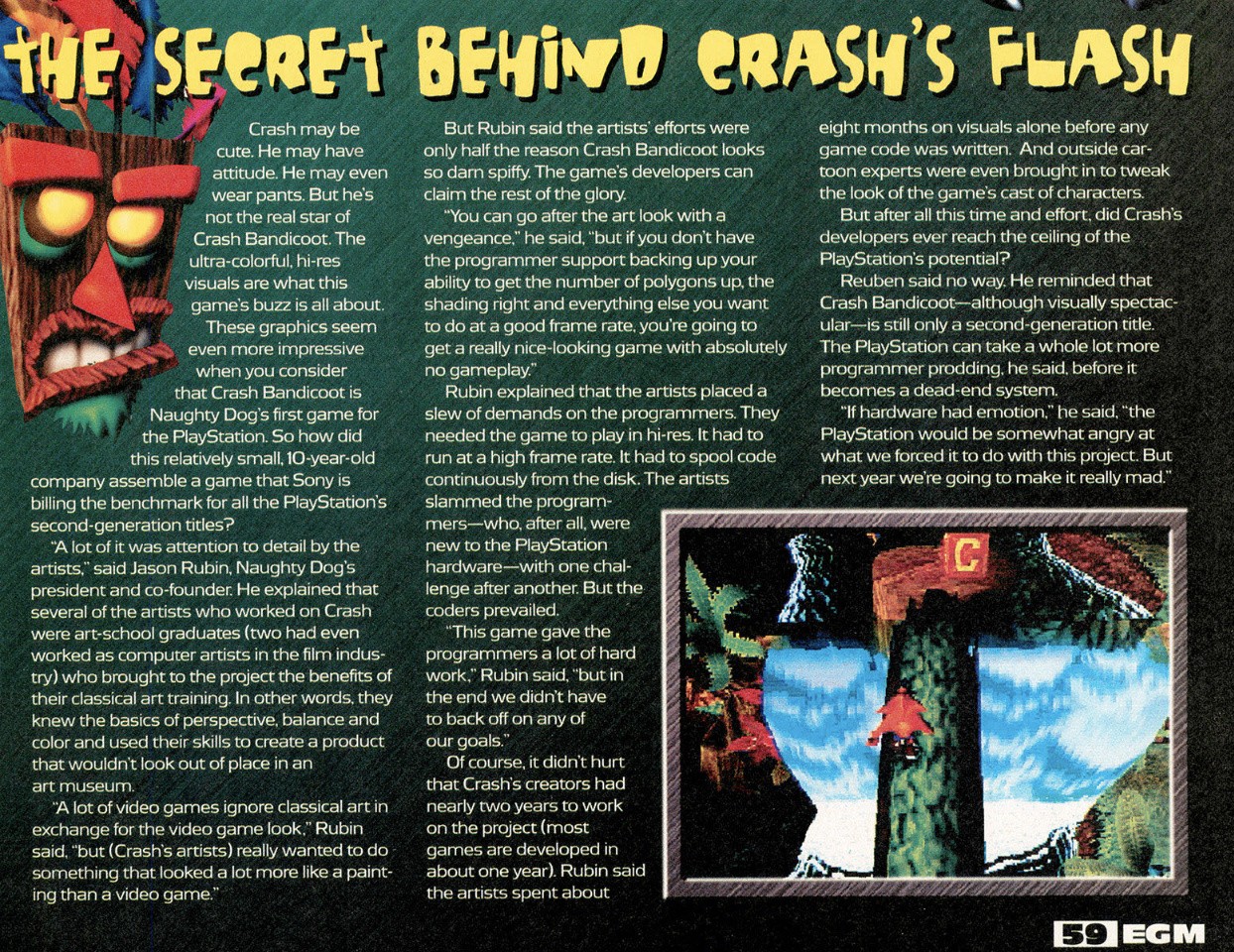
Because of this incident, Pearson cut ties with the studio (though many of his designs would later be recycled for other games in the series), going on to work on the Maximo series with David Siller, the producer of Crash Bandicoot, who left Universal to join Capcom. Meanwhile, Zembillas returned for the game's sequels, Crash Bandicoot 2: Cortex Strikes Back (1997) and Crash Bandicoot: Warped (1998), while also beginning work elsewhere on another character-based platformer, for another Universal-based studio, Insomniac Games, which eventually became Spyro the Dragon.
As Zembillas tells me, in January 1997, he met Ted Price, the co-founder of Insomniac Games, who asked the artist to help out with a new character-based platformer they were developing, codenamed "Project Pete".
Having been located just down the hall from Naughty Dog at Universal City, Price was keenly aware of what Zembillas could do and how much he had contributed to the original Crash Bandicoot, and so saw an opportunity to draw from the source to come up with a mascot character of its own. So he hired the artist to create several concepts for the game, including a design for the main character, Pete the Dragon, who would eventually become Spyro, with Zembillas’s help.
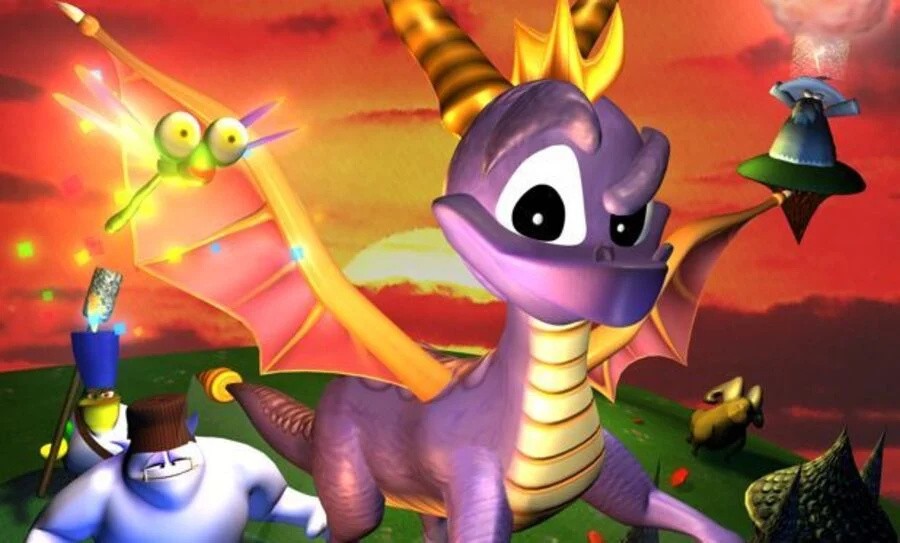
"When I started, I worked exclusively with Ted Price," says Zembillas. "Originally, they didn't know what they wanted; they just knew they wanted a dragon. The game was called 'Project Pete', alluding to Pete's Dragon, so I was doing like these big lumbering dragons, and we were trying all sorts of different things, which is what you typically do in development; you try whatever comes to mind, you get it out there, and the nos are just as valuable as the yeses. Then you can focus on what they want and eliminate what they don't.
"Eventually, I think I mentioned, 'Let's try a cute character,' and by the middle of the second day, I had nailed Spyro. That's how fast Spyro came about. From the beginning, I knew I had something. And they knew it, too. That's how Spyro was born."
Reflecting on his experiences working with Insomniac, it's clear that the project ended up being a lot less drama-filled than his prior collaborations with Naughty Dog, but that doesn't mean Zembillas doesn't still have some reservations about the nature of the work on the project and the compensation that he received, especially when it comes to some of the merchandise based on the work he has created.
"I see Spyro, I see Crash, I see Coco,” says Zembillas. “I see all this kind of stuff everywhere. But obviously, I don't get a cent from any of that; nothing. And it leads to one of the largest issues in working as a character designer: studios always have more leverage than the artists themselves when negotiating contracts.
"I'm now going to many of my fellow character designers and trying to beat it into their heads that this is not the way we should be doing things; work-for-hire is not the way we should be doing things. We should be creating and then licensing our work to these people: 'You have the right to make a video game from it, but you don't have the right to make plush toys, action figures, or anything like that.’
“If there's anything that I can get across to anybody, including my professional colleagues, it is that this is the way we should be doing things. Not the old way."
Spyro the Dragon, similar to Crash, went on to be another smash hit, spawning several sequels, but Zembillas would not be involved in any of the game's sequels; instead, finding himself volunteering to come up with characters for Naughty Dog's next big game, Project Y, which would later be renamed to Jak & Daxter.
Jak & Daxter & Crash Nitro Kart
Talking about how he originally became involved with Jak & Daxter, Zembillas says he initially heard about the project during a conversation with Bob Rafei, one of Naughty Dog's in-house artists.
Rafei, along with others at Naughty Dog, had been sent to the Animation Academy, an animation school Zembillas had set up in 1998, to take character design lessons from Zembillas and brush up on their skills. In the process, they had revealed to Zembillas that the project that they were currently working on was not exactly progressing as planned, especially when it came to its look. As a result, Zembillas decided to offer his services, still accepting Rubin’s apology that what had happened on the original Crash Bandicoot was simply a regrettable one-off and wouldn’t be repeated.
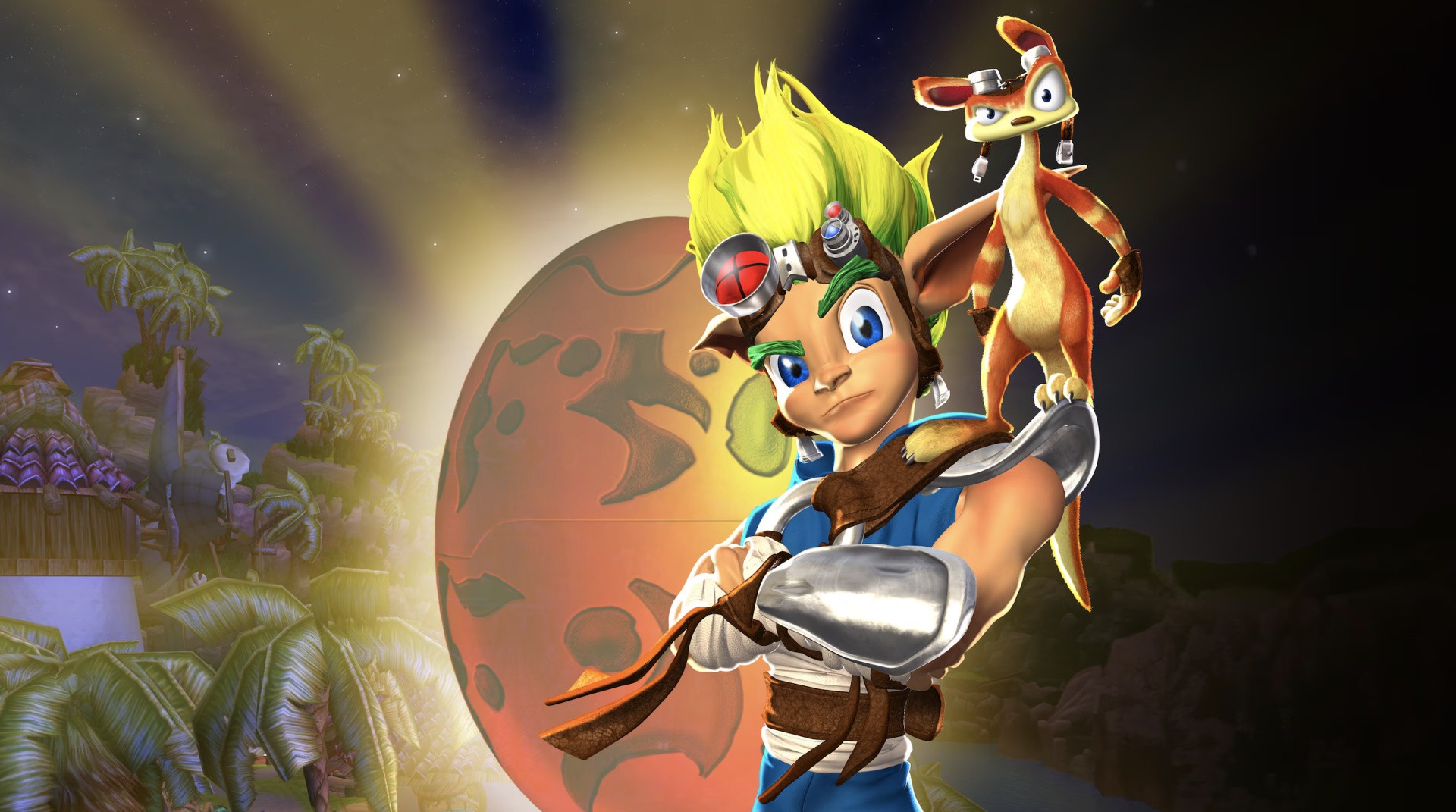
In the beginning, things seemed to get off to a good start, with Naughty Dog offering Zembillas a fairly spectacular contract – something he attributes nowadays to just how “desperate” the company was at the time. Just to give you some context, Naughty Dog had recently made the gamble of cutting ties with Universal Interactive following the release of Crash Team Racing to work directly with their publisher, Sony. But despite making steady progress on a new engine (Game-Oriented Assembly Lisp), it had again struggled to settle on a specific direction for the project, needing a ton of characters to populate its non-linear world.
Zembillas recalls, "I started working with Bob. He was art directing, but he was really going in circles with a lot of what he was saying. It was tough because I felt I just wasn't getting the right feedback from him.
“I remember Mark Cerny, at the beginning, one of the first creative directions he gave me was, 'We want this to be a unique game. We don't want you to look at anything else.' So that's what I was trying to do."
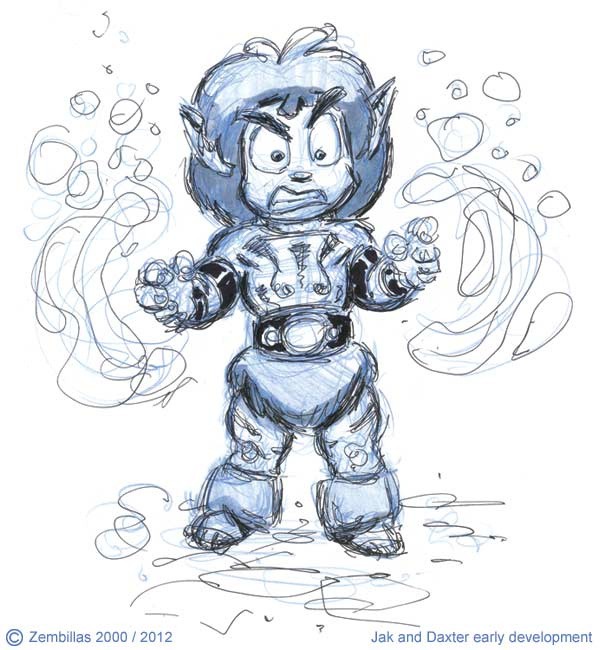
In total, Zembillas estimates he must have come up with 603 pages of character concepts for the game, over the course of one year. This includes early concepts for the character that would become Jak, a near-final design of his trusty sidekick Daxter, and various "Critters" (the creatures that would eventually morph into the game's Lurkers).
"I was told, 'Just draw goblins,'” he tells me. “So that's what I did. I had this one character with tattoos and markings on him, and I remember, in those early days, they were constantly showing the artwork I was creating to Sony because they were so far behind. Sony in Japan saw this one character and said, 'This is the main character. We like this character; Naughty Dog didn't agree, though, and after that, they began being a bit more selective about what they were passing along to Sony."
By his own assessment, Zembillas helped Naughty Dog immensely in defining the direction of Jak & Daxter’s art design. But when it finally came time for the game's release, he was shocked to learn that Naughty Dog had once again tried to downplay his contributions to the project, labelling the artist's role as "Additional Design" under the game's credits. Then, to make matters even worse, at the Game Developer's Conference Awards in 2002, Rafei and Naughty Dog were presented with an award for "Best Original Character" for Daxter — a character Zembillas had a huge key role in designing, and failed to make any mention of the artist in their acceptance speech.
"I remember they sent out a memo like Naughty Dog finally gets an award, and they publicly thanked somebody on their team and the crew for creating Daxter. I remember thinking, 'What are you talking about?' They didn't even acknowledge me. I must have done like 81 different designs for Daxter before I finally got the character that they were looking for."
For Zembillas, this series of events proved to be the final straw; he sent the studio a strongly worded email, effectively cutting ties with Naughty Dog. Looking back on this, Zembillas doesn't regret advocating for himself, but he regrets the content of the email and says he has no hard feelings toward Rafei and actually has a great deal of respect for his former student.
[We reached out to Rafei with questions about Zembillas's contributions to Jak & Daxter, but failed to receive a response.]
Following Jak & Daxter, Zembillas continued to be in demand elsewhere, with another major project he was approached to work on being Vicarious Visions' and Vivendi's multiplatform kart-based racer, Crash Nitro Kart, which was a follow-up to Naughty Dog's Crash Team Racing. This saw a reunion between Zembillas and Pearson, with the former being credited as the game's main character designer.
Nitro Kart was released in 2003 for PS2, Xbox, and GameCube and received mixed-to-positive reviews, with one of the more enthusiastic reactions from Official Xbox Magazine (Holiday 2003, issue 26), describing it as "a solid kart racer" and praising its four-player multiplayer mode, while Electronic Gaming Monthly's Demian Linn criticized it for being "nearly identical" to its PS1 predecessor right down to "the speed boosting Wumpa fruits". Despite this, Zembillas is proud of what the team was able to pull off and credits the game with temporarily saving the series.
"I was told by Vicarious Visions at the beginning of Crash Nitro Kart that if the game didn't do well, this would be the last of Crash," says Zembillas. "That's why they came to me and why I brought Joe Pearson into it. I put together the entire development team with extremely high-level artists. We did a great job. It did well enough to keep things going, and we have Crash to this day because of it. Whatever the critics said about CNK's gameplay, Vicarious Visions saved Crash Bandicoot. Also, I contracted for ownership of all the development art we created. I have it all, as well as publishing rights. That's also what I mean by a better way of doing things."
Ultimately, Nitro Kart would be the last Crash game Zembillas would be creatively involved in, with the artist instead going on to work on other projects away from the popular Bandicoot, in the years following. This includes designing an original character for the Canadian studio Radical Entertainment, which, sadly, went unused. Even after he stepped away from the series, though, he tells me that he still tried to keep an eye on what was happening with the character, and for the most part, he hasn't been a huge fan of what he's seen, with a few exceptions.
"I don't want to name any company in particular," says Zembillas. "But if Joe and I had been involved, I honestly believe those games would have been much better. Much, much better, or at the very least different.
"I don't see how Crash got any better without Joe's participation. It's got to be one of the most poorly managed properties, and even now, I'm thinking, 'Where’s the movie? Where’s the TV series?' You guys have a winner here, and you're doing nothing with it."
Following his work with Radical, Zembillas says he's stayed active behind the scenes elsewhere, but, unfortunately, various circumstances prevented him from dedicating as much time to this part of his career, including the demands of running his animation school and his parents' health. Nevertheless, he still runs his animation school and states that "over the last five years", he's been on an "epic new adventure" that he still hasn't told anyone about. According to him, this tease isn't related to any specific project, before you get your hopes up, but "has more to do with a personal change of environment," with the artist sharing that he is loving learning and exploring new directions to continue supporting his own growth as an artist.
One thing is for certain, though, he has no plans to work for any big studios anytime soon, with those days now firmly behind him. As he puts it, "I think that we can do better, and I think that independent artists can do better."